What’s actually slowing this PC down?
Pick the symptom - the matching free tool is one click away.
To organize clothes in a small space, measure the usable area, remove clothing you no longer wear, and assign each garment to the right storage mode. Fold bulky or stretchy pieces, hang crease-prone clothing, then reclaim vertical, door, drawer, and under-bed space without blocking access or compromising furniture safety.
The most effective solution is usually a measured, layered system rather than one extra storage product. The sequence matters: editing reduces demand, garment-based sorting uses each inch more efficiently, and frequency-based zoning keeps everyday clothes easier to reach than seasonal or occasional items.
As an Amazon Associate I earn from qualifying purchases.
Key takeaways
- Measure usable width, height, depth, door clearance, and obstructions before buying or building clothing storage.
- Removing unworn clothing creates more usable capacity than trying to compress every garment into the same container.
- Fold stretchy, bulky, and shape-sensitive garments; reserve hanging height for crease-prone, delicate, or structured clothing.
- Door backs, vertical walls, under-bed cavities, and divided drawers add storage without necessarily increasing the room’s floor footprint.
- A second hanging rod works best for short garments such as shirts, skirts, and folded-over pants—not coats or long dresses.
- Tall dressers, wardrobes, and freestanding shelving should be restrained according to the manufacturer’s instructions and anchored to a suitable wall structure.
1. How should you measure a small clothing-storage area?
Measure the usable space—not just the headline dimensions—before choosing a wardrobe, closet system, dresser, or organizer. Record the width, height, and depth of the closet, wall, door, and under-bed area, then subtract anything that prevents full use.
Measure around baseboards, trim, radiators, pipes, outlets, sloped ceilings, hinges, and door handles. Record the clearance needed to assemble the unit and to open hinged or sliding doors. Painter’s tape on the floor or wall can show whether a proposed cabinet, dresser, or wardrobe will obstruct a walkway.
#1 Best Overall

- Swing-proof & 44 LB Load: Unlike other door organizers, our product features reinforced stitching between each side pocket, and built-in strengthened side cardboards to prevent tilting. Additionally, strongly reinforced bottom cardboard, which can stay put without deforming even when you load up to 44 lbs. Also, do not move/sway when you open or close the door.
- Double Your Storage Space: Featuring 5 roomy pockets (up to 15.7" /40cm long) and 5 additional mesh side pockets, this over the door stuffed animal storage instantly expands storage options, making it an ideal space maximizer for any room.
- Multipurpose door storage: Versatile hanging door organizer works great for expanding storage. Fits children's rooms, storage rooms, offices, laundry rooms, bedrooms, bathrooms, living rooms, pantries, dorms, nurseries, and other areas where you need to store toys, diapers, wet wipes, baby towels, socks, and other items. Designed to cater to all your storage needs.
- Easy Accessibility with Bigger Pockets: Sized at 15.7in L x 5.5in W x 57.8 H, our closet door organizers provide larger bins and 4.3" gaps for effortless access. The see-through mesh on each pocket ensures you find what you need effortlessly.
- Easy to Assemble: Set up the toy storage organizer in a mere 30 seconds. Simply hang the hook on the door, hang the organizer onto the hooks, and insert the 5 bottom cardboards. With special metal hooks designed to fit doors up to 1.98" thick, enjoy a hassle-free and versatile installation experience.
IKEA’s clothing-storage planning guidance also recommends measuring the available width, height, and depth and accounting for doors, sloped ceilings, radiators, and pipes. For a construction-minded solution, treat the measurement as a small site survey: note the wall material, locate studs before anchoring anything, and distinguish clear internal dimensions from external product dimensions.
Use these as rough planning estimates rather than universal rules. According to IKEA’s official guidance (2026), approximately 10 folded T-shirts require 10 inches of vertical space, while 10 folded sweaters require 12 inches; the same guidance estimates about 39 inches for coats, 32 inches for shirts and blouses, 47 inches for short dresses, 75 inches for very long clothing, 13 inches for a shoe rack, and 24–28 inches for hanging pants. Garment thickness, folding method, hanger type, and how tightly a person packs clothing will change the result.
2. How can editing your wardrobe create more space?
Sort every garment into three groups: wear now, do not currently wear, and no longer want. Donate, sell, repair, or responsibly recycle the last group using options available in your area before buying additional storage.
Free tools Windows power users keep installed
One-click scans. No signup required.
IKEA’s clothing-organization guidance recommends beginning with what you own and what you actually wear, then separating currently worn, not-currently-worn, and unwanted items. The practical benefit is not merely visual: prime-access shelves, rods, and drawers can be reserved for clothes that leave the house regularly.
Use a temporary holding box for uncertain items rather than forcing every decision immediately. Write a review date on the box. If the box remains untouched, those garments probably should not occupy eye-level storage. Keep repair items together so a missing button or small tear does not turn into a permanent “maybe” pile.
Do not mistake vacuum-compressing or tighter folding for editing. Compression can reduce bulk for suitable clean, dry textiles, but it does not make unwanted clothing useful and may make daily retrieval harder.
3. Which clothes should be folded and which should be hung?
Fold clothing that stacks well or may lose its shape on a hanger, and hang clothing that benefits from a smooth, supported shape. This division protects garments while freeing valuable hanging height for pieces that need it.
| Storage method | Good candidates | Why it helps |
|---|---|---|
| Fold | Sweaters, knitted tops, stretchy items, T-shirts, vests, loungewear, jeans, sweatpants, and heavier fabrics | Uses shelf or drawer volume efficiently and reduces strain on shoulders and knits |
| Hang | Blouses, crease-prone tops, skirts, jackets, delicate fabrics, and most dresses | Keeps garments accessible and helps prevent creasing when adequate clearance exists |
| Either, depending on the garment | Pants, tailored trousers, lighter trousers, and occasion clothing | Use a hanger when crease control matters; fold heavier casual pairs when shelf space is more practical |
IKEA’s guidance on organizing clothes similarly recommends folding stretchy items such as sweaters and knitted tops while hanging crease-prone or delicate clothing. The rule is flexible: check the care label, fabric weight, shoulder construction, and how often the item is worn.
Use slim hangers only when they safely support the garment and do not make clothes difficult to remove. A thinner hanger can reclaim rod space, but it cannot solve an overfilled rod, an unsuitable hanger shape, or a closet that lacks enough vertical clearance.
Rank #2

- Durable Hanging Closet Organizer: Made with durable, tear-resistant fabric and reinforced cardboard. Each tier has a reinforced bottom, while pockets are supported by inverted U-shaped cardboard and fiberglass rods to hold shape under heavy loads. Reinforced stitching and thickened alloy hooks prevent sagging, warping and swaying during daily use
- Smart Space-Saving Door Storage: This closet organization features 5 large front pockets and 10 side mesh pockets. The transparent mesh pockets make it easy to identify contents at a glance. Ideal for maximizing unused door space
- 48 lbs Load Capacity & Stable Design: This over the door hanger designed with 3 reinforced hooks for enhanced stability, this over-the-door organizer supports up to 48 lbs. The secure hook system stays firmly in place, preventing slipping and tilting during daily use
- Easy Installation & Versatile Use: This over door organizer hanging comes with thickened alloy hooks that fit most standard doors without interfering with opening or closing. It works perfectly in bedrooms, nurseries, dorms, bathrooms, pantries and more, ideal for storing toys, baby supplies, toiletries, socks and other daily essentials
- Practical Daily Over The Door Storage Organization: With 5 spacious compartments, you can neatly sort and store outfits for each workday in advance, making your morning routine quicker and more efficient
4. How should you zone clothes by frequency of use?
Place everyday underwear, socks, workwear, and frequently worn tops in the easiest drawers, at eye level, or near the front of a reachable shelf. Place formalwear, seasonal clothing, spare bedding, and occasional-use items in higher, lower, or less convenient storage.
Group by garment type first: tops with tops, trousers with trousers, and underwear with underwear. Add color order only if color genuinely makes retrieval faster. A visually perfect rainbow is not useful if a person still has to search through mixed categories.
Test the system with clean laundry. Every garment should have an obvious destination that can be reached without moving three other piles. If clean clothes repeatedly land on a chair or the floor, the category is probably too broad, the container is too full, or the storage location is too difficult to access.
Keep a small amount of empty capacity in the most-used drawer or basket. A storage system that is technically full becomes difficult to maintain because every putting-away task requires rearranging existing clothing.
5. When does a second hanging rod maximize closet space?
A second hanging rod maximizes closet space when most of the existing garments are short-hanging and unused vertical space remains below the original rod. Shirts, blouses, skirts, and pants folded over a hanger are especially suitable.
The Container Store’s small-closet project guidance recommends adding an extra closet rod when most clothing is short-hanging. Divide the rod into practical zones rather than placing the second level so low that garments drag on the floor or become difficult to reach.
Recommended Free Tools
Do not use a double-rod arrangement where long dresses, coats, robes, or other full-length clothing need the entire height. Measure the longest garment, the hanger drop, and the hand clearance between rods before installation. Confirm the rod, brackets, and wall anchors are rated for the intended load; a stronger rod does not compensate for weak wall fixing.
A double-hanging layout is often more effective than adding another deep cabinet because it uses height already present in the closet. It is not automatically the best solution for a very shallow closet, a sloped ceiling, or a closet whose existing rod is already close to the floor.
6. How can you use vertical and door space without taking up floor space?
Use the back of a closet or bedroom door for lightweight, frequently accessed items such as scarves, belts, hats, bags, and small folded accessories. A door-hanging organizer can add compartments while preserving the room’s floor area, but the door and hardware must support the arrangement.
Rank #3
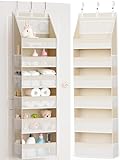
- MAXIMIZE EVERY INCH OF SPACE: Turn any door into a powerhouse of organization! With 6 deep main compartments for towels, diapers, or clothes and 13 breathable mesh side pockets for small essentials like chargers, keys, and cosmetics, this over the door storage keeps everything perfectly sorted—goodbye clutter, hello stress-free mornings!
- BUILT TO LAST & NO-SAG DESIGN: Say goodbye to sagging shelves! Reinforced fiberglass rods, thick non-woven fabric, and sturdy PP boards hold up to 55 lbs, keeping your organizer straight and stable even when fully loaded. Precision stitching ensures long-lasting durability—you can count on it every day.
- SEE IT ALL AT A GLANCE: Stop digging through piles! Mesh-front panels give instant visibility and airflow, keeping items fresh, dry, and easy to find. this back of door organizer perfect for bathrooms, nurseries, laundry rooms, or anywhere you need fast access to essentials.
- MULTI-PURPOSE ORGANIZER: From bedroom doors to dorms, kids’ rooms, bathrooms, or nurseries—this door hanging organizer adapts to your lifestyle. Store toys, diapers, clothes, or accessories anywhere you need extra vertical space. Declutter your home in style!
- HASSLE-FREE SETUP & COMPACT STORAGE: No tools, no stress—just hang with included hooks and insert the support boards. Instantly ready to organize! When not in use, it folds flat for easy, space-saving storage.
Before installing an over-the-door closet organizer, check door thickness, hinge clearance, handle position, closing force, the organizer’s dimensions, and its stated weight limit. Keep dense shoes, stacks of jeans, and other heavy loads out of a lightweight accessory organizer unless the product is specifically designed for them. A loaded door can sag, scrape its frame, or become difficult to close.
Vertical wall storage can include a narrow wardrobe, wall-mounted shelves, a peg rail for accessories, or a carefully planned closet system. Keep frequently used items between shoulder and waist height and reserve high shelves for light, occasional-use items. Wall-mounted systems require appropriate fixings for the wall construction; plasterboard, masonry, and studs do not accept the same anchors.
IKEA’s clothing-organization guidance identifies hanging organizers, boxes, baskets, and dividers as ways to use otherwise unused space. The useful principle is to add storage to a surface that is already there, rather than automatically adding another floor-standing unit.
7. How should you organize clothes under the bed?
Use under-bed storage for clean, dry, low-frequency items such as out-of-season clothes, winter accessories, spare bedding, and special-occasion garments. Under-bed space is a poor location for clothes needed every morning if the bed must be moved or the container is difficult to pull out.
Measure the lowest clearance from the floor to the bed frame, rails, and casters—not merely the space at the center of the bed. Check the container’s external height, including handles and lids, and allow enough room to pull it out. Label at least two sides when the container will be difficult to see once stored.
Crashes, No Sound, or Screen Glitches?
Random freezes, missing sound and display glitches usually trace back to one bad driver. Find and replace yours safely.Free scan · under a minuteWindows Errors? Fix Them Before They Spread
Repair common Windows errors and clear accumulated junk for a smoother, more stable PC - no reinstall needed.Free scan · no reinstallIKEA presents its SKUBB storage case as suitable for wardrobes or under beds and describes ventilation nets that allow air circulation while helping protect contents from dust and dirt. Treat that product information as a specification for that named case, not as a guarantee that every under-bed bag provides the same protection. Clothes should be clean and completely dry before storage.
Use broad labels such as “winter knitwear” or “formal clothing,” then place the most likely-to-be-needed container nearest the accessible side. Reassess seasonal storage when the season changes so the bed does not become a permanent archive.
8. What can you do when a closet has no shelves?
A fabric hanging organizer can create lightweight shelf-like compartments on an existing closet rod. Use it for folded T-shirts, workout clothes, small bags, and accessories rather than treating it as a structural replacement for a load-bearing shelf.
IKEA’s SKUBB six-compartment organizer is described as hanging inside a wardrobe, adding folded-clothing storage, taking little space, and folding flat when not in use. Product-specific load limits and dimensions still control what belongs in the compartments.
The Tool Desk
Outbyte PC Repair FREERepair Windows errors before they cause bigger problemsFix Now →Outbyte Driver Updater FREEFix the driver behind crashes, sound loss and screen glitchesFind Drivers →Rank #4

- Maximize Door Space Utilization: This 5 section over the door organizer features dimensions of 14.9"×6.5"×51.6"(38cm×16.5cm×131cm) with five large window pockets and four side pockets to efficiently use the storage space behind your door (1.4"-1.8" thick)
- Easy to Access: Enhanced visibility from clear-view front pockets and a wide opening offer quick identification and hassle-free access. A reduced-depth upper pocket simplifies retrieving items from its bottom. Four side pockets give additional storage space.
- Versatile Use: Perfect for bedrooms, bathrooms, laundry, and closets. Holds diapers, bottles, tissues, skincare, makeup, hair tools, hats, toiletries, and more. Keeps daily essentials organized and easily within reach
- Premium Material & Sturdy Structure: Made from premium non-woven fabric, PVC windows, internal rods, and cardboard bases, the over the door storage is stable and anti-tilt. with a heavy load of 40 lbs(18kg), perfect for long-term use
- Foldable Design: When not in use, the behind the door storage can be easily folded up and stored away, saving valuable space and making it a practical choice for those looking to declutter without sacrificing storage capacity
Dense stacks of jeans, shoes, books, or heavy sweaters can pull a fabric organizer out of shape or overload the rod. Use fixed shelving, a properly supported modular system, or a dresser for high-density loads. A hanging organizer is most useful when the missing storage is for light, flexible categories and the existing rod is securely installed.
9. How do you organize socks and underwear in a small dresser?
Divide drawers into small categories that match the way the household gets dressed: everyday underwear, socks, tights, belts, workout accessories, or sleepwear. Bins and dividers stop small items from spreading across the entire drawer and make the available volume easier to use.
Leave enough headroom for the drawer to close without compressing clothing into a tangled mass. Fold or roll items consistently, but choose the method that makes every item visible. A divider that creates tiny compartments can waste space when socks or underwear are bulky, so adjust the category size to the contents.
IKEA describes small boxes and dividers as solutions for socks, underwear, belts, jewelry, and accessories. Its SKUBB three-box set is described as a way to divide storage, organize small items, and fold when not in use. Those features illustrate the category; measure the actual drawer and container before purchasing because internal dimensions vary.
Quick wins for a faster PC:
Repair Windows errors before they cause bigger problemsFix Now →Fix the driver behind crashes, sound loss and screen glitchesFind Drivers →Clear out junk files and repair common Windows errorsFree Scan →Store the highest-use categories closest to the drawer front. Put infrequently used accessories toward the back only if they remain identifiable and reachable without emptying the drawer.
10. Should you choose open or closed clothing storage?
Choose open storage when visibility and immediate access matter more than concealment; choose closed storage when the bedroom needs a calmer appearance or clothing needs more protection from dust. The right choice also depends on available door clearance and how consistently the household can maintain visible shelves.
| Option | Best when | Trade-offs to check |
|---|---|---|
| Open wardrobe or shelving | The space is narrow, temporary, a reach-in closet, or a recess where visibility speeds dressing | Clothing is visible, dust protection is lower, and shelves must stay orderly |
| Closed wardrobe | A calmer visual appearance and concealed clothing are priorities | Hinged doors need swing clearance; sliding doors need track and front clearance; access may be less immediate |
| Modular or adjustable system | Garment categories, household needs, or room use may change | More planning and installation decisions; wall anchoring and total footprint still matter |
IKEA’s clothes-storage guidance describes AURDAL as an adaptable open system for walk-in, reach-in, and small or difficult spaces, while also explaining the access and appearance differences between open wardrobes and wardrobes with doors. The decision should be based on footprint, access, flexibility, installation, appearance, and safety—not appearance alone.
Independent reader supportYour contribution helps us test, update, and keep practical guides available for everyone.11. How do you make freestanding clothing storage safe?
Anchor any tall dresser, wardrobe, or freestanding shelving unit according to the manufacturer’s instructions, use the supplied restraint when provided, and attach the unit to an appropriate wall structure. Keep heavy items low, close drawers before walking away, and do not assume a narrow footprint makes a tall unit stable.
Do these 3 things before closing this tab:
1Clear out junk files and repair common Windows errors2Scan for outdated or missing drivers - takes under a minute3Repair Windows errors before they cause bigger problemsThe safety issue is significant. According to the U.S. Consumer Product Safety Commission (2022), clothing-storage-unit tip-overs were associated with 234 fatalities, 84,100 tip-over-related injuries treated in U.S. hospital emergency departments from 2006 through 2021, and an estimated annual average of 5,300 such injuries. Those figures apply to the CPSC’s stated U.S. scope and reporting period; they are not a prediction for a particular dresser or room.
Best Value
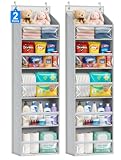
- 【2 Pack & Large Capacity】: 5 shelves baby storage organizer, suitable for narrow doors, it can hold a total of 200 diapers, 70 nursing bottles, 60 pairs of kids shoes etc. Size of the over the door storage is 24.4"W x 6.5"D x 53.3"H;
- 【Keep Shape Well】: Closet door organizer is made of Oxford fabric, more sturdy and less prone to ripping than other non-woven fabrics. Each layer has a strong pp board at the bottom and fiberglass strips on the sides, which makes it keep shape well, not easy to sag deformation;
- 【Higher & Deeper Pockets】: The space between the pockets is 5.9", Large interlayer spacing design allows you can easily store tall bottles without falling out, such as toiletries, shampoos, make ups etc. Dimension of each Pocket:12.2"Wx6.5"Dx10.6"H;
- 【Easy to Access】: The design of clear PVC window for over the door pantry organizer allows you to find the items you need at a glance, which is convenient and quick, makes it easier for you to access and can also avoid the confusion caused by improper storage;
- 【Multipurpose】: Diaper organizer can not only be used in nursery, but also be used in many other scenes in the home, such as closet, bathroom, pantry, rv, yarn, apartment, etc. It can be used to store toys, diapers, clothes, towels, toiletries, snacks, purse, shirt, and other sundries as well.
The CPSC’s Anchor It! safety guidance states: “Existing furniture can be anchored with inexpensive anti-tip devices.” Follow the restraint manufacturer’s directions, select fixings suitable for the wall, and avoid relying on adhesive alone where the instructions require a mechanical connection.
If children use the room, keep climbable objects and tempting heavy items away from tall furniture. Inspect restraints after moving furniture, redecorating, or changing the floor covering. For a built-in wardrobe or shelving installation, plan anchoring and wall conditions before construction rather than treating safety hardware as an afterthought.
How do you choose between storage solutions?
Compare storage by the constraints that determine whether the system will work after installation: footprint, capacity, access, flexibility, installation, appearance, safety, and replacement cost.
| Storage solution | Footprint | Access | Best use | Main limitation |
|---|---|---|---|---|
| Over-the-door organizer | Uses door depth; adds little floor area | Fast for small accessories | Scarves, belts, bags, hats, and lightweight items | Door clearance, closing force, and weight limit |
| Second hanging rod | Uses existing closet height | Fast for everyday short garments | Shirts, blouses, skirts, and folded-over pants | Cannot replace full-length hanging space |
| Under-bed case | Uses hidden floor-level void | Slow to reach | Seasonal and occasional clothing | Limited by bed clearance and moisture conditions |
| Hanging compartment organizer | Uses existing rod | Visible and reachable | Light folded clothing and accessories | Not a substitute for load-bearing shelving |
| Drawer bins or dividers | Uses existing drawer volume | Fast when categories are small | Socks, underwear, tights, belts, and jewelry | Can waste space if compartments are too small |
| Modular wardrobe system | Requires measured wall or floor footprint | Can combine hanging, shelves, and drawers | Changing needs or difficult closet layouts | More planning, installation, and anchoring decisions |
For a permanent apartment or bedroom improvement, prioritize a measured system that can be anchored safely. For a rental or short-term solution, start with removable or freestanding accessories only where their stability, door compatibility, and load limits are clear.
A practical order for organizing a small bedroom
- Measure: record usable dimensions, obstructions, door movement, and wall conditions.
- Edit: remove unwanted clothing and isolate repair or decision items.
- Classify: decide which garments should be folded, hung, stored in drawers, or moved seasonally.
- Zone: give eye-level and easiest-access locations to everyday clothing.
- Use existing volume: add a second rod, dividers, hanging compartments, or under-bed containers where measurements support them.
- Choose open or closed storage: balance visibility, dust, access, and door clearance.
- Secure tall furniture: install restraints and suitable anchors before loading the unit.
- Test the routine: put away a full laundry load and revise any category that creates a pile.
The best small-space clothing system is layered rather than dependent on one “space-saving” product: fewer garments, correct garment placement, vertical storage, hidden seasonal storage, and safe furniture installation work together.
Frequently Asked Questions
How do I organize clothes in a small space?
Measure the usable width, height, and depth, including clearance for doors and obstructions such as baseboards, radiators, pipes, trim, and sloped ceilings. Then remove clothing you no longer use before choosing organizers or furniture.
How do I organize clothes without a closet?
Use an over-the-door organizer for lightweight, frequently accessed accessories such as scarves, belts, hats, and small bags. Check door thickness, hinge and handle clearance, closing force, dimensions, and the organizer’s weight limit before installing it.
How should I store seasonal clothes when I have no space?
Store clean, completely dry out-of-season clothing, winter accessories, spare bedding, and special-occasion garments under the bed. Measure the lowest clearance around bed rails and casters, and label containers so seasonal items remain easy to identify.
How can I fit more clothes in a tiny closet?
A second rod is useful when most garments are short-hanging and unused height remains below the existing rod. It is unsuitable when long dresses, coats, robes, or other full-length garments need the full vertical clearance.
The Bottom Line
To organize clothes in a small space, measure first, edit what you own, assign each garment to the right storage type, and use vertical, door, drawer, and under-bed areas in that order. Add products only after the measurements and load requirements are clear, and anchor every tall clothing unit safely.
Quick Recap
Product prices and availability are accurate as of the date/time indicated and are subject to change. Any price and availability information displayed on Amazon at the time of purchase will apply.

