The Tool Desk
Outbyte Driver Updater FREEFix the driver behind crashes, sound loss and screen glitchesFind Drivers →Outbyte PC Repair FREERepair Windows errors before they cause bigger problemsFix Now →For most detached homes, the best starting point is a properly sized 5- or 6-inch K-style aluminum gutter. Choose half-round for traditional or historic architecture, box or fascia profiles for specialized roof edges and high-volume drainage, and sectional or seamless construction according to the length of the run and installation method. The correct system is determined by roof runoff, rainfall, downspouts, discharge, material compatibility, and maintenance—not appearance alone.
Rain gutters are not ten completely separate choices. The main decision layers are profile—the shape of the trough; construction method—sectional or seamless; and material—such as aluminum, vinyl, steel, copper, or zinc. A house can therefore have a seamless aluminum K-style system, a sectional vinyl K-style system, or a copper half-round system.
As an Amazon Associate I earn from qualifying purchases.
For most detached homes in North America, the practical starting point is a properly sized 5- or 6-inch K-style aluminum gutter. A half-round system is often a better architectural match for a historic or traditional house. Box and fascia gutters address larger roofs, low-slope or commercial-style construction, and specialized roof-edge conditions. Sectional gutters suit small repairs and DIY projects, while seamless gutters reduce joints on long residential runs. Whatever the profile or material, the system must be sized for the roof and rainfall, supported correctly, and connected to a discharge point that moves water away from the foundation.
What rain gutters do—and why the whole drainage system matters
Gutters collect runoff from the roof and direct it to downspouts. Downspouts, elbows, extensions, splash blocks, underground drains, or collection systems then carry that water away from the building. This helps limit soil saturation, foundation moisture, erosion, and water-related damage around the structure.
#1 Best Overall

- High-Quality White Aluminum: Built from rust-resistant aluminum for long-lasting performance and a clean, polished look that complements any home exterior
- B- Elbow - Fits Standard Gutters: Sized at 2"x3" for compatibility with most residential gutter systems, ensuring an easy and secure fit
- Durable & Weather-Resistant: Engineered to withstand harsh weather conditions, from heavy rain to snow, without bending or corroding
- Easy Installation: Features a simple design for quick installation, even for DIY homeowners
- Versatile Application: Ideal for use at corners or downspout transitions to redirect water flow where you need it
A gutter that looks attractive but overflows at a valley, discharges beside the foundation, or sags between supports has not solved the drainage problem. The gutter, downspout, roof edge, and discharge method should be treated as one system.
U.S. Department of Energy Building Science Education guidance identifies gutters and downspouts as one way to move roof water away from the foundation. Other approaches include underground drainage, catchment, and rainwater harvesting. The right choice depends on the site, local requirements, soil, slope, and intended use of the water.
The 10 types of rain gutters
| Type | Decision layer | Usually best for | Main caution |
|---|---|---|---|
| K-style | Profile | Most conventional homes | Angular ledges may hold more debris; nominal size may be inadequate for large or steep roofs |
| Half-round | Profile | Historic and traditional architecture | May have lower capacity at the same nominal width and may need specialty hangers |
| Box | Profile | Large roofs, commercial buildings, and low-slope rooflines | Often requires custom design, fabrication, waterproofing, and professional installation |
| Fascia-style | Profile | Clean rooflines or buildings with limited fascia | Availability and replacement parts vary |
| European or Victorian ogee | Decorative profile | Period restorations and ornate façades | Terminology overlaps with ordinary K-style or ogee gutters |
| Sectional | Construction method | DIY work, short runs, and repairs | Many joints create more potential leak points |
| Seamless | Construction method | Long runs and whole-house replacement | Normally requires on-site forming and professional installation |
| Aluminum | Material | General-purpose residential use | Lightweight metal can dent or deform more readily than heavier steel |
| Vinyl or PVC | Material | Low-cost DIY work and small outbuildings | Plastic can expand, contract, become brittle, or deform with age and exposure |
| Steel, copper, or zinc | Material family | Strength, historic work, premium appearance, or specialized service | Cost, weight, fabrication, and metal compatibility require closer planning |
The categories overlap. The sections below explain what each label actually means and where it fits.
1. K-style gutters
K-style gutters, also called ogee or O.G. gutters, are the dominant residential profile in North America. They have a relatively flat back and bottom, with a decorative front edge that resembles crown molding. The back typically mounts against the fascia, and the system is commonly paired with rectangular downspouts.
K-style gutters are widely available in aluminum, vinyl, steel, and copper. Common residential widths include 5 and 6 inches, although the correct size depends on the roof drainage calculation rather than the appearance of the profile alone.
Best for: Most detached homes, replacement projects, and homeowners who want readily available components.
Advantages:
- Broad availability through retailers and installers
- Many colors and material choices
- Good carrying capacity for the nominal width, depending on the specific profile and installation
- Compatibility with many gutter guards and other accessories
Limitations: The folded, angular shape can retain more leaves and debris than a smooth half-round trough. A standard residential size may also be undersized for a large roof plane, a steep roof, an intense-rainfall location, or a roof valley that concentrates flow.
2. Half-round gutters
Half-round gutters have a semicircular trough and are normally paired with round downspouts. Their smooth interior creates a simple water path and may make them easier to clean or less likely to trap debris than an angular profile.
Half-round gutters are frequently selected for older, historic, Mediterranean, Spanish Colonial, European, and traditional-style homes. Decorative hangers and round downspouts can become visible architectural details rather than merely functional hardware.
Best for: Historic restorations, traditional architecture, and projects where a rounded profile is part of the design.
Advantages:
- Traditional appearance
- Smooth interior with fewer angular surfaces for debris to catch on
- Good compatibility with decorative brackets, hangers, and round downspouts
Limitations: A half-round gutter may carry less water than a K-style gutter of the same nominal width, according to major home-improvement buying guides. Specialty hangers, custom sizes, copper, zinc, and other premium versions can also cost more than standard K-style components.
What’s actually slowing this PC down?
Pick the symptom - the matching free tool is one click away.
3. Box gutters
Box gutters are deep, generally rectangular gutters designed for high-volume drainage. They are common on commercial, industrial, and large-roof buildings, although custom residential versions are possible.
A box gutter may be integrated into the roof edge or fabricated as an external system. Integrated versions require especially careful coordination among the roof membrane, flashing, framing, gutter lining, outlets, and downspouts. A failure at that junction can allow water into the roof or wall assembly, not merely onto the exterior siding.
Best for: Large roofs, commercial buildings, low-slope rooflines, and projects requiring substantial water-carrying capacity.
Rank #2
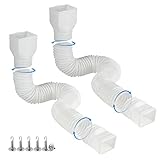
- 【 US Patented Product 】: No.D988482, No.D988483, No.D997309, No.D1009230, No.D1012250, No.D1016252, No.11885441
- 【 Thickened Material 】: This downspout extender is made of PE material, we thicken them to make it more harder and sturdier than others. We've done thousands of load-bearing tests, and it can withstand at least 10 pounds without deformation. It is suitable for the complex environment outside your house. You can even bury it in the ground
- 【 Upgrade Design 】: Each downspout drain extension comes with 2 different sizes of "adapters" to be suitable for 2 X 3 inches,3 x 3 inches and 3 x 4 inches downspout. Its split design allows you to use them more flexibility in different scenes
- 【 Widely Used 】:This downspout extender EACH downspout extension can easily be extended from 21 to 68 Inches. So it will help you protect the foundation of the house from damage, irrigating garden and so on
- 【 Excellent Performances 】: It has excellent performances of flexibility, easy to bend, and easy to restore to its original shape with no creases or cracks. It is antifreeze explosion proof and can be used in bad weather, such as snowing, sun exposure, etc
Advantages:
- Large cross-sectional area for high runoff volumes
- A clean fit with commercial, industrial, and flat-roof architecture
- Can be designed as part of the roof-edge assembly
Limitations: Box gutters are less commonly stocked as DIY residential components. They may require custom fabrication, engineering, detailed waterproofing, and professional installation. They should not be selected simply because a deep-looking gutter seems more durable; the roof drainage design still has to account for rainfall, outlets, overflow paths, and the building structure.
Recommended Free Tools
4. Fascia-style gutters
Fascia gutters have a taller back or an integrated profile intended to cover or replace the visual appearance of a conventional fascia board. They can create a clean, contemporary roofline and may offer more capacity than a K-style gutter of similar nominal width, depending on the exact profile.
Some fascia systems are intended for buildings that lack conventional fascia boards. Others are used to conceal or replace damaged fascia. The installer must coordinate the gutter with the roof edge, rafter tails, subfascia, sheathing, drip edge, and fastening points.
Best for: Contemporary homes, commercial buildings, buildings with limited or damaged fascia, and designs that call for an integrated roof edge.
Advantages:
- Clean, built-in appearance
- Taller profile options
- Potentially greater capacity than a standard profile of similar nominal width
- Can address roof edges where a conventional fascia-mounted gutter is difficult
Limitations: Regional availability varies, replacement components may be less universal, and installation details must be coordinated with the framing and roof assembly. A fascia-style gutter is not automatically the right repair for rotten fascia; the underlying structure still needs to be inspected and repaired.
5. European or Victorian ogee gutters
European and Victorian ogee systems are decorative variants associated with historic, high-end, or period-style architecture. They may include a pronounced front bead, ornate profile, decorative brackets, or custom metalwork.
There is important naming overlap here: ogee is also commonly used for the ordinary North American K-style profile. Specialty manufacturers and installers may use European ogee or Victorian ogee for more ornamented or forward-bead designs. Ask for a profile drawing or sample rather than relying on the name alone.
Best for: Period restorations, ornate façades, and homes where the gutter is meant to contribute visibly to the architecture.
Advantages:
- Distinctive appearance
- Compatibility with decorative brackets and custom metalwork
- Strong architectural fit with copper, zinc, and other premium finishes
Limitations: These systems generally cost more, have fewer off-the-shelf parts, and depend more heavily on specialist fabrication or installation. The decorative label does not by itself indicate higher hydraulic capacity.
Outdated Drivers Are Slowing You Down
One free scan finds every outdated or missing driver and matches the right update for your exact hardware.Free scan · exact hardware matchPC Slower Than It Used to Be?
A free scan shows the junk files, broken settings and background clutter dragging Windows down - then fixes them in one click.Free scan · Windows 10 & 116. Sectional gutters
Sectional gutters are sold in predetermined lengths and joined with connectors, inside and outside corners, end caps, outlets, and sealants. They are the traditional retail gutter system and are widely available for common residential profiles.
Sectional construction can be practical for a short repair, detached garage, shed, porch, or small house where standard lengths fit the roofline. A homeowner can usually transport and cut the components with ordinary tools, subject to the manufacturer’s instructions and safe access to the roof edge.
Best for: DIY projects, short runs, small outbuildings, and repairs where individual sections need to be replaced.
Advantages:
- Easy retail availability
- Simpler transportation than long custom-formed runs
- Individual damaged sections can be replaced
- Suitable for many small, accessible projects
Limitations: Every connector is a potential leak location. Long runs also require careful planning to maintain slope, support the gutter, manage thermal movement, and prevent joints from separating or sagging. Good sealant cannot compensate for inadequate fastening or poor alignment.
Free tools Windows power users keep installed
One-click scans. No signup required.
7. Seamless or continuous gutters
Seamless gutters are formed to the required length on site, normally by a professional installer using a gutter-forming machine. Long uninterrupted runs substantially reduce the number of field joints. Corners, outlets, end caps, and downspout connections still require seams or fittings, so seamless does not mean impossible to leak.
Rank #3

- High-Quality White Aluminum: Crafted from rust-resistant aluminum for long-lasting durability and a clean, polished finish that complements any exterior.
- Fits Standard Gutters: Sized at 2"x3" to seamlessly connect with most residential gutter systems, ensuring a secure and reliable fit
- Weather-Resistant Design: Built to withstand heavy rain, snow, and harsh conditions without bending or corroding
- Easy Installation: The simple, lightweight design makes installation quick and hassle-free, even for DIY homeowners
- Redirects Water Efficiently: Perfect for situations requiring front-to-back water redirection, such as guiding water away from your foundation or into a specific drainage area
Seamless systems are commonly made from aluminum and are also available in steel, copper, and other metals through specialty fabricators. The installer measures the roofline, forms each run, cuts outlets, and fits the system to the building.
Best for: Whole-house replacement, long roof runs, heavy-rain areas, and homeowners who prioritize fewer joints and a finished appearance.
Advantages:
- Fewer joints along straight runs
- Custom lengths that reduce unnecessary connections
- Clean appearance
- Convenient fit for a planned whole-house installation
Limitations: Seamless gutters usually require professional equipment and cannot normally be transported as standard retail stock. They also do not eliminate problems caused by poor slope, inadequate hangers, undersized downspouts, blocked outlets, or incorrect discharge.
Quick wins for a faster PC:
Fix the driver behind crashes, sound loss and screen glitchesFind Drivers →Repair Windows errors before they cause bigger problemsFix Now →For long runs or custom profiles, a seamless gutter installation service can handle site measurement, on-site forming, outlet placement, and roof-edge coordination. Before hiring, confirm geographic availability, licensing where applicable, insurance, the proposed profile and material, how runoff will be discharged, and what is included in the estimate.
8. Aluminum gutters
Aluminum is one of the most widely used residential gutter materials. It is lightweight, does not rust like ordinary steel, is available in many colors, and can be supplied as either sectional or seamless guttering.
Common aluminum thicknesses and sizes vary by manufacturer. Compare the actual product specifications, support requirements, and intended use instead of judging quality only by the nominal 5- or 6-inch width.
Best for: Most homeowners seeking a balance of cost, weight, corrosion resistance, color availability, and installation practicality.
Do these 3 things before closing this tab:
1Clear out junk files and repair common Windows errors2Fix the driver behind crashes, sound loss and screen glitches3Repair Windows errors before they cause bigger problemsAdvantages:
- Lightweight and relatively easy to handle
- Rust-resistant in ordinary service
- Broad color and profile availability
- Works for DIY sectional systems or professional seamless fabrication
Limitations: Aluminum can dent or deform more readily than heavier steel, especially where ladders, branches, hail, or other impacts are concerns. Check compatibility with adjacent roofing and flashing materials, particularly where dissimilar metals could come into contact.
9. Vinyl or PVC gutters
Vinyl gutters are plastic systems commonly sold in sectional lengths for DIY installation. They are lightweight, do not rust, and are often less expensive than metal alternatives. They are particularly common on small homes, sheds, garages, and budget-conscious replacement projects.
Plastic sections expand and contract with temperature. The system therefore needs the correct connectors, support spacing, end conditions, and allowance for movement. Exposure to age, temperature swings, impact, and unsuitable installation conditions can make plastic brittle or cause it to deform.
Best for: Low-cost DIY work, small homes, sheds, and other situations where easy handling and initial price matter more than a premium material or custom appearance.
Advantages:
- Lightweight
- Rust-free
- Easy to cut and assemble with suitable tools
- Generally accessible through retail channels
Limitations: Color and profile choices may be narrower than with metal systems. Sections can expand and contract, become brittle, or deform, and their service life depends heavily on local climate, exposure, support, and installation quality.
10. Steel, copper, or zinc gutters
Steel, copper, and zinc are best treated as a premium or heavy-duty material group rather than one identical gutter type. They have different weights, corrosion behavior, appearance, fabrication requirements, and compatibility rules.
Steel
Steel provides strength and can be useful where impact resistance or a more rigid gutter is important. Ordinary steel is vulnerable to corrosion, so galvanized, stainless, and coated steel systems should not be treated as interchangeable. The coating, cut edges, fasteners, maintenance, and local exposure all affect performance.
Rank #4

- Reliable Aluminum Material: crafted from coated aluminum, this downspout extension resists corrosion, cracking, and warping even in harsh weather or damp areas, ensuring decades of reliable performance far surpassing plastic
- Fit and Compatibility: designed with a standard 2 x 3 inches rectangular outlet and 30 inch length, this aluminum downspout extension seamlessly connect to most residential gutter downspouts for a quick, easy upgrade
- Protect Building Foundation: efficiently channel rainwater away from your home's base with our gutter downspout extension, preventing foundation erosion, seepage, and soil washout around gardens, lawns, or patios
- Effortless DIY Installation: lightweight aluminum is easy to cut to your exact length; Features a crimped end for simple, secure connections; Install in minutes using basic household tools, no special skills needed
- Paintable White Design: the clean white finish blends seamlessly with most home exteriors; Aluminum downspout extension is paintable, spray paint or brush to match your siding, house, or landscape for a custom look that lasts
Copper
Copper resists corrosion and develops a natural patina. It is often chosen for historic restoration, luxury construction, and buildings where the gutter is an intentional architectural feature. Copper is expensive and is generally installed by specialists familiar with forming, soldering or joining details, support, and compatibility with surrounding materials.
Zinc
Zinc is durable and develops a matte gray appearance over time. It can suit high-end and historic work, but coastal salt exposure and contact with incompatible materials require attention. Zinc also typically involves specialist fabrication and installation rather than ordinary retail replacement.
Best for: High-end construction, historic restoration, severe service, architectural matching, or long-term appearance goals.
Advantages: Steel offers strength; copper and zinc offer distinctive appearances and long service potential when properly detailed.
Limitations: These materials can involve higher material and installation costs, greater weight, more complex fabrication, and galvanic-corrosion risks when incompatible metals contact one another. Have the installer identify every adjacent metal, including roofing, flashing, fasteners, downspout straps, and outlets.
How to choose the right gutter system
1. Start with roof runoff, not appearance
Gutter size should be selected from the contributing roof area, roof pitch, rainfall intensity, gutter slope, and downspout arrangement. A roof valley or large upper roof may concentrate water into one section even when the overall house appears modest.
For U.S. projects, the International Plumbing Code addresses gutter and downspout sizing using applicable sizing provisions and local rainfall rates. Its roof-gutter provisions relate horizontal gutter capacity to gutter dimensions and slope. The locally adopted code, not a generic internet sizing chart, controls the project.
A standard 5-inch K-style gutter is a common starting point for many U.S. homes. A 6-inch K-style or a larger custom system may be appropriate for larger roof planes, steep roofs, intense rainfall, or concentrated valleys. These are starting points, not universal rules. A qualified installer should calculate the system for the actual roof and jurisdiction.
Do not solve an overflow problem by increasing gutter width alone. The outlets, downspouts, elbows, transitions, and discharge route must be able to carry the same flow. Ask for the proposed gutter profile, nominal size, downspout arrangement, and the assumptions used for roof area and rainfall.
What’s actually slowing this PC down?
Pick the symptom - the matching free tool is one click away.
2. Match the profile to the house
- Choose K-style when broad availability, conventional appearance, and easy access to replacement parts are priorities.
- Choose half-round when the house is historic, traditional, Mediterranean, Spanish Colonial, or otherwise suited to rounded details.
- Choose box gutters for high-volume drainage, large roofs, commercial buildings, or rooflines designed around an integrated rectangular gutter.
- Choose fascia-style when a taller integrated roof edge or a clean contemporary line is important, provided the framing and roof edge support it.
- Choose European or Victorian ogee for architectural authenticity and decorative impact—not because the name alone guarantees better drainage.
3. Decide between sectional and seamless
Sectional gutters make sense when the run is short, standard retail lengths fit, a homeowner needs to replace one section, or a small outbuilding does not justify custom forming. Seamless gutters make more sense for long runs, whole-house replacements, and projects where reducing field joints is worth professional installation.
Neither method is automatically leakproof. Sectional systems have more straight-run joints. Seamless systems still have corners, end caps, outlets, and downspout connections. In both cases, correct slope, support, fastening, joint assembly, and discharge matter more than the label alone.
4. Select a material for the site and budget
| Site or priority | Material or approach to compare | What to verify |
|---|---|---|
| Balanced cost and practicality | Aluminum, sectional or seamless | Thickness, color, impact exposure, support, and adjacent-metal compatibility |
| Lowest-cost DIY installation | Vinyl or sectional aluminum | Climate, temperature movement, brittleness, support, and replacement availability |
| Impact or rigidity concerns | Steel | Coating, corrosion protection, weight, fasteners, and handling |
| Historic or premium appearance | Copper, zinc, half-round, or specialty ogee | Patina or finish, specialist fabrication, metal compatibility, and cost |
| Coastal or chemically aggressive exposure | Site-specific metal selection | Salt exposure, coatings, dissimilar metals, fasteners, and maintenance |
Material selection should also account for snow and ice, branches and impact, coastal exposure, roof-metal compatibility, and the availability of replacement parts. Dissimilar metals can create galvanic-corrosion problems when they contact one another or are connected by conductive runoff. The installer should specify compatible fasteners, hangers, outlets, and downspout components—not just the gutter trough.
5. Plan downspouts and the discharge point
Downspouts are not an afterthought. Their number, location, size, elbows, and connection to the gutter determine how quickly water leaves the trough. Place outlets where they can carry the expected flow and where the discharge can be directed safely.
Quick wins for a faster PC:
Scan for outdated or missing drivers - takes under a minuteDriver Scan →Repair Windows errors before they cause bigger problemsFix Now →Fix the driver behind crashes, sound loss and screen glitchesFind Drivers →At grade, use an extension, splash block, underground drain, or another approved method to prevent water from collecting beside the foundation. DOE Building Science guidance describes terminating downspouts at least 5 feet from the foundation for the surface-discharge approach it discusses. That is not a universal rule for every site: local codes, lot lines, slopes, erosion risk, easements, and underground drainage conditions may require a different solution.
Best Value

- FUNCTIONAL WATER FLOW DESIGN: This rain chain gutter adapter creates a beautiful cascading water feature while efficiently directing rainwater from your gutter into rain chains for gutters. The matte black rain chain adapter helps prevent splashing and overflow, even during heavy rainfall.
- PREMIUM ALUMINUM CONSTRUCTION: Handcrafted by skilled artisans, this rain chain adapter for gutter is made from premium aluminum for long-lasting durability. Naturally rust resistant, it pairs perfectly with matte black rain chains for gutters and withstands year-round outdoor exposure.
- ENHANCES CURB APPEAL: Add a refined architectural accent to your home with this elegant rain gutter adapter. Designed to complement rain chains for gutters with adapter systems, it upgrades the look of your downspout while improving water control.
- EASY & SECURE INSTALLATION: This gutter downspout adapter installs easily at the top of the gutter opening. The solid brass nut and bolt feature a center groove to securely hang and stabilize rain chains for gutters for heavy rain, making it ideal for rain chain installation kits.
- SIZE & FIT DETAILS: Measures 5 x 3.5 x 3 inches, with top opening of 2 inches and bottom opening of 1.75 inches and includes a solid brass bolt for stability. Compatible as a downspout adapter, gutter adapter, or rain chain adapter—please measure your gutter opening to ensure proper fit before installation.
If the current system empties beside the house, a downspout extension or splash block for downspout can be a simple improvement, but it must not direct water onto a neighbor’s property, a walkway, an eroding slope, or a location where it can flow back toward the foundation. Confirm the outlet path before choosing the accessory.
6. Consider rainwater harvesting only as a planned downstream use
Roof runoff can be directed to a rain barrel or a larger storage system instead of being discharged immediately. A rain barrel diverter may suit a small garden-watering setup, while a larger rainwater harvesting system requires storage capacity, filtration or treatment appropriate to the intended use, overflow control, and a plan for the first flush and maintenance.
Collected roof water is not automatically potable. Local rules and the intended end use determine what treatment, separation, labeling, and plumbing controls are necessary. The storage system must also have a safe overflow route so that filling the barrel does not recreate a foundation-drainage problem.
Do these 3 things before closing this tab:
1Repair Windows errors before they cause bigger problems2Fix the driver behind crashes, sound loss and screen glitches3Clear out junk files and repair common Windows errors7. Include debris management and maintenance
Leaves, seeds, pine needles, roof grit, and other debris can obstruct gutters, outlets, and downspouts. Guards, strainers, and regular cleaning can reduce the maintenance burden, but no guard makes a gutter system maintenance-free.
For a common K-style system, compare gutter guards for 5-inch K-style gutters only after confirming the actual gutter width, profile, roof edge, shingle or roofing material, and downspout arrangement. A guard that fits the trough may still perform poorly if it allows fine roof grit to accumulate, interferes with the roof edge, or cannot be removed for inspection.
Accessible, low-height gutters may be maintained with a telescoping gutter cleaning tool, but the correct tool depends on roof height, access, debris type, and the user’s ability to work safely. Do not climb onto a roof or use a ladder beyond your training or equipment limits. A tool does not replace inspection of loose hangers, damaged fascia, separated joints, blocked outlets, or unsafe roof access.
At least periodically, inspect:
- Whether the gutter maintains its intended slope
- Sagging between hangers or fasteners pulling out of the fascia
- Open or leaking sectional joints
- Cracks, dents, corrosion, or brittle plastic
- Blocked outlets and downspouts
- Water marks on siding or behind the gutter
- Downspout extensions and splash blocks that have shifted
- Overflow at corners and roof valleys during significant rain
- Fascia or subfascia damage behind the gutter
8. Check local code and manufacturer instructions
Building and plumbing requirements vary by jurisdiction. The International Plumbing Code addresses subjects including watertight gutter joints, sizing, slope, compatible materials, and stormwater disposal. The 2024 International Building Code also includes requirements concerning exterior gutter and leader materials for covered building categories. These are model codes; they are not a substitute for checking the locally adopted code, permit requirements, and amendments.
The Tool Desk
Outbyte PC Repair FREERepair Windows errors before they cause bigger problemsFix Now →Outbyte Driver Updater FREEScan for outdated or missing drivers - takes under a minuteDriver Scan →For a replacement or new installation, confirm:
- Whether a permit or inspection is required
- The locally applicable rainfall and sizing provisions
- Requirements for discharge, underground drainage, or connections to storm systems
- Material restrictions for the building type or location
- Manufacturer requirements for hanger spacing, joints, fasteners, sealants, and thermal movement
Practical recommendations by scenario
Typical single-family home
Start by comparing 5-inch K-style aluminum sectional and seamless systems. Then verify the contributing roof area, pitch, local rainfall, gutter slope, outlet placement, downspout capacity, and discharge route. Choose sectional construction for a small accessible project or isolated repair; choose seamless construction for long runs or a whole-house replacement.
Large or steep roof
Obtain a sizing calculation rather than simply buying the largest visually available gutter. Compare 6-inch or larger profiles, larger or additional downspouts, and additional outlets as the calculation requires. Pay particular attention to valleys and upper roof sections that concentrate runoff into a lower run.
Historic or traditional home
Compare half-round or specialty European and Victorian profiles with round downspouts and appropriate brackets. Copper or zinc may be suitable when the budget, architectural requirements, and installation expertise justify them. Confirm the exact profile because the term ogee is used for both ordinary K-style gutters and some specialty decorative designs.
Commercial or low-slope roof
Investigate box, fascia, or engineered roof-drainage systems. These projects may involve roof membranes, integrated flashing, structural support, overflow provisions, and commercial drainage requirements. Use a professional designer or installer rather than adapting a residential retail kit.
DIY repair or small outbuilding
Sectional aluminum or vinyl components are generally easiest to source, transport, cut, and replace. Even a small job still needs properly aligned sections, adequate support, sealed joints, a clear outlet, and a discharge point that protects the building. If the fascia is rotten or the roof edge is unsafe, repair the underlying condition or hire a professional instead of attaching a new gutter to failing material.
A simple decision checklist
- Map the roof: Identify every roof plane, valley, upper roof, and edge that contributes water to each gutter run.
- Check the site: Note rainfall, snow and ice, wind, branches, coastal salt, soil, slope, erosion, and the location of the foundation and property lines.
- Choose the profile: Use K-style for broad residential compatibility, half-round or specialty ogee for architectural authenticity, fascia for an integrated edge, and box for high-volume or commercial-style drainage.
- Choose the capacity: Have the gutter and downspouts sized for roof area, pitch, rainfall intensity, slope, and outlet arrangement.
- Choose the construction method: Use sectional components for short or DIY-friendly work; consider seamless fabrication for long runs and whole-house replacement.
- Choose the material: Balance cost, weight, impact resistance, corrosion exposure, appearance, compatibility, and replacement availability.
- Design the discharge: Use extensions, splash blocks, underground drainage, or planned collection with a safe overflow route.
- Plan maintenance: Decide how the gutters will be inspected and cleaned and whether a compatible guard is worth the cost.
- Verify local requirements: Check the locally adopted building and plumbing codes, permits, and manufacturer installation instructions.
Questions to ask before accepting an estimate
- What roof area and rainfall assumptions were used to select the gutter and downspout sizes?
- Where will each roof valley and upper roof section discharge?
- What profile, actual dimensions, material thickness, and finish are being proposed?
- How many outlets and downspouts will the system have, and where will they be located?
- How will the gutter be supported, and is the fascia or subfascia sound enough to receive the fasteners?
- Which parts will be seamless, and where will field joints, corners, end caps, and outlets occur?
- How will the discharge be kept away from the foundation without creating erosion or nuisance drainage?
- Are the gutter, roof flashing, fasteners, hangers, and downspouts compatible with one another?
- What maintenance access is required, and will the proposed gutter guard be removable for inspection?
- What local permits, inspections, or drainage restrictions apply?
Bottom line
For most U.S. homeowners, the decision narrows to profile, capacity, material, and installation method rather than ten entirely separate choices. K-style aluminum is the mainstream option. Half-round is the leading traditional alternative. Fascia and box profiles address specialized architectural or drainage needs. Seamless construction reduces joints, while steel, copper, zinc, and vinyl serve different durability, appearance, budget, and installation goals.
The best gutter is the one sized for the roof and rainfall, matched to the building, supported by sound materials, compatible with adjacent metals, maintained over time, and connected to a discharge method that protects the foundation.
Frequently Asked Questions
What is the best type of gutter for a typical house?
For most typical detached homes, a properly sized K-style aluminum gutter is the practical starting point because components, colors, accessories, and replacement parts are widely available. The final choice should still account for roof area, pitch, rainfall intensity, gutter slope, downspout arrangement, and local requirements.
Crashes, No Sound, or Screen Glitches?
Random freezes, missing sound and display glitches usually trace back to one bad driver. Find and replace yours safely.Free scan · under a minutePC Slower Than It Used to Be?
A free scan shows the junk files, broken settings and background clutter dragging Windows down - then fixes them in one click.Free scan · Windows 10 & 11Are 5-inch gutters big enough?
Five-inch K-style gutters are common on many U.S. homes, but size is not universal. A large or steep roof, intense rainfall, or concentrated valley flow may require a 6-inch or larger profile, additional outlets, or larger downspouts. Have the system sized for the specific roof and jurisdiction.
Are seamless gutters leakproof?
Seamless gutters have fewer field joints because long runs are formed on site, but they still have seams at corners, end caps, outlets, and downspout connections. They can reduce joint-related maintenance, but correct sizing, slope, support, and discharge remain essential.
Should I choose half-round or K-style gutters?
Half-round gutters suit historic, traditional, Mediterranean, Spanish Colonial, and other period-style homes. They provide a rounded architectural detail and a smooth interior, but they may have less capacity than a same-width K-style gutter and may require specialty hangers.
Do gutter guards eliminate gutter cleaning?
No. Gutter guards can reduce the amount of leaves and debris entering the trough, but they do not eliminate inspections or cleaning. Confirm that the guard matches the gutter profile and width, does not interfere with the roof edge, and can be removed or accessed for maintenance.
The Bottom Line
For a typical home, begin with a correctly sized 5- or 6-inch K-style aluminum system, then choose sectional or seamless construction based on run length and installation needs. Choose half-round or specialty metal for architectural reasons, and use box or fascia systems only when the roof design or drainage calculation calls for them. The downspouts and discharge route are just as important as the gutter profile.
Quick Recap
Product prices and availability are accurate as of the date/time indicated and are subject to change. Any price and availability information displayed on Amazon at the time of purchase will apply.

