The most reliable way to control grasshoppers without jumping straight to broad-spectrum pesticides is to protect valuable plants first, remove grasshoppers directly, and reduce the surrounding habitat that sends new insects into the garden. Fine insect netting or lightweight floating row cover is usually the strongest first defense. Hand-picking, early scouting for nymphs, and carefully managing grassy borders can then reduce the population. Biological or botanical products may help in some situations, but none should be described as completely non-toxic or guaranteed to eliminate an outbreak.
Grasshopper pressure varies with species, weather, vegetation, and geography. Warm, dry conditions and drought can contribute to serious outbreaks, particularly in the western United States. The best results come from integrated pest management rather than one homemade spray or household remedy.
A note about the phrase natural and non-toxic: Natural, organic, reduced-risk, minimum-risk, and non-toxic are not interchangeable terms. A naturally derived substance can still injure plants, pollinators, aquatic life, pets, or people. Pesticide products must be used according to their current label, and even minimum-risk products have ingredient and labeling conditions. The practical goal in this guide is lower-impact control with the least unnecessary exposure—not a claim that any treatment is harmless.
As an Amazon Associate I earn from qualifying purchases.
Quick wins for a faster PC:
Repair Windows errors before they cause bigger problemsFix Now →Scan for outdated or missing drivers - takes under a minuteDriver Scan →Before treating: confirm the problem and find where grasshoppers are coming from
Inspect the plants and the garden perimeter before choosing a control. Look for adult grasshoppers as well as smaller, wingless or short-winged nymphs in grass, weeds, field edges, and other unmanaged vegetation. Nymphs are usually easier to manage because they are less mobile than adults.
Also check that grasshoppers are actually responsible for the damage. Several insects can chew foliage, and treating the wrong pest wastes time and may harm useful organisms. If you cannot identify the insect or the infestation is widespread, contact your state or county Cooperative Extension office. Local experts can help identify the species and explain which products, if any, are registered for your crop and location.
#1 Best Overall
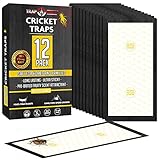
- The solution to get rid of crickets in house - Our cricket sticky traps for bugs work for House Crickets, Filed Crickets, Camel Crickets, Cave Crickets and Spider Crickets.
- Easy To Use Bug Traps - Simply peel back the paper exposing the glue and place the trap on the floor, glue side up and against the wall.
- Non-Toxic - Our insect traps sticky indoor are safe, poison free, non-toxic and insecticide-free. Ideal to keep your family safe from unwanted pests.
- 12 Pre-Baited Large Glue Traps - The bug traps sticky indoor contain fruity scented attractant built into the glue
- The Trap A Pest Promise - If for any reason you're not completely satisfied with the sticky bug traps indoor, simply contact us and we'll take care of it.
The practical control hierarchy
| Priority | Method | Best for | Main limitation |
|---|---|---|---|
| 1 | Fine netting or row cover | Small beds and high-value plants | Must be completely sealed and opened for pollination when necessary |
| 2 | Hand removal and scouting | Small infestations and young nymphs | Requires repetition and does not stop immigration from nearby areas |
| 3 | Perimeter and habitat management | Reducing migration pressure | Can displace insects or create new habitat if done carelessly |
| 4 | Biological or botanical products | Situations where nonchemical measures are insufficient | Results, availability, speed, and label permissions vary |
1. Cover valuable crops with fine insect netting or lightweight row cover
Exclusion is generally the most dependable nonchemical tactic because it prevents grasshoppers from reaching the foliage. Utah State University Extension recommends insect netting or lightweight spun-bonded row cover for high-value crops, and University of Maryland Extension describes row covers as an organic pest-management tool that excludes insects while allowing air, sunlight, and water to reach plants.
Choose a lightweight insect-barrier fabric for summer use rather than a heavy frost blanket unless you specifically need frost protection. Support the material over hoops or a simple frame so it does not press against growing foliage. Most importantly, seal every edge with soil, rocks, sandbags, or garden staples. A small opening at ground level can undermine the entire barrier.
The Tool Desk
Outbyte Driver Updater FREEFix the driver behind crashes, sound loss and screen glitchesFind Drivers →Outbyte PC Repair FREEClear out junk files and repair common Windows errorsFree Scan →Remove grasshoppers already inside the cover before sealing it. For crops that need insect pollination, open or remove the cover when flowers require access, then replace it after pollination. In hot climates, monitor temperature and plant stress under the fabric; lightweight materials and adequate ventilation are important.
Because exclusion is the strongest first move, a floating row cover is often the most useful purchase for a small bed: choose lightweight fabric, seal every edge, and check whether your crop needs pollinators to reach its flowers. Fine insect netting, hoops, and garden staples can serve the same basic strategy when matched to the crop and local weather.
2. Hand-pick or sweep grasshoppers from plants
Grasshoppers are less active in the cool morning and evening, making those times better for physical removal. Utah State University Extension recommends removing older grasshoppers by hand during the early morning or evening and dropping them into soapy water.
For a small garden, inspect plants and the surrounding ground, gently knock insects into a container, and repeat the process frequently. A Handheld insect net can make removal faster, especially when insects are jumping before you can grasp them. Focus on plants showing fresh damage and on the garden edge where grasshoppers are entering.
This method reduces the number of active feeders but does not prevent new adults from arriving from nearby fields, lawns, or weedy areas. It is therefore most effective when combined with crop covers and perimeter scouting.
3. Manage the vegetation immediately around the garden
Grasshoppers often move from grassy, weedy, or unmanaged areas into gardens as surrounding vegetation dries. Mowing or otherwise managing the immediate perimeter can reduce the amount of suitable cover and limit nymph movement across the border. Utah State guidance also describes mowing a wide boundary around open fields as one way to reduce migration of nymphs.
Use this as pressure reduction, not eradication. If you mow an infested strip without first protecting the garden, you may simply push insects into the crop. Cover high-value plants, identify where nymphs are concentrated, and then manage likely migration corridors where practical.
Do not interpret this advice as a reason to remove every patch of grass or wild vegetation. Mowing can displace insects, reduce habitat for beneficial wildlife, and create ecological trade-offs. Concentrate on the garden perimeter and the specific routes grasshoppers use to enter.
Recommended Free Tools
4. Find and manage young nymphs early
Young grasshoppers are less mobile than winged adults and are easier to remove before they disperse into the crop. Scout grassy and weedy edges regularly, especially during periods of warm, dry weather. Short inspections in the early morning and evening can reveal concentrations that are harder to find once the insects mature.
Where feasible, remove nymphs by hand or with a net, and protect the crop before adults become abundant. Early action is particularly important because a garden that appears lightly affected can receive continuing pressure from a nearby nymph concentration.
USDA materials also describe Nosema-based bait as most effective against young nymphal stages, but that product has different limitations from physical removal: it is slow acting, its results vary, and it is not a rescue treatment for plants being rapidly defoliated.
5. Use a watered grass border cautiously
Utah State University Extension recommends a border of grasses around high-value crops, kept well watered, so grasshoppers may concentrate there instead of on the main garden. This is a sacrificial or diversion strategy, not a guaranteed trap crop.
Windows Errors? Fix Them Before They Spread
Repair common Windows errors and clear accumulated junk for a smoother, more stable PC - no reinstall needed.Free scan · no reinstallCrashes, No Sound, or Screen Glitches?
Random freezes, missing sound and display glitches usually trace back to one bad driver. Find and replace yours safely.Free scan · under a minuteA watered border must be monitored. If grasshoppers begin breeding or staging there, the border can increase local pressure rather than reduce it. Inspect it for nymphs, decide in advance how you will manage insects that collect there, and do not allow the border to become an unmanaged refuge immediately beside the crop.
Rank #2

- ✅ OPTIMAL SOLUTION: Keeping your house free of crickets is simple with our professional-grade cricket glue traps. Our traps will capture and kill House Crickets, Filed Crickets, and Camel / Cave / Spider Crickets.
- ✅ HOW THEY WORK: Unlike other chemical-based solutions, our traps contain a timed-release cricket attractant that will attract, trap, and kill all types of crickets to stop the breeding cycle.
- ✅ NON-TOXIC & INSECTICIDE-FREE: Made with an industrial-grade super sticky adhesive that's 100% Non-toxic. Our traps are safe for usage throughout your home.
- ✅ EASY, EFFECTIVE & LONG-LASTING: Just peel and place the trap in your cricket infested areas. Our traps are infused with Molasses and Fruity Scent Attractant, so just sit back and let it do its work. Each trap is 6" x 12" in size to ensure a high capture rate. Our traps are effective for up to one full year.
- ✅ WHAT YOU GET: Each box comes with 8 pre-baited extra-large glue traps that are guaranteed to work. If you are not completely satisfied, simply contact us for an exchange or a full refund. No questions asked. EPA Est. No. 93048-CHN-1
This approach makes the most sense when the border can be separated from the valuable plants and incorporated into a broader plan that includes netting, scouting, and perimeter management.
6. Consider guinea hens or suitable poultry only where appropriate
Guinea hens feed heavily on grasshoppers, and USDA material discusses confining birds to a greenbelt or perimeter so they can prey on visiting insects without entering the crop. This can be useful on a suitable rural property with the space and infrastructure to manage poultry.
It is not a universal garden remedy. Birds may damage beds, disturb soil, eat seedlings, create sanitation concerns, attract predators, or conflict with neighbors and local regulations. They also require ongoing care. Do not acquire poultry solely to solve a minor or short-lived grasshopper problem. If birds are already part of the property, a managed perimeter strategy may be worth considering.
Do these 3 things before closing this tab:
1Clear out junk files and repair common Windows errors2Fix the driver behind crashes, sound loss and screen glitches3Repair Windows errors before they cause bigger problems7. Encourage natural enemies, but do not expect them to stop a major outbreak
Birds, reptiles, mammals, and predatory arthropods all consume grasshoppers. Maintaining diverse plantings, preserving appropriate habitat, and avoiding unnecessary broad-spectrum insecticides can support these natural enemies.
However, Utah State University Extension cautions that predators alone generally do not reduce grasshoppers enough to prevent damaging numbers during a significant infestation. USDA’s grasshopper integrated pest-management guidance likewise treats birds and wildlife as one component of biological control rather than a guaranteed stand-alone treatment.
Bird feeders, birdhouses, and companion flowers may support a healthier garden ecosystem, but they should not be marketed as a dependable cure. Use them as long-term habitat measures while taking direct steps to protect the crop.
8. Consider insecticidal soap for direct contact control
Some insecticidal soap labels list grasshoppers among the target pests and permit use on edible crops. The important words are some labels: formulations, permitted crops, directions, and restrictions differ. Use only a current product label that specifically lists grasshoppers and the crop or site you intend to treat.
Insecticidal soap is a contact treatment. The spray must directly wet the insect, and thorough coverage matters. It is not a long-lasting barrier, so repeat applications may be necessary when the label allows them. Spray timing, coverage, and the number of new insects entering the garden often determine whether the treatment appears to work.
- Read the entire label before mixing or applying the product.
- Follow the permitted crop, application rate, protective-equipment, re-entry, and harvest instructions.
- Avoid direct spray on bees and other beneficial insects, and follow any pollinator precautions on the label.
- Test plant tolerance as directed, because soap products can injure some foliage, particularly under stressful conditions.
- Keep sprays away from ponds, streams, and other aquatic environments unless the label specifically addresses the use.
- Do not substitute household dish soap for a labeled insecticidal soap product.
Soap-based does not mean harmless, and a product should not be called non-toxic simply because its ingredients sound familiar.
9. Use neem or azadirachtin only as a supplemental botanical option
USDA Agricultural Research Service materials identify neem or azadirachtin among organic control options, but older USDA grasshopper guidance cautions that neem has shown limited success as an antifeedant against some U.S. grasshopper species. It may be more promising as a growth regulator than as an instant knockdown treatment.
That evidence supports cautious use rather than a promise. A labeled neem or azadirachtin product may be worth considering for young grasshoppers or as one part of an integrated program, but it should not be treated as a dependable emergency cure. Results can differ by grasshopper species, product formulation, insect age, weather, and application timing.
Check the current label for the target pest, crop or site, application interval, harvest restrictions, and precautions around pollinators and aquatic organisms. Never replace a registered product label with a homemade neem-and-soap recipe. A kitchen mixture has no standardized concentration, may injure plants, and is not automatically legal or effective for the crop.
Rank #3

- PRE-BAITED WITH ATTRACTANT FOR TARGETED RESULTS: Our extra-large cricket traps come pre-baited with a powerful natural attractant to draw in common crickets, including house crickets, field crickets, camel crickets, cave crickets, and spider crickets. These pre-baited glue boards act as effective bug catchers, quietly trapping pests along their active trails. For optimal results, place each cricket killer on suspected bug travel paths and avoid frequent touching or moving the traps.
- EXTRA-STRONG ADHESIVE - STAYS STUCK: Equipped with extra strong heavy-duty adhesive, these cricket traps lock pests tightly once they step on the surface. No escaping crickets, bugs or crawling insects-this reliable cricket trap holds critters firmly, greatly boosting your indoor pest control effect.
- FAMILY & PET FRIENDLY - NO HARSH CHEMICALS: Totally pesticide-free and non-toxic formula makes our cricket traps safe for families, kids, dogs and cats. No harsh chemical fumes or dangerous poisons around your living space; this gentle bug catcher delivers efficient cricket killer power while staying pet & family friendly for long-term use.
- VERSATILE GLUE TRAPS FOR INDOORS & OUTDOORS USE: Our cricket sticky traps work seamlessly indoors & outdoors to eliminate cricket infestations. Use these cricket pads in kitchens, basements, garages, patios, sheds and warehouses. Whether you need cricket traps indoor for home spaces or outdoor bug catcher for yards, this cricket killer fits every pest-prone area of your property.
- EASY TO USE - PLACE AND FORGET: Super easy to set up and use for everyone! Each board requires no extra bait, sprays or complicated assembly. Just peel and place these pre-baited cricket pads anywhere bugs linger. The oversized surface provides wider coverage to catch more crickets at once, making it your go-to low-effort bug catcher and cricket killer for hassle-free pest management.
10. Consider Nosema locustae bait only when it genuinely fits
Nosema locustae, also called Paranosema locustae in some USDA materials, is a grasshopper-specific microbial control delivered in bait. It is most useful against young nymphs and is generally better suited to broad-area or long-term suppression than to rescuing a vegetable bed that is being stripped today.
The treatment is slow acting, and reported efficacy is variable. APHIS notes that the lack of rapid mortality limits its usefulness as a sole treatment. It is not a substitute for covering high-value plants or removing active grasshoppers.
Availability is another material concern. USDA-linked information and Extension responses have reported that Nolo Bait may be out of stock or unavailable for future seasons, with shelf-life concerns also noted. Before relying on it, verify current stock, the exact product label, target species, permitted application site, storage instructions, and shelf life. If the product is unavailable or the infestation requires immediate protection, use exclusion and direct removal instead.
Free tools Windows power users keep installed
One-click scans. No signup required.
Household remedies that should not be overpromised
Coffee grounds, vinegar, dish soap, chili sprays, essential oils, companion flowers, and homemade garlic mixtures are often suggested online. They should not be presented as proven universal grasshopper controls without evidence for the specific formulation, species, concentration, crop, and application method.
Garlic and other botanical extracts have research literature, but results depend heavily on formulation and conditions. Research on a particular extract is not proof that a kitchen recipe will work in every garden. Vinegar can injure foliage and soil organisms, undiluted or improvised soap mixtures can burn plants, and essential oils can harm insects that the gardener wants to preserve. If you use a pesticide, use a legally appropriate, current label—not a recipe assembled from household ingredients.
A low-impact action plan
Today
- Confirm that grasshoppers or nymphs are causing the damage.
- Inspect the perimeter, weedy strips, grassy edges, and nearby unmanaged vegetation.
- Cover the most valuable crops with fine netting or lightweight row cover, sealing every edge.
- Remove visible grasshoppers during the cool morning or evening and place them in soapy water.
Over the next week
- Scout the garden and its edges at least once in the morning and once in the evening during active pressure.
- Look for young nymphs and manage them before they become winged adults.
- After protecting the crop, mow or manage the immediate migration corridor where practical.
- If using a watered grass border, monitor it closely and manage insects that concentrate there.
- Preserve useful predator habitat while avoiding unnecessary broad-spectrum insecticides.
If damage remains unacceptable
- Choose only a product whose current label lists grasshoppers and your crop or application site.
- Compare the speed, coverage, repeat-application requirements, and ecological precautions of the available option.
- Use insecticidal soap only for direct contact, and consider neem or azadirachtin as supplemental rather than instant control.
- Consider Nosema bait only when young nymphs, broad-area suppression, product availability, and the slow time frame all fit the situation.
- Ask your county or state Cooperative Extension office about local species, outbreak conditions, and registered options.
When to get local help
Contact a local Extension office when grasshoppers are coming from a large field or vacant lot, when several plantings are being defoliated, or when you cannot distinguish nymphs from another pest. Pressure differs substantially by region and season. APHIS identifies major grasshopper outbreak concerns particularly in the western United States, and drought and warm, dry conditions can intensify problems.
Local advice is also important before treating crops near water, livestock areas, pollinator habitat, or neighboring properties. A product that is allowed for one crop, state, or site may not be allowed for another.
What’s actually slowing this PC down?
Pick the symptom - the matching free tool is one click away.
Source basis: The recommendations above reflect guidance and research summarized by Utah State University Extension, University of Maryland Extension, USDA, USDA Agricultural Research Service, USDA APHIS, the EPA pesticide-label framework, and Extension reports on biological-control product availability. Always defer to the current product label and local Extension guidance.
Frequently Asked Questions
Are coffee grounds, vinegar, or chili spray reliable grasshopper controls?
No universal household recipe is well supported for every grasshopper species and garden. These materials can injure plants or beneficial organisms, and homemade pesticide mixtures may not be legally appropriate. Start with crop covers, physical removal, early scouting, and perimeter management.
Is insecticidal soap safe because it is natural?
Not automatically. Insecticidal soap is a direct-contact pesticide, and some labels list grasshoppers on specific crops. Use only a current label that permits the target pest and crop, and follow its plant-safety, pollinator, aquatic, harvest, and exposure precautions.
Will floating row cover work during the summer?
Lightweight insect-barrier fabric can protect crops while allowing air, sunlight, and water through, but monitor heat and ventilation. Seal the edges completely and open or remove the cover when insect-pollinated crops need pollinator access.
How quickly does Nosema locustae bait kill grasshoppers?
It is slow acting and is generally intended for suppression of young nymphs over a broader area or longer period, not rapid rescue of a heavily damaged garden. Availability, shelf life, target species, and label permissions should be verified before purchase or use.
The Bottom Line
For most home gardens, start with exclusion: cover valuable plants with sealed fine netting or lightweight row cover, remove grasshoppers during cool hours, and scout grassy borders for young nymphs. Manage nearby vegetation without simply driving insects into the crop, and treat birds, poultry, soap, neem, and Nosema as situation-dependent tools rather than guaranteed cures. If a product is necessary, follow the current label and consult local Extension guidance—natural does not mean risk-free.
Quick Recap
Product prices and availability are accurate as of the date/time indicated and are subject to change. Any price and availability information displayed on Amazon at the time of purchase will apply.




