Do these 3 things before closing this tab:
1Clear out junk files and repair common Windows errors2Fix the driver behind crashes, sound loss and screen glitches3Repair Windows errors before they cause bigger problemsThe most effective “chemical-free” mosquito strategies do not smell like anything and do not kill mosquitoes. They keep mosquitoes out, place a physical barrier between the insect and your skin, disrupt flight, reduce exposure, or remove the water where mosquitoes breed.
In this article, chemical-free means without applied insecticides, synthetic skin repellents, essential oils, or other pesticidal products. That is a practical label, not a literal scientific one: air, fabric, water, and electricity are all matter or involve chemical processes.
As an Amazon Associate I earn from qualifying purchases.
Best choices by situation:
- Indoors: tight screens, closed doors, and air conditioning.
- Sleeping: an untreated mosquito net, correctly fitted and tucked, with a fan as an adjunct.
- Outdoors: a screen enclosure or directed fan combined with loose, covering clothing.
- For babies and toddlers: properly fitted netting over a stroller, carrier, crib, or play area.
- For fewer mosquitoes around a property: empty and scrub water-holding containers weekly, then cover unavoidable water and reduce nearby resting habitat.
No method guarantees zero bites. Mosquito species differ, mosquitoes bite during both daytime and nighttime, and protection that works in a closed bedroom may be inadequate on an open patio.
The evidence-based ranking
There are not 10 equally effective passive “natural repellents.” The strongest options are physical exclusion, physical netting, covering clothing, and source reduction. Air conditioning is also highly useful indoors. Fans, activity timing, breezy locations, head nets, and yard maintenance are valuable additions, but they are more dependent on the setting and on consistent use.
#1 Best Overall

- SOFT AND DURABLE: The hexagonal honeycomb mesh design makes the South to East mosquito net for head tear-resistant and barrier properties better, which can also give you a safe and peaceful outdoor experience.(TIP: You will receive 1 package that includes 2 head nets.)
- SIMPLY THE BEST MOSQUITO HEAD NET: This mosquito net is bigger than other nets. It has the finest mesh, the only head net with 620 holes per sq inch. The bug net also provides fresh air and offers great visibility and is made of premium materials.
- PERFECT FIT: The size (top C 25” x height 26" x bottom C 39”) fits comfortably over most headwear (Hat NOT included - we assume you like wearing your own favorite hat or cap underneath). This bug net for head is extra-long, and the shape is the best for protection, comfort, and ease of use.
- NATURAL WAY: The fly net for head serves as a natural protection. Not treated with chemicals. There is proper air circulation. Perfect for hiking, camping, climbing, traveling, and so on, to keep you safe!
- BUY WITH CONFIDENCE : 100% money back or replacement. If you have any question with our mosquito net for head, please contact us. We will help you within 24 hours.
| Relative confidence | Methods | What they actually do |
|---|---|---|
| Strongest | Screens; physical mosquito nets; covering clothing; removing breeding containers | Blocks access or reduces the number of mosquitoes produced nearby |
| Strong to moderate | Air conditioning; enclosed sleeping and outdoor areas | Creates a less accessible, more controlled environment |
| Promising but context-dependent | Fans and directed airflow | Interferes with flight and host-finding |
| Useful adjuncts | Timing, breezy locations, head and ankle coverage, vegetation management | Reduces exposure or removes favorable resting places |
| Do not treat as primary protection | Plants, ultrasonic devices, UV zappers, dryer sheets, vitamin B1, decorative candles, unverified wearables | Not reliably demonstrated to prevent bites in ordinary use |
Housing improvements have meaningful evidence behind them. A systematic review of randomized housing studies found lower indoor mosquito density after housing improvements, with a pooled odds ratio of 0.35 for vector density. The studies were primarily conducted in malaria- and dengue-endemic regions, so that number should not be converted into a promised percentage reduction for a suburban home or construction site. A separate Cochrane review found that non-insecticidal house screening may reduce malaria infection and illness, although much of the evidence came from African settings. See the housing-intervention review and the house-screening review.
1. Screen windows, doors, vents, and other openings
What it does
Screening prevents mosquitoes from entering a room in the first place. It is usually the best chemical-free improvement for a home, site office, workshop, cabin, or other enclosed space.
How to use it
- Install tight-fitting screens on windows and doors.
- Repair tears, loose edges, and gaps around the frame.
- Keep screen doors closed instead of propping them open.
- Use a spring-loaded or self-closing screen door if people regularly forget to close it.
- Inspect vents, eaves, pet doors, garage doors, and gaps around plumbing, electrical, or other utility penetrations.
- Check temporary office trailers and screened shelters for openings around window units and doors.
CDC specifically recommends installing or repairing window and door screens and keeping doors closed; its home mosquito-control guidance is a useful inspection checklist.
Where it works best
Screens are most useful anywhere people spend time indoors, especially bedrooms and living spaces during evening mosquito activity. They do not protect someone sitting outside, and they do not remove mosquitoes already inside a building.
Why it fails
- A person opens the door and mosquitoes enter before it closes.
- A small tear or unsealed screen edge provides the entry point.
- Aedes mosquitoes may already be indoors, particularly where indoor containers hold water.
- A screened window is irrelevant if people are being bitten on an unscreened porch or while walking between buildings.
- The source may be a less obvious opening, such as a vent, eave, pet door, or gap around a portable air conditioner.
Best combination: screens plus closed doors, air conditioning, and a fan across the body when mosquitoes remain indoors.
2. Use air conditioning and keep indoor spaces enclosed
What it does
Air conditioning reduces mosquito-human contact mainly by allowing a room to remain closed. It is not a chemical repellent and does not necessarily kill mosquitoes. Depending on the system, cooler and less favorable indoor conditions may provide an additional disadvantage to mosquitoes, but there is no single indoor temperature that reliably repels every species.
How to use it
- Use air conditioning instead of open windows when practical.
- Keep doors and windows closed while the system is running.
- Seal gaps around window units and portable air conditioners.
- Where air conditioning is unavailable, use intact screens and enclosed ventilation.
Both CDC guidance and the World Health Organization’s vector-borne disease guidance identify air conditioning and screened rooms as ways to reduce mosquito-human contact.
What’s actually slowing this PC down?
Pick the symptom - the matching free tool is one click away.
Where it works best
Air conditioning is particularly useful in bedrooms, living spaces, site offices, and homes in areas with night-biting Culex or Anopheles mosquitoes. It is also valuable when occupants do not want topical products.
Why it fails
A window unit or portable unit can leave a large opening if it is poorly fitted. Doors left open defeat the enclosure. Air conditioning also cannot protect people once they leave the room.
Best combination: a closed, screened room with air conditioning, plus an untreated bed net or fan if mosquitoes are still present.
3. Sleep under an untreated physical mosquito net
What it does
An untreated net creates a barrier between a sleeping person and mosquitoes. It is one of the most dependable ways to avoid bites without applying an insecticide or repellent to skin or fabric.
Free tools Windows power users keep installed
One-click scans. No signup required.
How to use it correctly
- Choose a net large enough to hang around the entire sleeping area and tuck securely beneath the mattress.
- Inspect it for holes before use.
- Keep the net tucked throughout the night.
- Hang it so the sleeper does not press against the mesh; a mosquito may bite through netting that is held against skin.
- Close the opening immediately after entering or leaving.
- Keep the net away from candles, cigarettes, heaters, and open flames.
CDC describes a compact, white, rectangular net with approximately 156 holes per square inch and enough material to tuck under a mattress as a practical choice. See its guidance on selecting and using mosquito nets.
An untreated net fits the strict definition used here. Permethrin-treated nets generally provide an additional insecticidal effect, but permethrin is an insecticide and therefore falls outside a no-insecticide plan.
Rank #2

- KEEPS THE INSECTS OUT OF YOUR EYES NOSE EARS FACE NECK AND SHOULDERS!!:The black fly head net over hat can keep your face,neck,head,ears and eyes off ,during the hiking,fishing,walking and the other outdoor activities,you can enjoy your outdoor activities all the way when you wear it
- EXTRA FINE SOFT COMFORTABLE LEIGHTWEIGHT BLACK MESH:Firstly,using the soft,non-scratchy,fine,and lightweight knitted mesh,and you can feel very comfortable;Secondly,you can see through easily the black color net and do not glare in the sunlight than the other colors.Thirdly,keep you cool easily through the small and enough holes of the mesh in summer
- EXTRA BIG LARGE AND LONG PRODUCT SIZE:The solid fabric size: 14cm*14cm (top cover);the bottom hem size: 100cm circumference;the mesh body size: 50cm long enough can reach the neck and shoulder protection maximum,even tuck into the collar for the shirt inside
- DESIGNED THE PORTABLE AND PACKABLE POUCH AND ADJUSTABLE DRAWSTRING:You can reach in and pull the net out all the way, eventually everting the pouch, which forms a solid fabric circle at the top in order to be packable and portable for you without use; you can get the best size for the bottom hem for you by means of the adjustable drawstring and ensure the insects not to bite you
- WIDE USE:Special for fishing, hiking, traveling and walking in the warmer seasons,and enjoy your outdoor activities. and suggest that you can get the best effect of protection if you wear it matching the any style hat (wide or broad brim is the best)during the outdoor activities
Where it works best
Use a bed net in a room without reliable screens or air conditioning, in tents, in cabins, or during travel. It can also be a useful backup in a screened room.
Why it fails
- The bottom is not tucked.
- The net has a hole or a gap around the head.
- The sleeper touches the net.
- The net is opened repeatedly or left partly open.
- Outdoor netting does not extend around the full sleeping platform.
For infants, use a correctly fitted crib, stroller, or carrier net rather than loose, sagging material. Never allow netting to become a suffocation or entanglement hazard.
4. Use mosquito netting around strollers, cribs, tents, and outdoor seating
What it does
This is the awake-time version of a bed net. It protects people who are resting, napping, camping, or eating outdoors, including during the daytime when Aedes mosquitoes may be active.
How to use it
- Cover strollers, infant carriers, cribs, and play yards with properly fitted mosquito netting.
- For camping, use a tent with intact insect mesh or a fully enclosed freestanding screen shelter.
- For outdoor meals, choose a screen room that encloses the sides, not merely a roof or decorative canopy.
- Inspect zippers, corners, floor seams, and entry flaps.
- Keep the mesh from resting directly against exposed skin.
CDC recommends netting over strollers and baby carriers and provides additional travel guidance in its mosquito-bite-prevention infographic.
Why it fails
Large openings, loose netting, repeated entry and exit, and roof-only canopies create false confidence. A net that touches a child’s skin may permit a bite through the mesh. Inspect the enclosure every time it is assembled, especially after transport or storage.
Best combination: intact enclosure netting, covering clothing, and a fan inside a large outdoor seating area.
Quick wins for a faster PC:
Scan for outdated or missing drivers - takes under a minuteDriver Scan →Repair Windows errors before they cause bigger problemsFix Now →5. Run a fan across the body or sleeping area
What it does
Directed airflow can make it harder for mosquitoes to fly and land. It may also disperse the carbon dioxide, heat, humidity, and odor plume that mosquitoes use to locate a host.
How to use it
- Aim airflow across exposed ankles, legs, or the upper body rather than merely pointing a fan toward a wall.
- Use a broad airflow pattern that reaches the body.
- For sleeping, position the fan so air reaches the bed without creating a tipping, electrical, or fire hazard.
- For patios or work areas, use a larger fan or multiple fans when the seating area is broad.
- Keep clothing and loose materials away from the blades and electrical connections.
What the evidence shows
In a controlled experimental-house study in rural Gambia, a ceiling fan reduced entry of Anopheles gambiae mosquitoes by 91% compared with a control house. The fan produced average air velocity of about 0.36 m/s around sleepers beneath a bed net. However, the study involved two experimental houses, four adult sleepers, and one fan model. Its result should not be presented as a universal 91% reduction outdoors or against every mosquito species. Read the full fan study or its published DOI record.
Why it fails
- The airflow is too weak or does not reach the skin.
- A person moves outside the air stream.
- Outdoor wind disperses the fan’s effect.
- Furniture, walls, screens, or other obstructions create sheltered pockets.
- The species or setting differs from the indoor Gambian experiment.
Best combination: use airflow as an adjunct to screens, a bed net, or covering clothing—not as a guaranteed replacement for a barrier.
6. Wear loose, covering, tightly woven clothing
What it does
Clothing reduces the amount of skin a mosquito can reach. Loose fabric is preferable because tight clothing can press against the skin and allow a mosquito to feed through it or reach skin at the edges.
Crashes, No Sound, or Screen Glitches?
Random freezes, missing sound and display glitches usually trace back to one bad driver. Find and replace yours safely.Free scan · under a minuteWindows Errors? Fix Them Before They Spread
Repair common Windows errors and clear accumulated junk for a smoother, more stable PC - no reinstall needed.Free scan · no reinstallWhat to wear
- Long sleeves and long pants.
- Loose rather than skin-tight garments.
- Socks and closed shoes instead of sandals.
- A shirt that covers the waist and lower back.
- Trousers long enough to cover the ankles.
- For outdoor work, clothing that does not leave wrists, waist, and ankles exposed as the wearer bends, kneels, or reaches.
CDC recommends loose-fitting long-sleeved shirts and pants. The CDC Yellow Book additionally recommends hats, boots, closed shoes, tucking shirts into pants, and tucking pants into socks where appropriate.
Fabric matters
“Long sleeve” does not mean mosquito-proof. Thin, stretchy, tight, or loosely knitted fabric may allow bites. A 2025 laboratory study screened 88 fabrics and identified 53 that blocked blood-feeding in tests involving three mosquito genera. That demonstrates that fabric structure matters; it does not mean every commercial shirt is bite-proof. See the 2025 fabric study and related mosquito-textile research.
Best combination: loose, substantial clothing plus covered ankles, hands, neck, and head when mosquito pressure is high.
Rank #3

- FOLDABLE AND PORTABLE MOSQUITO TENT: This pop-up folding bed net is easy to carry and store. Lightweight and takes up very little space. No need for assembly, when you use , it will be easy to open and can be compactly folded up, making it convenient for you to operate.
- HIGH QUALITY MATERIALS AND LARGE SIZE: The mosquito netting is made of sturdy and high toughness glass fiber rods and high-density netting material, with excellent workmanship and durability. bed canopy size is 78.7 inches long, 31.5 inches wide, and 23 inches high. The large-sized mosquito net provides spacious space and is suitable for various bed arrangements.
- BREATHABLE DESIGN: The side and bottom of the mosquito net are composed of small high-density mesh fabric, which allows good airflow to enter and provides excellent breathability. Immerse yourself completely in the air, enjoy fresh air, and create a comfortable night.
- EFFICIENT MOSQUITO FOR PREVENTING MOSQUITOES: Unlike mesh curtains, this mosquito net is equipped with a double-sided zipper that can smoothly open and close along the side and a length of the bed tent. The can effectively prevent mosquito and other very small flying insects or animals from entering, protecting you from mosquito infestation and bringing peace to your sleep.
- WIDELY APPLICABLE: The mosquito netting for patio is very suitable for outdoor athletes, beaches, starry nights,or camping.
7. Protect the gaps: head, neck, hands, ankles, and feet
What it does
Many people cover their torso but leave the areas mosquitoes can reach most easily. Closing those gaps can make the difference between a mostly effective outfit and one that still results in bites.
How to use it
- Wear a loose mosquito head net in high-pressure areas.
- Choose a head net that seals around the neck without pressing against the face or neck.
- Wear socks rather than low-cut footwear.
- Tuck pant cuffs into socks or boots.
- Use gloves or long cuffs when outdoor work leaves hands exposed.
- Check the neck, wrists, elbows, waist, ankles, and tops of the feet after dressing.
CDC recommends hats, boots, tucked clothing, and closed shoes as additional physical coverage. Its guidance on personal protection from mosquitoes and other arthropods is especially relevant for outdoor workers and travelers.
Why it fails
A head net with a loose neck opening, thin socks held tightly against the skin, pants that ride up while sitting, and sandals that expose the ankles all leave predictable entry points. Make the seal comfortable enough that it stays in place during movement.
8. Match outdoor activity to local mosquito activity
What it does
Avoiding the times and places of highest mosquito activity reduces exposure without applying a product. It is useful, but it is not a complete protection strategy.
General patterns
- Aedes aegypti and Aedes albopictus often peak around dawn and dusk and can bite during the day.
- Culex quinquefasciatus is typically more active from dusk to dawn, often with a late-evening peak.
- Anopheles mosquitoes generally feed at night or in the evening, although behavior varies by species and region.
For species-specific information, consult the CDC Yellow Book, CDC’s overview of mosquito behavior and disease, and local health-department alerts.
Recommended Free Tools
Practical use
- Where day-biting Aedes mosquitoes are common, avoid unprotected outdoor time around dawn, dusk, and daytime activity peaks.
- Where Culex or Anopheles mosquitoes dominate, maintain continuous evening and nighttime protection.
- Choose open, breezy locations rather than shaded, humid vegetation when possible.
- Ask the local health department which species and diseases are active in the area.
Do not assume that mosquitoes only come out at night. A daytime bite can still come from a disease-carrying species, and local populations may not follow textbook patterns.
9. Empty, remove, and scrub standing-water containers
What it does
Source reduction decreases future mosquito production rather than instantly repelling adult mosquitoes. It is one of the most useful ways to reduce the number of mosquitoes emerging around a home, worksite, or jobsite.
Use a weekly property inspection
- Walk the entire property, including balconies, garages, sheds, gutters, storage areas, and spaces behind furniture.
- Empty buckets, toys, tires, plant saucers, tarps, trash lids, birdbaths, pet dishes, unused pools, and other water-holding items.
- Scrub the container walls before putting the item away or refilling it.
- Turn containers upside down, store them under cover, or dispose of them.
- Dispose of the water where it cannot immediately collect again.
- Repeat at least weekly and after heavy rain.
Scrubbing is important for Aedes mosquitoes. Their eggs adhere to container walls above the former waterline and can survive drying for up to eight months. Pouring out the water alone may leave eggs behind to hatch when the container is refilled. Under suitable conditions, Aedes can develop from egg to adult in approximately seven to 10 days. CDC explains the Aedes life cycle and recommends weekly emptying and scrubbing in its home-control guidance.
Construction and property edge cases
On a construction site, inspect wheelbarrows, buckets, equipment covers, discarded containers, open pipe or material storage, temporary drainage features, and tarps after rain. At home, do not overlook bottle caps, clogged gutters, plant saucers, folded pool covers, or small toys. Water indoors—in vases, saucers, drains, or appliance trays—can also support mosquitoes.
The Tool Desk
Outbyte Driver Updater FREEScan for outdated or missing drivers - takes under a minuteDriver Scan →Outbyte PC Repair FREERepair Windows errors before they cause bigger problemsFix Now →Do not create a DIY “mosquito trap” bucket unless it is specifically designed, maintained, and prevented from producing adult mosquitoes. A poorly maintained trap can become a breeding container.
10. Manage unavoidable water and nearby resting habitat
Make necessary water inaccessible
- Cover rain barrels, cisterns, and storage containers tightly.
- Where a container cannot be sealed, use mesh smaller than an adult mosquito.
- Keep gutters clear and make sure they drain properly.
- Drain tarps, boat covers, toys, and pool covers.
- Maintain swimming pools according to local health guidance and drain unused pools when possible.
- For water-holding tree holes, use a method appropriate for the tree and local guidance. CDC specifically warns against filling tree holes with concrete, gravel, or sand and against drilling drainage holes; see its tree-hole guidance.
Reduce nearby resting habitat
- Mow grass and cut back weeds close to the home, entrances, and seating areas.
- Reduce dense, shaded, humid vegetation immediately beside doors and outdoor work or eating areas.
- Keep firewood, equipment, and clutter from creating cool hiding places next to the house.
Culex mosquitoes commonly rest in cool, dark, humid grass, shrubs, and thick vegetation. CDC’s Culex overview and yard-control recommendations explain why these changes can help.
Yard maintenance does not create a mosquito-proof property. Mosquitoes may arrive from a neighboring yard, storm drain, abandoned lot, wetland, or other area outside your control.
Choose a plan for your situation
| Situation | Best chemical-free combination | Main trade-off |
|---|---|---|
| Inside a home or site office | Tight screens, closed doors, air conditioning, and a fan if needed | Requires an intact building envelope, regular inspection, and electricity for cooling or airflow |
| Sleeping without insecticide | Untreated, tucked mosquito net plus a fan and screened or enclosed room | The net must remain closed and off the skin all night |
| Baby or toddler | Fitted stroller, crib, carrier, or play-yard net plus a screened or air-conditioned room | Requires careful fit, continuous supervision, and no loose or sagging material |
| Patio, deck, or barbecue | Large fan directed across people, loose covering clothing, and a fully enclosed screen shelter | Fans cover limited areas and can be noisy; roof-only canopies are not mosquito-proof |
| Camping | Fully enclosed tent or screen shelter, covering clothing, and a head net when necessary | Every zipper and opening must be closed immediately |
| High Aedes activity | Daytime physical barriers, screens, head and ankle coverage, and aggressive source reduction | Avoiding nighttime activity alone is insufficient |
| High Culex or Anopheles activity | Screens, air conditioning, a bed net, fan, and evening/night coverage | Nighttime protection must be continuous |
| Yard-wide nuisance | Remove and scrub containers, cover unavoidable water, and manage vegetation | Mosquitoes may breed or rest beyond the property |
| Disease-risk travel | Physical barriers plus destination-specific medical advice and, when appropriate, an EPA-registered repellent | Nonchemical methods alone may not provide adequate risk reduction |
What not to waste money on
Potted “mosquito-repellent” plants
A plant sitting beside a patio does not release enough repellent compound to protect a person. The plant’s extracted or crushed oils may have repellent properties, but that is a different, chemically active use. Iowa State Extension states that plants placed around a patio do not affect mosquitoes; see its explanation of mosquito-repellent plants. Use these plants as landscaping, not as your primary bite-prevention system.
Rank #4
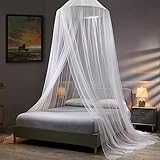
- High Quality: The dome bed canopy is made of 100% polyester, soft and light.Fine mesh(300 holes per inch2) protect you even against tiny mosquitoes,keeping you a peaceful and relaxing night's sleep.
- Easy Installation: Just take seconds to hang the hoop and tether from the ceiling,adjust the mosquito net.No assembly skills needed, for home and travel.It's easy to move from room to room.
- Foldable Design: Height 8.2ft,Circumference of Bottom 41ft,the stainless steel circular ring ensures durable performance,package with storage bag,easy cleaning and storage.
- Beautiful Decoration: The bed canopy make your bedroom or campsite more romantic and elegant, you can use LED light to decorate the canopy bed curtains,enhancing your bedroom and homes décor,create a warm and romantic life atmosphere for you.
- Package Include: You don’t need to worry about mosquito net accessories,the package include:1 mosquito net,1 hanging hook,40 inch hanging tether .Perfect for both indoor or outdoor uses.
Citronella candles
Citronella oil can show repellent activity in some formulations, but a candle produces a small and variable plume. Controlled research has been mixed, and consumer testing has found many candle and wearable products ineffective. A candle placed beside one person should not be treated as reliable protection. See the citronella candle field study and the controlled-study review. Candles also introduce an avoidable fire hazard around tents, netting, dry construction materials, and children.
Ultrasonic and electronic sound devices
A Cochrane review found no evidence that electronic mosquito repellents prevent bites or malaria. EPA states that sound-wave devices are not EPA-registered repellents and that safety or effectiveness data are unavailable. See the Cochrane review and EPA’s explanation of insect repellents.
UV bug zappers
UV zappers attract many non-target insects and have not been shown in controlled studies to reduce outdoor mosquito biting. Extension guidance from Colorado State University and the University of Kentucky advises against treating them as mosquito-control devices.
Essential oils and other unverified wearables
Essential oils are not chemical-free: they contain biologically active chemicals and can cause irritation, allergy, photosensitivity, or toxicity if misused. EPA says many unregistered minimum-risk repellents have not been evaluated for effectiveness, and CDC says the effectiveness of non-EPA-registered repellents is unknown. Bracelets, patches, dryer sheets, and vitamin B1 should not replace a physical barrier or a product supported by public-health guidance.
The Tool Desk
Outbyte Driver Updater FREEScan for outdated or missing drivers - takes under a minuteDriver Scan →Outbyte PC Repair FREERepair Windows errors before they cause bigger problemsFix Now →When chemical-free protection is not enough
For ordinary nuisance mosquitoes, a well-designed combination of barriers, clothing, airflow, timing, and source reduction may be sufficient. The standard changes when malaria, dengue, Zika, chikungunya, West Nile virus, or another mosquito-borne disease is present or possible.
CDC recommends EPA-registered repellents as an important additional layer, especially for travel to disease-risk areas. Nonchemical measures can reduce exposure, but this article should not be used as a substitute for destination-specific travel advice, malaria prevention medication when prescribed, outbreak guidance, or medical care. Start with CDC’s mosquito prevention guidance and the CDC Yellow Book.
Troubleshooting: why the method seems not to work
“I emptied the water, but mosquitoes came back.”
For Aedes, eggs may remain attached above the waterline and survive drying. Empty the container, scrub its walls, and store it where it cannot collect water. Check again after rain and inspect neighboring or less obvious containers.
Quick wins for a faster PC:
Repair Windows errors before they cause bigger problemsFix Now →Scan for outdated or missing drivers - takes under a minuteDriver Scan →Clear out junk files and repair common Windows errorsFree Scan →“I have screens, but I still get bitten indoors.”
Look for a door opened before the screen closes, a torn or poorly sealed screen, gaps around a portable air conditioner, or mosquitoes already inside. Check vases, plant saucers, drains, appliance trays, and other indoor water sources. Also consider whether the bite happened outdoors and the skin reaction was noticed later, or whether another insect was mistaken for a mosquito.
“My clothing covers me, but I still get bites.”
Check whether the fabric is thin, stretchy, loosely knitted, or pressed tightly against the skin. Inspect the ankles, wrists, neck, waist, and feet. Pants can ride up when sitting or working, and mosquitoes may enter through loose cuffs.
“The fan worked yesterday but not today.”
Confirm that airflow reaches the body rather than stopping at furniture or a wall. Check whether the person moved out of the airflow, whether outdoor wind dispersed it, or whether the species and setting changed. The 91% result came from a specific indoor experimental-house study in Gambia, not from every patio or outdoor work area.
“There is no standing water in my yard.”
Inspect clogged gutters, tree holes, storm drains, neighboring properties, wetlands, tarps, toys, pool covers, and tiny containers. Water indoors can also support mosquitoes. If the source is outside your property, focus on personal barriers and ask the local health department about community control.
“I was bitten during the day, so it cannot be a disease-carrying mosquito.”
That is incorrect. Aedes mosquitoes can bite during the day and night. Where mosquito-borne disease is a concern, use protection at all times and follow current public-health guidance; see CDC information on dengue transmission and vector-borne disease prevention.
Best Value

- Lightweight and breathable polyester mesh: Designed for portability and airflow, this fine mesh netting keeps insects out while ensuring comfort—ideal for camping, picnics, and backyard lounging
- Effective insect protection (180 holes/sq. in.): Provides a reliable barrier against mosquitoes, gnats, and other small bugs, perfect for outdoor adventures or indoor use
- Reusable and washable design: Easy to clean and maintain, this mosquito net offers long-term value for frequent campers, travelers, or anyone needing consistent bug protection
- Versatile indoor/outdoor use: Great for covering sleeping bags, cots, beds, or hammocks, and can also be used to patch torn window or door screens in a pinch
- Compact and convenient (48" x 72"): Packs easily into backpacks or travel kits without taking up space—ideal for minimalist packing and on-the-go insect defense
A practical no-insecticide checklist
- Seal the building: repair screens, close doors, and inspect vents and utility gaps.
- Control the bedroom: use air conditioning where possible or install a correctly tucked untreated net.
- Cover the body: choose loose, substantial clothing, socks, closed shoes, and head or neck coverage when needed.
- Add airflow: aim a fan across the people, not merely into the room.
- Control exposure: avoid local peak periods and shaded, humid resting areas when practical.
- Inspect water weekly: empty and scrub every container, including small items and jobsite equipment.
- Cover what cannot be emptied: seal rain barrels, cisterns, and storage containers with tight covers or mosquito-excluding mesh.
- Escalate for disease risk: check current local or destination-specific health advice rather than assuming physical measures alone are sufficient.
Frequently Asked Questions
Do mosquito-repellent plants actually work?
A potted plant beside a patio is not dependable mosquito protection. Its extracted or crushed oils may have repellent properties, but the plant itself does not release a tested protective dose around people. Use plants as landscaping, not as a substitute for screens, netting, clothing, or source reduction.
Does a fan really keep mosquitoes away?
Directed airflow can interfere with mosquito flight, landing, and host-finding. One controlled rural-Gambia study found a 91% reduction in entry by a particular malaria mosquito under specific indoor conditions, but that result is not a universal outdoor percentage. Aim the fan across the body and combine it with a physical barrier.
Can mosquitoes bite through clothes?
Yes. Thin, stretchy, tight, or loosely knitted fabrics may allow bites, especially when pressed against the skin. Wear loose clothing that covers the torso, wrists, ankles, and feet, and use head or neck coverage when pressure is high.
Does air conditioning stop mosquitoes?
It reduces contact mainly by allowing windows and doors to remain closed. It does not necessarily kill or chemically repel mosquitoes. Seal gaps around window and portable units, and use screens or a net as backup.
How often should standing water be removed?
Inspect at least weekly and after heavy rain. Emptying is not enough for Aedes containers because eggs can adhere above the waterline; scrub the container walls before storing or refilling them.
Do untreated mosquito nets work?
Yes, when the net is intact, fully enclosed, tucked beneath the mattress or sleeping platform, and kept away from the sleeper’s skin. An untreated net provides a physical barrier. Insecticide-treated nets are a different category because they contain an insecticide.
Are citronella candles chemical-free?
No. Citronella oil contains active chemicals, and candle performance is variable. Research has been mixed, so a decorative candle should not be treated as primary protection.
Crashes, No Sound, or Screen Glitches?
Random freezes, missing sound and display glitches usually trace back to one bad driver. Find and replace yours safely.Free scan · under a minutePC Slower Than It Used to Be?
A free scan shows the junk files, broken settings and background clutter dragging Windows down - then fixes them in one click.Free scan · Windows 10 & 11Do mosquitoes bite during the day?
Yes. Aedes mosquitoes commonly bite during daytime as well as around dawn and dusk. Culex and Anopheles species are often more active from evening through night, but behavior varies by species and location.
What if mosquitoes are coming from a neighbor’s property?
Continue controlling water on your own property, but recognize that mosquitoes can come from storm drains, wetlands, neighboring yards, and other areas. Use screens, clothing, netting, and airflow, and contact the local health department if the problem is persistent or disease risk is suspected.
What is the best chemical-free option for babies?
Use properly fitted netting over a stroller, carrier, crib, or play area, together with a screened or air-conditioned room. Inspect the fit, keep the netting off the child’s skin, avoid loose or sagging material, and supervise continuously.
The Bottom Line
The dependable no-insecticide strategy is layered protection: seal rooms with intact screens, use air conditioning or a correctly tucked untreated net for sleep, cover exposed skin and the gaps around ankles and neck, direct a fan across people outdoors, avoid local peak activity when practical, and remove or cover every water-holding container weekly.
Plants, ultrasonic gadgets, bug zappers, dryer sheets, vitamin B1, and decorative candles are not equivalent substitutes. If mosquito-borne disease is a concern, especially during travel, add the measures recommended by current public-health guidance rather than assuming “chemical-free” automatically means sufficient.
Quick Recap
Product prices and availability are accurate as of the date/time indicated and are subject to change. Any price and availability information displayed on Amazon at the time of purchase will apply.




