Choose dedicated winter tires if your city regularly drops below 7°C, or if snow, ice, slush and freeze-thaw conditions are part of your commute. Choose quality all-season tires when winter is generally mild, snow is unusual and roads are cleared quickly. Winter tires preserve flexibility and traction in cold weather and have the largest safety advantage on snow and ice; all-seasons are the simpler one-set compromise for moderate climates.
Your decision should be based on temperature and road conditions, not on whether you drive downtown or on a highway. A short urban trip can still include an icy intersection, an untreated side street or a sudden freeze.
As an Amazon Associate I earn from qualifying purchases.
Make the decision by temperature and road risk
Use this quick guide before comparing tire models:
- Mostly above 7°C, rare snow and promptly cleared streets: A good all-season set can be reasonable.
- Regular mornings below 7°C, packed snow, ice or slush: Winter tires provide a larger traction margin.
- Frequent severe snow or icy routes: Select four matching winter tires carrying the three-peak mountain snowflake (3PMSF) symbol.
- Limited apartment storage: Weigh the convenience of one all-season set against the additional control offered by a second winter set; some local tire shops provide seasonal storage.
Transport Canada says all-season and summer tires begin to lose elasticity below 7°C, while winter tires remain flexible at lower temperatures. That means the winter-tire question arises before the first snowfall.
Do these 3 things before closing this tab:
1Repair Windows errors before they cause bigger problems2Scan for outdated or missing drivers - takes under a minute3Clear out junk files and repair common Windows errorsWhy winter tires work better in a city winter
Cold-weather rubber remains flexible
A tire must deform around the texture of the road to generate grip. As temperatures fall, the compounds used in all-season tires become less elastic. Winter compounds are formulated to remain flexible in colder conditions, so they can continue conforming to cold, rough pavement instead of behaving more like a hard plastic surface.
#1 Best Overall
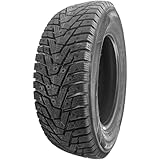
- Hankook Winter i Pike RS2 W429 is a Premium Touring studded winter tyre with directional tread pattern, designed for Passenger cars.
- Three Peak Mountain Snowflake certified
- Can be pinned with TSMI #11 studs, where permitted, for extra traction in severe ice and snow
- Wide block in the center of the tread provides improved snow and ice traction
- Built with a new rubber compound that boosts strength and durability for a longer tread life
Transport Canada summarizes the practical effect this way: below 7°C, all-season and summer tires begin to lose elasticity, leading to less traction. The exact amount of grip available still depends on the tire model, pavement, inflation, vehicle and weather, but the temperature trend applies even when roads are dry.
Sipes and edges bite into snow
Winter tires also use tread patterns with more sipes—small slits in the tread blocks—and edges intended to engage snow. Their channels help move slush away from the contact patch, while the softer compound maintains contact in cold conditions. These features are designed around snow and ice rather than a broad compromise between summer and winter use.
Ice exposes the difference most clearly
On bare pavement, the difference may feel modest. On polished ice, packed snow or a freeze-thaw surface, it can become decisive. Transport Canada reports a controlled comparison in which all-season tires had an extended stopping distance on icy conditions. The cited comparison does not publish a single stopping-distance percentage that can be applied to every vehicle or road, so no universal number should be assumed.
Quick wins for a faster PC:
Clear out junk files and repair common Windows errorsFree Scan →Fix the driver behind crashes, sound loss and screen glitchesFind Drivers →Winter tires and all-seasons compared
| Decision factor | Dedicated winter tires | Quality all-season tires |
|---|---|---|
| Cold-temperature grip | Compound stays flexible in cold weather and is intended for consistently low temperatures. | Handles a broad temperature range, but elasticity and traction decline as temperatures fall, especially below 7°C. |
| Snow and ice traction | Strongest option because the compound, siping and tread edges are designed for snow and ice. | Provides some mud and snow capability, but is less effective than winter tires in deep snow and on ice. |
| Dry-road comfort and convenience | Usable on dry roads, but requires a separate seasonal set and changeover. | One set works year-round, which simplifies ownership where winter conditions are mild. |
| Storage and changeover | Requires storage for the off-season and seasonal installation appointments, unless you have suitable storage and equipment. | No seasonal changeover or second-set storage is needed. |
| Legal requirements | May be required in some jurisdictions during a defined winter season; Quebec mandates winter tires province-wide during its winter season. | May not satisfy a local winter-tire mandate. Rules differ by jurisdiction. |
| Purchase and installation cost | Requires buying a second set plus seasonal installation and potentially storage. The total depends on the vehicle, tire model, mileage and market. | Usually avoids a second-set purchase and seasonal changeovers, but exact costs still depend on the vehicle, tire model, mileage and market. |
| Tire life | Seasonal use divides mileage between two sets; service life depends on tread condition, storage, alignment, inflation and driving. | All annual mileage is placed on one set, so life depends heavily on mileage, maintenance and the tire model. |
When winter tires are worth it for city driving
Your commute is cold even when roads are clear
City streets can be dry and still be below the temperature at which all-season rubber begins losing elasticity. If your car sits outside overnight and you routinely leave on sub-7°C mornings, winter tires can improve the traction available for starts, turns and emergency braking before snow is visible.
You encounter untreated side streets
Main roads may be plowed and salted while residential streets, parking ramps and alleyways remain packed or icy. Winter tires are most valuable where treatment is inconsistent, because the tire has to create grip rather than rely on a fully cleared surface.
Your route includes hills, bridges or shaded pavement
Bridges can freeze sooner than adjoining roads, and shaded areas may retain ice after nearby pavement dries. A city route that appears easy on a weather app can contain short sections where winter traction is the limiting factor.
You need more control during freeze-thaw cycles
Repeated melting and refreezing creates slush, ruts and hard ice. Winter tires are designed for this combination of cold temperature and changing surface, giving you more margin when conditions vary from block to block.
The Tool Desk
Outbyte PC Repair FREEClear out junk files and repair common Windows errorsFree Scan →Outbyte Driver Updater FREEFix the driver behind crashes, sound loss and screen glitchesFind Drivers →When all-season tires are a sensible compromise
Winter is mostly mild
All-season tires are intended to handle varied road conditions and provide some mud and snow capability. They can be practical when temperatures usually remain above 7°C, snowfall is uncommon and roads are cleared promptly.
You can avoid driving during storms
If you can work from home, delay trips or use another form of transport during snow and ice, your exposure is lower. That does not make all-seasons equivalent to winter tires; it changes how much winter risk you personally accept.
Rank #2
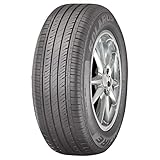
- 50,000 mile warranty
- All-Season Touring Tire
- Ideal for consumers looking for plenty of miles, good traction and fuel economy
- M+S Rated (mud and snow)
- Manufactured by Cooper Tire & Rubber Company
You have no practical way to store a second set
Storage, lifting equipment and changeover appointments are real ownership factors. One all-season set may be the workable choice for a driver in a mild climate who cannot store another set, provided the tires are correctly fitted, properly inflated and replaced before their tread becomes unsuitable.
Know what you are giving up
The compromise becomes less favorable as temperatures fall or snow becomes deeper. The National Highway Traffic Safety Administration describes all-seasons as suitable for varied conditions with some mud and snow capability, but states that winter tires are more effective than all-seasons in deep snow.
M+S is not the same as the severe-snow symbol
What the M+S marking tells you
M+S, or mud and snow, indicates a tread classification. It does not by itself certify that a tire meets the defined severe-snow traction requirement used for the three-peak mountain snowflake designation.
What 3PMSF means
The three-peak mountain snowflake symbol shows that the tire meets specified severe-snow traction requirements. For frequent severe snow or icy routes, use the 3PMSF marking as your severe-winter check rather than treating M+S alone as equivalent.
Look at the sidewall when shopping or inspecting a tire. If severe winter performance is central to your decision, confirm the symbol on all four tires and verify that the size, load index and speed rating match your vehicle requirements.
Install winter tires on all four wheels
Do not install winter tires on only the drive axle. Transport Canada recommends winter tires on all wheels for driving in cold, snowy or icy conditions, and mixing tire types can make a vehicle less stable.
Crashes, No Sound, or Screen Glitches?
Random freezes, missing sound and display glitches usually trace back to one bad driver. Find and replace yours safely.Free scan · under a minuteWindows Errors? Fix Them Before They Spread
Repair common Windows errors and clear accumulated junk for a smoother, more stable PC - no reinstall needed.Free scan · no reinstallWhy two winter tires can create instability
Different axles can then have very different levels of grip. One end may respond quickly while the other slides, changing how the vehicle behaves in a turn or during braking. Four matching winter tires give the front and rear axles a more consistent traction balance.
All-wheel drive does not replace winter tires
All-wheel drive can help deliver engine power when accelerating, but it does not create extra friction for braking or cornering. The tires remain the contact points with the road. A vehicle with all-wheel drive and all-season tires can still have less cold-weather and ice grip than a two-wheel-drive vehicle equipped with appropriate winter tires.
Choose tires that actually fit your vehicle
Verify size, load index and speed rating
Read the vehicle door placard and owner’s manual before buying. Confirm the tire size, load index and speed rating specified for your vehicle. A tire that physically fits the wheel may still be unsuitable if its load or speed rating is wrong.
Rank #3

- Product Overview: The Fullway HP108 are 205/55R16 91V SL-Standard Load, 4 Ply Rated Performance Tires Manufactured For Passengers
- Driving Conditions: All Season Traction, UTQG 380AA
- Styling and Construction: Four Black Sidewall, Radial Construction, 16 Inch Tires
- Load Index and Speed Rating: Load Index 91 Supports up to 1356 lbs Per Tire and Speed Rating V Certified to 149 mph
- Additional Note: Tires Only - Rims/Wheels Not Included
Check the vehicle’s approved fitments
Use the exact approved size unless the vehicle manufacturer documents an alternative. This is particularly important when changing wheel sizes for a winter set, because clearance, load capacity and electronic systems can be affected by an incorrect combination.
Recommended Free Tools
Inspect the sidewall markings
For severe winter conditions, look for 3PMSF. Do not assume that an M+S marking alone provides the same certification. Confirm that all four tires in the set carry the markings and specifications you intended to buy.
Use tread depth and pressure as safety checks
Do not run worn winter tires on snow-covered roads
Transport Canada advises avoiding winter use on tires worn close to 4 mm (5/32 inch) of tread on snow-covered roads. Measure the tread rather than judging it by appearance. A tire can still look acceptable on dry pavement while having too little tread for dependable snow performance.
Set pressure when the tires are cold
Inflate to the vehicle manufacturer’s specification on the door placard or in the owner’s manual. Check pressure when the tires are cold, before driving has warmed them. Cold weather changes pressure, so check it when seasons change and whenever a warning light or handling change appears.
Inspect for damage and uneven wear
Look for cuts, bulges, embedded objects and uneven wear during each seasonal changeover or pressure check. Uneven wear can indicate an alignment, suspension or inflation problem that will reduce the benefit of either tire type. Have a qualified tire professional assess damage or unusual wear before continuing to drive.
A practical city-driver buying and installation process
- Assess your actual winter exposure. Review typical morning temperatures, snow frequency, ice, slush, hills, bridges, parking ramps and whether you can avoid driving during storms.
- Check the vehicle requirements. Read the door placard and owner’s manual for size, load index and speed rating.
- Decide whether severe-snow certification is needed. If snow and ice are frequent or routes are poorly cleared, prioritize four tires with the 3PMSF symbol.
- Buy a complete set of four. Do not mix winter and all-season tires by axle. Replace a mismatched or damaged tire only after confirming the replacement plan with a tire professional.
- Arrange installation before conditions deteriorate. Seasonal changeover is easier before the first major storm, when appointment availability is better.
- Set cold pressure at installation. Use the vehicle specification, not the maximum pressure molded on the tire sidewall.
- Record storage and inspection details. Store the off-season set in a clean, dry location or use a reputable seasonal-storage service. Keep track of tread condition so a worn set is not reinstalled automatically.
- Recheck after installation. Confirm that the pressure-warning system has no alert, the vehicle drives normally and there is no rubbing or vibration. Return promptly if the steering pulls or a tire loses pressure.
How local laws affect the choice
Winter-tire requirements differ by jurisdiction. Some places specify dates, road conditions, approved markings or minimum tread requirements; others have no province- or state-wide mandate. Check the current rules where the vehicle is registered and where you drive.
Quebec is a clear example: Transport Canada notes that winter tires are mandatory province-wide during Quebec’s winter season. A set that is legal in one jurisdiction may not satisfy another jurisdiction’s rules, so confirm the requirement rather than relying on a general M+S marking.
Cost, storage and convenience trade-offs
The second-set cost is more than the tire invoice
Winter tires require a second set, seasonal mounting or wheel changes, and storage unless you have suitable space. The amount varies with vehicle size, tire model, wheel configuration, annual mileage and local market. There is no responsible universal price for the complete winter setup.
One-set ownership is simpler, not automatically safer
All-seasons avoid changeovers and storage, which can be valuable in a mild climate. That convenience does not remove the temperature and snow-performance compromise. If your city regularly falls below 7°C or develops ice, the safety margin of winter tires may justify the added logistics.
Rank #4

- Product Overview: The Armstrong Ski-Trac PC is a 205/55R16 91H SL-Standard Load, 4 Ply Rated Touring Tire Manufactured For Passengers
- Driving Conditions: Studless Winter Traction
- Styling and Construction: One Black Sidewall, Radial Construction, 16 Inch Tire
- Load Index and Speed Rating: Load Index 91 Supports up to 1356 lbs Per Tire and Speed Rating H Certified to 130 mph
- Additional Note: Tire Only - Rim/Wheel Not Included
Seasonal use changes how mileage is distributed
With two sets, annual mileage is divided between winter and non-winter tires. With one all-season set, every season’s driving accumulates on the same tires. Actual service life depends on tread wear, inflation, alignment, storage, mileage and the particular tire model, so compare condition rather than assuming one ownership pattern always lasts longer.
Common mistakes and how to correct them
Mistake: waiting for the first snowfall
Correction: Use temperature as the trigger. Below 7°C, all-season elasticity begins to decline, so a cold, dry commute can justify winter tires before snow arrives.
Mistake: buying only two winter tires
Correction: Install four matching winter tires. Mixing tire types can reduce stability because the axles no longer have comparable grip.
Mistake: treating M+S as severe-snow certification
Correction: Look for the three-peak mountain snowflake symbol when severe snow performance is required. M+S alone is not equivalent.
Free tools Windows power users keep installed
One-click scans. No signup required.
Mistake: assuming all-wheel drive solves winter traction
Correction: Remember that acceleration assistance does not increase braking or cornering friction. Select tires for the cold and surfaces you must handle.
Mistake: inflating by the sidewall maximum
Correction: Use the cold-pressure value on the vehicle placard or in the owner’s manual. Recheck pressure after installation and as temperatures change.
Mistake: keeping worn winter tires because they still look usable
Correction: Measure tread. Avoid winter use on snow-covered roads when tread is worn close to 4 mm (5/32 inch), following Transport Canada’s guidance.
Bottom-line choice for common city conditions
Choose all-season tires when
- Winter temperatures are generally mild and mostly above 7°C.
- Snow is uncommon and streets are cleared quickly.
- You can postpone driving during storms and accept less snow and ice traction.
- You prefer one set and have no practical storage or changeover arrangement.
Choose winter tires when
- Your regular commute includes temperatures below 7°C.
- You drive in packed snow, slush, ice, freeze-thaw conditions or on poorly cleared streets.
- You need the strongest available snow and ice braking and traction margin.
- Your jurisdiction requires winter tires, or severe-snow routes make 3PMSF certification appropriate.
The most defensible city-driving rule is simple: mild winters favor the convenience of quality all-seasons; sustained cold or meaningful snow and ice exposure favor four matching winter tires. Whichever set you use, correct fitment, cold-pressure checks and adequate tread are essential to getting the performance the tire was designed to provide.
Quick Recap
Product prices and availability are accurate as of the date/time indicated and are subject to change. Any price and availability information displayed on Amazon at the time of purchase will apply.

