Quick wins for a faster PC:
Repair Windows errors before they cause bigger problemsFix Now →Scan for outdated or missing drivers - takes under a minuteDriver Scan →At Constructing Excellence’s annual conference, speakers argued that construction will not become more resilient by simply optimising familiar processes. Their case was for deliberate disruption: changing how projects are designed, contracted, staffed and tested so the industry can do better work rather than repeat the same work more efficiently. The discussion, reported by Building on 27 January 2023, was a conference argument—not a universally accepted definition or proof that these proposals have since been implemented.
What “disruption, not change” meant at the conference
The phrase in the conference report draws a line between two kinds of improvement. Incremental change adds efficiency, software or equipment to an existing model. Disruption questions whether that model is the right one in the first place.


As an Amazon Associate I earn from qualifying purchases.
“Optimised tradition” can preserve the wrong system
Dale Sinclair, WSP’s head of innovation, described a risk he called “optimised tradition”. A project can adopt advanced tools while retaining the assumptions, sequencing and contractual relationships that created its problems. The result may be a faster version of an old method rather than a genuinely better way to deliver a building.
That distinction matters because construction is a system of interdependent decisions. A digital design platform cannot by itself fix a brief that changes late, a procurement route that rewards the lowest initial quote, or a supply chain brought in after key choices are closed. Technology can improve a step while leaving the overall delivery model suboptimal.
Strategic change starts with the outcome
Keith Waller, programme director at the Construction Innovation Hub, called for “strategic change that does a better thing, not the same thing better”. His formulation shifts the first question from “How can this task be accelerated?” to “What outcome should the project and its users receive, and what arrangement is most likely to produce it?”
The speakers were not presenting a settled industry definition of disruption. They were making a case for a paradigm shift in how clients, designers, contractors, manufacturers and educators work together. Their argument was that uncertainty makes this kind of rethinking more valuable, not less.
Innovation is largely decided before construction starts
A central theme was that project organisation determines how much innovation is still possible. By the time a contractor is appointed, many choices about geometry, materials, interfaces, logistics and buildability may already be fixed.
What’s actually slowing this PC down?
Pick the symptom - the matching free tool is one click away.
Why late contractor involvement narrows the options
Scott Tacchi, head of modern methods of construction (MMC) at Sir Robert McAlpine, said that up to 80% of projects reaching his firm were already at RIBA Stage 3 or beyond. RIBA Stage 3 is the “spatial coordination” stage, when the design has been developed and coordinated in substantially more detail than at concept or developed-design stages.
Tacchi’s figure describes the projects coming to his firm, as reported at the conference; it is not an independently verified rate for the whole construction industry. Its significance is the timing: if a contractor with manufacturing, logistics or MMC expertise joins after major design decisions, that expertise may be limited to finding efficiencies within a largely settled scheme.
What early involvement can change
Earlier contractor and specialist-supplier participation can test whether a proposed design is practical to manufacture, transport, assemble, maintain and adapt. It can also expose interfaces between trades before they become site problems. This does not guarantee a better project, and early involvement has to be governed so that advice is transparent and competing interests are managed. It does, however, create a point at which delivery knowledge can influence the brief rather than merely react to it.
For a client considering an innovative method, the useful question is not simply whether a contractor has used that method before. It is whether the procurement timetable gives the people who understand production and installation enough time to alter the design, sequence and risk allocation.
Recommended Free Tools
Commercial relationships can either enable or suppress experimentation
The conference panel criticised contracting practices that make every participant protect its own position. A race to the lowest quote can appear to reduce capital cost while transferring risk, encouraging conservative choices and leaving little budget or time for trials. If an unconventional method fails to fit a rigid package boundary, the safest commercial response may be to abandon it—even when it could deliver a better whole-life result.
From lowest price to value created together
Speakers pointed to earlier collaboration with the supply chain as a way to reduce waste and support innovative methods. Collaboration in this context is practical, not merely a statement of intent. It means involving manufacturers, specialist subcontractors and logistics teams while design decisions are still open; sharing the information needed to assess alternatives; and agreeing how the benefits, costs and risks of experimentation will be handled.
A collaborative arrangement still needs clear accountability. Teams should define who can approve a change, what evidence is required, how design responsibility is recorded and what happens if a trial does not work. Without those controls, “innovation” can become an excuse for unclear scope or unpriced risk.
Questions a procurement team should ask
- At what design stage will the principal contractor and critical specialists be appointed?
- Which decisions will remain open after appointment, and who has authority to change them?
- Does the evaluation reward buildability, waste reduction, safety and whole-life performance, or only the initial price?
- How will the team pay for prototypes, mock-ups, design development and learning when a test does not deliver the expected result?
- Are interfaces between packages assigned to named parties, with information exchanged early enough to manage them?
Technology is useful only when it supports a changed delivery model
The conference discussion did not reject technology. It challenged the assumption that purchasing a tool is the same as innovating. A platform, automated process or MMC component creates value only when the project’s people, approvals and contracts allow that capability to influence decisions.
| Question | Incremental optimisation | Disruptive approach discussed by the speakers |
|---|---|---|
| What is being improved? | An existing task or sequence is made faster or cheaper. | The project outcome and delivery model are reconsidered. |
| When is the contractor involved? | After much of the design is fixed, limiting changes to buildability adjustments. | Early enough to shape design, manufacture, logistics and assembly. |
| How are suppliers selected? | Packages compete mainly on the lowest quoted price. | The supply chain collaborates on waste, risk and value before decisions close. |
| What role does technology play? | Tools are added to traditional methods. | Methods, responsibilities and workflows are redesigned around the desired outcome. |
| How is culture treated? | Inclusion is handled as a policy or compliance exercise. | Respectful behaviour is expected in everyday work and treated as part of performance and safety. |
This is a comparison of the conference themes, not a controlled study showing that one approach always outperforms the other. A conventional method may be the right choice for a particular site, programme or risk profile. The point is to make that choice deliberately rather than inherit it because the project followed a familiar template.
Safe experimentation needs somewhere to learn
Uncertainty was the conference’s setting: its theme was “thriving through uncertainty”. Waller described Construction Innovation Hub “sandpits”, test-bed facilities at the Manufacturing Technology Centre in Coventry where teams could refine solutions in a fail-fast environment.
A sandpit separates learning from the consequences of discovering a problem for the first time on a live project. A team can test an assembly, inspect how components interact, identify a manufacturing constraint and revise the proposal before full production or site installation. The report presents this as an example of an experimentation environment, not as evidence of a proven industry-wide result.
How to use a test-bed mindset on a project
- State the hypothesis. Describe the specific problem the proposed method is intended to solve, such as reducing rework, shortening installation or improving safe access.
- Define a measurable acceptance condition. Agree what must be observed for the method to proceed, and what result would require redesign or abandonment.
- Test the interfaces, not just the component. Include design information, tolerances, transport, temporary works, installation sequence, inspection and maintenance access.
- Record the learning. Capture assumptions, defects, changes and unresolved risks so that the project does not repeat the same experiment unknowingly.
- Make a go/no-go decision. Assign an accountable decision-maker and a date for deciding whether to scale, modify or stop the approach.
Fail-fast does not mean careless. It means making the cost and boundaries of learning explicit, so a controlled test can prevent a larger and less manageable failure later.
Windows Errors? Fix Them Before They Spread
Repair common Windows errors and clear accumulated junk for a smoother, more stable PC - no reinstall needed.Free scan · no reinstallOutdated Drivers Are Slowing You Down
One free scan finds every outdated or missing driver and matches the right update for your exact hardware.Free scan · exact hardware matchRank #4
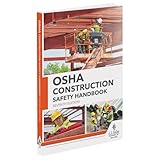
- 2024 OSHA Construction Safety Book is the seventh edition with the new OSHA HazCom final rule on 5/20/24. While the rule takes effect 7/19/24, the compliance dates don’t begin until 1/19/26 per 29 CFR 1910.1200(j).
- Construction Site Book offers quick access to essential OSHA regulations, jobsite hazards, and practical safety tips. It also helps employees identify hazards and prevent injuries and illnesses.
- Features easy-to-read format, full-color images, chapter quizzes with answer key, and comes in a compact size making it a convenient reference for employees.
- Critical topics include Confined Space Entry; Cranes & Derricks; Electrical Safety; Emergency Response; Ergonomics & Back Safety; Excavations; Fall Protection; First Aid & Bloodborne Pathogens; HazCom; Health & Wellness; Jobsite Exposures; Lockout/Tagout; Ladders & Stairways; Materials Handling/Storage; Motor Vehicles; PPE; Scaffolds; Site Safety & Security; Slips, Trips & Falls; Tool Safety; Welding, Cutting & Brazing; and Work Zone Safety.
- Specifications: 5 1/4” x 7 1/4", English, Soft bound. 7th Edition. Copyright 2024.
Skills, culture and inclusion are part of innovation
The call for disruption extended beyond digital tools and construction methods. Speakers linked the sector’s ability to change with who can enter, progress and contribute within it.
Making career routes visible
Sesitwa Mohlala said construction’s fragmentation can make the range of career paths difficult for young people to see. A person may encounter separate employers, professions, qualifications and project phases without understanding how they connect or what progression is possible.
That observation has a direct organisational implication: innovation programmes need people who can move across disciplines and explain how their work affects others. Employers and educators can make routes clearer by showing the relationship between design, manufacturing, site operations, commercial management, building safety, digital delivery and facilities management. The conference report does not claim that a single careers initiative solved this problem; it identifies visibility and fragmentation as barriers to address.
Respect should be handled as a work risk
Lydia McGuinness described sexist remarks she had experienced on site. Tracey Collins argued that disrespect should be addressed as directly as a safety incident. Her point is operational: behaviour that is tolerated can silence people, prevent concerns being raised and weaken the team’s ability to identify hazards or improve a process.
Do these 3 things before closing this tab:
1Fix the driver behind crashes, sound loss and screen glitches2Clear out junk files and repair common Windows errors3Scan for outdated or missing drivers - takes under a minuteCollins said Kier wanted “to make respect and inclusion part of our DNA”. Mohlala similarly argued that culture should be part of organisational identity rather than a box-ticking exercise. Policies still matter, but they need visible follow-through: supervisors must intervene when remarks or exclusion occur, reporting routes must be credible, and leaders must treat patterns of disrespect as information about how work is being managed.
Best Value

- Made in USA - Proudly produced in Ohio by a Veteran-owned business
- Hardbound book with burgundy imitation leather cover with block artwork and stamped with CONSTRUCTION LOG
- 384 Pages Section sewn-- book lays flat when open, Tamper-evident, archival quality, acid-free paper
- Date, Contractor, Weather, Work Log, Progress Updates, Rentals, Purchases, Supervisor Signatures
- Reorder SKU: LOG-384-7CS-A(ConstructionBlocks)
Inclusion is therefore connected to technical innovation. A team cannot learn quickly from mistakes if some members are discouraged from speaking, and it cannot redesign delivery effectively if expertise is filtered through status or habit.
The wider Building the Future Commission context
The conference report placed these arguments within Building’s year-long Building the Future Commission, launched for the publication’s 180th anniversary. The commission was intended to assess solutions and new ways of thinking across eight built-environment areas:
- Skills and education
- Energy and net zero
- Housing and planning
- Infrastructure
- Building safety
- Project delivery and digital
- Workplace culture and leadership
- Creating communities
The report describes the commission’s planned scope. It does not establish what its later findings were or whether the ideas discussed at the conference were adopted. The list is useful because it shows how the speakers’ definition of disruption crosses technical, commercial and social boundaries: a new construction method is only one part of a larger built-environment system.
The Tool Desk
Outbyte PC Repair FREERepair Windows errors before they cause bigger problemsFix Now →Outbyte Driver Updater FREEFix the driver behind crashes, sound loss and screen glitchesFind Drivers →A practical way to turn the argument into project decisions
Teams do not need to label a project “disruptive” to apply the conference’s challenge. They can make the underlying choices explicit at the start of a commission or during a re-plan.
- Describe the outcome before selecting the method. Set out the required performance, user experience, safety conditions, programme and whole-life considerations. Do not begin with a preferred technology and retrofit a justification.
- Map when each expertise enters. Identify the point at which contractors, manufacturers, specialist installers, operators and maintainers can still change the design. If that point is after RIBA Stage 3, record what innovation opportunities may already be closed.
- Test the commercial rules. Check whether fee structures, package boundaries and risk clauses reward early problem-solving or encourage defensive behaviour and lowest-price bidding.
- Choose a bounded experiment. Select one material, assembly, workflow or information exchange where a controlled test can answer a real project question. Define the acceptance criteria and the decision date.
- Make behaviour observable. Set expectations for respectful conduct, provide a route for reporting concerns and require leaders to respond consistently. Treat recurring disrespect as a management and safety issue.
- Review the system, not only the trial. If an experiment fails, ask whether the method was unsuitable or whether late decisions, fragmented responsibility or missing information prevented a fair test.
What the conference report can—and cannot—prove
The evidence is a historical report of speakers’ statements at Constructing Excellence’s annual conference, published by Building on 27 January 2023. It supports an account of the arguments they made: that optimising traditional arrangements may not be enough; that early contractor and supply-chain involvement can widen the space for innovation; that experimentation needs test environments; and that inclusion and respect belong in the definition of a modern construction culture.
It does not provide an independently verified industry benchmark for the “up to 80%” figure, a controlled comparison of procurement models, or evidence of the later impact of the sandpits, commission or proposed cultural changes. Readers should treat the ideas as a framework for questioning project practice, then test them against the specific site, contract, workforce and regulatory requirements in front of them.
The most consequential challenge is not to buy a newer tool. It is to decide early enough, collaborate broadly enough and create a respectful enough environment that a genuinely better way of delivering the work can survive contact with the project.
Quick Recap
Product prices and availability are accurate as of the date/time indicated and are subject to change. Any price and availability information displayed on Amazon at the time of purchase will apply.

