Free tools Windows power users keep installed
One-click scans. No signup required.
Concrete can crack after it appears cured because curing does not stop the material from shrinking, changing temperature, or responding to restraint and loads. Curing keeps moisture and temperature suitable while cement hydrates; it reduces avoidable early drying but cannot guarantee a crack-free slab. A crack first noticed after curing may have formed while the concrete was still plastic, during later drying, or from thermal, chemical, structural, or environmental causes.
People often say “cement” when they mean the placed material. Cement is the powder binder; a slab, driveway, wall, or footing is generally concrete, made from cement, water, aggregate, and often admixtures and reinforcement. The distinction matters because crack prevention involves the entire mixture, the design, construction, curing, and the conditions around the concrete—not curing alone.
As an Amazon Associate I earn from qualifying purchases.
What curing does—and what it cannot do
Curing is the practice of maintaining moisture and a suitable temperature so hydration can continue and the concrete can develop its intended properties. It begins after finishing, when the surface bleed-water sheen has disappeared, and continues for the period specified for the mix and project. A curing method may use water, damp burlap, polyethylene sheeting, curing compounds, or another approved system.
Quick wins for a faster PC:
Repair Windows errors before they cause bigger problemsFix Now →Scan for outdated or missing drivers - takes under a minuteDriver Scan →Clear out junk files and repair common Windows errorsFree Scan →Good curing limits rapid early water loss and supports strength and durability. It does not eliminate the volume changes that occur as concrete dries, nor does it remove restraint from a foundation, reinforcement, an adjacent slab, or the geometry of the element. The American Concrete Institute (ACI) therefore treats curing adequacy as something assessed against an in-place strength or another measurable property, not as a promise that no crack will appear. For concrete with a low water-to-cementitious-materials ratio, ACI notes that water may still be needed during curing; the correct method depends on the mixture.
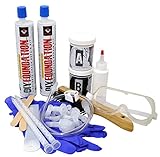
#1 Best Overall

- FIX FOUNDATION WALL CRACKS EASILY: Our Concrete Crack Repair Kit offers a reliable solution for foundation crack repair injection kit and concrete crack repair. Homeowners can address concrete cracks and cement crack filler issues efficiently, preventing water infiltration and protecting the basement from potential water damage. Whether you’re facing rainstorms or just trying to maintain your basement, it provides a hassle-free solution, saving you the cost and trouble of hiring professionals.
- LONG-LASTING WATERPROOF PROTECTION AND SEALING: Our Hydra Stop 300 Polyurethane Foam expands to fill cracks, acting as a concrete crack filler that creates a durable, waterproof concrete sealer barrier. This foam sealant gap filler helps prevent moisture entry, providing long-lasting protection concrete patch to your basement and foundation. Homeowners worried about water damage and basement flooding can rely on this effective solution.
- PRESERVE YOUR HOME’S VALUE AND STRUCTURAL INTEGRITY: In addition to offering a practical foundation cement crack filler solution, our kit helps maintain the structural integrity of your foundation. Sealing cracks with concrete crack sealer reduces the risk of foundation cement crack repair issues, helping to protect your home from further damage and providing lasting concrete crack repair. With an easy-to-apply system, this kit allows DIY homeowners to feel confident in their repair work.
- INCLUDES COMPLETE REPAIR SOLUTION: Our concrete crack filler and sealer kit includes 2-Hydra Stop 300 Polyurethane Foam, 2-Poxy Paste crack sealant, 15-surface ports, caulk gun, 2 pairs nitrile gloves, safety glasses, drop cloth, 10-wooden sticks, 10-corner ports, wire brush and a flexible injection hose assembly. This simplifies foundation cement crack filler repairs, making it easy for DIY homeowners to handle large cracks with the help of clear instructions and video tutorials.
- WHY CHOOSE APPLIED TECHNOLOGIES: Applied Technologies has been a trusted name in waterproofing and foundation repair solutions for over two decades. Our Hydra Stop 300 Polyurethane Foam provides effective foundation crack repair and concrete crack filler performance, ensuring a reliable seal. With easy-to-follow instructions for concrete crack sealer application and durable cement crack filler materials, we offer products designed to help protect your home and provide lasting results.
The Federal Highway Administration (FHWA) states the central limitation plainly: “Hardened concrete is always expected to shrink on drying (unless some kind of shrinkage-compensating component is present in the concrete) regardless of the degree of curing.” This sentence appears in the FHWA Guide for Curing of Portland Cement Concrete Pavements: Final Report, Chapter 1 (January 2005).
What “after curing” tells you
“After curing” describes when someone noticed a crack, not necessarily when it formed. Plastic-shrinkage cracks can develop before initial set and remain inconspicuous until dirt, washing, or a change in light makes them visible. Other cracks open gradually as hardened concrete dries or as temperatures cycle. A contractor or engineer will therefore ask about the placement date, finishing and curing sequence, weather, loads, and whether the crack has changed.
Curing is also not a single product or a single calendar number. The required period and method depend on the cementitious materials, water-to-cementitious-materials ratio, element size, exposure, and project specification. A method that is suitable for an ordinary slab may be inappropriate for a specialized low-ratio mixture. There is no one visual test that proves curing was adequate; measurable in-place strength or another specified property may be used instead.
Recommended Free Tools
Why a crack appears after curing
Several mechanisms can operate at the same time. The date you notice a crack is not necessarily the date it formed, so appearance alone cannot establish a cause. Timing, pattern, location, movement, moisture, weather, loading, reinforcement, and construction records all matter.
| Mechanism | When it starts | What drives it | Why it matters |
|---|---|---|---|
| Plastic shrinkage | Before initial set | Surface evaporation exceeds the rate at which bleed water replaces it | Shallow, often random cracks can form before the concrete is hard; prompt protection is important |
| Drying shrinkage | After hardening and during moisture loss | Cement paste contracts as water leaves; restraint converts contraction into tension | Ordinary drying shrinkage cannot generally be eliminated and must be controlled or accommodated |
| Thermal movement | During temperature changes, especially gradients | Heating, cooling, or different temperatures through the section create movement and stress | May combine with restraint, joints, or seasonal movement |
| Other deterioration or loading | Any age | Chemical reactions, weathering, reinforcement corrosion, overload, poor practice, or design/detailing errors | Can signal durability or structural distress and may require professional investigation |
Plastic shrinkage before the concrete sets
Fresh concrete contains solid particles, water, and air. Before initial set, the solids settle and bleed water rises to the surface. If the exposed surface loses water faster than bleeding can replenish it, the surface dries and contracts while the concrete below is still settling. That mismatch can open plastic-shrinkage cracks.
FHWA identifies wind, low relative humidity, high air temperature, and high concrete temperature as conditions that can make evaporation especially rapid. A long delay between finishing and curing increases exposure. A cover that dries out, is poorly overlapped, or blows away also allows the surface to lose water. These cracks may be visible soon after finishing, but a homeowner may not discover them until the slab is cleaned or the lighting changes.
Drying shrinkage after hardening
Once concrete has hardened, water continues to leave the cement paste. The paste contracts, but concrete is rarely free to contract uniformly. Restraint can come from the subgrade or foundation, adjacent pours, reinforcement, columns, embedded items, or the shape of the member. Restraint generates tensile stress; a crack forms when that stress exceeds the concrete’s tensile capacity.
PC Slower Than It Used to Be?
A free scan shows the junk files, broken settings and background clutter dragging Windows down - then fixes them in one click.Free scan · Windows 10 & 11Crashes, No Sound, or Screen Glitches?
Random freezes, missing sound and display glitches usually trace back to one bad driver. Find and replace yours safely.Free scan · under a minuteACI’s 2001 discussion gives a typical final shrinkage strain of about 600 × 10-6 for concrete in structures and compares it with a tensile-strain capacity of about 150 × 10-6 or less. These are typical values from that report, not a prediction for an individual slab. Actual shrinkage and cracking vary with mixture composition, aggregate source, ambient humidity, specimen geometry, and the exposed surface relative to volume.
Rank #2
- Drill-Free Injection: Repair basement wall cracks effortlessly without drilling, ensuring minimal disruption to your home's structure.
- Simple Application: Use a standard caulking gun to inject the low-viscosity, 2-component urethane, making the process accessible for any homeowner.
- Effective Hairline Crack Repair: Seal even the smallest cracks permanently with the specialized urethane, preventing further water seepage and damage.
- Interior Repair Advantage: Save on costly excavation by repairing cracks from inside your basement, maintaining exterior aesthetics and structural integrity.
- Comprehensive Protection: This solution not only protects against water but also acts as a barrier against radon and soil gases, safeguarding your basement environment.
Temperature, chemical, corrosion, and load-related cracking
Concrete expands when heated and contracts when cooled. A temperature gradient between the surface and the interior, or between connected parts of a structure, can create tension. Daily and seasonal cycles may repeatedly open and close a crack. Thermal effects can overlap with drying shrinkage and restraint.
Other possibilities include chemical reactions within the concrete, weathering, freeze-thaw exposure, reinforcement corrosion, overload, inadequate support, poor finishing or placement practice, and design or detailing errors. A single crack can have more than one contributor. A general article cannot diagnose an individual crack from a photograph or from width alone.
Use pattern and location as clues, not a diagnosis
Short, shallow cracks that appeared during a hot, windy placement suggest a different investigation from a crack that follows reinforcement, crosses a beam or column, leaks through a foundation wall, or is accompanied by rust staining and spalling. Cracks concentrated at re-entrant corners, openings, restraints, or poorly located joints may reflect stress concentrations. A map of the crack, its relation to joints and supports, and whether it is present on the opposite face gives a professional more useful information than a single close-up image.
Preventing cracks while concrete is fresh
For a new placement, decide how curing and weather protection will be carried out before concrete arrives. The objective is to keep evaporation from outrunning the concrete’s ability to supply moisture and to begin curing without an avoidable delay.
- Review the mixture and specifications. Confirm the approved water-to-cementitious-materials ratio, admixtures, finishing limits, reinforcement, joint layout, and required curing period with the concrete supplier and project engineer. Do not change the mix by adding unapproved water at the site.
- Check the forecast and site conditions. Wind, low humidity, high air temperature, and high concrete temperature increase evaporation risk. Plan shade, windbreaks, misting of the surrounding air where appropriate, or a cooler placement time for hot, dry, or windy conditions. These measures must be compatible with the project specifications and local safety requirements.
- Have curing materials ready before placement. FHWA discusses damp burlap and polyethylene covers. Use the method approved for the mix, place it as soon as finishing is complete and the surface sheen has disappeared, and keep it continuously effective for the specified period.
- Secure and maintain covers. Burlap must remain damp; polyethylene must stay in contact or be arranged as specified, with seams and edges secured. A cover that dries out or blows away is no longer controlling evaporation.
- Finish without adding water. Sprinkling water onto the surface during finishing can change the surface paste and weaken or dust it. If evaporation is too fast, use an approved evaporation-control or weather-protection procedure rather than an improvised water addition.
- Protect the curing period. Prevent premature traffic, impact, rapid temperature changes, and drying at exposed edges. Follow the supplier’s and engineer’s instructions when a curing compound, wet covering, or another system is specified.
Evaporation figures that are not universal homeowner limits
An FHWA appendix published in 2006 gives evaporation rates not to exceed 0.5 kg/m²/h for ordinary bridge-deck concrete and 0.25 kg/m²/h for latex-modified overlays and other cement concrete with a water-to-cementitious-materials ratio below 0.40. These are historical, application-specific guidance values for the cited bridge and overlay work. They are not universal thresholds for a residential driveway or floor. Use project specifications and professional advice rather than treating either number as a guarantee of safety for another placement.
Comparing common curing approaches
Water curing, damp burlap, polyethylene sheeting, curing compounds, and combined systems all aim to limit moisture loss, but their suitability depends on the mixture and the work sequence. Damp burlap must be kept wet; polyethylene and other covers must remain secured and effective; a curing compound must be compatible with later coatings, joint sealing, or finishing requirements. The key comparison is not which product is universally “best,” but whether the approved method starts promptly, remains continuous, and matches the project specification. A cover is a physical aid to moisture retention, not a substitute for proper timing or quality control.
Controlling shrinkage in hardened concrete
After hardening, prevention is mainly about managing movement and restraint. Drying shrinkage is inherent in ordinary concrete, so the practical goal is to keep stresses within the concrete’s capacity and provide planned places for movement.
Mixture proportions and aggregate
Mixture composition affects shrinkage. Aggregate source and properties, paste volume, water content, cementitious materials, admixtures, and the water-to-cementitious-materials ratio all influence the result. A lower ratio can reduce some forms of drying but may increase self-drying, particularly in specialized mixtures. Do not alter proportions in the field without an approved design.
Rank #3

- FAST & EASY CRACK REPAIR: Quickly seal leaks with this advanced 10' foundation crack repair injection kit designed for fast results and minimal effort. Sets rapidly and helps homeowners fix structural cracks in minutes without waiting hours or calling professionals
- COMPLETE ALL-IN-ONE REPAIR KIT: This premium concrete crack filler includes everything you need, such as urethane foam, injection ports, adhesive, gloves, and tools, so you can start immediately. Offers more material than standard kits for better coverage and value
- NO SPECIAL TOOLS REQUIRED: Designed for easy DIY foundation repair, this system works with a standard caulking gun; no drilling or special equipment needed. Quick and effective concrete crack repair, making it a hassle-free solution for homeowners
- DURABLE WATERPROOF SEAL: The expanding urethane creates a durable barrier that blocks water intrusion and prevents future damage. Excellent for foundation leak repair and reliable concrete wall leak repair, ensuring your basement stays dry and protected over time
- FIX, SEAL & PREVENT FUTURE DAMAGE: Engineered to restore structural integrity, this solution seals existing cracks and helps prevent future leaks, protecting your home's foundation for the long term
Reinforcement and detailing
Reinforcement does not make concrete immune to cracking. Properly designed reinforcement distributes cracks and limits their opening, while detailing must account for openings, corners, changes in thickness, supports, and connections. The amount, location, spacing, and development of reinforcement are design decisions, not rules that can be selected safely from a photograph.
Contraction joints and construction practice
Planned contraction joints create locations where shrinkage-related movement can occur in a controlled way. Joint spacing, depth, timing, layout, and connection to existing work must suit the slab or structural element. Good subgrade preparation, accurate placement, consolidation, finishing, and protection from early drying work together with the joint plan. A joint that is too late, too shallow, poorly aligned, or blocked by another element may not control cracking as intended.
Internal curing for specialized mixtures
Internal curing supplies water from within the mixture and can mitigate self-drying shrinkage in relevant low-water-to-cementitious-materials-ratio concrete. FHWA describes it as a specialized mixture approach, not a universal repair or retrofit for an already cracked household slab. Its use requires a designed mixture and appropriate materials, batching, and quality control.
Do these 3 things before closing this tab:
1Scan for outdated or missing drivers - takes under a minute2Clear out junk files and repair common Windows errors3Fix the driver behind crashes, sound loss and screen glitchesHow to evaluate a crack that you have found
Observation can help decide what information a qualified contractor or engineer needs, but it cannot prove a cause by itself.
Record the context
- Write down when the crack was first seen and the concrete’s approximate age.
- Map its location, direction, length, and relationship to joints, corners, openings, walls, columns, drains, and edges.
- Note whether it is on the surface only or continues through the element, and whether the opposite face shows a corresponding crack.
- Record recent weather, water exposure, freeze-thaw conditions, traffic, equipment, settlement, or nearby construction.
- Look for dampness, leakage, rust staining, spalling, loose concrete, exposed reinforcement, or changes in level.
Monitor movement instead of guessing from width
A crack that changes with temperature, opens after loading, leaks, or shows progressive displacement deserves more attention than a stable surface mark. Date-stamped photographs from the same position, a simple reference scale, and notes about weather can document change. Do not declare a crack safe because it looks narrow, and do not declare a structure unsafe solely because a crack is visible. No universal “safe” crack width applies without the governing specification, exposure, member, and design context.
Know when to obtain professional help
Arrange an evaluation by a qualified concrete professional or structural engineer when a crack is widening or offset, appears in a beam, column, foundation wall, suspended slab, or load-bearing connection, is accompanied by sagging or settlement, repeatedly leaks, exposes corroding reinforcement, or is followed by spalling or falling pieces. Urgent hazards—unstable elements, major displacement, or falling concrete—should be isolated and addressed promptly. A repair recommendation should follow an assessment of whether the crack is active, structural, water-related, or a dormant surface defect.
Why a patch is not the first step
Repair material can hide a symptom while the underlying movement continues. Filling an active crack without addressing water entry, restraint, settlement, corrosion, or loading may cause the repair to reopen or divert damage elsewhere. The appropriate method also depends on whether the crack is in a slab-on-ground, foundation, wall, bridge element, or another member; whether it is dry or leaking; and whether the concrete must carry structural load.
Before selecting a sealant, injection system, overlay, routing method, or replacement, establish the crack’s cause and activity with the responsible contractor or engineer. Follow the product and project specifications for surface preparation, moisture, temperature, compatibility, and curing. A cosmetic repair is not a substitute for correcting structural or drainage problems.
Rank #4
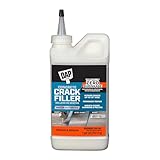
- Concrete crack filler repairs horizontal cracks in concrete, stone and other masonry materials
- Water activated dry powder repairs cracks up to 1/2”W x 1/2”D a single pass
- Ready for light foot traffc in 4 hours, return to full service (including vehicles) within 48 hours
- Ready to use formula, no shaking or mixing: prep surface, fill crack and mist
- DAP Concrete Crack Filler resists shrinkage, UV fading, and cracking
A practical prevention checklist
- Use an approved mixture and verify the water-to-cementitious-materials ratio; never add water as a finishing shortcut.
- Plan curing, covers, weather protection, labor, and access before the pour.
- Begin curing promptly after finishing and disappearance of surface bleed-water sheen.
- Keep burlap damp and polyethylene or other covers secured and effective for the specified period.
- Adapt placement timing and protection to wind, humidity, air temperature, and concrete temperature.
- Provide the designed reinforcement, joints, thickness, support, and detailing; do not improvise them after cracking.
- Protect fresh and early-age concrete from traffic, rapid drying, and damaging temperature changes.
- For an existing crack, document location and movement, check for water or corrosion, and obtain an appropriate evaluation before repairing.
The key distinction is between reducing avoidable early evaporation and accommodating movement that concrete will naturally undergo. Curing is essential, but crack control also depends on the mixture, restraint, reinforcement, joints, construction quality, environment, and loads. Treat every crack as information to investigate—not automatic proof of failure and not proof that curing was done incorrectly.
Frequently Asked Questions
Is cracking after curing normal?
Some cracking is common because hardened concrete normally shrinks as it dries and may be restrained. A visible crack is not automatically a structural failure, but widening, offset, leakage, corrosion, spalling, or cracks in load-bearing members require evaluation.
Can better curing prevent every concrete crack?
No. Prompt, continuous curing reduces avoidable early drying and plastic-shrinkage risk, but it cannot eliminate ordinary drying shrinkage, thermal movement, restraint, loading, or deterioration mechanisms.
When should curing begin?
Begin the approved curing method when finishing is complete and the surface bleed-water sheen has disappeared. Delays expose the surface to evaporation, especially in wind, low humidity, or high air and concrete temperatures.
Why should I not sprinkle water while finishing?
Adding water at the surface can change the paste and produce a weak, dusty surface. Use the specified evaporation-control or weather-protection procedure instead, and follow the supplier’s or engineer’s instructions.
Are the FHWA evaporation numbers safe limits for my driveway?
No. The 0.5 kg/m²/h and 0.25 kg/m²/h values come from 2006 guidance for specified bridge-deck, latex-modified, and low-ratio cement concrete applications. They are not universal household thresholds.
Does reinforcement stop cracks?
Reinforcement does not make concrete crack-proof. Properly designed reinforcement helps distribute cracks and limit opening, while joints, mixture choices, detailing, support, and construction practice address the causes of movement and restraint.
The Tool Desk
Outbyte PC Repair FREEClear out junk files and repair common Windows errorsFree Scan →Outbyte Driver Updater FREEFix the driver behind crashes, sound loss and screen glitchesFind Drivers →Can a photo identify the cause of a crack?
No. Timing, pattern, location, movement, moisture, weather, loads, reinforcement, and construction records are needed. A photo can document conditions but cannot establish a diagnosis or a universally safe crack width.
Should I fill a crack immediately?
Not before determining whether it is active, structural, water-related, or a dormant surface defect. A patch or sealant can reopen if movement, leakage, settlement, corrosion, or overload remains uncorrected.
The Bottom Line
Concrete cracking after curing does not prove that curing failed. Fresh concrete can suffer plastic shrinkage when evaporation outruns bleeding; hardened concrete normally dries, shrinks, and develops stress when restrained. Plan the mixture, joints, reinforcement, finishing, weather protection, and curing together, then investigate any existing crack for movement, leakage, corrosion, or structural distress before choosing a repair.
Quick Recap
Product prices and availability are accurate as of the date/time indicated and are subject to change. Any price and availability information displayed on Amazon at the time of purchase will apply.

