What’s actually slowing this PC down?
Pick the symptom - the matching free tool is one click away.
Stop using the drill immediately if it smells burnt, smokes, sparks, melts, shows battery damage, or repeatedly loses power. Release the trigger, move people away from an unsafe tool, and do not keep running it to reproduce the fault. A drill that is simply warm after sustained high-torque work may need a natural cooldown, but heat alone cannot identify whether the battery, motor, switch, charger, or mechanism is at fault.
Check the exact tool and battery model against current manufacturer instructions and recall notices. Product-specific protection systems and recalls mean that the correct next step depends on the model, the symptom, and whether the battery is damaged.
As an Amazon Associate I earn from qualifying purchases.
First decide whether the drill is safe to touch
Different symptoms call for different levels of caution. Treat the following as stop-use conditions:
Free tools Windows power users keep installed
One-click scans. No signup required.
- Burning, acrid, or electrical odor that persists after the trigger is released.
- Smoke, flame, active sparking, melting plastic, or unusual popping.
- A swollen, leaking, cracked, punctured, unusually hot, or otherwise damaged battery pack.
- Power that cuts out repeatedly, especially when the drill is not being heavily loaded.
- A tool that starts running unexpectedly, will not stop normally, or has a visibly damaged switch, cordless battery interface, or housing.
Do not handle a hot, leaking, or smoking lithium-ion pack unnecessarily. Keep people away and follow local emergency guidance. If there is no immediate hazard and the drill is only warm after demanding work, set it down on a nonflammable surface and allow it to cool naturally. Do not put a battery in a freezer, on ice, in water, or near a heater.
#1 Best Overall
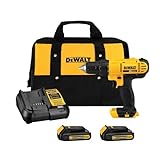
- Lightweight design fits into tight areas
- High performance motor delivers 300 unit watts out (UWO) of power ability completing a wide range of applications
- High speed transmission delivers two speeds (0-450 & 1,500 rpm) for a range of fastening and drilling applications
- 1/2' single sleeve ratcheting chuck provides tight bit gripping strength. Ergonomic handle delivers comfort and control
For a confirmed recall, follow the recall notice rather than general troubleshooting advice. The U.S. Consumer Product Safety Commission (CPSC) warned on October 24, 2024 about specific AILUKI cordless drills after nine incident reports involving explosion, ignition, melting, smoke, or overheating. Three reports involved property damage totaling $3,000, and one involved a burn injury. CPSC told owners to stop using the identified drills, remove their battery packs, and use local hazardous-waste procedures; it specifically warned against ordinary trash and retail collection boxes for that recalled battery.
Those figures and instructions apply to the identified AILUKI products, not to cordless drills as a whole. Do not assume that a different brand or model has the same defect or remedy.
Why a drill can become hot during heavy work
High-torque drilling and cutting
Demanding work can heat the battery faster than it can release heat. An official Milwaukee owner manual advises allowing a cordless tool to cool between high-torque drilling or cutting applications because a high discharge rate can raise cell temperature and potentially damage the pack. That is a workload precaution, not a universal diagnosis or a safe-temperature specification for every drill.
Quick wins for a faster PC:
Clear out junk files and repair common Windows errorsFree Scan →Scan for outdated or missing drivers - takes under a minuteDriver Scan →Repair Windows errors before they cause bigger problemsFix Now →Rank #2

- Powerful 20 V Motor and 2 x 1.5 Ah Battery: Equipped with a robust 20 V motor and 2 Li-ion battery, this cordless drill delivers smooth power for various drilling and driving tasks;Its rechargeable battery ensures you're always ready for next project
- 2 Variable Speed Settings for Versatility: With two speed options (0-400, 0-1500 RPM ), this drill provides ultimate control over your applications; Perfect for both delicate tasks and heavy-duty jobs, you can easily adjust the speed to match your needs
- Robust 266 In-lb (30 N.m) Torque and 21+1 Settings: With a maximum torque of 266 In-lb (30 N.m) and 21+1 adjustable settings, this drill excels in precision and ease; It prevents over-tightening and protects your materials with its precise torque control
- Comprehensive 34-Piece Drill Kit: You’ll get a 20 V cordless drill with battery and charger, 4 wood bits, 4 twist bits, extension bar, flexible shaft, 10 short screwdriver bits, 10 long screwdriver bits, and a screw anchor set- all essentials in one set
- Effortless Precision with LED Illumination: Lightweight and user-friendly, this electric drill features an LED light to illuminate your workspace for precise drilling in dark or tight areas; Its effortless operation and intuitive controls make it perfect for both beginners and pros
Large hole saws, long auger bits, masonry drilling, binding bits, and repeated starts under load all increase current demand. A dull or incorrect bit can make the motor work harder, but the available evidence does not provide a model-independent test that identifies the bit, motor, or battery as the failed component. Reduce the load only after the tool has cooled and the manual confirms that continued use is appropriate.
Protection electronics can interrupt operation
Some tool-and-battery systems monitor current, voltage, and temperature. Makita says its STAR-equipped compatible tools and batteries automatically stop when the system detects conditions that threaten overload, over-discharge, or overheating. Milwaukee describes overload and overheat protection on its cited M18 FUEL 1/2-inch drill.
A sudden stop can therefore be protective behavior on a compatible system. It is not proof that every power loss is normal protection. Restart behavior, indicator lights, reset procedures, and compatibility rules are model-specific; follow the exact manual instead of repeatedly pulling the trigger.
Rank #3

- Ergonomically Designed: Work in tight areas with a compact design that gets into tough spots
- Both tools are designed to fit into difficult to reach spaces
- Complete a wide range of applications with a high-performance motor that delivers up to 300 UWO, and an impact driver delivering up to 1,400 in-lbs of torque
- Both the DEWALT impact driver and drill driver feature integrated LED work lights with a convenient 20-second delay, ensuring enhanced visibility in dimly lit or challenging work areas
- One-Handed Loading - Keep one hand free with a 1/4 in. hex chuck that accepts 1 in. bit tips
What a burnt smell, smoke, or melting means
Odor and heat identify a hazard, not a failed part. The available manufacturer and safety notices do not establish a universal consumer test that distinguishes a damaged battery from a motor winding, switch, charger, connector, or mechanically bound gearbox. Opening a suspect lithium-ion pack can expose you to stored energy, fire, and damaged cells.
One older recall shows why the model number matters. In a CPSC Drill Master notice dated December 1, 2015, models 68239 and 68287 were recalled because an internal switch could stick in the “on” position and overheat. The notice reported about 1.7 million units, 25 reports of switch overheating, six reports of burns to hands or fingers, and five reports of minor property damage. The remedy was immediate stop-use and replacement for those listed items. It does not establish that an ordinary burnt smell on another drill means its switch has failed.
Safe troubleshooting procedure
- Release the trigger and disconnect the battery if it can be done without touching a dangerous pack. Do not keep cycling the tool to reproduce the symptom.
- Inspect from a safe distance. Look for smoke, flame, melted housing, discoloration, swelling, leaking electrolyte, cracked casing, or a battery that is much hotter than the tool body.
- Separate ordinary warmth from warning signs. If the drill is merely warm after sustained high-torque work and has no odor, smoke, or visible damage, let both tool and battery cool naturally. Cooling advice in the cited Milwaukee manual concerns high-torque applications; it is not a blanket clearance for a damaged drill.
- Record the exact identifiers. Photograph the model, serial or date code, battery model, charger model, and any error lights. These details determine recall coverage, compatibility, and service instructions.
- Check official recall listings and the manufacturer manual. A recall remedy applies only to the named models. Confirm that the manual matches the exact tool, battery platform, and edition.
- Contact the manufacturer or a qualified repair service. Describe when the failure occurs, whether the battery was hot, and whether the smell remains after cooling. Ask whether the tool should be returned, inspected, or quarantined.
- Dispose of a recalled or damaged pack through the instructed channel. For the AILUKI warning, CPSC specifies local hazardous-waste procedures and says not to use trash or ordinary retail collection boxes. Follow local authority instructions for any other damaged pack.
Do not open a lithium-ion battery, bridge contacts, substitute an unapproved pack, or install a generic switch or motor as a test. A qualified technician can determine whether a component is serviceable without exposing you to an uncontrolled battery fault.
Rank #4
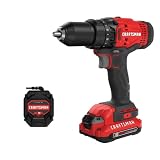
- 1/2inch Cordless drill/driver with high performance motor produces 280 unit watts out for completing a variety of applications
- 2speed gearbox with speeds of 0350/01, 500 for speed of fastening
- 1/2inches Keyless chuck for fast and easy bit changes
- Led light improves visibility in dark work areas
- Included 20V max Lithium battery with high performance cells provides ample runtime and increased performance
How to interpret repeated loss of power
When protection may be operating
If a compatible protected system stops only during a hard bind, deep cut, or prolonged high load, overload or thermal protection is one possible explanation. Let the tool cool, remove the load, and follow the model’s stated reset procedure. Makita’s STAR description and Milwaukee’s M18 FUEL information are examples of this behavior on particular systems, not a universal rule.
When the pattern is a stop-use warning
Stop testing when the drill cuts out under light work, loses power repeatedly after cooling, smells burnt, shows erratic speed, or runs hot without a demanding load. A depleted or degraded battery, charger problem, switch or motor fault, connector damage, or mechanical binding may all be plausible in an individual case, but none can be confirmed from the symptom alone. Model-specific inspection is required.
The Tool Desk
Outbyte PC Repair FREEClear out junk files and repair common Windows errorsFree Scan →Outbyte Driver Updater FREEScan for outdated or missing drivers - takes under a minuteDriver Scan →Recall examples and what they do—and do not—tell you
| Notice | Products covered | Reported hazard | Required action |
|---|---|---|---|
| CPSC AILUKI warning, October 24, 2024 | Identified AILUKI cordless drills and their battery packs | Nine reports involving explosion, ignition, melting, smoke, or overheating; three property-damage reports totaling $3,000 and one burn injury | Stop use, remove the battery pack, and follow local hazardous-waste procedures for the recalled pack |
| CPSC Drill Master recall, December 1, 2015 | Items 68239 and 68287; about 1.7 million units reported | Internal switch could stick on and overheat; 25 overheating reports, six hand/finger-burn reports, and five minor property-damage reports | Stop using the listed drills and follow the notice’s replacement remedy |
Neither notice supplies a general incidence rate for cordless drills. A recall number cannot be used to estimate the risk of an unrelated model.
Best Value

- Brushless motor delivers more run time over brushed
- Lightweight design fits into tight areas
- Ergonomic comfort grip handle provides ideal balance and tool control
- LED light with 20-second trigger release delay provides increased visibility in dimly lit spaces
- 3 Year Limited Warranty
Repair or replace: a practical decision framework
Do not decide solely from the purchase price or from the fact that the drill still runs. Compare these factors for the exact tool:
- Safety status: smoke, melting, a damaged pack, unexpected running, or a confirmed recall favors immediate removal from service.
- Warranty and service: check whether the manufacturer offers inspection, parts, or an authorized repair route.
- Repair estimate: obtain a diagnosis before buying a switch, motor, charger, or battery. There is no universal repair-cost threshold supported by the available evidence.
- Parts availability: use the manufacturer’s parts list and service information for the exact model; do not assume cross-model compatibility.
- Battery platform: a replacement tool may be practical if it uses batteries and chargers you already own, but confirm compatibility rather than forcing a pack into a different system.
- Fault location: establish whether the suspected problem is in the tool, battery, charger, or accessory. Replacing the wrong item can leave a dangerous fault in service.
For example, the manufacturer page for the Milwaukee M18 FUEL 1/2-inch Hammer Drill/Driver, model 2904-20, provides protection information and links to manuals, parts, and repair resources. It is an example of a model with documented service resources, not a recommendation for every job or battery owner.
Preventing heat-related failures on the job
- Use the bit type and size specified for the material and operation.
- Avoid forcing a stalled bit; release the trigger and clear the obstruction using the manual’s procedure.
- Alternate high-torque tasks with lower-load work and allow natural cooldowns.
- Keep ventilation openings clear of dust and debris.
- Use only batteries and chargers approved for the tool’s platform.
- Inspect packs before insertion and remove damaged or swollen packs from service.
- Store batteries and tools according to the manufacturer’s temperature and charging instructions.
- Keep model numbers and recall information accessible for crews that share tools.
These steps reduce avoidable load and handling risks, but they do not create a universal safe operating temperature. If the same drill repeatedly overheats under ordinary work, stop using it and obtain a model-specific inspection.
What not to do
- Do not continue running a smoking, melting, sparking, or burnt-smelling drill to “see if it clears.”
- Do not cool a battery with ice, water, compressed air directed into the pack, or forced heat.
- Do not puncture, crush, disassemble, or short a lithium-ion pack.
- Do not put a recalled or visibly damaged battery in household trash or an unapproved collection box.
- Do not apply a recall remedy from one model to another without confirming the exact model number.
- Do not assume a power cutout is harmless protection when it occurs under light load or keeps returning after cooldown.
Information to give a service technician
Write down the operation that preceded the failure, the material and bit used, approximate runtime, whether the battery or tool felt hotter, any odor or visible damage, indicator-light behavior, and whether the charger was connected recently. Include photographs of the labels and damage, but do not remove covers or open the battery to obtain them. This information helps the manufacturer or qualified repair professional decide whether to inspect the tool, isolate the pack, or apply a recall remedy.
Quick Recap
Product prices and availability are accurate as of the date/time indicated and are subject to change. Any price and availability information displayed on Amazon at the time of purchase will apply.

