You can phase most renovations that have separable goals and clear dependencies, such as kitchen finishes, bathroom upgrades, energy improvements by building area, and some exterior or addition work. Fix active leaks, safety hazards, structural defects and failing essential systems first. Then set priorities, map work that must happen together, and recheck the full budget before each phase.
Start with conditions that cannot wait
Cost spreading should never mean postponing a problem that is actively damaging the house or putting occupants at risk. Before dividing a renovation into stages, identify conditions that could worsen during the delay.
As an Amazon Associate I earn from qualifying purchases.
Move urgent repairs ahead of improvements
Common-sense triage puts active water entry, immediate safety concerns, structural damage and essential systems near failure ahead of comfort or appearance work. Examples include a roof or foundation leak that is allowing water inside, unsafe electrical conditions, a damaged load-bearing component, or a heating, cooling, plumbing or electrical system that is no longer dependable.
Outdated Drivers Are Slowing You Down
One free scan finds every outdated or missing driver and matches the right update for your exact hardware.Free scan · exact hardware matchWindows Errors? Fix Them Before They Spread
Repair common Windows errors and clear accumulated junk for a smoother, more stable PC - no reinstall needed.Free scan · no reinstallThe order for a particular defect depends on the building and the inspection findings. If you see signs of structural movement, persistent moisture, electrical overheating, gas problems or another potentially dangerous condition, arrange a qualified inspection rather than choosing a cosmetic phase first. A staged plan is useful only after the house is safe enough for the delay.
#1 Best Overall

- No light penetration: Our door seals are made of high-density foam core material, which effectively blocks light from penetrating around the door.
- Lower Energy Costs: This weather stripping protects your home from air leakage in both winter and summer, while increasing comfort and saving energy.
- Fits Most Doors: Door seal strip are flexible to fit slots from 0.35" to 0.59" and will fit most doors. Please check the slot you need to seal before ordering.
- Easy to Install: The door seal requires no adhesive and will not leave marks. Simply insert the door strips into the grooves or recesses to complete a tight seal that will not fall off easily.
- Enhance Your Living Space: The weather strip offers good resilience and sound insulation, effectively sealing gaps to block dust, water, and reduce noise, creating a comfortable and serene living environment.
Record dependencies before you approve a phase
Ask what later work could cover, damage or force you to remove what you install now. A new floor may be affected by future wall removal; finished walls can be opened again for plumbing; and insulation work can change how mechanical systems are accessed. Put those relationships in writing so that each phase leaves the next one possible.
Make a needs-and-wants list before choosing rooms
The National Association of Home Builders advises homeowners to write a prioritized list of needs and wants, estimate how much they can spend including related expenses, and stay involved with the budget even when a remodeler is hired. That simple list is the foundation of a phased plan.
Separate the four types of outcomes
- Must-fix conditions: damage, unsafe components and essential services that cannot reasonably wait.
- Comfort and efficiency: insulation, air leakage, temperature balance, ventilation and operating-cost goals.
- Accessibility and usability: changes that make rooms safer or easier for the household to use.
- Appearance and preference: finishes, decorative changes and other upgrades that do not protect the building or provide an essential function.
Rank items within each group, then compare the groups. A desired layout change may be more disruptive than a small repair but still make sense before new finishes if it would otherwise require demolishing them. Conversely, a decorative update can usually wait when an essential system is unreliable.
Define the result, not just the task
Write what each phase is supposed to achieve. “Improve the kitchen” is too broad for a staged project. “Restore a failing appliance,” “make food preparation accessible,” or “replace worn finishes without changing the layout” creates a scope that can be priced and completed independently. The same approach works for a bathroom, an addition or an efficiency project.
Use two sequencing lenses instead of one universal order
There is no fixed schedule that fits every house. Compare each proposed phase through both a condition-driven lens and a goal-driven lens.
Rank #2

- Press-In Kerf Fit: This weather stripping door seal fits 1/8" kerf slots and 1/4"–1/2" closed door gaps. For pre-cut kerf frames only; not self-adhesive. Measure before ordering
- Block Drafts & Energy Loss: The flexible door frame seal strip helps reduce cold drafts, light leaks, outside noise and heating or cooling loss for year-round comfort
- Replace Worn Exterior Door Seals: Ideal for replacing old, cracked, compressed or pet-damaged door weather stripping on front, back and garage entry doors
- Easy Press-In Installation: Remove the old seal, clean the kerf groove, measure and cut, then press the flange firmly into place. The 40FT roll can be cut to fit multiple doors
- Durable PE-Covered Foam: Resilient PU foam with a tough PE cover compresses and rebounds to help maintain a snug, long-lasting seal
| Sequencing lens | What it prioritizes | Questions to compare |
|---|---|---|
| Condition-driven repairs | Problems that threaten safety, allow active damage or interrupt essential service | How urgent is the problem? What happens if it waits? What did an inspection find? Which other work depends on the repair? |
| Goal-driven improvements | Comfort, energy efficiency, accessibility, layout or appearance | What household benefit will it deliver? What is the complete scope? How disruptive is it? Would later work undo it? |
This distinction prevents an attractive but low-consequence project from displacing a repair, while still allowing a household to choose among non-urgent improvements according to budget and disruption.
Build phases around dependencies
Once priorities are clear, group work that shares access, permits, trades or finishes. A phase should be large enough to produce a usable result but small enough to fund and manage without committing to every desired improvement.
Do hidden work before finishes
Coordinate structural changes, plumbing, wiring, ventilation, air sealing and insulation before closing walls or installing final surfaces. The explicit ENERGY STAR example is attic air sealing before adding attic insulation. Insulating first can hide leakage paths and make the sealing work harder or less effective.
Package work that would otherwise be repeated
If two tasks require the same walls, ceiling or floor to be opened, pricing them together may avoid reopening completed work. A staged plan can still divide the project by goal, but it should not separate tasks merely to create artificial phases. Ask the contractor to identify shared mobilization, protection and cleanup requirements.
Choose a usable stopping point
End a phase at a point where the room or system is safe, weather-tight and functional. For example, a kitchen stage might address a needed repair or appliance and leave cosmetic changes for later. An efficiency plan might complete one building area, verify that it performs as intended, and then move to another area. These are planning examples, not promises that staging will lower the total price; repeated mobilization can add expense.
Rank #3

- BLOCK DRAFTS EFFECTIVELY - High-quality door draft stopper made from industry-grade silicone with exceptionally strong adhesive. Our door sweep for the bottom of doors puts an end to all draft problems, cold air, and dust (for exterior doors and indoors). Size: 2” H x 39” L
- SAVE MONEY AND ENERGY - Our bottom door seal blocks thermal bridges effectively. This under door seal perfectly blocks both cold air and heat transfer, keeping your home comfortable and saving you money on energy expenses.
- INSTALLS IN UNDER 1 MINUTE - To install our door draft stopper just clean the door surface, pull back the adhesive strip, and attach the door sweeper for bottom of door to the lower door. As needed, any protruding door seal can be simply trimmed away. Fast and easy!
- PERFECT FOR ANY SURFACE - Our special exceptionally strong adhesive works on any surface. It offers a rock-solid grip. Our door weatherstripping can be easily removed without damaging your door if needed. Weatherstrip made for outdoor and indoor use.
- REDUCE AMBIENT NOISES - Thanks to its thick 3d chambers, our door gap filler insulation strip brings in the added bonus of reducing sounds and external noise. Say goodbye to unwanted sounds and embrace a more peaceful home environment.
Budget the whole project before paying for the first phase
Phasing works best when you estimate the eventual project even if you can afford only the first portion now. Include the costs that are easy to omit: furnishings, landscaping, permits, design or inspection services, temporary accommodations, protection and cleanup, disposal, utility reconnection and work needed to make later phases compatible.
Quick wins for a faster PC:
Repair Windows errors before they cause bigger problemsFix Now →Fix the driver behind crashes, sound loss and screen glitchesFind Drivers →Clear out junk files and repair common Windows errorsFree Scan →Ask for a phase-by-phase scope
Have the remodeler show what is included in the current phase, what is excluded, and what assumptions affect later work. Clarify who supplies fixtures and appliances, which finishes are temporary, how allowances are handled, and whether prices expire before a later phase begins. Keep a written record of changes and approvals.
Recheck the budget at every stage
Before authorizing the next phase, update the remaining scope, committed spending and available cash. A completed phase can reveal concealed conditions or change the design of later work. Repricing the remaining phases prevents a first-stage decision from consuming funds needed for a safety repair or essential system.
Account for disruption as a cost
Two plans with the same construction price can impose very different household costs. Consider whether the work removes a kitchen or bathroom, requires temporary heating or cooling, affects access, or forces storage and relocation. A slightly larger phase may shorten the total period of disruption, while a smaller phase may preserve cash flow. The right choice depends on the household and the contractor’s sequencing.
Energy projects: use an assessment, then follow the home’s evidence
The U.S. Department of Energy says a home energy assessment can help identify which upgrades to prioritize. Use an assessment or qualified evaluation when efficiency is a major reason for renovating, especially before committing to several separate measures.
Rank #4

- 【Strong Adhesive, Saves Money】Weather stripping door seal prevent heat and cold from escaping, save your heating and cooling bills. block noise, super adhesive, durable, not easy to degumming, easy to install
- 【5P High-Density Soft Hair】Brush weather stripping made of environmental friendly woven material, high density Brush, wear resistance, corrosion resistance, high-temperature resistance, excellent workmanship, soft bending without deformation
- 【Diverse Functions, Durable】The patio door weatherstripping has good anti-aging sealing performance,windproof, rainproof, dustproof, anti-collision, soundproof and energy saving
- 【Wide Application】Window insulation for winter Self adhesive seal strip widely used in various glass doors, aluminum doors windows, plastic steel windows, wooden doors, security doors, sliding doors, closets, cabinets and other gaps
- 【Easy to install】First measure the size of the gap between doors and windows, how much to use, how much to cut, energy saving, and environmental protection. If you have any questions, please contact us, and we will provide a perfect solutio
ENERGY STAR’s general opportunity ranking
ENERGY STAR describes a broad pattern for typical energy and comfort opportunity:
| Building area or measure | General guidance | Important qualification |
|---|---|---|
| Attic | Generally the highest opportunity for savings and comfort | Air seal before adding attic insulation |
| Basement or crawlspace | Usually the next area to consider | Actual priority depends on the home’s condition and construction |
| Ducts | Another significant opportunity | Assess the distribution system and access before choosing a phase |
| Doors and windows | Often a lower energy-use opportunity than the areas above | They can be more accessible for do-it-yourself work and may still matter for comfort, condition or appearance |
This is a general ranking, not an inspection or a mandatory schedule. ENERGY STAR notes that climate, the home’s age, construction and condition can change the order. A poorly performing window, moisture problem or damaged assembly may warrant earlier attention than the typical energy ranking suggests.
Phase efficiency by building area
When the assessment supports a multi-stage plan, group work by area and dependency rather than buying isolated products. One phase might address attic leakage and insulation; another might address the basement or crawlspace; a later phase might address ducts. Keep weatherstripping or other accessible door and window work for a later, home-appropriate stage when the higher-opportunity areas have been evaluated. Do not assume that a product’s accessibility makes it the best first investment.
Independent reader supportYour contribution helps us test, update, and keep practical guides available for everyone.Examples of renovations that can be staged
The following are planning patterns, not universal prescriptions. The correct order changes with the house, the assessment and the household’s priorities.
Recommended Free Tools
Kitchen
Separate a needed repair or appliance decision from cosmetic work when the layout can remain. A first phase could address a failing appliance, unsafe condition or essential plumbing issue. A later phase could cover cabinets, counters, lighting, flooring or decorative finishes. If the layout is changing, complete the design, structural, plumbing and electrical decisions before installing new finishes that might be removed.
Best Value
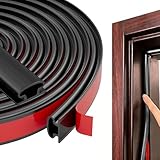
- 【THICKENED SILICONE MATERIAL - COMPLETELY BARRIERING AIR AND NOISE】:The weather stripping is made of thickened TPE material with good sealing and anti-deformation properties, with this weather stripping you can completely seal the gaps, keep the room warm in winter and cool in summer, Helps To Reduce Energy Consumption ,and blocking the entry of noise, light, rain, dust, wind, leaves, snow, and odor, and no reptile will sneak in.
- 【CUSTOMIZABLE IN A VARIETY OF SIZES】This weatherstripping is easy to customize, can be cut to size with scissors, and can be easily bent into any shape. Overall length 50 feet, width: 0.35 inch; thickness: 0.23 inch; fits gaps and spacing from 0.1 to 0.22 inch.NOTE: Please measure the width of the gap before purchase
- 【STRONG ADHESION - WON'T FALL OFF】This door weather stripping is covered with a strong adhesive substance. Simply remove the red film from the surface and install. After 24 hours of bonding, everything is securely bonded and there is no need to worry about peeling or adhesive residue, ensuring that this door seal strip in place long after use (and is no longer affected by extreme temperatures).
- 【EASY INSTALLATION】Measure the length of the groove to be sealed, cut the Universal Weatherstrip to the desired length, clean and dry the surface, and insert the Soundproof Weatherproof Weather strip into the groove.(Note:Low Temperature Will Result In Poor Adhesive Performance,Please Use A Hair Dryer To Heat The Adhesive Backing To Increase The Bonding Effect Before Installation)
- 【WIDELY USED】The Door Insulation Strip is a tough, long-lasting self-adhesive tape with minimal compression that helps prevent rattles, vibrations and squeaks. It is widely used as weather stripping, gaskets or cushioning and stabilizes major appliances such as doors, windows, furniture, electrical cabinets, speakers, toys, crafts, sports equipment, vents, air conditioning, plumbing, HVAC. Also, in cars, trucks and boats.
Bathroom
Deal first with active leaks, unsafe electrical conditions, damaged subflooring or a failing fixture. If the room remains usable, cosmetic finishes can be deferred. If accessibility is the main goal, plan clearances, controls, grab-bar backing and waterproofing as one coordinated scope rather than adding isolated features that later work would disturb.
Energy and comfort
Use the assessment to choose the building area with the strongest opportunity for this house. Follow the air-sealing-before-attic-insulation dependency, then consider other areas in light of the inspection. Keep the sequence flexible if climate or construction makes another measure more urgent.
Additions and layout changes
An addition or major reconfiguration usually requires a complete design and approval path before construction is split. You may be able to phase the build by area or finish level, but protect the building envelope and essential services first. Deferring a room’s finishes is different from leaving the structure, weather protection or utilities incomplete.
Free tools Windows power users keep installed
One-click scans. No signup required.
Exterior and landscape work
Separate work that protects the building from appearance improvements. Drainage, water entry and damaged exterior components belong ahead of decorative planting or hardscape. Landscaping can be scheduled after construction access, grading and runoff decisions are settled so completed work is not damaged by later excavation.
Check incentives before counting them in the plan
The Department of Energy describes federal tax-credit and state, territorial or Tribal rebate pathways for home upgrades. Amounts, funding, eligibility and timing can change. Verify the current rules with the appropriate government source before treating an incentive as available cash, and confirm whether the measure, property and contractor meet the requirements.
Do not let a possible credit determine the order of a safety repair or active water problem. Treat incentives as a potential budget input only after eligibility and timing are confirmed.
A practical decision checklist
- Inspect for active water entry, safety hazards, structural damage and failing essential systems.
- Write a prioritized needs-and-wants list.
- Define the result each phase must deliver.
- Estimate the complete eventual project, including related expenses and household disruption.
- Map dependencies and work that would be covered or undone later.
- For efficiency projects, obtain an energy assessment or qualified evaluation and compare its findings with ENERGY STAR’s general guidance.
- Group compatible work into manageable, functional packages.
- Ask for written inclusions, exclusions, allowances and future-work assumptions.
- Confirm permits, inspections and incentive eligibility before committing.
- Reconcile actual spending and remaining scope before approving the next phase.
Questions to ask a remodeling contractor
- What must be completed first to keep the house safe, dry and functional?
- Which tasks share access or require the same walls, ceiling or floor to be opened?
- What work in this phase could be damaged or removed by a later phase?
- What is included, excluded or supplied by the homeowner?
- What temporary conditions will exist between phases?
- How will a change in concealed conditions affect the remaining budget?
- Which decisions must be made now so later work does not require demolition?
The best phased renovation is not simply the cheapest first task. It is a sequence that protects the house, respects dependencies, produces useful results and keeps the full project financially visible.
Quick Recap
Product prices and availability are accurate as of the date/time indicated and are subject to change. Any price and availability information displayed on Amazon at the time of purchase will apply.

