There is no guaranteed cheapest month to buy lumber. Historical data often show stronger lumber pricing pressure in late winter and early spring, with some softening toward late spring and lower seasonal factors in parts of fall. Those patterns are market-level signals, not promises about the price or availability at your local yard. For a real project, the best time is when you can compare identical specifications, secure sound and protected storage, and still meet the construction schedule.
The short answer: use seasonality to choose when to request quotes, not as an automatic buy signal
If your project is flexible, begin checking prices in winter or early spring, then obtain another set of comparable quotes in late spring and again in early fall. This timing lets you observe the historical pattern without assuming it will repeat exactly. If the project has a fixed start date, a confirmed delivery date and suitable material are usually more valuable than a speculative saving from waiting.
As an Amazon Associate I earn from qualifying purchases.
National indicators can move differently from one another. A producer-price index measures what an industry receives, a futures contract reflects expectations for a standardized market, and a wholesaler index tracks a broad category. None is the same as the cash price for the species, grade, length and quantity on your takeoff. Your decision should therefore combine a market check with a written local quote.
Do these 3 things before closing this tab:
1Fix the driver behind crashes, sound loss and screen glitches2Clear out junk files and repair common Windows errors3Scan for outdated or missing drivers - takes under a minute- Check the same material from at least two suppliers at the same time.
- Specify species, grade, dimensions, treatment or drying, quantity, delivery and handling charges.
- Confirm that the stock is actually available and that the supplier will hold it under suitable conditions.
- Buy earlier when a delay would stop the project or when a particular grade or length is difficult to replace.
What the Bureau of Labor Statistics seasonal factors show
The U.S. Bureau of Labor Statistics commodity seasonal-factor table publishes relative factors for lumber and softwood lumber. They describe recurring seasonal movement in the producer-price series; they are not dollar prices and they are not observations from a home-improvement store. A value above the series’ normal seasonal level indicates relatively stronger seasonal pressure, while a value below it indicates relatively weaker pressure.
#1 Best Overall

- It is easy to use
- It is highly durable
- Manufactured in United States
- Model number: 1904A
| Series | March 2025 factor | October 2025 factor | What the figures mean |
|---|---|---|---|
| Lumber | 104.781 | 99.222 | March carried a higher seasonal factor than October in the 2025 BLS table; neither number is a retail price. |
| Softwood lumber | 108.187 | 96.662 | The seasonal spread was wider for softwood lumber; the factors still do not predict a particular store’s quote. |
These values support a useful planning idea: late winter and early spring can be a sensible time to start requesting quotes, while fall may provide a useful comparison point. They do not establish that every March purchase will cost more than every October purchase. Annual supply changes, regional freight, species mix, mill outages, dealer inventory and the size of your order can overwhelm a broad seasonal effect.
The BLS also publishes producer-price observations in its Producer Price Index—Logging tables. Those series are industry-level indexes. They help show whether prices received by producers are moving, but they cannot tell you what a contractor or homeowner will pay for a particular board today.
The historical futures pattern: why late February and May often matter
CME Group’s Random Length Lumber Futures and Options brochure describes a historical construction-cycle pattern. Buyers typically cover anticipated spring needs by the end of February. Prices tend to weaken into May, when construction and home-improvement activity has fully resumed, and demand can support prices into autumn. CME presents this as a historical tendency in the futures market, not a forecast for a specific year.
Recommended Free Tools
Winter and early spring: the quote-gathering window
Many projects are planned before the main building season. Mills, wholesalers and dealers may be responding to expected spring demand rather than only to today’s orders. Requesting quotes before the end of February can reveal whether a supplier is already pricing in that demand and whether the lengths or grades on your list are available.
Late spring: a potential softening period
The historical pattern points to prices tending to weaken into May. If your project can wait without creating storage, labor or permit problems, a May quote can be a useful benchmark against a winter quote. The word “tending” matters: a supply interruption, an abrupt change in housing activity or a regional shortage can reverse the pattern.
Summer and autumn: compare again rather than assume
Seasonal demand can support prices into autumn even as some construction activity changes with the weather. A fall quote may be attractive for one product and unavailable for another. Compare the delivered cost and the exact specification instead of treating “fall” as synonymous with “cheap.”
Rank #2

- Many Uses - This product is suitable for new home construction, renovation projects, and more and has been tested for many different jobs.
- High Quality Appearance - Every piece meets the stamped grading standards for strength and high quality appearance. They are also strong and durable.
- Versatile - Our Lumber can be primed and painted or sealed and stained. It has many uses and can do many jobs while having a high-quality appearance.
- Meets High Standards - Every stud meets the stamped grading standards for strength and highest quality in appearance. Framing studs are ideal for a wide range of uses from framing of houses to basic interior structural applications. Studs come in several widths for structural framing, structural walls, interior and protected exterior walls or can be used for a variety of craft and non-structural projects.
- Farm Plastic Supply - Farm Plastic Supply offers premium lumber products for all uses and jobs. Our lumber products are quality and are very durable. Our Lumber is very dependable and has been a favorite among many of our customers.
Why the best month changes from project to project
Supply can overpower the calendar
Mill curtailments, permanent closures, import changes and dealer inventory can move a quote independently of season. A supplier with full racks may discount to move stock; another may charge more because it must replenish a scarce grade or length.
Crashes, No Sound, or Screen Glitches?
Random freezes, missing sound and display glitches usually trace back to one bad driver. Find and replace yours safely.Free scan · under a minutePC Slower Than It Used to Be?
A free scan shows the junk files, broken settings and background clutter dragging Windows down - then fixes them in one click.Free scan · Windows 10 & 11Species and grade are not interchangeable
Framing lumber, pressure-treated material, appearance boards and engineered products follow different supply chains. Even within dimensional softwood, species, structural grade, moisture condition and actual dimensions affect availability and price. A low quote for a different grade is not a saving if it cannot perform the required structural or durability function.
Local freight and handling matter
A national index cannot include your delivery distance, lift-gate charge, minimum order, fuel surcharge or unloading conditions. Two suppliers can quote the same per-piece price but produce different delivered totals. Always compare the total for the same destination and delivery date.
Your schedule has an economic value
Waiting may save money on boards but cost more in equipment rental, labor remobilization, weather exposure or a missed inspection. Conversely, buying too early can create warped or stained material if it is stored uncovered or on the ground. The financially best date is the one that balances the quoted material cost with these project costs.
What the 2026 market evidence says—and what it does not
Recent indicators illustrate why a seasonal rule cannot substitute for a current quote.
Quick wins for a faster PC:
Clear out junk files and repair common Windows errorsFree Scan →Fix the driver behind crashes, sound loss and screen glitchesFind Drivers →Repair Windows errors before they cause bigger problemsFix Now →| Evidence | Reported observation | How to use it |
|---|---|---|
| CME October 2026 market update | Lumber futures were relatively stable through much of the second half of 2026, with slight recent downward pressure; the discussion also notes seasonal shifts away from new construction and framing as weather cools. See the CME October 2026 update. | It is context for market direction, not a guaranteed reduction at your local yard. |
| Canfor Q2 2026 interim filing | Canfor said reduced Southern Yellow Pine supply and lower Canadian SPF imports into the United States in the first half of 2026 compared with 2025 resulted in a more balanced U.S. lumber market. Read the SEC-filed interim management discussion. | This is company-authored market commentary, useful for explaining supply conditions but not an independent retail-price forecast. |
| Weyerhaeuser Q1 2026 filing | Weyerhaeuser reported its framing-lumber composite benchmark rising from $385 per thousand board feet (MBF) to $470/MBF during the quarter. The filing links the environment to holiday-season curtailments, permanent closures and lean dealer inventories. See the Q1 2026 Form 10-Q. | The composite is a benchmark, not a consumer price for your order; it demonstrates how supply and inventory can outweigh a simple monthly pattern. |
| ALFRED wholesaler index | The BLS lumber and construction-material merchant wholesaler PPI was 139.773 for August 2026, updated September 10, 2026, with May 2019=100 as its base. The series is not seasonally adjusted. View the ALFRED series. | It indicates movement in a broad wholesale category, not a lumberyard price list or a quote for a specific species and grade. |
Taken together, these observations show three different layers of the market: futures expectations, producer commentary and benchmark indexes. A local quote can diverge from all three because of regional supply, inventory age, order size and delivery logistics.
Rank #3

- By Crafters, For Crafters: Crafting and building with wood is our number one priority. Bringing you more of the wood craft supplies you love is our job. Please dont hesitate to get in touch
- Versatile Wooden Sticks and Lumber: These wooden pieces take paint, stain, and other embellishments well. Short lengths are suitable for many projects - from DIY decks to framing
- Pre-Cut and Pre-Sanded: Tired of cutting sanding and measuring your lumber? We've done it for you with less then a 1/64 inch tolerance. The lumber we produce comes pre-sanded and pre-cut to 12 inch sizes - craft ready. For Smaller than 12" pieces, you can easily cut them
- Quality Construction Material: Our wood and lumber are made from beautiful, quality wood - only the best for our woodworkers and DIYers! These are cut and prepared in the usa
- Sustainably Sourced Wood: All of our wood comes from sustainable forests. This insures that every tree is replaced and regrown for future generations
Choose your buying date by project risk
Buy now when delay threatens the project
Purchase once the specification and quantity are confirmed if any of these conditions apply:
- The project has a fixed inspection, rental or contractor start date.
- The required grade, treatment or unusual length is currently in stock but not routinely replenished.
- You have dry, level, ventilated storage and can protect the lumber from ground moisture and precipitation.
- A written quote has a clear expiration date or a supplier will reserve the material and delivery slot.
Ask the supplier to identify whether the price is firm, how long it is valid and what could change it, such as a delivery surcharge or a substitution.
Wait for another quote when the project is genuinely flexible
Waiting can make sense when work is months away, the material is common, storage is not a problem and you can compare a late-spring or fall quote without affecting labor or permits. Set a decision date rather than waiting indefinitely. If the new quote is only slightly lower but availability is less certain, the earlier purchase may have the lower total project risk.
Split the purchase when needs occur in stages
For a phased build, buy the material needed for the first protected stage and keep later quantities open. This avoids tying up cash and storage while still protecting the immediate schedule. Reconfirm dimensions and grade before each later order; a substitute that was available in winter may not match the original batch in spring.
A practical quote-comparison procedure
Use the following process every time you compare a lumberyard, home-improvement store or online offer.
- Write a complete takeoff. List species, structural or appearance grade, nominal and actual dimensions, every required length, treatment or drying requirement, quantity and an explicit waste allowance.
- Choose a single comparison unit. Keep per-piece, per-linear-foot and per-board-foot prices separate until all suppliers have reported the same basis. Do not compare a unit price from one quote with a delivered project total from another.
- Request quotes simultaneously. Ask suppliers for the same pickup or delivery date and destination. Market conditions can move between conversations.
- Record the complete delivered cost. Include delivery, handling, minimum-order fees, taxes where applicable, returns and any charge for rejected or substituted material.
- Confirm stock physically or in writing. “Available” may mean at a distant location or available to order. Ask how many pieces meet the required grade and lengths now.
- Ask about hold and replacement terms. Confirm whether the supplier will reserve the quoted stock, what happens if material is damaged in transit and whether returns are accepted.
- Check the delivery date against the work sequence. A lower quote that arrives after a crew, crane or permit window can be more expensive overall.
- Save the written quote. Keep the specification, validity period, quantities and delivery terms together so a later quote can be compared without changing assumptions.
How to buy early without damaging the lumber
Early buying only helps if the material remains usable. Keep bundles off the ground on evenly spaced supports, cover the top while leaving sides open for air movement, and prevent rain or snow from being trapped against the boards. Follow the supplier’s guidance for treated or engineered products, and do not assume that a plastic-wrapped bundle can remain sealed indefinitely. Before installation, inspect for twist, bow, end checks, staining and moisture problems; segregate damaged pieces before they reach the framing or finish stage.
Rank #4
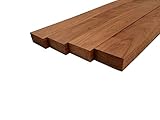
- Beautiful Grain
- Perfectly Kiln Dried
- Two sides sanded to 3/4" thickness
Arrange delivery when you can safely unload and stack the material. A truck arriving before the site is ready can force hurried placement, block access or expose boards to weather. Confirm the delivery method, access width, unloading area and who is responsible for counting and inspecting the load.
Free tools Windows power users keep installed
One-click scans. No signup required.
When a seasonal indicator should not change your decision
- A safety-critical specification is scarce. Do not substitute a lower grade to chase a seasonal price.
- The quote is for a different product. Different species, actual dimensions, treatment, moisture condition or lengths make the comparison invalid.
- The savings are smaller than project disruption. Include additional labor, rental, storage and weather exposure in the calculation.
- The market is moving faster than your schedule. A futures decline or index increase may not reach your local inventory immediately, and the direction can reverse before replenishment.
- You cannot store the material correctly. Paying less for boards that warp or stain can increase waste and rework.
A simple decision framework
Answer these questions in order:
- When must the material be installed? If the date is fixed, prioritize confirmed stock and delivery.
- Is the specification replaceable? Common stock gives you more freedom to wait; unusual grades and lengths favor securing supply.
- Can you store it properly? If not, buy closer to installation even if a seasonal window looks attractive.
- Have you compared identical delivered quotes? If not, the timing decision is premature.
- What is the cost of being wrong? Compare the possible saving from waiting with the cost of delay, damage, substitution or a second delivery.
When the answers are mixed, obtain a written quote that reserves the material or sets a delivery date, then ask whether the supplier can stage the order. That approach reduces exposure to both a price change and poor storage.
How to monitor prices without overreading the data
Keep a small record for your exact project: date, supplier, species, grade, dimensions, quantity, pickup or delivery terms, quoted total and availability. Repeat the same request in winter or early spring, late spring and, if the schedule permits, early fall. This creates a local series that is more relevant than a national index.
Use the BLS seasonal factors to understand the broad calendar, the BLS logging indexes and ALFRED wholesaler series to see industry-level movement, and CME futures commentary to understand market expectations. Treat each as background. None replaces a current quote with matching specifications.
Common mistakes and their fixes
Waiting for a mythical “cheapest month”
Fix: Set a quote schedule and a maximum acceptable total. Buy when the specification, delivery and storage conditions meet that threshold.
Comparing nominal dimensions only
Fix: Record actual dimensions, grade stamp or structural rating, moisture condition and length. A lower nominal-price quote may represent less usable material.
Best Value

- Ready-to-Use Copper Naphthenate 17% (contains 2% copper as metal), meets the AWPA M4 Standard
- Required by building codes (IBC 2303.1.9 & IRC R317.1.1) on end-cuts of all pressure treated lumber
- Low VOC (<350g/L) and 100% domestically sourced from recycled copper and reclaimed by-products.
- Labeled for General Use, and wood treated with Tenino maybe discarded in local landfill
- Water repellant and both toxic and repellant to termites and other wood destroying insect
Ignoring delivery and handling
Fix: Compare delivered totals to the same address and unloading terms, not shelf prices alone.
Assuming “in stock” means reserved
Fix: Obtain written confirmation of quantity, location, hold period and what happens if the supplier substitutes or cannot deliver.
Buying too far ahead
Fix: Match the purchase to a realistic installation sequence and a storage plan. Stage later orders when the build is phased.
Bottom line
Historical evidence points to higher seasonal factors around March, possible price softening toward May, and useful comparison opportunities in fall. The 2025 BLS factors—104.781 for lumber in March versus 99.222 in October, and 108.187 versus 96.662 for softwood lumber—describe producer-price seasonality, not retail prices. CME’s historical spring-buying pattern and the conflicting 2026 market signals show why no calendar date is a universal bargain.
For your project, request winter or early-spring quotes, compare the same specifications again in late spring or fall when the schedule allows, and buy when the complete delivered cost, availability, storage and construction date line up. A reliable local quote is more actionable than a national seasonal average.
Quick Recap
Product prices and availability are accurate as of the date/time indicated and are subject to change. Any price and availability information displayed on Amazon at the time of purchase will apply.

