What’s actually slowing this PC down?
Pick the symptom - the matching free tool is one click away.
Call a professional when bathroom mold involves sewage or other contaminated water, suspected HVAC contamination, extensive growth or water damage, moldy porous materials that may be hidden, or health concerns that make cleanup unsafe for an occupant. If the visible area is less than about 10 square feet (roughly a 3-by-3-foot patch), the U.S. Environmental Protection Agency says a homeowner can often clean it by following EPA guidance. That figure is a rule of thumb, not a guarantee that the room is safe or that damage is limited to what you can see.
The right decision depends on more than square footage: identify and stop the moisture source, consider what materials and systems are affected, and account for who lives in the home. Professional remediation is most useful when the cleanup requires containment, removal of damaged materials, contaminated-water procedures or investigation beyond a small, accessible surface.
As an Amazon Associate I earn from qualifying purchases.
When should I call a professional for bathroom mold?
Use the 10-square-foot guideline as a starting point, then check the conditions around the growth. EPA guidance says a moldy area under about 10 square feet can often be handled by a homeowner. When growth covers more than that, or there has been a lot of water damage, consult professional remediation guidance and consider hiring a contractor.
Do not treat 10 square feet as a safety cutoff. EPA’s area groupings are intended to help select cleanup techniques; they are not a threshold for health effects. A small visible patch can coexist with wet drywall, a leaking shower assembly, mold inside a wall cavity or contamination in an air-handling system.
#1 Best Overall
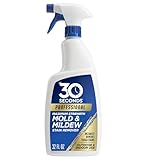
- BRIGHTER RESULTS INSTANTLY: Noticeably brightens indoor and outdoor surfaces, removing black mold and mildew stains as you watch, with no scrubbing or pressure washing required for fast, visible results
- NO SCRUBBING REQUIRED: Avoid the hassle and backbreaking work of scrubbing tough stains; the PRO formula lifts mold and mildew stains on contact so you simply apply, watch and rinse where needed
- 2X STRONGER FORMULA: The PRO formula is 2X stronger than the standard 30 SECONDS Outdoor Cleaner, made for your toughest black mold and mildew stains and messes on both indoor and outdoor surfaces
- OUTDOOR AND INDOOR USE: Use on siding, fences, decks, concrete floors, brick walls, drywall, wood, kitchen surfaces, bathroom tile and grout, bathtub soap scum and showers where mold and mildew can grow
- REMOVES BLACK MOLD STAINS & MORE: Targets stubborn black mold and mildew stains on a wide range of surfaces, giving a brighter, cleaner result indoors and outdoors without scrubbing or pressure washing
| Condition | Reason to consider professional help | What the homeowner should do first |
|---|---|---|
| Less than about 10 square feet on accessible, hard surfaces | DIY may be reasonable when no special hazard, hidden damage or health concern is present | Stop the moisture source, follow EPA cleanup guidance, clean hard surfaces with detergent and water, and dry completely |
| More than about 10 square feet or extensive water damage | The larger scope may require containment, removal of porous materials and a defined remediation plan | Limit disturbance, document the affected areas and consult remediation guidance or an experienced contractor |
| Sewage or other contaminated water | Contaminated-water cleanup requires specialized procedures and experience | Keep people away from the area and call a professional experienced with contaminated-water building cleanup |
| Suspected HVAC contamination | Running a contaminated system can spread mold through the building | Do not run a system known or suspected to be contaminated; seek HVAC-specific guidance |
| Occupant has health concerns about exposure | Cleanup decisions may need medical input and additional precautions | Consult a healthcare professional before starting work |
Situations that warrant professional remediation
Sewage or other contaminated water caused the damage
Call a contractor experienced in contaminated-water building cleanup when mold followed a toilet backup, drain overflow, floodwater of uncertain quality or another contaminated source. The issue is not simply the amount of visible mold. Contaminated water can affect flooring, wall cavities and other materials that require controlled removal and cleaning.
Do not spread contamination by moving wet belongings through clean rooms or by scrubbing aggressively before a plan is in place. Keep occupants out of the affected area while you arrange an assessment. Ask the contractor to explain how contaminated materials will be isolated, removed and disposed of.
Mold may be inside or near the HVAC system
If growth is visible in or near ductwork, air handlers, return plenums or other HVAC components, stop and obtain HVAC-specific advice. EPA guidance cautions against running a system known or suspected to be contaminated because air movement could distribute mold.
Do these 3 things before closing this tab:
1Clear out junk files and repair common Windows errors2Fix the driver behind crashes, sound loss and screen glitches3Repair Windows errors before they cause bigger problemsA bathroom fan that merely recirculates air is not the same as an exhaust system vented outdoors. If you suspect the central HVAC system, do not assume that cleaning a visible bathroom surface resolves the problem. A qualified professional should determine what equipment and connected spaces are affected before the system is operated.
Growth exceeds the small-area guideline or water damage is extensive
More than about 10 square feet, multiple connected surfaces, recurring wet drywall or a long-standing leak can make the work substantially different from wiping a spot. Extensive damage may involve containment, removal of porous materials, drying and verification that the water problem is repaired.
Large areas are also harder to assess visually. A contractor can help define the work area and identify whether the bathroom wall, ceiling, subfloor or adjoining room needs attention. The EPA guidance supports consulting remediation guidance and considering a professional in these circumstances; it does not make hiring mandatory in every home.
Rank #2

- Eliminates & Helps Prevent Mold: Targets existing mold at the source and leaves behind an invisible barrier that helps prevent future growth.
- EPA-Registered Solution: Registered with the U.S. Environmental Protection Agency for mold control when used as directed.
- Bleach-Free, Odorless, VOC-Free: Contains no bleach, ammonia, or volatile organic compounds, helping maintain healthy indoor air quality.
- Safe on Most Surfaces: Works on drywall, wood, tile, grout, concrete, fabric, and other common building materials.
- Versatile Use: Ideal for bathrooms, kitchens, basements, attics, laundry rooms, vehicles, and outdoor surfaces such as decks and patios.
Porous materials or hidden spaces are involved
Mold can penetrate materials that cannot be reliably cleaned by surface scrubbing. Moldy porous items may need disposal rather than repeated cleaning. Examples can include sections of drywall, insulation, ceiling tile, carpet underlayment and some composite wood products, depending on the damage.
Recommended Free Tools
Peeling paint, swollen trim, soft drywall, a musty odor without an obvious surface source, staining that returns after cleaning, or moisture inside a vanity or wall are reasons to investigate further. Do not paint or caulk over mold before the material is cleaned and completely dried; coating can conceal an unresolved problem.
An occupant has a health concern
CDC and NIOSH state that mold exposure may cause health effects or none, and advise people with health concerns to consult a healthcare provider. That is especially important before cleanup if someone in the home has experienced symptoms they associate with the bathroom, has a condition that makes exposure a concern, or is worried about performing the work.
A medical professional can advise the individual; a remediator addresses the building. Neither a visible patch size nor a mold test can determine whether cleanup is medically safe for a particular person.
When a homeowner may handle a small patch
A small, accessible area on a hard, nonporous surface may be a reasonable DIY project when the water source is understood and fixed, no sewage or other contaminated water is involved, HVAC contamination is not suspected, and no occupant has a health concern requiring medical advice.
- Stop the moisture. Repair the leak, condensation problem or ventilation failure before cleaning. If the source remains, mold is likely to return.
- Follow EPA cleanup guidance. Use the protective measures and work practices in the EPA’s home mold guidance rather than improvising a chemical treatment.
- Clean hard surfaces. Scrub mold from hard surfaces with detergent and water.
- Dry completely. Remaining dampness supports regrowth. Dry the cleaned surface and surrounding materials before closing walls or reinstalling trim.
- Decide what cannot be saved. Moldy porous materials may need to be removed and discarded instead of repeatedly scrubbed.
- Stop if the scope changes. If you uncover a larger area, wet wall cavity, contaminated water, spreading odor or suspected HVAC involvement, pause and call an experienced professional.
Do not assume that a household disinfectant, bleach or a coat of paint substitutes for removing mold and correcting moisture. The essential outcome is a clean, dry material with the water problem resolved.
Rank #3

- GET RID OF STUBBORN MOLD AND MILDEW STAINS: Our instant spray cleaner removes the stains left behind from black mold and mildew. They tend to leave behind ugly staining that can go deep below the surface; Our professional-strength spray is specifically formulated to eliminate discoloration caused by mold and mildew
- USING RMR-86: To safely and conveniently eliminate indoor mold and mildew stains and odors using RMR-86, proper ventilation and PPE should be used for each application
- SAFE TO USE ON MULTIPLE SURFACES: Easily remove stubborn stains from decks, wood, vinyl siding, drywall, concrete floors, brick walls, kitchen surfaces, and other areas where mold and mildew tend to grow
- FAST-ACTING SPRAY: Our powerful, fast-acting mold stain remover spray begins working instantly to target deeply embedded stains that linger on surfaces and hard-to-reach areas
- NO SCRUBBING NEEDED: Simply spray our ready-to-use formula on the affected area and watch the stains disappear right before your eyes!
Fix the moisture source or the mold will return
EPA’s warning is direct: “If you clean up the mold, but don’t fix the water problem, then, most likely, the mold problem will come back.” Bathroom mold commonly reflects a continuing moisture condition rather than a one-time cleaning failure.
Find the source
- Look for plumbing leaks at supply lines, valves, traps and toilet connections.
- Check shower corners, grout, caulk, faucets and the area around the tub for water entry.
- Inspect the ceiling and adjoining walls for roof, pipe or condensation leaks.
- Check under the vanity and around flooring transitions for swelling or persistent dampness.
- Consider whether steam is being exhausted outdoors or simply left in the room.
Dry wetted materials within 48 hours of getting wet, or remove them, according to CDC/NIOSH guidance. This is general remediation guidance, not a promise that every bathroom material can be saved. Materials that remain wet longer may require removal, and hidden moisture still needs to be located and corrected.
Verify the repair
After a leak is repaired, observe the area through normal shower use and check whether staining, odor or dampness returns. A contractor should describe how the moisture source will be repaired or verified, not just how the visible mold will be cleaned. If a wall or floor was opened, do not close it until the assembly is dry.
Free tools Windows power users keep installed
One-click scans. No signup required.
Preventing bathroom mold from recurring
Increase ventilation during bathing
EPA recommends increasing ventilation in bathrooms by running an exhaust fan or opening a window when showering. A fan vented outdoors can help remove moisture; it is a prevention aid, not a remediation service. It does not remove existing mold, dry a wet wall cavity or repair a leak.
Use the fan during the shower and continue ventilation afterward long enough for the room and surfaces to dry. Keep air paths clear and address a fan that is noisy, weak or venting into an attic or other enclosed space.
Clean damp-prone surfaces more often
EPA specifically suggests cleaning more frequently when mold recurs in damp places. Wipe condensation from walls and fixtures, keep shower surfaces from staying wet, and respond promptly to new staining. Frequent cleaning cannot compensate for a leak or inadequate exhaust, so treat recurrence as a signal to reassess moisture control.
Rank #4

- KILLS MOLD: EPA-registered formula kills mold and helps control mold and mildew on hard, nonporous surfaces when used as directed
- CLEANS AND DISINFECTS: Ready-to-use disinfectant cleaner provides non-acid cleaning performance while disinfecting treated hard, nonporous surfaces
- INHIBITS MILDEW GROWTH: Helps inhibit the growth of mold and mildew and the odors they cause when applied according to label directions.
- BLEACH-FREE FORMULA: Bleach-free cleaner deodorizes treated surfaces and leaves behind a fresh scent
- READY-TO-USE SPRAY: 32 fl oz trigger bottle is designed for household, commercial and industrial cleaning applications
Keep porous materials dry
Replace or remove moldy porous materials when they cannot be thoroughly cleaned. Dry towels, bath mats and other absorbent items between uses, and avoid storing damp materials against walls or inside poorly ventilated cabinets. These housekeeping steps reduce moisture but do not replace building repairs.
The Tool Desk
Outbyte Driver Updater FREEScan for outdated or missing drivers - takes under a minuteDriver Scan →Outbyte PC Repair FREERepair Windows errors before they cause bigger problemsFix Now →How to choose a mold remediation contractor
EPA recommends an experienced mold-cleanup contractor, checking references and asking what professional or government remediation guidance the company follows. The federal guidance does not establish one universally required credential or a nationwide licensing rule, so verify requirements that apply in your state, county or city rather than assuming a particular certification is legally mandatory.
Questions to ask before hiring
- How many bathroom mold and water-damage projects like this have you completed?
- Can you provide recent references for comparable work?
- Which EPA, CDC/NIOSH or other professional remediation guidance will you follow?
- How will you identify and repair the moisture source?
- How will you contain the work area and protect unaffected rooms?
- Which porous materials do you expect to remove, and how will you decide?
- What is your plan if you find hidden damage or contaminated water?
- How will you handle suspected HVAC involvement, and will the system remain off until evaluated?
- What work is included in writing, and what conditions would change the scope?
Be cautious of a proposal focused only on spraying or fogging. A credible plan addresses moisture, cleaning or removal, drying and the boundaries of the affected area. References and a clear scope are more useful than a promise based solely on a mold-test result.
Why routine mold testing should not decide the cleanup
CDC/NIOSH states: “There are no health-based standards for mold or other biological agents in indoor air.” Because there is no health-based pass/fail number for indoor mold air, CDC/NIOSH does not recommend routine air sampling for mold as part of building air-quality evaluations.
You generally do not need to know the mold type before removing visible mold and fixing moisture. Species testing is therefore not a prerequisite to hiring a qualified contractor or beginning an appropriate cleanup. Sampling may be considered in a special investigation directed by a qualified professional, but a test result should not delay stopping a leak, drying materials or addressing visible growth.
The practical sequence is inspection, moisture correction, appropriate cleaning or removal, and drying. Air sampling cannot substitute for those actions and cannot reveal every concealed wet material.
Advice for renters
Renters should promptly photograph the affected area, note when it appeared and report leaks, recurring dampness or suspected contaminated water to the landlord or property manager in writing. Keep copies of the notice and follow the lease’s maintenance procedure. Do not open walls or undertake major remediation without authorization unless an immediate safety emergency requires a different response.
If the landlord sends a contractor, ask what moisture source will be repaired, what materials will be removed and how the work area will be contained. Local housing rules and lease obligations vary, so this article is not a legal determination of responsibility.
Quick Recap
Common mistakes that make bathroom mold worse
- Using the size cutoff as a guarantee. Ten square feet is a rule of thumb, not proof that damage is shallow or safe.
- Cleaning before stopping the leak. Mold is likely to return when moisture remains.
- Painting or caulking over growth. Clean and dry first; coatings can conceal unresolved damage.
- Running a possibly contaminated HVAC system. Air movement can spread mold.
- Keeping moldy porous materials in place. Some materials cannot be reliably cleaned and may need disposal.
- Ordering routine air sampling instead of fixing dampness. CDC/NIOSH says routine sampling is not recommended and there are no health-based indoor-air standards.
- Hiring without checking experience. Ask for references and a written moisture-source and remediation plan.
A practical decision checklist
- Estimate the visible area, but do not use size alone.
- Identify whether water came from a clean plumbing source, sewage or another contaminated source.
- Check for hidden moisture, soft or porous materials and damage beyond the bathroom surface.
- Determine whether HVAC components could be contaminated; keep a suspected contaminated system off.
- Consider the health concerns of everyone who will be exposed to the work.
- Repair the water source and dry wetted materials within 48 hours when possible, or remove them.
- For a small, accessible hard-surface area with no special hazards, follow EPA cleanup guidance.
- For extensive growth, contaminated water, suspected HVAC involvement, hidden damage or health concerns, consult an experienced professional.
- After cleanup, improve ventilation and cleaning frequency so the bathroom stays dry.
Product prices and availability are accurate as of the date/time indicated and are subject to change. Any price and availability information displayed on Amazon at the time of purchase will apply.

