Plain, non-glossy newspaper is the best-documented substitute for cardboard in sheet mulching. Lay overlapping sheets over short vegetation, wet them, and cover them with organic mulch. The correct number of sheets depends on paper weight, weed pressure and the guidance you follow: university recommendations range from two or three layers to ten sheets, so treat any number as a starting point rather than a universal rule.
Why newspaper works as a cardboard substitute
Sheet mulching needs a continuous, light-blocking layer between existing vegetation and the new bed. Plain newsprint can provide that layer while it decomposes. The University of Vermont Extension’s 2026 lawn-to-garden method uses ten sheets of newspaper, overlaps the sheets by 8–10 inches, wets them and covers them with organic mulch. Virginia Cooperative Extension and Iowa State University Extension also describe newspaper as a sheet-mulching material, but recommend different layer counts.
As an Amazon Associate I earn from qualifying purchases.
The important characteristics are continuity and coverage, not a particular brand of paper. Sheets must meet or overlap so light cannot reach the grass or weeds below. Wetting helps prevent wind from moving the paper before mulch is added. The organic layer above protects the paper, keeps it in contact with the soil and supplies the finished bed’s surface mulch.
Newspaper is not a guaranteed weed-eradication treatment. Some weeds can survive beneath a sheet, exploit a seam or grow through the mulch. The UC Statewide Integrated Pest Management Program identifies bermudagrass and bindweed as especially difficult in sheet-mulched areas.
#1 Best Overall

- Keep Your Landscape Clean and Tidy: Our premium weed barrier is designed to provide excellent weed control properties, ensuring a clean and tidy landscape for a long time.
- Built to Last: Made from durable polypropylene, our 3.2oz landscape fabric heavy duty is extremely strong and tear-resistant, making it perfect for heavy foot and vehicle traffic.
- Water and Nutrients Flow Freely: Our weed barrier fabric keeps weeds away while allowing water and nutrients to flow through to the soil beneath, keeping your plants healthy and hydrated.
- Easy to Install: Our weed barrier landscape fabric is super-easy to install and can be cut to fit any size or shape. Lay it down over the soil and cover with landscaping fabric for a finished look.
- Versatile and Valuable: Our weed barrier fabric heavy duty can be used in gardens, landscaped areas, agricultural applications, and more. It's also perfect for stabilizing driveways and preventing erosion.
Which paper and mulch materials can replace cardboard?
| Material | How to use it | What the extension guidance establishes |
|---|---|---|
| Plain newspaper or newsprint | Use overlapping sheets as the continuous barrier; wet and cover them. | Best-supported direct replacement for cardboard. Layer recommendations vary by source and site. |
| Heavy paper | Apply as a sheet mulch and cover with organic material. | UC IPM recognizes cardboard or heavy paper, but does not specify a paper grade or universal layer count. |
| Shredded paper | Use as a loose upper mulch layer, not as an assumed sheet barrier. | University of Guam lists shredded paper among top-layer mulch materials; the guidance does not demonstrate equivalence to intact sheets. |
| Leaves, grass clippings, pine needles, bark, wood chips or compost | Spread over the paper or use to build the bed’s mulch layer. | Suitable organic covering materials when clean and free of unwanted chemicals or weed seeds. |
Do not treat every paper product as interchangeable. The reviewed extension guidance does not establish grocery bags, kraft or builder’s paper, or specialty landscape paper as general substitutes. If you are considering one of those materials, verify its composition and local recommendations rather than assuming it performs like newspaper.
Avoid paper or mulch that has been exposed to herbicides or pesticides, and avoid strongly dyed material. The University of Vermont Extension specifically cautions against chemical-treated or dyed materials in its lawn-conversion instructions.
How many newspaper layers should you use?
There is no single number that fits every newspaper, lawn and climate. Thicker paper, dense turf, aggressive perennial weeds and a rough or uneven surface can require more coverage than thin paper over sparse annual weeds. The published recommendations illustrate that range:
Outdated Drivers Are Slowing You Down
One free scan finds every outdated or missing driver and matches the right update for your exact hardware.Free scan · exact hardware matchWindows Errors? Fix Them Before They Spread
Repair common Windows errors and clear accumulated junk for a smoother, more stable PC - no reinstall needed.Free scan · no reinstall| Source and context | Recommendation | Qualification |
|---|---|---|
| University of Vermont Extension, 2026 lawn-to-garden conversion | Ten newspaper sheets | Used with 8–10 inches of overlap and a 4–6-inch organic cover in that example. |
| Virginia Cooperative Extension, 2026 mulching guidance | Three to four newspaper layers | General sheet-mulching guidance; conditions and paper weight can change the result. |
| Iowa State University Extension and Outreach | Two to three layers, with up to ten layers where needed | Advises avoiding an excessively thick barrier and breaking up the paper after the vegetation dies or after several weeks. |
Use these figures as field guidance, not as conflicting rules to reconcile into one formula. Inspect the finished layer for holes, thin spots and exposed seams. A smaller number of carefully overlapped sheets can block light better than a thicker stack with gaps.
Rank #2

- Professional Grade Weed Barrier: LAVEVE weed barrier fabric is made of woven polypropylene material. Its high-density and permeable characteristics effectively stop weed growth and protect soil health so your plants can grow well.
- Highly Permeable and Breathable: Weed control mat that resist UV rays and withstand sun exposure feature a cross-weave and permeable, breathable design. It is durable while allowing more air and water to penetrate the soil, effectively reducing erosion and driving out weeds.
- Easy to Cut and Install: Weed blocker fabric has clear green guide lines that help align planting. You can cut it freely with household scissors or craft knife according to the size and shape you need, fix the fabric with U-shaped securing pegs, and you can use it normally.
- Multi-path Application: LAVEVE weed barrier fabric (4FT x 50FT x 2 Pack, total 4FT x 100FT) is enhanced for greater load capacity and is suitable for various applications, including gardens, lawns, vegetable plots, flower beds, gravel paths, brick pavements, sidewalks, driveways, construction projects, and different types of gardens.
- Improve Your Quality of Life: Using weed barrier cover not only solves the trouble of weed growth for you, but also greatly improves the neatness and beauty of your garden.
Step-by-step: sheet-mulch a lawn or weedy area with newspaper
-
Cut the existing vegetation short
Mow or cut the grass and weeds as close to the ground as practical. Remove bulky debris and shape the bed so the paper can lie flat. The University of Vermont sequence starts with short vegetation rather than requiring complete sod removal.
-
Prepare the bed edges
Define the perimeter before laying paper. Check the transition to paths, foundations and other planting areas so the mulch will not spill into drainage routes or cover structures. Fill obvious hollows if they would leave a large air gap under the paper.
-
Lay plain newspaper with generous overlap
Place sheets across the entire target area. Overlap adjacent sheets by at least the 8–10 inches used in the University of Vermont example, and stagger rows so four corners do not meet at one point. Extend the paper into small edge gaps; weeds often exploit uncovered margins.
Recommended Free Tools
Special offer. See more information about Outbyte and uninstall instructions. Please review EULA and Privacy policy. -
Wet the paper thoroughly
Apply water until the sheets are damp and settle against the soil. Wetting makes newsprint less likely to blow away and helps the layers conform to the ground. Do not leave dry sheets exposed while waiting to source mulch.
Rank #3
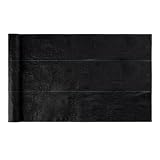 Amazon Basics Weed Barrier Landscape Fabric, 3 x 50 Feet, Black, 1-Pack
- 50x3-foot heavy-duty weed control fabric for helping prevent unwanted weed growth
- For use in gardening and farming or paving and gravel projects to provide stability and prevent erosion
- Breathable landscape fabric blocks weeds while allowing water and nutrients to reach the soil
- High-tensile, tear-resistant 90 GSM(3.2 oz) polypropylene garden weed blocker mat delivers reliable weed control
- Dimensions: 3 x 50 ft (W x L); easily cut to fit any space; trimming guidance helps minimize edge fraying after cutting; green guide lines for easy alignment
-
Add an organic cover immediately
Cover the wet paper with clean mulch. For its lawn-conversion example, University of Vermont Extension recommends 4–6 inches. Iowa State gives a general 2–4-inch range for many garden mulches, with depth depending on the mulch material, soil, climate and purpose. These recommendations address different contexts; choose a depth that keeps the paper fully covered without burying plant crowns or blocking drainage.
-
Check for exposed paper and seams
Walk the bed after the first watering and after heavy rain. Add mulch where paper has surfaced, shifted or pulled apart. Maintaining a continuous cover is more important than preserving a particular sheet count.
-
Monitor regrowth
Look for shoots at seams, edges and isolated holes. Pull or cut regrowth while it is accessible, then repair the spot with additional paper and mulch if appropriate. Do not assume that a dormant patch has been eliminated simply because it was covered.
Special offer. See more information about Outbyte and uninstall instructions. Please review EULA and Privacy policy.
How much mulch should cover the newspaper?
Mulch has three jobs in this method: it holds the paper in place, blocks residual light and becomes the surface layer of the new bed. The required depth changes with the material. Coarse wood chips have larger voids than fine compost, while leaves can compact or blow away. Iowa State’s 2–4-inch general range and Vermont’s 4–6-inch lawn-conversion example should therefore be read as context-specific instructions, not as interchangeable minimums.
Rank #4

- Heavy-duty PP Material: This landscape weed barrier fabric is made of 5.8oz high density is woven needle punched dual-layer and professional-grade polypropylene, tear-proof, easy to cut . Size: 4 x 300 ft / 1.2 x 91.4 m.
- High Permeability: Our heavy duty weed barrier is designed with excellent permeability. You never need to worry about the water will be puddled on the top of the material. Note: Woven layer should face up for better sun protection, weed barrier, and more vital water permeability.
- Weed Control & Soil Improve: This landscape fabric can allow the soil to breathe and keep soil retaining humidity. In addition, a unique dual-layer design can accumulate nutrients for the earth, boosting the growth of your plants.
- Easy Installation: Our weed block fabric is effortless to cut and install. It is convenient to DIY the cloth size and shape to meet your different needs. The garden cloth weed barrier also features green stripes for easy plant alignment. (Installation tools are not included.)
- Wide Application: Durable garden weed cloth will keep annoying weeds away from your garden. The weed mat fabric is ideal for garden, agriculture, industrial uses, such as a greenhouse, vegetable patch, flower bed, artificial grass, sidewalk, gravel, driveway, stones, etc.
- Use enough material that no newspaper remains exposed after watering or settling.
- Keep mulch from piling directly against trunks, stems or building components.
- Use clean, weed-free organic material; contaminated mulch can introduce the problem you are trying to suppress.
- Expect the layer to settle and decompose, especially when it contains leaves or fine compost, and top it up as needed.
Compost can be part of the covering or bed-building layer, but a thin compost dusting is not a substitute for a continuous sheet barrier. Shredded paper is similarly better treated as loose mulch unless you have separate local evidence that it will form an uninterrupted light block.
Independent reader supportYour contribution helps us test, update, and keep practical guides available for everyone.When newspaper sheet mulching struggles
Persistent perennial weeds
Bermudagrass and bindweed are named by UC IPM as difficult weeds for sheet mulching. Their runners, rhizomes or stems can move beyond the covered area or reappear through weak spots. Plan on repeated inspection and targeted removal rather than a fixed eradication date.
Gaps, thin spots and disturbed edges
Wind, foot traffic, animals and settling can open seams. Edges beside paths and fences are particularly vulnerable. Repair the barrier as soon as you see light reaching the soil.
Free tools Windows power users keep installed
One-click scans. No signup required.
Excessive paper thickness
More paper is not always safer. Iowa State warns that an overly thick paper layer can restrict water and air movement. Its guidance suggests breaking up the paper after the underlying vegetation has died or after several weeks to avoid leaving a long-term barrier. In practice, avoid creating a permanently sealed horizon: let the material decompose and maintain normal moisture movement.
Best Value
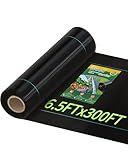
- Weed Control: Three-ounce thick woven polypropylene blocks sunlight to suppress weed seed germination; a durable physical barrier for flower beds and vegetable gardens
- Heavy Duty Construction: Woven from premium three-ounce polypropylene with 146 pounds of tensile strength per five-centimeter strip and up to 600 pounds across the full width; resists tearing under gravel and mulch
- Permeable Design: Allows rain and irrigation water to penetrate the soil while maintaining air circulation; supports healthy root development without trapping excess moisture
- Easy Installation: Green alignment stripes help position plants in straight rows; cuts cleanly with standard scissors; apply tape along the cut line first to minimize fraying for neat edges
- Versatile Outdoor Use: Ideal for flower beds, vegetable gardens, driveways, pathways, erosion control slopes, animal enclosures, and general yard landscaping; works under mulch, gravel, or as a ground cover
Wet or poorly drained sites
Paper and mulch should not be used to conceal standing-water problems. If water already pools, correct grading or drainage issues first. A thick, wet organic layer can remain saturated and slow access for planting or maintenance.
Newspaper versus cardboard: practical trade-offs
Both materials can serve as sheet layers when installed without gaps, but the available guidance does not provide a controlled head-to-head test. The meaningful comparison is how each material behaves on your site:
- Coverage: Newspaper arrives as smaller sheets, so it requires more overlaps and more attention to seams. Cardboard can cover larger areas per piece, but its edges still need to meet securely.
- Handling: Newsprint wets and conforms readily. Large cardboard pieces can be awkward around roots, corners and irregular ground.
- Thickness control: Newspaper is easy to layer incrementally. Either material can become an air- and water-limiting barrier if stacked excessively.
- Availability: Newspaper is the documented fallback when cardboard is unavailable. Gather enough clean sheets before beginning so the bed is not left partly covered.
- Weed pressure: Neither material promises control of aggressive weeds. Site preparation, overlap quality, mulch depth and follow-up determine the result.
Because no controlled comparison is supplied, do not claim that newspaper decomposes faster, suppresses weeds better or improves soil more than cardboard in every situation.
Preparing to plant after sheet mulching
Sheet mulching is a bed-conversion method, not a guaranteed timetable. The sources do not establish one universal waiting period. Observe whether the vegetation beneath has died, whether the paper remains intact and whether the mulch has settled. If you need to plant soon, create planting openings carefully rather than turning the whole barrier into a thick mixed layer.
For later maintenance, Iowa State’s advice is relevant: once the underlying vegetation has died or several weeks have passed, break up paper that remains as a continuous layer so air and water can move normally. Work only where needed and avoid reopening seams across areas that still require light exclusion.
A field checklist for a reliable newspaper layer
- Plain, non-glossy newspaper is on hand in sufficient quantity.
- Vegetation has been cut short and the bed outline is established.
- Sheets overlap generously, with no visible soil gaps.
- The paper is wet and covered before wind can disturb it.
- Organic mulch fully covers the paper at a depth suited to the material and site.
- Mulch and paper are free of known herbicide, pesticide and problematic dye contamination.
- Edges, seams and persistent weeds are scheduled for inspection.
- The paper will not be left excessively thick and impermeable after the vegetation dies.
For a construction or landscape project, document the material used, approximate layer count, overlap pattern and mulch depth in the site notes. That record helps explain later maintenance decisions when different crews return to the bed.
Quick Recap
Product prices and availability are accurate as of the date/time indicated and are subject to change. Any price and availability information displayed on Amazon at the time of purchase will apply.
Do these 3 things before closing this tab:
1Fix the driver behind crashes, sound loss and screen glitches2Repair Windows errors before they cause bigger problems3Scan for outdated or missing drivers - takes under a minute
