There is no single statewide construction schedule in Washington. The legal start and stop times depend on the city or county, zoning, the kind of work, and any permit condition or noise variance. Washington Department of Ecology rules provide a fallback framework, but local governments enforce construction-noise rules. Before relying on a time, identify the project’s exact jurisdiction and check its current ordinance and permits.
Why the location matters more than a statewide “quiet hours” rule
Washington’s noise system has two layers. Chapter 173-60 of the Washington Administrative Code sets maximum environmental-noise rules. A city or county may adopt a different local ordinance; where it does, the local rule controls. Issues that a local ordinance does not cover can fall back to Ecology’s rules. If no local ordinance applies, the local government enforces the state rules.
As an Amazon Associate I earn from qualifying purchases.
Ecology does not enforce noise rules or local noise ordinances. Its resident guidance says the local government has that authority. In practice, that means the answer to “What time can construction start?” begins with the project’s address, not with a statewide clock.
- Inside a city: start with the city department responsible for code, building, construction, or noise enforcement. City police or city hall can usually identify the correct office.
- Outside city limits: ask the county sheriff, county commissioners, or the county department designated in the local code.
- At a permitted project: read the land-use, building, environmental, and noise conditions attached to the permit. Those conditions can be stricter than ordinary hours.
Washington has many local ordinances, so a schedule that is lawful in one city can be a violation in the next city or county. The Seattle, Tacoma, and Spokane County provisions below are examples, not a statewide timetable.
#1 Best Overall

- 2.25-inch LCD Screen with Backlight: This TS-501B sound level meter is measured noise levels are expressed in decibels and displayed on the 2.25-inch LCD screen, it easy to read on a big display design. Long press the backlight button to turn on a backlight, making it easy to view even in dim light
- Decibel Meter with A/C Weighting: TopTes TS-501B decibel meter uses a precise condenser microphone to capture sound. It’s equipped with A-weighting and C-weighting facilities that measure noise levels from 30 to 130 dB with an accuracy of 1.5 dB, Frequency from 30 to 8000Hz. Perfect for monitoring noise levels in communities, home theaters, audio systems, automobiles, workshops, schools, offices, factories
- MAX/MIN Measurement: The sound pressure level (SPL) meter has Max or Min measurement values to represent the maximum/minimum (high/low peak) value of the sound produced within a certain time, and the data hold function can freeze the current reading based on the sound measurement according to individual needs
- Easy Use and Feature Packed: The non-slip side design ensures that the portable noise meter fits easily in the hand. TS-501B SPL meter is a battery-operated noise meter that comes with three durable batteries and has an automatic power off function to extend battery life. A low battery indicator will appear on the screen when the battery is low to remind the user to replace the battery in time
- What’s in the Box: One TS-501B Decibel Meter, Three AAA Batteries, One User Manual, One Carry Case. The device has been factory calibrated to ensure high measurement accuracy and compliance with quality standards.
What can change the hours at a particular site
| Factor | Why it matters | What to verify |
|---|---|---|
| Jurisdiction | Each city and county may set its own construction-noise rules and enforcement process. | The city or county containing the work site, including whether it is inside city limits. |
| Zoning | Some ordinances use different hours for residential, commercial, or mixed-use zones. | The site’s zoning designation and the hours attached to that zone. |
| Work type | Impact work such as pile driving or jackhammering may have narrower hours than ordinary work. | Whether the activity is classified as impact construction, demolition, maintenance, or ordinary construction. |
| Day | Weekdays, weekends, and legal holidays may have separate schedules. | The exact date, including whether it is a holiday recognized by the ordinance. |
| Permit or environmental condition | Land-use permits or State Environmental Policy Act conditions can impose additional limits. | All project permits, approved plans, SEPA conditions, and posted conditions. |
| Variance or exception | A variance may authorize noise at a time or place that would otherwise be prohibited. | Whether a current variance exists, its dates, hours, location, and conditions. |
| Emergency or public work | Some codes provide exceptions for emergency response, public projects, or specified maintenance. | The ordinance’s definition of the exception and whether this project qualifies. |
Seattle construction hours and noise limits
Seattle illustrates why both zoning and work type matter. The city’s construction and maintenance guidance lists broad hours, then narrower hours for several zones and for impact construction.
| Seattle category | Weekdays | Weekends and legal holidays |
|---|---|---|
| General construction and maintenance | 7:00 a.m.–10:00 p.m. | 9:00 a.m.–10:00 p.m. |
| Ordinary activity in Lowrise, Midrise, Highrise, Residential-Commercial, and Neighborhood Commercial zones | 7:00 a.m.–7:00 p.m. | 9:00 a.m.–7:00 p.m. |
| Impact construction, including examples such as pile driving and jackhammering | 8:00 a.m.–5:00 p.m. | 9:00 a.m.–5:00 p.m. |
The zone-specific hours are not a universal Seattle rule for every site. The city identifies exceptions for public projects and certain parking-lot maintenance. A project may also have land-use or State Environmental Policy Act restrictions that are tighter than the general schedule.
Seattle legal holidays
Seattle’s listed legal holidays include New Year’s Day, Memorial Day, Independence Day, Labor Day, Thanksgiving Day, the day after Thanksgiving, and Christmas Day. Because holiday treatment can affect the allowed hours, check the current city guidance for the date involved rather than assuming that a weekday holiday follows weekday hours.
Rank #2
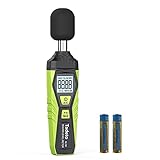
- 【Accurate Measurement】 The measuring range of the sound level meter is 30dB to 130dB . Highly accurate with ± 2.0 dB. Real-time monitoring can give you accurate data on the sound level in the area.
- 【A/C Weighted Measurement】 The A weighted simulates the frequency characteristics of low-intensity human ear noise, which is suitable for the detection of ambient noise. The C weighted simulates the frequency properties of high-intensity noises of the human ear, which are suitable for the sound pressure analysis of machine motors and machines. More professional measurement methods provide users with a more perfect user experience.
- 【Fast and Slow Measurement】 The sound level meter has the function of converting the fast and slow response rate. The fast response rate uses a time constant of 0.125s/time for general environmental measurement. The slow response rate uses a 1s/time constant, which is used for environmental measurements with relatively large changes in noise levels.
- 【Digital LCD Display 】 The digital display is a 4-digit LCD display with a resolution of 0.1 dB. Backlit LCD digital display, the reading effect is clearer in dark places. When the battery is low, the LCD display will display a low voltage icon, indicating that the power is low at this point and the battery needs to be replaced.
- 【Convenient and Lightweight 】Tadeto sound level meter is lightweight and easy to carry. It's widely used in factories, transportation, car, baby room and audio system offices, sound quality control in homes, schools, and construction sites.
Seattle variances and penalties
Seattle can issue a noise variance for construction that would otherwise be prohibited at a particular time or place. A variance is not blanket permission: its conditions and dates control the work. The city’s current noise-code guidance states that a first citation can be $150 to $1,000, with fines doubling for second and later citations. Confirm the current code, citation level, and any project-specific variance before concluding that an activity is unlawful.
Tacoma’s construction and demolition schedule
Tacoma’s code provides a different example. Construction and demolition, excluding emergency work, may not be performed from 9:00 p.m. to 7:00 a.m. on weekdays or from 9:00 p.m. to 9:00 a.m. on weekends and federal holidays, except as otherwise provided in the code.
These are Tacoma code provisions, not Washington’s statewide hours. Check the current wording and exceptions for the specific activity. An emergency-work exception, a different code section, or a permit condition can change how the rule applies.
Rank #3

- Accurate 30-130dB Noise Measurement: The Goldeep SL750A decibel meter measures sound levels from 30 to 130dB with ±1.5dB accuracy and a 31.5Hz-8KHz frequency response. This sound decibel meter is ideal for checking home noise, neighbor noise, traffic sound, office noise, construction sites, factories, classrooms, baby rooms and musical instruments.
- A/C Weighting for Different Sound Environments: This digital sound level meter supports A/C weighting modes for more flexible noise testing. A-weighting is suitable for environmental noise such as urban traffic, schools, offices, business areas and construction sites. C-weighting is designed for industrial noise from machinery, equipment, aerospace, high-speed rail and other high-intensity sound sources.
- dB/SONE Units for Sound & Loudness Testing: Use the dB unit to measure sound intensity for environmental noise, machine noise, traffic noise and workplace noise. Switch to SONE to better understand perceived loudness, making this db meter useful for music, audio systems, acoustic checks and instrument noise control..
- FAST/SLOW Response with MAX/MIN Tracking: The spl meter includes FAST and SLOW response settings. FAST response, 0.125s per reading, is useful for changing noise levels, while SLOW response, 1s per reading, is suitable for steady-state noise. MAX/MIN value tracking helps record peak and minimum noise levels over a period of time.
- Easy-to-Use Sound Meter for Daily & Professional Needs: Designed with data hold, clear LCD display, anti-slip grip and a windbreak ball, this sound meter is practical for indoor and outdoor use. Package includes 1 sound level meter, 2 AAA 1.5V batteries and 1 user manual, so you can start measuring noise right away.
What Spokane County’s exemption means—and does not mean
Spokane County’s noise code lists sounds from temporary construction sites among exemptions from specified noise provisions during the period stated in the code, or when the work is conducted beyond 1,000 feet of a residence where people reside and sleep. The code contains other exemptions and distinctions as well.
Do these 3 things before closing this tab:
1Fix the driver behind crashes, sound loss and screen glitches2Clear out junk files and repair common Windows errors3Scan for outdated or missing drivers - takes under a minuteThat language should not be read as unrestricted permission to make noise. It is an exemption inside a particular county code, with a defined scope. Check the exact current text, the time period it states, distance conditions, and any other county, state, or permit requirement before treating work as exempt.
How to check whether a project is allowed
- Pin down the site. Record the street address, nearest intersection, or another description that lets an inspector find the work.
- Identify the government. Determine whether the property is inside a city and which county it is in.
- Find the current noise and construction code. Look for provisions covering construction, demolition, maintenance, impact work, weekends, holidays, emergency work, and exemptions.
- Confirm zoning. In places such as Seattle, the zone changes the ordinary schedule.
- Ask about permits. Request the applicable building or land-use permit conditions, SEPA conditions, public-project requirements, and approved work hours.
- Check for a variance. Ask whether the project has a noise variance and what hours, equipment, dates, and mitigation measures it authorizes.
- Classify the activity accurately. Describe whether it is pile driving, jackhammering, demolition, truck activity, backup alarms, general framing, concrete work, or another source. The classification can determine the applicable rule.
- Contact the enforcing office if uncertain. Ask which department handles construction noise and how it accepts complaints or requests for an investigation.
How to report construction noise in Washington
Ecology advises residents to contact the local government to learn which department is responsible and what procedure to follow. Inside city limits, city police or city hall can direct you; outside city limits, the county sheriff or county commissioners can identify the responsible county office. The agency may respond with an informal visit, an official noise measurement, a warning, a notice to comply, a citation, or no action.
Rank #4

- 【Widely Used】The noise meter is the use of environmental sound level instrument, can be widely used in such as factories, workshops, schools, residential, office areas, traffic roads, audio and other occasions of sound level measurement. Also suitable for noise engineering, product quality control, health,prevention and control.
- 【Accurate Measurement】Measuring Range:30~130dB ;Accuracy:±1.5dB(94dB@1KHz);Display Resolution:0.1dB
- 【A Weighted Measurement】 A Weighted network (automatic switching range display)
- 【Fast/Slow mode selection】Press the MODE key, you can convert the response speed of the noise meter, FAST fast, SLOW slow
- 【MAX/MIN Measurement】Press RANGE key to measure the maximum value of MAX and minimum value of MIN.A maximum duration of more than 3 seconds is recorded, with a normal test sampling rate of 0.5 seconds. The maximum error is ± 5%.
Information to provide
- The construction-site address or a nearby address and clear location description.
- The dates and exact start and stop times you observed.
- The activity and equipment involved, such as pile driving, jackhammering, demolition, truck alarms, generators, or general work.
- Whether the noise is happening now, recurring, or already stopped.
- Any permit number, project name, contractor information, posted notice, or variance reference you have.
- How the noise affects the property, such as sleep disruption, blocked access, or repeated activity during prohibited hours.
A precise location is essential. Seattle’s Department of Construction and Inspections says it needs the site address or a useful nearby location so inspectors can find the potential violation. A complaint may not lead to enforcement if the problem has already ended, is outside the department’s authority, or cannot be observed during the investigation.
Seattle complaint routing
Seattle’s Noise Enforcement Program investigates complaints involving construction sites, maintenance activity, and installed mechanical equipment, and it reviews noise-variance applications. It does not handle every kind of nuisance sound, so a complaint should go to the agency responsible for the source. For a life-threatening emergency or an after-hours noise complaint, Seattle directs callers to 911.
Recommended Free Tools
What evidence helps—and what does not prove a violation
A written log is often more useful than a single impression. Record each occurrence promptly, using the same clock and noting weather or other circumstances that may affect what you heard. Keep copies of agency case numbers, emails, photos of posted notices, and any response you receive.
Best Value
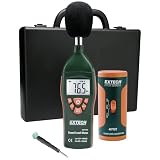
- Datalogs up to 16,000 readings with USB interface for downloading to a PC
- Triple LCD displays humidity, temperature, and date (year, month, and day)
- Programmable from keypad or PC
- Selectable data sampling rate
- User programmable audible and visual alarms
A consumer sound-level-meter app or inexpensive meter can create an informal record, but it is not automatically a legal measurement. Ecology states that valid results require proper training in noise measurement and equipment use. Do not present an uncalibrated device reading as an official determination. The local agency may need its own trained measurement, an inspection while the noise is occurring, or documentation of the applicable code and permit condition.
Why a complaint may not produce an immediate citation
- The work ended before inspection. Inspectors may be unable to observe the sound or verify the timing.
- The wrong agency received the report. Construction noise, mechanical equipment, traffic, and emergency activity may be handled by different offices.
- The project has authorization. A variance or permit condition may allow the reported hours or equipment.
- The rule does not cover the source. A local ordinance may regulate one category of sound while leaving another to a different rule.
- The location is incomplete. Without an address or reliable description, an inspector may not be able to identify the site.
- The evidence is insufficient. A complaint can start an inquiry, but enforcement requires the agency to establish a violation under its code.
These possibilities do not make a complaint pointless. They explain why a detailed, time-specific report and a request for the correct enforcing office are more effective than a general statement that a site is “too loud.”
Questions to ask the agency or project representative
- Which city or county code controls this address?
- What are the allowed hours for this specific type of work on weekdays, weekends, and holidays?
- Is the activity classified as impact construction, demolition, maintenance, emergency work, or another category?
- Does the project have a noise variance, SEPA condition, land-use condition, or special permit?
- Which department investigates a complaint, and does it accept reports online, by phone, or in writing?
- What information or evidence is needed for an inspection?
- Is there an after-hours or emergency number, and when should it be used?
Statewide takeaways without overgeneralizing local examples
Washington’s state framework does not give every construction site the same start and stop time. Local ordinances, zoning, work category, holidays, permits, variances, and emergency or public-work exceptions can all change the answer. Seattle demonstrates zone- and impact-specific schedules; Tacoma demonstrates a separate weekday and weekend prohibition; Spokane County demonstrates that a code exemption can be limited by a stated period and distance from residences.
Crashes, No Sound, or Screen Glitches?
Random freezes, missing sound and display glitches usually trace back to one bad driver. Find and replace yours safely.Free scan · under a minutePC Slower Than It Used to Be?
A free scan shows the junk files, broken settings and background clutter dragging Windows down - then fixes them in one click.Free scan · Windows 10 & 11For a reliable answer, verify the exact address, read the current local code, and check the project’s permit and variance conditions. For a noise complaint, contact the local enforcing government, provide a location that can be found, describe the activity and timing, and understand that an investigation—not an automatic citation—determines the outcome.
Quick Recap
Product prices and availability are accurate as of the date/time indicated and are subject to change. Any price and availability information displayed on Amazon at the time of purchase will apply.

