PC Slower Than It Used to Be?
A free scan shows the junk files, broken settings and background clutter dragging Windows down - then fixes them in one click.Free scan · Windows 10 & 11Outdated Drivers Are Slowing You Down
One free scan finds every outdated or missing driver and matches the right update for your exact hardware.Free scan · exact hardware matchBefore buying an energy-efficient building material, define the job it must do, identify the climate and assembly it will be used in, and compare the performance metric that actually applies to that product. Then verify the exact model, installation method, warranty, environmental claims, and complete installed cost. “Energy-efficient” and “green” are not universal grades that let you compare insulation, windows, concrete, and finishes on one scale.
The checks below are designed for a new build, renovation, or retrofit. They separate energy use in the finished building from manufacturing impacts, so a product can be evaluated for the result you need rather than for a vague label.
As an Amazon Associate I earn from qualifying purchases.
1. Define the building problem before looking at products
Start with the part of the building you are trying to improve. A material that is excellent for reducing heat flow may be irrelevant if the main loss is an old heating system, air leakage, or poorly fitted doors. An energy assessment can identify where a home loses energy and can examine heating equipment, insulation, windows, and doors together. The Federal Trade Commission’s insulation guidance is a useful starting point for understanding what product information to request: FTC guidance on buying home insulation.
Free tools Windows power users keep installed
One-click scans. No signup required.
Write a short project brief
Before requesting prices, record the room or assembly, the existing condition, the work area, and the outcome you want. For example, “increase roof insulation without reducing required ventilation,” “replace single-pane windows in a south-facing living room,” or “specify concrete with a documented lower embodied-carbon impact.” This prevents a sales label from substituting for a design requirement.
#1 Best Overall

- Coverage: One bag covers 77.5 square feet, containing 8 batts (9.69 sq ft per batt).
- Thickness: 6.5 inches thick, fits deeper 2x6 walls or retrofit applications.
- Unfaced Design: No vapor barrier, intended for areas with separate moisture control.
- Thermal Resistance: R-19 value, suitable for 2x6 framing insulation.
- Location and climate: record the project’s jurisdiction and climate zone. Heating and cooling priorities can change the best specification.
- Assembly: identify whether the material belongs in a roof, wall, floor, foundation, window opening, door, or another location.
- Space and geometry: note available cavity depth, rough-opening dimensions, shading, orientation, and any clearance or ventilation constraints.
- Performance target: state the required R-value, U-factor, SHGC, air-tightness detail, durability requirement, or other metric relevant to the component.
- Constraints: include moisture exposure, access, fire or code requirements, sequencing, occupancy, and the construction schedule.
The target should come from the project’s design and local requirements, not from the highest number printed on a package. For insulation in particular, the FTC says the required R-value depends on climate, construction, and where in the home the insulation is installed.
Do not treat a higher number as an automatic winner
A higher R-value may require more thickness, a different framing detail, or a change to the assembly. If it is compressed, interrupted by gaps, installed around services incorrectly, or left with air bypasses, its nominal rating will not describe the installed result. Check how the specified value fits the complete assembly and the installer’s method.
2. Match the metric to the material
There is no single efficiency number for every building product. Compare the measure that describes the job the material performs, and keep units and test conditions attached to every figure.
Insulation: verify R-value and the fact sheet
R-value describes resistance to heat flow. The FTC says manufacturers must label insulation packages, while installers and retailers must provide fact sheets. Ask for the fact sheet before approving a substitution, and check the labeled value for the product and thickness being quoted.
R-38 from two companies represents the same labeled level of insulation even if one product is batt or roll insulation and the other is loose-fill, according to the FTC’s example. That does not make the products interchangeable in every assembly: density, installation equipment, cavity dimensions, support, and detailing still affect whether the labeled performance can be achieved.
- Confirm the R-value is for the exact product, thickness, and installation condition.
- Ask how the installer will maintain continuous coverage at framing, corners, penetrations, and junctions.
- Check whether the quote includes air-sealing work needed for the insulation to perform as intended.
- Keep the fact sheet with the contract so a later product substitution can be checked against the specification.
Windows, doors, and skylights: compare U-factor and SHGC
For windows, doors, and skylights, compare the exact model’s U-factor and, where relevant, its solar heat gain coefficient (SHGC). U-factor indicates heat transfer through the product; lower values generally indicate less heat flow. SHGC describes the fraction of solar radiation admitted through the product. The useful balance depends on climate, orientation, shading, and the room’s heating and cooling needs.
The U.S. Department of Energy explains the relevant purchasing considerations for residential windows, doors, and skylights at its energy-efficient product guidance. Compare the performance values for the complete, specified unit rather than a center-of-glass value or a marketing claim about the glazing alone.
Rank #2

- Fire Proof Insulation: Ceramic fiber blanket insulation, rated to 2400 F
- Product Specifications: 1" Thick x 16" x 48", density 8 lb/ft3, made in the USA
- Uses: Wood stove baffle, fireplace, pellet stove, chimney, furnace, boiler, pizza ovens and forge
- Uses: Brazing, soldering, welding, foundry, kiln, refractory, glass blowing, and jewelry making
- Similar to: Kaowool, Inswool, Durablanket, Cerablanket, TaoFiber, Fiberfrax, Ceramic Wool
Other materials: identify what the claim measures
For structural or finish materials, ask whether the claim concerns operational energy, manufacturing energy, embodied carbon, recycled content, durability, or another attribute. A manufacturing energy figure is not a substitute for an in-use thermal rating, and an embodied-carbon figure does not tell you how much heating or cooling energy a building will use.
3. Check climate-zone and assembly suitability
A product’s performance is conditional. The same window specification can have different consequences in a heating-dominated climate than in a cooling-dominated one, and the best insulation location depends on the construction. Confirm the climate zone used by the product’s certification or design table and compare it with the project location.
Use the whole assembly, not an isolated product number
Ask the designer or builder to show where the product sits in the wall, roof, floor, or opening assembly. Look for thermal bridges, gaps, fasteners, joints, flashing, drainage, and transitions to adjacent materials. A high-performing component can be undermined by a weak perimeter detail or an installation that leaves an air path.
Confirm dimensions and site conditions
Measure existing openings and cavities rather than relying on an old schedule. For replacement windows and doors, verify rough-opening dimensions, sill conditions, exterior cladding, drainage, and the order in which trim and weather barriers will be removed and reinstated. For insulation, verify actual cavity depth and obstructions before ordering quantities.
Recommended Free Tools
4. Verify certification, labeling, and the exact model
A certification is meaningful only when it applies to the product and performance you are buying. ENERGY STAR says its residential window, door, and skylight criteria depend on climate zone. The current criteria stated on its buying page became effective October 23, 2023. Use the ENERGY STAR buying guidance and its Product Finder, then check the ENERGY STAR and NFRC labels on the actual product.
Match the label to the quote
Record the manufacturer, product line, dimensions, configuration, glass or panel package, opening type, and certification details. A label for one configuration does not automatically cover a visually similar configuration with different panes, coatings, spacers, or frame materials. Require the quote and contract to identify the exact model or an approved equivalent with equal or better documented performance.
Keep evidence through delivery
Photograph or retain the labels, product literature, and delivery paperwork. Check the labels against the approved schedule before installation. If a supplier proposes a substitution, pause approval until the replacement’s performance values, certification, dimensions, and warranty terms have been compared.
Rank #3

- Attic This product is recommended for an attic application. Place this in between your trusses. For unfaced insulation make sure there is 2 inches of properly vented air space to prevent moisture in the insulation.
- In the Bags There are 8 Batts per Bag for a Total of 64 SQFT per Bag. Bulk listing of 8 Bags or Two Bundles of 4 Making the Total Square Footage for this Product 512 sqft.
- Contains no Paper Backing, Kraft Facing, on Material. This Product Cannot be Used for Exterior Walls, but Works well for Interior Walls, Floors, Ceiling. Even Attic spaces with 2 or More Inches of Air Space with Proper Ventaltion.Can be used for Soundproofing
- This Product has a R-38 R-value. The Dimensions are R-38 x 24 x 48 by 12 in Thick or Deep Making it Ideal for R-38 x 24 x 48 Construction.
- Requires Coordination on Delivery. A Non-Encypted Phone Number will be Needed. Please be Ready to Provide this with 24 Hours of Purchasing via a Phone Call or Amazon Messaging.
Understand what a certification does not prove
A window certification addresses the criteria of that program; it does not certify the quality of the installation, guarantee a particular household’s bill reduction, or establish that the product has the lowest manufacturing impact. Those questions require separate checks.
Quick wins for a faster PC:
Scan for outdated or missing drivers - takes under a minuteDriver Scan →Clear out junk files and repair common Windows errorsFree Scan →5. Treat “green” and ecolabel claims as specific evidence
The Environmental Protection Agency advises buyers to prefer credible ecolabels tied to stated environmental-performance criteria and to be cautious with broad phrases such as “environmentally friendly” or “green.” Its consumer guidance is available at EPA’s buying-green resource.
Ask five questions about an environmental label
- What attribute is measured? It may be recycled content, toxicity, energy use, emissions, water, or another category.
- What criteria and test method are used? Request the published standard or criteria document.
- Who verifies the information? Distinguish independent certification from a manufacturer’s self-declaration.
- What product and version does it cover? Confirm the label applies to the exact model, formulation, plant, or product family in your quote.
- What is outside the scope? A label may address one impact while saying nothing about durability, installation, or operational energy.
For public or institutional procurement, EPA’s recommendations, specifications, standards, and ecolabels resource provides access to criteria, product registries, supplier availability, and model contract language. EPA states that a listing is not an endorsement of a specific product. Treat it as a way to find and evaluate criteria, not as a shortcut to a project-specific decision.
6. Read an EPD without confusing it with an efficiency rating
An Environmental Product Declaration (EPD) is based on life-cycle assessment and reports quantified environmental impacts under a declared scope and set of assumptions. EPA explains that EPDs commonly report cradle-to-manufacturing-plant-gate embodied carbon. That boundary generally covers extraction and manufacturing up to the factory gate; it does not, by itself, describe transport to your site, installation, use, maintenance, replacement, or end of life.
Embodied energy and embodied carbon are different measures. A factory may improve energy efficiency while still producing different greenhouse-gas emissions depending on its fuel mix, electricity source, and process emissions. The ENERGY STAR/EPA Buy Clean guidance explains this distinction at its procurement and plant-energy page.
Do these 3 things before closing this tab:
1Fix the driver behind crashes, sound loss and screen glitches2Clear out junk files and repair common Windows errors3Scan for outdated or missing drivers - takes under a minuteCompare EPDs on a like-for-like basis
Before comparing two numbers, check the declared or functional unit, product quantity, density or strength, service life assumptions, lifecycle modules, geographic scope, electricity mix, and publication date. A kilogram of one material is not necessarily functionally equivalent to a square metre, cubic metre, or structural unit of another. If boundaries or units differ materially, mark the comparison as not comparable rather than ranking the products.
Separate product impacts from plant certification
The ENERGY STAR/EPA page states that a manufacturing plant energy-performance score of 75 or higher may qualify the plant for ENERGY STAR certification. That is a plant program, not a rating for an individual building material. Likewise, the page reports that cement, concrete, steel, and glass account for 11% of global energy-related greenhouse-gas emissions; use that as context for why procurement matters, not as a product-specific impact estimate.
Rank #4
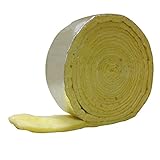
- The product is manufactured in china
- The product is highly durable and easy to use
- Easy installation and easy handling
- Size: 3" x 1" x 25 ft.The product is manufactured in china
- The product is highly durable and easy to use
What an EPD can and cannot answer
- It can help answer: how reported lifecycle impacts compare when products use compatible units, boundaries, and assumptions.
- It cannot alone answer: whether a product will reduce the building’s heating or cooling demand, whether it fits your assembly, or whether installation will be successful.
- It may not cover: the full lifecycle beyond the stated modules, job-site waste, transport, or future replacement.
7. Price the installed result, not just the material
Request more than one installer quote. ENERGY STAR recommends asking for labor and materials to be broken out. A low material price can be offset by additional preparation, specialized equipment, disposal, trim, flashing, air sealing, or commissioning.
Require an itemized quote
| Quote item | What to verify |
|---|---|
| Product | Exact model, size, quantity, performance values, certification, and approved substitute rules. |
| Preparation | Removal, repair, air sealing, framing changes, substrate preparation, and disposal. |
| Installation labor | Method, crew qualifications, sequencing, protection of occupied areas, and completion checks. |
| Accessories | Flashing, membranes, fasteners, spacers, sealants, trim, supports, and ventilation components. |
| Testing or documentation | Any inspection, photographs, product labels, warranty registration, or performance verification included. |
| Warranty | Coverage for the product, labor, glass or finish, water intrusion, and conditions that would void coverage. |
Compare the total installed price and the work included, not a material-only price. Confirm whether taxes, delivery, scaffolding, lifts, temporary weather protection, and making-good are included or excluded.
What’s actually slowing this PC down?
Pick the symptom - the matching free tool is one click away.
Account for operating and replacement decisions carefully
For windows, ENERGY STAR reports that replacing single-pane windows with ENERGY STAR certified windows can lower household energy bills by an average of up to 13% nationwide. The estimate is based on RESFEN 6.0 calculations performed by D&R International in support of ENERGY STAR, accessed October 13, 2026. It is an average estimate, not a guarantee for an individual household; actual results depend on climate, existing windows, heating and cooling systems, occupancy, weather, and installation.
8. Scrutinize installation and warranty conditions
Installation is part of the product’s real-world performance. ENERGY STAR states: “Even the best windows, doors, and skylights can be drafty if they are poorly installed.” Follow the product’s installation instructions and ask which details the installer will use at the sill, jambs, head, perimeter, and transitions to the weather-resistive barrier.
Questions for the installer
- What installation method is proposed, and which manufacturer instructions govern it?
- How will the opening or cavity be prepared and protected from water?
- How will gaps, penetrations, and junctions be sealed?
- What credentials, training, or manufacturer requirements apply to the warranty?
- What inspection or acceptance checks will occur before finishes conceal the work?
- Who handles a defect: the installer, supplier, manufacturer, or more than one party?
Read warranty exclusions before signing
Look for requirements about approved installers, maintenance, compatible sealants, storage, moisture exposure, and alterations. A warranty that covers the product but excludes labor may leave you paying for removal and reinstallation. Keep the final model information, labels, invoice, installation record, and warranty registration together.
Independent reader supportYour contribution helps us test, update, and keep practical guides available for everyone.9. A practical buying workflow
Use this sequence for insulation, openings, and materials with environmental disclosures. It creates a record that can be checked when prices or substitutions change.
- Assess the building: identify the principal energy problem and the component responsible.
- Define the assembly: document location, dimensions, climate zone, orientation, moisture exposure, and constraints.
- Set the metric: specify R-value for insulation, U-factor and SHGC for relevant openings, or the appropriate declared impact for another material.
- Collect primary documents: obtain the insulation fact sheet, product label, certification record, installation instructions, warranty, and EPD or ecolabel criteria where applicable.
- Check the exact model: match the product number, configuration, dimensions, and declared values to the design and quote.
- Compare compatible evidence: align climate zone, test conditions, functional units, lifecycle boundaries, and publication dates.
- Obtain itemized bids: request multiple installer quotes with labor, materials, preparation, accessories, and exclusions separated.
- Review installation: confirm the method, credentials, sequencing, weather protection, and acceptance checks.
- Approve substitutions in writing: require equal-or-better evidence for the specified metric and confirm the warranty remains valid.
- Archive the record: retain labels, fact sheets, EPDs, quotes, invoices, photographs, and warranty documents for the building owner.
10. Common buying mistakes and how to correct them
Choosing a generic “green” product
Problem: the claim does not identify a criterion, verifier, product version, or impact boundary.
Correction: ask what is measured, under which standard, and whether the exact model is covered. If the supplier cannot answer, treat the claim as unverified.
Best Value

- Coverage: One pack covers 77.5 square feet, containing 8 batts
- Thickness: 5.5 inches thick, suitable for 2x6 walls.
- Thermal Resistance: R-21 value, fits 2x6 framing.
- Unfaced Design: No vapor barrier, for areas with separate moisture control.
Comparing unlike performance numbers
Problem: an insulation R-value, a window U-factor, and an EPD carbon figure are placed in one ranking.
Correction: compare each product on the metric tied to its function, then evaluate the assembly, installation, and total cost separately.
Buying the highest R-value without checking the assembly
Problem: the material does not fit the cavity or is installed with gaps and compression.
Correction: confirm thickness, continuity, detailing, and the fact sheet before ordering.
Assuming a certification covers installation
Problem: a certified window is installed with poor flashing or perimeter sealing.
Correction: review installation instructions, installer qualifications, and the warranty’s conditions; inspect the work before concealment.
Using an EPD as a complete product verdict
Problem: a cradle-to-gate embodied-carbon figure is treated as proof of lower operating energy or lower total lifecycle impact.
Correction: state the EPD boundary, compare compatible functional units, and assess operational performance and installation independently.
Accepting a substitution without documentation
Problem: a similar-looking product arrives with different dimensions, ratings, or warranty conditions.
Correction: compare the exact replacement before delivery or installation and record written approval.
11. A final checklist for the purchase meeting
- Have we identified the building’s actual energy problem?
- Is the climate zone and assembly location documented?
- Are we using the correct metric: R-value, U-factor, SHGC, or a clearly defined environmental impact?
- Do we have the manufacturer’s fact sheet or primary technical document?
- Does the certification or ecolabel apply to this exact model and current criteria?
- For an EPD, are the declared unit, lifecycle boundary, assumptions, and date comparable?
- Does the quote separate product, preparation, labor, accessories, testing, delivery, and exclusions?
- Are installation instructions, credentials, inspections, and warranty conditions clear?
- Will labels and documents be checked when the product arrives?
- Is any substitution approved in writing before installation?
Frequently asked questions
Is a product with a higher R-value always more energy-efficient?
No. The required R-value depends on climate, construction, and location in the home. A higher nominal value can fail to deliver its potential if it does not fit the assembly or is installed with gaps, compression, or air bypasses.
Which window numbers should I compare?
Compare the exact model’s U-factor and, where relevant, SHGC, using climate-zone and orientation considerations. Verify the ENERGY STAR and NFRC labels and ensure the quoted configuration matches the certified product.
The Tool Desk
Outbyte PC Repair FREERepair Windows errors before they cause bigger problemsFix Now →Outbyte Driver Updater FREEFix the driver behind crashes, sound loss and screen glitchesFind Drivers →Does an EPD prove that a material is energy-efficient?
No. An EPD reports lifecycle impacts within a declared scope, often cradle to the manufacturing plant gate. It is not a universal rating of the building’s operating energy performance. Compare EPDs only when units, boundaries, and assumptions are sufficiently similar.
Why get multiple installation quotes?
Labor, preparation, accessories, weatherproofing, and disposal can materially change the final cost. Multiple itemized quotes reveal what is included and make it easier to compare the installation method and warranty responsibilities, not just the material price.
Quick Recap
Product prices and availability are accurate as of the date/time indicated and are subject to change. Any price and availability information displayed on Amazon at the time of purchase will apply.

