PC Slower Than It Used to Be?
A free scan shows the junk files, broken settings and background clutter dragging Windows down - then fixes them in one click.Free scan · Windows 10 & 11Crashes, No Sound, or Screen Glitches?
Random freezes, missing sound and display glitches usually trace back to one bad driver. Find and replace yours safely.Free scan · under a minuteStudying architecture develops far more than the ability to draw buildings. Through repeated design projects, students learn to investigate a place, interpret a brief, generate alternatives, communicate ideas visually, test technical decisions and improve a proposal under real constraints. The result is a blend of creative, analytical, digital, organisational and interpersonal skills.
Those skills can lead to architectural practice, but they also transfer to planning, interior and spatial design, landscape, conservation, construction and project management, property, policy, research, education, media and other consultancy work. Your best destination depends on which abilities you can demonstrate, the qualification stage you have reached and any additional registration or specialist requirements in your country.

As an Amazon Associate I earn from qualifying purchases.
What studying architecture develops
Architecture courses differ by school and qualification level. The Royal Institute of British Architects (RIBA) notes that the balance between design, technical study, professional knowledge and other subjects varies, so no single list describes every programme. The following abilities are common outcomes rather than a fixed curriculum.
Design thinking and creative problem-solving
Every substantial project asks you to turn an open-ended brief into a workable response. You identify the users, site and purpose; define the problem; generate more than one option; test those options; and reconcile competing demands such as appearance, accessibility, cost, structure, climate and planning constraints.
This is design thinking in a practical sense. You learn to make decisions with incomplete information, explain why a solution is appropriate and revise it when evidence or feedback changes. RIBA describes successive design projects as a way of turning knowledge into ability and developing professional judgement. That judgement is useful wherever a job involves framing a problem, weighing trade-offs and producing a clear proposal.
Visual communication and spatial reasoning
Architecture students communicate ideas that are difficult to describe in words alone. Depending on the course, you may use freehand drawings, measured drawings, diagrams, photography, collages, physical models, plans, sections, elevations, renders and other three-dimensional representations. Portfolio preparation also teaches you to select and sequence evidence so another person can understand your thinking quickly.
These exercises develop spatial reasoning: seeing how people, materials, circulation, light and structure relate in three dimensions. They also develop presentation judgement. A technically correct drawing can still fail if its hierarchy, annotation or framing obscures the important point. The exact media and software differ among schools, so describe only tools you have actually used and can discuss at a credible level.
Technical and digital literacy
Many programmes introduce computer-aided design (CAD) and other information-technology skills alongside analogue methods. You may learn to set up drawings accurately, manage layers and references, construct a digital model, extract views and communicate dimensions or materials. Some courses also expose students to rendering, parametric workflows, environmental analysis or building-information methods, but these are not universal requirements.
The transferable ability is not a software brand on a CV. It is the capacity to choose an appropriate tool, maintain reliable information, spot errors and explain what the output means. Cambridge Careers identifies CAD and IT as transferable architecture-degree skills. If you list a programme in an application, state the task you completed and your level of proficiency rather than implying expertise from a short introduction.
Rank #2

- PREMIUM 68LB/100GSM SKETCH PAPER FOR DRY MEDIA: Fuxi's sketch paper pad has 100.8gsm, 155μm-thick paper with a bright white diagonal-tooth surface for erasing, shading and blending. Fuxi sketching paper works with graphite, colored pencils, charcoal, pens, light ink and oil pastels. Fuxi makes sketch paper for kids to use at school or at home; this drawing paper pad supports classwork and practice as sketch paper for drawing. Not for watercolor, alcohol markers, acrylic paint or heavy wet media.
- DIAGONAL-TOOTH TEXTURE & REPEATED-ERASING PERFORMANCE: Fuxi sketchpad 9x12 uses 100.8gsm, 155μm bright white paper. Its diagonal tooth grips graphite, colored pencil and charcoal for clean lines, shading and blending. High-strength surface sizing withstands repeated erasing during figure studies, still-life drawing, landscapes and urban sketches. This sketchpad for kids suits class practice; at home, it works as a sketchpad for drawing, while roomy pages support detailed studies for adults
- TOP SPIRAL BOUND & LAY-FLAT: The Fuxi 9x12 sketchbook has a top coil that flips smoothly and stays above the page, helping reduce wrist contact for left- and right-handed users. The 9x12 spiral sketchbook opens flat for sketching, shading, notes and art class. Pages detach neatly for homework, sharing or display. Fuxi's spiral sketchbook 9x12 is a sketchbook for drawing that combines the roomy workspace expected from an art sketchbook 9x12 with a 9x12 spiral bound sketchbook format.
- THOUGHTFUL DOUBLE-SIDED HARDCOVER DESIGN & TRUE-TO-SIZE 9X12 SHEETS: The Fuxi sketchbook 9x12 measures 13.2 x 9 x 0.7 in; each micro-perforated sheet removes cleanly at a full 9 x 12 in. With 100 sheets (200 usable sides), this perforated sketch book 9x12 features drawing paper 9 x 12 in size for class and home practice. Rigid front and back covers help protect pages in backpacks and give this double sided hardcover sketchbook a firm drawing surface for class, travel or sketching without a desk.
- ACID-FREE 98% BRIGHT WHITE DRAWING PAPER: Made with 100gsm sheets, Fuxi white drawing paper for kids keeps pencil lines, shading and color clear. This drawing paper pad works as a drawing pad for kids at school or home. The drawing book for kids supports doodles and classwork, while the drawing notebook for kids keeps sketches and ideas together. As an art drawing pad, it gives beginners and artists room for dry-media practice. Acid-free pages help reduce yellowing over time.
Research, observation and synthesis
Projects commonly begin with investigation. Site and building visits, photographs, measurements, mapping, archival research, precedent studies, user interviews and environmental observations help you understand context before proposing a design. RIBA identifies site visits and building visits as part of architectural study.
The important skill is synthesis: turning scattered observations into a useful design position. A strong site analysis does not merely collect facts; it identifies patterns, risks, opportunities and unanswered questions, then shows how those findings affect the proposal. The same method applies to planning evidence, heritage assessments, policy work, market research and many forms of consultancy.
Teamwork, critique and professional communication
Studio work is social even when an individual project is assessed. Tutorials and critiques require you to explain choices, listen to criticism, defend a decision when appropriate and change course when the evidence supports it. Group projects add coordination with people who may have different priorities, working habits or technical knowledge.
These experiences build concise verbal communication, visual storytelling, meeting discipline and feedback literacy. They also teach you to separate criticism of an idea from criticism of yourself, a useful habit in any project environment. RIBA explicitly identifies problem-solving and teamwork as outcomes of project work.
Planning and project management
An architecture project has interdependent tasks: briefing, research, concept generation, testing, technical resolution, drawing, model-making, writing and presentation. Deadlines force you to sequence those tasks, identify dependencies and protect time for revision. Cambridge Careers includes project-management skills among transferable abilities.
Rank #3

- CONVENIENT DESIGNS FOR SKETCH DRAWING: The sketchbook designs with durable spiral bound and die cut line per each inner paper, you can detach paper without any trouble. Also, the 8.5x11 inches 90gsm high quality sketch paper provide perfect drawing experience
- PREMIUM AND DURABLE PAPER: The sketchbook includes 80 sheets 90gsm paper, the durable sketch paper provides perfect drawing and writing experience, great idea for all drawing method, such as, pencil, pastels, charcoal, gel pen and so on
- LARGE SIZE WITH PROTECTIVE COVER: 1 pack of 8.5x11 inches sketchbook, the large size provides multiple functions, to meet all your drawing requirements, it can offer unique prefect painting experience for you. Also, the waterproof hardcover with PU material makes protection function for high quality art works
- QUALITY ENSURE: All of the components are under our door-to-door quality control system; quality assurance process delivers outstanding quality and durability
- GREAT GIFT: An ideal gift for you to find more sketch drawing necessary tools easy way and ideas here. It provides a unique and practical present
You learn to scope work, track progress, maintain files, meet submission requirements and make sensible compromises when time or information is limited. Those habits transfer directly to design coordination, construction administration, events, research projects and operational roles.
Do these 3 things before closing this tab:
1Repair Windows errors before they cause bigger problems2Fix the driver behind crashes, sound loss and screen glitches3Clear out junk files and repair common Windows errorsTechnical, cultural and professional judgement
Architecture education connects design decisions with how buildings are made, occupied, regulated and experienced. You may consider materials, construction, structure, environmental performance, access, history, culture and professional responsibility. The precise depth depends on the school and qualification stage, but the central lesson is consistent: a visually attractive idea must also respond to people, place and practical consequences.
How the learning cycle builds those abilities
A typical project is less a single drawing exercise than a repeated cycle of investigation and refinement. The sequence varies, but the underlying process often looks like this:
- Read and define the brief. Identify the intended users, required activities, deliverables, constraints and questions that need answering.
- Study the context. Visit or document the site, examine buildings and users, gather relevant history or policy and record observations in a usable format.
- Generate alternatives. Produce several spatial or strategic responses instead of committing immediately to the first plausible idea.
- Test the options. Use drawings, models, digital representations, environmental checks, feedback or scenario testing to reveal strengths and weaknesses.
- Resolve the proposal. Coordinate spaces, materials, structure, access, circulation and presentation so the idea works as a coherent whole.
- Communicate and reflect. Present the outcome, respond to critique and document what changed, why it changed and what remains unresolved.
Being able to describe this cycle is valuable in applications because it demonstrates a method, not just a finished image.
Where you can use architecture skills
The table separates likely work content from additional requirements. Job titles and regulated responsibilities vary by country, and a degree does not automatically qualify you for every role.
Recommended Free Tools
Rank #4

- BEST-SELLING HARDCOVER JOURNAL: This classic 5.6" x 8" vegan leather journal features a durable and water-resistant cover, 160 blank pages, inner expandable pocket, sticker labels, ribbon bookmark & elastic closure band.
- PREMIUM PAPER: Made with high-quality, 100 gsm acid-free paper in light ivory color, our journal paper is thicker than average notebooks & note pads, so you can confidently use most pens, pencils, and markers without ghosting and bleed-through.
- LAY FLAT DESIGN FOR WRITING EASE: Our thread-bound, blank page notebook is designed to lay flat, making it easier to write or sketch for both right and left-handed users. It’s the perfect notebook for drawing, sketching, note taking and journaling.
- INNER POCKET: Includes an expandable inner storage pocket to store appointment cards, notes, receipts, and more. Personalize your journal cover & spine with the sheet of sticker labels included.
- VERSATILE BLANK NOTEBOOK: Ideal for free-form journaling, sketching, or writing. Whether you're capturing ideas, doodling, or crafting a beautiful junk journal or scrapbook the blank pages offer the flexibility to perfectly personalize your work.
| Destination | Architecture skills used | Requirements to check |
|---|---|---|
| Architectural practice | Brief analysis, concept design, drawings, models, digital coordination, client communication and technical development. | In the United Kingdom, the professional route combines academic study, practical experience and further assessment. Registration rules differ elsewhere. |
| Urban planning and urban design | Site and policy research, mapping, spatial analysis, public-facing communication and balancing competing interests. | Planning-specific qualifications, local policy knowledge or professional accreditation may be expected. |
| Interior and spatial design | Space planning, user experience, material thinking, visualisation, detailing and presentation. | Portfolio quality, sector experience and knowledge of relevant regulations or procurement processes can matter. |
| Landscape architecture | Site observation, environmental response, spatial composition, diagrams and coordination across a wider setting. | Landscape-specific study, planting or ecological knowledge and local practice requirements may apply. |
| Building conservation and heritage | Building recording, historical research, careful analysis of existing fabric and clear documentation. | Heritage methods, conservation experience or postgraduate study may be requested for specialist posts. |
| Construction and project management | Sequencing, coordination, reading drawings, communicating with consultants and managing constraints. | Construction knowledge, site experience, health-and-safety training or project-management credentials can strengthen eligibility. |
| Property and the built environment | Understanding how buildings, sites, users and development constraints interact; visual and written analysis. | Commercial, valuation, planning or development knowledge may be needed for specialist roles. |
| Design or engineering consultancy | Problem definition, technical communication, modelling, research and multidisciplinary teamwork. | Engineering or other regulated roles can require a separate accredited qualification and registration. |
| Research, teaching, policy and public service | Evidence gathering, synthesis, writing, presentation, stakeholder communication and systems thinking. | Research or teaching posts may require postgraduate study; public-sector roles have their own recruitment criteria. |
| Media, arts and digital communication | Visual storytelling, photography, graphics, 3D representation, writing and portfolio curation. | Employers usually assess the quality and relevance of your work, not the degree title alone. |
Architecture degree versus the protected architect title
Do not assume that completing an architecture degree makes you a licensed or registered architect everywhere. In the UK, RIBA describes a route that combines academic qualifications, practical experience and further professional assessment, and the title “architect” is protected by law. The exact stages, exemptions and registration requirements can change and differ by jurisdiction.
If you intend to practise under a regulated title, check the current rules of the relevant regulator and whether your course is accredited for the route you plan to follow. If you have completed only an undergraduate degree, describe your qualification accurately and apply for roles whose responsibilities match your training.
How to turn a studio project into employability evidence
Employers outside architecture may not immediately understand what a studio project involved. Translate it into evidence they can evaluate:
- State the problem. Give the project type, users, site and the question you were trying to answer.
- Show your investigation. Identify the observations, data, precedents or interviews that influenced the work.
- Explain your process. Describe alternatives considered, tests performed and the reason for the selected direction.
- Name the tools and your role. Specify drawing, modelling, CAD, photography, writing or fabrication tasks you completed personally, including your actual level of proficiency.
- Describe collaboration. Say who you worked with, how responsibilities were divided and how feedback changed the result.
- Quantify constraints where possible. Mention a deadline, area, number of users, technical limitation or coordination challenge when the figure is accurate and relevant.
- End with the outcome and reflection. Explain what you delivered, what you learned and what you would improve next time.
This format works for a planning application, a construction coordinator role, a heritage internship or a non-design position because it connects activity to capability.
Choosing a direction from the skills you enjoy most
There is no universal “best” architecture career. Compare options using the questions below rather than relying on the degree label.
Best Value
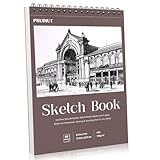
- 【Professional Grade 8.5x11 Sketchbook for All Artists】Premium 68lb/100g/m2 acid-free paper resists bleed and smudge. Great for dry media like pencil, charcoal and pastel. 50 smooth sheets for beginners and professionals. Perfect sketchbook for drawing, sketching projects
- 【Spiral Binding Portable Design with Tear Line】Durable spiral binding design allows 360° page turns, and pre-perforated tear edge design allows for clean paper tears (no scissors required). 8.5x11 sketchbook size fits standard portfolio. Back hardcover doubles as outdoor/desktop drawing board
- 【Versatile Drawing Supplies for Dry Media】Thick, non-yellowing paper pairs well with colored pencils, gel pens, markers and charcoal. Acid-free surface extends the life of your work. Our sketchbooks meet studio and classroom standards. A great gift for art students and creative people
- 【Durable 8.5x11 Sketchbook with Extras】Premium matte cover protects pages, reinforced spiral spine for durability. Built-in backboard for easy drawing on your knees or uneven surfaces. Classic size that fits in a backpack - ideal travel sketchbook for inspiration anytime, anywhere
- 【Multi-Purpose Artist Sketchbook Set】8.5x11 sketchbook, perforated pages make it easy to create frameable artwork. Compatible with all dry media - from quick sketches to detailed illustrations, to meet a variety of artists' creative projects
| Question | If your answer is mostly “yes” | Directions to investigate |
|---|---|---|
| Do you want to keep developing building designs and portfolios? | You prefer sustained design development and visual communication. | Architectural practice, architectural visualisation or spatial design. |
| Do you enjoy evidence, mapping, users and public decisions? | You are motivated by context, policy and competing stakeholders. | Planning, urban design, research or public-service work. |
| Do you prefer coordination, sequencing and delivery? | You gain satisfaction from making complex work happen reliably. | Construction coordination, project management or development roles. |
| Are existing buildings, history and careful documentation your focus? | You value analysis and responsible change to places already built. | Conservation, heritage consultancy or building surveying pathways. |
| Do representation and digital production interest you most? | You enjoy making complex ideas understandable through images or models. | Visualisation, graphics, digital communication, web design or related creative work. |
Use informational interviews, short placements, portfolio reviews and job descriptions to test these preferences. A careers-service list describes possible directions, not automatic eligibility or a guarantee of employment.
What graduate-outcome figures can—and cannot—tell you
Published outcomes are useful context when their scope is kept intact. UCL Bartlett School of Architecture reports that 93.9% of its graduates were in work or further study 15 months after graduation, based on Graduate Outcomes Surveys covering 2017–22. Among graduates in work, the same page reports 74.9% in construction, built environment and property, 6.5% in academic research and higher education, and 5.6% in performance and creative arts.
UWE Bristol reports that 85.1% of its Architecture graduates were in work or further study 15 months after graduation in the HESA Graduate Outcomes Survey 2023/24, published in March 2026. These figures describe named institutions and stated cohorts; they are not estimates for every architecture programme, and the different periods and populations should not be treated as a direct comparison.
Practical ways to keep developing
Regular drawing, model-making, photography, digital modelling and reflective writing can strengthen the skills your portfolio needs. A basic architecture or design sketchbook is a useful optional tool for recording observations and iterations; it is not essential and cannot replace course instruction or feedback.
Keep a project archive with dated versions, brief notes, images of physical work and a short account of decisions. Over time, this gives you material for portfolios, interviews and applications in both built-environment and broader sectors. RIBA also directs prospective students toward educational and portfolio resources and its bookshop, which can help you find further study material.
A broader view of the architecture graduate
Sir Terry Farrell describes the breadth of the field in RIBA’s Think Architecture: “The art of architecture can be practised by people with a wide range of skills – if I had to have maths or physics I wouldn’t (and probably couldn’t!) have become an architect.” The statement is a personal observation, not a replacement for checking an individual school’s entry requirements.
The most portable architecture graduate is not defined by one software package or job title. They can investigate a situation, make a reasoned proposal, communicate it clearly, collaborate under critique and organise the work needed to deliver it. Those capabilities keep options open while you decide how close your career should remain to buildings and places.
What’s actually slowing this PC down?
Pick the symptom - the matching free tool is one click away.
Quick Recap
Product prices and availability are accurate as of the date/time indicated and are subject to change. Any price and availability information displayed on Amazon at the time of purchase will apply.

