Before signing or moving into a high-density urban development, verify four things in writing: what the lease promises, what you will pay each month, how emergencies are handled in this particular building, and how construction, noise, ventilation and shared systems may affect daily life. Marketing descriptions are not a substitute for the lease, a building-specific emergency plan or a walk-through at realistic times of day.
The questions below apply broadly, but legal requirements depend on your city, state, tenure and building. Examples from New York City, Texas and U.S. Department of Housing and Urban Development (HUD) guidance are identified as jurisdiction-specific; use them as questions to ask, then confirm the rules that govern your home.
As an Amazon Associate I earn from qualifying purchases.
Make sure the lease records the deal you are actually accepting
Read the complete lease and every addendum before paying a deposit. New York City’s Department of Housing Preservation and Development (HPD) advises apartment hunters to check the correct rent, address and landlord; confirm that agreed amenities appear in the lease; verify the rent due date and late charges; and determine whether utilities are included or billed separately. That is NYC guidance, not a universal legal rule, but it is a useful review sequence everywhere. See HPD’s apartment-hunting tips and check your local equivalent.
Confirm the parties, home and term
- Match the legal landlord or management entity, unit number, street address and your name to the documents you received.
- Check the start and end dates, renewal or notice requirements, permitted occupants, subletting rules and any move-in or move-out appointment requirements.
- Ask who can accept notices and maintenance requests, including an after-hours contact for urgent problems.
Put promised amenities and services in writing
If a viewing or offer promised a storage space, parking place, balcony, appliance, furnished item, fitness room, roof area, package room or other amenity, identify it in the lease or a signed addendum. Clarify whether access is included in rent, subject to a separate fee, limited by hours or revocable under building rules. A brochure, email or verbal assurance can be difficult to enforce if it is absent from the contract.
#1 Best Overall
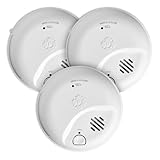
- First Alert's Precision Detection advanced sensing technology complies with new industry standards to reduce cooking nuisance alarms and provides early warning in the event of a home fire emergency
- Provides reliable 2-in-1 protection against both smoke and carbon monoxide
- End-of-life warning lets you know when it’s time to replace the alarm
- Battery-operated alarm allows for easy installation and maintenance
- Test/silence button for efficient testing to ensure alarm is working properly
Check rent, charges and late-payment language
Write down the recurring base rent, the due date, grace period if any, late charges, returned-payment fee, renewal increases or formulas, and any required insurance or service charges. Distinguish a one-time move-in fee from a monthly charge. Ask for a written schedule of parking, storage, amenity, technology, trash, package or other fees before you budget.
Identify utility responsibility before you compare rents
The lease should state which utilities the landlord provides, which accounts you open yourself and which are billed through the building. Ask how heating, cooling, water, hot water, electricity, gas, sewer, waste and internet are allocated, and whether a bill includes an administrative or service fee. “Utilities included” is not meaningful until each service is named.
| Lease item | Question to answer | Evidence to keep |
|---|---|---|
| Rent and dates | What exact amount is due, on which date, for what term? | Signed lease and rent schedule |
| Amenities | Which facilities or equipment are included, and are there access fees or rules? | Lease clause or signed addendum |
| Utilities | Who pays each service, and how is usage measured or allocated? | Utility clause, sample bill or written explanation |
| Other recurring charges | Are parking, storage, packages, trash, insurance or technology billed monthly? | Fee schedule attached to the lease |
| Repairs and notices | How do you report routine, urgent and after-hours problems? | Management contact sheet and portal instructions |
Understand how the building measures and bills utilities
High-density developments may use different meters for different services. HUD describes master-metered, checkmetered and individually metered arrangements in its public-housing utility guidance. Those descriptions explain possible configurations; HUD public-housing rules do not automatically govern a privately rented apartment. Read HUD’s utility allowances and resources, then ask management which arrangement applies to your building.
Master-metered service
A master meter measures the building’s consumption. The owner may include a service in rent or allocate costs under a stated formula. Ask whether your share is based on unit size, occupancy, a submeter, a ratio utility billing system or another method, and request the formula in writing.
Rank #2

- First Alert's Precision Detection advanced sensing technology complies with new industry standards to reduce cooking nuisance alarms and provides early warning in the event of a home fire emergency
- Provides reliable 2-in-1 protection against both smoke and carbon monoxide
- End-of-life warning lets you know when it’s time to replace the alarm
- Battery-operated alarm allows for easy installation and maintenance
- Test/silence button for efficient testing to ensure alarm is working properly
Checkmetered or submetered service
A checkmeter or submeter records a unit’s or group’s usage even when the utility account remains in the owner’s name. Confirm who reads the meter, how often, what rate is applied, whether common-area usage is included and who handles billing disputes.
Individually metered service
An individual meter normally means you open an account and pay the utility directly. Ask when to transfer service, which provider serves the address, whether a deposit is required and what happens if service is interrupted. Keep confirmation numbers from account setup.
Request a sample recent bill or a written estimate based on comparable units if available. Treat estimates as planning information, not a guarantee: weather, occupancy, equipment settings and utility rates change. Include recurring utility and amenity charges when comparing two developments with different advertised rents.
Free tools Windows power users keep installed
One-click scans. No signup required.
Learn the emergency plan for the actual building
Emergency procedures depend on the building’s height, layout, fire-protection systems, local instructions and current hazards. Texas Department of Insurance guidance recommends checking for sprinklers and smoke alarms and knowing the evacuation plan; its apartment fire-safety checklist is available at TDI’s apartment fire checklist. In New York City, the Fire Department publishes an apartment-building emergency preparedness reference and resident materials at FDNY’s reference page. The page lists a 2024 guide, so ask whether a newer edition or building-specific notice has replaced it.
Rank #3

- Please Note: The SC07 is a basic standalone unit. It does not support wireless interconnection, Wi-Fi, or base station connection; for wireless interconnection, search for SC07-W
- 10-Year Protection, Zero Maintenance: A built-in sealed lithium battery powers the alarm for a full decade—no battery replacements, no late-night low-battery chirps, and no ladder climbing
- Photoelectric Smoke Sensor and Electrochemical CO Sensor: Responds faster to slow-smoldering fires, helps reduce cooking-related false alarms, and reliably detects dangerous carbon monoxide
- Simple Installation: No rewiring required; easily mount this smoke and carbon monoxide alarm on a wall or ceiling using the included mounting bracket, screws, and anchor plugs
- Meets UL 217 & UL 2034 Safety Standards: Independently tested and certified to meet UL 217 and UL 2034 standards for smoke and carbon monoxide detection; clear certification markings help support safety checks and code-compliant installation
Ask these questions before move-in
- Which stairways and exits serve your floor, and where do they lead?
- When should residents evacuate, shelter in place or remain in an apartment with the door closed?
- How are alarms, announcements, accessible evacuation assistance and emergency updates delivered?
- Where are assembly areas, fire extinguishers and emergency power information posted?
- Who is the on-site contact during a fire, flood, lift failure or utility outage?
Inspect alarms, sprinklers and routes
Locate the smoke alarm, test it using the manufacturer’s test function and report a failed, missing or damaged device immediately. Look for sprinklers where the building provides them and never hang items from or obstruct sprinkler heads. Ask whether a carbon-monoxide alarm is required or already installed for your unit and fuel-burning equipment; follow local rules and management instructions before buying or replacing one. A smoke and carbon-monoxide alarm can be a sensible supplemental purchase only after you confirm what the building already supplies and what local requirements allow.
Walk the route from your door to the stairs and outside. Hallways, stairs and exit doors must remain usable; do not store bicycles, boxes or furniture in them. Learn the difference between an everyday lift route and a protected emergency route, because lifts may be unavailable during a fire or power failure.
Ask how occupied-building construction will affect you
Construction can continue after residents move in. In New York City, the Department of Buildings says a qualifying Tenant Protection Plan (TPP) addresses egress, fire safety, health requirements, housing standards, structural safety, noise restrictions and essential services such as heat, hot and cold water, gas and electricity. The department describes it this way: “A Tenant Protection Plan (TPP) outlines what steps the contractor and your building owner will take to protect tenants when construction or renovation happens while tenants are living in the building.” Read the NYC-specific information at NYC DOB’s Tenant Protection Plan page. Other jurisdictions use different requirements.
What’s actually slowing this PC down?
Pick the symptom - the matching free tool is one click away.
Get a disruption schedule
Ask what work is active or approved, the expected completion date, daily noisy-work hours, delivery routes, elevator shutdowns, water or power interruptions and temporary changes to entrances or amenities. Request advance-notice procedures and a contact for dust, vibration, leaks or unsafe conditions. If management cannot give a schedule, treat that uncertainty as a cost and logistics risk rather than assuming work will be quiet.
Rank #4

- 2-in-1 DETECTION: Model 30CUDR detects both smoke and carbon monoxide and features advanced sensing technology with over 25% faster smoke detection*; sounds a loud 85-decibel alarm with red LED light for clear visual warnings; suitable for homes
- AA BATTERY OPERATION & WARRANTY: Powered by two AA batteries (included) for easy, no-wiring setup . Backed by 10-year limited warranty** that starts from date of purchase
- REDUCED FALSE ALARMS: Uses advanced sensing technology that helps distinguish between real smoke and everyday cooking or steam; helps reduce false alarms while maintaining quick, accurate detection when smoke is present
- TESTED FOR RELIABILITY & COMPLIANCE: Rigorously tested to meet UL 217 10th Edition, UL 2034 5th Edition, and FCC standards for performance and safety; enhanced sensing technology helps reduce false alarms from everyday cooking or steam
- BUILT FOR HOMEOWNERS AND PROFESSIONALS: Designed for those who prioritize dependable, code-compliant detection; supports safety goals for homeowners, property managers, contractors, and professionals seeking long-term home safety assurance
Check protection of exits and essential services
During a walk-through, note whether construction barriers narrow corridors, alter door operation or change the route to stairs. Ask how workers separate occupied areas from dust and debris, maintain fire doors and keep heat, hot and cold water, gas and electricity available. Photograph conditions and written notices when you move in; report an obstruction or loss of an essential service through the building’s stated emergency channel.
Independent reader supportYour contribution helps us test, update, and keep practical guides available for everyone.Test noise, ventilation and temperature comfort in real conditions
HUD’s Housing Health and Safety Rating System operating guidance identifies external noise, poor construction or separation, disrepair, and noisy plumbing or equipment as possible sources of nuisance. It also notes that when glazing is used to control noise, adequate alternative ventilation is needed. The general guidance cannot predict the conditions in your particular unit; use it to plan an observation rather than as a promise of quiet. The guidance is available in HUD’s operating document.
Visit at more than one time
If feasible, visit during a morning commute, evening peak and a weekend period. Listen at the bedroom wall, living-room windows, corridor, lift lobby and plumbing walls. Notice traffic, deliveries, sirens, common-room activity, footsteps, lift machinery, pumps and neighboring units. Ask current residents or management whether recurring problems have been reported and how they are handled.
Understand the ventilation system
Ask whether the unit uses operable windows, mechanical supply and exhaust, a central system or a combination. Find the controls, filters and intake or exhaust grilles. Confirm how to report persistent odors, condensation, overheating or a failed fan. Do not assume that a closed window solves noise if it leaves the room without adequate fresh-air supply.
Best Value

- 2-in-1 Protection: The smoke and carbon monoxide detector is equipped with both photoelectric smoke sensor and electrochemical CO sensor that both detect smoke and dangerous CO levels
- ETL Listed: The smoke and carbon monoxide alarm meets the UL 217 & UL 2034 safety standards for your peace of mind and absolute confidence in our product
- Simple Installation: Requires no rewiring; easy to mount this fire and CO alarm on any wall or ceiling with the included mounting bracket, screws and anchor plugs
- Combination Alarm with CO Readings: the large LCD display clearly indicates real-time carbon monoxide (CO) levels in the surrounding air, as well as its battery level and working status
Compare developments by total living conditions, not headline rent
When choosing between buildings or units, score each one using the same evidence. A lower advertised rent can be offset by utilities, amenity charges, transport costs, frequent outages or construction disruption.
| Comparison axis | Questions to document |
|---|---|
| Total monthly cost | What are rent, utilities, service fees, parking, storage, insurance and other recurring charges? |
| Daily access | How convenient are transit, shops, schools, medical care and other services for your household’s routine? |
| Emergency readiness | Are exits clear, alarms present, instructions current and after-hours contacts known? |
| Construction risk | What work is scheduled, during which hours, and what outages or access changes are expected? |
| Noise and comfort | What did you hear at different times, and how do ventilation, heating and cooling operate? |
| Accessibility | Can you travel from street to entrance, lift, unit, mail area and shared amenities using the actual route? |
Accessibility needs are personal and building-specific. Confirm door clearances, thresholds, lift dimensions and reliability, visual or audible alerts, accessible emergency assistance and the route to shared facilities in person or through precise written measurements. Marketing labels alone do not establish that a route works for your household.
Use a disciplined move-in inspection
- Before bringing belongings in: photograph every room, window, floor, ceiling, appliance, meter, alarm, sprinkler and visible defect. Include a date or preserve the original file metadata.
- Verify life-safety features: test smoke alarms as instructed, locate exits and stairs, read posted emergency notices and record the building’s emergency number.
- Check water and power: run taps, flush toilets, test hot water, inspect for leaks and confirm that outlets, lights, heating and cooling controls work.
- Check ventilation and noise: operate fans or windows, listen with appliances off, and note odors, vibration, condensation or unusual equipment noise.
- Test shared access: use the entrance, lift, stairs, mail or package area and any promised amenity. Report a missing access credential immediately.
- Send a written condition report: list each defect, location and photo, and keep the submission, response and repair dates. Follow up on safety or water problems rather than relying on a verbal conversation.
Know what to do when something goes wrong
Separate emergencies from routine repairs
Use the emergency number for fire, a gas odor, flooding that threatens people or electrical equipment, a locked exit, loss of essential heat in dangerous conditions or another immediate hazard. Call the applicable emergency service when there is imminent danger. Use the normal portal or maintenance line for cosmetic defects, minor appliance faults and non-urgent noise complaints, and keep the ticket number.
Recommended Free Tools
Keep a resident file
Store the signed lease and addenda, fee schedule, utility instructions, emergency plan, inspection photographs, meter readings, notices, tickets and correspondence in one place. A dated record helps you explain a recurring problem and prevents confusion about what was promised or reported.
Warning signs that deserve a pause
- Management will not identify the legal landlord, provide a complete lease or put promised amenities and fees in writing.
- No one can explain who pays each utility or how a shared bill is calculated.
- Exits, stairs, alarms or emergency notices are inaccessible, damaged, missing or blocked during your visit.
- Active construction has no stated work hours, disruption plan, notice process or protection of occupied areas.
- Repeated noise, odors, overheating, condensation or ventilation failures are dismissed without a reporting path.
- The actual accessible route depends on an out-of-service lift or a door, threshold or corridor you cannot use safely.
A high-density development can work well when its promises, costs, emergency procedures and operating conditions are transparent. Make the decision from the signed documents and observed building conditions, not from the marketing description alone.
Quick Recap
Product prices and availability are accurate as of the date/time indicated and are subject to change. Any price and availability information displayed on Amazon at the time of purchase will apply.

