There is no single nitrogen-purity level that fits every job. As a starting point, broad industry guidance places semiconductor manufacturing, electronics and research at 99.999% or higher; laser cutting, heat treating and pharmaceutical manufacturing at 99.9–99.999%; food packaging, winemaking and food processing at 99–99.9%; and tire inflation or chemical blanketing at 95–99%.
Those percentages are orientation ranges, not universal specifications. The correct purchase decision also depends on oxygen, moisture, oil, particles, hydrocarbons and other contaminants; pressure and flow; point-of-use conditions; the applicable standard; and how the supplier verifies the gas. Use the range as a screening tool, then obtain the exact grade and certificate requirements from the process or equipment manufacturer.
As an Amazon Associate I earn from qualifying purchases.
At-a-glance nitrogen purity ranges
The table below summarizes broad application bands associated with the Compressed Air and Gas Institute (CAGI). CAGI presents these as general guidance rather than binding standards.
Recommended Free Tools
| Application | Broad starting point | Critical verification |
|---|---|---|
| Semiconductor manufacturing, electronics and research | 99.999% or higher (ultra-high purity) | Exact semiconductor grade, individual impurity limits, analytical method and fab or tool requirements |
| Laser cutting, heat treating and pharmaceutical manufacturing | 99.9–99.999% (high purity) | Process specification, nozzle flow, operating pressure and contaminant certificate |
| Food packaging, winemaking and food processing | 99–99.9% (food grade) | Intended-use rules, supplier qualification, handling controls and applicable food-gas requirements |
| Tire inflation and chemical blanketing | 95–99% (industrial) | Whether residual oxygen, moisture, oil or particles can affect the product, process or equipment |
| Aircraft nitrogen systems within ISO 2435:1973 | At least 98.5% by volume | ISO limits for oil vapor and particulate matter, plus the aircraft system’s scope and certification requirements |
| Medical-gas applications | Use the governing monograph and intended-use specification | Medical-gas quality, manufacturing, packaging, labeling, storage and distribution requirements |
The CAGI document does not establish a publication year in its accessible material, and its bands should not be treated as regulatory limits. For a specific installation, the governing standard or equipment specification takes precedence.
#1 Best Overall

- PRECISION CONTROL: Our nitrogen regulator is engineered for a maximum working input of 3000 PSI and a finely adjustable output of 0-600 PSI. The gauges are clearly marked with higher ranges (4000 PSI input / 800 PSI output) to provide a clear visual safety buffer, promoting informed and confident handle during all your pressure control tasks
- SUPERIOR LEGIBILITY & PROTECTION: This nitrogen regulator features two easy-to-read gauges provide clear, accurate pressure readings at a glance. Each gauge is shielded by a rugged rubber boot, offering superior protection against impacts, scratches, and everyday job site wear and tear. For your safety, a built-in relief valve automatically activates near 600 PSI to prevent over-pressurization, ensuring safe procedure and protecting your equipment
- UNIVERSAL FITTINGS: Features standard CGA580 inlet and 1/4" SAE male flare outlet connections for broad compatibility. Quickly connect to a wide range of systems and tools without the need for extra adapters, getting you to work faster and more efficiently
- WIDE APPLICATION: The nitrogen regulator is suitable for a multitude of tasks including HVAC system purging, brazing, soldering, leakage tests, and pressure testing. A trusted and robust tool that delivers professional results, making it the excellent choice for both technicians and skilled DIY enthusiasts
- INDUSTRIAL-GRADE CONSTRUCTION: Our nitrogen regulators are crafted from solid brass with a precision-machined piston and diaphragm for long-lasting performance. The large T-style handle allows for smooth, precise adjustments, ensuring steady pressure control and outstanding on-the-job longevity
Why the headline percentage is not enough
“99.999% nitrogen” describes the proportion of gas identified as nitrogen on the stated measurement basis. It does not, by itself, tell you how much oxygen, water vapor, oil, particles, hydrocarbons or other contaminants remain. Two products carrying the same headline percentage can therefore have different impurity profiles and different suitability for a process.
Ask for the individual impurity limits, not only the nitrogen percentage. A semiconductor tool may be sensitive to trace contaminants that are irrelevant to tire inflation. A food process may require documented food-gas controls even when the numerical purity appears adequate. An aircraft system can have additional limits for oil vapor and particulate matter that are not captured by a single purity figure.
Measurement and sampling matter as well. Confirm the analysis method, sampling point, frequency, certificate of analysis or quality-verification procedure, and whether the result applies to the delivered cylinder, bulk tank, generator outlet or point of use. Distribution piping, regulators, hoses and storage vessels can introduce contamination after the gas leaves the supplier.
Quick wins for a faster PC:
Fix the driver behind crashes, sound loss and screen glitchesFind Drivers →Clear out junk files and repair common Windows errorsFree Scan →How to specify nitrogen for a real installation
- Define the process duty. Write down what the nitrogen does: inerting, purging, cutting assistance, heat treatment, food contact, pressure control, breathing-gas protection or another function. Include the material being protected and the consequence of contamination.
- Find the controlling document. Check the equipment manual, process qualification, customer specification, industry standard, medical monograph or aviation requirement. A broad application chart cannot replace a document that names the grade.
- Set impurity limits individually. Request maximum oxygen, moisture, oil, particles and any process-specific contaminants. State units and measurement conditions so supplier certificates can be compared.
- Specify pressure and flow. Record normal flow, peak flow, inlet pressure, pressure stability and the required pressure at the tool or application point. Purity without adequate flow can still cause poor cutting, incomplete purging or process interruptions.
- Check point-of-use quality. Confirm compatible piping, cleanliness, filtration, regulators, hoses and connection practices. Decide where samples will be taken and how often the system will be checked.
- Choose supply and redundancy. Compare cylinders, liquid bulk, microbulk and on-site generation against consumption, delivery access, peak demand, backup requirements and verification needs.
- Document acceptance. Keep the approved grade, certificate format, sampling plan, change-control process and actions for an out-of-specification delivery in the purchasing and maintenance records.
Semiconductor manufacturing, electronics and research
These applications normally sit at the highest end of the broad purity guide because trace contaminants can alter surfaces, electrical behavior, deposition, etching or experimental results. The relevant semiconductor reference is SEMI C59. The current listing identifies C59-0317 and covers different nitrogen grades for semiconductor use, but the detailed grade tables were not available in the listing reviewed.
Do not order a generic “ultra-high-purity” product solely because it exceeds the headline percentage. Obtain the exact SEMI grade, every listed impurity limit, analytical method, packaging requirement and point-of-use expectation from the fab, tool maker or process owner. Confirm whether the specification applies at the source, at the distribution header or at the tool inlet.
Rank #2

- CGA580 Inlet Connection, 1/4" SAE Male Flare Outlet Connection and Easy to Read 2 Inch Gauges with Protective Rubber Gauge Boots
- PRESSURE- Input: 0-4000PSI. Output: adjustable - 0-450PSI. The display show 600PSI that you can rate them at 450PSI, but they are able to go up to 600PSI
- Great for HVAC Purging / Inertization / Pressure Tests / Leakage Tests / Brazing / Soldering
- Large brass Tee Handle with stainless steel pressure adjusting screw and regulator bushing that prevents galling
- Sturdy brass piston designed diaphragm, self re-seating relief valve (not designed to protect downstream system)
For electronics or research equipment outside a formal fab, the instrument manufacturer may set limits that differ from a semiconductor grade. Ask whether oxygen, water, hydrocarbons, particles or trace metals are the limiting contaminants and whether continuous monitoring is required.
Laser cutting, heat treating and pharmaceutical manufacturing
These uses occupy a broad high-purity band because the nitrogen interacts directly with a cut, a heated surface or a regulated manufacturing process. Laser cutting performance depends on stable pressure and flow at the nozzle as well as gas quality. A gas that meets a purity percentage but cannot maintain the specified flow can produce poor edge quality, discoloration, dross or slower cutting.
Heat treating requires the process owner to define the acceptable atmosphere for the alloy, temperature profile and furnace design. Oxygen and moisture limits may be more important than the headline nitrogen number, particularly where oxidation or surface chemistry is critical.
Pharmaceutical manufacturing requires the applicable process and quality system controls. Confirm whether nitrogen is used for blanketing, transfer, drying, packaging or direct product contact, then obtain the required grade, certificate and change-control obligations. The broad CAGI band is a starting point, not a pharmaceutical release specification.
Food packaging, winemaking and food processing
Food applications need both suitable gas quality and a controlled supply chain. In the United States, 21 CFR 184.1540 states that nitrogen “must be of a purity suitable for its intended use” and permits specified uses under current good manufacturing practice. The cited section does not establish one blanket numerical percentage for every food application.
Rank #3

- DOT-3AA Approved: Each cylinder is stamped with U.S. DOT markings, ensuring full compliance with strict gas storage and transportation standards. Note!!!: Cylinder ships empty; please consult local gas suppliers for filling
- Premium Steel Construction: Made from high-strength alloy steel with thick walls for maximum durability, built to withstand tough usage environments. Suitable for industrial manufacturing, welding, HVAC, hydroponic, and beverage applications
- High Compatibility: Features a female-threaded CGA-580 valve for seamless connection to standard nitrogen regulators (2015 PSI service pressure / 3359 PSI test pressure)
- Professional Glossy Red Finish: The durable red coating ensures long-lasting aesthetics while protecting against daily wear. Each unit is stamped with a fresh production date for long-term use. Dimensions: 7" diameter x 23" height(including valve)
- One-Year Warranty: Enjoy 12 months of quality assurance with our professional customer service team ready to address any issues within 12 hours. Contact us through Amazon for full support and assistance
That wording makes the intended use decisive. Nitrogen used to displace oxygen in a package, protect wine, mix a beverage or contact a food ingredient may have different documentation and handling expectations. Qualify the supplier, verify the certificate and review the applicable food-contact or processing rules for your jurisdiction and product.
CGA F-3-2024 provides a supplier-qualification guideline for food and beverage gas manufacturers and distributors, including nitrogen. Treat “food grade” as a controlled specification and supply-chain responsibility, not as a substitute for checking the actual impurity limits, sanitation practices, storage and delivery equipment.
Tire inflation and chemical blanketing
Industrial uses often tolerate a wider purity range, but “tolerate” does not mean “ignore contaminants.” For tire inflation, determine whether the vehicle, tire manufacturer, operating temperature, moisture exposure or maintenance program imposes additional requirements. Dryness, pressure stability and service logistics may matter more than pursuing the highest available purity.
Chemical blanketing protects a vessel, tank or material from oxygen, moisture or reactive gases. Identify the reaction hazard and the required residual oxygen or dew point before choosing a grade. A lower-purity gas can be acceptable when the process has enough margin; it can also be unsafe or ineffective when oxygen-sensitive chemistry, flammable vapor control or corrosion prevention is involved.
Aircraft nitrogen systems
ISO 2435:1973 specifies a minimum purity of 98.5% by volume for nitrogen within the standard’s aircraft scope. The standard also addresses oil vapor and particulate matter, and it excludes nitrogen intended for oxygen systems. ISO identifies the standard as published in December 1973 and reviewed and confirmed in 2020.
Free tools Windows power users keep installed
One-click scans. No signup required.
Rank #4

- LIGHTWEIGHT & CORROSION-RESISTANT. Crafted from high-strength 6061-T6 aluminum alloy, these nitrogen tanks are rust-free and easy to handle, ideal for both professional and personal use.
- BUILT FOR HIGH PRESSURE. Engineered to perform, each cylinder supports up to 2216 PSI/153 BAR service pressure and is hydrostatically tested to 3694 PSI/254.7 BAR for reliable durability.
- PROTECTIVE FINISH. The sleek aluminum alloy coating adds a striking look while delivering extra resistance to corrosion, scratches, and everyday wear.
- CERTIFIED SAFE. Each tank is stamped with required DOT and TC compliance markings and features a CGA-approved 580 valve with female threads for nitrogen regulators.
- BRAND NEW, NEVER RECONDITIONED. Kegco only offers brand-new aluminum nitrogen tanks, never refurbished, ensuring you get uncompromised quality from the start. Ships empty (no gas).
That figure must not be generalized to unrelated aircraft systems, ground equipment or industrial uses. Verify the aircraft maintenance data, approved servicing equipment, contamination limits and certification records for the specific system. The standard’s scope and exclusions are as important as its numerical minimum.
Medical-gas applications
Medical nitrogen should not be selected from a general industrial purity chart. Apply the governing medical-gas monograph, intended-use requirements and device or clinical instructions. CAGI lists medical-grade nitrogen at 99% or higher for categories such as cryopreservation, cryotherapy and medical imaging, but that category-level guide is not a universal product specification.
The U.S. Food and Drug Administration’s November 2025 medical-gas CGMP guidance is identified as a draft and nonbinding. It discusses quality systems and controls for identity, strength, quality and purity, along with manufacturing, packaging, labeling, storage and distribution. Distinguish that draft guidance from binding regulations and the official product standards that apply to your facility.
Independent reader supportYour contribution helps us test, update, and keep practical guides available for everyone.Supply method, system size and lifecycle cost
Higher purity can increase total cost beyond the gas price. CAGI notes that purity selection can affect nitrogen-generator size, air-compressor size, energy use and maintenance. A generator sized only from the purity target may fail when peak flow, pressure, operating hours or backup capacity are considered.
The Tool Desk
Outbyte Driver Updater FREEFix the driver behind crashes, sound loss and screen glitchesFind Drivers →Outbyte PC Repair FREEClear out junk files and repair common Windows errorsFree Scan →Compare delivered cylinders, bulk or microbulk supply and on-site generation using the same operating assumptions:
Best Value
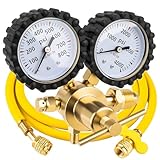
- HVAC Essential: Siasky Nitrogen Regulator is a must-have for HVAC professionals, ensuring accurate pressure testing and leak detection in AC systems
- Precise Regulation: Equipped with 0-800 PSI Delivery Pressure and a 5FT Hose, this regulator provides precise control for all your nitrogen testing needs
- Reliable Performance: The CGA580 Inlet and 1/4-Inch Male Flare Outlet Connection ensure a secure fit, while the durable construction guarantees long-lasting use in any HVAC setting
- Leak Detection Made Easy: Easily monitor pressures with the 0-800 PSI low pressure gauge and 0-4000 PSI high pressure gauge, making leak detection and troubleshooting a breeze.NOTE: The gauge shows 800 PSI that you can rate them at 600 PSl, but they are able to go up to 600 PSI
- Versatile Kit: Whether you're working with nitrogen tanks, pressure tests, or AC systems, the Siasky Nitrogen Regulator is the ultimate solution for all your HVAC needs. Get yours today and experience top-tier performance
- Average and peak nitrogen flow, including simultaneous users
- Required pressure at each point of use
- Purity and individual impurity limits
- Storage capacity and delivery frequency
- Redundancy during maintenance or supplier interruption
- Certificate, sampling and monitoring costs
- Energy, compressor, dryer, filtration and maintenance requirements
CGA G-10.1-2023 is the current listed commodity specification for commercial gaseous and liquid nitrogen, ninth edition, and supersedes the 2016 edition. Its scope includes quality verification, sampling, analytical procedures, containers and typical uses. It provides a technical framework; it does not assign one commercial grade to every end use.
Safety requirements for every purity level
Nitrogen is inert but can displace oxygen. A leak or rapid release can create a life-threatening oxygen-deficient atmosphere without warning from the gas itself. OSHA’s October 29, 2020 interpretation identifies hazard communication, compressed-gas handling and laboratory-safety rules as relevant to the circumstances it discusses.
- Use the supplier’s current safety data sheet and the equipment manufacturer’s handling instructions.
- Provide ventilation suitable for the release scenario and location.
- Evaluate whether fixed or portable oxygen monitoring is needed.
- Secure cylinders and protect valves, regulators and hoses from damage.
- Train workers on oxygen-deficient-atmosphere hazards, alarm response and emergency entry restrictions.
- Inspect connections and piping for leaks before commissioning and after maintenance.
OSHA’s interpretation also states that OSHA does not register, certify, approve or endorse commercial products. Follow the current rules that apply at your site and jurisdiction rather than treating any agency statement as a product approval.
Outdated Drivers Are Slowing You Down
One free scan finds every outdated or missing driver and matches the right update for your exact hardware.Free scan · exact hardware matchPC Slower Than It Used to Be?
A free scan shows the junk files, broken settings and background clutter dragging Windows down - then fixes them in one click.Free scan · Windows 10 & 11A practical purchase checklist
Before placing an order, send the supplier and equipment owner the same written specification:
- Application and intended use
- Required nitrogen percentage and measurement basis
- Maximum oxygen, moisture, oil, particle and process-specific contaminant levels
- Normal and peak flow, inlet pressure and point-of-use pressure
- Applicable standard, monograph, equipment manual or customer specification
- Certificate of analysis or quality-verification format
- Sampling location, frequency and acceptance criteria
- Container, bulk-tank or generator requirements
- Backup supply and change-control expectations
- Ventilation, monitoring and emergency procedures
If the supplier cannot state how the grade was measured or sampled, the percentage alone is not enough to approve the gas. The safest specification is the one that connects purity, contaminant limits, delivery conditions and verification to the actual process.
Quick Recap
Product prices and availability are accurate as of the date/time indicated and are subject to change. Any price and availability information displayed on Amazon at the time of purchase will apply.

