Municipal compost is a stable soil amendment made when a city or regional facility manages the aerobic (oxygen-dependent) decomposition of collected organic material. Residents and businesses separate approved organics, the program collects and preprocesses them, and operators control the recipe, oxygen, moisture, temperature and curing time until the material is stable enough for testing and use.
There is no single municipal recipe. Accepted materials, equipment, contamination rules, quality standards and resident access differ by jurisdiction. Some cities compost organics aerobically from the outset; others digest them without oxygen first and then aerobically compost the resulting digestate.
As an Amazon Associate I earn from qualifying purchases.
What “municipal compost” means
The U.S. Environmental Protection Agency defines composting as “the managed, aerobic (oxygen-required) biological decomposition of organic materials by microorganisms.” It defines compost as the biologically stable soil amendment produced by that process. In a city program, microbes do the breakdown, while facility operators create conditions that keep the process controlled and aerobic.
Outdated Drivers Are Slowing You Down
One free scan finds every outdated or missing driver and matches the right update for your exact hardware.Free scan · exact hardware matchWindows Errors? Fix Them Before They Spread
Repair common Windows errors and clear accumulated junk for a smoother, more stable PC - no reinstall needed.Free scan · no reinstallThat definition separates finished compost from two materials often confused with it:
#1 Best Overall

- Feed the soil not the plants - stimulate microbial activity in your soil and boost probability of success with all types of plants… like composting but faster
- For best results, apply monthly throughout the growing season, especially in the fall and spring
- No synthetic chemicals - main ingredient in this product is activated humics derived from organic sources (OMRI certified organic)
- Concentrated formula - simply dilute at a ratio of 1 oz to 1 gallon and spray/pour on your soil
- Farmer’s Secret products are made with pride in Kentucky and puts the know-how of award-winning farmers into your hands. Get in on the Secret!
- Anaerobic-digestion products: Digesters operate without oxygen and produce biogas plus a wet solid or slurry called digestate. Digestate can later be aerobically composted, but the digestion output alone is not finished compost under the EPA definition.
- Raw or partially decomposed organics: Material that is still hot, unstable or biologically active needs further processing. Applying it as if it were finished compost can cause odors, oxygen depletion or plant problems.
The word “municipal” describes the collection and public-service context, not a guaranteed quality grade. A city may operate its own site, contract with a regional facility, or send material through several facilities. Local rules determine what residents can put in a cart and where the final product goes.
How a city turns discarded organics into compost
Most municipal systems follow a recognizable chain, even when their machinery differs. The sequence below is a general model rather than a requirement that every city use every step.
- Separation at the source. Residents, restaurants, landscapers and other generators place accepted food scraps, yard trimmings or other organics in the designated container. Keeping plastic, metal and other contaminants out at this point produces a cleaner feedstock.
- Collection and transport. Trucks deliver the material to a composting, anaerobic-digestion or integrated organics facility. Some programs collect food and yard material together; others keep streams separate.
- Preprocessing. Workers and equipment remove bags, packaging and visible foreign objects. The remaining material may be shredded, mixed, pulped, pressed or blended to create a more uniform feedstock.
- Recipe and pile preparation. Operators balance wet, nitrogen-rich material with dry, carbon-rich material and add bulking agents when needed. Particle size and pile structure are adjusted so air can move through the mass.
- Active decomposition. Microorganisms consume the organics while operators manage oxygen, moisture and temperature. Turning, blowers, vents or porous wood chips keep the process aerobic.
- Curing or stabilization. After the most intense biological activity subsides, the material rests so remaining compounds can mature into a stable amendment.
- Screening. A screen removes oversized wood, plastic, stones and other pieces that did not break down. Clean oversize material may be returned to a later batch.
- Sampling and testing. Facilities may test maturity, pathogens, contaminants and other properties under local or provincial standards. The tests and product categories depend on the jurisdiction.
- Distribution or end use. Finished material can support public landscaping, agriculture, construction and restoration projects, be sold in bulk, or be offered to residents through events and depots.
What goes into a municipal compost facility
Potential feedstocks include food scraps, leaves, grass clippings, tree and brush trimmings, crop residues, animal manure and biosolids. A facility’s permit and operating plan determine which of these it accepts. A residential “green bin” program may take food scraps but exclude liquids, treated wood or certain compostable packaging even when those items are accepted elsewhere.
What’s actually slowing this PC down?
Pick the symptom - the matching free tool is one click away.
Carbon and nitrogen balance
Microbes need both carbon-rich “browns” and nitrogen-rich “greens.” Dry leaves and untreated wood chips generally supply carbon; food scraps and fresh grass generally supply nitrogen. The EPA gives a rough household-level guideline of three parts browns to one part greens by volume, or about a 30:1 elemental carbon-to-nitrogen ratio. That is general process guidance, not a universal municipal formula. Facilities adjust recipes based on moisture, particle size, incoming loads and laboratory or operator measurements.
Size, texture and porosity
Shredding or chopping makes feedstock more uniform and exposes more surface area to microbes. Material that is too fine can compact and restrict airflow; material that is too coarse can decompose slowly. Operators use bulking agents such as wood chips to create air spaces and to absorb excess moisture. Screening at the end removes pieces that remain too large for the finished product.
Rank #2

- SUPERCHARGE YOUR GARDEN: Elevate your plants' growth with premium organic Brut Worm Castings. Our certified organic formula guarantees optimal nutrition for your indoor and outdoor plants.
- PURE ORGANIC GOODNESS: Made with certified organic ingredients, our worm castings are raised indoors in containers, ensuring unparalleled purity and effectiveness for your plants’ health.
- LUSH & VIBRANT PLANTS: Watch your plants thrive with mineral-rich Brut Worm Castings. Experience lush greenery, vibrant blooms, and bountiful harvests—naturally nourishing your plants from root to leaf.
- BORN FROM FAMILY CARE: As a family-owned business, we take pride in offering the finest organic castings. Every batch is carefully crafted to nurture your plants as if they were our own.
- CERTIFIED ORGANIC: Our castings are OMRI and CDFA listed, representing true organic excellence and bringing the power of nature’s nutrients directly to your plants’ roots. Eco sustainable resorce for your gardening enjoyment!
Contamination prevention
Non-compostable packaging, produce stickers and residues from herbicides are examples of contaminants the EPA says should be kept out of feedstock. Source separation is the first defense. Facilities then use manual inspection, magnets, screens, pulpers, presses or other equipment to remove what they can. No screening system captures every contaminant, so the accepted-material list and resident instructions remain important.
How operators control the composting process
Oxygen
Composting is aerobic. In outdoor rows, loaders or specialized turners mix the material and reopen air spaces. In static piles, perforated pipes and blowers push air in or draw it through. Enclosed systems use fans and mechanical mixing. If a wet, compacted pile loses oxygen, anaerobic pockets can form, producing odors and slowing the intended process.
Moisture
Microbes need water, but saturated material fills the air spaces that oxygen must occupy. Operators may add water to a dry pile, mix in dry bulking material when it is too wet, or use covers and drainage to manage rainfall. Moisture is adjusted alongside the feedstock recipe and aeration rather than treated as an isolated setting.
Temperature and pathogen reduction
Microbial activity raises the temperature during the active stage and the temperature falls as readily degradable food is consumed. Operators track temperature with probes or sensors and adjust turning, airflow, moisture and pile dimensions. Properly managed heat, followed by curing, helps reduce pathogens and weed seeds, but the required time-temperature standard comes from the applicable local regulation or product specification.
Three common municipal facility designs
| Method | How it works | Operational strengths and constraints |
|---|---|---|
| Turned or aerated windrows | Long rows are turned with loaders, excavators or windrow turners; some rows use pipes for airflow. | Adaptable to small or large volumes and many materials, but requires managed outdoor space and mobile equipment. |
| Actively aerated static piles | Material remains in place while blowers push or pull air through pipes; timers or temperature sensors can control airflow, and covers can help manage moisture. | Can handle large quantities without routine turning; pile design, blower operation and moisture control are critical. |
| In-vessel composting | Organics are loaded into enclosed drums, silos or trenches and mechanically mixed or turned, often with bulking agents. | Uses space efficiently and gives operators close control of air and temperature; equipment and site requirements influence cost and scale. |
Choosing among these designs depends on land, climate, odor controls, incoming material, throughput and available equipment. One city can also combine methods, using enclosed preprocessing and curing outdoors.
Rank #3

- Unleash Growth Potential - Packed with minerals and nutrients, our compost empowers plants for lush, vibrant growth; a garden's dream come true.
- Organic Nourished Plants - Unlock nature's secrets with our natural fertilizer, ancient wisdom for thriving plants, untouched by synthetics.
- Safety With Results - No more burns! Aerated and tested, our compost is a safe sanctuary for plants, cultivating beauty without harm.
- Symbiotic Harmony, Natural Balance - Embrace nature's harmony as our compost fosters a symbiotic dance between beneficial microbes and your plants.
- Premium Quality, Pure Content - Discover the treasure of pure compost in every bag, no fillers, no additives, just the essence of growth.
Toronto: anaerobic digestion followed by aerobic composting
Toronto’s Green Bin material illustrates a two-stage system. The city sends collected organics to one of two facilities. Preprocessing removes plastic bags and other contaminants; one facility uses a hydropulper and the other a hydraulic press. The prepared material then spends approximately two weeks in anaerobic digesters, where it produces biogas and digestate.
Do these 3 things before closing this tab:
1Repair Windows errors before they cause bigger problems2Fix the driver behind crashes, sound loss and screen glitches3Clear out junk files and repair common Windows errorsThe digestate leaves the city and is aerobically composted outdoors with yard waste over several months. Only after that aerobic stage does it become finished compost. Toronto says the finished product is tested against Ontario Category AA/A standards, then used by commercial and agricultural sectors or distributed to residents at certain events and depots.
Toronto also publishes an approximate digestate-to-yard-waste ratio of 1:10. Both the two-week digestion period and that ratio are Toronto-specific figures reported by the City of Toronto in 2026; they are not universal municipal requirements or a general compost recipe.
Calgary: in-vessel aerobic composting
Calgary describes a different arrangement at its composting facility. Green Cart food and yard material is shredded, while dewatered biosolids are blended separately with wood chips. The two streams remain separate in the described process.
For the in-vessel stage, air is pumped into enclosed vessels while operators monitor temperature, moisture and oxygen. Calgary describes at least 55°C for at least three consecutive days during pathogen reduction. The material then passes through screening and curing before storage.
Quick wins for a faster PC:
Fix the driver behind crashes, sound loss and screen glitchesFind Drivers →Clear out junk files and repair common Windows errorsFree Scan →Rank #4

- Feed the soil not the plants - stimulate microbial activity in your soil and boost probability of success with all types of plants… like composting but faster
- For best results, apply monthly throughout the growing season, especially in the fall and spring
- No synthetic chemicals - main ingredient in this product is activated humics derived from organic sources (OMRI certified organic)
- Concentrated formula - simply dilute at a ratio of 1 oz to 1 gallon and spray/pour on your soil
- Farmer’s Secret products are made with pride in Kentucky and puts the know-how of award-winning farmers into your hands. Get in on the Secret!
The city describes approximately 60 days from start to finish: 21 days in the composting vessels followed by another 21 days of curing, with the remaining time covering preparation and handling. Calgary says finished compost is tested by a Compost Quality Alliance-accredited laboratory against criteria set by the Canadian Council of Ministers of the Environment. These durations and controls describe Calgary’s program, not a general rule for every facility.
Calgary also has described an anaerobic-digestion expansion approved in 2022 and expected to be completed in 2026. Project schedules can change, so current facility information should be checked directly with the city.
Independent reader supportYour contribution helps us test, update, and keep practical guides available for everyone.How safety and quality are established
Municipal compost is not automatically suitable for every use simply because it came through a city program. Facilities and regulators combine feedstock restrictions, process controls, contamination removal, curing and product testing. The applicable standard depends on where the compost was made and how it will be marketed or used.
Ontario’s jurisdiction-specific example
Ontario’s compost quality standards and production guideline set requirements for process monitoring, pathogen reduction, sampling and quality categories. Toronto’s reference to Category AA/A testing reflects those provincial rules. They should not be presented as a universal North American standard.
Recommended Free Tools
What screening can and cannot do
Toronto says contaminants removed during preprocessing are sent to landfill. Calgary says screening removes plastic, metal and large objects. Those steps reduce visible contamination, but they do not prove that every particle has been removed. Follow the facility’s accepted-material list and use the finished product according to its stated grade and instructions.
Best Value
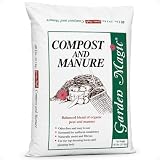
- Organic Compost Blend: Enhance the nutrient content and soil quality of lawns and raised garden beds with this organic blend, promoting healthy plant growth and soil vitality
- Ready-to-Use Mixture: Pre-prepared with odorless organic reed sedge peat and composted animal manure, this blend is ready to use immediately for all your gardening needs
- Essential Nutrients for Plant Growth: Packed with vital nutrients, this blend supports the healthy growth of flowers, vegetables, and grass, ensuring strong, vibrant plants
- Versatile for Gardening: Perfect for improving potting soil in planters or raised beds, making it an ideal choice for gardeners enhancing their container gardening projects
- Convenient 40-Pound Bag: Each 40-pound bag covers approximately 0.75 cubic feet, providing ample material for small-scale gardening and soil enrichment tasks
Where finished municipal compost goes
Finished compost is used as a soil amendment rather than as a replacement for all soil. EPA-listed applications include gardens, agriculture, horticulture, landscaping, topsoil and sod production, roadside and construction projects, wetlands, soil remediation, ecological restoration and erosion control.
A municipality may apply it to parks and public works, sell it in bulk, provide it to contractors or distribute limited quantities to residents. Toronto describes resident distribution at certain events and depots; Calgary describes storage and local use of tested finished material. Availability, pickup rules and volumes vary, so residents should check their own city’s current program page.
Retail bags labeled “garden compost” or “compost soil amendment” are not automatically municipal-origin material. A product’s source and quality claims must come from its own label or documentation, not from the generic word “compost.”
The Tool Desk
Outbyte PC Repair FREERepair Windows errors before they cause bigger problemsFix Now →Outbyte Driver Updater FREEFix the driver behind crashes, sound loss and screen glitchesFind Drivers →How to compare two city compost programs
When evaluating a municipal system, compare the parts that actually change the outcome:
- Accepted feedstocks: food scraps only, food plus yard waste, biosolids, or commercial and agricultural inputs.
- Process path: direct aerobic composting or anaerobic digestion followed by aerobic composting.
- Facility design: windrows, aerated static piles, in-vessel equipment, or a combination.
- Contamination controls: source-separation rules, preprocessing, screens, magnets, pulpers and disposal of rejects.
- Monitoring and standards: temperature, oxygen and moisture controls; laboratory testing; and the local quality category.
- Product destination: public works, farms, commercial sales, resident giveaways or another documented use.
Comparing those factors is more informative than asking which city “composts more.” The consulted city pages do not provide a comparable national or portfolio-wide production total, so a single overall tonnage figure should not be inferred.
What residents can do to improve the finished product
- Read the current accepted-material list for your collection service; rules differ even between neighboring cities.
- Keep plastic bags, produce stickers, metal, glass and other listed contaminants out of the organics cart.
- Do not assume a package marked “compostable” is accepted unless the local program specifically says so.
- Drain excess liquid and follow instructions for liners or wrapping.
- Use finished municipal compost according to the city’s stated grade and application guidance, especially where food production or sensitive plantings are involved.
Clean input gives operators more usable feedstock, reduces landfill-bound rejects and makes screening and testing more effective. The final product still depends on the facility’s process and the standards governing it.
Quick Recap
Product prices and availability are accurate as of the date/time indicated and are subject to change. Any price and availability information displayed on Amazon at the time of purchase will apply.

