Do not treat site entry as a turnstile decision. Before a worker starts, the manager should confirm six things: the person is authorised for that area, competent and appropriately supervised, inducted into this site, covered by current work planning, equipped for the remaining risks, and supported by welfare and emergency arrangements. If any one of those controls is missing, delay entry or restrict the task until it is corrected.
The legal details depend on the country, project and worker’s role. This framework uses UK Construction (Design and Management) Regulations 2015 (CDM) and Health and Safety Executive (HSE) guidance as its main basis. Apply the local law, the construction phase plan, risk assessments, method statements, site rules and task-specific permits that govern your project.
As an Amazon Associate I earn from qualifying purchases.
Start with a documented go/no-go decision
A pre-entry check is a control point, not just an administrative form. The manager must know who is coming in, what they will do, where they will work, which hazards are present and what supervision is available. Record the decision in the project’s normal access, induction or permit system so that another supervisor can see the worker’s status.
Free tools Windows power users keep installed
One-click scans. No signup required.
Under UK CDM 2015, a contractor must take reasonable steps to prevent unauthorised people entering the site. Regulation 15(10) states: “A contractor must not begin work on a construction site unless reasonable steps have been taken to prevent access by unauthorised persons to that site.” This does not mean that a gate and a sign are enough; the controls must work in the conditions of the actual project.
#1 Best Overall

- 【Comfortable Fit】: SAFEBUILDER Work Hard Hat with 6-points suspension, Good at Shock Impact when workers work in danger, Protection For Head. Y-Type Chinstrap to keep Hard Hat Fixed on the head and Adjustable to be good feeling. Head size adjustable range is 53-63cm/ 20.87-24.80 inch.
- 【Humanized Design】: SAFEBUILDER Work Hard Hat design is humanized, with multiple adjusting devices, which can adjust the size and depth of the Hat shell according to the size and contour of the workers' head, so that the Hat fits the workers' head more closely and improves the comfort and stability of wearing.
- 【Quality Material】:SAFEBUILDER Work Hard Hat is made of high strength ABS (Acrylonitrile butadiene Styrene) material, which can provide reliable protection for workers in dangerous operating environments.
- 【Certificates Approved】: SAFEBUILDER Work Hard Hat meet ANSI Z89.1-2014 ,Type 1 Class C Standards, Also meet CE EN397-2012 ,-20℃. Can be used in Construction, Industrial,Decoration, Outdoor Work ,Rescue,Electricity, Mining and other places To get Head Protection, Improve the work safety Level and workers Get Happy daily working time.
- 【Accessories of SAFEBUILDER】SAFEBUILDER Brand Safety Hard Hats Support Ear Muffs mounted to get Hearing Protection, Safety Visor installed Inside & Outside of Hat Shell ,Clear visor & Tinted Visor for choices help workers get Clear vision In Daily work or at Night. Choose Safebuilder Choose a full set Head Protection.
1. Confirm authorisation, boundaries and access control
Verify the person and the assignment
- Check the worker’s identity and employing contractor against the day’s access list.
- Confirm the precise work area, shift and task they are authorised to enter.
- Identify restricted zones, exclusion zones, live services, lifting areas and other places where ordinary site access does not apply.
- Decide whether the person needs an escort or direct supervision. Visitors, delivery personnel and occasional workers may need a shorter, visit-specific induction and an escort rather than unrestricted access.
Test the boundary, not just the paperwork
Walk or inspect the perimeter and access points often enough to detect damaged fencing, open gates, failed locks, missing signs or routes that allow people to bypass the control. Consider children, members of the public, neighbouring businesses, road users and people who may enter accidentally. Separate vehicle and pedestrian routes where the project layout requires it, and keep emergency access available.
Explain the site rules before entry: where to report, which routes to use, where smoking is permitted, what areas are prohibited, and how to challenge an unknown person. A worker who cannot identify their permitted area or reporting point is not ready to proceed alone.
2. Check task-specific competence and supervision
Match evidence to the actual work
Competence is not a generic label. Check that the person has the skills, knowledge, training and experience needed for the assigned activity and the hazards on this site. Evidence can include training records, experience, trade qualifications, equipment authorisations and a supervisor’s assessment. A card or certificate can support the decision, but it is not, by itself, proof that the worker can perform this particular task safely in these conditions.
Quick wins for a faster PC:
Fix the driver behind crashes, sound loss and screen glitchesFind Drivers →Repair Windows errors before they cause bigger problemsFix Now →Scan for outdated or missing drivers - takes under a minuteDriver Scan →Confirm supervision and information
- Name the supervisor responsible for the worker and confirm that the supervisor is present or reachable as required by the risk assessment.
- Check that the worker has the current drawings, instructions, method statement or task briefing needed for the job.
- Increase supervision when the person is new, the task is high risk, conditions are changing, or the worker is still completing training.
- Make sure language, literacy, disability or communication needs have been addressed so instructions and alarms will be understood.
Do not allow a worker to operate plant, use a specialist system or enter a controlled area merely because they have worked on construction sites before. The authorisation must cover the equipment and the conditions in front of them.
3. Deliver a site-specific induction and maintain communication
Cover what the person must know before work
A suitable induction should explain the hazards and arrangements that are specific to this site. At minimum, cover the site layout, access and escape routes, work zones, traffic management, falling-object and lifting risks, excavations or temporary works, live services, required PPE, welfare locations, first aid, emergency alarms, incident and near-miss reporting, and who is responsible for decisions.
Rank #2

- Low profile design
- Tested and marked for reverse donning
- Shell constructed from high density polyethylene materials
- The Package Weight Of The Product Is 3 Pounds
Explain how workers receive updates after the induction. Daily briefings, toolbox talks, shift handovers and change notices are part of the communication system; an induction does not remain sufficient when the sequence, hazards or access route changes.
Scale the induction for visitors
Someone visiting once to inspect progress does not need the same information as a worker performing a week-long excavation, but the visitor still needs enough information to avoid harm. Tailor the briefing to the visit, state the boundaries, provide the required PPE and keep the visitor escorted where they cannot safely navigate the site independently. A prior induction can be accepted only when it is still relevant to the current project and the person’s role.
4. Confirm the work is planned for actual site conditions
Review information before the person starts
Check the construction phase plan, risk assessment and method statement against the work scheduled for that shift. They should address known conditions and the interaction between trades, not describe an ideal site that no longer exists. Verify that the worker has been briefed on the controls and understands what would require the job to stop.
Check the hazards that commonly invalidate a plan
- Asbestos, contaminated ground, hazardous substances or other environmental contaminants.
- Overhead and underground electrical, gas, water, drainage or communications services.
- Ground conditions, excavations, unsupported edges, temporary works and changes caused by weather.
- Nearby roads, schools, footpaths, occupied buildings and members of the public.
- Other contractors’ work, simultaneous lifting, hot work, deliveries, reversing vehicles and changing access routes.
- Plant condition, isolation requirements, loading limits and the sequence in which work will be performed.
Ask whether the planned controls are physically in place. A method statement cannot control a service that has not been located, a walkway that is blocked, or an exclusion zone that is not being enforced. Re-plan when the work sequence or site condition changes materially.
5. Check PPE and equipment for the residual risk
Use the hierarchy of control first
PPE is the last line of defence, not a substitute for eliminating a hazard, isolating it or using collective protection. Confirm that the risk assessment identifies the residual risks and that the site rules specify the PPE required for the area and task.
Rank #3
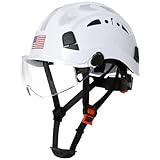
- Hard Hats Construction Osha Approved:AOLAMEGS safety helmet made of high impact penetration resistant ABS materials,lightweight,strong and comfortable. A good choice to protect heads against falling objects, impacts, bumps, and scrapes.AOLAMEGS safety hard hats meet ANSI Z89.1-2014 Type I Class C standards,visors meet ANSI Z87.1-2015 standards
- Package Including :1pc White Reflective Construction Hard Hats with Clear Visor + 1 Pack Hi-Viz Reflective Stickers .The construction hard hat Kit help complete comprehensive above-the-neck safety systems
- More Humanized Design:Rapid-Dial ratcheting headgear,one-handed adjustment design allows workers to modify fit without removing work helmet.Helmet size range from 53-63cm/ 20.86-24.80 inch.Sliding vent holes allow easy opening and closing based on weather conditions .Universal slots design ensures that safety hardhats to install attachments.And the safety helmet has Hi-Viz design on the front-rear-and sides of the helmet allows the user increased visibility under low light conditions
- Adjustable & Comfort Fit:Adjustable 6-point suspension system for improved shock absorption and overall comfort.Comfortable and convenient soft cup style chinstrap for extra security and stability, remove freely.Equipped with a pack of hard hat reflctive stickers ,provide a safe protection on dark outdoor work .Easy flip-up clear visor provides eye protection in debris protection
- Applicable Environment:Safety helmet with the clear visor,Suitable for construction,tree climbing work,woodworking,mechanics, forestry,manufacturing,height and scaffolding work, in any trade that requiring general head protection
Inspect fit, condition and suitability
- Check that each item is the correct type for the hazard, fits the wearer and is compatible with other equipment.
- Inspect helmets, footwear, eye and hearing protection, gloves, respiratory equipment, harnesses and high-visibility clothing for damage, contamination, expiry or missing components.
- Confirm that workers know how to wear, adjust, clean, store and report defects in the equipment.
- Provide task-specific additions where the assessment requires them, such as face protection, fall-arrest equipment, respiratory protection or chemical-resistant gloves.
HSE guidance says head protection is needed on almost all construction sites when a risk of head injury remains after other controls, and protective footwear is expected. The precise specification still depends on the hazard, the assessment, local requirements and site rules. Do not make a helmet or any other purchase a substitute for fixing an unsafe layout or work method.
What’s actually slowing this PC down?
Pick the symptom - the matching free tool is one click away.
6. Confirm welfare and emergency readiness from the start
Welfare must be usable, not merely promised
Before work begins, confirm that suitable toilets, washing facilities, drinking water, rest and changing arrangements required for the project are available, clean and accessible. They must remain available as the site moves; a facility that is locked, out of service or too far from the work area is not an effective arrangement.
Make the emergency plan actionable
Workers should know how to summon first aid, where the first-aid equipment and trained personnel are located, how to report an incident or near miss, where to assemble and who controls the response. Explain fire arrangements, alarms, evacuation routes and what to do if there is serious and imminent danger. Where the task creates a foreseeable rescue need, verify that the rescue method, equipment, people and communications are planned before entry.
Emergency arrangements must account for the actual shift: lone workers, out-of-hours work, changing access routes, visitors, severe weather and the location of the workface. A generic noticeboard plan is not enough if responders cannot reach the area.
Independent reader supportYour contribution helps us test, update, and keep practical guides available for everyone.Use the same decision standard for workers and contractors
When several contractors or workers are being assessed, compare them against the task rather than against one another’s paperwork. The following framework is a management aid, not a regulatory scoring system.
Crashes, No Sound, or Screen Glitches?
Random freezes, missing sound and display glitches usually trace back to one bad driver. Find and replace yours safely.Free scan · under a minutePC Slower Than It Used to Be?
A free scan shows the junk files, broken settings and background clutter dragging Windows down - then fixes them in one click.Free scan · Windows 10 & 11Rank #4

- Country Of Origin : United States
- The Package Height Of The Product Is 9 Inches
- The Package Length Of The Product Is 14 Inches
- The Package Width Of The Product Is 13 Inches
| Check | Evidence to examine | Decision question |
|---|---|---|
| Competence | Relevant training, experience, authorisations and understanding of the task | Can this person perform this work safely in these conditions? |
| Supervision | Named supervisor, availability, briefing and communication arrangements | Who will intervene if conditions or the worker’s method change? |
| Site understanding | Induction record, site-rule briefing and emergency knowledge | Can the person explain the hazards, routes and reporting process? |
| Planning | Current risk assessment, method statement, permits and coordination with other work | Does the plan control the hazards that actually exist today? |
| PPE and equipment | Correct specification, fit, inspection and equipment authorisation | Are residual risks controlled without relying on defective or unsuitable equipment? |
Stop entry when a red flag appears
Delay access, limit the person to a safe waiting area or stop the task when any of these conditions applies:
- The person cannot be identified, is not authorised, or cannot state where they are allowed to work.
- The required competence, supervision, induction or language support is missing.
- The risk assessment or method statement does not cover the task, has not been briefed, or no longer matches site conditions.
- A boundary, exclusion zone, access route, guard, temporary work or service control is defective.
- Required PPE or plant is missing, damaged, incompatible or unauthorised.
- Welfare, first aid, communications or emergency arrangements are unavailable for the shift.
Record the reason, assign an owner and set the condition that must be met before release. If the issue concerns an immediate danger, keep people out until the hazard is controlled; do not rely on a verbal promise to correct it later.
Special case: US construction permit-required confined spaces
The ordinary site-entry checklist is not enough for a permit-required confined space in the United States. Use the applicable OSHA permit process. Before authorising entry, the entry supervisor must verify that the required tests, procedures and equipment are in place and that rescue services are available. This is a specific US requirement, not a universal confined-space rule or a replacement for the law governing the project’s jurisdiction.
Keep the gate check live throughout the project
Entry approval is not permanent. Recheck workers when they change task, area, shift, employer, equipment or supervision, and whenever site conditions or the construction sequence changes. Coordinate contractor information and inspect the jobsite, materials and equipment at the frequency required by local law. In the United States, OSHA construction provisions require frequent and regular inspections by competent persons and restrict equipment operation to qualified workers.
The Tool Desk
Outbyte PC Repair FREEClear out junk files and repair common Windows errorsFree Scan →Outbyte Driver Updater FREEScan for outdated or missing drivers - takes under a minuteDriver Scan →A reliable manager can therefore answer six questions before releasing a worker: Are they authorised? Are they competent and supervised? Have they received the right induction? Is the work planned for today’s hazards? Are PPE and equipment suitable? Are welfare and emergency arrangements ready? A “no” is a control failure to resolve, not a box to tick after the work has started.
Quick Recap
Product prices and availability are accurate as of the date/time indicated and are subject to change. Any price and availability information displayed on Amazon at the time of purchase will apply.

