The Tool Desk
Outbyte Driver Updater FREEScan for outdated or missing drivers - takes under a minuteDriver Scan →Outbyte PC Repair FREEClear out junk files and repair common Windows errorsFree Scan →Neither steel is universally better. Choose weathering steel when you want a natural rust-colored patina and the project can dry between wettings. Choose hot-dip galvanized steel when you prefer a zinc-coated metallic finish or the site makes an uncoated rusting surface risky. Persistent dampness, coastal or deicing chlorides, drainage, runoff staining, fabrication, and the required maintenance can change the decision.
The decision in one view
Start with the site, not the product name. Identify how long the steel will stay wet, whether salt will reach it, where runoff will go, and what appearance the finished project must have. Then use the following comparison as a screening tool; structural or safety-critical work still needs project-specific engineering and specifications.
As an Amazon Associate I earn from qualifying purchases.
| Decision factor | Weathering steel | Hot-dip galvanized steel |
|---|---|---|
| Appearance | Develops a natural rust-colored patina and is commonly selected for a weathered architectural or landscape look. | Has a zinc coating and a metallic galvanized appearance rather than a deliberately rusted patina. |
| Exposure | Needs conditions that allow a protective patina to form. Prolonged wetness and chloride salts are warning conditions. | Can provide long atmospheric protection in many environments when the coating and component are properly specified; performance depends on local exposure. |
| Detailing | Requires drainage that prevents water traps, plus planning for early rust-colored runoff and staining on adjacent surfaces. | Still needs suitable drainage, coating specification, and component selection for the expected environment and service. |
| Maintenance expectation | Often selected to avoid routine painting, but it is not maintenance-free where water or salts defeat patina formation. | The zinc coating protects the underlying steel in atmospheric exposure; inspection and repairs remain necessary when the coating is damaged or the environment is severe. |
| Evidence scope | Much authoritative performance and cost evidence comes from bridges and structures, so it does not automatically predict the life or price of a garden item. | American Galvanizers Association (AGA) service-life guidance addresses atmospheric exposure and is conditional, not a guarantee for a particular product. |
How weathering steel protects itself
Weathering steel is intentionally exposed to the atmosphere. Alloying elements help the surface develop a dense corrosion-retarding oxide or oxy-hydroxide layer, commonly called a patina. The patina is the product’s protective mechanism and its visible design feature.
Do these 3 things before closing this tab:
1Clear out junk files and repair common Windows errors2Scan for outdated or missing drivers - takes under a minute3Repair Windows errors before they cause bigger problemsThat protection is not automatic as soon as the steel is installed. Federal Highway Administration (FHWA) guidance explains that patina formation depends on exposure conditions, including repeated wetting and drying. A project that dries between rain events can progress toward a protective surface; a project that remains damp can continue corroding instead of stabilizing.
#1 Best Overall

- [MATERIALS AND SIZE]: Landscape Edging made of high-quality corten steel, pre-rusted surface for all-weather use and maintenance-free durability.; Landscape Edging 40inch lengh x 6 inch height, 20FT in total length.
- [FLEXIBLE LANDSCAPE EDGING]: Steel landscape edging is flexible and bendable, and can be easily bent and molded to any shape angle you need.the edges are folded and thickened top, protect hands
- [EASY TO INSTALL]: steel landscape edging can be easily inserted into the soil, use clips fix the edging, making the edging seamlessly linked, increasing the stability of the landscape edging, and making the landscape edging more aesthetically pleasing.
- [MULTIPLE USE]: Steel landscape edging is suitable for gardens, patios, paths, planting, farmland, forestry and any other place where you need to separate areas, it effectively prevents grass roots and weeds from spreading and maintains a neat landscape.
- [LANDSCAPE EDGING SERVICE]: we are at your service 24/7, if you have any questions about landscape edging, please feel free to contact us, we will provide you with a solution to your satisfaction within 24 hours!
Early in the process, rain can carry loose rust-colored material from the steel. The runoff may stain concrete, light-colored stone, paving, siding, or plants. The color and amount of runoff can change as the surface weathers, but a design that cannot tolerate staining should address drainage before installation rather than assuming the issue will disappear.
What “rusting” does and does not mean
Seeing rust on weathering steel is expected. It does not by itself prove that the material is failing. The practical question is whether the intended protective patina can form and remain stable in the actual exposure. If the steel is repeatedly soaked, held against wet soil, or exposed to concentrated salts, corrosion can continue at a rate the material was not intended to withstand.
Weathering steel therefore should not be treated as a universal substitute for a coated or otherwise protected product. FHWA’s 2011 brief, Improved Corrosion-Resistant Steel for Highway Bridge Construction, states: “Conventional and high-performance weathering steels described in ASTM A709 perform well except in protracted time-of-wetness conditions and when chlorides are deposited on the steel either naturally (i.e., in coastal locations) or in snow belt regions where deicing salts are heavily applied.” That statement is written for highway bridge steels, but the exposure warning is directly relevant when screening an outdoor site.
Outdated Drivers Are Slowing You Down
One free scan finds every outdated or missing driver and matches the right update for your exact hardware.Free scan · exact hardware matchWindows Errors? Fix Them Before They Spread
Repair common Windows errors and clear accumulated junk for a smoother, more stable PC - no reinstall needed.Free scan · no reinstallHow hot-dip galvanized steel protects itself
Hot-dip galvanizing applies a zinc coating to steel. In ordinary atmospheric exposure, the zinc forms the protective surface while shielding the steel underneath. The finish is metallic rather than rust-colored, so it suits projects where a deliberately weathered appearance is not wanted.
AGA states that properly specified hot-dip galvanized steel can provide 70 or more years of atmospheric corrosion protection in most environments. AGA qualifies that estimate by pointing to temperature, humidity, pollution, and air salinity. It is an industry reference for atmospheric service, not a guaranteed life for every item, location, edge, fastener, or buried condition.
Galvanizing does not eliminate the need for design judgment. The coating, steel component, connections, fabrication process, and exposure should be specified together. A galvanized part that is constantly submerged, buried in aggressive soil, or damaged during handling is not represented by a general atmospheric service-life statement.
Rank #2

- Do it once, do it Right! Edge Right is the ultimate hammer-in edging. Instead of cheap plastics it's comprised of heavy duty 16-gauge COR-TEN steel.
- Worried about damage from your weed eater? Don't be! Edge Right can take unlimited abuse.
- Edge Right develops a rust patina over time to give a handsome modern look. (It can be sealed too!)
- Uses COR-TEN steel in order to be more malleable for use on curves in your landscape.
- The COR-TEN weathering steel can last well over 100 years.
Exposure conditions that decide the choice
Intermittent rain with good drying
This is the most favorable setting for weathering steel. Open screens, freestanding landscape elements, exposed edging, and other components that shed water and dry on all sides are more compatible with patina formation than enclosed or dirt-filled details. Galvanized steel also performs well as an atmospheric option, so appearance and fabrication requirements may become the deciding factors.
Free tools Windows power users keep installed
One-click scans. No signup required.
Persistent dampness, soil contact, and water traps
Long time-of-wetness is a warning for weathering steel. Water trapped behind a folded edge, under a horizontal ledge, inside a blocked tube, or at a joint can keep the surface from drying. Soil and mulch can hold moisture against edging or planters, while irrigation may wet the same location repeatedly.
FHWA and the American Institute of Steel Construction (AISC) both emphasize drainage. AISC’s Uncoated Weathering Steel Reference Guide (2022) says: “Experience has shown drainage that directly contacts weathering steel girders (as well as those of other material types) through a leaking or failed joint results in poor performance and that adequate joint maintenance cannot be reliably guaranteed.” Although the passage concerns bridge girders, the principle applies to any outdoor detail where water from another surface is directed onto steel.
If a component cannot drain and dry, do not select weathering steel merely because rust is visually appealing. A zinc-coated option, a different protective system, or a redesigned detail may be more appropriate.
Coastal air and deicing salts
Salt is one of the clearest reasons to be cautious with uncoated weathering steel. Coastal chloride deposition and heavy deicing-salt exposure are specifically identified by FHWA as conditions in which weathering grades may not perform as intended. Salt can arrive in windborne spray, splash from roads, or runoff from treated pavement.
Galvanized steel is not automatically risk-free near the coast or in a snow belt; AGA’s estimate remains dependent on local air salinity and other environmental factors. The practical distinction is that weathering steel relies on a stable patina, whereas galvanized steel arrives with a protective zinc coating whose expected atmospheric performance can be evaluated for the local environment.
Rank #3
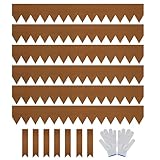
- ABOUT THE EDGING: 3.5" above ground; 6 Pack of 40" each, 20Ft total installed; 7 pieces 8'' Clamps for extra stability; Corten steel is a kind of weathering steel and develop rust patina over time; This rust acts as a protective coating and eliminates the need for paint; CorTen steel material allows the edgings to last for 100 plus years; Clamps and gloves included
- PRE-RUSTED: The corten steel edging has been pre-rusted; No need to wait, get a beautiful rusted patina right away. Also, you can lock in the color with a coat of polyurethane paint after the patina is completely formed
- WIDELY USED: These corten steel edgings can add charm and character to your garden landscaping; They create clean lines and offer natural, rustic finish; They keep grass from spreading into your garden beds or soil and mulch in the garden from spilling onto the lawn; Quality Cor-Ten steel landscape edging widely used in outdoor gardens, courtyards and forestry, etc; Used in both commercial and residential settings
- NO DIG AND EASY TO MAINTAIN: With sharp saw teeth, this bendable hammer-in steel edging is easy to bend and install, (Note:Please wear gloves for installation); It can also be easily hammered back down; You can easily pull the edging up and reshape it to match a new bed shape
- Email anytime for support. Our team is here to help!
Drainage onto other materials
Ask where every drop leaving the steel will land. Rust-colored runoff from weathering steel can mark porous paving, masonry, stucco, or light-colored finishes. It can also reach planting beds. Keep discharge away from surfaces where staining is unacceptable, provide a deliberate drainage path, or use a finish that does not depend on exposed rusting.
Appearance and landscape compatibility
When the patina is the design
Weathering steel is a strong visual choice for contemporary landscapes, industrial-style details, retaining features, sculpture, screens, and architectural accents where an evolving rust tone is intentional. The surface changes as it weathers, so the installed color should be treated as a process rather than a fixed paint color.
Before committing, obtain a sample or agree on an acceptable range of tones with the designer. The finished appearance depends on exposure and wetting patterns. A sheltered face and a rain-washed face may not weather at the same pace.
What’s actually slowing this PC down?
Pick the symptom - the matching free tool is one click away.
When a clean metallic finish is preferred
Galvanized steel provides a zinc-coated appearance without deliberately creating a rust patina. That can be a better match for utility structures, rails, frames, hardware, and projects where adjacent finishes must remain visually clean. The particular coating appearance and the project’s finish requirements should be checked together rather than assumed from a generic product photograph.
Maintenance and service life
Weathering steel maintenance
Weathering steel is often chosen to reduce painting, but “low maintenance” does not mean “install and ignore.” Establish an inspection routine appropriate to the project. Look for water traps, blocked drains, leaking joints, soil accumulation, new salt sources, and areas where corrosion is deeper or more localized than on the surrounding surface.
- Keep drainage paths open and prevent irrigation or roof runoff from concentrating on the steel.
- Remove soil, mulch, leaves, and debris that hold moisture against the surface.
- Check adjacent paving, walls, and plants for rust-colored staining and redirect runoff if necessary.
- Reassess the exposure after site changes such as new sprinklers, road-salt storage, or a roof addition.
For bridge applications, FHWA’s 1989 guidance gives a conservative decision rule: “If serious doubt remains after applying the guidelines in the selection process, then engineering judgment should lean towards coated steel.” A homeowner or landscape contractor should apply the same logic at a smaller scale: unresolved exposure doubt is a reason to choose a protected finish or obtain professional advice, not a reason to assume the patina will compensate.
Rank #4

- User-friendly Design: the landscape edging features a unique rolled top edge, enabling easy hammer-in installation, preventing accidental scratches, and boosting both the aesthetics and safety of your garden
- Sturdy Low-maintenance: this garden edging is made of durable weathering steel, providing reliable support for plants, withstanding various weather conditions, and requiring almost no upkeep for long-term use
- Precise Dimensions: the metal edging for landscaping comes with 8-inch depth, 48-inch length per strip, plus 2-inch serrations, perfectly fitting diverse garden layout needs
- Neat Zone Division: this weathering steel landscape edging separates flower beds and lawn areas neatly, creates a tidy visual effect, and prevents grass root spread to maintain a clean yard
- Natural Stylish Look: the steel landscape edging forms sleek lines for a rustic, natural style, stops lawn encroachment into flower beds, and avoids soil or mulch spilling onto the lawn.Note: The steel color has a slight rusting appearance, which is a normal phenomenon
Galvanized steel maintenance
Inspect galvanized work for mechanical damage, cut edges, poor drainage, and conditions that differ from the assumed atmospheric exposure. Keep dirt and debris from creating persistent wet spots. If the zinc coating is damaged during fabrication, transport, or installation, the repair method should be compatible with the specified galvanizing system and accepted by the responsible fabricator or designer.
Quick wins for a faster PC:
Fix the driver behind crashes, sound loss and screen glitchesFind Drivers →Repair Windows errors before they cause bigger problemsFix Now →AGA’s “70+ years” figure should be read as a conditional atmospheric-protection estimate. It does not establish a single service life for a garden edging product, a planter, a fastener, or a component in a wet or saline location.
What the published cost figures actually mean
FHWA’s 2009 technology brief reports more than 10 percent construction-cost savings for highway bridge use of weathering steel where painting is avoided. The same bridge-focused brief attributes more than 30 percent life-cycle-cost savings to reduced maintenance and greater durability compared with common construction steels.
Those figures are historical, application-specific bridge evidence. They are not a retail price estimate and do not compare every weathering-steel product with every galvanized product. A short garden border, planter, railing, or furniture frame has different quantities, fabrication costs, connections, transport, and installation labor. Obtain project-specific quotes instead of multiplying the bridge percentages into a small-project budget.
Independent reader supportYour contribution helps us test, update, and keep practical guides available for everyone.Project-by-project guidance
Garden edging and landscape borders
Weathering steel garden edging can work when the patina is desired, the strip can drain, and rust runoff will not damage paving or light-colored finishes. Keep irrigation from repeatedly wetting the same joint and avoid burying details that cannot dry. Galvanized edging is the more conservative visual and exposure choice when the border stays damp, sits beside salt-treated paths, or must remain free of rust staining.
Planters and raised beds
Planters combine moisture, soil contact, irrigation, and concentrated drainage, so detailing matters more than the label on the sheet. Provide a defined route for water to leave, prevent water from pooling at seams, and inspect the exterior where soil or mulch may remain against the steel. If staining or persistent wetness cannot be controlled, a galvanized or otherwise coated construction may better fit the use.
Best Value

- [ Corten Steel Edging] Material: Corten Steel, Size: 40" L x 8" W ( include the spikes), the height of the spikes is 2 inch, and the part above the ground is 6 inch. Include: 6 Packs steel edging, clips x 6, gloves x 1, screws x 12, nuts x 12, wrench x 1. After install, 6 pieces total 20 feet in length.
- [ Steel Edging for Landscaping ] Steel Landscape Edging is made of special weather-resistant corten steel, which is characterized by its natural rusting appearance. And no special maintenance, can resist any bad weather.
- [ Metal Edging ] No need to wait, you can immediately see the beautiful patina, which allows the Edging landscape to resist any weather and last well over 100 years outdoors.
- [ Metal Landscape Edging] This corten steel Edging is easy to use. It can be bent into any shape at will. Just connect the Steel Landscape Edging and hammer it into the land. Widely used in outdoor gardens, courtyards, paths, plantings, agriculture, outdoor patios, forestry, etc, to prevent the spread of weeds.
- [ Garden Metal Edging] Any problem, you can contact us at any time. GZGNEEVL is very concerned about the user experience of each customer. Just click ASK SELLER besides your order from us we will provide a best solution at the soonest without returning the package.
Furniture, screens, gates, and decorative panels
Open frames and panels that dry quickly are more favorable to weathering steel. Consider touch points, clothing stains, nearby paving, and the visual effect of early runoff. Galvanized steel is often easier to align with a metallic finish and may be preferable where users expect a clean surface rather than a changing patina.
Structural, elevated, or safety-critical work
Do not extrapolate a consumer comparison to a beam, retaining structure, stair, guard, bridge component, or other safety-critical element. Use a qualified designer, confirm the applicable steel and coating specifications, and document exposure, drainage, connections, inspection, and repair requirements. FHWA and AISC guidance is valuable engineering context, but bridge evidence does not guarantee performance for a different geometry or environment.
Detailing checklist before ordering steel
- Map the exposure. Record rain, irrigation, condensation, snow, coastal spray, deicing salts, pollution, and any source of continuous dampness.
- Identify drying conditions. Note which faces are open to air and which will touch soil, mulch, masonry, another metal, or an enclosed cavity.
- Trace the water. Follow roof, paving, joint, and irrigation runoff to its discharge point. Do not allow a leaking or failed joint to drain directly onto weathering steel.
- Decide the finish. Confirm whether an evolving rust patina is an intended feature or whether a zinc-coated metallic appearance is required.
- Plan for staining. Protect or separate light-colored paving, stone, walls, and planting areas from early weathering runoff.
- Specify the component and environment together. For galvanized work, identify the required hot-dip galvanizing approach and the expected atmospheric exposure with the fabricator or designer.
- Review fabrication and installation. Check joints, cut edges, holes, welds, fasteners, lifting damage, and any field modifications that can interrupt drainage or coating protection.
- Write the maintenance plan. State who will clear drains, remove debris, inspect for corrosion or coating damage, and respond when the site’s exposure changes.
- Escalate uncertainty. For structural or safety-critical work, have a qualified engineer make the final material and detailing decision.
Common failure modes and practical responses
| Observed problem | Likely decision issue | Practical response |
|---|---|---|
| Weathering steel remains wet and corrosion continues | Persistent time-of-wetness, blocked drainage, or soil contact prevents a stable patina. | Remove the water trap or moisture source; if drying cannot be achieved, reconsider a coated material and obtain professional advice for structural work. |
| Rust-colored marks appear on paving or walls | Early weathering runoff is reaching an adjacent porous or light-colored surface. | Redirect discharge, add a deliberate drainage detail, protect the receiving surface, or select a finish that avoids exposed rusting. |
| Localized corrosion occurs near a joint | Water from another surface is draining directly onto the steel or a joint is leaking. | Repair the source, restore drainage, and inspect the affected steel rather than treating the symptom alone. |
| Weathering steel is installed beside a salted road or coastal spray | Chlorides are being deposited at a level that can defeat intended patina performance. | Reassess the material with a qualified designer; a galvanized or other protective system may be more suitable. |
| Galvanized steel is damaged during installation | Handling, cutting, drilling, or field work has interrupted the zinc coating. | Document the damage and use the fabricator’s or designer’s compatible repair specification before service begins. |
| The installed color does not match expectations | Weathering steel changes with wetting, drying, and exposure; galvanized appearance also varies by product and finish requirements. | Approve representative samples and define acceptable appearance before fabrication. |
A simple selection rule
Choose weathering steel when all of the following are true:
- The rust-colored patina is a deliberate part of the design.
- The steel can dry between wettings and has no persistent water trap.
- Chloride exposure from coastal air, road spray, or deicing salts is low enough for the intended application.
- Runoff can be directed away from surfaces and plants that could stain.
- The owner accepts inspection and cleaning even though routine painting is not planned.
Choose hot-dip galvanized steel when one or more of these conditions apply:
- A zinc-coated metallic finish fits the project better than a changing rust patina.
- The location is persistently damp or the detail cannot reliably dry.
- Salt exposure, splash, or runoff makes uncoated weathering steel a questionable choice.
- Staining of adjacent finishes is unacceptable.
- The project team can specify the coating and component for the actual atmospheric environment and maintain the installation accordingly.
When the choice remains uncertain, resolve the exposure and drainage questions first. For structural work, rely on a qualified designer and project specifications rather than a generic service-life or cost claim.
Bottom line for outdoor projects
Weathering steel is the better fit for a dryable site where its rust patina, changing color, and landscape character are intentional. Galvanized steel is the better fit where a zinc-coated finish, cleaner adjacent surfaces, or greater tolerance for difficult atmospheric exposure is more important. Neither material removes the need for good drainage, suitable detailing, inspection, and a realistic maintenance plan.
The decisive test is simple: can the steel dry, will salt reach it, and where will water and staining go? Answer those questions before comparing prices, and the material choice will be based on the conditions that actually determine outdoor performance.
Recommended Free Tools
Quick Recap
Product prices and availability are accurate as of the date/time indicated and are subject to change. Any price and availability information displayed on Amazon at the time of purchase will apply.

