People accept water efficiency when it preserves the shower, clean clothes, healthy landscapes, and predictable bills they value. The most effective design therefore combines efficient fixtures and buildings with leak prevention, clear feedback, practical assistance, and a credible explanation of performance. Treat conservation as a better way to deliver the same service—not as a daily penalty—and adapt the solution to local climate, rates, housing conditions, and household budgets.
Define the outcome people are choosing
Water efficiency means delivering the same useful service with less water, less hot-water energy, and less avoidable cost. A resident should still get a comfortable shower, adequate pressure, reliable toilets, clean dishes, and a landscape suited to the local climate. A builder or utility that asks customers to accept inconvenience before explaining the service benefit is designing resistance into the program.
As an Amazon Associate I earn from qualifying purchases.
The U.S. Environmental Protection Agency (EPA) uses this performance-based approach in its WaterSense program. The WaterSense label helps consumers identify water-efficient products, homes, and programs that meet efficiency and performance criteria. For a construction project, the label is a useful screening tool, not a substitute for checking pressure, flow, controls, installation, and compatibility with the rest of the system.
PC Slower Than It Used to Be?
A free scan shows the junk files, broken settings and background clutter dragging Windows down - then fixes them in one click.Free scan · Windows 10 & 11Outdated Drivers Are Slowing You Down
One free scan finds every outdated or missing driver and matches the right update for your exact hardware.Free scan · exact hardware match“Wanted” efficiency has four practical tests:
- Service: Does the fixture or landscape still do its job?
- Effort: Can a household adopt it without unusual maintenance, a complicated application, or a specialist visit?
- Visibility: Can people see how use and costs change?
- Fairness: Can renters, lower-income households, and people in older homes access the benefit?
A project that passes all four tests is more likely to last than one that relies on a slogan or a one-time giveaway.
#1 Best Overall

- High Pressure Shower Head with 5 Different Shower Modes: HOPOPRO keeps upgrading showerheads to be more water-saving without making compromise to high water pressure shower experience, which makes this high pressure shower head with 5 different shower modes become one of U.S. Most-Loved Showerheads and recommended by The Washington Post, NBC News, Today TV show, etc
- Superior Material and Exclusive Water Pressurized Design: This high flow rain showerhead is constructed of premium ABS plastic, which makes it lightweight, durable and rust-proof. 4.1 inch panel with 66 easy-to-clean shower nozzles jets out high-pressure rain of hot water and ensures steady shower coverage, high water pressure stream and SPA experience
- Widely Compatible with Different Bathroom Styles: Modern product appearance equipped with universal G1/2" thread makes this fixed showerhead easily connected to standard or universal shower arms. 360¡ã adjustable brass ball connection joint design brings more flexibility for more shower angles or heights
- 1-Minute Tool-free Quick Installation: Installation is about as easy as it gets. No plumber needed, as the package includes all the practical accessories for installation, even a roll of anti-leaking plumbers tape and a small wrench to ensure a snug fit. An ideal bathroom replacement option to upgrade your older showerhead
- Brand Professionalism and Advantage: HOPOPRO is a brand tested by Consumer Reports and recommended by Consumer Reports, The Washington Post, NBC News, Today TV show as its premium product quality and fabulous shower experience. We're specialized in providing comfortable shower solutions and bringing luxury shower experience
Start with the local problem, not a favorite technology
Before selecting a fixture or writing a message, identify where water is being used and what constrains the people who must operate the solution. A leaking toilet in an older rental, a high-flow shower in a new apartment, and summer irrigation in a dry climate require different interventions.
| Situation | Likely first action | Design questions |
|---|---|---|
| Unexplained high bill or suspected leak | Leak check, meter review, and repair referral | Who can access the shutoff and meter? Who pays for the repair? Is the customer notified before a large bill arrives? |
| Comfort complaints after a retrofit | Verify pressure, flow, temperature, and installation | Was the product compatible with the existing valve, supply pressure, and hot-water system? |
| High shower and hot-water demand | WaterSense-labeled showerhead or a coordinated bathroom retrofit | Will spray pattern, temperature recovery, and user expectations remain acceptable? |
| Seasonal outdoor demand | Climate-appropriate planting, irrigation adjustment, and targeted maintenance | What is the soil, exposure, rainfall pattern, and irrigation control? Can the household maintain the design? |
| New construction | Whole-home water-efficiency specification and commissioning | Are fixtures, piping, leak checks, metering, and owner instructions coordinated before handover? |
Segmenting this way prevents a common error: offering the same message and measure to every customer. EPA’s utility guidance recommends combining understandable bills, water-use assessments, retrofit kits, incentives, leak checks, and targeted landscape practices rather than relying on a single tactic. See EPA’s utility guidance for the full set of program levers.
Design the building so efficiency is the default
In a home or multifamily project, the most persuasive conservation measure is one that works without a daily decision. Put efficiency into the construction documents, then verify it in the field.
The Tool Desk
Outbyte Driver Updater FREEScan for outdated or missing drivers - takes under a minuteDriver Scan →Outbyte PC Repair FREERepair Windows errors before they cause bigger problemsFix Now →Specify verified fixtures and appliances
Use WaterSense-labeled fixtures where an applicable label exists, and state the required model, flow setting, installation detail, and acceptance check in the specification. Confirm that the fixture works with the building’s pressure and valves; a nominally efficient product that performs poorly will be removed or bypassed.
Prevent and expose leaks
Coordinate pipe installation, valve access, shutoffs, pressure testing, and final inspection. Give the owner a simple map of shutoffs and a procedure for checking the meter when all fixtures are off. EPA says the average family could waste 180 gallons per week—about 9,400 gallons a year—through household leaks; the estimate appears on its current WaterSense statistics page, whose underlying estimate year is not stated. Present that figure as a reason to check, not as a prediction for every home.
Plan hot-water delivery as part of water efficiency
Reducing water at a shower also reduces the energy used to heat water, but only if users do not compensate by waiting longer for hot water or taking longer showers. Coordinate fixture selection with pipe runs, recirculation controls, insulation, and commissioning. Explain the expected wait time and controls at handover so occupants know what normal operation looks like.
Make outdoor systems fit the climate
Landscape plans should match local rainfall, soil, exposure, and maintenance capacity. Use irrigation controls and zones that can be adjusted, provide accessible isolation valves, and give the owner seasonal instructions. The American Water Works Association (AWWA) supports efficient end-use practices and climate-appropriate landscapes as part of a broader conservation policy; its current statement is available at Water Efficiency and Conservation.
Rank #2

- LDR 502 1100 Water Saving Showerhead with Push Button Flow Control, Chrome Plated Brass
- Flow control slows water to a trickle, but does not shut off entirely to prevent scalding
- Chrome plated brass construction Limited Lifetime
- Max 1.8 GPM 80 PSI CA Compliant Water Saving High Pressure Shower Head
- Water saving design with push button flow control
Use whole-home certification carefully
EPA describes WaterSense-labeled homes as at least 30 percent more water-efficient than typical new construction. The program includes labeled fixtures, no leaks, and certification for efficiency and performance. That combination matters: a label on one fixture cannot compensate for poor installation, uncontrolled irrigation, or a building envelope and hot-water layout that frustrate residents. Program details are on EPA’s homes page.
Compare interventions on the measures that affect acceptance
No single retrofit is a universal winner. Compare the service delivered, household effort, capital cost, compatibility, maintenance, and local economics before choosing a package.
| Intervention | Best fit | Evidence and savings context | Acceptance checks |
|---|---|---|---|
| WaterSense-labeled showerhead | Homes with older or uncomfortable high-flow showers | EPA estimates that replacing one showerhead can save an average family 2,700 gallons of water and more than $75 in annual water and energy costs. This is an EPA estimate on a page updated November 20, 2025, not a guaranteed household result; see Shower Better. | Check thread size, pressure, spray pattern, temperature stability, and whether the user can install it without a plumber. |
| Leak detection and repair | High bills, vacant units, aging plumbing, or unexplained meter movement | EPA’s 180-gallons-per-week estimate describes potential waste from household leaks; actual savings depend on leak size, duration, and repair timing. | Provide a clear test, rapid repair path, and protection from unaffordable emergency charges. |
| Water-use assessment and retrofit kit | Households that need diagnosis or cannot select products alone | No universal savings figure is established; the value is matching the measure to the end use. | Keep the assessment short, offer materials immediately, and include installation help where needed. |
| WaterSense-labeled home package | New construction or substantial renovation | EPA’s program requirement is at least 30 percent greater efficiency than typical new construction, with performance and leak criteria. | Commission the complete system and provide operating instructions, not just a certificate. |
| Climate-appropriate landscape and irrigation changes | Properties with significant seasonal outdoor demand | AWWA supports this practice, but no single savings amount applies across climates, soils, plantings, and schedules. | Design for the owner’s maintenance ability and make seasonal adjustment simple. |
Include upfront price, labor, expected maintenance, and eligibility for a utility incentive in the comparison used by a client or resident. If a value is unknown, say so; false precision damages trust when the first bill arrives.
Make savings understandable without promising a payback
People cannot act on a conservation message they cannot connect to their own bill or routine. Give them a baseline, a specific action, and a way to check the result.
Do these 3 things before closing this tab:
1Scan for outdated or missing drivers - takes under a minute2Repair Windows errors before they cause bigger problems3Fix the driver behind crashes, sound loss and screen glitches- Establish a baseline: Use recent bills, meter intervals, fixture counts, irrigation schedules, and a leak check. Explain whether the baseline is a household average, a seasonal value, or a measured site value.
- Describe the service: State what remains unchanged—shower function, toilet performance, landscape intent, or hot-water availability.
- Show an estimate with assumptions: Identify the EPA, utility, or project calculation, the number of occupants, frequency of use, water and energy rates, and whether the value is annual or one-time.
- Provide feedback: Use a bill comparison, meter read, or simple dashboard. Avoid implying that weather, occupancy, or behavior will remain constant.
- Offer a correction route: Tell the customer whom to contact if pressure, temperature, leaks, or installation do not meet expectations.
EPA’s current WaterSense homes page also presents an average-family program estimate of 50,000 or more gallons and $700 in annual water and energy bills compared with a typical home. Treat that as a program-level estimate, not a universal guarantee for every labeled home; occupancy, climate, rates, and behavior change the result.
Use savings numbers to support a decision, not to force one. A resident may value fewer maintenance calls, a quieter fixture, or a reliable landscape more than a calculated payback period.
Pair the physical measure with an easy support system
Efficiency fails when the customer must do all the work after the contractor or utility leaves. Build the support path at the same time as the retrofit or construction package.
Rank #3
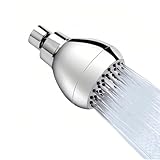
- [Pressure-Boosting Technology] "Powerful 360° rotating shower head delivers 2.5GPM high-pressure jets (vs standard 1.8GPM) with self-cleaning silicone nozzles—eliminate clogs, maintain peak water flow, and enjoy rain-like relaxation without mineral buildup. Chrome-plated brass fitting resists rust even in hard water areas."
- Self-Cleaning Nozzles "Anti-clog silicone jets automatically push out mineral buildup when water's off. No more poking holes with pins – maintains perfect spray pattern for 5+ years.
- 360° Adjustable Luxury "Brass ball joint rotates smoothly even with stiff shower arms. Target sore muscles from any angle – 20% wider coverage than basic models with leak-proof chrome finish.,no peeling, no fading. Sleek curved design hides unsightly pipes while maximizing coverage area, perfect for modern bathrooms."
- [Tool-Free Installation] "G1/2" threaded adapter works with 99% of US shower arms. Twist-lock mechanism secures in seconds—no wrench needed,COMPACT SIZE: Shower head measures 3.85 inches in height and 2.75 inches in width for efficient water distribution
- [Full-Body Wellness Focus] "Wide 3-inch spray pattern mimics natural rainfall with adjustable settings—massage, mist, or turbo mode. Ergonomic silicone grip prevents slippery handle, ideal for arthritis sufferers or elderly users.".
- Assessment access: Offer an on-site or remote review that identifies the highest-impact end use.
- Retrofit kits: Supply compatible parts and plain-language instructions; include a referral for customers who cannot self-install.
- Incentives: Explain eligibility, documentation, payment timing, and whether the incentive is available to renters, landlords, or both.
- Leak response: Provide a clear escalation path for suspected leaks and a policy for unusually high bills.
- Technical assistance: Give builders, facility staff, and residents a contact who can resolve pressure, controls, or compatibility issues.
- Bill design: Show units, comparison periods, and a prominent next action instead of presenting unexplained totals.
These measures reflect EPA’s recommended utility approach and AWWA’s policy support for customer education, technical assistance, efficient end uses, and water reuse consistent with public-health protection. A program can be generous on paper and still inaccessible if applications require printing, travel, landlord approval, or an upfront purchase.
Protect affordability and access from the beginning
Conservation programs should reduce resource use without shifting unreasonable costs onto the people least able to pay. Review the rate structure and the assistance structure together. EPA advises utilities to ensure that rates encourage—or at least do not discourage—efficiency and to coordinate conservation measures with affordability programs.
For construction and renovation teams, access questions include:
- Can a renter receive the retrofit or must the owner apply?
- Is the measure free at the point of installation, or does the customer wait for reimbursement?
- Can customers without smartphones, reliable internet, or transportation participate?
- Who owns and maintains the equipment in a multifamily building?
- Will a lower bill be offset by a new service charge or maintenance cost?
Offer the same performance goal through more than one route: direct installation, a kit with assistance, or a rebate for customers who prefer to hire their own contractor. Document accessibility and language needs in the program brief, not as an afterthought.
Independent reader supportYour contribution helps us test, update, and keep practical guides available for everyone.Communicate comfort and performance first
A useful message has a simple sequence: name the service, explain the design change, quantify the likely resource benefit with its assumptions, and show how to get help.
Example for a shower retrofit
“This labeled showerhead is designed to maintain a comfortable spray while using less water and hot-water energy. Installation takes place at the existing connection; if pressure or temperature is not right, contact the program for a check. EPA estimates that an average family could save 2,700 gallons and more than $75 a year, but your result depends on household use and local rates.”
The wording avoids a guarantee, identifies the performance expectation, and gives the resident a remedy. Similar language can explain a labeled home, a leak check, or an irrigation adjustment. Do not describe efficiency as a sacrifice, and do not hide the conditions that determine the result.
Rank #4
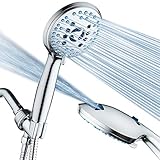
- MORE WATER PRESSURE, LESS CLEANING - Revolutionary AquaCare hand shower features advanced 8-setting 5-zone Powerhead with Self-clean Anti-clog Nozzles that prevent accumulation of grime inside. So while other showerheads clog and lose water pressure over time, AquaCare nozzles remain clean and clog-free for years of flawless performance. Designed in USA by top American shower experts. Removable Flow Regulator.
- PURE-CLEAN PROTECTION - Studies show that ordinary shower heads are often infested with grime that rapidly grows overnight, then gets flushed out in your face with the morning shower. That's why keeping your showerhead clean is essential for good shower hygiene. AquaCare nozzles are made with special revolutionary material that works 24/7 on molecular level to protect from degradation. This protection is 100% safe and effective for the life of the product and can never wear off.
- BUILT-IN 2-MODE TUB & TILE POWER WASH - Tired of that disgusting soap scum and dried hair left behind after each shower? Clean it all in seconds from up to 6 feet away, without setting a foot in your shower. Simply flip the AquaCare handle and turn it into a High-pressure Power Wash! Use Wide Fan to quickly rinse off large areas, or switch to Point Jet and instantly blast away that stubborn grime! Patented.
- IDEAL PET SHOWER - AquaCare was designed to be relentless on the toughest grime, yet gentle on your pet. Simply set your faucet to the best water pressure for your dog's fur length and density, then use our unique Dual-width Fan Spray to thoroughly rinse out shampoo in seconds. It provides the perfect flow pattern for a fast and effortless pet shower, regardless of their size and breed.
- PREMIUM CONVENIENCE PACKAGE - Enjoy added mobility and reach with Extra-long 72-inch Heavy-duty Stainless Steel Hose, Angle-adjustable Overhead Bracket, and an additional Low-reach Wall Bracket that mounts instantly and securely on any surface with power adhesive back. Ideal for Child Care, Senior Care, Pet Care, Bathing and Cleaning applications, AquaCare is your TOTAL SHOWER CARE system that creates a better shower hygiene and cleaner shower environment for your entire family.
Use a construction-to-occupancy implementation plan
Assign an owner to each stage so the efficiency intent survives handoff.
- Brief: Record local end uses, climate, water and energy rates, occupancy assumptions, affordability requirements, and the comfort standards the project must meet.
- Design: Select labeled fixtures where appropriate, coordinate hot-water distribution, detail leak prevention and access, and design landscape and irrigation for local conditions.
- Procure: Verify the exact model, certification status, compatibility, lead time, warranty, and installation instructions.
- Install: Protect valves and meters from obstruction, label shutoffs, and keep commissioning records.
- Commission: Test for leaks, confirm pressure and temperature, inspect controls, and verify that irrigation zones operate as intended.
- Handover: Give occupants a one-page operating guide, baseline readings, maintenance intervals, and a contact for defects or comfort problems.
- Support: Connect residents to audits, kits, rebates, and assistance; schedule a follow-up bill or meter review where practical.
- Improve: Use complaints, repair records, participation, and measured use to adjust the next project rather than assuming the first design fits every building.
Troubleshoot the reasons people reject efficiency
“The new fixture feels weak.”
Check supply pressure, aerators or screens, isolation valves, filters, and installation before concluding that the efficiency target is wrong. Compare the actual product and settings with the approved specification. If the system cannot deliver the promised service, replace or correct it promptly.
What’s actually slowing this PC down?
Pick the symptom - the matching free tool is one click away.
“My bill did not fall.”
Review occupancy, weather, irrigation, leaks, billing intervals, rates, and hot-water use. A single retrofit may be overwhelmed by a running toilet or a change in household routine. Explain the diagnostic process rather than claiming the measure failed or the customer misused it.
“The program is too hard to join.”
Shorten the form, allow a contractor or landlord to submit documentation, provide non-digital options, and offer direct installation. Track where applicants abandon the process.
“The landscape died after the change.”
Check plant suitability, establishment watering, soil, exposure, irrigation coverage, and maintenance instructions. Climate-appropriate design is not simply replacing plants; it is creating a system the owner can operate through seasonal conditions.
Measure whether the design is actually wanted
Track both resource outcomes and experience. A falling water total with rising complaints is not a successful design.
- Performance: measured water use by end use where available, leak incidents, hot-water energy, and irrigation runtime.
- Participation: assessment completion, retrofit installation, incentive uptake, and representation of renters and assistance customers.
- Experience: comfort complaints, repeat service calls, maintenance time, and resident-reported ease of use.
- Equity: approval and completion rates by housing type, income-support eligibility, language, and access route.
- Durability: products still in service, failed components, bypasses, and performance after the first seasonal cycle.
Set a baseline and a review date for each metric. Use the results to change specifications, instructions, or support—not to blame occupants for conditions the design created.
The practical standard
Water efficiency people want is built into the service they already value. Start with the local end use, specify equipment that performs, prevent and reveal leaks, make savings legible, remove installation and paperwork barriers, and protect affordability. When construction teams and utilities treat comfort, access, and follow-through as part of efficiency—not extras—conservation becomes a dependable feature of the home rather than a demand placed on the household.
Quick Recap
Product prices and availability are accurate as of the date/time indicated and are subject to change. Any price and availability information displayed on Amazon at the time of purchase will apply.

