What’s actually slowing this PC down?
Pick the symptom - the matching free tool is one click away.
A sudden discovery is not automatically sudden damage. Homeowners policies commonly cover a sudden, accidental release—such as a burst supply pipe or failed appliance hose—but often exclude water and building damage that develops through continuous seepage or a long-running leak. The insurer will usually examine when the damage occurred, not only when you noticed it.
Coverage still depends on your policy wording, exclusions, endorsements, deductible, maintenance duties, the water source, and the evidence. Use the steps below to protect the property, document the facts, and present a claim without guessing whether it qualifies.
As an Amazon Associate I earn from qualifying purchases.
The core distinction: occurrence versus discovery
Insurance adjusters separate two dates that homeowners often treat as one:
Do these 3 things before closing this tab:
1Fix the driver behind crashes, sound loss and screen glitches2Repair Windows errors before they cause bigger problems3Scan for outdated or missing drivers - takes under a minute- Occurrence: when water escaped and the insured damage developed.
- Discovery: when someone first saw the stain, puddle, swelling, odor, or other symptom.
A pipe can leak behind a wall for weeks and become visible when a ceiling finally discolors. The ceiling may appear to “fail suddenly,” but the underlying damage may have accumulated gradually. Conversely, a hose can rupture while you are away, release a large volume within minutes, and be discovered hours later; that may still be a sudden event. The Insurance Council of New Zealand (ICNZ) explains this distinction directly: suddenness concerns the damage that occurred, rather than simply the moment of discovery. Its guidance is New Zealand-specific, but the factual distinction is useful wherever a policy uses sudden or gradual language.
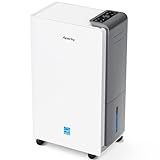
#1 Best Overall

- Semiconductor dehumidifiers use thermoelectric cooling to remove moisture from the air. They create a drier, more comfortable environment by reducing humidity and improving air quality.
- Our home dehumidifier features intelligent auto-shutoff, automatically powering down when the water tank is full. Set it and forget it, knowing your dehumidifier is working efficiently and safely, giving you true peace of mind.
- Our dehumidifier features a captivating 7-color ambient light, allowing you to bathe your room in a spectrum of soothing hues. Choose from a calming blue, energizing green, romantic red, and more – easily select the perfect color to create your desired atmosphere and enhance your living space. Dehumidify in style and set the perfect mood, every time.
- Sleep Mode creates the perfect sleep sanctuary. The dehumidifier's atmosphere lights automatically turn off, and noise fades to a whisper. Experience truly undisturbed dehumidification for a night of perfect rest.
- Elevate your home's comfort and style with our sleek and compact dehumidifier. Designed to seamlessly blend into any space, from the living room and bedroom to the bathroom, basement, and even your RV. Its modern aesthetics and space-saving footprint make it the perfect dehumidification solution for every corner of your home.
Washington insurance consumer guidance summarizes the common pattern as: “Homeowner insurance usually covers sudden leaks, but may not cover gradual leaks.” The wording is a general description, not a coverage promise for a particular contract.
Five facts that usually drive the coverage decision
Organize the loss around these questions before describing it to an insurer. They prevent a dramatic but imprecise description—such as “the leak happened today”—from obscuring the facts that matter.
| Coverage axis | What to establish | Why it matters |
|---|---|---|
| Water source | Internal pipe or appliance, roof opening after a covered event, sewer backup, groundwater, floodwater, or another source | Different perils can have different exclusions or require a separate endorsement or policy. |
| Duration | Whether the release was abrupt or whether water and damage accumulated over days, weeks, or longer | Continuous seepage and gradual damage are commonly excluded or limited. |
| Discovery versus occurrence | When you noticed the problem and what evidence indicates when the damage began | A late discovery does not prove a late occurrence, and a sudden discovery does not prove a sudden leak. |
| Maintenance and duties | Precautions taken, prompt reporting, emergency mitigation, and compliance with post-loss requirements | Neglect or failure to prevent additional damage can affect payment, especially for freezing or known leaks. |
| Damage and contract terms | Direct water damage, the failed component, mold or rot, repair scope, deductible, sublimits, exclusions, and endorsements | One part of a loss may be covered while another is excluded or subject to a limit. |
What commonly fits “sudden and accidental”
A sudden event is an abrupt release that was not expected or intentionally caused. Common examples include:
Recommended Free Tools
- A pressurized supply pipe breaks and floods a room.
- An appliance connection or washing-machine hose ruptures while the appliance is operating.
- A water heater tank suddenly fails and discharges into the surrounding area.
- A covered storm creates an opening in the roof and rain enters through that opening, if the policy treats the storm damage and resulting water as covered.
These examples describe event patterns, not guaranteed outcomes. Policies can exclude particular equipment, impose water-damage or mold sublimits, or deny a loss when the owner ignored a known condition. The failed pipe, hose, or appliance itself may also be treated differently from the resulting damage to floors, walls, or belongings. Ask the insurer to identify which parts of the claimed damage are being evaluated under which coverage.
What commonly indicates a gradual leak
Insurers may view damage as gradual when moisture has been escaping continuously or intermittently and the building has been deteriorating over time. Indicators can include:
- Long-term staining, darkening, bubbling paint, or swollen trim around a fixture or pipe.
- Wood rot, corrosion, soft subflooring, or deteriorated drywall beneath a bathroom or kitchen.
- Mold growth or a persistent musty odor that predates the reported incident.
- Mineral deposits, rust tracks, or repeated repairs at the same connection.
- Utility use or moisture readings that suggest a leak was active before discovery.
- A plumber’s conclusion that a fitting had been leaking for an extended period.
Gradual damage can be hidden and difficult to date. A professional should distinguish observed conditions from estimates and explain the basis for any duration opinion. Do not ask a contractor to select a coverage conclusion; ask for a factual description of the source, repairs, visible conditions, and indicators of age.
Rank #2

- 【80 Pint Capacity for Up to 5,000 Sq.Ft Spaces】Quickly removes excess moisture from basements, bathrooms, bedrooms, RVs, and other large living areas, delivering 80 pints per day (95°F, 90% RH).conditions. Designed as a powerful dehumidifier for basement, home, and large spaces, it helps eliminate damp air, condensation—and pet-related odors caused by excess humidity. Even during humid seasons, it works continuously to maintain a dry, comfortable, and healthier indoor environment.
- 【90° Auto Swing Airflow for Even Coverage】Distributes dry air evenly across the room, helping cover every corner and reduce uneven humidity levels. The 90° auto swing function enhances air circulation and drying efficiency, bringing a level of airflow distribution typically not available in standard models. It delivers balanced airflow without direct drafts, creating a more comfortable indoor environment.
- 【30%–80% Smart Humidity Control for Flexibility】 Unlike many standard dehumidifiers limited to a minimum of 40% RH, this unit can reach as low as 30%, offering a wider and more flexible control range. Engineered with advanced technology, it adapts to real-world conditions and maintains a stable, comfortable humidity level across different environments—including basements, bathrooms, bedrooms, closets, RVs, and other high-humidity areas.
- 【Energy Star Certified for Efficient Operation】Engineered for consistent, real-world performance, this ENERGY STAR certified dehumidifier delivers reliable results across everyday conditions—not just controlled test settings. It helps minimize unnecessary energy use while maintaining strong dehumidification efficiency, supporting lower operating costs over time.
- 【AI-Smart Protection System for Reliable Performance】Equipped with intelligent sensing technology, this dehumidifier detects frost buildup and abnormal operation in real time. It automatically activates auto defrost and overload protection to maintain stable performance and help prevent potential damage. With AI-assisted monitoring, it optimizes operation to reduce unnecessary energy use while ensuring reliable performance in low-temperature and extended-use environments.
A New Zealand example, not a universal time limit
In its March 2024 consumer guide, ICNZ describes “sudden” in the legal context it discusses as abrupt, all at once, or instantaneous. The guide gives an example in which a plumber estimated that a toilet hose had leaked for about “4 to 5 days”; the dispute service treated that as gradual under the applicable New Zealand definition. That example does not create a four-day rule in the United States or elsewhere. Your own policy and local law control.
The Tool Desk
Outbyte Driver Updater FREEScan for outdated or missing drivers - takes under a minuteDriver Scan →Outbyte PC Repair FREEClear out junk files and repair common Windows errorsFree Scan →The water source can change the entire claim
Do not describe every water event as a plumbing leak. The source determines which insuring agreement, exclusion, or separate policy may apply.
Floodwater and groundwater
California Department of Insurance guidance says flood damage is not covered by a standard homeowners policy and that separate flood insurance may be available. Water rising from outside, overflowing a body of water, or entering as groundwater can therefore present a different coverage question from a burst interior pipe. Definitions vary, so read the policy’s flood and surface-water wording rather than relying on the everyday meaning of “flood.”
Sewer or drain backup
Backup through a sewer, drain, or sump may be excluded unless an endorsement adds coverage. A sudden backup can still be outside the base policy. Identify the point where water entered and whether it was contaminated; avoid handling contaminated water without appropriate protection.
Roof and storm entry
Rain entering through a newly damaged roof opening may be evaluated with the covered storm event, while water entering through an old, unrepaired roof defect may be treated as maintenance-related. Photograph the exterior and interior before temporary repairs when safe.
Free tools Windows power users keep installed
One-click scans. No signup required.
Internal plumbing and appliances
A sudden discharge from a pipe, valve, or appliance connection is the classic sudden-water scenario. The policy may pay for resulting damage while excluding wear, corrosion, defective workmanship, or the failed part itself.
Rank #3
- 【ENERGY STAR 25 ≠ ENERGY STAR Most Efficient 2025】Don't fall for competitors' word games. With only 2.6% of ENERGY STAR models earning "Most Efficient 2025" title, these options are exceptionally rare on the market. RHEA-001 is one of the few to truly hold this top-tier certification. Many brands use misleading phrases like "Energy Star Efficient 25" or "Energy Star 25" to imply a standard they haven't met. Choosing them is a risk.With AEOCKY, you get verified performance and the peace of mind of authentic, top-tier efficiency.
- 【True ENERGY STAR Most Efficient 2025 Compressor Dehumidifier for homes (5500 sq.ft)】80 pint/day in the humid Mid-summer (95℉, 95%RH); 56 pint/day in the warm, damp basement (86℉, 80%RH)! Among all ENERGY STAR dehumidifiers, only an elite 2.6% earn the ENERGY STAR "Most Efficient 2025" certification. It is this top-tier capability that allows the RHEA-001 to completely outperform its competitors in both performance and energy efficiency.(Dehumidification capacity≠Water Tank Volume)
- 【Top-Rated Efficiency - Save More Energy】Breaking industry barriers, one of the first brands to achieve ENERGY STAR Most Efficient 2025. Compared to non-Energy Star inefficient products,RHEA-001 efficiency is increased by ≤50%, saving ≤1000 on electricity bills annually (running 24/7 year-round). Energy efficiency is the domain of absolute dominance for our RHEA-001. This relentless pursuit of technological innovation in efficiency is the ironclad moat that has established AEOCKY as the leading dehumidifier brand.
- 【Powered by Exceptional Core Components】AEOCKY utilizes Cutting-Edge High-Efficiency Rotor Compressor Pro+ to RHEA-001, whose core components evaporator and condenser adopt“3+2”structure with one more row than others. Never use aluminum tubes, we unswervingly use 7mm diameter high-tooth internal thread pure copper pipes.We also equipped with advanced blue hydrophilic aluminum foil, achieving breakthrough heat exchange efficiency meeting the most rigorous energy efficiency standards in history.
- 【Cutting-Edge Smart Humidity Control for Unprecedented Precision】Newly designed architecture breaks industry's decade-long lack of innovation, enabling it have high-performance chip. Millisecond-level dynamic detection keep humidity within ideal range,with full-stack proprietary humidity compensation algorithm ensuring RHEA-001 exceeds industry standard for humidity accuracy.Exclusive power-off memory function can be used with smart socket, automatically resuming function after power restoration, suitable for smart home or special area like RV.
Read these policy sections before you characterize the loss
Pull the declarations page, full policy, endorsements, and renewal documents for the period in which the damage occurred. Look for:
- Covered perils and water exclusions: Note wording for accidental discharge, seepage, leakage, flood, surface water, sewer backup, and rain.
- Gradual-damage or hidden-water language: Some policies offer limited protection for hidden gradual damage; ICNZ’s March 2024 guide gives illustrative limits ranging from $2,000 to $10,000 in examples. Those figures are not market statistics or a promise that your policy has the benefit.
- Duties after loss: Check deadlines, notice requirements, proof-of-loss forms, protection of property, cooperation with inspection, and preservation of damaged items.
- Maintenance and freezing provisions: The National Association of Insurance Commissioners (NAIC) notes that frozen-pipe claims can depend on reasonable maintenance and steps taken to prevent freezing.
- Deductible and sublimits: A covered loss may still produce no payment if the payable amount is below the deductible, and mold or water-backup coverage may have separate limits.
- Alternative living expense and contents terms: If rooms are unusable, determine what documentation is required for temporary housing or damaged belongings.
Texas Department of Insurance guidance cautions that coverages vary by company and advises reading the policy or speaking with an agent to confirm exact coverage. Treat any general explanation—including this one—as a starting point, not a contract interpretation.
What to do after discovering water damage
- Make the area safe. Keep people away from unstable ceilings, contaminated water, and wet electrical equipment. If water is near energized wiring, leave the area and call a qualified professional or emergency service. Do not create a hazard while trying to save property.
- Stop the source if it is safe. Shut the fixture valve or main water supply, turn off an appliance, or arrange an emergency plumber. If the source is a roof opening, use only safe temporary protection; do not climb an unsafe roof.
- Notify the insurer promptly. Use the claim number or reporting method in your policy. California regulator guidance recommends reporting the damage to start the claim process and asking whether the loss is covered, what deductible applies, and whether repair estimates are needed.
- Photograph and video the condition. Capture the source, shutoff position, affected rooms, ceilings, floors, walls, cabinets, and damaged belongings. Take wide views that show location and close-ups that show detail. If practical, document before moving items and throughout cleanup.
- Keep a written timeline. Record when you first noticed water or a symptom, weather conditions, what you did, when professionals arrived, and what they found. Separate observations (“water was pooling at 8:15 a.m.”) from opinions (“the leak had been present for a week”).
- Mitigate additional damage. Remove standing water when safe, move undamaged property to a dry place, and begin drying wet materials. California guidance recommends drying and dehumidifying wet areas to reduce the possibility of mold after sudden water damage. Keep every invoice and note what work was performed.
- Preserve evidence. Keep damaged items until the adjuster or insurer tells you they may be discarded, unless they pose a health or safety hazard. Save failed parts, packaging, maintenance records, plumber invoices, receipts, and moisture reports.
- Obtain factual professional reports. Ask the plumber, builder, or drying professional to state the source, repair performed, visible conditions, moisture readings if taken, and the factual basis for any estimate of duration. ICNZ notes that insurers may consider professional reports and photographs.
- Separate emergency work from permanent repairs. Emergency source control and drying may be necessary immediately. Before rebuilding, ask the insurer whether an inspection or written scope is required, while still taking reasonable steps to prevent further loss.
Build evidence that answers the duration question
Because timing is often disputed, make the chronology easy to follow. Include:
- The last date the area was known to be dry or functioning normally.
- The first date and exact symptom observed: a puddle, sound, stain, odor, pressure change, or appliance alarm.
- Weather, occupancy, and any relevant event, such as a freeze or storm.
- When the water was shut off and when a professional inspected the source.
- Photographs with dates retained in the original files where possible.
- Moisture maps, drying logs, equipment run times, and disposal decisions.
- Receipts for emergency plumbing, extraction, dehumidification, hotel stays, and replacement necessities.
Do not alter walls or throw away materials solely to make the loss appear newer. If removal is necessary for safety or drying, photograph first and preserve samples or failed components when practical.
Independent reader supportYour contribution helps us test, update, and keep practical guides available for everyone.How an insurer may investigate
An adjuster may inspect the source and surrounding materials, compare new and old photographs, review maintenance and repair records, and interview occupants or contractors. They may look for signs of age such as layered staining, corrosion, microbial growth, swelling, or previous patching. A plumber may be asked whether the failure was abrupt and whether the condition of the materials supports a duration estimate.
The investigation can produce a mixed result. For example, a sudden pipe break may support coverage for drywall and flooring damaged by the release, while long-standing rot behind the pipe, the corroded pipe itself, or later mold treatment may be excluded or limited. Ask for the scope in writing so you can see which item is assigned to which policy provision.
Rank #4

- Compact Moisture Control – This Wi-Fi enabled dehumidifier removes up to 8 pints per day at 80°F, 60%RH (24 pints MAX at 95°F, 90%RH), keeping spaces up to 1,800 sq ft comfortably dry.
- Space-Saving & Ultra-Quiet – Designed for small spaces, this 38dB whisper-quiet dehumidifier keeps humidity under control without disruption, ideal for bedrooms, nurseries, and home offices.
- Hassle-Free Drainage – Includes a 3.3ft drain hose for continuous drainage, so you never have to empty the tank manually. Perfect for long-term use in basements, laundry rooms, and storage areas.
- Energy-Efficient & Smart Control – Energy-saving design reduces electricity costs. Wi-Fi-enabled for remote control via app or voice assistants. Set humidity levels, timer, and auto mode with ease.
- Safe & Easy to Maintain – Features auto shut-off to prevent overflow, a removable water tank, and washable filters for long-lasting performance. Portable handle for easy movement.
Direct water damage, failed parts, mold, and related costs
| Damage or expense | Questions to ask |
|---|---|
| Resulting damage to walls, ceilings, floors, or cabinets | Was it caused by a covered, sudden discharge, and does the estimate separate new damage from pre-existing deterioration? |
| Failed pipe, hose, valve, or appliance | Does the policy pay for the component, or only resulting damage? Is wear, corrosion, or defective workmanship excluded? |
| Rot, deterioration, or structural decay | What evidence indicates how long the condition existed, and is gradual deterioration excluded? |
| Mold or microbial growth | Is mold excluded, capped, or covered only when caused by a covered peril and reported promptly? |
| Drying, extraction, and dehumidification | Are reasonable mitigation costs covered, and what invoices, logs, or authorization does the insurer require? |
| Belongings and temporary housing | Are contents and loss-of-use benefits available, and what proof of ownership or additional living expense is needed? |
Mold treatment is not automatic. Washington and Texas guidance describe common limits or exclusions, while California guidance notes that mold caused by a covered peril may be covered. The actual policy, cause, timing, and applicable limit decide the result.
Special situations that often cause confusion
Frozen pipes
A pipe that bursts during a freeze may look sudden, but the insurer can examine whether the home was heated, whether water was shut off and lines drained when appropriate, and whether reasonable precautions were taken. NAIC guidance highlights maintenance and prevention as relevant considerations. Keep records of heat, inspections, and emergency steps.
A toilet or appliance hose discovered after several days
The date you saw the wet floor is not proof of the start date. A plumber’s estimate, staining pattern, and moisture distribution may indicate that the hose leaked for days. The ICNZ “4 to 5 days” example is a New Zealand illustration, not a universal threshold.
Rain after a storm
Document the storm damage that created the opening and the path rain took into the home. A pre-existing roof defect can lead to a different analysis than a newly wind-damaged opening.
Hidden gradual-damage endorsement
Some contracts add narrow coverage for hidden water damage or limited repairs even when the leak was gradual. Such provisions can have a small sublimit, a definition of “hidden,” and exclusions for the source or mold. Do not assume an endorsement exists because another policy has one; verify the endorsement number and wording on your declarations or policy forms.
If the insurer questions or denies the claim
- Request the decision in writing. Ask for the exact policy provision, the facts the insurer relied on, and the items it is excluding or limiting.
- Compare the decision with your evidence. Point out the source, timeline, photographs, professional findings, mitigation records, and any endorsement that applies. Correct factual errors promptly.
- Ask focused questions. For example: Is the dispute about duration, source, maintenance, mold, the failed component, or a sublimit? What additional document would resolve that issue?
- Use the insurer’s review process. Follow the complaint or reconsideration instructions and keep copies of every submission.
- Contact the appropriate regulator or dispute service. Processes differ by state and country. ICNZ describes a New Zealand pathway in which a consumer may escalate to the applicable external dispute service after the insurer’s complaint process, including a two-month period in the guide’s procedure. That timetable does not apply automatically elsewhere.
- Consider professional advice for a substantial dispute. A licensed public adjuster, coverage attorney, or qualified building professional may help interpret the contract and quantify damage. Verify licensing and fees before engaging anyone.
Jurisdiction and policy limits
Regulator explanations from Washington, California, and Texas describe common patterns in the United States, not a national rule. State law, policy form, insurer, endorsements, and facts can change the result. The ICNZ material is specific to New Zealand law and dispute practice and should not be exported as a United States definition.
Even where a sudden release is covered, the deductible can absorb a smaller loss, a water-backup or mold limit can cap payment, and a failure to mitigate can reduce recovery for additional damage. Conversely, a hidden-water endorsement or a covered storm opening may provide protection that a bare summary of “gradual leak excluded” would miss.
Prevention and records that help later
- Inspect appliance hoses, shutoff valves, supply lines, water heaters, and exposed plumbing for corrosion, bulges, or drips.
- Replace aging hoses and fittings according to the manufacturer’s guidance and retain receipts.
- Know the main water shutoff and test that it works; label it for everyone in the household.
- Protect pipes from freezing and maintain safe heat when the property is vacant.
- Check under sinks and around toilets, tubs, and appliances periodically for moisture or staining.
- Keep maintenance invoices, photographs of concealed work before closing walls, and records of prior leaks.
- Review the declarations page at renewal for water-backup, hidden-water, mold, and deductible terms.
- Consider a home dehumidifier or other drying equipment when appropriate after a loss, but understand that using one does not establish coverage or replace professional remediation.
A practical decision checklist
Before submitting or disputing a claim, confirm that you can answer these questions:
Quick Recap
- Where did the water originate, and is that source identified by a qualified person?
- What happened first: the release, the building damage, or your discovery?
- What evidence supports the estimated duration?
- Which damage is direct water damage, and which is the failed component, rot, mold, or a later repair?
- What policy exclusions, endorsements, sublimits, deductible, and maintenance duties apply?
- What safe mitigation did you perform, when, and at what cost?
- Have you preserved photographs, damaged items, receipts, reports, and a dated timeline?
- If the insurer disagrees, have you requested the specific provision and factual basis in writing?
Product prices and availability are accurate as of the date/time indicated and are subject to change. Any price and availability information displayed on Amazon at the time of purchase will apply.
Quick wins for a faster PC:
Scan for outdated or missing drivers - takes under a minuteDriver Scan →Repair Windows errors before they cause bigger problemsFix Now →
