What’s actually slowing this PC down?
Pick the symptom - the matching free tool is one click away.
Choose a construction adhesive by the two materials you are joining and the job conditions—not by the words “water-based” or “solvent-based” alone. Confirm substrate compatibility, interior or exterior rating, application-temperature limits, moisture resistance, open time, cure instructions, cleanup method, and safety information on the current label and technical data sheet. Those checks determine whether the adhesive fits your project; the broad chemistry label does not prove bond strength or suitability.
What “water-based” and “solvent-based” mean—and what they do not tell you
Construction adhesives are sold under broad chemistry descriptions, but the available manufacturer information does not establish one taxonomy that covers every product. “Water-based” and “solvent-based” are useful starting points for handling and cleanup decisions, not a complete performance specification.
As an Amazon Associate I earn from qualifying purchases.
For example, Loctite Power Grab All Purpose is explicitly described by its manufacturer as water-based. DAP All Purpose is described as an interior-use adhesive with water cleanup. Henkel’s technical sheet describes Loctite PL Premium as a one-component, polyurethane-based, moisture-curing adhesive that contains no water or chlorinated solvents. That description does not make polyurethane a synonym for solvent-based adhesive. Always identify the actual formulation and follow that product’s instructions.
There is no standardized, category-wide test in the cited material that proves water-based construction adhesives are weaker or stronger than solvent-based products. Product-to-product specifications matter more than the category name.
#1 Best Overall

- Our strongest formula: This heavy duty glue is 2x stronger than Gorilla Heavy Duty Construction Adhesive Ultimate
- Crystal clear: Clear Gorilla glue leaves a discreet finish to keep the focus on your project, not the glue
- All purpose glue: A waterproof glue formulated for virtually all projects and repairs; this Gorilla glue gives indoor or outdoor projects a Gorilla Tough bond, even under water
- Paintable: Because this adhesive glue works on so many surfaces, it's paintable for any finish that you prefer
- Gap filling: Gorilla Glue Construction Adhesive also works as a gap filling adhesive caulk for in-home projects
Start with the bond: identify both substrates
The first selection question is not “Which chemistry is best?” It is “Which product is specified for both surfaces I need to join?” Manufacturers make product-specific substrate claims, and those claims should not be generalized to every adhesive in a category.
Common substrate combinations
- Wood products: Check whether the label names the exact wood product, such as solid wood, plywood, or oriented strand board (OSB).
- Drywall and foamboard: Verify that the adhesive lists these materials and whether the foam type has any restrictions.
- Concrete and masonry: Confirm that the product is intended for mineral substrates and check moisture and curing requirements.
- Metal: Look for an explicit metal-use statement and any preparation requirements.
Henkel lists PL Premium for a broad set of common materials, including wood products, concrete, masonry, foamboard, metal, and drywall. DAP lists its All Purpose adhesive for an interior-use set that includes wood, plywood, OSB, drywall, and foamboard. These are claims for those named products, not evidence that every water-based or solvent-based adhesive works on the same materials.
Why the exact surface matters
Two materials can look similar but behave differently during application and curing. Porosity, surface contamination, moisture, coatings, and the amount of adhesive applied can change the result. Read the product’s technical data sheet for surface preparation, bead size, clamping or temporary support, and cure conditions. If a surface is not listed, treat compatibility as unconfirmed rather than assuming that a general-purpose label covers it.
Interior or exterior: match the location to the rating
Determine where the bond will remain in service. Interior and exterior claims are product-specific, and a product described for interior use should not be substituted for an exterior-rated adhesive merely because both are marketed as construction adhesives.
Rank #2
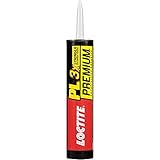
- All Purpose: One component polyurethane-based adhesive that covers a wide variety of projects and bonds to most materials for consistently successful results
- 3X Stronger: 3 times as strong as ordinary construction adhesives and stronger than many substrates it joins together
- Versatile: Ideal for sub floor installations and bonds to most common construction materials such as wood, OSB, drywall, brick, concrete, masonry, stone, foam insulation, metal, ceramic, PVC, and more
- Interior and Exterior: Paintable adhesive with no strong solvent odor that sets in 30 minutes and fully cures in 24 hours for projects inside and out
- Weather Resistant: Waterproof and can be applied directly to wet and frozen surfaces without shrinking and cures in cold temperatures
| Product example | Use statement in the cited manufacturer information | How to apply that information |
|---|---|---|
| DAP All Purpose | Described as interior-use | Use for an interior project only when the current label and technical information still specify the surfaces and conditions involved. |
| Loctite PL Premium | Described by Henkel as suitable for interior or exterior projects and water-resistant | Confirm the current cartridge label and data sheet before using it outdoors, especially where the joint will see persistent wetting or weather exposure. |
“Water-resistant” is not a universal promise that a cured joint can be submerged or used in every wet environment. Treat the manufacturer’s exact wording, limitations, and required curing conditions as controlling.
Temperature, open time and cure: the numbers are product-specific
Adhesive performance depends on applying the chosen product within its stated temperature range and allowing it to cure under the conditions specified by the manufacturer. The following figures belong to named products and should be checked against the current instructions for the cartridge in your hand.
| Product | Application temperature | Open time | Cure information |
|---|---|---|---|
| DAP All Purpose | 40–100°F, according to the cited DAP product page accessed in 2026 | Not stated in the cited product information | Not stated in the cited product information |
| Loctite PL Premium | Above 41°F and below 95°F, according to Henkel’s technical data sheet revised December 12, 2019 | 15–20 minutes | 24–48 hours at 78°F and 50% relative humidity; the sheet says cure time varies with temperature, humidity, substrate porosity and the amount applied |
How to use the temperature range on a real job
- Measure the temperature of the work area and the substrates, not just the outdoor air.
- Compare those readings with the current product label. Do not substitute one manufacturer’s range for another’s.
- Plan positioning and temporary support inside the stated open time. An open-time figure is the period available for placement and adjustment under the specified conditions; it is not a guarantee of final bond strength.
- Leave the assembly supported for the time and conditions the technical sheet requires. A bead that feels firm at the surface may not have reached its final cure throughout.
Cold, heat, humidity, porous surfaces and unusually thick adhesive deposits can all change the schedule. If your conditions differ substantially from the technical sheet, allow more time and obtain product-specific guidance rather than relying on a generic rule.
Free tools Windows power users keep installed
One-click scans. No signup required.
Cleanup and work planning
Cleanup is one of the clearest practical differences among products. Decide what you will use before opening the cartridge, and remove uncured residue promptly according to the label.
Rank #3

- STRONG, LASTING CONSTRUCTION BOND: Liquid Nails heavy duty construction adhesive forms a permanent bond that outlasts the project on interior and exterior builds.
- WATERPROOF & WEATHERPROOF: Holds up to moisture, humidity and temperature swings indoors and out, making it ideal for decks, siding and exterior trim.
- BONDS MANY MATERIALS: Grips wood, plywood, OSB, drywall, tileboard, brick veneer, concrete and more for framing, paneling and remodeling jobs.
- EXCEPTIONAL HOLDING POWER: High-strength formula bridges gaps and holds heavy materials with a flexible bond that resists impact and movement.
- GENEROUS COVERAGE: One cartridge covers roughly 30+ linear feet with a 1/4-inch bead; meets ASTM C-557 for construction adhesive performance.
| Product example | Uncured-residue cleanup described by the manufacturer | After cure |
|---|---|---|
| DAP All Purpose | Water cleanup | Not stated in the cited product information |
| Loctite Power Grab All Purpose | Soap and water for uncured residue; the product is described as water-based | Follow the current label; the cited description addresses uncured material |
| Loctite PL Premium | Mineral spirits for uncured residue | Mechanical removal once cured, according to Henkel’s instructions |
A cleanup checklist
- Protect adjacent finished surfaces before dispensing the bead.
- Keep the product’s specified cleanup material available; do not improvise with a household cleaner.
- Remove squeeze-out while it is still within the product’s stated cleanup window.
- For cured residue, use only the removal method permitted by the label and avoid damaging the substrate.
- Dispose of solvent-contaminated rags and other waste according to the product’s safety data sheet.
Safety: water-based does not mean harmless
OSHA identifies solvent-based adhesives among the more hazardous adhesive types used in wood finishing and notes that some chemicals can create fire and explosion hazards. OSHA also advises reading the product label, safety data sheet (SDS), and manufacturer information for the specific precautions that apply.
OSHA’s woodworking guidance describes hot-melt, heat-seal, aqueous-based and polyvinyl-acetate adhesives as less-toxic alternatives to solvent-based adhesives in that woodworking-finishing context. That is not a finding that every water-based adhesive is safe for every use, nor does it remove the need for ventilation, protective equipment or the SDS.
Ignition-source control
An OSHA roofing-adhesive bulletin and incident record describe a worker using flammable solvent-based roofing adhesive near a propane torch and suffering severe burns. The event illustrates why you must identify flammability warnings and keep ignition sources away from products that carry them. It does not establish a comparative incident rate for solvent-based and water-based adhesives.
Quick wins for a faster PC:
Repair Windows errors before they cause bigger problemsFix Now →Fix the driver behind crashes, sound loss and screen glitchesFind Drivers →Clear out junk files and repair common Windows errorsFree Scan →Before you apply any adhesive
- Read the current label and SDS, including ventilation, gloves, eye protection, storage and disposal requirements.
- Remove flames, sparks, torches, pilot lights and other ignition sources when the product warns of flammability.
- Provide the ventilation the manufacturer requires, particularly in enclosed spaces.
- Keep the cartridge and SDS available for anyone else working on the installation.
- Stop if the label, substrate or job conditions do not match the intended use.
Bond strength and “instant grab” claims
Do not rank adhesives by an “instant grab” phrase alone. DAP’s guidance specifically cautions that instant grab should not be mistaken for final bond strength or cure speed. Grab describes how readily a product holds during initial placement; it does not replace the product’s final-strength data, cure schedule, or substrate limitations.
Rank #4

- STRONG, DURABLE INTERIOR BOND: Liquid Nails Interior Projects latex construction adhesive forms a strong, lasting bond for everyday remodeling and repair jobs.
- BONDS MOST BUILDING MATERIALS: Grips wood, corkboard, drywall, hardboard, paneling, particleboard and treated lumber for versatile interior projects.
- STAYS FLEXIBLE: Bond remains flexible after curing so it moves with materials without cracking or letting go.
- LOW ODOR, SAFE INDOORS: Low-odor, latex-based formula is made for comfortable interior use during installation.
- EASY WATER CLEANUP: Wet adhesive cleans up easily with water for a faster, mess-free finish.
For a structural or safety-critical application, use the manufacturer’s technical bulletin and any stated strength values for the exact product and substrates. The cited material does not provide a standardized comparison between water-based and solvent-based construction adhesives, so no category-wide strength winner can be named.
A practical selection procedure
Use this sequence whenever you are choosing between products or deciding whether a particular cartridge fits the job.
- Write down both substrates. Include the actual board, panel, masonry, metal or foam type and any coating on it.
- Define the location. Mark the project as interior, exterior, or an area exposed to recurring moisture, then require a matching product claim.
- Check the current label for compatibility. If either substrate is absent, do not assume compatibility from the word “all purpose.”
- Verify application temperatures. Compare the expected substrate and air temperatures with the stated range.
- Plan positioning. Note the open time, decide how the parts will be aligned, and prepare temporary support before dispensing adhesive.
- Plan the cure. Read the full cure instruction, including humidity, porosity, bead amount and any required waiting period before loading the joint.
- Choose the cleanup method. Confirm whether water, soap and water, mineral spirits or mechanical removal is specified, and stage the materials safely.
- Read the SDS and hazard statements. Address ventilation, protective equipment, storage and ignition control before beginning.
- Document the product. Keep the cartridge, lot information and technical sheet with the project records so another worker can identify exactly what was used.
How the supplied product examples fit common projects
Interior wood, plywood, OSB, drywall or foamboard
DAP All Purpose is described for interior use and lists wood, plywood, OSB, drywall and foamboard among its intended materials. Its cited application range is 40–100°F and its cleanup is described as water cleanup. Select it only when the current label still covers your exact pair of materials and the room conditions fall within the stated limits.
Recommended Free Tools
Interior or exterior work involving a broader material set
Henkel describes Loctite PL Premium for interior or exterior projects and lists wood products, concrete, masonry, foamboard, metal and drywall among common materials. Its 2019 technical sheet describes a one-component, polyurethane-based, moisture-curing adhesive with no water or chlorinated solvents. The same sheet specifies application above 41°F and below 95°F, a 15–20 minute open time, and a 24–48 hour cure at 78°F and 50% relative humidity, subject to changes caused by conditions and adhesive amount. Use the current technical information to confirm that the formulation and limits have not changed.
Best Value

- Our strongest formula: This heavy duty glue is 2x stronger than Gorilla Heavy Duty Construction Adhesive Ultimate
- Crystal clear: Clear Gorilla glue leaves a discreet finish to keep the focus on your project, not the glue
- All purpose glue: A waterproof glue formulated for virtually all projects and repairs; this Gorilla glue gives indoor or outdoor projects a Gorilla Tough bond, even under water
- Paintable: Because this adhesive glue works on so many surfaces, it's paintable for any finish that you prefer
- Gap filling: Gorilla Glue Construction Adhesive also works as a gap filling adhesive caulk for in-home projects
When a water-based product is the priority
A water-based description or water-cleanup instruction may simplify residue handling in an interior project, but it does not remove the need to verify substrates, temperature, cure and safety. Loctite Power Grab All Purpose is one cited example explicitly described as water-based; its manufacturer says uncured residue can be cleaned with soap and water.
Troubleshooting selection mistakes
The adhesive will not hold during placement
- Check that both substrates are named in the current product information.
- Confirm that the surfaces and adhesive were within the stated application-temperature range.
- Review the open-time requirement and whether temporary support was needed.
- Do not treat a high-grab marketing phrase as proof that the joint has cured.
The joint remains soft or uncured
- Compare actual temperature and humidity with the cure conditions in the technical sheet.
- Consider whether the substrate is unusually porous or the adhesive layer is thicker than directed; Henkel identifies both factors, along with temperature and humidity, as affecting PL Premium cure.
- Do not load the joint until the product’s specified cure period has elapsed.
Residue damaged the surrounding finish
- Use only the cleanup method specified for uncured residue.
- Remove squeeze-out earlier on the next application and mask adjacent finished surfaces.
- If the residue has cured, follow the label’s mechanical-removal guidance and test any method on an inconspicuous area first.
The project is outdoors or near an ignition source
- Confirm an explicit exterior or moisture-resistance claim rather than inferring it from the chemistry name.
- Read flammability warnings and remove ignition sources before opening the cartridge.
- Use the SDS to set ventilation, storage and disposal procedures.
What the evidence can—and cannot—support
The cited manufacturer documents establish handling and intended-use details for particular products. They do not prove that one chemistry category always bonds better, cures faster or lasts longer than the other. Formulations and instructions can change, so a product page or technical sheet from an earlier date should be checked against the current package.
In particular, the available information supplies no category-wide comparative statistic for water-based versus solvent-based construction adhesives. Product-specific figures such as DAP’s 40–100°F range or PL Premium’s 15–20 minute open time must remain attached to those named products and conditions; they should not be presented as averages for an entire class.
Do these 3 things before closing this tab:
1Repair Windows errors before they cause bigger problems2Fix the driver behind crashes, sound loss and screen glitches3Clear out junk files and repair common Windows errorsDecision checklist before you buy or apply
- Are both substrates explicitly listed?
- Is the product rated for the project’s interior, exterior and moisture conditions?
- Will the substrate and air temperatures stay within the application range?
- Do you have enough open time to align and support the parts?
- Have you planned for the full cure period under the expected humidity and porosity conditions?
- Is the specified cleanup material ready?
- Have you read the label and SDS for ventilation, personal protection, flammability and disposal?
- Are you relying on actual technical specifications rather than “instant grab” language?
If any answer is no or unknown, pause and obtain the current technical information for a product that explicitly matches the job.
Quick Recap
Product prices and availability are accurate as of the date/time indicated and are subject to change. Any price and availability information displayed on Amazon at the time of purchase will apply.

