The best mason bee house is dry, securely mounted, easy to open and clean, and placed near early flowers and workable wet clay mud. A sheltered box alone is not enough: mason bees are solitary insects, not hive bees. Each female uses an individual tunnel, gathers pollen and nectar, builds brood cells with mud, and seals the nest herself. A well-designed house provides nesting cavities, while the surrounding site provides food, mud, shelter, and protection from pesticides and parasites.
For most North American gardens, start with removable paper-lined tubes or a washable, deconstructible laminated block; mount the house about 3–6 feet above ground with the entrance facing east, southeast, or south; protect it from rain and wind; and plan to remove and maintain the nesting material after the active season.
As an Amazon Associate I earn from qualifying purchases.
1. Choose a house you can maintain
When comparing houses, prioritize serviceability over appearance. The structure should be sturdy enough to remain fixed in wind, have a roof or overhang, and allow the nesting material to be removed for inspection, cleaning, replacement, and seasonal storage.
A useful starting specification is nesting tunnels approximately 5/16 inch in diameter and 6–8 inches deep. These dimensions are commonly suitable for blue orchard mason bees and similar systems, but they are not universal requirements. Local species, tunnel materials, and the manufacturer’s design can change the preferred dimensions.
#1 Best Overall

- Heavy Wax Coated: The mason bee house is full body coated with wax, helping extend its service life for outdoor use
- Assembled Wooden Bee House: The handmade wooden mason bee nest you receive is assembled and ready to use and with stainless steel screw clasp on the back of the bee house, you can hang it on a tree or wall
- Mason Bee House: Effectively attract mason bees through our bee house to help increase pollination efficiency in gardens and orchards, promoting plant growth and fruit production
- Mason Bee House Tube Size: For mason bee and easy to get the mason bee cocoons, same 5/16" diameter size hole and 6" long which is a suitable size for mason bee; easily for mason beekeeper to remove the cocoons
- Package Include: 1 Completed mason bee house assembled with hook and nails,1 meter rope to hang on a tree or wall to attract mason bees and butterflies to live in your garden, creates a comfortable environment for pollinator bees and enhance productivity of pollination
Best nesting-material options
- Paper-lined cardboard tubes: inexpensive, replaceable, and easy to remove after nesting.
- Natural reeds: usable when they can be removed and replaced rather than permanently sealed inside the structure.
- Deconstructible laminated blocks: reusable when the layers can be opened for cocoon inspection and cleaning.
If you are buying rather than building, compare a mason bee house with removable tubes against decorative hotels with permanently sealed cavities. The important qualification is that removable tubes are a design feature to look for, not proof that a particular listing is extension-approved or appropriate for every species and climate.
Avoid older solid blocks, inaccessible bamboo bundles, and plastic systems that cannot be opened or cleaned. They can retain moisture and allow parasites, pollen mites, chalkbrood, dermestid beetles, and other disease agents to accumulate. A hotel may attract bees during its first season and still become poor habitat if the nests are left unmanaged for years.
A practical construction checklist
- Use weather-resistant framing and a firmly attached back or mounting bracket.
- Provide a roof or overhang that extends beyond the nesting openings.
- Keep tunnel openings unobstructed and free of sharp splinters.
- Make tubes or blocks removable without destroying the shelter.
- Design for inspection, cleaning, and replacement—not just initial occupancy.
- Use several smaller houses if you want to support a broader range of cavity-nesting insects rather than concentrating every nest in one large hotel.
2. Mount it where bees get morning sun and dry shelter
Mount the house approximately 3–6 feet above ground on a solid post, fence, wall, building, deck, or tree. Secure it so it does not swing or vibrate in the wind. A swinging house can be difficult for returning bees to relocate, and movement can disturb active nests.
Windows Errors? Fix Them Before They Spread
Repair common Windows errors and clear accumulated junk for a smoother, more stable PC - no reinstall needed.Free scan · no reinstallOutdated Drivers Are Slowing You Down
One free scan finds every outdated or missing driver and matches the right update for your exact hardware.Free scan · exact hardware matchFace the entrance east, southeast, or south where possible. Morning sun helps warm the nest and encourages early activity. In a hot climate or against a heat-reflective wall, protect the house from intense afternoon sun with shade while retaining a bright, dry morning exposure. In a cool or damp climate, morning warmth and shelter from rain should take priority.
Angle the house slightly downward, or place it under an overhang, so water cannot run into the tunnels. Keep it away from:
- driving rain and prevailing strong winds;
- roof runoff and downspouts;
- sprinklers, hoses, and irrigation spray;
- pond edges or places that remain damp;
- bird feeders, where predators and frequent disturbance may increase; and
- high-traffic paths, doors, play areas, and locations where the structure will be bumped.
The house should be easy to see and monitor, but not so exposed that people, pets, or maintenance equipment regularly disturb it. Do not move it after females have begun nesting: returning bees can use visual landmarks and the remembered position of the nest.
3. Build the habitat around the house
Mason bees cannot raise young without nearby forage and mud. A house placed in a flowerless yard may remain empty or support fewer nests even when its construction is excellent.
Provide early and continuous flowers
Plant flowers that open when local mason bees emerge in late winter or spring, then plan a succession of blooms through the rest of the active season. Blue orchard mason bees are strongly associated with early fruit-tree bloom, including apples, pears, and cherries, while other local Osmia species may use different plants.
Rank #2

- Durable Bee House: Our Mason Bee House is a beautifully crafted, wax-coated bee hotel designed to provide a suitable habitat for peaceful pollinators in your garden. This durable bee house is ready to use straight out of the box
- Long-lasting Design: The natural wooden construction of this Mason Bee Box features a wax coating that boosts its longevity, supporting steady use in outdoor surroundings while attracting mason bees effectively
- Optimal Habitat: Each tube in our bee hotel is made from kraft paper with a diameter of 5/16 inches and a length of 6 inches, providing an ideal space for mason bees to nest and thrive in their new insect hotel
- Easy Installation: The back of the bee house includes a sturdy metal wall hook for easy mounting on walls or garden stakes. For hanging in trees, we also provide a special rope, ensuring versatile placement options in any outdoor setting
- Enhance Pollination Efficiency: Attracting mason bees to your garden not only beautifies your surroundings but also significantly improves pollination efficiency for flowers and fruit trees, making our Habitat Home Hotel an essential addition for any gardener
Choose plants for your region rather than relying on a universal list. The right selection depends on climate, elevation, soil, and the timing of local bloom. As a practical target, place the house within roughly 300 feet of reliable floral resources when possible, while recognizing that weather, species, and the continuity of bloom matter as much as the measured distance.
When planning a new bed, prioritize native plants for mason bees or other regionally appropriate early-spring pollinator plants from a verified local nursery or regional plant database. Avoid treating one plant list as suitable for every location.
Provide wet, workable clay mud
Mason bees need mud—not a birdbath—to divide the tunnel into brood cells and seal the entrance. Create a shallow depression or place a small container of clay-rich soil near the house. Keep it consistently moist but not submerged.
Free tools Windows power users keep installed
One-click scans. No signup required.
The mud should be close enough for repeated trips and protected from rapid drying. A sheltered clay patch or a slow-drip arrangement can work better than a deep container of standing water. Ordinary local clay soil may be sufficient; a purchased mason bee mud source is an optional solution only where the garden lacks workable clay.
Do not substitute a water station for mud. Adult bees may visit moisture, but nest construction requires soil with the right texture and moisture content.
4. Install before local spring emergence
Put the empty house in place before bees begin searching for nesting cavities. The calendar varies substantially by species and region. In western Oregon, blue orchard mason bees may become active when temperatures reach approximately 50–55°F, often from February through March. In the Mid-Atlantic, activity may occur approximately from mid-April through mid-June. Those examples are regional—not a universal schedule.
Use local extension guidance and observed temperatures to determine timing. Have the following ready before emergence:
- A dry, securely mounted house with fresh or cleaned nesting material.
- Early flowers within practical foraging distance.
- A nearby source of wet, workable clay mud.
- Protection from pesticide drift and direct irrigation.
- A plan for recording occupancy and removing the nests after the active season.
If you are using purchased cocoons
Buy from a local source whenever possible. Bees moved from another region may be poorly adapted to the local climate, and transporting bees between regions can introduce pathogens to new populations. Do not release distant bees casually simply to make a new house look occupied.
Rank #3

- Durable Mason Bee House: Our mason bee house is fully coated with beeswax, supporting steady use in outdoor surroundings while effectively attracting mason bees to your garden
- Ready-to-Use Design: This natural wooden bee house arrives fully assembled and features a stainless steel screw clasp on the front and back for easy hanging on trees or walls, making it a convenient addition to any garden
- Enhance Pollination: Attracting mason bees to your garden not only beautifies your surroundings but also significantly improves pollination efficiency for flowers and fruit trees, making our Habitat Home Hotel an essential addition for any gardener
- Optimal Nesting Habitat: Each tube in our insect hotel is crafted from kraft paper with a diameter of 5/16 inches and a length of 6 inches, providing a suitable nesting environment for mason bees to thrive
- Simple Installation: The front and back of the bee house is equipped with a sturdy metal wall hook for effortless mounting. We also include a special rope for hanging in trees, offering versatile placement options in any outdoor setting
If the house has an emergence chamber, follow the supplier’s instructions for positioning the cocoons. If it does not, a small protected cardboard emergence box with a correctly sized exit hole can be positioned above the nest openings, provided it remains sheltered and dry.
5. Know what to expect during nesting
Female mason bees typically inspect cavities, select a tunnel, gather pollen and nectar, and carry mud back to the house. They build a series of brood cells from the back of the tunnel toward the entrance. Each cell receives provisions and an egg, and the completed tunnel is capped with mud.
Visible mud-capped openings are a useful sign of activity, but they do not prove that a nest is healthy. Bees may continue using nests containing parasites or disease. Monitor without repeatedly opening active nests.
During the active season:
- Do not relocate the house once nesting has started.
- Keep the roof, mounting hardware, and entrance dry.
- Check for damaged caps, mold, predators, and obvious pest activity.
- Avoid insecticide use near the house and prevent spray or drift from reaching it.
- Do not seal occupied tunnels, spray them, or pull out tubes while adults are still nesting.
- Record dates of first activity, peak occupancy, and the end of adult activity.
6. Remove and maintain the nests seasonally
A maintainable house has a seasonal life cycle. Leaving filled tubes in an exposed hotel year after year is one of the most common ways a useful structure becomes a source of parasites and disease.
After adult activity ends
Once adult activity has finished and developing bees remain inside, remove filled tubes or blocks where the design allows it. Store them in a dry, protected, well-ventilated, unheated space such as a garage or shed. Avoid damp storage, excessive heat, and conditions that invite predators or parasitic wasps. Exact timing should follow local species and climate guidance.
If you use disposable or replaceable material, this is the point to remove and replace compromised tubes. For reusable systems, open the tubes or deconstruct the block during dormancy so cocoons can be inspected.
Inspect during fall or winter dormancy
Open removable tubes or deconstructible blocks carefully. Separate healthy-looking cocoons from material showing mold, obvious parasites, or other damage. Clean reusable nest components according to regional extension recommendations; one described method uses a weak bleach-water solution followed by thorough rinsing and drying.
Do these 3 things before closing this tab:
1Clear out junk files and repair common Windows errors2Fix the driver behind crashes, sound loss and screen glitches3Repair Windows errors before they cause bigger problemsMaintenance reduces the buildup of pollen mites, parasitic wasps, dermestid beetles, and fungal pathogens. It also lets you replace damaged materials before the next emergence period. A replacement set of paper-lined mason bee nesting tubes is often simpler than attempting to rescue wet, crushed, or visibly contaminated liners.
Rank #4
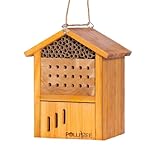
- Beeswax Coating: The exterior of our mason bee house is covered in beeswax, helping prolong the service life for long-term outdoor use
- Assembled Wooden Bee House: The handmade wooden mason bee hotel you receive is assembled and ready to use. With stainless steel screw clasp on the back of the bee house, you can hang it on a tree or wall
- Practical Design: The mason bee house has two types of mason habitat.Removable paper tube and wood block ,and the diameter of the tube is 5/16" and the length of the paper tube is 6"
- Mason Bee House-Effectively attract mason bees through our bee house to help increase pollination efficiency in gardens and orchards, promoting plant growth and fruit production
- Customer Support: If you encounter any problems while using the mason bee house, please feel free to let us know. We will do our best to resolve the issue and ensure your satisfaction.
A reusable cleanable mason bee nesting block can be a good alternative for people who prefer a long-term structure, but only if its layers genuinely open for inspection and cleaning. “Reusable” should not mean permanently sealed.
7. Troubleshoot the common problems
The house is empty
Check the timing first. The local bees may not have emerged yet, or the house may have been installed after the nesting window. Next check for early flowers, workable mud, pesticide exposure, excessive shade, wind, and rain. A new house may also take time to be discovered, and occupancy is not guaranteed.
Rain or mold is getting into the tunnels
Improve the roof or overhang, tilt the entrance slightly downward, relocate the house away from runoff and sprinklers, and ensure the nesting material can be removed and dried. Do not simply add a waterproof exterior coating if it traps moisture inside the nest.
What’s actually slowing this PC down?
Pick the symptom - the matching free tool is one click away.
Only a few tunnels are occupied
That may be normal for the first year or for a small local population. Improve the surrounding habitat rather than adding more cavities immediately: provide early flowers, a continuous bloom sequence, and nearby wet clay mud. Confirm that the tunnel size and depth suit the species likely to use the house.
There are insects other than mason bees
Cavity-nesting structures are not species-exclusive. Leafcutter bees, native mason bees, mason wasps, parasites, and other insects may use the same openings. A bee house should be viewed as managed cavity-nesting habitat, not automatically as a pure mason-bee colony.
The house is overheating
Keep the entrance warm and bright in the morning but provide afternoon shade in hot climates or on heat-reflective walls. A roof can protect against both rain and direct solar exposure. Avoid enclosing the house in a place with no air movement.
Independent reader supportYour contribution helps us test, update, and keep practical guides available for everyone.A simple installation plan
- Select the structure: choose a sturdy house with removable tubes, removable reeds, or an openable laminated block.
- Prepare the mounting point: use a solid post or fixed surface about 3–6 feet above ground.
- Set the orientation: face east, southeast, or south; adapt for local heat and afternoon shade.
- Weatherproof the exposure: add an overhang, prevent runoff, and angle the openings slightly downward.
- Improve the habitat: plant regionally appropriate early flowers and maintain a nearby patch of wet clay mud.
- Install before emergence: use local seasonal guidance rather than a nationwide calendar.
- Monitor lightly: record activity without moving or repeatedly opening active nests.
- Maintain annually: remove filled material after adult activity, inspect it during dormancy, clean or replace it, and store it in a dry protected location.
What to buy or build—and what to avoid
| Feature | Prefer | Be cautious of |
|---|---|---|
| Nesting material | Paper-lined tubes, removable reeds, or openable laminated blocks | Permanent bamboo bundles, plastic tubes, or sealed solid blocks |
| Weather protection | Roof, overhang, sheltered wall, and slight downward tilt | Openings under roof runoff or sprinkler spray |
| Mounting | Rigid attachment to a post, fence, wall, or building | Loose hanging structures that swing in the wind |
| Location | Morning sun, afternoon protection where needed, nearby flowers and mud | Deep shade, intense reflected heat, pesticide drift, or heavy foot traffic |
| Long-term care | Removable components that can be inspected, cleaned, replaced, and stored | A decorative hotel intended to remain untouched indefinitely |
Further reading and responsible sourcing
For advanced management—including cocoon inspection, parasite identification, disease prevention, chemical sensitivity, and storage—consult regional university extension guidance or a current specialist manual such as a mason bee management guide. Advice is strongest when it matches the species and climate where the house will be installed.
The Tool Desk
Outbyte PC Repair FREEClear out junk files and repair common Windows errorsFree Scan →Outbyte Driver Updater FREEScan for outdated or missing drivers - takes under a minuteDriver Scan →For plants, use a verified regional nursery or local plant database. For cocoons, use a current local supplier and confirm that the source follows appropriate regional handling practices. Neither purchased plants nor cocoons guarantees occupancy or improved pollination.
Best Value

- An indispensable garden helper: Mason bee house provides a comfortable space for mason bees to nest, attracts and maintains mason bees to live in your garden, helps sustain pollinating bees and preserve biodiversity in your area, ensuring a thriving environment for both wildlife and your garden
- Easy to install: Package includes 1pc mason bee House with a top hook and 1pc metal ground stake (Includes 4 screws for installation); Bee House Size: 8.6x8.4x3.9 inches; 3 installation ways: you can stand the bee house among the flowers, place it on the grass, or hang it under the trees according to the garden layout; the three-piece base can stand firmly in the soil without worrying about being affected by bad weather
- Durable materials: Constructed with durable and natural wood, the bee house features a surface covered with a clear varnish coating, which is not easily eroded by rainwater; exquisite workmanship, no sawdust, bamboo pipes are securely fitted and resist falling out, naturally dry bamboo tubes will not be moldy and are consistent with the lifestyle habits of mason bees compared to synthetic materials like plastics; environmentally friendly materials help maintain the stability of ecosystems
- Superb design and construction Inside: The bee house is bamboo tubes of different diameters between 0.2-0.6 inches all grouped together for the mason bees to pick one according to their body size, then to lay their eggs, ensuring that pollinators can live comfortably
- Thoughtful Present: This unique hexagonal bee house is not only a perfect habitat for bees, but also a beautiful garden decoration; It's the perfect present for gardeners who appreciate both style and function
Frequently Asked Questions
How high should a mason bee house be mounted?
About 3–6 feet above ground is a useful general range. Secure it to a rigid post, fence, wall, or building rather than leaving it swinging in the wind.
Which direction should a mason bee house face?
Face it east, southeast, or south where practical so the entrance receives morning sun. In hot climates, protect it from intense afternoon heat while keeping the morning exposure bright and dry.
Do mason bees need a water source?
They need wet, workable clay or clay-rich mud for brood-cell partitions and nest caps. A birdbath or standing-water container is not a substitute for a nearby mud source.
Quick wins for a faster PC:
Repair Windows errors before they cause bigger problemsFix Now →Fix the driver behind crashes, sound loss and screen glitchesFind Drivers →Can a mason bee house stay outside all year?
The shelter may remain mounted, but filled tubes or blocks should generally be removed after adult activity and stored in a dry, protected, well-ventilated space where they can be inspected and maintained during dormancy.
Are bamboo and plastic tubes suitable for mason bees?
They may be difficult to manage when permanently sealed. Prefer removable paper-lined tubes, removable reeds, or a deconstructible laminated block so nests can be inspected, cleaned, and replaced.
When should I put out a mason bee house?
Install the empty, prepared house before the local spring emergence period. The date varies by species, elevation, and region; regional extension guidance is more reliable than a single national calendar.
The Bottom Line
Build or buy a mason bee house as a maintainable piece of habitat: dry, rigidly mounted, morning-facing, protected from weather, and easy to open. Put early flowers and wet clay mud nearby, avoid pesticide exposure, and remove, inspect, clean, replace, or safely store nesting material every season. Those management details matter more than a decorative design or a large number of empty tunnels.
Recommended Free Tools
Quick Recap
Product prices and availability are accurate as of the date/time indicated and are subject to change. Any price and availability information displayed on Amazon at the time of purchase will apply.

