Free tools Windows power users keep installed
One-click scans. No signup required.
Short answer: the Wüsthof Classic 5-inch is the best boning knife for most home kitchens, the Victorinox Fibrox 6-inch Curved is the best budget buy, and the Shun Premier 6-inch is the best premium upgrade. Hunters and high-volume game processors have different needs; for them, the Dexter-Russell Sani-Safe S131-6 is the more relevant specialist recommendation.
A boning knife is worth buying if you regularly break down poultry, trim roasts, remove silverskin, separate meat from joints, or work with whole fish. For most home cooks, the Wüsthof Classic 5-inch Boning Knife is the best all-around choice. The Victorinox Fibrox 6-inch Curved Boning Knife is the better value, while the Shun Premier 6-inch Boning Knife is the premium option for experienced cooks who prefer a rigid, curved blade.
Those recommendations are based on published testing rather than hands-on testing by this site. Bon Appétit’s testers broke down whole chickens with the leading models, while Epicurious evaluated boning knives across chicken, fish, flexibility, blade thickness, handle comfort, and control. Field & Stream’s separate outdoor testing points to a different winner for hunters and game processors.
Quick picks
| Pick | Blade profile | Flexibility | Best for | Important caveat |
|---|---|---|---|---|
| Wüsthof Classic 5-inch | Slim, slightly curved profile; verify the exact listing | Balanced between flexible and rigid | Most home-kitchen meat and poultry work | Current manufacturer and review descriptions differ on the blade shape and exact configuration |
| Victorinox Fibrox 6-inch Curved | Curved, approximately 5.9-inch blade | Moderate | Budget buyers, beginners, and occasional use | The curved blade may take practice and can be less straightforward to sharpen |
| Shun Premier 6-inch | Curved | Rigid | Experienced cooks, precise trimming, and fish work | More expensive and less forgiving for a first boning knife |
| Dexter-Russell Sani-Safe S131-6 | Curved | Designed for practical processing work | Hunters, wild game, and high-volume processing | Its strongest case is outdoor and game processing, not necessarily the home kitchen |
1. Wüsthof Classic 5-inch Boning Knife: best overall
The Wüsthof Classic is the strongest one-knife recommendation for a home cook who wants to handle chicken, roasts, trimming, tendons, and fat without committing to an aggressively specialized blade. Bon Appétit named the Classic its best overall boning knife after using it to break down a whole chicken. Testers found its balance of flexibility and rigidity useful, with good maneuverability, edge retention, and relatively easy sharpening. The handle and bolster also accommodated multiple grips.
As an Amazon Associate I earn from qualifying purchases.
Its relatively straight sightline was considered approachable for beginners because it makes the path from hand to tip easy to monitor. That can matter more than a small difference in steel or finish when you are learning to keep the edge against a bone without cutting away useful meat.
Wüsthof’s current U.S. listing identifies this as a forged 5-inch model with a slim, curved profile, pointed tip, three-rivet black handle, and stated hardness of 58 HRC. It is described for deboning, skinning meat and poultry, and removing tendons and fat. Because the current manufacturer description and Bon Appétit’s description of the tested knife are not perfectly aligned, check the exact SKU, blade length, and profile on the retailer page before ordering. See the current Wüsthof product listing and the published Bon Appétit test.
#1 Best Overall
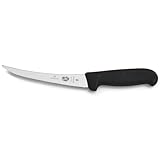
- As its name suggests, the Fibrox Pro Boning Knife is used to easily trim or remove meat and fish from the bone
- The curved, flexible stainless steel blade is ideal for thinner or more delicate cuts of meat such as chicken or fish that are more tender and intricate to bone
- Patented Fibrox handle is textured, slip resistant, and ergonomically designed for balance and comfort, NSF approved
- Expertly crafted in Switzerland since 1884; designed for professionals who use knives all day, every day; lifetime against defects in material and workmanship
- Keep your Victorinox knives maintained with our knife sharpeners, B001X5A998 (Part#7.8715) or B0050DIUZO (Part#7.8721), SOLD SEPARATELY.
Choose it if: you want a controllable, versatile boning knife for ordinary kitchen work and prefer a balanced blade rather than an especially flexible or stiff one.
Recommended Free Tools
Skip it if: your main job is processing deer at volume, or you specifically want a very flexible fish-skinning blade or a rigid premium Japanese knife.
2. Victorinox Fibrox 6-inch Curved Boning Knife: best budget pick
The Victorinox Fibrox is the practical value choice. Both Bon Appétit and Epicurious favored this curved model as an inexpensive option, and published testing found that its textured handle felt secure while the blade offered a useful middle ground between flexibility and rigidity. It is a sensible purchase for occasional users, first-time buyers, bulk meat preparation, and anyone who wants a commercial-style tool without paying premium-knife prices.
Victorinox’s U.S. product page identifies model 5.6603.15 as a Swiss-made 6-inch Fibrox boning knife with a 5.9-inch curved blade, thermoplastic-elastomer handle, non-slip grip, and dishwasher-safe construction. The manufacturer positions it for separating meat cleanly along bones and joints in meat and poultry. Confirm that model number: Victorinox sells several visually similar boning knives, including flexible, stiff, straight, and curved versions. The relevant model is the 6-inch curved knife, not simply any Victorinox boning knife. See the official Victorinox specifications.
The curve helps with sweeping cuts around bones and joints, but a straight blade can be easier for a novice to track and sharpen. Give the Victorinox a little practice on poultry before using it for delicate, high-value cuts. Its lower price also makes it less painful to dedicate to messy or high-volume preparation.
Choose it if: you want the most useful low-cost option, are still learning, or need a dependable knife for occasional poultry and meat preparation.
Rank #2

- Sharp, curved blade for efficient deboning
- Non-slip handle for secure grip
- Swiss Made, durable and dishwasher safe
Skip it if: you strongly prefer a straight blade, need a truly rigid knife for heavy trimming, or want premium handle materials and finish.
3. Shun Premier 6-inch Boning Knife: best premium upgrade
The Shun Premier is the upgrade for an experienced cook who values a stable, rigid curved blade and premium construction. Bon Appétit selected it as its upgrade pick after testing it on whole-chicken breakdown. Testers particularly liked its stability, comfortable pakkawood handle, and ability to make horizontal cuts, fillet fish, and butterfly chicken breasts.
Shun lists model TDM0743 with a curved rigid blade, VG-MAX cutting core, 68-layer Damascus cladding, pakkawood handle, and Japanese manufacture. The manufacturer describes it for boning, trimming silverskin, making cutlets, and filleting fish. Those specifications describe the construction; they are not independent performance test results. The official Shun listing and Bon Appétit’s testing report provide the relevant product and test information.
Do these 3 things before closing this tab:
1Repair Windows errors before they cause bigger problems2Scan for outdated or missing drivers - takes under a minute3Clear out junk files and repair common Windows errorsA rigid blade gives you a predictable platform for controlled trimming, but it does not conform as readily to every bone or skin. The Shun therefore rewards deliberate technique rather than disguising it. It is also a substantial investment for someone who only breaks down a chicken a few times a year.
Choose it if: you already have sound knife control and want one premium knife for boning, trimming, cutlets, and some fish work.
Skip it if: this is your first boning knife, you need maximum flexibility, or your priority is value rather than materials and finish.
Rank #3

- Versatile de-boning tool. Trim or remove meat from the bone with ease. This knife's pointed tip easily pierces meat while the curved-edge allows for smooth, clean cuts close to and around the bone.
- For delicate & thick cuts. Thick meats like beef or pork require a less flexible knife, but this knife's slight bend allows for a delicate touch. The curved yet semi-stiff blade allows for a better working angle when cutting close to and around the bone.
- Easy handling. This knife features an ergonomic Fibro Pro handle for a non-slip grip - even when wet. This exceptional knife is weighted and balanced for easy handling and comfort.
- Knife Dimensions. Stainless steel blade - 6" In length. Meets the strict National Sanitation foundation (NSF) standards for public health protection.
- Trusted Swiss quality. Expertly crafted in Switzerland in 1884, Victorinox provides a lifetime Guarantee against defects in material and workmanship. Making a Lifetime commitment has never been so easy.
How to choose a boning knife
Flexible or rigid?
Flexible blades bend slightly to follow the contours of bones and fish. They are useful for skinning fish and making long, close cuts around irregular surfaces. The trade-off is reduced stability when trimming dense meat or cutting through connective tissue.
The Tool Desk
Outbyte Driver Updater FREEScan for outdated or missing drivers - takes under a minuteDriver Scan →Outbyte PC Repair FREEClear out junk files and repair common Windows errorsFree Scan →Rigid blades resist bending and provide a steadier platform. They are better suited to controlled trimming, silverskin, denser cuts, and work close to joints. They require more deliberate handling because the edge will not follow every contour for you.
Neither construction is automatically superior. If your work is mostly chicken and general kitchen trimming, a moderate or balanced blade is the safest choice. If you skin fish frequently, lean flexible. If you trim roasts or process meat with firm, controlled strokes, lean rigid. ZWILLING describes its Pro model as a long, thin, flexible boning blade, whereas Shun describes the Premier as curved and rigid; those descriptions illustrate the design trade-off rather than a universal ranking. See ZWILLING’s product specifications.
Curved or straight?
A curved blade can make sweeping cuts along bones and around large joints. It may also make horizontal cuts and certain fish tasks feel more natural once you are accustomed to it. The disadvantages are a learning curve and, for some users, more difficulty maintaining a consistent sharpening angle.
A straight blade offers a simple sightline from the hand to the tip. That makes it easier to see and control the point, especially when you are learning to separate meat from a bone. It is often the less intimidating option for beginners.
Windows Errors? Fix Them Before They Spread
Repair common Windows errors and clear accumulated junk for a smoother, more stable PC - no reinstall needed.Free scan · no reinstallCrashes, No Sound, or Screen Glitches?
Random freezes, missing sound and display glitches usually trace back to one bad driver. Find and replace yours safely.Free scan · under a minuteWhat blade length is most useful?
For kitchen boning, 5 to 6 inches is the useful middle range represented by the principal tested models. A shorter blade offers close control around poultry and joints; a 6-inch blade gives you a little more reach for larger cuts and fish without becoming a substitute for a long slicer or fillet knife. The current listed lengths are approximately 5.9 inches for the Victorinox, 5 inches for the Wüsthof listing, and 6 inches for the Shun.
Rank #4

- Narrow, curved blade for agile meat trimming
- Crafted in wear-resistant stainless steel with the finest quality wooden handle
- This 6" extra narrow, semi-stiff and curved blade is perfect for delicate trimming and deboning tasks.
Alternatives worth considering
ZWILLING Pro 5.5-inch Flexible Boning Knife
This German-made forged model is a logical choice if you specifically want a thin, flexible blade. ZWILLING lists a curved bolster, full tang, triple-riveted handle, and stated hardness of 55–58 HRC. Bon Appétit liked the blade, but did not place it in the top three because the angular bolster could feel uncomfortable when choking up or changing grips. It may suit users who prioritize flex and durability over the most adaptable handle geometry.
Mercer Culinary Millennia 6-inch Boning Knife
The Mercer is a very inexpensive alternative with a textured ergonomic handle. Published testing found it capable, but its stronger curve made it less approachable than the Victorinox. It is worth considering when price is the overriding concern, but the Victorinox is the safer budget recommendation for a first purchase.
Dexter-Russell Sani-Safe S131-6
For hunters, game processors, and people who process large quantities of meat, the Dexter-Russell Sani-Safe S131-6 deserves separate attention. Field & Stream’s 2026 outdoor-focused testing named it best overall for game processing, citing its affordability, durability, grip, and ease of sharpening. That is a different use case from a home-kitchen ranking centered on poultry, fish, and ordinary meat preparation. If you are looking for a boning knife for deer or wild game, this is the recommendation most directly supported by the outdoor testing.
Opinel Les Forges 1890 5-inch Boning Knife
Field & Stream identifies this as a specialist hunting option with a forged X50CrMoV15 blade and wood handle. Its stiffness and shorter length can be useful for controlled game-processing work, but they make it less versatile for delicate cuts or tasks requiring extra reach.
Shun Classic 6-inch Boning & Fillet Knife
The Shun Classic is another current option for shoppers considering the brand. It has a rigid curved blade, VG-MAX steel, Damascus cladding, and pakkawood handle. It is a potentially useful alternative to the Premier line, but the Premier is the model directly supported as the premium upgrade in the cited comparison.
Care, sharpening, and safe use
- Use a stable cutting board. A boning knife is designed for controlled separation, not for chopping through hard bones. Avoid twisting the blade or using it as a pry bar.
- Keep the edge away from hard contact. Work along bones and joints rather than forcing the edge through them. If a joint will not separate with controlled pressure, reposition the knife and find the natural gap.
- Clean promptly. Follow the manufacturer’s care instructions for the specific model. Although the Victorinox listing identifies its construction as dishwasher-safe, hand-washing and immediate drying are generally the more conservative approach for preserving an edge and handle.
- Sharpen according to the blade design. Straight blades are usually simpler for a beginner to maintain consistently. Curved blades require attention to the changing contact area and a steady angle; use a sharpening method appropriate for the manufacturer’s instructions rather than assuming a pull-through sharpener is suitable.
- Store it safely. Use a blade guard, knife block, or other protected storage so the edge does not strike loose utensils and nobody reaches blindly into a drawer.
- Keep the knife sharp. A dull boning knife encourages excess force and slipping. Sharpen before the edge begins skating over meat, and replace the knife if the blade is damaged rather than trying to straighten a serious bend by force.
What the published testing covered
Bon Appétit’s test involved breaking down whole chickens: removing breast and thigh meat, separating wings, making chicken lollipops, and deboning thighs. Its evaluation included weight, maneuverability, handle comfort across grips, out-of-box sharpness, edge retention, and ease of sharpening. That protocol explains why its results are especially relevant to home cooks preparing poultry.
Best Value

- 【Premium High Carbon Steel】This professional fish fillet knife is made from high-quality Japanese stainless steel 10Cr15CoMoV, which makes the HOSHANHO fillet knife more durable, harder, and sharper than other meat knives. With a hand polished edge at 15 degrees per side, the boning knife can achieves ultimate sharpness.
- 【Excellent Cutting Results】With a 7 inch long, thin blade, the fillet knife makes it easy to slice, bone, trim, skin and butterfly different types of meat and fish. The slender blade helps to cut through fish bones and flesh with more precision and less waste, resulting in a neat and beautifully cut fillet.
- 【Ergonomic Design】The ergonomic shape of the fish knife's handle provides a more comfortable grip and reduces user fatigue. The handle of the boning knife is made of durable pakkawood, these materials have good resistance to corrosion and abrasion, which ensures a long service life of the fillet knife.
- 【Mutifunctional Use】In addition to easily cutting fish bones and removing fish scales, this fish knife can also be used to cut other types of meat. It is a practical and multifunctional kitchen tool, the frosted texture will be the most unique knife among all your knives and a perfect gift for your family and friends.
- 【Flexible and Lightweight】The blade of the fish knife is relatively soft and can better adapt to the shape of the fish ingredients, making it easier to operate and control. Its portability allows chefs to switch between different kitchen utensils more freely, improving work efficiency.
Epicurious used a broader framework that considered chicken breakdown, fish skinning, blade length and thickness, flexibility, handle comfort, and control. Its tested field included Victorinox, Wüsthof, Zwilling, Mercer, Dexter Russell, and Steelport models. Field & Stream’s 2026 review approached the category from the perspective of hunting and game processing, which is why its Dexter-Russell recommendation should not be treated as a contradiction of the kitchen picks.
In short, “best” depends on where the knife will work. For a general home kitchen, choose Wüsthof. For value, choose Victorinox. For an experienced cook wanting a rigid premium blade, choose Shun. For deer, wild game, or high-volume processing, consider Dexter-Russell.
Prices, inventory, retailer availability, and exact product configurations can change. Verify the model number, blade length, and profile immediately before purchase. Product links may be monetized affiliate links; that does not change the recommendations.
Frequently Asked Questions
What is the best boning knife overall?
For most home cooks, the Wüsthof Classic 5-inch Boning Knife is the best choice because it balances maneuverability, edge retention, sharpening ease, and flexibility for poultry, roasts, trimming, tendons, and fat.
What is the best inexpensive boning knife?
The Victorinox Fibrox 6-inch Curved Boning Knife, model 5.6603.15, is the best budget pick in the cited testing. Confirm the model number because Victorinox sells several similar boning knives.
Should a boning knife be flexible or rigid?
A flexible blade follows bones and fish contours more easily. A rigid blade is steadier for trimming silverskin and dense meat. Choose flexible for frequent fish skinning and rigid for controlled meat trimming.
Is a curved or straight boning knife better?
A curved knife can make sweeping cuts around bones and joints, but a straight knife is usually easier for beginners to track and sharpen consistently.
What is the best boning knife for deer and wild game?
The Dexter-Russell Sani-Safe S131-6 is the use-case-specific pick supported by Field & Stream’s 2026 outdoor testing for hunters, wild-game processing, and high-volume work.
The Bottom Line
Bottom line: Buy the Wüsthof Classic for the best all-around kitchen performance, the Victorinox Fibrox 6-inch Curved for the best value, or the Shun Premier if you are experienced and want a rigid premium blade. Hunters and high-volume game processors should look first at the Dexter-Russell Sani-Safe S131-6 instead.
What’s actually slowing this PC down?
Pick the symptom - the matching free tool is one click away.
Quick Recap
Product prices and availability are accurate as of the date/time indicated and are subject to change. Any price and availability information displayed on Amazon at the time of purchase will apply.

