Yes—but only in a limited, technically specific sense. Stanford researchers demonstrated a hybrid photovoltaic–thermoelectric device that generated a small amount of electricity after sunset. The system used radiative cooling: the panel radiated heat toward the night sky, became slightly cooler than the surrounding air, and used a thermoelectric generator to convert that temperature difference into electricity.
The 2022 demonstration produced about 50 milliwatts per square metre under experimental conditions. That is a legitimate scientific result, but it is nowhere near the output of a conventional solar array in sunlight and does not mean ordinary rooftop panels can supply a home throughout the night.
As an Amazon Associate I earn from qualifying purchases.
What the Stanford experiment actually demonstrated
The research paper, Nighttime electric power generation at a density of 50 mW/m2 via radiative cooling of a photovoltaic cell, was published online on April 5, 2022, in Applied Physics Letters. The authors were Sid Assawaworrarit, Zunaid Omair and Shanhui Fan of Stanford University’s Ginzton Laboratory. The paper record and publication details are available through the U.S. Department of Energy’s OSTI database.
Windows Errors? Fix Them Before They Spread
Repair common Windows errors and clear accumulated junk for a smoother, more stable PC - no reinstall needed.Free scan · no reinstallOutdated Drivers Are Slowing You Down
One free scan finds every outdated or missing driver and matches the right update for your exact hardware.Free scan · exact hardware matchThe device combined two technologies:
- A photovoltaic cell, which served as the surface exposed to the sky.
- A thermoelectric generator, which produced electricity from the temperature difference between the cooler cell and warmer surrounding air.
The photovoltaic cell was not generating normal sunlight-driven electricity in darkness. Instead, it formed part of a thermal-energy system. That distinction is important when assessing headlines claiming that “solar panels work in the dark.”
#1 Best Overall
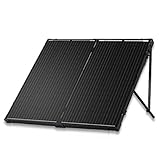
- 【25% High-Efficiency】Powered by N-Type cells boasting up to 25% conversion efficiency, this 200w solar panel delivers exceptional performance even in low-light conditions. The integrated adjustable aluminum alloy kickstand lets you tilt it to the perfect angle toward the sun, maximizing daily energy production (up to 1000Wh per day with 5 hours of sunlight). Whether you’re charging devices at a campsite or powering your rv solar panel system, this kit ensures you get the most out of every ray of sunshine.
- 【Compact & Portable Foldable Design】This renogy portable solar panel folds into a sleek, suitcase-sized case (only 28.46 lbs/12.91kg) for easy carrying, storage, and quick setup—perfect for solar panels for camping, RV trips, off-road adventures, or remote cabin getaways. No bulky installation required; unfold, prop up the adjustable kickstand, and start harvesting clean energy wherever your journey takes you.
- 【Compatible with Most Power Stations】 Compatible with Jackery Explorer 1000 v2, EcoFlow DELTA 3/DELTA 3 Max/RIVER 3 Max, Anker SOLIX S2000, BLUETTI AC180/Elite 30 V2, GRECELL T-500, ALLWEI SGR-PPS300-2, and other models with matching voltage, current, and connector requirements. This solar panel has MC4 output cables only; the Renogy 4-in-1 adapter cable is sold separately (ASIN B0HF8C61W4). Also compatible with 12V battery systems when paired with a compatible solar charge controller (included).
- 【Durable for Reliable All-Weather Use】Built with low-iron tempered glass, anti-corrosion aluminum frame, and IP65-rated junction box, these renogy solar panels are engineered to withstand harsh outdoor conditions—resisting rain, snow, dust, and even hail. Backed by a 5-year materials and workmanship warranty.
- 【Versatile Compatibility】 Designed to work seamlessly with 12V battery systems, this foldable solar panel is the perfect blend of portability and performance, solving the core pain point of limited access to electricity in off-grid environments while fitting easily into your adventure gear.
How can a panel generate power after sunset?
Every object emits thermal radiation. A surface with a clear view of the sky can radiate heat upward through the atmosphere toward the colder upper atmosphere and outer space. In suitable conditions, it loses heat faster than it receives heat from the surrounding air, roof and equipment. Its temperature can therefore fall slightly below ambient temperature.
A thermoelectric generator placed between the cooler panel and warmer surroundings uses this temperature difference to create a voltage through the Seebeck effect. Heat flows from the warmer environment toward the cooler radiating surface, and a small portion of that energy flow is converted into electricity.
The system is not drawing energy from darkness or from “cold space” in isolation. It is exploiting a heat flow between warmer surroundings and the colder sky.
The Tool Desk
Outbyte Driver Updater FREEScan for outdated or missing drivers - takes under a minuteDriver Scan →Outbyte PC Repair FREEClear out junk files and repair common Windows errorsFree Scan →How much electricity does it produce?
The reported output was approximately 50 mW/m2. In simple terms, that is:
| Area | Approximate output at 50 mW/m2 |
|---|---|
| 1 m2 | 0.05 watts |
| 20 m2 | 1 watt |
| 400 m2 | 20 watts |
These are approximate figures before wiring, voltage-conversion, controller and storage losses. The researchers’ contemporaneous explanation noted that roughly 20 square metres of collecting area would be needed to produce about enough power for a small light under the stated conditions. The AIP research summary provides that practical comparison.
Rank #2

- 【TRAVEL LIGHT, POWER ANYWHERE】 Weighing only 6lb and folding to 19*26*0.5in, this 100W panel is easy to carry, store, or hang—perfect for RVs, vans, tents, and emergency backup power.
- 【LONG REACH FOR FLEXIBLE SETUP】 A 9.84ft (3m) cable lets you place the panel in direct sunlight while keeping the controller or power station shaded, making installation safer and more convenient.
- 【SEPARATE CONTROLLER FOR SAFE CHARGING】 Comes with a standalone PWM controller that protects your 12V system from reverse polarity, overcharge, overload, and short-circuit—safe to use and easy to replace or upgrade later.
- 【CHECK YOUR POWER STATION’S INPUT LIMIT】 Some power stations cap input (e.g. 60W max). Even in full sun, the panel cannot exceed that cap—this is normal system design, not a defect. Please confirm your specs or message us before buying.
- 【USB PORTS FOR ESSENTIAL DEVICES】 When connected to a 12V battery, the USB ports supply steady power to phones, lights, and small gadgets. They can also work under sunlight without a battery for emergency top-ups, though current may vary.
For perspective, a conventional 400-watt solar module can produce hundreds of watts under strong sunlight. Comparing that daytime rating directly with nighttime radiative-cooling output is not a precise performance calculation—the conditions, duration and measurement basis differ—but the scale difference is substantial.
Claims that nighttime panels produce “25% as much energy as during the day” should not be repeated without a clearly defined area, time period, weather condition and comparison baseline. That percentage does not align clearly with the Stanford paper’s reported 50 mW/m2 result. The widely circulated secondary article containing that formulation was published on January 25, 2023, while the underlying research dates to 2022.
Do ordinary solar panels work in complete darkness?
Ordinary photovoltaic panels need incoming light. They can produce some electricity under artificial light or moonlight, but the available illumination is far weaker than direct sunlight and is not the mechanism demonstrated by the Stanford device.
The Stanford concept is better described as a hybrid photovoltaic–thermoelectric radiative-cooling system. The photovoltaic surface helps provide the radiating area, while the thermoelectric component harvests the resulting temperature gradient.
It also does not involve moonlight in any meaningful way. The relevant energy source is thermal radiation and the heat difference between the panel and its surroundings—not visible lunar light.
Rank #3
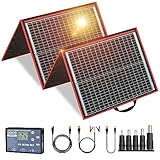
- 【COMPACT & TRAVEL-READY】 Folds down to 19.3x20.9x1.1in and just 7.3lb—light enough to pack, carry, and set up solo. Perfect for RVs, vans, camping, or backup power.
- 【LONG CABLE, COOLER & SAFER】 9.8ft (3m) cable lets you park the panel in full sun while your controller or power station stays shaded—better cooling, safer use, and more flexible setups.
- 【SEPARATE CONTROLLER, SAFER CHARGING】 Includes a standalone PWM controller for 12V batteries with full protections (reverse polarity, overcharge, overload, short-circuit). Easy to replace or upgrade later.
- 【CHECK DEVICE INPUT BEFORE ORDERING】 Some power stations cap solar input (60–100W). Even with 150W, output won’t exceed that cap—normal by design, not a defect. Message us if unsure—we’ll help confirm before you buy.
- 【USB PORTS FOR ESSENTIALS】 Connect to a 12V battery for steady phone/lights charging. Can also give quick emergency top-ups directly in sunlight (current may vary).
Does it generate electricity throughout the whole night?
Not at a constant rate. Nighttime output depends on:
- Cloud cover and atmospheric moisture.
- The panel’s temperature relative to ambient air.
- Wind and convective heat transfer.
- The panel’s unobstructed view of the sky.
- Roof materials, mounting structures, wiring and other sources of thermal leakage.
- The design and electrical matching of the thermoelectric generator.
- The time elapsed since sunset.
Clear, dry conditions generally favour radiative cooling. Clouds and humidity can reduce the surface’s ability to radiate heat into the sky. Related literature also reports that atmospheric transparency can decrease as the night progresses, so peak output may not continue until dawn. The related study’s publication record discusses nighttime radiative-cooling generation and its environmental conditions.
A useful installation would therefore need power electronics and usually a battery or capacitor to smooth the weak, variable output.
Could existing solar panels be retrofitted?
In principle, a photovoltaic surface could be incorporated into a hybrid system with thermoelectric components. In practice, the research does not establish a consumer-ready retrofit kit.
A retrofit would need to manage:
- Thermal interfaces between the panel and thermoelectric module.
- Insulation that limits unwanted heat entering the cooled surface.
- Mounting hardware and weatherproof electrical connections.
- Power electronics capable of using very low-voltage, low-current output.
- Daytime operation without shading or substantially reducing photovoltaic production.
- Long-term exposure to moisture, dirt, wind, temperature cycling and roof movement.
Roof shading, nearby buildings and trees, humidity, wind and the roof construction itself could significantly reduce performance. Adding components could also introduce cost, weight, maintenance needs and failure points without producing enough electricity to justify them.
Rank #4

- Portable Generator with 60W Solar Panel Included: with a big battery pack, ZeroKor 300W solar powered generator are powerful enough to charge smartphones,tablets,laptops,headphones or other outdoor small camping supplies(Tips:Using electrical appliances over 300W may damage the portable solar generator, especially some devices that are prone to heat or built-in air compressor such as coffee maker,Hair dryer, water pump etc )
- Multiple Charging outlets for camping gear with SOS Flashlight: with 2* 300W Max wall AC outlets, 1* DC port (9V-12.6V/10A max ), 3* 5V/3A Max USB ports, 1*quick charge USB port (5V/3A 9V/2A Max), Flashlight with reading mode and SOS mode for your outdoor Adventures, our portable solar power station offers a versatile charging solution,allowing you to charge your outdoor smart devices directly from a wall AC outlet
- Multiple Charging Optional, Solar Panel Charger 60W Included: ZeroKor portable power bank generator can be recharged by Home AC outlet, DC5521 13V-23V Solar Panel (Portable Power Station built-in MPPT), 12V Carport. Take the portable solar power bank generator with you on-the-go and never worry about power shortage,the portable AC outlet design makes it more suitable for Tent camping OFF-Grid
- Built in BMS(Battery Management System) : ZeroKor portable power station features short circuit protection, over-current protection, over-voltage protection, overload protection and overheating protection. The built-in cooling fan system will automatically start and stop according to the portable battery pack internal temperature during use. Acting as a portable solar power bank, it accommodates multiple devices simultaneously, making it perfect for indoor and outdoor use
- HIGH CONVERSION EFFICIENCY: ZeroKor solar panels 60W monocrystalline solar cell have a high conversion efficiency of 20.5%, and its performance is better than that of polycrystalline solar panels under the condition of insufficient light
What later research has changed
Subsequent work has explored improved thermal designs and has reported higher laboratory or modelled figures. A related 2022 study described nighttime radiative-cooling generation above 100 mW/m2. That study is available through the National Library of Medicine.
A 2024 arXiv preprint reported a result of 350 mW/m2. Because it is a preprint, it should be treated as a reported research result rather than an established commercial performance figure. Read the preprint here.
Earlier theoretical work proposed that optimized systems might eventually exceed 2 W/m2. That is a modelled or proposed performance level, not the output of a standard commercial rooftop panel. The theoretical work is available on arXiv.
Higher research numbers are scientifically interesting, but they do not change the consumer conclusion: nighttime output remains constrained by small temperature differences, environmental conditions and thermoelectric conversion efficiency.
What’s actually slowing this PC down?
Pick the symptom - the matching free tool is one click away.
Is this technology commercially available?
The cited research demonstrates a device, not a widely sold residential panel advertised to deliver substantial electricity after sunset. Homeowners should be cautious of products described as “dark solar,” “moonlight solar” or “night solar” unless the seller provides independently verifiable outdoor test data, clearly defined measurement areas, all-night averages, certifications, warranty terms and a realistic installation method.
Best Value

- 【TRAVEL LIGHT, POWER ANYWHERE】 Weighing only 9.7lb and folding to 20×27×1.1in, this 200W panel is slim, portable, and easy to carry or mount—perfect for RVs, vans, boats, trailers, or emergency backup power.
- 【LONG REACH FOR FLEXIBLE SETUP】 A 9.84ft (3m) cable lets you place the panel in direct sunlight while keeping the controller or power station shaded, making installation safer and more convenient.
- 【SEPARATE CONTROLLER FOR SAFE CHARGING】 Comes with a standalone PWM controller that protects your 12V system against reverse polarity, overcharge, overload, and short-circuit—safe to use and easy to replace or upgrade later.
- 【CHECK YOUR POWER STATION’S INPUT LIMIT】 Some power stations cap input (e.g. 100-150W max). Even in full sun, the panel cannot exceed that cap—this is normal design, not a defect. Please confirm your specs or contact us before buying.
- 【USB PORTS FOR ESSENTIAL DEVICES】 When connected to a 12V battery, the dual USB ports provide steady power for phones, lamps, and small gadgets. They can also work in direct sunlight without a battery for emergency top-ups, though current may vary.
In particular, a brief peak measurement is not the same as sustained overnight energy. A quoted value may also apply only to the radiating surface rather than the complete system footprint. Any serious product comparison should identify the denominator and account for the energy consumed by controllers, converters and storage.
Is it better than a battery?
For household electricity, no—not at the demonstrated output. A battery stores daytime solar energy at a far more useful scale and can deliver it when appliances need it. The practical options for using solar power after sunset remain:
- Solar plus battery storage: suitable for shifting daytime generation into evening and overnight use.
- Grid-connected solar: potentially simpler where local tariffs, export credits or net-metering rules make them favourable.
- Portable power stations: useful for renters, emergency backup and small loads, though they have less capacity than whole-home systems.
Examples of established storage categories include the Tesla Powerwall, the Enphase IQ Battery 5P for compatible Enphase systems, and portable systems sold through EcoFlow’s official store. Prices, installation requirements, incentives and compatibility vary by location and should be confirmed locally.
Recommended Free Tools
Radiative-cooling generation could eventually supplement storage or power ultra-low-energy equipment, but the economics depend on the cost, durability and net output of the additional thermal hardware.
Where could nighttime radiative-cooling power make sense?
Millwatt- or microwatt-scale applications are more plausible than household loads. Potential uses include:
- Remote environmental sensors.
- Weather stations.
- Battery-extending monitoring equipment.
- Small off-grid electronics.
- Specialized nighttime instruments.
Thermoelectric generators may also be more useful where a larger, steadier temperature difference is available—for example, around industrial equipment, engines, pipelines or warm infrastructure—than on a rooftop after sunset.
What to check before believing a product claim
- Is the device a conventional photovoltaic panel, or a hybrid PV–thermoelectric system?
- Is the reported output measured per panel area, emitter area or total system footprint?
- Is the figure a peak, average or full-night result?
- What were the sky, humidity, wind and temperature conditions?
- Does the system continue producing useful net power after conversion losses?
- Does it reduce daytime solar output?
- Is there a certified product, installation route and meaningful warranty?
- What is the cost per usable watt-hour compared with a battery?
The construction and retrofit reality
For a building project, the main design question is not whether a panel can produce any electricity after sunset. It is whether the added system can provide dependable energy at an acceptable installed cost while preserving the roof’s weatherproofing, access, structural integrity and daytime solar performance.
Do these 3 things before closing this tab:
1Scan for outdated or missing drivers - takes under a minute2Repair Windows errors before they cause bigger problems3Fix the driver behind crashes, sound loss and screen glitchesThat means considering roof orientation and obstructions, wind exposure, drainage, penetrations, cable routes, maintenance access, insulation, electrical protection and compatibility with the existing inverter. At present, experimental nighttime generation does not offer a straightforward substitute for a properly designed solar-and-storage installation.
Quick Recap
Product prices and availability are accurate as of the date/time indicated and are subject to change. Any price and availability information displayed on Amazon at the time of purchase will apply.

