Recommended Free Tools
Short answer: Both a bridge and an underpass can separate traffic safely and keep a junction moving. A bridge usually has the more resilient drainage profile because the roadway stays above grade and does not depend on a low-point sump and pumps. An underpass can be the better fit where right-of-way, visual impact, grades or utilities make an overpass impractical, but it must have dependable collection, waterproofing, outfalls and—where gravity drainage is not possible—pumps, controls, alarms and backup power.
The defensible choice is a site-specific life-cycle analysis, not a decision based on the initial construction price. Groundwater, flood levels, rainfall intensity, utilities, pedestrian access, construction staging, inspection access and the consequences of a closure can reverse a general preference for either form.
As an Amazon Associate I earn from qualifying purchases.
What the choice actually changes
A grade-separated road project moves one traffic stream above or below another. The structural form changes far more than the profile of the roadway: it determines where rainwater collects, how crews reach equipment, how utilities are moved, how incidents are recovered and what happens when a critical component is out of service.
Free tools Windows power users keep installed
One-click scans. No signup required.
For bridges, the main long-term tasks are structural inspection, deck and joint maintenance, drainage cleaning, corrosion or concrete protection and repair of bearings and other components. For underpasses, those tasks are joined by waterproofing, mechanical and electrical equipment, confined-access work, pump-station maintenance and management of a deliberate low point in the highway.
#1 Best Overall

- Build 20 different models that each teach about force, load, compression, tension and more
- Over 285 interchangeable building pieces
- Includes 36-page, illustrated experiment manual and Assembly guide
- Skill level: Intermediate
Federal Highway Administration guidance treats these as connected design decisions. FHWA’s Service Life Design for Bridges links durable component design with lower future repair costs and fewer traffic delays. Its HEC 24 Highway Stormwater Pump Station Design explains why a depressed roadway may need a pump station and why gravity drainage to another outfall should be compared with pumping on an approximate life-cycle-cost basis. HEC-22 Urban Drainage Design, 4th edition connects rainfall design, collector capacity, storage, maintenance access and life-cycle cost. Hydraulic Design of Safe Bridges also cautions that bridge underdeck drainage can be difficult to clean and vulnerable to breakage.
Bridge versus underpass at a glance
| Decision axis | Road over bridge | Road underpass |
|---|---|---|
| Traffic separation | Elevates the road over the conflicting movement; ramps and approach grades determine sight distance and merge quality. | Depresses the road below the conflicting movement; ramp length, vertical clearance and low-point geometry govern operations. |
| Drainage dependency | Usually drains by gravity from the deck and approaches, avoiding an underpass sump and pump dependency. | Requires collection at the low point and a reliable outfall; pumps may be needed where gravity discharge is unavailable. |
| Key maintenance work | Structural inspection and repair, deck drainage, joints, bearings and protective systems. | Drainage structures, pumps, controls, alarms, backup power, waterproofing, mechanical and electrical systems, plus confined-access work. |
| Construction constraints | Foundations, piers, girder erection, crane access, overhead utilities and staged traffic. | Excavation support, groundwater control, waterproofing, utility relocation, haul routes and staged traffic through a deep work zone. |
| Closure consequence | A structural or deck problem can close a prominent elevated route, but drainage does not normally depend on powered equipment. | A pump, control, power, waterproofing or flooding failure can close the depressed roadway quickly. |
| Best initial question | Can the site accept the approach grades, foundations, visual form and right-of-way? | Can the site reliably keep groundwater and stormwater out, collect inflow and discharge it during outages? |
The table describes typical system behavior, not a universal ranking. Site conditions and the selected structural details control the result.
Which option is better for traffic?
How a bridge affects operations
A bridge keeps the through roadway above the cross street, rail line or other movement. That can provide a direct, legible route for the principal traffic stream and leaves the surface level available for local access, walking and cycling. The operational benefits depend on the approach geometry: steep or closely spaced ramps can reduce speed, sight distance and merge length, while constrained bridge landings can create weaving.
Designers should check the full approach, not only the span. Confirm available right-of-way for ramps, horizontal and vertical curves, lane additions, acceleration and deceleration, maintenance pull-offs, pedestrian crossings and bicycle grades. A bridge that clears the conflict but forces short merges or poor sight lines may perform worse than a longer underpass with more forgiving approaches.
How an underpass affects operations
An underpass places the through road below the crossing movement. It can preserve a flatter surface for the cross street and may reduce the visual prominence of a large elevated structure. The trade-off is a long depressed section with retaining walls, a clearance envelope, approach grades and a low point that must remain usable during intense rain.
Check whether the underpass creates a hidden queue, limits emergency access or introduces a sharp transition from daylight to a confined space. Pedestrian and bicycle continuity needs separate attention: crossings at the top of the ramps may be convenient, while routes through or alongside the depressed section can require lighting, barriers, drainage grates and accessible grades.
Incidents and recovery
Traffic analysis should include a blocked lane, a disabled vehicle, a collision, a maintenance closure and a flooding alarm. Bridges generally allow water to continue draining by gravity, but a structural inspection or deck repair can require lane closures at height. Underpasses can be operationally excellent in dry conditions yet vulnerable to a single failed pump, blocked inlet, lost power supply or damaged control panel.
Quick wins for a faster PC:
Scan for outdated or missing drivers - takes under a minuteDriver Scan →Clear out junk files and repair common Windows errorsFree Scan →Rank #2
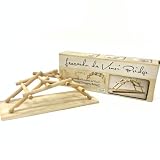
- BUILD A REAL DA VINCI INSPIRED BRIDGE Construct a working model based on Leonardo da Vinci’s famous self-supporting bridge design. This hands-on wooden STEM kit demonstrates real engineering principles through an engaging and rewarding building experience.
- EDUCATIONAL STEM LEARNING EXPERIENCE Explore concepts in engineering, architecture, physics, and history while building. Great for students, hobbyists, makers, homeschool projects, classroom activities, and anyone interested in mechanical design.
- APPROXIMATELY 1 HOUR BUILD TIME Designed to provide an immersive yet manageable project experience. The completed bridge makes an impressive display piece and conversation starter once assembled.
- HIGH-QUALITY WOODEN MODEL KIT – AGE 14+
- Made from durable precision-cut wood components with detailed illustrated instructions. A thoughtful gift idea for teens, adults, engineers, history enthusiasts, and STEM lovers.
Model diversion routes and the time needed to inspect, isolate and reopen each facility. Include access for fire and rescue vehicles, tow trucks, inspection crews and pump-maintenance contractors. The preferred form is the one that retains acceptable traffic service during the failures that are credible at that location.
Drainage resilience: why underpasses need more systems
The underpass low point
Rain falling on the depressed roadway, runoff from the approaches and groundwater entering through joints or defects all move toward the low point. The drainage design must intercept that water before it reaches the travel lanes, hold or convey it safely and discharge it to an approved outfall.
HEC-22 treats rainfall selection, inlet and collector capacity, storage, maintenance access and life-cycle cost as one design problem. A typical underpass arrangement may include approach inlets, trench or slot drains, sump pits, screens, pumps, a discharge main, check or isolation valves, level sensors, a control panel, alarms and an emergency power source. The exact arrangement depends on the catchment, groundwater, outfall elevation and required level of service.
Gravity drainage should be tested first
Where a gravity route to an alternate outfall is physically and hydraulically feasible, compare it with a pump station. HEC 24 specifically calls for an approximate life-cycle-cost comparison rather than an automatic assumption that pumping is necessary. A gravity system can avoid energy use, rotating equipment and some outage modes, but it may require a deeper or longer outfall, larger pipes, easements, storage or a higher construction cost.
If gravity discharge is not reliable at the design water level, the pump station becomes a critical transportation asset. The analysis should cover duty and standby capacity, wet-well volume, pump starts, clogging, access for removal, telemetry, alarm escalation, manual operation and the time available before water reaches the roadway.
Power, controls and alarms
Specify what happens when utility power fails, a pump trips, a level sensor disagrees with another sensor or communications are lost. Backup generation or another approved source should be sized for the required operating period and tested under load. Alarms need a continuously staffed response path, clear set points and a documented escalation procedure; an alarm that merely appears on an unattended panel does not protect traffic.
Keep electrical equipment above credible flood levels where practicable. Provide safe access to pumps, valves and control panels without sending workers into moving traffic or an inundated space. Record the location and rating of every inlet, isolation point and backup component so a responder can act without searching through drawings during a storm.
Rank #3

- 【DIY London Tower Bridge Model Kit】This 3D London Tower Bridge wooden puzzle with LED light is one of the iconic buildings in Britain, ancient and elegant. Assemble Size: 14.1x2.9x4.6in.
- 【Unique Gifts】This Tower Bridge construction model kit is the best gift for teens, friends, family members, architectural enthusiasts around the world or those who love handmade crafts on birthday, Christmas, or another occasion.
- 【English Instruction】This DIY model Tower Bridge Kit cut with exquisite laser technology and accompany english instruction, the matierial is environmentally friendly, non-toxic, 113 pcs easy to assemble, recommended for over 14 years old. Kids can also assemble with the help of adults.
- 【Fun Project】This 3D puzzles can greatly stimulate the spatial imagination of players, improve the graphics recognition ability, enhance the player's observation and hand-eye coordination ability, Three-dimensional Puzzles is also a very interactive activity for both children & adults
- 【Perfect Decoration】Our Big Ben model kit is good for Home decoration. It looks great to show on your table, bookshelf, add it in your collections or hang on the window, wherever you put, it makes your home more exquisite and vintage.
Waterproofing and groundwater
Subsurface walls, slabs, joints and penetrations must resist groundwater as well as rainfall. Investigate seasonal groundwater levels, artesian pressure, contaminated water, soil permeability and the effect of nearby dewatering. Select waterproofing details that can be inspected and repaired, and plan how a leak will be located when finishes or traffic barriers conceal the structure.
Crashes, No Sound, or Screen Glitches?
Random freezes, missing sound and display glitches usually trace back to one bad driver. Find and replace yours safely.Free scan · under a minutePC Slower Than It Used to Be?
A free scan shows the junk files, broken settings and background clutter dragging Windows down - then fixes them in one click.Free scan · Windows 10 & 11Waterproofing is not a substitute for drainage capacity. Conversely, a large pump cannot compensate for uncontrolled infiltration, blocked inlets or an outfall that surcharges during the same storm. The design should balance barriers, collection, storage and discharge, with access to clean every part of the system.
Bridge drainage is simpler, not maintenance-free
A bridge deck is exposed, so water normally leaves by gravity through deck drains, scuppers, gutters and approach drainage. That avoids the underpass sump-and-pump dependency in many sites, but it introduces its own failure modes. FHWA’s Hydraulic Design of Safe Bridges notes that underdeck drainage systems can be hard to clean and can break, allowing water to discharge where it damages concrete, bearings, traffic or property below.
Keep deck drains, downpipes, outlets and approach channels reachable for inspection and cleaning. Check that discharge does not wet expansion joints, bearings, pier caps, sidewalks or electrical equipment. Protect outlets from impact and debris, and make sure a blocked drain has a visible consequence before water ponds in a traffic lane.
Bridge durability also depends on details that are not visible from the roadway: concrete cover, reinforcement protection, steel coatings, joints, bearings, waterproofing membranes and replaceable drainage components. FHWA’s bridge service-life guidance emphasizes inspection, maintenance and repair planning during design. A bridge with poor access or non-replaceable components can create long closures even though its drainage is gravity-driven.
Maintenance: different work, not automatically less work
Bridge maintenance profile
- Routine deck, joint, scupper, gutter and downpipe cleaning.
- Inspection of girders, slabs, piers, abutments, bearings and foundations.
- Repair of concrete, reinforcing-steel corrosion, steel coatings and protective membranes.
- Replacement or adjustment of joints, bearings and damaged drainage parts.
- Traffic control, elevated work access and periodic lane closures for inspections or repairs.
Inspection intervals and repair triggers are set by the owner and jurisdiction; the cited FHWA material does not establish one universal interval or cost.
Underpass maintenance profile
- Cleaning of inlets, trench drains, screens, sumps, pipes and outfalls.
- Inspection, exercising and replacement planning for pumps, motors, valves, sensors and controls.
- Generator or other backup-power testing, fuel management and transfer-switch checks.
- Waterproofing inspection, leak response, joint sealing and concrete repair.
- Lighting, ventilation or other installed systems where the project includes them.
- Confined-access planning, gas testing where applicable, rescue equipment and traffic protection.
The additional mechanical and electrical inventory creates recurring energy, testing and replacement costs. It also creates more components whose failure can affect the roadway immediately.
Rank #4

- HOBBY MODEL KIT – Unassembled model packed in an envelope with easy to follow instructions. Ideal for ages 14 and up.
- NO GLUE OR SOLDER NEEDED – Parts can be easily clipped from the metal sheets. Tweezers are the recommended tool for bending and twisting the connection tabs.
- PREMIUM SERIES GOLDEN GATE BRIDGE - 2.5 Sheet Model with a moderate difficulty level. Once assembled, dimensions are 14.45 L x 0.94 W x 2.95 H inches. 1:7535 Scale.
- FROM STEEL SHEETS TO 3D – Pop out the pieces and connect using tabs and holes. Includes illustrated instructions
- HIGHLY DETAILED ETCHED MODEL – Display your 3D model once completed - collect and build them all.
Constructability and right-of-way
When a bridge is easier to build
An overpass may avoid a deep excavation and continuous groundwater cut-off. It still requires foundations that can carry vertical and lateral loads, pier locations that do not obstruct traffic, crane or launching access, utility clearances and a safe sequence for girder erection. Staging can be difficult where the existing road must remain open and there is little room for temporary supports.
Approach embankments and ramps consume land. Confirm property impacts, retaining-wall lengths, sight-distance envelopes, noise or visual constraints and access to adjacent parcels before selecting the span arrangement.
When an underpass is easier to fit
An underpass can preserve the skyline and keep the cross street near existing grade. It may fit an urban corridor where a bridge’s ramps would displace buildings or split a community. Excavation, however, must be supported while traffic and utilities remain in service. Groundwater control can require well points, cutoff walls, a base slab designed for uplift and treatment or disposal of pumped water.
Map every utility in three dimensions and verify it in the field. A deep box may conflict with sewers, water mains, gas lines, transit structures or building foundations. Include temporary works, utility support, contaminated soil handling, haul routes and weather delays in the comparison; they are part of the project risk even when they do not appear in the permanent-works estimate.
How to compare life-cycle cost
Construction price alone is an incomplete comparison. Build a common study period and include the following categories for each alternative:
| Cost category | Bridge items | Underpass items |
|---|---|---|
| Initial works | Foundations, piers, superstructure, deck, approach embankments, retaining walls and drainage. | Excavation support, groundwater control, box or retaining structure, waterproofing, drainage collection, outfall and equipment. |
| Routine operation | Inspection access, deck-drain cleaning and traffic control. | Electricity, pump testing, alarm monitoring, inlet and sump cleaning, power-system testing and traffic control. |
| Renewal | Membranes, joints, bearings, coatings, concrete repairs and drainage components. | Pumps, motors, controls, sensors, generators, waterproofing, seals, concrete repairs and drainage components. |
| Risk and outage | Closure costs from structural, deck or drainage repairs. | Flood response, pump or power failure, emergency bypass pumping and closures during waterproofing or equipment replacement. |
Use local unit rates, electricity tariffs, inspection requirements, groundwater data and realistic replacement assumptions. HEC 24’s recommendation to compare gravity and pumping with approximate life-cycle costs is particularly important for a depressed road. Report uncertainty as ranges or scenarios rather than presenting a single precise number unsupported by site data.
What’s actually slowing this PC down?
Pick the symptom - the matching free tool is one click away.
A practical decision process
- Define the operating objective. Identify the traffic stream that must remain free-flowing, target speeds, pedestrian and bicycle connections, emergency routes and acceptable closure durations.
- Survey the physical site. Establish topography, flood levels, rainfall inputs, groundwater, soil, utilities, property limits, existing drainage and available outfalls.
- Lay out both concepts. Draw ramp grades, curves, clearances, retaining walls, foundations, drainage paths, maintenance access and construction staging for a bridge and an underpass.
- Test hydraulic behavior. Size collectors and storage, check surcharge and outfall conditions, and determine whether gravity discharge is dependable. If not, define pump duty, standby, controls, alarms and backup power.
- Test failure and incident cases. Simulate blocked inlets, pump failure, utility power loss, extreme rainfall, groundwater rise, a disabled vehicle and planned maintenance closures.
- Price the life cycle. Include energy, inspections, cleaning, component replacement, waterproofing renewal, traffic control, emergency response and the value of closure risk.
- Choose and preserve access. Select the option with an acceptable combined risk profile, then protect space for inspection, cleaning, lifting, bypass pumping, generators and future repairs.
Design and handover checklists
Questions for a bridge
- Can every deck drain, scupper, downpipe and outlet be reached safely?
- Where will water go if a drain blocks, and will it avoid joints, bearings and traffic below?
- Are inspection platforms, lifting points and lane-closure arrangements included?
- Do the service-life details make vulnerable components replaceable?
- Have approach grades, pedestrian routes, bicycle grades, sight distance and merge lengths been checked together?
Questions for an underpass
- What is the design rainfall and inflow catchment, and how much storage exists before the road is affected?
- Can gravity reach a reliable outfall under high water levels, or is pumping unavoidable?
- Are duty and standby pumps, power backup, alarms, telemetry and manual controls defined?
- Can crews clean every inlet, screen, sump, pipe and outfall without entering an unsafe space?
- How will groundwater, uplift, joints and penetrations be waterproofed and repaired?
- What is the response when power, a pump, a sensor, communications or an outfall fails?
- Are electrical and control components protected from the flood levels they are expected to withstand?
Common failure modes and better responses
“The underpass flooded even though the pumps were sized correctly.”
Check blocked screens and inlets, failed level sensors, closed valves, loss of power, a tripped motor, insufficient wet-well volume, inflow above the design event and an outfall that was already surcharged. The remedy may be operational—cleaning, testing or alarm response—rather than a larger pump. Recalculate the complete path from pavement to outfall.
Best Value

- The London Tower Bridge wood model kit consists of 113 wooden pieces and it takes 1.5-2 hours to put it together. It will be easy to build even if you are 3D puzzle beginner. If you have not experienced wooden 3D assembly products and have a little hesitate, you can use this product to practice and experience the fun of mortise and tenon craft.
- All you need comes in the package: 5 precious laser-cut plywood sheets, illustrated English instructions, and screwriver. This is an unfinished product, need to assemble yourself.
- With adorable design, this DIY model is a perfect desk display for you to build. A home decor for your home&office.
- It is also a cool gift for your family or friends on Christmas/Birthday/Valentine's Day.
- The 3D puzzle is a nice stress reliever and after finishing,you will have a true sense of accomplishment.
“A bridge drain keeps damaging the structure below.”
Inspect the drain body, joints, downpipe connections, outlet protection and discharge path. A broken or inaccessible underdeck system can direct water onto concrete, bearings or traffic. Provide a durable, replaceable detail and a cleaning method, not only a larger opening.
“The preferred concept is cheap to build but closes often.”
Reprice the closures, traffic control, emergency response, energy, inspections, equipment renewals and lost access over the study period. A low capital bid can become the higher-cost option when a single failure has a large traffic consequence.
“Utilities make the underpass appear impossible.”
Verify locations and levels, then test staged support, relocation and alternative alignments. Compare those temporary and permanent costs with bridge foundations and ramps. Do not eliminate a concept from a two-dimensional utility plan.
Do these 3 things before closing this tab:
1Clear out junk files and repair common Windows errors2Fix the driver behind crashes, sound loss and screen glitches3Repair Windows errors before they cause bigger problemsWhat the evidence can—and cannot—say generally
There is no broadly applicable statistic that ranks bridges and underpasses across all projects. Rainfall probabilities, pump sizing, construction costs and maintenance intervals are jurisdiction- and site-specific. The reliable general conclusion is narrower: bridges usually avoid an underpass sump and pump dependency, while underpasses require more deliberate drainage, waterproofing, mechanical, electrical and confined-access planning. Bridges still need serious deck-drainage and structural service-life management.
Use the FHWA publications as design references, then replace generic assumptions with the owner’s rainfall criteria, floodplain rules, inspection program, utility information, outfall permits and local prices. That is how a project team turns a form preference into a defensible decision.
Bottom line for project teams
Choose a bridge when its ramps, foundations, right-of-way and visual impacts are acceptable and you want the roadway to remain naturally above drainage low points. Choose an underpass when urban fit, cross-street continuity or property constraints justify the added hydraulic and equipment dependency—and only after proving that collection, waterproofing, outfall capacity, backup power and maintenance access are robust. In both cases, design for inspection and failure recovery from the start. The better option is the one that delivers the required traffic operation with the lower whole-life exposure to flooding, inaccessible repairs and disruptive closures.
Quick Recap
Product prices and availability are accurate as of the date/time indicated and are subject to change. Any price and availability information displayed on Amazon at the time of purchase will apply.
The Tool Desk
Outbyte Driver Updater FREEFix the driver behind crashes, sound loss and screen glitchesFind Drivers →Outbyte PC Repair FREEClear out junk files and repair common Windows errorsFree Scan →
