Repair when a qualified diagnosis shows an isolated, safe failure that should restore dependable service for a meaningful period. Replace when the system is unsafe, repeatedly failing, inefficient, poorly matched to the home, or approaching the end of its useful life—and the complete installed replacement offers better value over time. The right answer is not determined by age or one repair invoice alone.
Use a documented diagnosis, an itemized repair quote, and a comparable installed-replacement quote. Then weigh immediate cost, future repairs, energy and water use, downtime, warranty coverage, installation quality, permits, and how long you expect to remain in the home.
As an Amazon Associate I earn from qualifying purchases.
Start with safety and a real diagnosis
Stop using a system if continued operation could create fire, shock, gas, carbon-monoxide, structural, flooding, or other serious hazards. For electrical, gas, structural, active water-intrusion, or other safety-critical conditions, use a qualified professional and follow local code and permit requirements. Do not make a repair-versus-replace decision from a symptom, a product age sticker, or an online price alone.
The Tool Desk
Outbyte PC Repair FREERepair Windows errors before they cause bigger problemsFix Now →Outbyte Driver Updater FREEFix the driver behind crashes, sound loss and screen glitchesFind Drivers →Questions the diagnosis must answer
- What component failed, and what caused it?
- Is the failure isolated, or has it damaged or exposed other components?
- Is the system safe to operate while you wait?
- What happens if the repair is delayed?
- How long is the proposed repair expected to last under normal use?
- Are compatible parts, refrigerant, controls, or other service items still available?
Ask the technician to put the findings in writing. A credible diagnosis distinguishes a worn part from an undersized, poorly installed, corroded, contaminated, or otherwise declining system. That distinction often matters more than the part price.
#1 Best Overall

- MAKE YOUR HOME YOUR SANCTUARY: 4-pack of 3-month pleated Filtrete 16x25x1 MERV 11 MPR 1000 AC Furnace Air Filter helps capture unwanted particles from your household air to contribute to a cleaner, fresher home environment
- COOLING SEASON READY: Keep your home cool and your air cleaner with a Filtrete AC filter (Compared to MERV minimum filter requirements)
- EXCLUSIVE TECHNOLOGY: Designed with Filtrete 3-in-1 technology to pull in and trap unwanted particles, allowing cleaner air to flow through (Compared to MERV 11 minimum filter requirements; microparticles are 0.3 – 1.0 in size)
- COUNTLESS MICROPARTICLES: With a 1000 MPR and MERV 11 rating, your Filtrete Filter will help capture many microparticles from the air passing through it
- CERTIFIED: This furnace filter is CERTIFIED asthma and allergy-friendly (2) and helps capture dust, lint and other allergens in your household air
Compare ownership costs, not just today’s bill
A repair is the lower-cost choice only if it provides useful, reliable service for its expected life. Replacement is the lower-cost choice when its additional upfront cost is offset by fewer failures, lower operating costs, better comfort, or a longer service period.
A practical total-cost comparison
| Cost or benefit | Repair option | Replacement option |
|---|---|---|
| Upfront amount | Diagnostic fee, parts, labor, taxes, and any immediate related work | Equipment, installation labor, removal and disposal, permits, controls, accessories, taxes, and required modifications |
| Future repairs | Likely follow-up work on aging or related components | Expected service needs during the warranty and afterward |
| Operating cost | Current energy or water use, including the effect of declining performance | Estimated use based on the actual model, local utility or fuel rates, load, and installation quality |
| Useful life | Expected remaining service after this repair | Expected service period of the complete installed system |
| Downtime | Time waiting for parts and labor, plus the risk of another outage | Scheduling, installation, commissioning, and possible temporary loss of service |
| Coverage | Existing manufacturer or installer coverage and the repair warranty | Equipment, labor, and accessory warranties, with their exclusions and registration rules |
| Home fit | Whether the existing capacity, distribution, controls, and code compliance remain suitable | Whether sizing, distribution, drainage, ventilation, and controls are correctly designed |
For a simple estimate, calculate each option’s expected cost over the period you expect to own the home:
Total ownership cost = upfront cost + expected repairs + operating cost − rebates or assistance − residual value.
Crashes, No Sound, or Screen Glitches?
Random freezes, missing sound and display glitches usually trace back to one bad driver. Find and replace yours safely.Free scan · under a minuteWindows Errors? Fix Them Before They Spread
Repair common Windows errors and clear accumulated junk for a smoother, more stable PC - no reinstall needed.Free scan · no reinstallThe estimate does not need false precision. Write down the assumptions, use a range when a future repair is uncertain, and identify which unknown would change the decision. The U.S. Department of Energy’s Federal Energy Management Program describes an efficient product as cost-effective when lifetime energy savings exceed the upfront premium; that principle applies only when the savings estimate is realistic for your home and installation.
Use this decision process
- Make the situation safe. Shut down equipment when instructed, contain leaks if it can be done safely, and arrange qualified help for hazardous conditions.
- Record the system. Note the type, make and model if available, installation date or estimated age, capacity, fuel, current symptoms, and recent maintenance.
- Obtain a written diagnosis. Request the failed part, root cause, safety assessment, effect of delay, and expected repair life.
- Request an itemized repair quote. It should separate diagnostic fees, parts, labor, taxes, related work, warranty duration, and assumptions.
- Request a complete replacement quote. Require equipment model and efficiency rating, load-sizing method, installation scope, permits, code work, removal, disposal, startup and commissioning, warranties, and schedule.
- Estimate future ownership cost. Include energy or water use, likely maintenance, repeat-repair risk, and the years you expect to stay.
- Check coverage and incentives. Confirm manufacturer registration, installer labor coverage, service-contract terms, utility rebates, tax provisions, and expiration dates before relying on them.
- Compare assumptions. Make sure both quotes address the same capacity, comfort requirements, controls, distribution work, and site conditions.
- Choose repair, replace, or another opinion. If the diagnosis is uncertain, the scope differs between quotes, or the safety risk is unclear, pay for an independent assessment before authorizing major work.
- Set a review date. Record the decision, assumptions, warranty documents, and a date to reassess performance, bills, and recurring faults.
When repair is usually the sensible choice
- The failure is clearly isolated and the underlying system is in good condition.
- The repair is covered by a warranty or service contract after you verify the exact component, cause, exclusions, and service fee.
- The repair cost is modest compared with a properly scoped replacement, and the repair warranty is meaningful.
- The system has been reliable, meets the home’s capacity and comfort needs, and has no persistent safety, moisture, noise, or efficiency problem.
- A replacement would require disruptive work, permits, or distribution changes that are not justified by the expected benefit.
- Parts and qualified service are available, and the technician can explain a reasonable remaining service life.
A repair is not automatically economical because it is cheaper today. A low-cost part installed into a failing system can simply move the expense to the next breakdown.
When replacement deserves serious consideration
- The system cannot be operated safely or cannot be brought into compliance with applicable code.
- Failures are frequent, unrelated, or spreading to multiple components.
- Repair cost is large relative to a complete installed replacement, especially when the repair offers little remaining life.
- Energy or water bills are rising without a change in use, or the equipment is visibly inefficient.
- Persistent comfort, humidity, airflow, capacity, noise, odor, or indoor-air-quality problems remain after proper service.
- The equipment is obsolete, parts are difficult to obtain, or the proposed fix is a temporary workaround.
- The home’s needs have changed and the current capacity, distribution, controls, or fuel choice is no longer suitable.
Replacement still requires a diagnosis. A new, oversized, badly ducted, poorly vented, or incorrectly commissioned system can waste money and fail to solve the original problem.
Rank #2
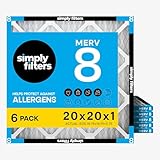
- Universally Compatible: Measuring 20" x 20" x 1", with an actual size of 19.75"x19.75" x 0.75", Simply Filters works with almost any brand. Comparable to 3M Filtrete MPR 600, Filterbuy AFB Silver, and Honey well FPR 5.
- Cleaner Air Everywhere: Our filters capture dust, mold, pet dander, and pollen in homes, offices, schools, hospitals, and commercial spaces, trapping 90% of airborne particles, promoting a healthier living environment with clean and fresh indoor air.
- Advanced Pleated Technology: With a higher pleat count than most retail, our meticulously crafted filters offer superior capture coverage, optimizing airflow and efficiency.
- Long-lasting Filtration & Easy Installation: Enjoy up to 3 months of resilient filtration. Hassle-free replacement for air conditioning units or HVAC systems. Follow airflow arrows and insert into the filter slot for central units or return grilles.
- Made in USA: Our filters are made using 100% American components, including recycled materials, ensuring superior performance and quality. Experience exceptional filtration and support local manufacturing.
How to interpret the HVAC age and “50%” rules
HVAC guidance is often reduced to a universal age or price formula. That is misleading.
Age is a screening signal, not an order to replace
The U.S. Department of Energy’s 2022 Energy Saver guide lists a heat pump or air conditioner older than 10 years, and a furnace or boiler older than 15 years, as possible replacement considerations. The same guide points to frequent repairs, rising energy bills, persistent comfort or humidity problems, and excessive noise. These are prompts for evaluation, not automatic replacement thresholds. A well-maintained older unit can be a better short-term choice than a poorly designed new installation.
The historical 50% heuristic
The DOE Building America Best Practices Series, Volume 14 HVAC guide (August 2011) includes a decision branch in which repair costs above half of replacement cost support replacement, alongside system age and very low efficiency. That is an older, HVAC-specific heuristic—not a current universal rule for every home system. Treat “more than 50%” as a reason to compare complete options, then weigh diagnosis, condition, installation, efficiency, and local costs.
Efficiency savings need household-specific estimates
The 2022 DOE guide says new energy-efficient heating or cooling equipment alone can reduce energy use by 20% or more, and that combining equipment with recommended insulation, air sealing, and thermostat settings can cut heating and cooling bills by about 30%. Those are DOE estimates, not guarantees for an individual home. Actual results depend on climate, equipment ratings, sizing, duct or pipe distribution, envelope condition, thermostat settings, maintenance, occupancy, and local energy prices.
Make an HVAC replacement quote comparable
Ask each contractor to address the following items in writing:
Free tools Windows power users keep installed
One-click scans. No signup required.
- Load calculation and sizing: the method used for the home, not a replacement of the same nominal size by default.
- Distribution: duct leakage, airflow, insulation, registers, returns, hydronic piping, or zoning that could limit performance.
- Equipment and controls: exact model numbers, capacity range, efficiency ratings, fuel, thermostat compatibility, and ventilation requirements.
- Installation: refrigerant or combustion procedures, electrical work, condensate management, drainage, flue or venting, startup, commissioning, and documentation.
- Permits and code: who obtains permits, pays fees, schedules inspections, and corrects deficiencies.
- Warranty: equipment, labor, heat exchangers or compressors where applicable, registration deadline, maintenance conditions, and exclusions.
- Project timing: equipment availability, expected outage, weather contingencies, and temporary measures.
DOE notes that oversizing, poor distribution design, and leaky ducts can undermine efficiency, comfort, and equipment life. An efficient model is not automatically cost-effective when the installation is wrong.
Rank #3

- MAKE YOUR HOME YOUR SANCTUARY: 2-pack of 3-month pleated Filtrete 20x25x1 MERV 11 MPR 1000 AC Furnace Air Filter helps capture unwanted particles from your household air to contribute to a cleaner, fresher home environment
- EXCLUSIVE TECHNOLOGY: Designed with Filtrete 3-in-1 technology to pull in and trap unwanted particles, allowing cleaner air to flow through
- COUNTLESS MICROPARTICLES: With a 1000 MPR and MERV 11 rating, your Filtrete Filter will help capture many microparticles from the air passing through it
- CERTIFIED: This furnace filter is CERTIFIED asthma and allergy-friendly (2) and helps capture dust, lint and other allergens in your household air
- CHANGE YOUR FILTER OFTEN: For optimal performance, make sure to change your filter at least once every 90 days
Apply the framework to other home systems without borrowing HVAC rules
The same cost-and-risk method works for roofs, plumbing, electrical systems, water heaters, appliances, and structural components, but their hazards, codes, failure modes, and service lives differ. Do not transfer HVAC age markers or the 50% heuristic to them.
Roofing
Repair can make sense for a localized, well-understood defect when the surrounding roof, flashing, underlayment, and drainage are sound. Replacement deserves evaluation when leaks recur in several areas, materials are broadly deteriorated, the deck is damaged, or a repair would leave an unreliable assembly. Have active water intrusion assessed promptly to limit hidden structural and mold damage.
Plumbing and water heating
For plumbing, distinguish a single accessible fitting from widespread corrosion, recurring drain failure, hidden leaks, or damaged supply and waste lines. For a water heater, compare tank condition, leak risk, fuel or electricity use, capacity, venting, code work, and installation location. DOE’s Home Energy Checklist reports that water heating can account for 14%–25% of household energy use; the page does not state a publication year. That share makes operating cost worth including, but it does not by itself justify replacement.
Electrical systems
Burning odors, heat, arcing, repeated breaker trips, damaged insulation, water exposure, or unsafe panels require prompt qualified assessment. Do not make a price-based repair decision before the hazard and code implications are understood. A component replacement may be appropriate; in other cases, the service, panel, wiring, grounding, or capacity must be addressed as a system.
Appliances
For an appliance, compare age, repair cost, replacement cost, depreciation, expected remaining life, and survey evidence about repeat failures. Those are the factors used by Consumer Reports’ repair-or-replace decision tool; the tool is a consumer aid, not a universal prescription. Include delivery, installation, required electrical or plumbing changes, disposal, operating cost, and warranty in the replacement figure.
Warranty and home-service-contract checks
Do not assume “under warranty” means every related expense is covered. Verify:
Rank #4

- SIZE & COMPATIBILITY: Nominal 16x20x1 (Actual 15.75 x 19.75 x 0.75 in). Select nominal size based on your current filter's frame or measurements. Fits standard furnaces, ACs & HVAC return grilles
- ENHANCED AIR QUALITY: Merv 8 rating air filters effectively captures household irritants like lint, dust, and pollen, to help provide cleaner and healthier air in your home
- IMPROVED FURNACE EFFICIENCY: Designed to promote furnace efficiency and optimization, this furnace air filter traps particles that can cause system wear and tear
- DURABLE CONSTRUCTION & EASY INSTALL: Made with a beverage board frame and wire mesh support, this home air filter provides reliable, long-lasting performance. Insert with the airflow arrow pointing toward the furnace/blower (away from the return grille) for a snug fit
- ELECTROSTATICALLY CHARGED MATERIAL: The air filters are made with synthetic material that is electrostatically charged to attract and capture allergens as small as 3 microns
- the exact product, component, and failure cause covered;
- parts-only versus parts-and-labor coverage;
- service fees, deductibles, dispatch limits, and authorized-provider rules;
- maintenance, registration, installation, and documentation conditions;
- exclusions for corrosion, pre-existing defects, code upgrades, consequential damage, or improper installation;
- the claim deadline and the process for approval before work begins.
The Federal Trade Commission distinguishes builder warranties on new homes from separately purchased home service contracts. Service contracts can cover specified repairs or replacements, but coverage, duration, fees, exclusions, and claim limitations vary. They are not the same as insurance, and you should compare the contract price with the likely out-of-pocket cost before buying or renewing one.
Do these 3 things before closing this tab:
1Scan for outdated or missing drivers - takes under a minute2Repair Windows errors before they cause bigger problems3Fix the driver behind crashes, sound loss and screen glitchesMaintenance that can delay an avoidable replacement
Maintenance cannot rescue an unsafe or fundamentally failed system, but it can reveal problems earlier and protect the useful life of equipment.
- Clean or replace furnace, air-conditioner, and heat-pump filters on the schedule and in the size and type specified for your equipment.
- Arrange annual professional HVAC maintenance where appropriate, with documented findings rather than a generic “tune-up” label.
- Keep condensate drains, combustion air, exterior equipment clearances, and access areas unobstructed.
- Track utility or fuel use, comfort complaints, repair dates, and unusual sounds or odors.
- Address insulation, air sealing, duct leakage, and thermostat settings when they are part of the diagnosed cause or a cost-effective efficiency plan.
Do not buy a universal filter or replacement part without matching the equipment’s required dimensions, rating, airflow limits, and manufacturer instructions.
A worksheet for the decision
Copy these fields into a note before collecting quotes:
- System: type, make, model, capacity, fuel, installation date or estimated age.
- Symptoms: what happened, when it began, operating conditions, noises, odors, leaks, comfort changes, and outage frequency.
- Diagnosis: failed part, root cause, affected components, safety status, delay risk, and expected repair life.
- Repair quote: diagnostic fee, parts, labor, taxes, related work, repair warranty, and estimated downtime.
- Replacement quote: complete installed price, model and efficiency rating, sizing method, permits, code work, removal, disposal, warranties, and schedule.
- Ownership: expected time in the home, comfort or capacity needs, local utility or fuel rates, maintenance history, rebates, assistance, and financing terms if relevant.
- Decision: repair, replace, or obtain another opinion; list the assumptions and the date to review performance.
Ask every bidder to use the same scope. A quote that omits permits, disposal, electrical changes, duct modifications, controls, or commissioning is not cheaper on a like-for-like basis; it is incomplete.
Quick wins for a faster PC:
Scan for outdated or missing drivers - takes under a minuteDriver Scan →Repair Windows errors before they cause bigger problemsFix Now →Common decision mistakes
Using age as the only rule
Age changes the probability of future failure, but condition, maintenance, design, safety, efficiency, and parts availability determine value. Use age to trigger questions, not to dictate the answer.
Best Value

- Universally Compatible: Measuring 16" x 25" x 1", with an actual size of 15.75"x24.75" x 0.75", Simply Filters works with almost any brand. Comparable to 3M Filtrete MPR 600, Filterbuy AFB Silver, and Honey well FPR 5.
- Cleaner Air Everywhere: Our filters capture dust, mold, pet dander, and pollen in homes, offices, schools, hospitals, and commercial spaces, trapping 90% of airborne particles, promoting a healthier living environment with clean and fresh indoor air.
- Advanced Pleated Technology: With a higher pleat count than most retail, our meticulously crafted filters offer superior capture coverage, optimizing airflow and efficiency.
- Long-lasting Filtration & Easy Installation: Enjoy up to 3 months of resilient filtration. Hassle-free replacement for air conditioning units or HVAC systems. Follow airflow arrows and insert into the filter slot for central units or return grilles.
- Made in USA: Our filters are made using 100% American components, including recycled materials, ensuring superior performance and quality. Experience exceptional filtration and support local manufacturing.
Comparing a repair invoice with a headline replacement price
Compare an itemized repair with a complete installed replacement, including permits, code work, removal, accessories, startup, and warranty. Excluding those items can reverse the apparent difference.
Counting promised savings as guaranteed savings
Use actual equipment ratings, a credible load calculation, local rates, envelope conditions, and installation assumptions. Keep DOE’s 20% and about 30% figures as contextual estimates, not promises.
Ignoring the cause of failure
Replacing a failed control without correcting poor airflow, voltage problems, contamination, water intrusion, or improper sizing invites another failure. Ask what caused the part to fail.
What’s actually slowing this PC down?
Pick the symptom - the matching free tool is one click away.
Accepting a vague warranty
Get coverage, exclusions, labor terms, registration requirements, and claim procedures in writing before authorizing work.
Skipping permits or sizing
Unpermitted or incorrectly sized work can create safety, comfort, resale, inspection, and warranty problems. Confirm responsibility with the contractor and your local authority.
Bottom line: choose the lowest reliable lifetime cost
Repair when the diagnosis is safe and specific, the system is otherwise sound, and the repair should provide dependable service for a meaningful period. Replace when risk, repeat failures, inefficiency, poor fit, or short remaining life make the complete installed alternative the better ownership value. A second opinion is worthwhile whenever the diagnosis is uncertain or the proposed replacement does not document sizing, permits, installation scope, and warranties.
Quick Recap
Product prices and availability are accurate as of the date/time indicated and are subject to change. Any price and availability information displayed on Amazon at the time of purchase will apply.

