Do these 3 things before closing this tab:
1Fix the driver behind crashes, sound loss and screen glitches2Repair Windows errors before they cause bigger problems3Scan for outdated or missing drivers - takes under a minuteRail is usually the better fit for long-distance cement when shipments are large and regular, both origin and destination have workable rail connections, and the shipper can control terminal and first/last-mile operations. Road remains competitive when loads are smaller, deliveries are irregular, sites lack rail access, or transfer, storage and waiting charges erase rail’s lower line-haul rate. There is no reliable distance at which rail automatically becomes cheaper. Compare the complete door-to-door move for the exact lane, cement format, volume and delivery window.
What determines the winner: the complete delivered move
A rail tariff or truck line-haul quote is only one part of cement logistics. The relevant comparison is the cost and service outcome from the loading point to the customer’s unloading point.
As an Amazon Associate I earn from qualifying purchases.
| Cost or service element | Questions for rail | Questions for road |
|---|---|---|
| Line haul | What is the tariff per tonne, minimum shipment, fuel or energy adjustment and billing basis? | Does the quote include the full distance, fuel surcharge, tolls and any minimum charge? |
| First and last mile | How will cement reach the origin terminal and leave the destination terminal? Are short-haul trucks included? | Can a truck travel directly from plant to jobsite or distribution point without a transfer? |
| Terminal and handling | Are siding, loading racks, hoppers, silos, bagging equipment, weighbridges and unloading systems available? What are the handling fees? | Who loads and unloads the vehicle, and are waiting, demurrage or site-access charges included? |
| Storage and delay | What happens if a train arrives early or late? Are storage, wharfage, detention or demurrage charges triggered? | What are the free waiting hours, re-delivery terms and charges for a missed delivery window? |
| Product risk | How many transfers occur, and how are bags or bulk cement protected from moisture, contamination and damage? | What packaging, tarp, tank and unloading controls are required, and who bears loss or damage risk? |
| Reliability | What departure frequency, transit-time range and terminal dwell should be planned? | How do congestion, road restrictions, driver availability and dispatch flexibility affect the delivery window? |
| Emissions | What locomotive energy source, load factor, route and transfer legs are counted? | What truck type, fuel, payload, route and empty running are included? |
This full-lane approach reflects the cost items identified in India’s NITI Aayog review, including handling, sourcing, warehousing, damage, wharfage and demurrage. A low rail rate can lose its advantage after terminal and local delivery costs are added.
The Tool Desk
Outbyte PC Repair FREEClear out junk files and repair common Windows errorsFree Scan →Outbyte Driver Updater FREEScan for outdated or missing drivers - takes under a minuteDriver Scan →When rail is the stronger option
Large, repeatable volume
Rail works best when the shipper can fill a substantial movement on a recurring schedule. A full rake, mini-rake or tank-container program can spread terminal and planning costs over many tonnes. The practical question is not simply whether one large order exists, but whether the volume and frequency match the railway’s operating pattern and minimums.
#1 Best Overall

- Complete Ready To Run Freight Train Set
- Powered by a F7 Diesel Locomotive with Operating Headlight
- Includes; Open Quad Hopper Car, Gondola Car, and Wide-Vision Caboose
- 47" x 38" Oval of Snap-Fit E-Z Track, Power Pack and Speed Controller
- HO Scale 1:87
As a carrier-specific illustration, BNSF states that one of its railcars can carry the equivalent of four truckloads of cement. That is BNSF’s service claim for its own US operating context, not a universal conversion for every railcar, route or loading configuration.
Rail access at both ends
Origin and destination access must be operational, not just visible on a map. Check for a usable siding or terminal, permitted loading and unloading hours, adequate track length, weighbridge capacity, and equipment compatible with the cement format. A destination several kilometres from a railhead may still work if local trucking is dependable and priced into the comparison; a nominally connected site may fail if it requires expensive construction or repeated transfers.
Bulk handling infrastructure
Bulk cement requires controlled transfer into and out of covered equipment. India’s Ministry of Railways described rail-connected bulk terminals with hoppers, silos and bagging facilities in its November 2025 policy announcement. These installations can reduce manual handling, but they also create capital, operating, maintenance and scheduling requirements. Confirm who owns the equipment, who operates it and what happens during an outage.
Predictable replenishment rather than instant dispatch
Rail can suit a cement producer supplying a depot, ready-mix network or major project with a planned inventory cycle. The buyer must be able to forecast demand, book capacity and hold enough stock to absorb terminal dwell or a missed departure. If the jobsite requires an unplanned top-up tomorrow, a direct truck may be more useful even when the nominal rail line haul is lower.
When road remains the better choice
Small or irregular consignments
Trucks can be dispatched for the actual load instead of waiting to accumulate a train-sized quantity. This is valuable for smaller contractors, phased projects and markets with uneven demand. Multiple trucks also allow deliveries to be spread across sites or days without breaking a rail booking into costly transfers.
Direct delivery and difficult sites
Road’s core advantage is door-to-door access. A truck can often load at the cement plant, travel to the project or local warehouse and unload without an intermediate terminal. That directness avoids transloading, temporary storage and an additional damage point. It also helps where roads, gates, turning radii or delivery appointments are easier for trucks than for rail equipment.
Short lead times and flexible scheduling
Cement Manufacturers’ Association material identifies schedule flexibility, door-to-door service and affordability on shorter leads as reasons road continues to carry most cement in India. Those characteristics can remain decisive on a long route when the shipment is too small for rail or when the rail service has infrequent departures.
What’s actually slowing this PC down?
Pick the symptom - the matching free tool is one click away.
Rank #2
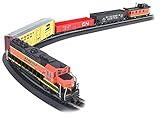
- Complete Ready To Run Electric Train Set: This 130-piece freight train set includes everything needed to start your model railroad journey right out of the box
- Powered Diesel Locomotive: Features an EMD GP40 Diesel Locomotive equipped with an operating headlight for realistic train operations
- Comprehensive Rolling Stock and Accessories: Includes Open Quad Hopper Car, Gondola Car, Steel Reefer Car, Off-Set Cupola Caboose, Signal Bridge, Miniature Figures, Railroad Signs, Street Signs, and Telephone Poles
- Easy Setup Track System: Features a 47 inch by 38 inch oval of Snap-Fit E-Z Track with included Power Pack and Speed Controller for convenient operation
- Authentic HO Scale Model: Built to 1:87 scale ratio, providing detailed and proportionate model railroad experience
Locations without economical rail access
If the first or last mile is long, congested or subject to a single terminal’s charges, the local trucking component can dominate the total. Road may win even over a very long line-haul distance when it can complete the movement directly and reliably.
Is rail cheaper than trucks for cement?
Rail can have a lower long-haul cost per tonne, but that does not establish a lower delivered cost. India-focused figures illustrate the distinction: the 2025 NITI Aayog review reported indicative road freight of INR 3–4 per tonne-kilometre and rail freight of about INR 1.5 per tonne-kilometre plus last-mile cost. These were source-era figures attributed to interaction with an industry logistics department, not current quotes, global benchmarks or guaranteed tariffs.
India’s Ministry of Railways separately described a bulk-cement charging basis of ₹0.90 per tonne-kilometre in a November 2025 policy release. A February 2026 ministry update reported a reduced basis of ₹0.85 per tonne-kilometre for bulk cement tank-container movement and mentioned discounts for empty returns. These are ministry-reported policy terms; verify that the applicable commodity, route, equipment, distance calculation and date match your booking before using them in a budget.
For either mode, calculate:
Delivered cost per tonne = line haul + origin collection + terminal handling + storage and inventory cost + destination handling + final delivery + waiting, demurrage, wharfage, tolls, packaging or loss allowances.
Free tools Windows power users keep installed
One-click scans. No signup required.
Request every component on the same basis. A rail quote that excludes two local truck legs cannot be compared fairly with a truck quote that includes door-to-door delivery.
How far must cement travel before rail makes sense?
There is no supported universal break-even distance. The threshold changes with shipment size, train frequency, siding and terminal charges, road rates, fuel, terrain, congestion, inventory cost, empty-return arrangements and the availability of local trucks.
Use distance as a screening variable, not a decision rule. A long route with poor terminal access can favour road; a shorter corridor with high recurring volume and efficient terminals can favour rail. The only defensible break-even point is the one calculated from current, lane-specific quotes.
Rank #3

- Complete Ready To Run Freight Train Set
- Powered by a F7-A Diesel Locomotive with Operating Headlight
- Includes; Box Car, Steel Gondola Car, Off-Set Cupola Caboose
- 24" Circle of Nickel Silver E-Z Track , Power Pack and Speed Controller
- N Scale 1:160
A practical break-even calculation
- Define the exact origin and destination, including the plant gate, terminal, depot and final unloading point.
- State the cement form: bagged, bulk pneumatic, bulk tank-container or another configuration.
- Enter tonnes per shipment, shipments per month, annual volume and the required delivery window.
- Obtain a rail quotation that itemizes rail line haul, terminal handling, storage, demurrage, equipment, first-mile and last-mile trucking.
- Obtain a road quotation for the same tonnes, dates, loading and unloading responsibilities, fuel basis, tolls, waiting allowance and delivery locations.
- Add the financial effect of inventory: stock held while waiting for a train, minimum order quantities, financing, site storage and the cost of a stockout.
- Divide each mode’s complete cost by delivered tonnes, then test realistic delays and volume changes rather than relying on one optimistic case.
The mode with the lower result is the economical choice for that operating case. If the results are close, reliability, handling risk and the cost of changing modes may matter more than a small rate difference.
Cement format changes the logistics equation
Bagged cement
Bags can move through ordinary freight networks, but every loading, transfer and unloading event adds labour, equipment time and opportunities for tearing or moisture exposure. Compare palletization, wrapping, bagging at the terminal, warehouse space and expected loss. A rail plan that requires re-bagging or several manual transfers may lose its line-haul advantage.
Bulk cement
Bulk movements can reduce packaging work, but they depend on compatible silos, pneumatic or mechanical unloading and dust-control procedures. Verify tank capacity, pressure requirements, cleanliness, contamination controls and the receiving site’s ability to accept the full discharge rate.
Tank containers
India’s February 2026 ministry update concerned bulk cement tank-container charging and reported interest from cement companies, while also describing terminal-silo facilitation by CONCOR. The announcement indicates a policy and infrastructure direction, not proof that every corridor has service or that expected savings have already been achieved. Confirm equipment availability, empty repositioning, terminal appointments and current charges.
Handling, storage and damage: the costs most quotes hide
Cement is sensitive to moisture and contamination, and its value can be lost through caking, torn bags, incorrect product segregation or prolonged exposure. Map every physical handoff:
Windows Errors? Fix Them Before They Spread
Repair common Windows errors and clear accumulated junk for a smoother, more stable PC - no reinstall needed.Free scan · no reinstallCrashes, No Sound, or Screen Glitches?
Random freezes, missing sound and display glitches usually trace back to one bad driver. Find and replace yours safely.Free scan · under a minute- Plant loading into wagon, container or truck.
- Weighing, sealing and documentation.
- Transfer from rail to local truck, if required.
- Temporary storage in a warehouse, silo or covered yard.
- Final unloading and inspection at the customer site.
Assign responsibility and evidence requirements at each point. The contract should state who pays for shortage, wet or damaged bags, contamination, rejected loads, cleaning, rehandling and disposal. Include demurrage or detention triggers, free time, notice requirements and the process for weighing a disputed delivery.
The Cement Manufacturers’ Association of India said logistics costs could reach 30–35% of cement cost in a 2021 industry statement. That is a historical association estimate, not a universal current share, but it shows why handling and storage deserve the same attention as the headline freight rate.
Rank #4

- 【Segment Design Motorized Cargo Train】This 36.6 inch length train building set consists of 1 rechargeable motorized head and 2 cargo carriages used for deliver passengers, cargo and coal. Each carriage can be easily connected or separated, and move by powered locomotive as real city trains, with its powerful and rechargeable engine. (Switch control, NO remote control, )
- 【Eye-catching Size and Realistic Design 】The assembled train is 36.6*2.36*4.02 inch (L*W*H), with 16 curved tracks and 16 straight tracks to consist a 42*44 inch rectangle train tracks. The doors and carriage cover can be opened. Exquisite stickers bring this freight train to life.
- 【High Compatibility】This train set is compatible with mainstream brand trains and tracks, which makes train lovers, railway enthusiasts and transport building fans to combine this train into their own miniature rail network. Ideal for recreating railyard operations or building expansive train layouts.
- 【Great Gift for Fans of Train Toys】This train set is packed in elaborate box. It makes a great gift for model train lovers, railway enthusiasts and transport building fans to create your very own miniature rail network.
- 【Engaging Building Project】With 1078 pieces and an detailed instruction, it offers a building challenge for boys and girls who want to create their own locomotive train. Teens will enjoy hours of build-and-play, which will improve hands-on ability , promote engineering skills and spark imagination
Reliability, inventory and project scheduling
Rail planning questions
- How many departures are available each week or month?
- What is the normal and worst-case terminal dwell?
- What minimum notice is required to reserve wagons or containers?
- Can the service split a shipment, or must the consignee accept the complete movement?
- What contingency applies when a siding, locomotive, terminal or unloading system is unavailable?
Road planning questions
- How many trucks can be supplied on the required dates?
- What is the plan for traffic restrictions, weather, weigh stations and driver hours?
- How long is included for loading and unloading before waiting charges begin?
- Can a missed appointment be recovered with another vehicle?
- Will empty trucks be available for the return leg, and does that affect the rate?
Measure reliability against the project’s consequence of delay. A lower average rate is not economical if a late cement delivery stops concrete work, forces an emergency purchase or requires expensive site labour to remain idle. Conversely, paying for premium truck flexibility may be wasteful for a depot with ample buffer stock.
Emissions: compare the whole route, not the locomotive or truck alone
Rail often has an emissions advantage when trains are heavily loaded and transfer distances are short, but the result depends on locomotive energy, electricity generation, route, payload, empty running and terminal operations. Road results depend on truck technology, fuel, payload, congestion and return movements.
The Australian Supply Chain Benchmarking Study: Cement by L.E.K. Consulting (circa 2021) found that rail cost and emissions vary with network design and intermodal integration, and specifically identified transfer-to-road costs when intermodal facilities are lacking. Its Australian context should not be converted into Indian rates or a global emissions factor.
A 2021 Cement Manufacturers’ Association article reproduces mode-specific pollution and greenhouse-gas figures and a rail-rake-to-truck capacity comparison based on earlier secondary material. Treat those figures as historical, source-dependent illustrations rather than current, route-specific emissions measurements.
When requesting an emissions comparison, specify the accounting boundary: plant gate to customer gate, whether first and last-mile trucks are included, the electricity or fuel factor, payload, empty return, terminal energy and the treatment of damaged or rejected product.
Independent reader supportYour contribution helps us test, update, and keep practical guides available for everyone.India’s recent bulk-cement rail policy context
India’s Ministry of Railways announced rail-connected bulk-cement terminals with hoppers, silos and bagging facilities in November 2025. In February 2026, the ministry reported that the tank-container charging basis had been reduced to ₹0.85 per tonne-kilometre and described discounts for empty-return movements. It also said CONCOR was facilitating terminal silos and that cement companies had approached it about tank-container movement.
These measures may improve the economics of suitable lanes by reducing handling friction or the cost of empty equipment, but a policy announcement is not a guarantee of realized savings. Check the current circular, eligibility, route, terminal, equipment and effective date with the railway or operator before building a contract price around it.
Best Value

- 【Segment Design Motorized Cargo Train】This 36.6 inch long train building set consists of 1 rechargeable motorized head and 2 cargo carriages used for deliver passengers, cargo and coal. Each carriage can be easily connected or separated, and move by powered locomotive as real city trains, with its powerful and rechargeable engine. (Switch control, NO remote control )
- 【Eye-catching Size and Realistic Design 】The assembled train is 36*2.76*3.94 inch (L*W*H), with 16 cruved tracks and 16 straight tracks to consist a 42*44 inch rectangle train tracks. The doors and carriage cover can be opened. Exquisite stickers bring this BNSF freight train to life.
- 【High Compatibility】This train set is compatible with mainstream brand trains and tracks, which makes train lovers, railway enthusiasts and transport building fans to combine this train into their own miniature rail network. Ideal for recreating railyard operations or building expansive train layouts.
- 【Modular Assembly】 Referring to step by step instruction, assemble the locomotive and carriages separately and then connect three parts easily, which reduces the complexity and difficulty of assembly.
- 【Great Gift for Fans of Train Toys】This train set is packed in elaborate box. It makes a great gift for model train lovers, railway enthusiasts and transport building fans to create your very own miniature rail network. It offers a building challenge for boys and girls who want to create their own locomotive train. Teens will enjoy hours of build-and-play, which will improve hands-on ability , promote engineering skills and spark imagination
Historical Indian modal data also needs a date label: the Cement Manufacturers’ Association reported roads carrying roughly 71–72%, rail 25% and waterways 3–4% of cement transport in 2020–21. Those shares describe that period and should not be presented as today’s national mix.
A procurement process that produces an honest comparison
- Write one lane specification. Include exact loading and unloading addresses, cement grade and format, tonnes per movement, monthly frequency, annual volume, delivery window and required equipment.
- Define service responsibility. State whether the provider is responsible for plant pickup, terminal handling, storage, final delivery, unloading, documentation and claims.
- Request itemized rail and road bids. Require the same currency, tax treatment, fuel basis, validity date, free time, surcharges and assumptions.
- Validate physical compatibility. Confirm siding length, axle or wagon limits, loading rates, silo or bagging capacity, truck access, turning space and unloading equipment.
- Model three demand cases. Price the planned volume, a lower-volume month and a peak month. Rail may look different when a rake is full, partially used or delayed.
- Test disruption scenarios. Ask for the cost and response time if a train misses its slot, a terminal closes, a truck is unavailable or the customer cannot unload.
- Choose a measurable service level. Put delivery-window performance, damage allowance, claims timing, demurrage and escalation contacts in the contract.
- Review actuals after the first movements. Compare quoted and realized tonnes, dwell, handling, waiting, shortages, damage and emissions assumptions before expanding the lane.
Common mistakes and how to correct them
Using a distance rule of thumb
Mistake: assuming rail wins beyond a particular number of kilometres. Correction: calculate the lane with current quotes and all local legs; infrastructure and volume can outweigh distance.
Comparing rail line haul with all-in trucking
Mistake: treating a rail tariff as the final delivered price. Correction: add first-mile, terminal, storage, last-mile, waiting, demurrage, wharfage and handling.
Ignoring shipment frequency
Mistake: selecting rail because one large project order can fill a train. Correction: test recurring monthly demand, booking lead time and the cost of holding inventory between departures.
Assuming rail access means usable access
Mistake: relying on a nearby rail line without checking sidings, equipment, operating hours and local delivery. Correction: inspect both terminals and obtain written handling and drayage terms.
Leaving product risk undefined
Mistake: treating all tonnes as delivered and saleable. Correction: document moisture, contamination, shortage, bag damage, seals, inspection and claims responsibilities at every handoff.
Presenting historical figures as current facts
Mistake: quoting the NITI Aayog indicative rates, 2020–21 modal shares or association emissions numbers as current global benchmarks. Correction: label the date, geography, source basis and limitations, then obtain current lane quotes and emissions assumptions.
Recommended Free Tools
Decision checklist
- Prefer rail evaluation first when volume is large and regular, both ends have suitable terminals, bulk or bagging equipment is available, and the buyer can plan inventory.
- Prefer road evaluation first when loads are small or irregular, the delivery point is not rail-connected, the schedule is urgent, or transfers create material cost and damage risk.
- Consider a multimodal plan when rail can handle the long trunk movement and trucks can efficiently cover both ends. Price the transfer explicitly rather than assuming it is automatically cheaper or cleaner.
- Do not award on rate alone. Compare delivered cost per tonne, delivery-window performance, handling losses, claims exposure, minimum volume, resilience and the stated emissions boundary.
Bottom line for long-distance cement shippers
Rail is a compelling option when scale, repetition and terminal connectivity allow its lower long-haul economics to survive the first and last mile. Road is often the better answer when direct access, small lots or flexible timing matter more than the line-haul rate. The correct choice comes from an itemized, lane-specific comparison of the entire movement—not from a universal distance threshold, a historical national average or a single advertised tariff.
Quick Recap
Product prices and availability are accurate as of the date/time indicated and are subject to change. Any price and availability information displayed on Amazon at the time of purchase will apply.

