Quick wins for a faster PC:
Fix the driver behind crashes, sound loss and screen glitchesFind Drivers →Clear out junk files and repair common Windows errorsFree Scan →Scan for outdated or missing drivers - takes under a minuteDriver Scan →The right portable generator is sized from the loads you must run, not from a headline wattage. Add the running watts of equipment that will operate at the same time, then leave enough capacity for motor-starting surge. Before buying, verify the generator’s outlet mix, fuel and runtime test conditions, 120/240-volt capability, and automatic carbon-monoxide (CO) shutoff. During use, keep it outdoors at least 20 feet from buildings, direct exhaust away from openings, use correctly rated outdoor cords, and never connect it to house wiring through a wall outlet.
This guide explains how to choose capacity, compare runtime claims, match outlets and cords, evaluate inverter and conventional designs, and operate a generator safely on a construction site or at home.
As an Amazon Associate I earn from qualifying purchases.
What a portable generator is
A portable generator is a movable, internal-combustion-engine-driven electric generator with AC receptacle outlets for temporary use. The federal regulatory category covers units rated no higher than 15 kW and 250 volts with AC receptacles. That definition describes the class; it does not tell you whether a particular model can run your tools, appliances, pump or temporary site equipment.
Capacity, starting performance, outlet configuration, fuel system, controls, protection features and service support determine whether a generator is suitable. Treat the nameplate and owner’s manual as the controlling specifications. Marketing labels such as “home backup” or “jobsite power” do not replace a load calculation.
#1 Best Overall

- 𝗣𝗼𝘄𝗲𝗿𝗳𝘂𝗹 𝗢𝘂𝘁𝗽𝘂𝘁 - 4400 peak watts and 3400 running watts, perfect for RV camping and home backup
- 𝗠𝘂𝗹𝘁𝗶-𝗢𝘂𝘁𝗽𝘂𝘁 𝗢𝗽𝘁𝗶𝗼𝗻𝘀 - Includes 2*120V AC ports, 1*12V DC port, 1*RV port
- 𝗟𝗼𝗻𝗴 𝗥𝘂𝗻𝘁𝗶𝗺𝗲: Runs for up to 14 hours at 25% load with ECO mode, 2 gallon fuel tank with fuel gauge, allows you to check fuel levels at a glance, keeping you prepared
- 𝐋𝐨𝐰 𝐍𝐨𝐢𝐬𝐞: Under 72 dBA from 23FT away, this generator provides steady power for your home during a power outage or RV nights
- 𝗟𝗶𝗴𝗵𝘁𝘄𝗲𝗶𝗴𝗵𝘁 𝗮𝗻𝗱 𝗣𝗼𝗿𝘁𝗮𝗯𝗹𝗲: Only 56lbs, easy to move around
Choose generator size from real loads
Running watts and starting watts are different
Running watts are the power an appliance or tool uses after it is operating. Starting, or surge, watts are the temporary demand created when a motor, compressor or similar load starts. A generator must have enough continuous running-watt capacity for all loads operating together and enough surge capacity for the largest starting event that occurs while other equipment is already running.
Find both figures in the appliance, tool or generator manual and on the equipment nameplate where provided. If a device lists amps rather than watts, use the voltage and amperage shown for that circuit; do not assume a single universal conversion when the equipment documentation specifies otherwise. Some equipment has no separately published starting value. In that case, obtain the manufacturer’s guidance or have a qualified electrician assess the starting demand rather than guessing.
A practical sizing procedure
- List essential loads. Include only equipment that must operate from the generator. Separate essential circuits from optional lights, chargers and tools.
- Record running watts. Write down the running rating for every item.
- Add simultaneous running demand. Total the running watts for the equipment that may be on at one time.
- Identify motor starts. Mark refrigerators, pumps, compressors, saws and other equipment with a starting or surge rating.
- Allow headroom. Select a generator whose continuous rating exceeds the calculated running total and whose surge rating can cover the largest starting combination. Headroom also reduces nuisance overload trips when loads change.
- Check voltage requirements. A wattage total is not enough if any equipment requires 240 volts, a particular phase arrangement or a dedicated circuit.
- Recheck the plan. Confirm every assumption against the current manuals before connecting the equipment.
Why undersizing causes problems
An overloaded generator may trip its breaker, stall when a motor starts, produce unstable power or overheat. Repeatedly resetting a breaker without reducing the load does not solve the underlying problem. Turn off optional equipment, let the generator stabilize, and reconnect loads one at a time within the documented ratings. If the generator cannot carry the required starting demand, use a larger unit or a load-management plan rather than operating it at the edge of capacity.
Recommended Free Tools
How to compare runtime honestly
Runtime is meaningful only when the fuel capacity and test load are stated together. A claim such as “runs for 10 hours” is incomplete without the fuel type, tank size, rated output and percentage of load used during the test. Runtime measured at 25% load cannot be compared directly with runtime measured at 50% load.
| Runtime detail to record | Why it matters |
|---|---|
| Fuel type | Gasoline, propane and dual-fuel operation can have different output and consumption. |
| Fuel capacity | A larger tank can produce a longer interval between refills without proving greater efficiency. |
| Test load | State the load percentage or wattage; otherwise the number is not comparable. |
| Rated output during test | Shows what the stated load represents on that particular generator. |
| Operating mode | Eco or load-sensing modes, when provided, can change consumption; verify the manufacturer’s conditions. |
| One-time or recurring figure | Promotional or laboratory claims should not be treated as a guaranteed field runtime. |
Use the manufacturer’s published test conditions as a baseline, then plan conservatively. Actual runtime changes with load cycling, ambient temperature, altitude, fuel age, maintenance and the number of times motors start. A generator carrying a changing construction load will not behave like one tested at a steady percentage.
Rank #2
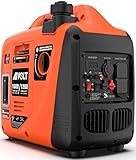
- 🔌 Safe for Sensitive Electronics | <3% THD Clean Power Inverter Generator - This portable inverter generator with advanced inverter tech delivers stable, clean power (THD <3%), safe for your phones, laptops, or small tools. It’s the perfect for home office backups during blackouts or generator for camping - keep your devices charged without worry
- ⚡ Powerful & Fuel-Efficient | Runtime: 8 hrs at 25% load, 2 hrs at full load – This AIVOLT quiet gas inverter generator, powered by a 60cc 4-stroke OHV engine with copper windings, delivers 1600 starting watts and 1260 running watts. The eco-mode switch intelligently adjusts fuel consumption, enabling up to 8 hrs of continuous operation at 25% load for significant fuel savings, while full 1260W operation runs approximately 2 hrs (refuel as needed). Perfect for camping, RV trips, tailgating, job sites, and home backup.
- 🔇 Ultra-Quiet (57 dBA) & Lightweight - This portable quiet generator (57 dBA at 23ft) is quieter than a normal conversation— no more noisy distractions during camping or backyard gatherings, truly a silent gas generator. At just 28lbs, it’s 20% lighter than similar models, a handy small inverter generator easy to carry to campsites or job sites as your go-to quiet generator for camping
- 🔌🔗 Multifunctional Panel & Parallel Capability - This portable inverter generator comes with 2x120V outlets and 2 USB ports (Type-A/C), perfect for charging phones while running a camping fridge. 3 indicator lights and an hour meter let you monitor power status in real time. Need more power? Connect two AIVOLT VS1600101 quiet inverter generators via a parallel kit (not included) to double your output seamlessly
- 🛡️ CO Protect & Comprehensive Safety - This gas powered generator features built-in CO Alert tech that auto-shuts down when unsafe CO levels are detected, protecting your family. Low oil auto-shutdown and overload protection also safeguard both the generator and your electronics - make it a safe for home or RV use, no safety worries
Fuel choices
- Gasoline: Commonly available, but it must be stored and handled as a flammable liquid. Use only the fuel grade and storage method specified by the manufacturer.
- Propane: Requires an approved cylinder, hose and regulator arrangement. Verify the generator’s rated output and runtime conditions when operating on propane rather than gasoline.
- Dual-fuel: Offers a choice of fuels, but compare the separate output and runtime figures for each fuel. Do not assume the gasoline specification applies to propane.
Never refuel a hot or running generator. Shut it down, allow the engine and exhaust system to cool, and follow the manual’s fuel-handling instructions. Store fuel only in approved containers and away from ignition sources.
Outlet types and electrical compatibility
Start with the equipment you intend to connect
Before comparing models, list the plugs and circuits your equipment requires. Confirm the number and type of 120-volt receptacles, whether a 30-amp or 50-amp outlet is needed, and whether 120/240-volt operation is available. An outlet that physically accepts a plug does not automatically mean the generator can supply the required voltage or current safely.
| Specification | Questions to answer |
|---|---|
| 120-volt receptacles | How many circuits are available, and what is the rating of each receptacle or breaker? |
| 30-amp outlet | Does the intended equipment or transfer equipment require a 30-amp connection? |
| 50-amp outlet | Is a 50-amp connection required, and can the generator deliver the documented output on that outlet? |
| 120/240-volt capability | Does the unit provide both voltages in the arrangement required by the equipment? |
| GFCI or other protection | What protection does the model provide, and does it match the work environment and local electrical requirements? |
| Outlet covers and weather protection | Can the receptacles remain protected when the generator is outdoors? |
Match every cord, plug and appliance to the outlet and circuit rating. Do not use adapters to defeat grounding, neutral or current requirements. If a building connection is needed, use a properly installed transfer switch or other approved equipment designed by a qualified electrician; a portable generator is not a substitute for compliant building wiring.
Extension cords
Use heavy-duty extension cords designed for outdoor use. The cord’s wattage rating must exceed the total wattage of all connected appliances. Inspect cords before every use for cuts, crushed insulation, loose ends or overheated plugs. Keep connections out of puddles and away from traffic that could damage them. Do not daisy-chain extension cords to reach a distant load; obtain a cord of the correct length and rating.
Inverter versus conventional generators
“Inverter” and “conventional” describe the generator’s electrical design, but neither label alone proves that a model is right for a particular load. Compare the documented running and surge ratings, outlet mix, 120/240-volt capability, noise specification, portability, fuel system, maintenance access, automatic CO shutoff and warranty or service support.
Rank #3

- 【Extened Runtime】: This protable generator comes with 1.06-gallon fuel tank, allows for up to 17 hours of operation at 25% load, or 8.6 hours at 50% load, with parallel function and ECO mode, providing long-lasting power. perfect for RVs, camping, home backup emergency.
- 【Powerful Output】: The inverter generator produces 2500 peak watts and 1900 running watts clean power (less than 3% THD), gas powered by 80CC 4-stroke. making it safe for sensitive electronics like laptops, TV, lights, fans, small power tools, phone, laptop, drone and camera.
- 【Quiet Operation&Ultralight】: Under 59 dBA from 23FT away, this power generator provides quiet, steady environment for you. The portable generator at only 39.46 pounds, ultra light. comes with convenient and sturdy carrying handle. making it easy to transport for camping and outdoor work.
- 【Safety&3-year warranty】: With CO sensor, the generator will automatically shut down if carbon monoxide levels get too high, keeping you safe during use. Includes 3-years warranty with FREE lifetime technical support from experts.
- 【Full Service】: SIOKIUU begins with silent generators, backed by a full-service system, To ensure quality, all SIOKIUU generators are functionally tested in the factory, After the inspection, the engine oil inside the machine will be drained out. There may still be a very small amount of residual oil left inside. So there may be a slight smell of gas or minimum residual gasoline when you receive it. Don't worry about it, it's not second-hand.
For sensitive electronic equipment, follow the equipment manufacturer’s power requirements and the generator manufacturer’s documentation. Do not infer performance from the word “inverter” without checking the stated output characteristics and protections. Likewise, do not assume a conventional unit is unsuitable for every electronic load; verify compatibility for the actual equipment.
Free tools Windows power users keep installed
One-click scans. No signup required.
Portability and jobsite fit
Check the complete operating weight, wheel and handle arrangement, lifting points and the space required for ventilation. A unit that can be moved around an empty driveway may be impractical on uneven construction ground. Plan how it will be unloaded, positioned 20 feet from buildings, protected from weather without enclosing it, and moved for refueling or maintenance.
CO protection is a purchase criterion
Carbon monoxide is an odorless, colorless gas produced by fuel-burning engines. CPSC guidance identifies automatic CO shutoff as a feature to look for and points to technologies meeting PGMA G300-2023 and UL 2201-2023. UL 2201 also includes reduced-CO-emissions requirements. Ask the manufacturer for the applicable certification or documentation; do not rely on an unverified badge or a generic statement that the generator is “CO safe.”
A CPSC staff analysis of more than 140,000 simulations involving 511 portable-generator fatalities estimated that nearly 100% of those deaths could have been averted with UL 2201-compliant generators and nearly 87% with PGMA G300-compliant generators. The analysis also found limited marketplace compliance at that time. Those figures support treating verified CO protection as a buying requirement, not an optional convenience.
Non-negotiable placement and operating rules
CPSC’s May 27, 2026 statement says: “Never use a portable generator inside homes, garages, basements, crawlspaces, sheds or other enclosed areas, even if doors or windows are open.” It also says: “Operate generators outdoors only, at least 20 feet from homes and buildings, with exhaust directed away from windows, doors and vents.” Follow those distances for every operating mode and load.
Rank #4
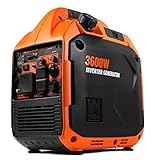
- 149cc engine generates up to 3600 surge watts and 2900 rated watts
- Produces clean power to prevent damage to sensitive electronics such as smart phones, tablets and laptops
- Ultralight body weighs in at a mere 46 pounds for easy transport and torage
- Fuel shutoff maximizes the generator’s lifespan by using up the remaining fuel in the carburetor before shutting down
- Includes two three-prong 120V receptacles, one TT-30R RV receptacle, one 12V DC receptacle, two 5V USB ports, and a three-year warranty
- Position the generator outdoors, at least 20 feet from homes and buildings.
- Point the exhaust away from windows, doors, vents and other openings.
- Keep the unit on a stable, dry surface with clear airflow around it.
- Never place it in a garage, shed, crawlspace, basement, porch enclosure or other partially enclosed area.
- Keep people, children and combustible materials away from hot exhaust and engine parts.
- Do not operate it during rain or in wet conditions unless the manufacturer provides a protective method that does not restrict ventilation. Never improvise an enclosure.
Install battery-operated or battery-backup CO alarms on every level and outside sleeping areas. CPSC identifies UL 2034, IAS 6-96 and CSA 6.19.01 as relevant alarm standards and advises testing batteries monthly. Alarms are a backup warning system, not permission to operate a generator closer to a building or indoors.
Prevent backfeeding and other electrical mistakes
CPSC warns: “NEVER try to power the house wiring by plugging the generator into a wall outlet, a practice known as ‘backfeeding.’” Backfeeding can energize circuits thought to be off, bypass protective devices and expose utility workers or occupants to lethal voltage. It can also damage the generator and building wiring.
To power selected building circuits, have a qualified electrician install equipment approved for generator transfer, interlocking and grounding requirements in your jurisdiction. Follow the transfer equipment and generator manuals exactly. Do not connect a generator to a household receptacle with a homemade cord, and do not defeat a breaker or grounding feature to make a plug fit.
Independent reader supportYour contribution helps us test, update, and keep practical guides available for everyone.Construction-site operating workflow
Before connecting loads
- Read the generator and tool manuals; confirm running, starting and voltage requirements.
- Inspect the generator, fuel system, cords, plugs, receptacles and protective covers.
- Place the unit outdoors at least 20 feet from buildings with exhaust directed away from openings.
- Verify that the CO shutoff and warning indicators perform the manufacturer’s self-check.
- Start the generator with all loads disconnected unless the manual specifies another sequence.
While working
- Connect only outdoor-rated cords whose wattage ratings exceed the connected load.
- Add tools one at a time and watch for overload, unusual noise, overheating or a CO warning.
- Keep cords routed where vehicles, lifts and materials will not crush or cut them.
- Stop work immediately if anyone experiences headache, dizziness, nausea or confusion, or if a CO alarm sounds. Move people to fresh air and call emergency services as appropriate.
- Never leave a running generator unattended where unauthorized people can approach it.
Shutdown and refueling
- Turn off and unplug connected equipment according to the equipment manuals.
- Allow the generator to run unloaded briefly only if the manufacturer instructs you to do so; otherwise follow the specified shutdown sequence.
- Switch the generator off and let the engine and exhaust cool completely.
- Refuel outdoors using the specified fuel and an approved container. Wipe spills before restarting.
- Inspect for damage and store the unit, cords and fuel securely after use.
Maintenance, storage and reliability
Follow the maintenance schedule in the owner’s manual for oil, air filtration, spark plug, fuel system, battery and cooling components. Keep service records, especially when a generator is used intermittently. Old or contaminated fuel can cause starting and running problems; use the storage procedure and stabilizer guidance specified by the manufacturer.
Before long-term storage, drain or treat fuel as directed, protect the unit from moisture and dust without blocking ventilation openings, and remove or maintain the starting battery according to the manual. At the beginning of each season, perform a controlled test with a known load and inspect every cord and outlet.
Best Value

- 224cc dual-fuel engine runs on both gasoline (6800 surge watts, 5100 rated watts) and propane (6000 surge watts, 4500 rated watts)
- Bonded-neutral 240V configuration provides low-power Level 2 charging for battery and hybrid electric vehicles
- The WEN Watchdog CO Shutdown Sensor helps protect both you and your family by automatically turning off the generator if dangerous levels of carbon monoxide are detected
- Fuel shutoff maximizes the generator’s lifespan by using up the remaining fuel in the carburetor before shutting down
- Includes fuel shut-off to help limit maintenance, onboard wheels, a telescoping pull handle, one L14-30R 120V/240V receptacle, two three-prong 120V receptacles, one TT-30R RV receptacle, one 12V DC receptacle, two 5V USB ports, a voltage selector switch, a tool-free LPG quick-connector, a six-foot-long LPG regulator hose, and a three-year warranty
Buying checklist
| Decision | What to verify before purchase |
|---|---|
| Capacity | Running watts cover simultaneous loads; surge watts cover motor starts; required voltage is available. |
| Runtime | Fuel capacity and test load are stated together; gasoline and propane figures are separated on dual-fuel models. |
| Outlets | Correct number of 120-volt receptacles, required 30-amp or 50-amp outlet, and documented 120/240-volt operation. |
| CO safety | Automatic shutoff and verifiable PGMA G300-2023 or UL 2201-2023 technology or documentation. |
| Output design | Inverter or conventional design is compatible with the actual equipment; manufacturer states output characteristics. |
| Portability | Weight, handles, wheels, lifting points and outdoor placement are practical for your site. |
| Service | Maintenance access, parts availability, warranty terms and authorized support are clear. |
| Accessories | Correct outdoor extension cords, approved fuel containers and any electrician-installed transfer equipment are included in the plan. |
Troubleshooting common problems
The generator trips when a tool starts
Disconnect nonessential loads and verify the tool’s starting watts. If the combined starting demand exceeds the generator’s surge rating, stagger starts, reduce simultaneous loads or use a larger generator. Repeated breaker resets are not a solution.
Runtime is much shorter than advertised
Check whether the published figure used a lower load percentage, a different fuel, a larger or smaller tank, or an economy operating mode. Compare your actual wattage and load cycling with the manufacturer’s test conditions. Inspect maintenance items and fuel quality before assuming the generator is defective.
An outlet or cord becomes hot
Disconnect the load immediately. Inspect for overload, a damaged plug, loose connection, undersized cord or a failing receptacle. Do not continue operating until the cause is corrected and damaged components are replaced.
What’s actually slowing this PC down?
Pick the symptom - the matching free tool is one click away.
The CO alarm or automatic shutoff activates
Move everyone to fresh air, stop using the generator and do not restart it near a building. Recheck the 20-foot placement, exhaust direction and ventilation. If the warning returns outdoors in the correct position, have the generator inspected by qualified service personnel.
Bottom line for a safe purchase
Buy from a documented load calculation: continuous watts plus starting headroom, with the voltage and outlet arrangement your equipment actually needs. Compare runtime only with fuel capacity and test load shown, and verify each fuel separately on dual-fuel models. Give automatic CO shutoff, outdoor placement, correctly rated cords and a no-backfeed connection plan the same priority as wattage. A generator that meets those requirements will be more useful—and far safer—than one chosen from a single headline runtime or peak-watt number.
Quick Recap
Product prices and availability are accurate as of the date/time indicated and are subject to change. Any price and availability information displayed on Amazon at the time of purchase will apply.

