For most construction sites that rely on trained lay responders, naloxone nasal spray is the more practical default. CDC/NIOSH workplace guidance specifically advises considering the nasal formulation because it is easier and safer for non-medical providers to administer. Injectable naloxone remains a valid option when responders are trained and equipped for that exact product.
Whichever formulation you stock, treat it as emergency treatment—not a substitute for professional care. Call 911 for every suspected opioid overdose, give naloxone promptly when indicated, and continue monitoring the person while waiting for emergency responders.
As an Amazon Associate I earn from qualifying purchases.
What the choice means on a construction site
Naloxone is an opioid antagonist that can temporarily reverse many life-threatening effects of an opioid overdose, including dangerously slowed or stopped breathing. Its effect can wear off before the opioid has left the body, so a person can deteriorate again after appearing to improve. Naloxone buys time for emergency medical care; it does not complete the treatment.
Construction sites create practical challenges that are different from a clinic or ambulance. Crews may be spread across floors, laydown yards, trailers, tunnels, or remote projects. Noise, dust, heavy equipment, shift work, and limited access for emergency vehicles can delay recognition and response. The best formulation is therefore the one that trained responders can reach, administer correctly, and replace before it expires.
#1 Best Overall
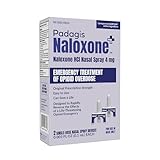
- QUICK & EFFECTIVE: Padagis Naloxone HCl Nasal Spray delivers a dose of naloxone, designed to provide quick and effective reversal of opioid overdose symptoms.
- SIMPLE TO USE: With a simple nasal spray mechanism, Padagis Naloxone HCI Nasal Spray is user-friendly, allowing for ease of use in emergency situations. Safe to use even when Opioids aren’t present.
- COMPACT & CONVENIENT: Each packet contains a nasal spray device and can be easily carried in pockets, purses, or emergency kits, ensuring life-saving intervention is always within reach.
- TRUSTED BY PROFESSIONALS: By equipping individuals with the means to respond to opioid overdoses, Padagis Naloxone HCI Nasal Spray empowers communities to help save lives, offering support in critical moments. Naloxone is trusted by first responders.
CDC/NIOSH workplace guidance, published from an underlying October 2018 NIOSH publication and presented on a CDC page updated September 26, 2024, recommends considering nasal spray for lay-provider safety and ease of administration. That is an operational recommendation for workplace response, not proof that nasal naloxone is clinically superior in every circumstance.
Nasal spray and injection at a glance
| Jobsite consideration | Naloxone nasal spray | Injectable naloxone |
|---|---|---|
| How it is delivered | Prefilled device delivers naloxone into the nose. | Responder delivers naloxone by injection into a muscle or under the skin. |
| Readiness | The NARCAN label describes the device as ready to use without assembly. | Requires the responder to perform an injection using the exact stocked product and its instructions. |
| Lay-responder practicality | CDC/NIOSH advises considering this formulation for lay-provider safety and ease of administration. | Practical when the site has responders trained and equipped for injection. |
| Training requirement | Train on the specific spray device, dose timing, repeat-dose recognition, and label directions. | Train on the specific injectable presentation, injection technique, sharps safety, dose timing, and label directions. |
| Scene hazards | Does not make a scene safe. Assess for powders, residues, sharps, and other hazards; use appropriate PPE. | Does not make a scene safe. The same hazard assessment and PPE requirements apply. |
| Stocking approach | Keep at least two doses available and place them where responders can reach them quickly. | Keep at least two doses available, with locations and quantities matched to the trained response team. |
| Emergency follow-through | Call 911, observe continuously, and use a new spray for each repeat dose when the label calls for another dose. | Call 911, observe continuously, and follow the stocked product’s repeat-dose instructions. |
Why nasal spray is usually the practical default
It reduces steps during a high-stress response
A prefilled nasal device is carried to the person, positioned in the nostril, and activated according to its label. There is no medication to draw up or injection site to prepare. Fewer handling steps can make it easier for a trained coworker to act while another person calls 911 and clears the area.
That simplicity matters when a suspected overdose is discovered in a noisy or congested work area, when the responder is wearing gloves, or when several people are coordinating around an injured worker. It does not remove the need for training: responders still need to recognize a likely opioid overdose, use the device correctly, and know when a second dose may be needed.
Free tools Windows power users keep installed
One-click scans. No signup required.
It is better suited to lay-provider programs
Most jobsites do not have a clinician present on every shift. CDC/NIOSH therefore points employers toward a formulation that non-medical responders can administer with less procedural complexity. The guidance’s wording is deliberately practical: “Consider the nasal spray formulation for its safety to lay providers and its ease of administration.”
This does not mean every site should discard injectable stock. If an employer already has a trained medical team, an occupational-health protocol, or a jurisdictional program built around injectable naloxone, injection may be appropriate. The formulation must match what responders practice and what the site can store, inspect, and replace.
When injectable naloxone can make sense
A trained responder is consistently available
Injection can be a workable choice when designated responders have current training for the exact injectable product and are expected to be present during the relevant shifts. Training should include the product’s route, dose, preparation, administration, sharps precautions, and disposal process. A general first-aid certificate is not a substitute for formulation-specific instruction.
Rank #2

- Original Prescription Strength: Two 4 mg single-dose devices. Available over the counter without a prescription. Works quickly, reversing an opioid overdose in minutes.
- A Staple For Medical Supplies & Equipment: NARCAN Nasal Spray is an addition to any emergency first aid kit. It's designed for opioid emergencies and can help save a life in case of an opioid overdose.
- Used by First Responders: Naloxone nasal spray is carried by first responders and commonly employed in emergency situations. NARCAN Nasal Spray is designed to rapidly reverse the effects of a life-threatening opioid overdose. Use as directed.
- Easy to Use: Easy to use nasal spray opioid overdose treatment. No nasal swabs or injections are needed. Safe to use even if opioids are not present.
- First Aid Kit Item: this naloxone overdose medicine can help complete your first aid kit. Designed to rapidly reverse the effects of opioid overdose No training required.
The site’s medical protocol already uses injection
Some employers coordinate response with an occupational nurse, physician, paramedic team, or other medical program. In that setting, injectable naloxone may fit the existing equipment and supervision model. The site should still maintain an independent emergency plan for times when that professional is off-site or delayed.
Do these 3 things before closing this tab:
1Fix the driver behind crashes, sound loss and screen glitches2Repair Windows errors before they cause bigger problems3Scan for outdated or missing drivers - takes under a minuteAccess and resupply favor the injectable product
Availability of naloxone products and the rules governing non-health-care administration vary by state. Employers should confirm that the selected product can be obtained, stored, and administered legally under the site’s jurisdiction and policy. A theoretically easier product is not practical if it cannot be kept in sufficient quantity or replaced promptly.
What every responder must do before giving naloxone
- Make the scene safe. Stop nearby work, control traffic and equipment, and look for electrical, fall, confined-space, chemical, or other construction hazards. Do not create a second casualty.
- Use appropriate PPE. CDC/NIOSH identifies disposable nitrile gloves as responder PPE. Put on gloves when available and use additional protection required by the site’s hazard assessment.
- Do not enter a contaminated scene. Visible drug powder, residue, needles, or an unknown substance can expose rescuers. If staff cannot safely control the hazard, keep people back and wait for professional responders.
- Check the person and activate emergency help. Assess responsiveness and breathing. Call 911 immediately for every suspected overdose, or direct a specific coworker to make the call and report the exact site access point.
- Retrieve the stocked formulation. Use only the product responders were trained to administer. Check the package and label; do not improvise a different route or device.
- Give naloxone according to the label. The nasal device is prefilled; injectable products require the trained injection procedure for that product.
- Provide first aid or CPR as trained. Follow the site’s emergency-response protocol and dispatcher instructions. Naloxone does not replace ventilation support, CPR when indicated, or paramedic care.
- Stay with the person and reassess. Watch breathing and responsiveness continuously. Be prepared for a repeat dose when the product label and the person’s condition call for it, and tell arriving professionals exactly what was given and when.
How repeat doses and observation work
The opioid involved may last longer than naloxone. A person who wakes up can become drowsy or stop breathing again, so responders must continue observation while waiting for emergency medical help. The FDA NARCAN label states that the product is “not a substitute for emergency medical care.”
For NARCAN Nasal Spray, the label directs responders to keep the person under observation and use a new spray for each repeat dose as necessary while awaiting emergency medical assistance. Do not reuse a device. For any other product, follow that product’s current label rather than applying NARCAN instructions automatically.
Record the time of each dose, the person’s response, any return of slowed breathing, and the time 911 was called. Give that information to emergency medical services. Do not let an apparently improved person leave the site or refuse evaluation without following the site’s medical and emergency policies.
The Tool Desk
Outbyte Driver Updater FREEFix the driver behind crashes, sound loss and screen glitchesFind Drivers →Outbyte PC Repair FREERepair Windows errors before they cause bigger problemsFix Now →How many doses and where to place them
CDC/NIOSH recommends stocking at least two doses. That minimum is important because one dose may not restore breathing sufficiently, the opioid effect may return, or more than one person may need help before emergency services arrive.
Rank #3

- Used by first responders
- Original prescription strength
- Safe and easy to use
- Designed to rapidly reverse the effects of an opioid emergency
A large or dispersed project may need more than two doses and more than one cabinet. Quantity and placement should reflect:
- Number of workers, shifts, subcontractors, and visitors who may be present.
- Site size, vertical levels, remote work areas, and travel time between the kit and a potential incident.
- Whether a kit remains accessible during nights, weekends, shutdowns, and security-controlled periods.
- Cellular or radio coverage and the time an ambulance may need to reach the site.
- How quickly the employer can replace an opened, damaged, or expired dose.
Keep the kit clearly identified and reachable without sending a responder through an unsafe area. Include the site’s address, gate or access instructions, and directions for emergency crews where those details are likely to save time.
Training program for a jobsite
Assign roles before an emergency
Put naloxone into the existing first-aid or emergency-response plan. Name who can administer it, who calls 911, who meets the ambulance, who controls the work area, and who documents and replenishes supplies. A backup roster is essential for multiple shifts and changing subcontractor crews.
Teach recognition, not just device operation
Training should cover signs of a possible opioid overdose, such as unresponsiveness and dangerously slow or absent breathing, while emphasizing that responders should follow dispatcher and medical direction. Workers should understand that naloxone is for suspected opioid effects and that an unknown collapse can have other causes requiring urgent care.
Practice the exact formulation stocked
Use the same nasal device or injectable presentation that will be in the cabinet. Include package opening, administration, disposal, repeat-dose decisions, and communication with 911. If the employer changes products, retrain responders rather than assuming the old technique transfers.
Include scene safety and PPE
Exercises should require responders to pause and identify hazards before approaching. Cover nitrile glove use, sharps awareness, visible powder or residue, contaminated clothing, and the point at which only professional responders should enter. The goal is to prevent a rescue attempt from exposing additional workers.
Rank #4

- Full prescription strength: Nasonex 24HR provides effective allergy relief with mometasone furoate (glucocorticoid) 50 mcg per spray; available over the counter, without a prescription
- 24-hour relief: This nasal spray temporarily relieves allergy symptoms including nasal congestion, runny nose, sneezing, and itchy nose caused by hay fever or other upper respiratory allergies
- Non-drowsy, scent-free mist: Multi-symptom allergy and congestion relief nasal spray without the drowsiness, so your day stays on track
- How Nasonex works: A trusted choice designed for targeted multi-symptom control; You may start to feel relief within 12 hours and full effect after several days of regular, once-a-day use
- Dosing: Adults 12+: 2 sprays per nostril once daily; Children 2-11: 1 spray per nostril once daily (adult supervision required); Do not use under age 2; See package insert for full directions
Integrate CPR and first aid
Naloxone training belongs alongside the site’s first-aid and CPR program. Responders need to know how to follow dispatcher instructions, support breathing, perform CPR when trained and indicated, and continue observation after the person responds.
Windows Errors? Fix Them Before They Spread
Repair common Windows errors and clear accumulated junk for a smoother, more stable PC - no reinstall needed.Free scan · no reinstallOutdated Drivers Are Slowing You Down
One free scan finds every outdated or missing driver and matches the right update for your exact hardware.Free scan · exact hardware matchStorage, inspection, and replacement
Follow the specific manufacturer’s instructions for storage conditions, expiration, package integrity, and administration. Assign a named person or role to inspect the kit on a schedule set by the employer’s medical director or safety program.
- Check that the package is sealed, readable, and undamaged.
- Track expiration dates and replace doses before they expire.
- Replace any dose used in training or an incident so the minimum stock remains available.
- Keep the kit where responders can reach it quickly but unauthorized people cannot casually remove it.
- Review locations whenever the project layout, shift pattern, or access route changes.
Do not transfer medication into unmarked containers or separate the device from its instructions. Keep the current product labeling with the dose so responders can verify the route and repeat-dose directions under stress.
Building a practical overdose-response kit
Naloxone is only one part of the response. A jobsite kit should support both the medical response and the safety of the responder.
- At least two naloxone doses, with additional stock where site size or access time warrants it.
- Disposable nitrile gloves and any other PPE required by the site’s hazard assessment.
- First-aid and CPR supplies already required by the site’s emergency plan.
- A written quick-reference card showing the site address, emergency access point, 911 instruction, responder roles, and the stocked product’s label steps.
- A means to document dose time, response, and replenishment without delaying emergency care.
Do not add equipment that workers have not been trained to use. A larger kit is not automatically a safer kit if it creates confusion or delays the call for professional help.
Recommended Free Tools
Historical workplace overdose figures: useful context, not a current rate
NIOSH workplace guidance cites Bureau of Labor Statistics data showing that deaths from nonmedical use of drugs or alcohol at work increased by at least 38% annually from 2013 through 2016. In 2016, 217 workplace overdose deaths represented 4.2% of occupational injury deaths, compared with 1.8% in 2013.
Best Value

- Ridiculously Fast Relief: Unblock your nose in seconds with Afrin No Drip Severe Congestion Nose Spray Decongestant, a fast-acting sinus spray providing sinus pressure and congestion relief with cooling menthol in a convenient twin pack nasal spray bottle
- Effective for Severe Nasal Congestion: This maximum strength nasal spray decongestant is perfect for relieving severe nasal congestion and sinus pressure caused by colds and allergies, offering quick and effective decongestants for adults and children 6 years and older
- No Drip Technology: Afrin's No Drip sinus medicine ensures the medicated mist stays where it's sprayed, providing effective nasal decongestion without the mess or discomfort of it dripping from your nose or down your throat
- Cooling Menthol Formula: Experience the soothing and cooling sensation of menthol while the powerful nasal decongestant works to constrict blood vessels in the nasal passages and reduce swelling to help you breathe easier
- 12-Hour Non-Drowsy Decongestion: Experience long-lasting relief for up to 12 hours without drowsiness, perfect for both day and night use to alleviate nasal congestion and provide sinus pressure relief
Those figures are historical, covering 2013–2016, and should not be presented as a current national workplace rate. They do show why employers may include opioid-overdose response in a broader first-aid and emergency-readiness program, even when no previous incident has occurred at a particular project.
Legal and access considerations
FDA public guidance describes three FDA-approved forms of naloxone and supports administration by non-health-care bystanders, but access and requirements vary by state. Before purchasing, confirm the rules that apply to the employer, the project location, designated responders, storage, documentation, and standing orders or other authorization requirements.
Coordinate with the site’s occupational-health professional, safety manager, insurer, and legal advisers as appropriate. A written policy should explain who may administer naloxone, how training is recorded, how privacy is protected, and how the event is reported under the employer’s incident procedures.
Decision framework for choosing the formulation
- Identify the responder population. If response depends mainly on trained coworkers, start with nasal spray as the practical default recommended by CDC/NIOSH.
- Match training to the product. Choose injection only when trained responders will reliably be present and can perform the exact injection procedure safely.
- Map the site. Determine how long it takes to reach each work area and where kits can remain accessible on every shift.
- Plan for the second dose. Stock at least two doses and set a resupply process for use, damage, or expiration.
- Test the emergency chain. Verify that workers can call 911, give the correct site address, control hazards, retrieve the kit, and meet responders at the gate.
- Review after drills or incidents. Correct delays in access, unclear roles, inadequate PPE, or product-specific training gaps.
Common mistakes and how to prevent them
Waiting to call 911
Naloxone can produce a visible response, but that response may be temporary. Make the emergency call immediately and keep professional help moving toward the site.
Keeping only one dose
One dose may be insufficient or may be damaged, expired, or already in use. Maintain at least two doses and set a replacement trigger.
Mixing formulations in training
Showing one device while stocking another creates avoidable errors. Train on the exact product and update instruction cards when the product changes.
Approaching an unsafe scene
Powder, residue, needles, and other hazards can injure or expose responders. Establish a clear stop point and wait for professionals when staff cannot control the hazard.
What’s actually slowing this PC down?
Pick the symptom - the matching free tool is one click away.
Assuming a recovered person is safe
Continue observation and follow the product label because opioid effects can outlast naloxone. Give emergency clinicians the dose and timing information they need.
Bottom-line choice for most jobsites
For a construction employer whose overdose response will be carried out by trained coworkers, stock an approved naloxone nasal spray and build the program around rapid access, at least two doses, formulation-specific training, PPE, scene control, and an immediate 911 call. Choose injectable naloxone when the site’s trained medical responders and procedures genuinely support injection. In either case, the quality of the response program—not the package alone—determines whether the medication is available and used safely when minutes matter.
Quick Recap
Product prices and availability are accurate as of the date/time indicated and are subject to change. Any price and availability information displayed on Amazon at the time of purchase will apply.

