What’s actually slowing this PC down?
Pick the symptom - the matching free tool is one click away.
Choose lumber in this order: define the end use, identify the grading system, set the moisture requirement, and confirm whether quoted dimensions are nominal, rough, or surfaced. Structural softwood for framing or load-bearing work should carry an accredited grade stamp. Hardwood for furniture, cabinetry, and trim is usually sold under appearance grades based on the clear pieces that can be cut from each board. For U.S. softwood dimension lumber under nominal 5 inches thick, “dry” means 19% moisture content or less under the American Softwood Lumber Standard.
Before you accept a quote, put the grade, species or species group, moisture target and verification method, surfacing condition, dimensions, tolerances, and price basis in writing. Those details prevent a board that looks right in the yard from being the wrong material for the job.
As an Amazon Associate I earn from qualifying purchases.
Start with the job, not the board
Lumber grade is not a universal quality score. It describes how a piece is expected to perform under a particular grading system. A structural softwood grade communicates design properties used for engineering, while a hardwood appearance grade communicates the proportion of usable clear cuttings available from a board. A high appearance grade is not automatically a structural grade, and a structural grade is not automatically the best choice for visible furniture parts.
Quick wins for a faster PC:
Clear out junk files and repair common Windows errorsFree Scan →Fix the driver behind crashes, sound loss and screen glitchesFind Drivers →Repair Windows errors before they cause bigger problemsFix Now →Write down the application before comparing products:
#1 Best Overall
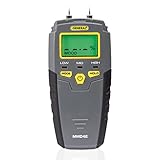
- HUMIDITY SENSOR: Our handy meter tool can quickly determine what level of remediation is needed to keep your family safe from black mold. High levels of dampness that go untreated are the leading cause of harmful fungus growth in the home.
- WATER LEAK DETECTOR: Finding the moisture content in your wood or drywall is the first step in early prevention. Continuously check and test suspicious water stains around the house so you can determine whether the area is wet or has already dried. Low, medium and high moisture tones and on-screen icons, Reading HOLD button
- MOISTURE READER: The mold test features large 0.3" high digits in a backlit LCD for quick and easy detecting. Our mildew scanner includes extra 8mm stainless steel pins, a protective cap that doubles as a calibration checker, and a “9V” battery.
- MOLD TESTER: For an accurate test read, stick the stainless steel pins into the surface of what you're measuring. The gauge has a broad range of 5 - 50% for wood and 1.5 - 33% for building materials such as concrete and drywall.
- GENERAL TOOLS: We're a recognized leader in designing and developing specialized precision tools dedicated to delivering exceptional customer service. We encourage artisans and DIYers to work smarter, measure better, and repair more productively.
- Framing or load-bearing work: specify the structural species or species group, grade, dimensions, moisture condition, and required grade mark.
- Cabinetry, furniture, doors, and trim: specify the hardwood species, appearance grade, clear-cutting expectations, surface condition, and whether widths and lengths may be random.
- Flooring, gluing, or tightly fitted joinery: treat moisture content and the measurement method as purchase requirements, not informal preferences.
- Visual work: state which faces and edges must be clear, how much color or figure variation is acceptable, and whether knots, wane, or mineral streaks are allowed.
Once the use is clear, compare suppliers on six facts: allowable design properties or clear-cutting recovery, species, moisture condition, rough or surfaced state, available dimensions and tolerances, and the basis on which the material is priced.
Which grading system applies?
Structural softwood grades
Structural softwood lumber is sorted into stress grades using visual or machine criteria related to engineering design properties. Knots, slope of grain, checks, splits, density and other characteristics can affect the strength of a piece. Two boards of the same species and nominal size can therefore have materially different design capacities. The grade name and grade mark are the practical way to match a board to a structural specification; appearance alone is not enough.
For framing, beams, joists, rafters, or other load-bearing members, obtain lumber from a grading agency recognized for the applicable standard. Check that the stamp is legible on the piece or bundle and that it agrees with the plans or the engineer’s specification. If the project calls for a particular grade, do not substitute a visually similar board without approval.
Hardwood appearance grades
Native American hardwood lumber follows a different logic. Under National Hardwood Lumber Association rules, basic grades depend on the proportion of clear pieces that can be cut from a board. The grade is therefore a recovery expectation: it tells you how much usable, defect-free material can be obtained, rather than promising a single clear rectangle or a uniform appearance.
Hardwood is commonly sold in random widths and lengths. If your project needs repeated 6-inch-wide parts, long door stiles, or a particular finished thickness, agree on the selection before ordering. A nominal grade can meet the rule while still supplying boards that are inconvenient for your cut list. Ask whether the quote is for random stock, a specified-width selection, or a custom sort.
How to read a structural lumber grade stamp
A typical dimension-lumber grade stamp identifies several facts at once. The USDA Wood Handbook describes the usual elements as the supervising grading agency, species or species combination, mill number or brand, grade requirements, and target moisture condition. Use every element to verify that the delivery matches the order.
Rank #2
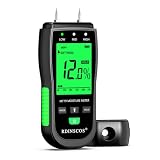
- FIND HIDDEN WALL MOISTURE EARLY — Check suspicious drywall and building surfaces after a leak, water stain, or other moisture concern. Detect abnormal moisture before a small issue develops into more extensive damage and costly repairs
- CHECK BEFORE YOU REPAIR — Don't rely on a wall looking or feeling dry. Use the moisture meter to check questionable areas before painting, repairing, or covering the surface, helping you make decisions based on actual moisture readings.
- CHECK FIREWOOD BEFORE YOU BURN — Test firewood before placing it in your fireplace or wood stove. Knowing the moisture level of your firewood helps you choose wood that is ready for burning and avoid relying on appearance alone.
- PIN-TYPE TESTING FOR DIRECT MEASUREMENTS — The contact pins penetrate the material to measure moisture inside wood and building materials. This makes it useful for checking areas where surface conditions may not tell the whole story.
- ONE TOOL FOR TWO IMPORTANT HOME CHECKS — Keep it ready for two practical jobs: checking walls for hidden moisture and checking firewood before burning. A simple way to make informed decisions before a moisture problem becomes expensive or wood goes into the fireplace.
- Grading agency: confirms which organization supervised application of the grading rules.
- Species or species group: matters because design properties differ among species and combinations.
- Mill number or brand: identifies the producing mill or registered mark.
- Grade: communicates the structural category required for design use.
- Moisture condition or target: indicates whether the piece was produced for a dry condition or another specified condition.
Do not treat a stamp as proof that every board is currently at the moisture level you need. It documents the grade and the marked condition; delivered boards can gain or lose moisture during storage and transport. When moisture is critical, combine the stamp check with a delivery measurement and the supplier’s documentation.
What moisture content should lumber have?
The 19% dry-lumber threshold
For U.S. softwood dimension lumber less than nominal 5 inches thick, the American Softwood Lumber Standard defines dry lumber as material at 19% moisture content or less. Lumber above the applicable dry condition is commonly described as green. The 19% figure is a standard threshold for this class of softwood; it is not a universal target for every species, thickness, product, climate, or interior use.
Moisture matters because wood changes dimension as it gains or loses water. Movement can show up as gaps, cupping, twisting, open joints, cracked coatings, or fastener problems. The risk is greatest when material is installed in a much drier or wetter environment than the one in which it was stored. Flooring, cabinetry, glued panels, stair parts, and close-tolerance joinery deserve an explicit moisture requirement.
What kiln-dried means
Kiln-dried lumber has been seasoned in a chamber to a predetermined moisture content. The phrase describes the drying process, not a guarantee that every board will arrive at one identical reading. A board can reabsorb moisture after leaving the kiln, especially if it is stored uncovered or exposed to a damp site.
Put the requirement in the order
The USDA Forest Products Laboratory states: “If the moisture requirement is critical, the level of moisture content and the method by which it will be achieved must be specified.” Apply that rule literally. Write both the target and the verification method into the purchase order or supply agreement.
Crashes, No Sound, or Screen Glitches?
Random freezes, missing sound and display glitches usually trace back to one bad driver. Find and replace yours safely.Free scan · under a minuteWindows Errors? Fix Them Before They Spread
Repair common Windows errors and clear accumulated junk for a smoother, more stable PC - no reinstall needed.Free scan · no reinstall- State the maximum or target moisture content and identify the product to which it applies.
- State whether the requirement is demonstrated by a supplier certificate, kiln schedule, delivery measurement, or a combination.
- Identify when readings are taken: at the mill, on delivery, after acclimation, or at installation.
- State what happens if material exceeds the limit, such as segregation, replacement, or additional acclimation time.
A wood moisture meter is useful for checking delivered boards against the written requirement. Use it as a field check, not as a replacement for documented grading or a kiln schedule. Readings can vary with species, temperature, surface condition, and measurement depth, so follow the meter manufacturer’s method and sample multiple boards rather than relying on one reading.
Rank #3
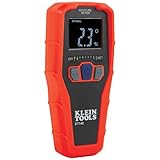
- WATER LEAK DETECTOR detects relative moisture content from leaks and flooding
- PINLESS MOISTURE METER measures relative moisture content in building materials
- NONDESRUCTIVE DETECTION up to 3/4-Inch deep using Electromagnetic field (EMF) technology
- USE ON DRYWALL, MASONRY, HARDWOOD, AND SOFTWOOD; calibrated for these materials only
- REVERSE-CONTRAST DISPLAY for easy viewing of reading and nine LED bars to indicate moisture range
Are 2×4 dimensions actually 2 by 4?
Usually, no. A designation such as 2×4 is a trade or nominal size. The actual dimensions depend on whether the lumber is rough-sawn or surfaced and on the supplier’s permitted tolerances. Ask for actual thickness and width whenever a fit, reveal, housing, or machining allowance is important.
Rough versus surfaced lumber
Rough-sawn lumber retains the saw-textured surface and is sold near its stated rough thickness. Surfacing removes material to create a smoother, more uniform face. Common surfacing descriptions include S4S, surfaced on four sides, and S1S1E, surfaced on one side and one edge. The code affects the dimensions you receive and the amount of material left for later machining.
AHEC’s guidance gives these deductions for surfaced hardwood:
Do these 3 things before closing this tab:
1Repair Windows errors before they cause bigger problems2Fix the driver behind crashes, sound loss and screen glitches3Clear out junk files and repair common Windows errors| Nominal thickness range | Surfacing deduction |
|---|---|
| 1 1/2 inches and less | Subtract 3/16 inch from nominal thickness |
| 1 3/4 inches and thicker | Subtract 1/4 inch from nominal thickness |
These are thickness deductions described by AHEC for the cited hardwood sizing guidance. Confirm the supplier’s own surfacing code and tolerances before treating them as a finished-dimension guarantee.
Hardwood rough-thickness conventions
AHEC lists these standard rough hardwood thicknesses:
| Trade thickness | Metric equivalent |
|---|---|
| 3/4 inch | 19.0 mm |
| 4/4 | 25.4 mm |
| 5/4 | 31.8 mm |
| 6/4 | 38.1 mm |
| 8/4 | 50.8 mm |
Because these are rough-thickness conventions, the final thickness after surfacing will be smaller. If a project requires a finished 3/4-inch panel or a precise 1-inch component, order enough rough stock to leave the required machining allowance and state the finished dimension separately.
Rank #4

- 🌲【Accurate and fast measurements reveal hidden water leaks】: It has 2 high-precision pins that can penetrate the surface to be tested and quickly measure moisture content to estimate potential moisture increase throughout the home. COCZOW moisture meter is the ideal tool for measuring moisture.
- 🌲【Professional Wood Moisture Meter】: 6 calibrated scales. Our moisture meter is a great tool for manufacturers, floorers, inspectors and wood suppliers to quickly and easily measure moisture content (% Mc). You can quickly determine if the moisture content is low (5-12%), medium (12-17%) or high (17-60%). Checking moisture content prevents wood from cracking and warping.
- 🌲【Widely Used】: PM6811A moisture meter is ideal for carpentry, building construction, agricultural restoration and floor laying. Measure moisture content of wood products such as hardwood floors, cabinets, furniture, lumber, lath, beams, plywood, panels, composite boards, window frames, forestry wood, coils, building materials, etc.
- 🌲【User-friendly】: With LCD backlight, the backlight color is divided into three types of green, yellow and red, or display the moisture content of different measurement types. Hold function, maximum/minimum moisture measurement function and 5-minute automatic shutdown function (no power supply required).
- 🌲【Why choose COCZOW Wood Moisture Meter】: LED display function, large measuring range (wood: 2.0%-75.0%. Building materials: 1.5-30%), durable stainless steel needle, heat insulation, light weight and easy to carry. Get professional and accurate results with Peakmeter Wood Moisture Tester.
Widths, lengths, and tolerances
Ask the seller to identify whether widths and lengths are random or specified. For hardwood, random dimensions are normal under NHLA-style trading. For structural softwood, confirm the listed nominal size, actual size, permissible variation, and whether the material is supplied in fixed lengths or a length mix. A quote that says “2×4” without the surfacing condition and tolerance is incomplete for a detailed takeoff.
Free tools Windows power users keep installed
One-click scans. No signup required.
How to calculate board feet
Hardwood quantity and pricing are often expressed in board feet. One board foot is a piece 1 foot long, 1 foot wide, and 1 inch thick. Use this formula:
Board feet = width (inches) × length (feet) × thickness (inches) ÷ 12.
Worked examples
- A board 8 inches wide, 10 feet long, and 4/4 (1 inch) thick: 8 × 10 × 1 ÷ 12 = 6.67 board feet.
- A board 6 inches wide, 8 feet long, and 8/4 (2 inches) thick: 6 × 8 × 2 ÷ 12 = 8 board feet.
- A board 12 inches wide, 6 feet long, and 5/4 (1.25 inches) thick: 12 × 6 × 1.25 ÷ 12 = 7.5 board feet.
For rough hardwood grading, AHEC describes a surface-measure formula of width in inches × length in feet ÷ 12, rounded to the nearest whole number. Board feet then equal surface measure multiplied by thickness. Ask which tally method the seller uses, because the grading calculation and the invoice calculation may not be identical.
Green, gross, and net tally
Kiln drying can change the quantity basis. AHEC notes that green or gross tally can result in approximately 7% fewer board feet received after kiln drying because of shrinkage. Before comparing prices, ask whether the quote is based on net tally after drying or green/gross tally before drying. Two apparently different prices can represent the same material once the tally basis is normalized.
Compare lumber options on the facts that change performance
| Comparison point | Questions to put in the quote |
|---|---|
| End-use grade | What structural grade or hardwood appearance grade applies, and what performance or clear-cutting expectation does it represent? |
| Species | Which species or species group is supplied, and may the mill substitute within the group? |
| Moisture | What target or maximum applies, how is it achieved, and how is it verified? |
| Surface condition | Is the stock rough, S4S, S1S1E, or another surfacing condition? |
| Dimensions | Are dimensions nominal or actual, and what width, length, thickness, and tolerance apply? |
| Quantity basis | Is the price per piece, linear foot, or board foot? For kiln-dried hardwood, is tally green/gross or net? |
Use this comparison before looking at unit price. A cheaper board with a wetter condition, random short lengths, or a larger surfacing allowance may cost more after sorting, machining, acclimation, and waste.
Best Value

- Easy to Read with Large LCD Screen: This wood moisture meter is easy to get an accurate reading from the surface of materials and displays accurate moisture readings on the 2.25" big screen. Use this handheld meter to check the moisture content in firewood or drywall, it can stand up on the table, the moisture content is displayed with a bar graph and percentage (_%RH) on the screen. Date Hold and Max/Min function is used to freezes readings, useful for writing down data
- Tricolor Backlight Display, Easy to Use: TopTes Moisture Meter TS-630 features an HD tri-color backlight to easily know if the wood/wall humidity is Dry, Moist, or Wet. Green backlight for Low moisture, orange backlight for middle moisture, and red moisture for high moisture. After selecting the mode, and putting pins into the firewood, easy and quick to get a visible alert from the clear screen
- Seven Calibration Scales, Two Material Mode: It is designed with built-in characteristic parameters of 7 calibration scales for wood and building material, ranging from 0.0% to 57%. This humidity meter is perfect for woodworking, water damage restoration, building construction, and home renovation. Easily Check and test suspicious water leaks around the wall/floor so you can quickly determine what level of remediation is needed
- Pin Type & Battery Operated: TopTes TS-630 moisture meter is a pin-type moisture meter and operates on batteries. With a high precision multi-material sensor, DON’T need calibration. It’ll support an accurate reading after inserting the stainless steel pins into the surface of the wood or building materials. It will auto shut off after 10 minutes of non-use to help save energy. A low-battery indicator will appear on the screen when the battery is running out
- What's in the Box: One TS-630 Moisture Meter, three AAA Batteries, one User Manual, one Carry Pouch, one Pair of Test Pins, one Mini Wrench
A practical lumber-buying procedure
- Define the cut list and service. Identify load-bearing members, visible parts, glued parts, and the environment in which the lumber will be installed.
- Choose the grading rule. Use an accredited structural grade for load-bearing softwood. Use the applicable NHLA-style appearance grade and clear-cutting expectation for native American hardwood.
- Name the species or species group. Do not rely on a color description or a generic term if design values or appearance depend on species.
- Set moisture terms. State the moisture target, the method by which it will be achieved, and how delivery will be checked. For softwood dimension lumber under nominal 5 inches thick, 19% or less is the standard dry threshold.
- Set the size terms. Specify rough or surfaced stock, surfacing code, nominal and actual dimensions, and allowed width and length tolerances.
- Set the selection terms. For hardwood, state whether random widths and lengths are acceptable or whether the supplier must select particular sizes and lengths.
- Set the price basis. Require the board-foot formula and tally basis in the quote, including whether kiln-dried material is priced on net or green/gross tally.
- Review documentation before delivery. Request the grade information, species identification, moisture documentation, and any mill or supplier certificates promised in the order.
- Inspect on arrival. Compare the grade marks, dimensions, moisture readings, quantity, and visible condition with the written order before cutting or installing.
- Quarantine exceptions. Separate boards with decay, severe warp, damage, or an illegible or mismatched grade mark until the supplier or designer resolves them.
Delivery inspection checklist
- Confirm the species or species group against the order.
- For structural material, find the accredited grade stamp and check the agency, mill mark, grade, and moisture condition.
- Measure a sample of actual thickness and width; check whether surfaces are rough or machined.
- Check lengths and widths against the stated tolerances and identify random stock that does not fit the cut list.
- Use a moisture meter on a representative sample when moisture is specified; record locations and readings.
- Look for decay, insect damage, deep checks, splits, excessive bow, crook, cup, twist, wane, crushed ends, and handling damage.
- For appearance lumber, evaluate the clear areas you can actually cut, not just the best-looking face of the board.
- Reconcile the received quantity with the invoiced basis, especially when board feet and kiln-drying shrinkage are involved.
Common buying mistakes and fixes
Choosing by appearance for a structural job
A straight, knot-free-looking board is not a substitute for the specified stress grade. Fix the problem by requiring the appropriate grade mark and checking the species and grade against the design documents before installation.
Assuming “kiln dried” is a current moisture reading
Kiln drying describes how the lumber was seasoned. It does not eliminate moisture gain during storage. Put the target and measurement method in the order, then sample the delivered stock.
Ordering a nominal size as a finished size
Nominal dimensions are trade labels. Surface deductions, machining, and tolerances determine the actual piece. Fix this by stating rough or surfaced condition and the required finished dimensions separately.
The Tool Desk
Outbyte PC Repair FREERepair Windows errors before they cause bigger problemsFix Now →Outbyte Driver Updater FREEFix the driver behind crashes, sound loss and screen glitchesFind Drivers →Comparing hardwood prices without the tally basis
A green or gross tally can shrink by approximately 7% after kiln drying, according to AHEC. Normalize quotes by asking whether each price uses net tally after drying or green/gross tally before drying.
Assuming an appearance grade guarantees usable project dimensions
NHLA-style grades are based on clear-cutting recovery and commonly use random widths and lengths. Fix the risk by submitting the cut list and agreeing on specified dimensions or a selection before the order is released.
Installing before resolving exceptions
Once a board is cut, evidence of the original size, defect, or mismatch can be lost. Hold questionable material aside, document the issue, and obtain a disposition before machining or installation.
Putting the specifications into a purchase order
A useful order description combines the variables instead of using a shorthand such as “dry 2×4” or “clear hardwood.” For example, a structural line item should identify the species or species group, accredited structural grade, nominal and actual size requirements, length range, moisture condition, grade-mark requirement, and inspection terms. A hardwood line item should identify species, NHLA-style appearance grade, rough thickness or finished thickness, random or specified widths and lengths, surfacing code, moisture target, board-foot tally, and whether the tally is net or green/gross.
Recommended Free Tools
Have the supplier acknowledge substitutions in writing. A different species group, surfacing condition, or tally basis can change design properties, recovery, dimensions, and installed cost even when the nominal product name looks similar.
Quick Recap
Key decisions at a glance
- Use structural stress grades for structural softwood; use appearance grades and clear-cutting expectations for hardwood visual work.
- For U.S. softwood dimension lumber under nominal 5 inches thick, dry means 19% moisture content or less under the American Softwood Lumber Standard.
- When moisture is critical, specify both the required level and how it will be achieved or measured.
- Treat nominal dimensions as trade sizes until rough or surfaced condition and actual tolerances are confirmed.
- Use the board-foot formula for hardwood and ask whether the seller uses net or green/gross tally after kiln drying.
- Read the grade stamp and inspect the delivered boards before cutting or installation.
Product prices and availability are accurate as of the date/time indicated and are subject to change. Any price and availability information displayed on Amazon at the time of purchase will apply.

