Crashes, No Sound, or Screen Glitches?
Random freezes, missing sound and display glitches usually trace back to one bad driver. Find and replace yours safely.Free scan · under a minuteWindows Errors? Fix Them Before They Spread
Repair common Windows errors and clear accumulated junk for a smoother, more stable PC - no reinstall needed.Free scan · no reinstallChoose the cleanroom class from the process risk, not from a preferred number. In the FDA’s aseptic-processing examples, ISO 5 protects the critical exposed-product zone, ISO 7 forms the adjacent controlled area, and ISO 8 supports less-critical work such as equipment cleaning. Those are examples for sterile-drug operations, not a universal zoning rule. Your required class depends on where product or product-contact surfaces are exposed, the occupancy state you must qualify, airflow and pressure design, and the applicable regulatory and microbiological controls.
What ISO 5, ISO 7 and ISO 8 actually classify
ISO 14644-1:2015 defines cleanroom classification by the concentration of airborne particles at specified sampling locations. It uses light-scattering airborne particle counters and addresses threshold particle sizes from 0.1 micrometres to 5 micrometres. The classification describes airborne particle concentration; it does not tell you whether particles are viable organisms, chemically hazardous material, radioactive material or another dangerous contaminant.
As an Amazon Associate I earn from qualifying purchases.
The official ISO description says the standard “specifies the classification of air cleanliness in terms of concentration of airborne particles in cleanrooms and clean zones; and separative devices as defined in ISO 14644-7.” The 2015 edition was confirmed in 2021, with review activity recorded in 2026. Use the edition adopted by your jurisdiction and quality system rather than an unverified secondary table.
ISO 5: the tightest control of these three
ISO 5 is used where a critical product, container, closure or product-contact surface is exposed and contamination must be minimized. In an aseptic line, this is typically the critical zone around filling, open transfers or other exposed operations. ISO 5 may be provided by a unidirectional-airflow workstation, isolator, restricted-access barrier system or another engineered enclosure; the equipment choice does not change the need to demonstrate the required classification and process controls.
#1 Best Overall

- Industry-Leading Accuracy & ISO Compliance: Engineered for high-stakes environments, the PMD331 meets ISO 21501-4 standards. Every unit undergoes rigorous calibration to ensure reliable, repeatable data. Perfect for ISO Class cleanroom certification, surgical suites, and pharmaceutical manufacturing where precision is non-negotiable.
- Simultaneous 7-Channel Monitoring: Gain a comprehensive view of air quality with one-touch detection. The PMD331 monitors seven particle sizes simultaneously (0.3µm, 0.5µm, 0.7µm, 1.0µm, 2.5µm, 5.0µm, and 10µm). Utilizing advanced Mie-scattering technology and a powerful laser source, it provides instant insights into both fine allergens and coarse industrial dust.
- Industrial-Grade Components for Longevity: Built to withstand demanding professional use, the internal system features a high-performance German Furgut vacuum pump for stable flow rates and genuine Parker filters. These premium components ensure long-term sensor stability and minimize maintenance downtime in rugged environmental monitoring tasks.
- Massive Data Storage & Streamlined Reporting: Streamline your facility audits with massive onboard storage for over 2,000,000 records. Effortlessly export detailed logs via USB for in-depth desktop analysis or utilize the RS-485 Modbus interface for versatile data communication. The 4-inch high-resolution display provides real-time graphing, enabling instant on-site trend analysis.
- Complete Professional Field Kit: Ready for deployment the moment it arrives. This all-in-one solution includes a heavy-duty protective carrying case, calibration certificate, Parker filter tube, USB drive, and AC adapter.
ISO 7: the surrounding controlled environment
ISO 7 commonly surrounds an ISO 5 critical zone in the FDA aseptic-processing examples. It protects material and personnel flows before they enter the critical area and limits the contamination challenge reaching the ISO 5 zone. The correct design still depends on door arrangements, transfers, interventions, pressure direction and the process risk assessment.
ISO 8: support for less-critical activities
ISO 8 is the least stringent of these three classes. In the cited FDA context, it is suitable for supporting activities such as equipment cleaning and other work where product or product-contact surfaces are not critically exposed. ISO 8 is not automatically adequate for every warehouse, preparation room or nonsterile operation: the required class follows the contamination risk and the adopted standard.
How the three classes compare
The class number alone is not a complete facility specification. A defensible comparison includes the process, occupancy state, airflow, pressure cascade, monitoring and regulatory evidence.
What’s actually slowing this PC down?
Pick the symptom - the matching free tool is one click away.
Rank #2
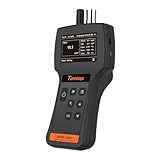
- Advanced Monitoring Capabilities: Offers precise measurement of various particulate sizes 0.3µm, 0.5µm, 1.0µm and key air quality indices like PM2.5, PM10, and TSP, ensuring reliable and accurate air quality assessment.
- Comprehensive Sensor Suite: Integrates temperature and humidity sensors alongside particulate monitoring for a holistic view of environmental conditions.
- User-Friendly Interface: Features a large, clear display and straightforward button controls, making operation intuitive for users of all levels.
- Extended Battery Life: Equipped with a 3500mAh battery for continuous operation exceeding 4 hours, perfect for extended field use or overnight monitoring sessions.
- Robust Data Management: Includes a 32GB internal storage for extensive data logging and easy USB data transfer.
| Decision factor | ISO 5 | ISO 7 | ISO 8 |
|---|---|---|---|
| Typical role in FDA aseptic example | Critical zone where exposed product or product-contact surfaces are protected | Adjacent or surrounding controlled area | Less-critical support work, including equipment cleaning |
| Process criticality | Highest; contamination can directly affect exposed sterile product | High; contamination control for materials, personnel and the critical zone | Lower relative criticality; support operations with limited direct exposure |
| Particle classification basis | ISO 14644-1 particle concentration at designated sizes and locations | ISO 14644-1 particle concentration at designated sizes and locations | ISO 14644-1 particle concentration at designated sizes and locations |
| Exact concentration limits | Obtain from the licensed ISO 14644-1 edition adopted for your project; not stated in the public preview | Obtain from the licensed adopted edition; not stated in the public preview | Obtain from the licensed adopted edition; not stated in the public preview |
| Airflow demand | Normally higher than ISO 7 and ISO 8; design must demonstrate protection of the critical zone | Normally higher than ISO 8; design must protect flows into the critical area | In the cited FDA context, supporting rooms commonly use at least 20 air changes per hour |
| Pressure strategy | Usually the cleanest, positively protected location where product protection is required | Positive cascade toward less-controlled spaces, subject to process and containment needs | Often the outer support level in a positive cascade, unless containment requires another direction |
| Qualification burden | Highest: particles plus airflow visualization, HEPA integrity, recovery, pressure and microbiological evidence where applicable | Substantial: room classification and supporting environmental controls | Still requires classification and documented controls; fewer critical interventions do not eliminate qualification |
| Energy and capital implications | Usually greatest because of tighter filtration, airflow and monitoring requirements | Intermediate | Usually lower, but actual cost depends on room size, heat load, pressure design and operating schedule |
The table’s air-change and cost observations are design context, not universal ISO requirements. Do not substitute an air-change target for a demonstrated classification and contamination-control strategy.
A practical workflow for selecting the class
- Map exposed surfaces. Draw the process from receipt through cleaning, preparation, filling, closing, inspection and transfer. Mark every point where product, container, closure or product-contact equipment is open to room air. Include interventions, sampling and line clearance rather than only the normal production sequence.
- Define the critical zone. Identify the smallest area that must receive the tightest control during each exposure. Assign ISO 5 where the risk assessment shows that exposed sterile product or a product-contact surface requires that level. Do not classify an entire suite as ISO 5 merely because one operation needs it.
- Build protective surrounding zones. Use ISO 7 or another justified class around the critical zone to control personnel and material movement. Add lower-class support rooms, such as ISO 8, where activities are less critical and surfaces are protected or closed. Confirm that gowning, airlocks, pass-throughs and waste routes do not defeat the intended cascade.
- Choose the occupancy state. State whether classification will be demonstrated as-built, at-rest or in-operation. A room can meet particle limits when empty and fail when operators, equipment and materials are present. The qualification protocol must use the state required by the adopted standard, regulator and process.
- Specify particle sizes and sampling. Use the particle sizes, sample locations, sample volumes, acceptance criteria and statistical rules in the adopted ISO 14644-1 edition and applicable regulatory guidance. Record the room layout and the rationale for each location.
- Design airflow and pressure together. Verify that supply, return and exhaust arrangements deliver the intended direction of clean air and prevent short-circuiting. Set pressure differentials for the process risk; a sterile-product cascade may need positive pressure, while hazardous containment may require negative pressure.
- Qualify the room and equipment. Add airflow visualization, airflow-volume or velocity checks as applicable, HEPA filter integrity and leak testing, recovery testing, pressure-differential verification, temperature and humidity checks, and environmental monitoring. Particle counts alone cannot establish control.
- Document the rationale and lifecycle. Put the class assignment, occupancy state, limits, monitoring plan, deviation process and requalification triggers in the contamination-control strategy. Revisit the assessment after layout changes, HVAC modifications, new equipment, process changes or adverse environmental trends.
What FDA’s aseptic example does—and does not—mean
FDA’s cited aseptic-processing guidance illustrates a common arrangement: ISO 5 for the critical zone, ISO 7 for the adjacent area and ISO 8 for less-critical support rooms. It also gives a concrete pressure example: adjacent rooms of differing classification should have a substantial positive pressure differential, such as 10–15 pascals with doors closed, with continuous monitoring and investigation of deviations.
The same guidance says Class 100,000 (ISO 8) supporting rooms commonly use airflow sufficient to achieve at least 20 air changes per hour, while significantly higher rates are normally needed for Class 10,000 and Class 100 areas. These figures describe the FDA’s guidance context; they are not universal ISO minimums. Room geometry, heat loads, equipment, personnel, recovery requirements and the contamination-control strategy can require a different design.
Rank #3
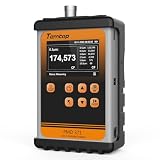
- Dual-Detection Precision Technology: Uniquely engineered to measure both particle concentration (PM1, PM2.5, PM4, PM10, TSP) and particle count (0.3μm, 0.5μm, 0.7μm, 1μm, 2.5μm, 5μm, 10μm), providing the most comprehensive particulate analysis for cleanrooms, laboratories, and sensitive industrial settings
- Professional-Grade Precision Engineering: Integrates advanced Mie-scattering principle with Temtop professional-grade PM sensor, German Furgut pump (2.83L/min flow rate), ensuring measurement accuracy compliant with ISO 21501 and NIST standards
- Advanced Data Management: Features 8GB internal storage capacity (2,000,000+ data sets), multiple data transfer options including USB and RS-232 Modbus, with a large 4-inch display offering customizable particle view modes
- Robust Industrial Design: Full metal construction with superior anti-interference capabilities, extended 8-hour battery life, designed for demanding professional environments requiring precise particulate monitoring
- Comprehensive Professional Support: 5-year manufacturer warranty, 2-year free calibration service, complete accessory package (carrying case, calibration certificates, filter tubes, conversion cables), and 24/7 global customer support
Do not copy this three-level arrangement into a facility with a different product, containment concern or jurisdiction. For example, a process involving potent powders may need a pressure direction intended to contain hazards rather than a simple positive cascade. The class selection must reconcile product protection, personnel protection and regulatory expectations.
How classification is measured
Use a calibrated airborne-particle counter
ISO 14644-1 names the light-scattering airborne particle counter as the basis for determining concentration at designated sample locations. A cleanroom particle counter is therefore the direct instrument for the classification measurement workflow. Select one whose particle-size channels, flow rate, counting efficiency, calibration status, data integrity and reporting functions match the adopted standard and your quality system.
Plan sampling so that probes represent the room’s risk points: near exposed operations, returns, doors, transfer points and locations identified by airflow studies. The instrument result is meaningful only when sample volume, probe placement, room state, instrument calibration and data review are controlled.
Rank #4

- PORTABLE PARTICLE COUNTER. Adopts the Mie-scattering principle to simultaneously detect 7 different particles sizes, including 0.3μm, 0.5μm, 1μm, 2.5μm, 5μm, and 10μm. Counts up to 2,000,000 particles/ft³, meets requirements for HVAC, dust-free workshop, filter testing, IAQ investigation, air quality monitoring and etc
- RELIABLE RESULTS. Adopts 2.83L/min (1 CFM) pump suction laser particle sensor module, a more stable flow rate brings a more accurate measurement of particulate matters
- CLEAR DISPLAY AND DATA INTEGRATION. Large display for viewing particle data, you can choose a specific channel as the main view. Stores up to 5000 records and is easy to export via USB flash drive
- ISO CERTIFIED: Every CEM DT-9881 comes with a calibration certificate for CEM's own PCS system. Come with the product
- WHAT YOU GET. Particle counter, carrying case, charger, RS-232 converter cable, filter tube, flash drive, RTU protocol, user manual. CEM12-months warranty & 24/7 customer support are accessible via email and phone
Recognize what the counter cannot tell you
A particle count does not identify viable microorganisms and does not characterize a particle’s chemical, radiological or toxic nature. It also does not prove that a process is sterile. ISO 14644-1 classification is one layer of evidence, not a sterility certificate.
Qualification controls beyond particle counts
- Airflow pattern and visualization: smoke or other validated visualization demonstrates that clean air sweeps product and critical surfaces as intended and does not carry contamination from operators or equipment into the critical zone.
- HEPA integrity and leak testing: test filters at installation and at suitable intervals defined by the approved program. A room can show acceptable counts while a damaged or bypassing filter undermines the design.
- Pressure-differential monitoring: use a differential-pressure monitor or equivalent system to show that the cascade remains within limits. Monitoring supports control; it does not establish an ISO class by itself.
- Recovery testing: demonstrate how quickly the room returns to its specified condition after a defined challenge, using the method and acceptance criteria in the qualification protocol.
- Environmental and microbiological monitoring: for sterile-drug operations, collect the viable and other microbiological evidence required by the applicable CGMP framework. Set alert and action levels, investigate excursions and trend the data.
- Operational discipline: validate gowning, cleaning, disinfection, material transfer, personnel flows and intervention practices. HVAC performance cannot compensate for uncontrolled behavior or poor procedures.
Can an ISO certificate qualify a pharmaceutical facility?
No. FDA states: “No. It is generally not acceptable from a CGMP perspective for a manufacturer of sterile drug products produced by aseptic processing to rely solely on ISO 14644-1 and ISO 14644-2 when qualifying its facility.”
Quick wins for a faster PC:
Fix the driver behind crashes, sound loss and screen glitchesFind Drivers →Clear out junk files and repair common Windows errorsFree Scan →For a sterile-pharmaceutical facility, combine ISO classification with applicable FDA requirements or the rules of the relevant jurisdiction, engineering qualification, validated cleaning and disinfection, pressure and airflow evidence, environmental monitoring, microbiological data and process-specific aseptic qualification. An ISO certificate can document a measured particle condition at a defined time and occupancy state; it cannot certify sterility, operator practices or the entire contamination-control strategy.
Best Value

- High-Precision Mass Concentration Analysis: Engineered as a high-tier aerosol mass monitor, the PMD351 provides real-time, high-fidelity readings for PM1.0, PM2.5, PM10, and Total Suspended Particulates (TSP). Utilizing advanced Mie-scattering technology, it converts particle counts into precise mass concentration (μg/m³), essential for professional industrial hygiene and environmental compliance.
- Industrial-Grade Sampling with German Engineering: Accuracy starts with flow stability. The PMD351 is equipped with a premium German Furgut vacuum pump, ensuring a constant 2.83 L/min (0.1 CFM) flow rate. This constant-flow sampling system guarantees isokinetic conditions, providing the stable data integrity required for credible health and safety assessments.
- Massive 32GB Storage & Advanced Connectivity: Designed for extensive field studies, the device features a 32GB internal memory capable of logging over 2 million data sets. Seamlessly export data via USB or utilize the RS-485 Modbus interface for remote monitoring and integration into automated facility management systems.
- Comprehensive Environmental Monitoring: Beyond particulates, the PMD351 integrates high-accuracy Temperature and Humidity sensors. This multi-parameter approach allows professionals to understand the correlation between environmental conditions and pollutant behavior, facilitating more informed air quality management decisions.
- The Gold Standard Service Package: Invest with confidence. The PMD351 comes with a 5-year manufacturer warranty and 2 years of complimentary calibration service. The deployment-ready kit includes a rugged carrying case, calibration certificates, parker filter tubes, and 24/7 global technical support.
Choosing among ISO 5, ISO 7 and ISO 8 in common situations
Open aseptic filling or exposed sterile connections
Start with ISO 5 at the point of exposure, then design the surrounding room and transfer route—often ISO 7 in the FDA example—to protect that zone. Evaluate every intervention and replenishment activity, because a normally closed step may become critical when a connection is opened.
Equipment cleaning with no exposed product
ISO 8 can be appropriate for this support activity in the cited FDA context when the equipment and cleaning method prevent contamination from reaching product-contact surfaces before the next controlled step. Confirm the cleaning, drying, storage and transfer conditions; the room label alone does not establish suitability.
Preparation or staging before a critical operation
Use the risk assessment to decide whether ISO 7, ISO 8 or another arrangement is justified. Consider the time that containers remain open, whether closures are in place, traffic frequency, equipment shedding, and the route into the critical zone. If staging can expose product, its classification may need to match the critical operation rather than the support room.
Common selection mistakes and corrections
- Choosing the lowest-cost class by room name: correct it by mapping exposure points and interventions first.
- Using an empty-room result as the operating result: specify the required occupancy state and test with representative people, equipment and materials.
- Publishing particle limits from an unverified chart: obtain the licensed standard or authorized national adoption and cite the edition used in the protocol.
- Treating 20 air changes per hour as an ISO 8 rule: use it only as the cited FDA guidance context, then verify actual performance by classification and recovery testing.
- Ignoring pressure alarms or door behavior: continuously monitor relevant differentials, investigate deviations and assess the impact on exposed product.
- Calling classification proof of sterility: add viable monitoring, microbiological evidence and aseptic-process qualification required for the product and jurisdiction.
Project checklist
- Process map showing every exposed product, container, closure and product-contact surface.
- Documented critical-zone and surrounding-zone rationale.
- Adopted ISO 14644-1 edition, particle sizes, sample plan and occupancy state.
- Airflow direction, visualization method and pressure-cascade set points.
- HEPA integrity, leak-test, recovery and environmental-monitoring protocols.
- Calibrated particle counter and pressure-monitoring instruments with data-integrity controls.
- Alert, action, deviation and requalification procedures.
- Contamination-control strategy linking room classification to cleaning, gowning, transfers and process qualification.
Bottom line for facility owners and designers
Specify ISO 5 where exposed product or product-contact surfaces require the tightest protection; use ISO 7 as the surrounding controlled environment when the process risk supports it; and reserve ISO 8 for justified support work such as equipment cleaning. Then prove the design in the required occupancy state with particle counting, airflow, pressure, HEPA, recovery and microbiological controls. The right classification is the one your documented risk assessment and applicable regulator can defend—not simply the cleanest or cheapest number.
Quick Recap
Product prices and availability are accurate as of the date/time indicated and are subject to change. Any price and availability information displayed on Amazon at the time of purchase will apply.

