Recommended Free Tools
Do not treat any national “top 10” as a legal or horticultural rule. Invasive status depends on where you garden, and the same ornamental may be restricted in one state, merely naturalized in another, or unlisted elsewhere. The examples below are drawn from extension guidance in Iowa, North Carolina, New York and Florida; use them as a screening list, then check your current state, county or tribal invasive-plant list before buying, planting, removing or giving a plant away.
A good replacement performs the same job—shade tree, hedge, vine, wet-soil perennial or groundcover—while matching your region, light, soil, moisture, mature size and winter hardiness. “Invasive” is a specific term, not a synonym for any vigorous plant: UF/IFAS Extension defines it as nonnative plants that cause, or are likely to cause, environmental or economic harm, and/or harm to humans.
As an Amazon Associate I earn from qualifying purchases.
Why an invasive-plant list must be local
Plant laws and ecological impacts are jurisdictional. A plant that escapes in one climate may fail to survive in another, while a species that is manageable in a fenced yard can spread rapidly beside a woodland, road, flood channel or wetland. University of Maryland Extension distinguishes invasive plants from noxious weeds and from naturalized plants that reproduce without necessarily causing documented harm. That distinction is why a nursery tag or an internet list is not enough evidence for a purchase decision.
Do these 3 things before closing this tab:
1Scan for outdated or missing drivers - takes under a minute2Clear out junk files and repair common Windows errors3Fix the driver behind crashes, sound loss and screen glitchesExtension lists also use different scopes. Iowa State University Extension’s guide covers plants commonly found in Iowa gardens and includes potential invaders, aggressive spreaders and overplanted species; it does not say every entry is legally invasive. North Carolina State Extension’s southern resource, updated July 25, 2025, is aimed at southern landscapes. Cornell’s alternatives page is written for New York. UF/IFAS recommendations are Florida-specific, and California’s UC Statewide Integrated Pest Management guidance focuses on preventing spread and disposing of invasive material safely.
#1 Best Overall

- PREMIUM WILDFLOWER SEED MIX: Contains 24 prairie wildflower varieties; High germination rate with non-GMO USA-sourced seeds; Perfect for midwest regions including Indiana, Missouri, Michigan, and Pennsylvania; Creates stunning flower mix for all gardens
- THROW AND GROW SIMPLICITY: Easy planting for beginners and experts; Simply scatter seeds in prepared soil and watch your wildflower mix flourish; Includes perennial wildflowers that return year after year; Ideal for bulk coverage of large or small areas
- POLLINATOR PARADISE: Attracts bees, butterflies, and birds with nectar-rich blooms; Features Black Eyed Susan, Purple Coneflower, Cornflower, and more favorites; Creates a biodiverse habitat that supports local ecosystem; Vibrant colors throughout seasons
- CALIFORNIA POPPY, CHINESE FORGET ME NOT, CLARKIA. California Poppy, the state flower, glows in vivid orange with lacey foliage and reseeds naturally. Chinese Forget Me Not fills gardens with tender blue blooms and abundant clusters. Clarkia adds vertical color with tall spikes of coral-pink ruffled petals resembling delicate garden rosettes.
- CONTINUOUS BLOOMS ALL SEASON: Experience waves of color from spring through fall; Mix includes early bloomers like California Poppy and Blue Flax; Summer standouts include Cosmos and Coreopsis; Fall favorites like New England Aster extend the display
Before you plant or remove anything, look up the current list for your jurisdiction and ask whether rules differ for sale, transport, propagation or disposal. Regulations change, and a county or watershed authority may be stricter than a statewide list.
Ten regional examples at a glance
| Plant | Where the cited concern applies | Common garden role | Native-replacement direction |
|---|---|---|---|
| Callery pear, including Bradford pear (Pyrus calleryana) | Iowa where it spreads by seed; also listed by North Carolina State for southern landscapes | Flowering street or lawn tree | Serviceberry, fringetree, hawthorn, sourwood or black tupelo, matched to local range and site |
| Burning bush | Iowa examples; North Carolina southern resource | Compact shrub, bright fall color | A locally native shrub with the required size and seasonal color; serviceberry is one Iowa alternative for some ornamental roles |
| Japanese barberry | Iowa examples | Low hedge or foundation shrub | A non-invasive, locally native hedge shrub selected for the same mature dimensions |
| Privet | North Carolina southern resource | Dense hedge or screen | A regionally native screening shrub from your extension’s approved list |
| Japanese honeysuckle | North Carolina and Iowa examples | Fast vine or bank cover | In New York guidance, trumpet honeysuckle, American bittersweet, Dutchman’s pipe and fox grape are listed alternatives; verify each locally |
| English ivy | North Carolina southern resource | Evergreen groundcover or wall vine | A locally native groundcover or a managed native vine; Cornell lists several regional vine alternatives |
| Yellow flag iris | North Carolina and New York resources | Wet-soil ornamental iris | White turtlehead, blueflag iris, cardinal flower or another locally permitted iris |
| Purple loosestrife | Iowa and New York examples | Showy flowering plant for damp ground | A native wet-site perennial chosen for the same moisture and bloom period |
| Outdoor asparagus fern | Florida-specific guidance | Textured bedding or groundcover plant | Coontie for sun or shade; sunshine mimosa for a native groundcover in full or partial sun |
| Trumpetcreeper (Campsis radicans) | Cornell warns that it is an aggressive spreader; this is not a blanket invasive designation | Native flowering vine | Use only where its vigor can be supported and controlled; otherwise choose a lower-vigor native vine from a local list |
The final entry is deliberately labeled as a caution rather than called invasive everywhere. It illustrates why spread behavior, site proximity to natural areas and local terminology all matter.
The ten plants, with safer replacement strategies
1. Callery pear and Bradford pear
Iowa State Extension describes Callery pear as invasive where it spreads by seed, particularly along roadsides and in woodlands. Bradford pear is a commonly planted cultivar of the same species and appears in North Carolina State’s southern “Plant These Instead” guidance. Birds can carry the fruit, and seedlings may establish beyond the original planting; a tree that behaves acceptably in a clipped lawn can therefore become a source of new trees nearby.
Quick wins for a faster PC:
Repair Windows errors before they cause bigger problemsFix Now →Fix the driver behind crashes, sound loss and screen glitchesFind Drivers →Clear out junk files and repair common Windows errorsFree Scan →Choose a replacement by the function you actually need. Iowa State names serviceberry (Amelanchier), fringetree (Chionanthus virginicus), hawthorn (Crataegus), sourwood (Oxydendrum arboreum) and black tupelo (Nyssa sylvatica) as alternatives. Their native ranges, mature sizes, soil tolerances and hardiness differ, so confirm the species—not just the common name—against your local flora and planting site.
2. Burning bush
Burning bush is included in Iowa State’s shrub examples and in North Carolina State’s southern resource. Its appeal is a compact outline and intense red fall color, but a plant selected for those ornamental traits can still move into surrounding habitat where conditions permit. Inclusion on an extension list is regional evidence, not proof that every state prohibits it.
Rank #2

- PREMIUM CALIFORNIA WILDFLOWER MIXTURE. Elevate your garden with Sweet Yards California Wildflower Mixture, a bulk 1-ounce packet bursting with over 7,000 native seeds. This open-pollinated and non-GMO mix is thoughtfully curated for maximum beauty and biodiversity.
- ADAPTABLE ACROSS THE US. Designed to thrive in all US regions, this wildflower seed mix has been embraced by successful gardeners nationwide. Whether you're in the East, West, North, or South, experience vibrant blooms within 2 to 3 months of planting, making it the ideal choice for versatile and stunning landscapes.
- GENETICALLY DIVERSE & POLLINATOR FRIENDLY. Sweet Yards Wildflower Mixture is open-pollinated, ensuring genetic diversity that attracts and supports various pollinators. Be it insects, birds, or natural elements like wind, our mix promotes a flourishing ecosystem in your garden.
- COLORFUL SPRING PLANTING. Immerse your outdoor space in a riot of colors with our wildflower seed mix. Perfect for spring planting, the annual species in this mix create a kaleidoscope of hues, turning your garden into a visual masterpiece. Bring the essence of California's wild beauty to your home.
- BULK BEAUTY, EASY PLANTING. With bulk seeds, easily sow the seeds of a vibrant garden. Whether you're a seasoned gardener or just starting, Sweet Yards California Wildflower Mixture is the best choice for a hassle-free, stunning floral display. Create a haven for bees, butterflies, and hummingbirds while enjoying the effortless beauty of native wildflowers.
Start with the design role: a foundation shrub, a low screen or fall color. Ask your local extension office or native-plant society for a shrub that reaches the same mature height and width without reseeding or spreading. Iowa State lists serviceberry among possible replacements for overplanted or invasive ornamental trees and shrubs; in a small bed, choose a naturally compact local species rather than repeatedly shearing a large one.
3. Japanese barberry
Japanese barberry appears among Iowa State’s shrub examples. Gardeners often choose it for a small footprint, colored foliage and tolerance of difficult conditions. Those advantages can make removal harder if it establishes outside the bed, especially where birds distribute seed or branches root after being discarded.
Free tools Windows power users keep installed
One-click scans. No signup required.
Replace the function, not the label. Measure the available width, note the hours of sun and test drainage before choosing a native hedge or foundation shrub. A local list may offer several species, and the best choice will depend on whether you need evergreen cover, flowers, berries or fall color. Do not assume that a shrub marketed as “native” is native to your county or ecoregion; verify its range.
4. Privet
North Carolina State includes privet in its southern invasive-plant alternatives series. Privets are commonly used as dense hedges, so an isolated specimen may look contained while a hedge produces fruit and seedlings along fence lines, drainage routes or woodland edges.
For a screen, specify the height, width, privacy season and pruning tolerance you need, then select a locally native screening shrub from your state’s current list. Planting fewer shrubs at their true mature spacing reduces the temptation to over-prune and makes it easier to inspect for seedlings. If an existing hedge is close to natural habitat, prevent fruiting and plan removal with the disposal precautions below.
Rank #3
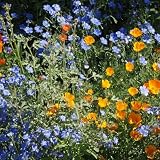
- 16 Western Native Wildflower Seeds - This premium wildflower seed mix features California Poppy, Arroyo Lupine, Palmer Penstemon, Blazing Star, Blue Flax, Tidy Tips, and more drought-tolerant native flower seeds built for sunny Western landscapes.
- Bold Color Wildflower Seeds Mix - Vivid poppies, penstemons, and lupines create a striking blend of bold brights and soft pastels with varied heights for texture and movement. This wild flower seeds mix delivers a windswept Western meadow aesthetic.
- Water-Wise Wild Flower Seeds - These native wildflower seeds thrive in full sun with well-drained soil and minimal water. Drought-tolerant flower seeds for planting outdoors that cut irrigation and fertilizer needs once established in your garden.
- Attracts Bees, Butterflies & Hummingbirds - Nectar-rich native flower seeds attract pollinators while building habitat and biodiversity. Create a vibrant outdoor pollinator garden with diverse Western wild flower seed varieties that thrive in heat.
- 100% Pure Seed No Fillers - This blend of annual, perennial, and biennial wildflower seeds contains zero inert filler. Open-pollinated native plant seeds are adapted to Western heat and seasonal rainfall patterns for reliable, long-term results.
5. Japanese honeysuckle
Japanese honeysuckle is listed by both North Carolina State and Iowa State. Its rapid growth and fragrant flowers make it tempting for banks, fences and informal groundcover, but a vigorous vine can overrun shrubs and climb into trees. Vines also spread when cut sections or rooted crowns are moved with yard waste.
The Tool Desk
Outbyte Driver Updater FREEScan for outdated or missing drivers - takes under a minuteDriver Scan →Outbyte PC Repair FREERepair Windows errors before they cause bigger problemsFix Now →Cornell’s New York alternatives page pairs invasive vines with trumpet honeysuckle, American bittersweet, Dutchman’s pipe and fox grape. Those are regional suggestions, not a nationwide prescription: check hardiness, mature size and legal status where you live. Cornell specifically notes that trumpetcreeper is an aggressive spreader, so give it a strong support, room to climb and a pruning plan rather than treating it as maintenance-free.
6. English ivy
English ivy is part of North Carolina State’s southern series. It is often planted to cover bare soil or masonry, yet a groundcover that escapes a bed can climb trees, cross property lines and persist after the original planting is neglected.
Decide whether you need year-round cover, erosion control or a wall-climbing vine. Use a native groundcover or vine recommended for your local light and moisture conditions, and avoid any plant that the local list flags as a rapid spreader. Before planting on a slope, check how the alternative handles runoff; a plant that survives in a pot may not hold soil or stay contained outdoors.
7. Yellow flag iris
Yellow flag iris appears in North Carolina’s southern resource and on Cornell’s New York invasive-alternatives page. It is associated with wet soils, where rhizomes and floating plant material can move through ditches and waterways. A pond edge is therefore a higher-risk location than an isolated, dry ornamental bed.
What’s actually slowing this PC down?
Pick the symptom - the matching free tool is one click away.
Rank #4

- 16,000 PREMIUM SEEDS: A rich blend of 16,000 true Northeastern native wildflower seeds, curated for strong germination and long-season bloom across regional climates.
- AUTHENTIC NATIVE BLEND: Includes favorites such as Black-Eyed Susan, New England Aster & more — all region-adapted for naturalized meadows and woodland borders.
- FRESH FOR 2026 SEASON: Specially packed for the 2026 growing year, ensuring vigorous establishment, cold tolerance, and reliable flowering from spring through fall.
- 1-OUNCE FRESHNESS POUCH: Seeds are sealed within a 1-ounce moisture-protected pouch for extended viability, complete with planting instructions for broad-area coverage.
- FAMILY SOWN PROMISE: Each packet includes simple planting instructions and freshness-sealed packaging. If your seeds don’t grow, we’ll refund your purchase—no questions asked!
Cornell lists white turtlehead, blueflag iris, cardinal flower and other iris species as alternatives. Confirm that the selected species is native or permitted in your watershed, can tolerate the site’s water depth and will not be confused with another iris sold under a similar common name. Keep aquatic plant material out of storm drains and natural waterways during maintenance.
8. Purple loosestrife
Iowa State lists purple loosestrife among its perennial examples, and Cornell includes it in New York guidance. Its tall flower spikes suit rain gardens and damp borders, but wetland-adjacent plantings have direct pathways into open space.
Choose a native wet-site perennial for the same moisture level and flowering season. Cardinal flower and white turtlehead are examples named by Cornell for wet-site alternatives, but their light and soil preferences are not identical. Read the plant label for mature spread, keep the planting away from moving water unless it is approved locally, and remove spent stems before seed dispersal when local guidance recommends it.
9. Outdoor asparagus fern (Florida)
UF/IFAS describes outdoor asparagus fern as a Florida invasive-plant concern and pairs it with two Florida natives. This recommendation should not be exported to colder states or treated as a national designation; Florida’s climate and invasive-species assessments are different from those in Iowa, New York or the Carolinas.
For a Florida planting, UF/IFAS recommends coontie as a native suitable for sun or shade and sunshine mimosa as a native groundcover for full or partial sun. Match the plant to the actual microclimate: coontie is a structural foliage plant, while sunshine mimosa forms a lower spreading cover. Confirm irrigation, mature spread and any county restrictions before installing either.
Best Value

- 🌼 “American Meadow Magic” Wildflower Seed Mix: Our signature PlantMe blend features 25 diverse wildflower varieties, specially curated to create a stunning, natural meadow right in your own backyard. Experience the magic of a flourishing, colorful ecosystem.
- 🌱Extra-Large, High-Yield Packet | 10,000+ Pure Seeds: This oversized packet contains 30 grams (over 1 oz) of premium seeds with no fillers. With 10,000+ live seeds, you have ample coverage for approximately 100 sq. ft., ensuring a thick, vibrant display.
- 🦋Pollinator Paradise & Easy “Throw & Grow”: Attract bees, butterflies, and hummingbirds with nectar-rich blooms. This easy-to-grow mix is perfect for all skill levels—simply scatter on prepared soil for a successful, low-maintenance wildflower meadow.
- ✅Guaranteed Freshness & High Germination Rate: We deliver the freshest with rigorously tested high germination rates. Packaged in a resealable, moisture-proof pouch to lock in freshness and viability for seasons to come.
- 🎁Complete Growing Kit in One Bag: Includes clear planting instructions and is beautifully designed for gifting. Perfect for birthdays, holidays, or to inspire a new gardener. Grow a piece of American meadow magic anywhere!
10. Trumpetcreeper: an aggressive-spreader caution
Cornell’s New York alternatives guidance explicitly warns that trumpetcreeper is an aggressive spreader. It is a native vine, so calling it invasive in every region would be inaccurate. The practical lesson is that a native plant can still be a poor choice for a narrow bed, a small trellis or a property bordering sensitive habitat.
Use trumpetcreeper only when you have a substantial support, room for its mature growth and the ability to cut back shoots that leave the intended area. If those conditions are absent, ask your local extension service for a lower-vigor native vine with similar flowers or wildlife value. Dispose of cut stems according to local rules so pieces cannot root in a compost pile or roadside ditch.
Independent reader supportYour contribution helps us test, update, and keep practical guides available for everyone.How to choose a native alternative that will actually work
Iowa State says its replacements were selected for similar or better ornamental qualities, comparable size, similar light and soil conditions, Iowa winter hardiness and native or non-problematic status. Cornell uses a similar approach, advising gardeners to check hardiness zone and site conditions and noting that its alternatives resemble the plants they replace in appearance and cultural requirements. Apply those criteria in this order:
PC Slower Than It Used to Be?
A free scan shows the junk files, broken settings and background clutter dragging Windows down - then fixes them in one click.Free scan · Windows 10 & 11Crashes, No Sound, or Screen Glitches?
Random freezes, missing sound and display glitches usually trace back to one bad driver. Find and replace yours safely.Free scan · under a minute- Define the job. Write down whether you need a canopy tree, privacy screen, compact shrub, vine, groundcover, wet-soil plant, fall color or a pollinator feature. “Native” alone does not identify the right growth form.
- Verify regional origin. Prefer a species native to your state, ecoregion or watershed—not merely somewhere in the United States. Iowa State notes that “region” can mean an ecoregion, geographic feature or political boundary.
- Measure the site. Record full sun, part shade or shade; soil texture and drainage; seasonal moisture; mature height and width; overhead wires; and distance to streams, woods and property lines.
- Check hardiness and climate. Use the current hardiness guidance for your location, then account for heat, drought, salt, flooding and reflected heat that a generic zone number may not capture.
- Check behavior. Ask how the plant reproduces, whether birds spread its fruit, whether stems root when cut and whether it is known as an aggressive spreader. A plant can be legal yet unsuitable for a small or habitat-adjacent site.
- Confirm current rules and availability. Recheck state and county lists before purchase. Cornell notes that many alternatives are available at local nurseries, but inventory and plant names vary; request the botanical name and source region.
A purchase checklist that prevents most mistakes
- Search the botanical name and all common names on your current state or county invasive and noxious-weed lists.
- Ask the nursery whether the plant is sterile, seed-producing, self-seeding or restricted in your jurisdiction; do not rely on “non-invasive” marketing language without a local source.
- Compare the mature dimensions on the label with the space, not the container size.
- For vines and groundcovers, inspect the boundary to the nearest drain, creek, woodland, vacant lot or neighboring property.
- Buy from a nursery that can identify the species and cultivar accurately; common names such as “honeysuckle” and “iris” may cover several species with different status.
- Keep the receipt and plant label so you can identify the plant later if rules change or removal becomes necessary.
If an invasive plant is already in your garden
UC Statewide IPM advises considering removal when an invasive plant is near natural areas, roads, flood channels or waterways that can carry it into open space. Distance and reproductive ability should guide the decision: a seed-producing shrub beside a creek deserves faster action than a contained, non-fruiting specimen in an isolated courtyard.
- Identify before cutting. Confirm the species and check local restrictions. Some jurisdictions require a licensed contractor or prohibit transport of live material.
- Plan for reproduction. Schedule work before seed ripening when practical. Look for fruit, seed heads, rhizomes, tubers, rooted nodes and green cuttings that could survive handling.
- Contain every reproductive part. Put flowers, fruit, seed heads and viable roots directly into sturdy bags or covered containers. Do not drag vines or shake soil across a driveway or drainage route.
- Remove the root system as the plant requires. Follow local extension instructions for hand pulling, repeated cutting or other permitted methods. One cut rarely ends a perennial or rhizomatous plant.
- Clean tools and footwear. Brush off soil and plant fragments before moving to another bed, and wash tools if sap or seed material is present.
- Use the approved disposal route. Disposal is not universal. UC IPM says that where mandatory green-waste programs apply, reproductive parts should be bagged separately while remaining green waste goes to the designated compost system. Your municipality may require landfill disposal, special collection or another method, so follow its written rules.
- Monitor the site. Recheck the area during the following growing seasons for seedlings and resprouts, especially after rain or soil disturbance.
Where to verify a plant before you buy
Use the most local, current authority available and compare more than one designation when lists disagree. Iowa State University Extension and Outreach is useful for Iowa garden examples and replacement traits. North Carolina State Extension’s July 25, 2025 update covers southern landscape swaps. Cornell IPM provides New York alternatives and site-suitability cautions. UF/IFAS supplies Florida-specific invasive assessments and native pairings. University of Maryland Extension’s June 9, 2026 guidance helps distinguish invasive, noxious and naturalized plants. UC Statewide IPM supplies California-focused prevention, reproduction and disposal advice.
When a source names a plant but does not cover your jurisdiction, treat that entry as a reason to investigate—not as proof of a ban. Recheck lists each season before propagating, trading or installing a plant near open space.
Quick Recap
Product prices and availability are accurate as of the date/time indicated and are subject to change. Any price and availability information displayed on Amazon at the time of purchase will apply.

