Do these 3 things before closing this tab:
1Repair Windows errors before they cause bigger problems2Scan for outdated or missing drivers - takes under a minute3Clear out junk files and repair common Windows errorsCardboard can turn a weedy patch or section of lawn into a plantable bed by excluding light while the paper slowly decomposes. For a reliable installation, cut vegetation low, remove every non-paper packing material, lay two or three clean layers with generous overlaps, wet the sheets, and cover them completely with organic mulch. Then choose a planting schedule that matches your setup: some sheet-mulch beds are planted through prepared openings, while a lawn conversion may rest for four to six months before planting into the soil.
This method is commonly called sheet mulching or lasagna gardening. It is inexpensive and biodegradable, but it is temporary. Cardboard can tear, shed rain when dry and uncovered, and restrict air and water movement if it is installed too tightly or left in place longer than the planting plan requires.
As an Amazon Associate I earn from qualifying purchases.
What cardboard does—and what it cannot do
A cardboard barrier works primarily by blocking sunlight. Existing grass and many small weeds weaken when the leaves cannot photosynthesize, while the paper and mulch gradually break down into the soil. Texas A&M AgriLife Extension specialist Jayla Fry describes the technique as “a very straightforward technique” in its April 2026 article, Use Cardboard to Stop Weeds in Your Garden.
Quick wins for a faster PC:
Fix the driver behind crashes, sound loss and screen glitchesFind Drivers →Repair Windows errors before they cause bigger problemsFix Now →Scan for outdated or missing drivers - takes under a minuteDriver Scan →The barrier is not a permanent, impermeable weed-proof membrane. Paper can slow the movement of air and water, and the University of California Statewide Integrated Pest Management Program notes that rain or overhead irrigation may run off the surface. Moisture under the sheet can also be difficult to judge. Cardboard may tear if people walk on it, and gaps at seams or edges give weeds a route back to light.
#1 Best Overall

- Professional Grade Weed Barrier: LAVEVE weed barrier fabric is made of woven polypropylene material. Its high-density and permeable characteristics effectively stop weed growth and protect soil health so your plants can grow well.
- Highly Permeable and Breathable: Weed control mat that resist UV rays and withstand sun exposure feature a cross-weave and permeable, breathable design. It is durable while allowing more air and water to penetrate the soil, effectively reducing erosion and driving out weeds.
- Easy to Cut and Install: Weed blocker fabric has clear green guide lines that help align planting. You can cut it freely with household scissors or craft knife according to the size and shape you need, fix the fabric with U-shaped securing pegs, and you can use it normally.
- Multi-path Application: LAVEVE weed barrier fabric (4FT x 50FT x 2 Pack, total 4FT x 100FT) is enhanced for greater load capacity and is suitable for various applications, including gardens, lawns, vegetable plots, flower beds, gravel paths, brick pavements, sidewalks, driveways, construction projects, and different types of gardens.
- Improve Your Quality of Life: Using weed barrier cover not only solves the trouble of weed growth for you, but also greatly improves the neatness and beauty of your garden.
Use it when you want a low-cost lawn conversion, a temporary suppression layer under a new bed, or a way to reduce weeding while organic mulch establishes. Do not treat it as a substitute for correct irrigation, soil preparation, or ongoing inspection.
Materials and tools
Cardboard
- Use plain corrugated cardboard in sheets or a roll. The UC Agriculture and Natural Resources Cooperative Extension guide recommends two to three layers of B-flute cardboard and lists rolls or salvaged boxes as options; see How to Sheet Mulch.
- Choose enough material to cover the entire bed, including the planned overlap at every seam and an edge beyond the intended planting area.
- Remove tape, staples, shipping labels, plastic film, foam, waxed sections and other non-paper packing materials before laying the sheets. Penn State Extension specifically calls out tape and staples in its lawn-to-bed procedure.
Covering material
- Prepare clean organic mulch such as leaves, straw or wood chips. Local leaves or a municipal yard-waste source may be suitable if they are free of contaminants and weed-bearing material.
- Keep enough mulch on hand to cover every visible sheet. A covered barrier stays in place, is less likely to shed water, and is protected from wind and rapid drying.
Optional tools
- A mower, string trimmer or shears for cutting existing vegetation low.
- A flat-bladed shovel or half-moon edger for marking and cutting a crisp new bed edge, as described by Penn State Extension.
- A hose or watering can for wetting each section as it is installed.
- A knife or utility blade for trimming cardboard around the bed perimeter and planting openings.
How to install cardboard as a weed barrier
1. Decide whether you are suppressing weeds or converting lawn
Mark the final bed before bringing in cardboard. A narrow weed-suppression strip can be planted soon after the barrier and mulch are installed if you prepare openings for the plants. A lawn-to-garden conversion has a different objective: the grass and roots need time to die and the sheet needs time to settle. Penn State’s Sheet Mulching: Lawn to Garden Bed in 3 Steps recommends a four-to-six-month rest period before planting into the soil for that type of conversion.
2. Cut the vegetation low
Mow or cut grass and weeds as close to the ground as practical. Remove bulky stems, branches and debris that would hold the sheets above the soil. You do not need to excavate all roots for a sheet-mulch installation, but flattening the vegetation prevents air pockets and reduces the chance that shoots will lift the cardboard.
Recommended Free Tools
If you are creating a new edge, score the line with a half-moon edger or cut it with a flat-bladed shovel. A defined edge keeps mulch from spreading and makes it easier to inspect the cardboard later.
3. Clean and flatten the cardboard
Break down boxes and flatten rolls. Pull off tape, staples, labels, plastic windows and any other material that will not decompose with the paper. Keep the cardboard as intact as possible; small scraps and narrow strips create extra seams that are harder to keep closed.
4. Lay two or three layers with closed seams
Start at one edge and place sheets over the soil and cut vegetation. The UCANR quick-start recipe calls for two to three layers of B-flute cardboard. Arrange the layers so that a seam in one layer is covered by a continuous sheet in the next.
Rank #2
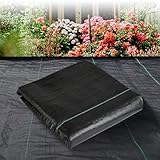
- Premium Weed Barrier Fabric:Weed barrier landscape fabric is a type of geotextile fabric that is commonly used in landscaping and construction.With excellent weed control properties, providing a clean and tidy landscape.Very strong and durable,Pro landscape weed barrier will provide you with premium weed protection for a very long time.
- Durability: 3.2oz Weed barrier landscape fabric heavy duty is designed to be extremely durable, with a high tensile strength and tear resistance.It is made from polypropylene, which is a durable material that can withstand harsh weather conditions. This allows it to withstand heavy foot traffic, vehicle traffic, and other types of wear and tear.
- Allows Water and Nutrients to Flow Through: While weed barrier landscape fabric blocks the growth of weeds, it allows water and nutrients to flow through to the soil beneath. This helps to keep plants healthy and hydrated, while preventing the growth of unwanted weeds.
- Super-Easy To Install and Set-Up:You don’t have to be an expert or call in expensive professionals in order to set up the weed blocking fabric,Weed barrier landscape fabric is easy to install and can be cut to fit any size or shape.It is typically laid down over the soil, with landscaping fabric or mulch placed on top to create a finished look.
- Versatile: Weed barrier landscape fabric heavy duty is a versatile product that can be used in a variety of applications. It can be used in gardens, landscaped areas, agricultural applications, and more, making it a valuable tool for any gardener or landscaper.Driveway fabric is designed to stabilize driveways by providing a strong, durable base layer that helps to distribute weight and prevent erosion. It can be used on both gravel and paved driveways.
Use a generous overlap—about 8 inches is a robust general target. UCANR specifies 8 inches, while Penn State specifies 8 to 10 inches. Other sheet-mulching instructions use smaller overlaps, so local recipes may differ; the non-negotiable requirement is that no soil remains visible between sheets or around the perimeter. Pay particular attention to corners, bed edges and places where the ground is uneven.
5. Wet the sheets as you work
Soak each section before moving on to the next. Wet cardboard conforms to the ground, is less likely to blow away, and begins softening for decomposition. If wind arrives before you can mulch, weigh down exposed sections with clean, temporary anchors that will not damage the paper; remove them after the organic cover is installed.
6. Cover the barrier completely with organic mulch
Spread mulch over the entire cardboard surface, including overlaps and edges. Extension recipes differ because they describe different climates and installation details:
| Guidance | Cardboard arrangement | Mulch depth | Timing or planting note |
|---|---|---|---|
| UC Agriculture and Natural Resources Cooperative Extension, 2026 | Two to three layers of B-flute; about 8-inch overlaps; wet as installed | At least 3 inches in its quick-start guide | Smaller plants may go into compost and mulch; larger plants can be placed through a hole in the cardboard |
| Penn State Extension, publication page accessed 2026 | Overlap 8 to 10 inches; wet the cardboard | Four to six inches total | For lawn conversion, allow four to six months before planting into the soil |
| University of Guam Cooperative Extension & Outreach, 2024 | Overlap sheets and wet them before covering | Two to five inches of organic mulch | Estimates barrier decomposition at four to eight months; local conditions control the result |
These are method-specific recipes, not a single universal depth. Choose one recipe and make the cover continuous. A deeper layer generally provides more protection from light and helps hold the paper down, but it also changes how quickly the bed dries and how easily you can plant.
7. Plant through the barrier or let the conversion rest
For a bed that is already prepared for planting, make a hole only where a plant will go. Cut through the cardboard, open the hole to the soil or compost as needed, set the plant, and close the mulch around the stem without burying it. UCANR notes that smaller plants can be planted in the compost and mulch layer, while larger plants can be placed through a hole in the cardboard.
For a lawn conversion, the Penn State four-to-six-month rest period gives the underlying vegetation time to die before you disturb the layer. Waiting is not a universal rule for every sheet-mulch design: the UCANR setup allows certain plants above or through the sheet, and the University of Guam factsheet gives a four-to-eight-month decomposition estimate that is local rather than universal. Decide based on whether roots need immediate access to native soil, how vigorous the existing grass is, and the recipe you selected.
Rank #3

- Keep Your Landscape Clean and Tidy: Our premium weed barrier landscape fabric is designed to provide excellent weed control properties, ensuring a clean and tidy landscape for a long time.
- Built to Last: Made from durable polypropylene, our 3.2oz weed barrier landscape fabric heavy duty is extremely strong and tear-resistant, making it perfect for heavy foot and vehicle traffic.
- Water and Nutrients Flow Freely: Our weed barrier blocks weeds while allowing water and nutrients to flow through to the soil beneath, keeping your plants healthy and hydrated.
- Easy to Install: Our landscape fabric is super-easy to install and can be cut to fit any size or shape. Lay it down over the soil and cover with landscaping fabric or mulch for a finished look.
- Versatile and Valuable: Our weed barrier fabric heavy duty can be used in gardens, landscaped areas, agricultural applications, and more. It's also perfect for stabilizing driveways and preventing erosion.
How to keep water and air moving
Check moisture below the cover
Do not judge irrigation only from the appearance of the mulch. Lift a small section at an edge or an intended planting opening and feel the soil beneath it. The UC Integrated Pest Management sheet-mulching guidance explains that paper can make moisture difficult to assess and can hinder water and air movement; its recommendations are summarized at Sheet Mulching.
Plan irrigation before closing the bed
If the bed needs regular irrigation, place drip lines beneath the cardboard before the final mulch layer goes on. This keeps water close to the soil and avoids repeatedly wetting the top of a dry sheet. Do not assume that overhead rain or sprinklers will pass evenly through every overlap. A dry, uncovered sheet may shed water, and a covered but tightly compacted layer can still slow infiltration.
Avoid unnecessary punctures
Every cut is a potential opening for light and weeds. The UCANR WeedCUT guidance on mulching and weed control cautions against puncturing the barrier except where a plant is intentionally installed. Make planting holes only as large as needed and keep the surrounding overlap intact.
What’s actually slowing this PC down?
Pick the symptom - the matching free tool is one click away.
Know when to remove or break up old paper
As the cardboard ages, inspect whether it is still blocking light or instead obstructing water and air. Iowa State University Extension notes that removing or breaking up paper after the underlying vegetation is killed may be appropriate when continued coverage would interfere with the planting plan; see How to Kill Grass to Create a New Garden Bed. The correct choice depends on whether roots still need a barrier, whether the paper remains intact, and how your irrigation is working.
Maintenance after installation
Inspect seams and edges
Walk the perimeter after wind, heavy rain and the first watering. Add mulch where cardboard is exposed, and reposition or replace sheets that have shifted. Gaps at the edge are often the first places for grass to re-enter.
Top up decomposed mulch
Organic mulch settles and decomposes along with the paper. Replenish it before the cardboard becomes visible. Use the same clean material or a compatible local mulch; avoid burying plant crowns or piling mulch against woody stems.
Rank #4

- 【High-quality Landscape Fabric】: Our weed barrier fabric heavy duty is woven from high-quality polypropylene material, featuring strong tensile strength and durability for long-term ground coverage.
- 【Easy to Use & 30 Staples Included】: Our weed control mat features clear green guide lines to help align your plants. You can easily cut it to any size or shape you need. Each includes 4FT x 100FT (2packs 4FT x 50FT) garden fabric weed barrier cloth (Packaged Folded). We also offer 30 U-shaped stakes to securely fasten the weed fabric, ensuring it remains firmly in place.
- 【Highly Permeable and Breathable】: FEED GARDEN weed blocker fabric has good permeability, effectively allowing water and air to pass through the soil, making it suitable for a variety of outdoor landscaping and gardening applications.
- 【Widely Application】: FEED GARDEN landscaping fabric is suitable for gardens, lawns, vegetable plots, flower beds, gravel and paved paths, driveways, and construction sites. Its ease of use make it an useful tool for gardening and farming.
- 【Customer Satisfaction】 FEED GARDEN provides high-quality products and efficient after-sales service. If you're not satisfied with the lawn fabric, please contact us, we will provide you with a solution as soon as possible.
Repair tears rather than ignoring them
Cardboard is temporary and can tear, especially where people walk or wheel equipment. Slide an intact piece under or over a damaged section, restore the overlap, wet it, and cover it again. If traffic is unavoidable, use a defined path that does not cross the barrier.
Watch the weeds you are actually suppressing
Annual weeds weakened by darkness may disappear quickly, while vigorous perennial grass or weeds can persist at edges and openings. Pull or cut growth that emerges through a seam, then patch the opening and restore mulch. Do not assume that a single installation eliminates future weed seeds carried in by wind, birds or new mulch.
Cardboard compared with other bed-cover choices
Cardboard, landscape fabric and bare mulch solve different problems. The extension sources cited here describe cardboard’s benefits and limitations but do not establish that it is universally superior to fabric or another method. Use the following decision guide rather than treating one material as best for every bed.
| Criterion | Cardboard sheet mulch | Landscape fabric | Bare organic mulch |
|---|---|---|---|
| Persistence | Biodegradable and temporary; the University of Guam factsheet estimates four to eight months for decomposition under its local conditions | Designed to persist longer than paper; removal and disposal become part of later maintenance | Decomposes without an underlayer and normally needs periodic replenishment |
| Light exclusion | Strong while sheets overlap and remain covered; tears and gaps reduce performance | Depends on intact coverage and correct installation; seams and openings still matter | Depends mainly on depth and how quickly the mulch settles or breaks down |
| Water and air movement | Can restrict both; inspect moisture and consider drip irrigation below the sheet | Flow characteristics depend on the fabric and soil contact; no fabric specification is established by the cited sources | Allows direct soil contact but does not provide a continuous light-blocking layer |
| Availability and labor | Salvaged boxes can be free; cleaning, overlapping, wetting and covering require labor | Must be purchased and cut; installation includes anchoring and later removal | Simple to spread, but deeper or repeated applications may be needed for persistent weeds |
| Best fit | Lawn conversion or a temporary suppression layer where biodegradable materials are desired | Projects that call for a longer-lasting manufactured barrier and accept its removal burden | Maintained beds where weeds are already controlled and the goal is moisture conservation and surface protection |
Troubleshooting common failures
Cardboard blows away before mulching
The sheets were likely too dry, too lightly overlapped or exposed to wind. Wet them in place, increase overlap toward about 8 inches, and temporarily weigh down edges until the organic cover is spread.
Water runs off instead of soaking in
Dry paper can shed water, especially before mulch is added. Wet the sheets during installation, cover them completely, and test moisture below the layer. If irrigation remains uneven, move drip lines beneath the cardboard or open only the planting areas required by the design.
Outdated Drivers Are Slowing You Down
One free scan finds every outdated or missing driver and matches the right update for your exact hardware.Free scan · exact hardware matchWindows Errors? Fix Them Before They Spread
Repair common Windows errors and clear accumulated junk for a smoother, more stable PC - no reinstall needed.Free scan · no reinstallGrass appears between sheets
Locate the gap, cut or pull the emerging growth, and patch it with clean cardboard that overlaps the opening. Re-wet the repair and restore the mulch depth. Narrow overlaps are more vulnerable, which is why the UCANR and Penn State recipes use about 8 inches or more.
Best Value

- [ Space-Saving Design Weed Barrier Fabric ] - With a weight of 3.2oz, the PP woven weed barrier fabric comes in various size options. Please take note: the 4ft and 6ft wide landscape fabric are be folded and rolled up for storage, making the actual width only half of the appearance. Once opened, it returns to its actual size.
- [ Water and Air Permeable Landscape Fabric ] - iropro woven weed barrier fabric allow air and water to reach the soil, keep the soil moisture and healthy. After laying down our landscape fabric, plants can still get nutrients but without the interference of weeds, so they can grow better. You can save more time and energy to concentrate on gardening and landscaping.
- [ Sturdy and Durable Landscape Fabric ] - Heavy duty garden weed barrier fabric is made from high quality polypropylene material, which means it is very strong and can resistant to tear, high temperature and last for years.
- [ Easy-Install Weed Barrier ] - You don’t need to be an expert to install iropro landscaping fabric. You can easily cut the landscape fabric to desired size and shape with a pair of scissors. Green guideline printed is very helpful for alignment when you need planting in rows.
- [ Multipurpose Landscape Fabric ] - It can be used to control weed growth in gardening or landscaping, laying down under raised flower bed, vegetable garden, gravel path, walkway, decking, stones, patio, artificial grass lawn and so on. Weed barrier fabric is also heavy enough to be used as geotextile fabric for construction projects, such as driveway fabric, road stabilization, retaining wall, erosion control.
Plants are dry even though the mulch looks wet
Check the soil at root depth rather than the mulch surface. Paper and mulch can conceal dry soil, and a compacted layer can slow infiltration. Adjust irrigation, verify that the planting hole reaches moist soil, and replace or break up paper that is no longer serving a useful barrier role.
The sheet tears under foot traffic
Keep traffic off the bed whenever possible. Where access is unavoidable, repair with an overlapping piece and add mulch. Treat the barrier as a decomposing soil-cover layer, not a walking surface.
You need to plant before the lawn has died
Do not make a blanket assumption about timing. A setup designed for plants in compost and mulch can be planted through prepared holes, while Penn State’s lawn-conversion method calls for four to six months of rest before planting into the soil. Choose one approach, label the planting holes clearly, and monitor the underlying grass before disturbing the layer.
The Tool Desk
Outbyte Driver Updater FREEScan for outdated or missing drivers - takes under a minuteDriver Scan →Outbyte PC Repair FREERepair Windows errors before they cause bigger problemsFix Now →A practical inspection schedule
- Installation day: Confirm that all tape, staples, labels and plastic are gone; check every seam and edge; wet the cardboard; and spread the full mulch cover.
- After the first significant rain or irrigation: Look for runoff, exposed cardboard, shifted sheets and standing water. Check moisture below the cover.
- During the first growing season: Inspect seams and planting holes whenever you weed or water. Patch openings before perennial growth becomes established.
- As the paper softens: Decide whether the barrier is still needed. Replenish mulch, add a new overlapping section where light reaches soil, or remove and break up paper if it is obstructing air and water for the next planting stage.
For additional local context, the UC Master Gardeners of Sacramento County discuss sheet-mulching lawn conversion in Beyond Lawn. Climate, cardboard thickness, rainfall, irrigation and the original vegetation all affect how quickly the layer changes.
Extension guidance and source details
- UC Agriculture and Natural Resources Cooperative Extension, “How to Sheet Mulch,” May 4, 2026: https://ucanr.edu/node/167753/printable/print
- University of California Statewide Integrated Pest Management Program, “Sheet Mulching”: https://ipm.ucanr.edu/home-and-landscape/sheet-mulching/
- Penn State Extension, “Sheet Mulching: Lawn to Garden Bed in 3 Steps”: https://extension.psu.edu/sheet-mulching-lawn-to-garden-bed-in-3-steps
- UCANR WeedCUT, “Mulching / Weed Control User Tool”: https://weedcut.ipm.ucanr.edu/management-practices/mulching/
- University of Guam Cooperative Extension & Outreach, “Sheet Mulching,” 2024 factsheet: https://advisor.uog.edu/_resources/files/extension/2024-uog-extension-factsheet-sheet-mulching-1.pdf
- Iowa State University Extension and Outreach, “How to Kill Grass to Create a New Garden Bed”: https://yardandgarden.extension.iastate.edu/how-to/how-kill-grass-create-new-garden-bed
- Texas A&M AgriLife Extension Service, April 2026, “Use Cardboard to Stop Weeds in Your Garden”: https://agrilifeextension.tamu.edu/wp-content/uploads/2026/04/April-Articles.pdf
- UC Master Gardeners of Sacramento County, “Beyond Lawn”: https://www.ucanr.edu/site/uc-master-gardeners-sacramento-county/beyond-lawn
When installed as a continuous, wet and fully covered layer, cardboard is a practical short-term weed barrier. Its success depends less on the box itself than on closed seams, adequate mulch, appropriate planting timing and regular checks that water and air still reach the soil.
Quick Recap
Product prices and availability are accurate as of the date/time indicated and are subject to change. Any price and availability information displayed on Amazon at the time of purchase will apply.

