Free tools Windows power users keep installed
One-click scans. No signup required.
Military leadership can give you a strong starting point for a construction company, but it does not replace construction-specific competence. The practical transition is to pair your strengths in planning, accountability, risk control and team leadership with civilian skills in estimating, contracts, codes, job costing, cash flow, sales and safety. Start with a narrow service, validate demand locally, obtain every required license and insurance policy, and build repeatable operating systems before taking on complex projects.
The U.S. Department of Defense says veterans are 45 percent more likely to be self-employed than non-veterans, a broad entrepreneurship comparison rather than evidence that military experience predicts construction success. More than 50,000 service members and military spouses have completed Boots to Business training since its 2013 launch. The SBA reported 304,823 veteran-owned businesses in 2024.

As an Amazon Associate I earn from qualifying purchases.
What military leadership transfers—and what it does not
Your service experience is most valuable when converted into observable business processes rather than presented as a résumé credential. Construction clients buy predictable results: a safe site, accurate scope, reliable schedule, controlled costs and clear communication.
PC Slower Than It Used to Be?
A free scan shows the junk files, broken settings and background clutter dragging Windows down - then fixes them in one click.Free scan · Windows 10 & 11Crashes, No Sound, or Screen Glitches?
Random freezes, missing sound and display glitches usually trace back to one bad driver. Find and replace yours safely.Free scan · under a minuteTransferable strengths
- Mission planning: Turn a project objective into a written scope, work breakdown, schedule, responsibilities and decision points.
- Accountability: Use daily production reports, weekly commitments and documented corrective actions instead of relying on informal updates.
- Risk management: Identify hazards, dependencies, procurement risks and schedule threats before mobilization.
- After-action reviews: Review completed work for quality failures, rework, near misses, margin erosion and customer complaints, then change the process.
- Team leadership: Set expectations, coach supervisors and develop apprentices without confusing authority with technical expertise.
- Logistics: Apply disciplined planning to material lead times, equipment, staging, transportation and site access.
Skills you must add
Military leadership alone does not qualify you to price a foundation, interpret a building code or sign a change order. Learn takeoffs and estimating, production rates, subcontractor scopes, contracts, payment applications, retainage, lien rules, payroll, tax compliance, procurement, customer sales and construction accounting. You also need enough technical understanding to recognize bad work and appoint a qualified person when a trade requires credentials you do not hold.
#1 Best Overall

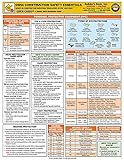
- 2024 OSHA Construction Safety Book is the seventh edition with the new OSHA HazCom final rule on 5/20/24. While the rule takes effect 7/19/24, the compliance dates don’t begin until 1/19/26 per 29 CFR 1910.1200(j).
- Construction Site Book offers quick access to essential OSHA regulations, jobsite hazards, and practical safety tips. It also helps employees identify hazards and prevent injuries and illnesses.
- Features easy-to-read format, full-color images, chapter quizzes with answer key, and comes in a compact size making it a convenient reference for employees.
- Critical topics include Confined Space Entry; Cranes & Derricks; Electrical Safety; Emergency Response; Ergonomics & Back Safety; Excavations; Fall Protection; First Aid & Bloodborne Pathogens; HazCom; Health & Wellness; Jobsite Exposures; Lockout/Tagout; Ladders & Stairways; Materials Handling/Storage; Motor Vehicles; PPE; Scaffolds; Site Safety & Security; Slips, Trips & Falls; Tool Safety; Welding, Cutting & Brazing; and Work Zone Safety.
- Specifications: 5 1/4” x 7 1/4", English, Soft bound. 7th Edition. Copyright 2024.
There is no authoritative construction-specific study proving that military leadership causes better business outcomes. Treat veteran entrepreneurship statistics as context, not a forecast for your company.
Choose the right construction entry point
A narrow initial offer limits technical and financial exposure while you learn the market. Interview local property owners, facility managers, general contractors, trade contractors, suppliers and a Veterans Business Outreach Center (VBOC) or Small Business Development Center (SBDC). Ask what work is hard to staff, how buyers select contractors, typical payment timing and which licenses or credentials are mandatory.
| Entry model | Capital and cash-flow profile | Licensing and technical burden | Sales and risk considerations |
|---|---|---|---|
| General contracting | High: working capital for labor, materials and subcontractor payments before client receipts | Broad coordination, estimating and often a state or local contractor license | Longer sales cycle, substantial contractual, schedule and safety exposure |
| Specialty trade | Low to medium, depending on vehicles, tools and equipment | Trade credentials may be compulsory; technical supervision is critical | Can build repeat work, but capacity depends on skilled labor and production rates |
| Renovation and small remodeling | Medium; deposits may help but are not guaranteed | Scope, code and permit knowledge vary by project | Shorter sales cycle, frequent design changes and high customer-communication demands |
| Facilities maintenance | Low to medium; recurring visits and service equipment are typical | Requirements depend on systems serviced and the facility | Recurring revenue potential, response-time obligations and sometimes formal vendor onboarding |
| Subcontracting | Low to medium; the prime contractor may provide a defined scope, but payment can still lag | Focused technical capability and compliance with the prime’s requirements | Faster route to projects, but less control over schedule, pricing and customer relationship |
Choose the model where you can demonstrate competence, access qualified supervision and survive the payment cycle. A specialty subcontractor or maintenance service is often a more controllable first operation than acting as a full general contractor on large projects.
Recommended Free Tools
Pick a startup route
| Route | Control and speed | Financing and liabilities | Mentoring and fit |
|---|---|---|---|
| Build from scratch | Maximum control, slowest customer and process development | Usually the lowest purchase debt, but you fund startup costs and early losses | Requires deliberate coaching, hiring and system design |
| Buy an existing contractor | Faster access to customers, staff and revenue history | Requires acquisition financing and rigorous review of tax, legal, warranty, safety and undisclosed liabilities | Existing managers may provide continuity; verify that relationships are transferable |
| Join a franchise | Faster launch with a defined brand and operating playbook | Up-front and continuing fees; contractual restrictions reduce flexibility | Formal training may help, but local demand and labor remain your responsibility |
| Begin as a specialty subcontractor | Fastest way to prove production and learn commercial workflows | Lower overhead than a broad contractor, though insurance, bonding and working capital still apply | Prime contractors can provide volume and feedback while you build references |
Before buying a company or signing a franchise agreement, have a construction attorney and accountant examine the purchase terms, financial statements, work-in-progress schedule, open claims, warranties, equipment condition, employee obligations and licensing status.
Use a veteran transition program before spending heavily
Boots to Business is an SBA entrepreneurial education and training program offered through the Department of Defense Transition Assistance Program. Enroll before separation through DoD TAP when available, or use Boots to Business Reboot after service. The curriculum addresses business ownership, market research, financing, legal considerations and connections to resources.
- Complete the introductory training. Record assumptions about customers, pricing, startup costs and your personal income requirement.
- Book a VBOC counseling session. Ask for help testing the business model, reviewing a business plan, finding mentors, preparing financing materials and identifying local referrals.
- Use an SBDC and local construction advisers. Get a second review of your market, bookkeeping setup, permits, insurance and bid strategy.
- Build a lender-ready package. Include a personal financial statement, résumé, entity documents, startup budget, 12-month cash-flow forecast, assumptions, contracts or letters of intent and a plan for owner compensation.
Programs can improve preparation and referrals; they do not guarantee financing, licenses, contracts or profitability.
Rank #3

- 2024 OSHA Construction Safety Book is the seventh edition with the new OSHA HazCom final rule on 5/20/24. While the rule takes effect 7/19/24, the compliance dates don’t begin until 1/19/26 per 29 CFR 1910.1200(j).
- Construction Site Book offers quick access to essential OSHA regulations, jobsite hazards, and practical safety tips. It also helps employees identify hazards and prevent injuries and illnesses.
- Features easy-to-read format, full-color images, chapter quizzes with answer key, and comes in a compact size making it a convenient reference for employees.
- Critical topics include Confined Space Entry; Cranes & Derricks; Electrical Safety; Emergency Response; Ergonomics & Back Safety; Excavations; Fall Protection; First Aid & Bloodborne Pathogens; HazCom; Health & Wellness; Jobsite Exposures; Lockout/Tagout; Ladders & Stairways; Materials Handling/Storage; Motor Vehicles; PPE; Scaffolds; Site Safety & Security; Slips, Trips & Falls; Tool Safety; Welding, Cutting & Brazing; and Work Zone Safety.
- Specifications: 5 1/4” x 7 1/4", Spanish, Soft bound. 7th Edition. Copyright 2024.
Build the operating system before the first job
Estimating and scope control
Create a repeatable estimate template that separates direct labor, materials, equipment, subcontractors, permits, disposal, supervision, overhead allocation, contingency and desired gross profit. Keep a written inclusions and exclusions list. Record the labor hours and production assumptions behind every quantity; otherwise a polished spreadsheet can hide an impossible schedule.
Use a bid review checklist: drawings and revisions, site access, working hours, utility conflicts, prevailing-wage or certified-payroll rules where applicable, bonding, insurance limits, liquidated damages, retainage, payment terms, warranty obligations and change-order procedure. Decline work when the scope is unclear, the schedule is unsafe or the payment risk exceeds your cash reserve.
Contracts and change orders
Have a construction attorney adapt a contract for your jurisdiction and service. Define scope, price, schedule, payment milestones, notice requirements, ownership of materials, warranty, dispute resolution, suspension or termination rights and responsibility for permits. Never perform extra work on a verbal promise. Document the condition, requested change, labor and material cost, schedule effect and written authorization before proceeding unless an emergency requires immediate action.
Job costing and cash flow
Open a business bank account and code every transaction to a job and cost category. Compare committed cost, actual cost, percent complete and billed amount each week. Forecast cash at least 13 weeks forward, including payroll, taxes, insurance, equipment, supplier terms, retainage and debt payments. A profitable estimate can still fail if payroll is due weeks before a progress payment.
Procurement and workforce
Qualify suppliers, obtain written quotes, confirm lead times and keep an approved-substitution process. Use purchase orders and delivery checks. For employees and subcontractors, verify classification, licenses, certificates of insurance, safety orientation and right-to-work documentation as applicable. Pay attention to overtime, payroll taxes and certified-payroll requirements on public work.
Do these 3 things before closing this tab:
1Clear out junk files and repair common Windows errors2Fix the driver behind crashes, sound loss and screen glitches3Repair Windows errors before they cause bigger problemsCustomer sales
Translate military accomplishments into customer outcomes: reduced downtime, disciplined project controls, emergency response, team development or logistics under constraints. Ask for the customer’s problem, budget, deadline, decision process and definition of quality. A clear proposal with assumptions and a communication cadence is more persuasive than broad claims about leadership.
Best Value

- Updated Compliance: While the new rule takes effect on 7/19/2024, training and compliance dates don’t start until 1/19/2026, giving your team ample time to prepare with this thorough guide to OSHA regulations (29 CFR 1910.1200(j)).
- Comprehensive Safety Training Handbook: Prepares your employees for 25 of OSHA’s hottest safety topics, from Confined Space Entry to Workplace Violence, ensuring they are equipped with vital safety knowledge for a safer work environment.
- In-Depth, Easy-to-Understand Content: Each chapter tackles key workplace hazards like Electrical Safety, Lockout/Tagout, Respiratory Protection, and more, helping to prevent injuries and illnesses while promoting safe practices.
- Interactive Learning with Quizzes: Engaging chapter review quizzes reinforce safety concepts, making it easier for employees to retain and apply the knowledge, with downloadable answer keys for easy tracking.
- Specifications: English, Softbound, full-color pages (272 pages) offer clear, visually appealing safety information for a diverse workforce, with home safety details included throughout.
Make safety a launch requirement
OSHA states that even a small start-up can begin managing safety with simple actions and provides Recommended Practices for Safety and Health Programs in Construction, along with free On-Site Consultation for small businesses. Treat safety as an operating system, not a binder.
- Write the policy. State that production never overrides safe work, identify who can stop work and define reporting without retaliation.
- Assign competent persons. Name the qualified person responsible for each hazard area and document their authority and training.
- Assess hazards before work. Cover falls, struck-by and caught-between hazards, electrical exposure, excavation, lifting, silica, confined spaces, weather and traffic.
- Orient every worker and visitor. Record training, language needs, personal protective equipment, emergency contacts and site rules.
- Run toolbox talks. Tie the discussion to that day’s tasks and changing conditions; keep attendance and topics.
- Inspect and correct. Log findings, assign an owner and due date, and verify closure.
- Report incidents and near misses. Preserve facts, obtain medical help, meet reporting deadlines and complete a corrective-action review.
- Control subcontractors. Prequalify them, exchange site hazards, verify insurance and credentials, and include safety duties in the subcontract.
Ask OSHA’s On-Site Consultation service about available help. Confirm current federal, state and local requirements because consultation does not replace compliance obligations.
Clear the legal, tax and insurance gates
Requirements differ by state, locality, trade, project type and contract value. Before advertising or bidding, confirm the following with the relevant licensing board, municipality, insurer, accountant and construction attorney:
- Business entity registration and assumed-name filings
- Contractor and trade licenses, qualifying-party rules and renewal dates
- Building, demolition, electrical, plumbing, environmental and right-of-way permits
- General liability, commercial auto, workers’ compensation, employer liability and equipment coverage
- Surety bond capacity and project-specific bond requirements
- Federal, state and local tax registrations, payroll withholding and sales or use tax treatment
- Lien, notice-to-owner and prompt-payment rules
- Building-code, energy-code, accessibility and environmental obligations
- Record retention, privacy, employment and independent-contractor rules
Do not assume that a license in one municipality transfers to another, that a veteran-owned designation substitutes for a contractor license, or that a client-requested insurance limit is adequate for every project.
Use veteran contracting pathways realistically
SBA VetCert is the federal certification pathway for qualifying veteran-owned firms. Service-disabled veteran-owned small business (SDVOSB) status requires qualifying service-disabled veteran eligibility, ownership and control. Certification can open specified federal sole-source and set-aside opportunities, but it does not guarantee an award.
Prepare ownership and control records, formation documents, résumés, tax returns and licenses before applying. After certification, monitor solicitations that match your NAICS codes, capabilities, geographic reach and size status. Confirm the current SBA size standard for each NAICS code and read every solicitation’s bonding, past-performance, labor, security and place-of-performance requirements. Do not bid solely because a procurement is reserved for veterans; bid only when your team can perform the exact scope.
Quick Recap
A practical first-year sequence
- Days 1–30: Complete Boots to Business or Reboot, meet a VBOC and SBDC adviser, interview at least a dozen potential customers and trade partners, and select one service and geography.
- Days 31–60: Verify licensing, permits, insurance and bond requirements; choose an entity and accountant; price equipment and labor; build a 13-week cash forecast and a conservative startup budget.
- Days 61–90: Create estimate, proposal, contract, change-order, purchase-order, daily-report, safety and incident forms. Secure supplier terms and recruit or contract qualified supervision.
- Months 4–6: Take only work that fits your documented capacity. Review cost-to-complete, schedule variance, safety observations, rework and customer communication every week.
- Months 7–12: Standardize the profitable service, collect references and completed-project data, strengthen bonding and working capital, and decide whether to add a trade, employee or public-sector channel.
Common transition mistakes and fixes
- Overestimating leadership as technical qualification: Partner with or hire licensed trade expertise and learn enough to verify quality.
- Starting too broad: Narrow the service, customer and geography until estimating and production are repeatable.
- Ignoring cash timing: Model payroll, deposits, retainage, supplier terms and slow approvals before signing a contract.
- Using informal change orders: Require written scope, price and schedule approval before extra work.
- Treating safety as paperwork: Make supervisors inspect work, stop unsafe activity and close corrective actions.
- Assuming veteran status wins work: Meet every technical, licensing, past-performance and solicitation requirement; certification is an opportunity channel, not a guarantee.
- Buying a troubled company without diligence: Investigate claims, taxes, warranties, work in progress, employee obligations and license standing before closing.
Product prices and availability are accurate as of the date/time indicated and are subject to change. Any price and availability information displayed on Amazon at the time of purchase will apply.

