The Tool Desk
Outbyte PC Repair FREERepair Windows errors before they cause bigger problemsFix Now →Outbyte Driver Updater FREEFix the driver behind crashes, sound loss and screen glitchesFind Drivers →Winterize a partially built home by first documenting its construction stage, then making the roof and openings shed water, stabilizing every temporary structure, securing the site, and choosing between monitored temporary heat and a complete plumbing drain-down. The right choice depends on electrical reliability, who can respond to alarms, whether fire-protection piping is installed, and how complex the boiler or wet systems are.
Do the initial walk-through before the first freeze and repeat a documented inspection after every major wind or snow event. Local building, fire, plumbing, insurance, and permit requirements can impose additional steps; confirm them with the authority having jurisdiction and your insurer before shutting utilities off or leaving the site unattended.
As an Amazon Associate I earn from qualifying purchases.
Start with a documented winterization walk-through
Assign one responsible person to lead the inspection and record the date, weather forecast, construction stage, utility status, and outstanding hazards. Photograph each elevation, roof plane, opening, mechanical room, temporary support, stored-material area, fence line, and utility shutoff. A photo log gives the builder, owner, insurer, and emergency responders a common baseline when conditions change.
Outdated Drivers Are Slowing You Down
One free scan finds every outdated or missing driver and matches the right update for your exact hardware.Free scan · exact hardware matchPC Slower Than It Used to Be?
A free scan shows the junk files, broken settings and background clutter dragging Windows down - then fixes them in one click.Free scan · Windows 10 & 11Record what is complete and what is exposed
- Note whether the roof sheathing, underlayment, flashing, and final or temporary coverings are complete.
- List every open window, door, skylight, wall bay, attic vent, crawlspace vent, and penetration.
- Identify unfinished floors, stairs, balconies, porches, decks, and areas where a fall or collapse is possible.
- Mark temporary walls, posts, beams, scaffolds, ladders, shoring, bracing, netting, chutes, and fences.
- Record the location and condition of the main water valve, electrical disconnect, gas or fuel shutoff, water heater, boiler, pumps, drains, and cleanouts.
- Determine whether fire sprinklers, standpipes, hose connections, or other water-based fire-protection systems are connected.
- Write down who can enter the property, who has keys, and who will respond to a power, temperature, leak, or security alarm.
Do not assume an unfinished structure is safer because it contains less equipment. Open framing, temporary supports, stacked materials, and incomplete weather barriers can be more vulnerable to wind, snow, water intrusion, and unauthorized entry than a finished house.
#1 Best Overall

- Duck Brand insulating foam pipe stick covers are great for insulating both hot and cold water pipes
- These foam pipe covers are pre-slit for easy opening and installation on curved pipes and the self sealing edges make it easy to secure
- Versatile foam pipe insulation helps prevent winter freezing and summer sweating of indoor water, air conditioning and HVAC pipes. Safe for temperatures up to 212 F.
- These pipe covers have an R Value of 3.6 and can fit 1/2" to 3/4" pipes
- Each foam pipe stick is 12" long for easy installation. 6 pipe sticks come in a pack for a total of 6 feet of pipe insulation
Make the building shed water before the first freeze
Moisture protection is the first priority. Freeze damage usually follows water entry: wet sheathing, insulation, masonry, or framing freezes, expands, and remains wet after temperatures rise. EPA moisture-control guidance addresses drainage, foundations, walls, roofs, plumbing, and HVAC during construction and maintenance. Apply that principle in a practical sequence: keep precipitation out, give any water that enters a clear path out, and do not trap damp materials behind coverings.
Roof and flashing
Complete the roof enclosure where practicable. If the permanent roof is not ready, install a temporary assembly designed for the expected wind and snow exposure rather than laying loose tarps over framing. Fasten underlayment, panels, edge protection, and temporary membranes according to the product instructions, with particular attention to laps, penetrations, ridges, eaves, valleys, and perimeter uplift.
- Inspect every roof-to-wall transition, valley, chimney or vent penetration, and temporary edge.
- Provide positive drainage so meltwater cannot pond behind a curb, parapet, or temporary dam.
- Keep roof drains, gutters, scuppers, downspouts, and ground-level discharge points clear.
- Direct downspouts away from the foundation and from excavations or soil that can wash against unfinished walls.
- Remove accumulated snow and ice when the structure, access route, and local safety rules allow it; do not create a new fall hazard while doing so.
Inspect coverings again after the first high-wind event. A membrane that looked secure in calm weather can lift at an edge, tear around a fastener, or funnel water into an open wall bay.
Free tools Windows power users keep installed
One-click scans. No signup required.
Windows, doors, and other openings
Close openings with weather-resistant panels or sheeting that is mechanically secured to sound framing. Covering an opening with a loose sheet invites wind uplift and can abrade the adjacent weather barrier. Seal the top and sides against driven rain while preserving any ventilation required by the design, fuel-burning equipment, or local code. Do not block a required combustion-air opening or relief path.
Install temporary doors or lockable panels where crews are absent. Label openings that remain intentionally ventilated so a later visitor does not seal them without understanding the consequence. At the end of each shift, check that panels, fasteners, and seals have not been removed for material delivery or inspection.
Walls, floors, foundations, and drainage
Do not open more exterior wall or roof area than can be enclosed and made weather-tight promptly. A municipal construction specification uses this as a practical rule: to the extent practicable, avoid opening existing exterior walls to weather until the new construction enclosing that area is weather-tight. It is a useful sequencing principle, not a universal substitute for local code.
Rank #2
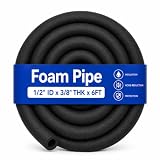
- Application: Pipe insulation foam tube for pipe freeze protection and sharp edge protection.Provides good water pipe insulation, sharp edge collision protection, and has good surface grip.(Please confirm the inner diameter before purchasing)
- Foam Pipe Insulation: Our pipe insulation foam are made of high quality nitrile rubber.Class B flame retardant, good flame retardancy, high elasticity, non-absorbent
- Non-folding packaging: Foam tube is naturally rolled up and put into the packaging bag.Avoid obvious creases caused by folding.Working temperature is -58°F to 230°F(- 50℃ to 110℃)
- No Pre-cut: The foam tube is completely closed structure, better thermal insulation effect.Pipe insulation foam can be cut to length as you need
- Package: You will receive 6 feet of insulation foam tubing. We stand behind of our products if you have any questions
- Maintain temporary grading, swales, berms, pumps, and drains so runoff moves away from foundations.
- Remove standing water from slabs, pits, crawlspaces, elevator shafts, and trenches before it freezes.
- Keep floor and wall assemblies from staying wet; use ventilation or dehumidification only when equipment is suitable for the conditions and monitored.
- Protect penetrations and unfinished masonry from direct precipitation and repeated freeze-thaw exposure.
- Check that sump pumps have power, a discharge route, and a tested backup plan if flooding is possible.
Protect materials and equipment
Raise lumber, gypsum products, insulation, cabinets, doors, flooring, and mechanical equipment above grade and away from walls that can transmit moisture. Cover materials with breathable, secured protection that sheds water without trapping condensation. Keep fuel, solvents, and other flammables in approved containers and locations; excess stored material increases both fire load and theft risk.
Secure the construction site against people and weather
USFA guidance recommends securing doors and windows, removing trash and debris, limiting excess stored materials, and requesting patrols or drive-bys. Treat the property as an active worksite even when no crew is present.
Lock down valuable and hazardous items
- Lock tools, fuel, appliances, copper, wire, fixtures, and portable generators in a secured building or rated storage container.
- Remove ladders, loose hand tools, and climbable objects from the perimeter where possible.
- Keep only the material needed for the next phase on site; arrange off-site storage for surplus stock.
- Post the street address and emergency contact numbers where responders can see them from the access point.
- Use lighting, cameras, or an alarm only if someone is assigned to receive alerts and act on them.
Stabilize the perimeter and access equipment
Brace or remove temporary fences, scaffolds, ladders, netting, chutes, signs, and stacked materials that can act as sails. NYC construction-safety guidance specifically calls for securing materials, netting, ladders, chutes, fences, and scaffolds and removing ice and snow. Keep a clear route for emergency vehicles and for the person performing storm checks. Close gates and lock them, but do not create a barrier that prevents firefighters, utility crews, or authorized inspectors from reaching required shutoffs.
Plan a storm check
Arrange a visit after high wind, heavy snow, freezing rain, or a prolonged power outage. The visitor should never enter alone if structural damage is suspected. From a safe location, look for displaced roof coverings, leaning walls, fallen lines, damaged fences, open doors, and water flowing where it should not. If the site is unsafe, keep people out and call the appropriate emergency, utility, or structural professional.
Provide temporary bracing and shoring
Partially completed work can fail under construction loads or winter weather even when the permanent design is adequate. FEMA’s construction note states: “Contractor shall provide all measures necessary to protect the structure during construction. Such measures shall include but are not limited to bracing, shoring for construction loads, temporary structures, and partially completed work.”
Have the builder or engineer identify which walls, roof planes, frames, trusses, stairs, decks, retaining walls, and excavations require temporary support. Do not remove a brace because it interferes with a covering, and do not add a brace that bears on an unverified slab, soil edge, or plumbing line. Record the intended load path and inspect connections, bearing points, anchors, and any support exposed to water.
Rank #3
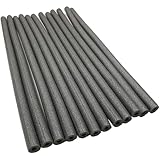
- Each cover is 3 feet long, made from durable foam and pre-slit for quick and easy installation on copper, iron, and PVC pipes. ID (nominal) 5/8inch; wall thickness 3/8 inch, fits copper pipe size 1/2 inch, fits iron pipe size 3/8 inch. *ALL SIZES ARE APPROXIMATE AND CAN CHANGE SLIGHTLY DUE TO THE MANUFACTURING PROCESS*
- All-Season Savings & Protection – From frigid winter nights to humid summer mornings, this insulation helps guard against freezing, pipe sweating, and keeps plumbing operations smooth and quiet.
- Helps Reduce Energy Waste and Bills – By minimizing heat loss, you can lower your water heater’s workload — giving you faster hot water delivery and saving you money.
- Prevents Costly Pipe Damage & Emergencies – Prevents ice formation and reduces the risk of burst pipes—protecting your home and your wallet from unexpected plumbing disasters.
- Durable Temperature Range – Safe for use from -90°F to 180°F (-68°C to 82°C) for both hot and cold water pipes. R-value = 2.2.
- Verify that temporary supports remain plumb, tight, and protected from vehicle impact.
- Keep snow, materials, and equipment from accumulating beyond the loads allowed by the temporary design.
- Prevent water from collecting at the base of shoring or against an unsupported excavation.
- Restrict access below overhead work, unstable framing, or snow-loaded projections.
- Have a qualified person reassess supports after any movement, impact, flooding, or unusual snow load.
Choose between controlled heat and a complete plumbing drain-down
There is no universal rule to heat every unfinished house or to drain every pipe. Compare the two strategies against the building’s actual systems and the reliability of supervision.
| Decision factor | Controlled temporary heat | Shut off and drain-down |
|---|---|---|
| Freeze risk | Reduced only while the heat source, power, distribution, and monitoring work. | Low for drained potable lines, but trapped water, low points, equipment, and fire-protection piping can still freeze. |
| Electricity and supervision | Requires dependable power, temperature monitoring, alarm response, and safe access during storms. | Less dependent on continuous power after draining, but still needs inspections for leaks, intrusion, and storm damage. |
| Sprinklers and standpipes | May allow required systems to remain charged if the system designer and fire authority approve the protection plan. | Shutting water can disable or damage fire-protection systems; obtain direction before changing their status. |
| Boilers and wet systems | Can preserve a system that is designed to operate safely in winter. | Often needs a licensed plumber or heating professional to drain, isolate, and protect boilers, radiant loops, or other wet systems. |
| Operating cost | Includes fuel or electricity, equipment rental, monitoring, and emergency response; no fixed amount is established here. | Usually avoids continuous heating cost but requires labor and may lengthen spring recommissioning. |
| Recommissioning | Normally quicker if temperatures stayed stable and the system remained commissioned. | Requires a documented refill, leak check, air purge, equipment startup, and inspection before use. |
Option A: maintain safe, monitored heat
Use temporary heat only when a responsible person can check it and respond to an alarm, outage, fuel problem, or leak. Select listed equipment sized for the space and install it with the manufacturer’s clearances, ventilation, fuel controls, and fire precautions. Keep heaters away from combustible framing, coverings, sawdust, insulation, solvents, and stored materials. Never improvise a flue or place a fuel-burning heater where combustion products can accumulate.
Prepare the piping
Insulate vulnerable pipes in crawlspaces, exterior walls, garages, attics, and other unheated areas. Missouri Public Service Commission guidance recommends insulation or UL-listed heat tape for exposed pipes; Bella Vista Water District lists pipe wrap, heat tape, and foam jackets as protective measures. Follow the heat-tape listing and installation instructions exactly, including thermostat, overlap, and grounding requirements. Heat tape is not a substitute for correcting a wet, damaged, or overloaded circuit.
Make monitoring dependable
- Place temperature sensors near the most vulnerable piping and in the coldest practical zones, not only beside the heater.
- Test alarms, remote notifications, smoke detection, and carbon-monoxide detection where applicable.
- Verify that the circuit is protected, labeled, and not shared with a load that can trip it.
- Keep fuel supplies secured and maintain a documented refueling plan.
- Record indoor temperature, outdoor conditions, heater status, and each visit in a dated log.
Do not use controlled heat when the building cannot be monitored, the electrical service is unreliable, the heat source cannot be installed with required clearances, or storm access is too dangerous for timely response. In those conditions, drain-down is generally the safer starting point, subject to fire-system and local-code review.
Option B: shut off and drain the plumbing
For an unheated or unattended building, the basic sequence is to isolate the water, remove pressure, drain every accessible section, and protect traps and equipment with products approved for the specific system. Bella Vista Water District and Arlington County describe the same core approach.
- Locate and label the main water valve, building drains, hose connections, water heater, boilers, pumps, and system isolation valves.
- Confirm with the fire authority or system professional whether sprinklers, standpipes, fire pumps, or other fire-protection piping must remain charged or receive a separate freeze-protection plan.
- Shut off the main water valve and verify that the meter or pressure indicator stops responding to an open fixture.
- Turn off energy to the water heater. Follow the manufacturer’s procedure for gas, electric, or indirect-fired equipment; do not drain a heated tank that is still energized.
- Open indoor faucets and outdoor spigots, starting at the highest point and working downward, so air replaces draining water.
- Flush toilets and drain toilet tanks. Remove water from low points, filters, pumps, washing-machine connections, refrigerator lines, and other exposed equipment.
- Open drain valves on plumbing sections designed for drainage and use compressed air only when the system manufacturer or licensed professional specifies the pressure and method.
- Protect traps with biodegradable antifreeze only where the fixture or system instructions permit it. Never put automotive antifreeze in potable-water plumbing.
- Leave a written tag at the main valve stating what was shut off, what was drained, the date, and who performed the work.
Boilers, radiant loops, hydronic heating, wet fire systems, and complicated manifolds can retain water in places that are not obvious. Arlington County advises using a licensed plumber for boilers or wet systems. If you cannot prove that a circuit is drained or safely protected, have the appropriate professional isolate it.
Rank #4

- Rich in Quantity to Use: the package comes with 36 pieces of insulating foam pipe covers, each insulation foam measures about 3.28 ft/ 1 meter in length, about 1.65 inches/ 42 mm in outer diameter, about 0.87 inches/ 22 mm in inner diameter, about 0.39 inches/ 10 mm in thickness, suitable for 3/4 inches copper pipes, and the quantity is enough for your daily use and replacement
- Reliable and Serviceable: the insulation foam is made of quality PEP foam, which is soft and reliable, not easy to tear or wear, anti collision protection and reusable, serving you for a long time; Lightweight, durable, and flexible for versatile use at outdoor pipe insulation, the pool, lake, beach, or in craft projects
- Safe and Trustworthy: the pipe wrap has good fireproof, heat-insulating, and sound-absorbing properties, good elasticity, easy bending, and safe use, which will bring you an ideal experience. Ideal for pipe insulation, swimming pools, and recreational use
- Convenient Installation: the pipe insulation wrap adopts pre slit design, so the assembly is simple; Only by directly clamping the insulation foam on the pipe, the insulation foam can be firmly fixed and not easily ruined
- Wide Application: the foam pipe insulation is waterproof, dustproof, oil resistant and corrosion resistant, an ideal choice for various outdoor pipe insulation, avoiding your pipe from freezing in winter and providing long-term protection; In addition, it can also be applied for crafts, décor, swimming, floating, aquatic fitness, summer camps, obstacle courses, DIY insulation, and protective padding for adults to enjoy for activities, games, and themed events
Protect fire-protection piping before changing water service
Fire sprinklers, standpipes, hose connections, and fire-pump systems are not ordinary domestic plumbing. NYC guidance requires protecting fire-protection lines from freezing, and Denver Water warns that shutting off a vacant building can affect fire-protection systems. Before a drain-down, contact the fire-protection contractor, monitoring company, insurer, and authority having jurisdiction as applicable. They may require temporary heat, a listed antifreeze solution, dry-system conversion, draining procedures, impairment notification, fire watch, or another documented plan.
Recommended Free Tools
Do not close a valve, disable an alarm, or drain a fire-protection line simply because the rest of the building is being winterized. Record any approved impairment, post the required notices, and restore the system as soon as the responsible authority permits.
Winterize electrical, fuel, and mechanical systems
Shut down equipment according to its instructions rather than pulling a random breaker. Identify circuits that must remain energized for sump pumps, alarms, monitoring, temporary heat, security, or fire protection. Label every disconnect so a storm visitor can determine what is live without trial and error.
- Protect temporary cords, panels, generators, and fuel containers from water, traffic, and unauthorized use.
- Keep generator exhaust outside and away from doors, windows, and openings; never run a fuel-burning generator inside the structure.
- Drain or protect compressors, pumps, pressure washers, and other equipment that can retain water.
- Close and secure fuel valves when equipment is out of service, and inspect for leaks or damaged hoses.
- Keep HVAC openings, ducts, and equipment covered against precipitation while preserving required ventilation.
Use a repeatable storm and inspection routine
Before winter, complete a final sign-off using the construction log. After each major storm, repeat only the checks relevant to the event but document every visit.
Before winter checklist
- Photographs are dated, labeled, and stored where the owner and builder can access them.
- Roof coverings, flashing, openings, drainage paths, and downspouts are weather-tight or intentionally protected.
- Temporary bracing, shoring, scaffolds, fences, ladders, netting, chutes, and stored materials are secured.
- Main utility valves and disconnects are labeled; the chosen heat or drain-down plan is written and approved.
- Fire-protection status is confirmed with the responsible professional.
- Alarms, temperature sensors, smoke and carbon-monoxide detection, and communications are tested.
- Insurance coverage, inspection obligations, permits, and local fire-code requirements are confirmed.
- Emergency contacts, the site address, and access instructions are posted.
After high wind, snow, or freezing rain
- Inspect from outside first for leaning, displacement, sagging, fallen lines, and damaged access controls.
- Check roof coverings, flashing, ponding, leaks, snow accumulation, and ice at edges and walkways.
- Look for frozen or burst lines, unexplained water, tripped power, heater shutdown, and alarm notifications.
- Verify that doors, window panels, fences, scaffolds, ladders, netting, and chutes remain secured.
- Remove snow and ice only with a safe method and only when the structure and local rules permit it.
- Record temperature, utility status, observations, repairs, photographs, and the next required action.
Respond safely to a freeze or burst pipe
Never thaw a frozen pipe with a torch or open flame. NYC and Bella Vista both warn that flame thawing creates fire and explosion hazards, especially in a structure containing wood framing, solvents, fuel, or concealed cavities.
- Shut the water at the main valve if a line is frozen, leaking, or has burst.
- Open nearby faucets to relieve pressure while keeping people away from energized equipment and wet electrical areas.
- Do not chip at ice, drill into a pipe, or apply uncontrolled heat inside a wall or ceiling.
- Call a licensed plumber when the break, valve, boiler, wet system, concealed line, or repair is beyond the owner’s competence.
- Photograph the damage, preserve failed parts when safe, and notify the insurer and responsible project parties.
- After repair, dry affected assemblies promptly, inspect for hidden moisture, and revise the winterization plan before the next freeze.
Recommission the house in spring
Reopening a drained or winterized building is a controlled startup, not simply turning the main valve. Review the winter log, inspect the roof and enclosure, and confirm that temporary supports and coverings are still appropriate.
- Close fixture faucets and drain valves, remove temporary antifreeze where used according to the product instructions, and verify that fixtures are assembled correctly.
- Open the main water valve slowly while checking every accessible joint, appliance connection, valve, and concealed-area indicator for leaks.
- Flush lines to remove stagnant water and air, then test pressure and flow.
- Refill and start water heaters, boilers, pumps, and hydronic loops using the manufacturer’s sequence; purge air and confirm relief devices and controls.
- Restore fire-protection systems only through the responsible contractor or authority, then verify alarms, valves, monitoring, and required documentation.
- Test electrical circuits, sump pumps, HVAC equipment, alarms, and security systems before workers return.
- Remove temporary weather barriers and bracing only when the permanent enclosure and structural design allow it.
Keep the dated winter log with project records. It should show what was protected, which utilities were isolated, every inspection and storm response, and the person who authorized restoration. That record supports safer handoffs among the owner, builder, trades, insurer, and emergency responders.
Quick Recap
Product prices and availability are accurate as of the date/time indicated and are subject to change. Any price and availability information displayed on Amazon at the time of purchase will apply.

