The most effective way to reduce road-construction noise indoors is to stop air leakage at the building envelope. Close and latch windows during the loudest work, seal sash and frame gaps, weather-seal exterior doors, and then add an interior window insert if the existing frame is sound. These measures usually outperform a curtain hung over an open or poorly sealed window.
Work from the largest leakage path to the smallest. Windows are commonly the weak link in a facade, doors are acoustically weaker than surrounding walls, and an airtight, correctly fitted treatment matters more than a product label. Keep required egress and ventilation intact while you work.
As an Amazon Associate I earn from qualifying purchases.
Start with the noise you can stop today
During active construction, walk the perimeter of the noisiest room and listen at each opening. Put your hand near the joint without touching it; moving air, a sharp increase in sound, or visible daylight indicates a path worth treating. Check window sashes and frame joints, trickle vents, door jambs and thresholds, letter slots, cable entries, pipe penetrations, and cracks where walls meet floors or ceilings.
What’s actually slowing this PC down?
Pick the symptom - the matching free tool is one click away.
Use these immediate, reversible steps in order:
- Close and fully latch every window in the affected room. A window that is closed but not compressed against its seals can still leak sound.
- Apply removable perimeter weatherstripping to the largest sash or frame gaps. Clean and dry the surfaces first so the strip seals continuously.
- Hang a temporary clear-vinyl acoustic curtain or a heavy, lined curtain over the complete window opening. Mount it so the fabric overlaps the sides and reaches below the sill; a narrow uncovered edge remains a leakage path.
- Move beds, desks, and seating to the side of the house farthest from the road. This changes your distance from the source but does not seal the room.
- Use a white-noise machine for sleep or concentration. It masks some perceived noise; it does not reduce sound entering the building.
Do not tape over a required trickle vent, block an emergency-opening window, or wedge a door shut. If the room becomes hot or stuffy after windows are kept closed, address ventilation before making a permanent seal.
#1 Best Overall
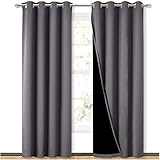
- Complete blackout curtains block light and reduce noise for better sleep - 2 layer construction with blackout lining
- Curtains measure 52 inches wide x 84 inches long per panel, sold as a set of 2 panels for a total width of 104 inches
- Silver grommets make installation easy on any standard curtain rod; thermal insulating design helps regulate room temperature
- Care instructions - Machine wash cold, tumble dry low; do not bleach or iron; polyester fabric resists fading, shrinking and wrinkles
- Versatile solid black drapes complement any decor; perfect for bedrooms, living rooms, media rooms, nurseries and more
Find and rank the leakage paths
Airborne sound follows the easiest air path. Treating a small crack while a larger opening remains can produce little audible change. Rank each path by opening size, direct line to the road, and how continuously it leaks.
- Windows: inspect the meeting rails, corners, frame-to-wall joint, and any vent in the sash or wall.
- Doors: look for daylight under the leaf, at the latch side, and around the jamb. Letter slots and pet doors require special attention.
- Utility penetrations: seal gaps around pipes, conduits, extractor ducts, and cable entries with a material suitable for that opening and its fire-safety requirements.
- Junctions: check skirting boards, floor-to-wall joints, ceiling edges, and cracks around old repairs.
Seal only after confirming that the opening is not a required air inlet, pressure-relief path, or fire-rated assembly. For an uncertain penetration, ask a qualified building professional rather than filling it with an unsuitable foam or sealant.
Choose a window treatment that fits the existing frame
Federal Highway Administration (FHWA) guidance identifies window openings as a frequent weak link and describes interior glass sash or interior storm sash as a proven way to improve a residential opening. The treatment must be fitted as a sealed assembly; a panel that leaves an open perimeter gap will underperform.
Quick wins for a faster PC:
Clear out junk files and repair common Windows errorsFree Scan →Scan for outdated or missing drivers - takes under a minuteDriver Scan →Removable weatherstripping
Weatherstripping is the first window upgrade when the frame and sash are serviceable. Replace compressed or missing seals, ensure the sash closes evenly, and check the corners for discontinuities. It is inexpensive and rental-friendly, but it cannot compensate for a warped frame, a failed locking mechanism, or a vent that remains open.
Interior acoustic insert or storm sash
An interior insert adds a second sealed layer on the room side of the existing window. FHWA states that an approximately 3-inch air space may be needed when an interior storm sash is installed in a sound existing frame. Treat that dimension as a design condition, not a guaranteed noise-reduction figure: the result depends on the glass, frame, seals, frequency, and installation.
An insert is generally reversible, preserves the exterior appearance, and can be appropriate for a rental or a period facade. Confirm that the reveal has enough depth, that the insert can be removed for cleaning or emergency access, and that it does not interfere with the window’s required operation.
Rank #2
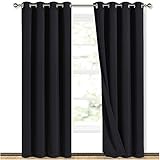
- Complete blackout curtains block light and reduce noise for better sleep - 2 layer construction with blackout lining
- Curtains measure 52 inches wide x 84 inches long per panel, sold as a set of 2 panels for a total width of 104 inches
- Silver grommets make installation easy on any standard curtain rod; thermal insulating design helps regulate room temperature
- Care instructions - Machine wash cold, tumble dry low; do not bleach or iron; polyester fabric resists fading, shrinking and wrinkles
- Versatile solid black drapes complement any decor; perfect for bedrooms, living rooms, media rooms, nurseries and more
Replacement acoustic window
If the existing frame is damaged, loose, or unable to accept a continuous seal, a replacement acoustic window may be more appropriate than an insert. Replacement is a larger project: it can affect trim, exterior weatherproofing, planning requirements, and ventilation assumptions. Have the installer assess the wall opening and specify a complete, sealed assembly rather than glass alone.
Do these 3 things before closing this tab:
1Clear out junk files and repair common Windows errors2Fix the driver behind crashes, sound loss and screen glitches3Repair Windows errors before they cause bigger problemsTemporary clear-vinyl or lined curtains
A clear-vinyl curtain is a quick temporary screen when you need daylight and reversibility. A heavy lined curtain can add absorption and masking, but neither treatment seals the perimeter by itself. Hang the curtain across the full opening with side returns and a bottom overlap, and keep it clear of heaters and required escape routes. Expect an aesthetic and operating trade-off: curtains can obstruct views, handles, and ventilation when the window is open.
| Window measure | Best use | Reversibility | Important limitation |
|---|---|---|---|
| Perimeter weatherstripping | Small, identifiable sash or frame gaps | High | Cannot correct a damaged or distorted frame |
| Interior insert or storm sash | Sound frame with sufficient interior reveal | High | FHWA notes an approximately 3-inch air space may be needed; performance is assembly-dependent |
| Replacement acoustic window | Loose, damaged, or unsuitable existing frame | Low | Requires professional installation and may change ventilation and exterior details |
| Clear-vinyl or heavy lined curtain | Short-term, reversible reduction while retaining some daylight | High | Does not eliminate perimeter leakage and can affect views or window operation |
Make exterior doors as airtight as the windows
FHWA describes doors as acoustically weaker than surrounding walls. A hollow or poorly sealed door can therefore dominate the room’s sound path even after a window has been improved.
Specify the door assembly
- Use a solid-core door rather than a lightweight hollow leaf where replacement is practical.
- Fit a continuous vinyl perimeter seal on the jambs and head.
- Use a gasketed stop so the closed leaf compresses against a continuous seal.
- Install a drop-bar or automatic threshold sweep to close the bottom gap.
Adjust the sweep so it contacts the floor without dragging, trapping the door, or preventing safe egress. Check the threshold for an uneven floor; a sweep that touches only at two points leaves a central leak. Do not defeat a fire door’s closer, latching, or listed hardware while trying to improve acoustics.
Decide whether walls and ceilings need work
Only move beyond openings after windows and doors are sealed. Added insulation, an extra plasterboard or drywall layer, and decoupled construction can help when sound is transmitting through the wall itself, but these are more disruptive and expensive than envelope sealing. They can also expose flanking paths through adjoining rooms, floors, ceilings, and service cavities.
Windows Errors? Fix Them Before They Spread
Repair common Windows errors and clear accumulated junk for a smoother, more stable PC - no reinstall needed.Free scan · no reinstallOutdated Drivers Are Slowing You Down
One free scan finds every outdated or missing driver and matches the right update for your exact hardware.Free scan · exact hardware matchSuspended ceilings are generally reserved for severe cases or special structures. They reduce room height and may require changes to lighting, sprinklers, ventilation, and fire detailing. Have a qualified acoustical or building professional identify the transmission path before opening a wall or ceiling; otherwise you may spend heavily on a surface that is not the dominant route.
Rank #3
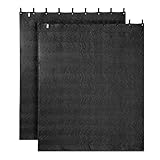
- Sound Absorption & Noise Reduction: Made with a polyester woven surface and recycled cotton filling, this 3-layer physical barrier effectively absorbs indoor echoes, reduces sound reflections, and blocks part of the external noise. Note: 1. This product provides limited sound insulation and is mainly used as a protective barrier only. 2. Keep the product in a dry environment. If it gets wet, please air dry it promptly. Prolonged dampness may cause unpleasant odors and material damage
- Effective Light Blocking: The thick, dense material and dark color effectively block light, creating a dim environment and avoiding glare. Ideal for home theaters, conference room projections, tents, or temporary darkrooms
- Thickened Design: Secured with zig-zag quilting and double-stitched binding, the soundproof blanket maintains its shape, resists tearing, and stands up to long-term hanging use. No glue bonding and odor-free materials make it friendly for users and households
- Large Coverage: Each blanket measures 96 x 80 in / 2438 x 2032 mm. 2 packs provide wide coverage with fewer seams, ideal for covering standard doors and windows or handling large spaces where soundproofing, light blocking, and insulation are needed
- Easy Installation: Equipped with multiple metal grommets and woven straps, the acoustic blankets can be hung with hooks, screws, or curtain rods. Quick to set up and secure, it works as a flexible soundproof, blackout, or insulation barrier on walls, doors, and windows.
What outdoor barriers can and cannot do
A temporary or permanent barrier works by blocking the line of sight between the construction source and the house. It must be high enough and long enough to interrupt that path. Driveways, street openings, gaps at the ends, and sound flanking over or around the barrier reduce its effect.
FHWA’s 2017 guidance characterizes a 10 dB reduction as attainable for an effective highway noise barrier, 15 dB as very difficult, and 20 dB as nearly impossible. These are barrier-planning figures, not a promise for a particular road project or backyard fence. A house on a hillside above the barrier, or a building that rises above it, may receive little benefit.
Dense vegetation is usually a visual or psychological screen rather than a practical acoustic solution for an existing home. FHWA says a 200-foot width of dense vegetation would be needed for about 10 dB, a footprint that is generally impractical in established neighborhoods. Planting a narrow hedge can improve privacy and perception without producing that measured reduction.
Keep ventilation and indoor air safe
Sealing windows and doors reduces uncontrolled air exchange. Before permanently sealing a room, determine how it will receive outdoor air and how excess heat will be removed. Mechanical ventilation or air conditioning may be needed, especially in bedrooms or rooms with high occupancy.
Ask a qualified window or HVAC professional to check the proposed seals against local building requirements. Keep any code-required ventilator operational, maintain safe combustion-air arrangements, and do not rely on opening a window during the loudest work if that defeats the acoustic treatment. A quieter but overheated or poorly ventilated room is not a successful retrofit.
Independent reader supportYour contribution helps us test, update, and keep practical guides available for everyone.Coordinate with the road project
Indoor treatments address the receiver, but the project team can sometimes reduce the source. Contact the road agency or contractor and ask for the designated noise contact, approved work hours, planned equipment enclosures, temporary barriers, and the local complaint or mitigation process.
Rank #4

- Sound Absorption & Noise Reduction: Made with a polyester woven surface and recycled cotton filling, this 3-layer physical barrier effectively absorbs indoor echoes, and reduces sound reflections. Note: 1. This product provides limited sound insulation and is mainly used as a protective barrier only. 2. Keep the product in a dry environment. If it gets wet, please air dry it promptly. Prolonged dampness may cause unpleasant odors and material damage
- Effective Light Blocking: The thick, dense material and dark color effectively block light, creating a dim environment and avoiding glare. Ideal for home theaters, conference room projections, tents, or temporary darkrooms
- Thickened Design: Secured with zig-zag quilting and double-stitched binding, the soundproof blanket maintains its shape, resists tearing, and stands up to long-term hanging use. No glue bonding and odor-free materials make it friendly for users and households
- Large Coverage: Each blanket measures 80 x 48 in / 2032 x 1219 mm. It provides wide coverage with fewer seams, ideal for covering standard doors and windows or handling large spaces where soundproofing, light blocking, and insulation are needed
- Easy Installation: Equipped with multiple metal grommets and woven straps, the acoustic blankets can be hung with hooks, screws, or curtain rods. Quick to set up and secure, it works as a flexible soundproof, blackout, or insulation barrier on walls, doors, and windows.
FHWA guidance recommends controlling construction noise through the type, timing, and duration of work and addressing community concerns proactively. Give the project specific information: the room affected, dates and times, equipment causing the problem, whether sleep or work is being disrupted, and whether vibration is also present. Request information about monitoring or a change in the noisiest operation’s schedule when local rules allow.
Recommended Free Tools
Use a decision framework before spending money
Compare each proposed measure against the actual path into your house, not against a generic product claim. Consider:
- Reversibility and rental suitability: removable seals, inserts, and curtains can be taken out; replacement windows and wall work cannot.
- Expected benefit at the leakage path: an airtight fit at a large gap is usually more valuable than a thicker treatment placed away from the gap.
- Installation disruption: weatherstripping and curtains are quick; window, door, wall, and ceiling work require planning and access.
- Daylight, views, and operation: inserts and curtains can affect handles, cleaning, escape access, and the ability to open a window.
- Ventilation and HVAC consequences: permanent sealing may require mechanical fresh air or additional cooling.
- Need for measurement: persistent or complex problems justify an acoustical assessment before major construction.
FHWA does not publish one universal consumer-product dB figure for every insert, curtain, or weatherstrip. Performance varies with the complete assembly, installation quality, frequency content, and remaining leakage. Treat a manufacturer’s rating as applicable only when its test configuration matches your window or door.
When curtains are not enough
Heavy equipment can create low-frequency noise and structural vibration that travel through the building. Curtains and surface treatments mainly address airborne sound and may have little effect on shaking, rattling, or bass-heavy energy. Record when the vibration occurs and which surfaces rattle, then report it to the project contact and request professional assessment if it is severe or persistent.
Escalate to a qualified acoustical or building professional when the frame is damaged, the noise remains disruptive after sealing, a permanent wall or HVAC change is proposed, or you need documented measurements for a complaint or mitigation request. Ask the professional to identify the dominant path and to specify a complete, code-compliant assembly rather than selling a single component in isolation.
A practical room-by-room sequence
- Bedroom: seal and latch the window, treat its perimeter, add an insert if the frame permits, and move the bed away from the road-facing wall. Use white noise only as a masking aid.
- Home office: close leakage paths first, then use a full-width temporary curtain or insert. Keep required ventilation available during long work periods.
- Living room: inspect both the road-facing window and the exterior door; door leakage can dominate if the window is already tight.
- Whole house: compare rooms on the quiet side. If they are substantially quieter, prioritize the road-facing facade rather than insulating every internal wall.
Recheck the room during the same construction operation after each change. That simple before-and-after comparison tells you whether the treatment addressed the dominant path and prevents unnecessary work elsewhere.
Quick Recap
Product prices and availability are accurate as of the date/time indicated and are subject to change. Any price and availability information displayed on Amazon at the time of purchase will apply.

