Recommended Free Tools
The most reliable way to reduce noise in shared student housing is to use several layers at once: agree on sleep and study periods, control sound at its source, use headphones or earplugs as temporary listener-side protection, make reversible physical changes with permission, and involve the resident adviser (RA) or housing office when a repeated problem does not improve. Your housing contract and local residence policy control the enforceable quiet hours; no single schedule applies to every university.
Start with the rule that applies to your building
University housing usually separates two ideas that are easy to confuse:
As an Amazon Associate I earn from qualifying purchases.
- Courtesy expectations: Residents are expected to avoid disturbing others throughout the day.
- Designated quiet hours: Specific overnight periods when noise restrictions are stricter. Examination or finals periods may require 24-hour quiet.
For example, the University of Illinois Chicago says courtesy quiet hours are in effect 24/7. Its posted quiet hours are 10 p.m.–8 a.m. Sunday–Thursday and 1–10 a.m. Friday–Saturday, with 24-hour quiet during finals. Binghamton publishes courtesy hours all day, quiet hours from midnight–8 a.m. Sunday night through Friday morning and 2–10 a.m. on weekends, plus 24-hour quiet during finals. Columbia lists 11 p.m.–8 a.m. Sunday–Thursday and 1–8 a.m. Friday–Saturday, with 24-hour quiet during reading and examination periods. Johns Hopkins sets minimum quiet hours of 8 p.m.–8 a.m. on weeknights and 10 p.m.–8 a.m. on weekends; individual communities may extend them, and finals have 24-hour quiet.
PC Slower Than It Used to Be?
A free scan shows the junk files, broken settings and background clutter dragging Windows down - then fixes them in one click.Free scan · Windows 10 & 11Outdated Drivers Are Slowing You Down
One free scan finds every outdated or missing driver and matches the right update for your exact hardware.Free scan · exact hardware matchThese examples demonstrate variation rather than a universal standard. Read your residence contract, handbook, posted hall rules and any finals-period notice before deciding that a neighbor is violating policy. Even outside posted hours, sound that prevents another resident from sleeping or studying can violate courtesy expectations.
#1 Best Overall
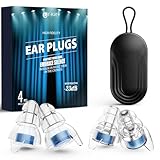
- HIGH FIDELITY EAR PLUGS - You may experience muffling when you wear foam-based ones. But those days are gone. You will be able to hear different sound frequencies and talk to people with these HIFI earplugs since they reduce noise evenly and maintain the full frequency.
- ECO-FRIENDLY DESIGN - These hypoallergenic silicone earplugs are washable and reusable, so if you keep them right, they will stay with you for years. In contrast, the Polyurethane foam takes up to 5 years to degrade in nature. So it's cool to have personalized and exclusive silicone earplugs!
- NOISE REDUCTION 23dB - The acoustic filter elements in the ear plug can reduce the volume by 23 dB, which is an ideal value for concerts or band rehearsals. So you can do more of what you love while minimizing the risk of noise-induced hearing loss, tinnitus, and anxiety.
- REURE CAN PROTECT YOU ANYWHERE - The compact case protects your earplugs. You can attach it on your key chain, jeans, or backpack and it can follow you anywhere. Ideal for concerts, noise sensitivity, tinnitus relief, motorcycles, musicians, sports events, flying, sleeping noise cancelling, etc.
- PERFECT FIT GUARANTEE - Every order comes with two pairs of different-sized ear plugs so that you can have the most comfortable experience. If you have any problems when you are using it, please get in touch with our support team to get the best after-sales service 🙂
Define what “too loud” means in a shared room
A useful practical test is whether sound can be heard outside the room. Columbia Housing describes any noise audible outside a room or suite as intrusive. Johns Hopkins uses a similar approach when discussing acceptable noise levels. That standard is more useful than arguing about a particular volume setting, because the same setting sounds different in a single room, a suite or a building with thin partitions.
Health-oriented guidance gives context but does not replace your housing rules. The World Health Organization Working Group on Noise Control in Buildings, as reproduced in Guidelines for Healthy Housing, gives background targets below 45 dB(A) Leq for good indoor speech intelligibility and 35 dB(A) Leq in bedrooms. It also gives outdoor targets below 55 dB(A) Leq during the day and 45 dB(A) Leq at night. These are guideline values, not guarantees that a dorm will meet them and not necessarily local legal limits. A phone sound-meter app can help you compare situations, but it is not a compliance test and should not be used to confront someone over a single reading.
1. Identify the source and timing before you confront anyone
For two or three days, make a short factual log. You are looking for a pattern, not building a case against a roommate.
Quick wins for a faster PC:
Repair Windows errors before they cause bigger problemsFix Now →Fix the driver behind crashes, sound loss and screen glitchesFind Drivers →Clear out junk files and repair common Windows errorsFree Scan →- Record the source: voices, music, television, gaming, footsteps, doors, guests, appliances, plumbing or outdoor traffic.
- Write down start and end times, including whether the disturbance is intermittent or continuous.
- Note the effect: waking you, preventing sleep, interrupting study, or making calls and online classes difficult.
- Record where you hear it: inside your room, through a shared wall, in the hallway or in a common area.
- Note what changed when the sound stopped, such as a door closing, a speaker moving or guests leaving.
“You are always loud” invites an argument about intent. “Music was audible through the shared wall from 11:20 p.m. to 12:05 a.m. while I was trying to sleep” identifies a solvable event. Do not record private conversations or make covert recordings unless your local law and housing policy clearly permit it.
Rank #2

- LESS NOISE, CRISPER SOUND – Enjoy the moment at your volume with Experience 2 earplugs. Designed with live events in mind, Experience 2 earplugs lower the volume without compromising sound quality, ensuring a crisp, clear listening experience at concerts, festivals, sporting events and beyond.
- CERTIFIED HEARING PROTECTION – Loop Experience 2 earplugs qualify as certified hearing protection, keeping your ears safe from damaging noise for peace of mind in loud situations. Experience 2 offers 17 dB (SNR) of filtered noise reduction.
- MADE FOR DANCING AND MOVING – Designed to stay put day and night, Experience 2 earplugs are the perfect event companion. Customize your fit with 4 upgraded ear tip sizes for a secure fit, even in smaller ears. Loop earplugs are reusable, easy to clean and built to last.
- EASY TO USE – Experience 2 earplugs are easy to insert and come with adjustable ear tip sizes for optimal noise reduction and a comfortable fit throughout the day. Just pop them in, twist to secure and head out at your volume. When inserted correctly, Experience 2 earplugs shouldn't stick out from the front.
- IN THE BOX – 1 set of Loop Experience 2 earplugs, 4 sets of silicone ear tips (sizes XS + S + M + L – M comes pre-installed), 1 portable and convenient keychain Carry Case.
2. Make a specific roommate agreement
Have the first conversation when nobody is rushing to class or already angry. Start with the shared goal—sleep, study and a usable common area—then propose rules that can be observed.
Include sleep and study windows
Each roommate should state ordinary sleep times, early classes, work shifts, online lectures and predictable exam-period needs. A schedule might include a sleep window from 11 p.m. to 7 a.m. and a quiet study block from 6–9 p.m., but use your actual timetable rather than copying someone else’s hours.
Use an observable volume rule
“Keep it reasonable” is too vague. A workable rule is that music, television, calls and game audio should not be audible outside the room or suite, especially during the agreed sleep window. Headphones should be the default for late-night personal media.
Set common-area and guest expectations
- Decide whether guests need advance notice and how many are acceptable on weeknights.
- Specify where conversations, gaming and group work may occur.
- Agree to close doors gently and avoid dropping bags or moving furniture at night.
- Set a process for an immediate request, such as a text message or a mutually agreed phrase.
Write down what happens after a request
Agree that a roommate will acknowledge a message and lower the sound promptly, rather than debating the entire history of the conflict at midnight. Schedule a review after one week. The University of Illinois Chicago notes that roommate agreements can be updated with RA facilitation, and Johns Hopkins encourages roommates to discuss acceptable noise levels so everyone can live, study and sleep comfortably.
Rank #3

- Effective Noise Cancellation: The noise Cancelling ear plugs that reduce noisy voice level by up to 25dB-30dB, providing natural quiet sound quality to protect your ear hearing not influenced by noisy environment and help you to get in your bubble. The ergonomic round shape of sleeping ear plugs sits perfectly in your ears, making it a fashionable mountings that protect your hearing.
- Soft Silicone Earplugs: The Noise Reduction Earplugs made from soft silicone for stronger hearing protection and re-usability, which don’t stick to dust and have a comfortable touch. The silicone ear plugs come in 8 different ear tips sizes, so you can always find the perfect fit in your ear. You can use earplugs long periods for day and night, nothing in ear and no discomfort or pain while wearing this earplugs for sleeping or any different scenes.
- Multi-Purpose Scenario: The reusable ear plugs you enjoy with quiet moment for sleeping noise cancelling, studying, working,concert or party, motorcycles or airplane pressure, musicians and etc.The earplugs for noise reduction apply for different scenarios to protect our ear hearing.
- Comfortable Wear and Reusable: The ear plugs for sleeping is super light-weight and easy to carry anywhere with plastic storage box. The soft silicone ear plugs are reusable and washable, which is Sustainable. You can choose different silicon ear tips to apply your ear canal for perfectly fit, making it painless to wear for long periods of time while effectively reducing the impact of sound waves on the eardrum.Suggested that you regularly should clean the earplugs for clean use.
- Package Included: In ear plugs packaging - there are 2 pair of earplugs, 8 sizes of soft silicone ear tips, 1 plastic storage box,1 round carabiner and 1 instruction card. Our silicone earplugs are durable and reusable, providing a quiet world in your life.
A simple written agreement can look like this:
- “From 11 p.m. to 7 a.m., audio is on headphones unless everyone in the room agrees otherwise.”
- “During the 6–9 p.m. study block, calls and gaming stay in the common room at a level not audible in bedrooms.”
- “Guests are announced in the group chat before arrival and leave by the agreed time.”
- “If someone texts ‘quiet please,’ the person making the noise lowers it immediately; details are discussed the next day.”
3. Control the sound at its source
Source control usually helps everyone more than trying to block sound after it has spread. The National Institute for Occupational Safety and Health describes engineering controls as modifying equipment or making physical changes to the surrounding environment to reduce noise at the listener’s ear. In a dorm, that means small, reversible changes rather than permanent construction.
For music, television and gaming
- Lower the volume before it becomes audible outside the room.
- Use headphones for late-night personal listening; Johns Hopkins explicitly encourages headphone use in residence housing.
- Move speakers away from shared walls, doors and floors. Do not place a subwoofer directly on a neighboring wall or on a hollow desk.
- Put speakers on a stable shelf or isolation pads supplied by the manufacturer, if permitted, to reduce vibration through furniture.
- Use the device’s sleep timer so audio does not continue after you fall asleep.
For footsteps, doors and furniture
- Close doors by turning the handle rather than letting the latch slam.
- Add removable felt pads under chairs and other movable furniture where the housing rules allow it.
- Lift furniture instead of dragging it, and avoid rearranging a room during quiet hours.
- Place a permitted rug or runner in high-traffic areas. A rug can reduce impact noise and reflections inside the room, but it will not soundproof a floor or ceiling.
For voices and guests
- Move group conversations away from shared bedroom walls and toward a common area with a closed door.
- Keep doors and windows closed when outdoor noise or hallway activity is carrying into the room, provided ventilation and fire-safety rules are met.
- End gatherings at the agreed time rather than waiting for a neighbor to complain.
4. Use renter-safe physical treatments realistically
Soft furnishings and door sealing can make a room less reverberant and reduce some leakage, but they do not turn a dorm into a studio. Absorption reduces reflections within the treated room; true sound isolation generally requires heavier, sealed building assemblies that students cannot install and housing staff may prohibit.
Low-risk options to request
- Area rugs with an approved underlay to reduce footfall and chair movement.
- Bookcases or wardrobes placed on a shared wall, without blocking vents, sprinklers, electrical panels or egress routes.
- Removable draft seals or door sweeps approved by housing and compatible with fire doors.
- Fabric curtains or other soft furnishings that reduce hard-surface reflections.
Changes that need explicit permission
- Adhesive acoustic panels, wall anchors, ceiling hooks and anything that may damage paint or fire-rated assemblies.
- Replacing door hardware, adding permanent seals or altering windows.
- Moving heavy furniture in a way that blocks exits, radiators, sprinklers or accessible routes.
Ask the RA or facilities office before installing any seal, panel or floor covering. Never wedge open a fire door, cover a smoke detector or block a ventilation grille to reduce noise.
5. Protect your sleep and study while the source is being fixed
Listener-side controls are useful, but they do not solve the underlying disturbance or protect neighbors from your own audio. Treat them as a supplement to communication and source control.
Rank #4

- Noise Reduction Earplugs: The Noise Reduction earplugs that reduce noisy voice level by up to 25dB-30dB,providing natural quiet sound quality. The Earplugs for sleeping won’t irritate to your ears at loud sound scene.The hearing protection earplugs will provide some noise attenuation,but they won’t make it completely impossible to hear sound keeping your ears safe from damaging sounds.
- Soft Silicone Earplugs: The Silicone Earplugs is made of soft flexible soft-touch silicone to perfect fit the ear carnal and re-usability. This Earplugs for noise cancelling is comfortable and durable for nighttime and daytime. Earplugs comes with 7 pairs silicone ear tips and one soft connection cord to fit each person’s in needs, offering you a wonderful feeling comfort.
- Multi-Purpose Scenario: The reusable ear plugs makes you to enjoy with quiet moment for sleeping noise cancelling, studying, working,concert or party, motorcycles or airplane pressure, musicians and snoring etc.The earplugs for noise reduction apply for different environment to get your own world silence.
- Comfortable Wear and Reusable: The Earplugs for concert is soft and easy to insert ears comfortably no matter where you are in to block any loud sounds. Earplugs is super light and carry anywhere with plastic box and connection cord whatever on necks or in box.This Reusable earplugs can be washable all the time to keep it clean for continuous using.
- What you get: 1 pair of Earplugs, 7 pairs of silicone ear tips,1 piece black carrying plastic box & rope, 1 piece lanyard, 1 piece rope buckle and 1 round key-chain. Hope that Our Earplugs can bring you quiet using experience on your loud sound life.
Noise-canceling headphones
Active noise cancellation is most effective against steady, low-frequency sounds such as HVAC rumble, road noise or an aircraft-like hum. It is less reliable against sudden voices, doors, footsteps and impact noise. For studying, choose a comfortable fit, keep playback at a level that does not create hearing risk, and take breaks. Do not wear headphones when you must hear a fire alarm, evacuation announcement, medical device or other safety signal.
Foam earplugs for sleeping
Foam earplugs can reduce incoming sound during sleep or focused work. Insert them according to the package directions, keep them clean and replace them when they become dirty or lose their shape. Select a design that still allows you to hear alarms if that is required in your room; consider a vibrating alarm or visual alert if you routinely sleep through alarms. Earplugs do not stop your roommate from hearing your television, music or calls, so they cannot substitute for a volume agreement.
Room positioning and routines
- Place your bed or desk farther from the shared wall when the layout permits.
- Use a white-noise machine or a quiet fan only if it does not create a new disturbance for roommates.
- Study in the library or another approved quiet space when you have a deadline and the room cannot be made quiet quickly.
- Keep a consistent wind-down routine so a short, unavoidable noise does not become an all-night sleep disruption.
Quiet-hour examples at a glance
| Institution | Courtesy expectation | Regular quiet hours | Exam-period rule |
|---|---|---|---|
| Binghamton | 24/7 courtesy hours | Midnight–8 a.m. Sunday night through Friday morning; 2–10 a.m. on weekends | 24-hour quiet during finals |
| University of Illinois Chicago | 24/7 courtesy quiet hours | 10 p.m.–8 a.m. Sunday–Thursday; 1–10 a.m. Friday–Saturday | 24-hour quiet during finals |
| Columbia | Noise audible outside a room or suite is considered intrusive | 11 p.m.–8 a.m. Sunday–Thursday; 1–8 a.m. Friday–Saturday | 24-hour quiet during reading and examination periods |
| Johns Hopkins | Roommates are encouraged to discuss acceptable levels | Minimum 8 p.m.–8 a.m. weeknights; 10 p.m.–8 a.m. weekends; communities may extend these hours | 24-hour quiet during finals |
Use this table to understand how much policies vary, not to claim that another university’s hours apply to your building. Your contract, hall notice and RA are the controlling references.
Free tools Windows power users keep installed
One-click scans. No signup required.
6. Escalate a repeated problem fairly
If a direct request fails, move from informal communication to a documented, neutral process. Do not retaliate with loud music, pounding on walls, public shaming or threats; those actions can breach conduct rules and make a resolution harder.
Best Value

- 【Effective Noise Reduction】Our noise cancelling ear plugs, feature a unique design that reduces noise levels by up to 30dB, providing ear protection and a peaceful and uninterrupted experience in any noisy environment. They are also earplugs for sleeping noise cancelling, so you can enjoy a restful night's sleep without any disturbances.
- 【Comfortable and Reusable】Made with soft silicone and a plastic profile, our ear plugs, including quietcomfort earplugsear plugs, are both comfortable to wear and reusable. They also come with 4 pairs of soft silicone ear tips in XS/S/M/L sizes, a waterproof design, and a small carrying case, making them the perfect travel companion.
- 【Stylish Design】Our ear plugs are designed with a durable plastic profile that provides structural support. The soft silicone material that envelops the ear plugs ensures comfort and durability for long-term use.
- 【Multi-Purpose】 Our ear plugs are versatile and perfect for a variety of activities, including sleeping, concerts, motorcycling, shooting, working, studying, showering, and other loud places. They are also noise cancelling earbuds, so you can focus on your music or podcasts without any distractions.
- 【Clear Hearing and Unobstructed Listening】 Our ear plugs are designed to allow for clear hearing and unobstructed listening, so you can communicate easily with those around you while still enjoying the benefits of ear protection and noise reduction.
- Send a calm written summary. State the dates and times, the impact on sleep or study, the agreement you proposed and the specific change you are requesting.
- Give a reasonable opportunity to correct it. For an immediate overnight disturbance, ask for the volume to be lowered now. For a recurring pattern, propose a meeting or a one-week trial of the agreement.
- Contact the RA or resident director. Columbia Housing directs residents to an RA when a roommate or neighbor will not cooperate. Share your factual log and the agreement, not a collection of insults or assumptions about motive.
- Follow the contract’s next step. Depending on the housing arrangement, that may be a housing office, conduct process, mediation service, landlord or facilities team.
- Report urgent safety issues separately. Threats, dangerous overcrowding, blocked exits, tampering with alarms or violence require the emergency or security channel, not a noise complaint.
Ask for a remedy that matches the problem: mediated roommate expectations, a room change, a facilities inspection for a defective door or appliance, or enforcement of posted quiet hours. A request for punishment without evidence is less likely to resolve the noise than a request for a specific corrective step.
Choose the right intervention for the situation
| Situation | First choice | What it helps | Limitations |
|---|---|---|---|
| Late-night music or gaming | Headphones and a written quiet-window agreement | Reduces sound at the source and protects sleep | Requires the person making the noise to cooperate |
| Footsteps and chair movement | Felt pads, an approved rug and furniture relocation | Reduces impact and vibration in the room | Needs permission; cannot eliminate structural impact noise |
| Hallway or traffic noise | Close doors and windows; use earplugs or noise cancellation | Provides immediate listener-side relief | Does not change the building or protect neighbors |
| Guests during quiet hours | Advance-notice and end-time rule, then RA support if ignored | Addresses behavior and accountability | May require formal housing intervention |
| Noise that persists after requests | Factual log and escalation through the housing contract | Creates a fair, documented path to mediation or enforcement | Resolution time varies by housing office and severity |
Troubleshoot common scenarios
“I need to sleep, but my roommate starts gaming at midnight.”
Use the sleep window as the focus, not the game itself. Ask for headphones after the agreed time, move speakers away from the shared wall, and set a review date. If the behavior continues, send the dates and times to the RA and request mediation or a room-change discussion under your contract.
“I have an exam tomorrow and the room is noisy tonight.”
Make a specific immediate request, then use the library or another approved quiet space if available. Earplugs or noise-canceling headphones can protect your concentration for the short term. If your campus has finals or examination quiet hours, cite the posted rule and contact the RA or duty staff rather than starting a confrontation.
The Tool Desk
Outbyte Driver Updater FREEFix the driver behind crashes, sound loss and screen glitchesFind Drivers →Outbyte PC Repair FREERepair Windows errors before they cause bigger problemsFix Now →“The neighbor says my normal daytime conversation is a violation.”
Check whether the sound is audible outside your room or suite and whether your building has courtesy hours all day. Lower the volume, close the door and move the conversation away from the shared wall. If the disagreement continues, ask the RA to clarify the policy rather than arguing over an unverified decibel number.
“Foam panels did not stop the noise.”
That result is expected if the panels only absorb reflections inside your room. They may reduce echo, but they rarely provide the mass, airtightness and decoupling needed for sound isolation through a wall. Remove or retain them according to housing rules, and return to source control, door management and an RA-supported agreement.
“My roommate ignores every message.”
Stop sending repeated late-night texts. Keep the factual log, send one neutral summary with the requested change and the date you will seek help, then contact the RA or housing office through the procedure in your contract. Do not retaliate or enter the roommate’s space without permission.
Keep the plan safe and sustainable
- Do not use earplugs or headphones in situations where you must hear alarms or safety instructions.
- Do not install permanent construction, alter fire doors or block exits without written housing approval.
- Do not assume a consumer decibel meter proves a policy violation; building acoustics, measurement position and weighting affect the reading.
- Revisit the agreement before midterms and finals, when schedules and quiet-hour rules may change.
- Separate ordinary noise from harassment, threats, unsafe conditions or medical emergencies, which require the appropriate emergency or conduct response.
A layered approach works because each part addresses a different path sound can take: the person creating it, the room and furnishings that transmit it, the listener who needs immediate relief, and the housing system that can enforce a fair standard. Start with a concrete agreement and source control, use reversible measures with permission, and escalate through the contract when cooperation fails.
Quick Recap
Product prices and availability are accurate as of the date/time indicated and are subject to change. Any price and availability information displayed on Amazon at the time of purchase will apply.

