Free tools Windows power users keep installed
One-click scans. No signup required.
The most reliable approach is to treat highway noise and traffic dust as two related but different problems. Use a properly designed solid barrier or a tighter building envelope for sound, and use source control, ventilation management, filtration and cleaning for particles. A wall will not clean indoor air, and an air cleaner will not quiet traffic.
The right combination depends on your home’s distance and elevation from the road, window and HVAC condition, climate, room layout and whether a transportation project is planned nearby. The steps below show what each measure can realistically do, where it can fail and how to choose the next improvement.
As an Amazon Associate I earn from qualifying purchases.
Start with a simple assessment
Walk the property at different times of day and note where sound and visible dust are strongest. Record whether you can see the highway from the windows or yard, whether the home sits above the road, which rooms face traffic, and where windows, doors, vents and other openings are located. Check your local air-quality reports on days when traffic or weather makes conditions worse.
The Tool Desk
Outbyte Driver Updater FREEFix the driver behind crashes, sound loss and screen glitchesFind Drivers →Outbyte PC Repair FREERepair Windows errors before they cause bigger problemsFix Now →Keep a short log for a week: windows open or closed, HVAC operating, noticeable odors or dust, and times when trucks or stop-and-go traffic are loudest. This does not replace a professional measurement, but it helps you avoid spending on a measure that cannot address the actual path of noise or air entry.
#1 Best Overall

- 【Strong Adhesive, Saves Money】Weather stripping door seal prevent heat and cold from escaping, save your heating and cooling bills. block noise, super adhesive, durable, not easy to degumming, easy to install
- 【5P High-Density Soft Hair】Brush weather stripping made of environmental friendly woven material, high density Brush, wear resistance, corrosion resistance, high-temperature resistance, excellent workmanship, soft bending without deformation
- 【Diverse Functions, Durable】The patio door weatherstripping has good anti-aging sealing performance,windproof, rainproof, dustproof, anti-collision, soundproof and energy saving
- 【Wide Application】Window insulation for winter Self adhesive seal strip widely used in various glass doors, aluminum doors windows, plastic steel windows, wooden doors, security doors, sliding doors, closets, cabinets and other gaps
- 【Easy to install】First measure the size of the gap between doors and windows, how much to use, how much to cut, energy saving, and environmental protection. If you have any questions, please contact us, and we will provide a perfect solutio
- Noise path: direct line of sight from the road to a window, yard or upper floor; sound also travels around barrier ends and over low barriers.
- Particle path: open windows and doors, cracks and crevices, leaky ductwork, and outdoor air brought in by ventilation systems.
- Indoor sources: cooking, smoking, candles, fireplaces, cleaning products and tracked-in soil can add particles after outdoor air is sealed out.
Prioritize the rooms you occupy most. A quiet, filtered bedroom may deliver more benefit than trying to treat every room at once.
What a highway noise barrier can—and cannot—do
The Federal Highway Administration (FHWA) describes a noise barrier as a solid obstruction between the highway and a receiver such as a home. An effective barrier typically reduces highway noise by 5 to 10 decibels, which can be perceived as as much as a halving of loudness. FHWA also states, “They do not completely block all noise they only reduce overall noise levels.” Treat 5–10 dB as a general engineering result, not a promise for a particular lot.
Line of sight determines performance
A barrier must be high enough to break the direct visual path between the traffic and the part of the home or yard you want to protect. It must also be long enough to limit sound traveling around both ends. A short fence, a gate with large gaps or a wall that stops beside the bedroom window may leave the dominant sound path untouched.
Quick wins for a faster PC:
Fix the driver behind crashes, sound loss and screen glitchesFind Drivers →Repair Windows errors before they cause bigger problemsFix Now →FHWA says barriers are normally most effective for the first row of homes within about 61 metres (200 feet) of a highway. Homes on a hillside above the road, or rooms on floors that rise above the barrier, may receive little benefit because sound can pass over the obstruction. A barrier can still change the experience at ground level while leaving an upper bedroom exposed.
Design checks before building
- Map the road, property line, house and proposed barrier in plan view and elevation.
- Identify the windows, patios and outdoor areas that matter most; a barrier sized only for the ground-floor yard may not protect an upstairs room.
- Use a continuous, solid construction with no open slats or large gaps along the principal sound path.
- Check the barrier’s full length, including ends near driveways and side boundaries.
- Confirm setbacks, drainage, sight-distance rules, wind loading, foundations and ownership of the strip where the barrier would stand.
A construction professional or acoustical engineer can model the geometry when the road is elevated, the property is irregular or the desired barrier would be tall. Do not assume a decorative planting row or ordinary privacy fence has equivalent acoustic performance.
When a transportation agency may be involved
FHWA’s federal noise requirements apply to certain highway projects for which a state transportation department requests federal funding. For specified new-location or reconstruction projects, the state must assess noise impacts and consider feasible and reasonable abatement. Federal law does not require a barrier along every existing highway when no qualifying improvement is planned.
Rank #2
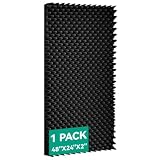
- Superior Soundproofing for Any SpaceTransform your environment with Geynnple Soundproof Foam Panels. These high-density panels are designed to absorb sound, making them perfect for home studios, offices, or any room that requires effective noise control and acoustic enhancement
- Easy Installation (Adhesive Not Included)Installing Geynnple Soundproof Foam Panels is straightforward. While the panels don’t come with adhesive, they are designed to be easily applied using your preferred adhesive or double-sided tape, ensuring simple setup and reliable noise reduction
- Ideal for Home Studios and OfficesGeynnple foam panels provide top-tier soundproofing, making them perfect for music recording, podcasting, or creating a quiet workspace. Reduce distractions and optimize acoustics for a more productive and comfortable environment
- [Quantity Clarification]: Images may show a split or two-part display effect to better illustrate the product’s shape and application. This does not indicate two separate panels. Each order includes 1 Pack = 1 Piece
- Comprehensive Noise Control SolutionAchieve superior sound isolation with Geynnple Sound Foam Panels. Made from high-density foam, these panels improve room acoustics and reduce noise, offering a complete solution for any soundproofing project—just add your preferred adhesive for installation
Contact the state or local transportation department to ask whether a project is programmed, whether a noise study exists, and what its public-involvement and abatement policies say. Eligibility, design and funding are location-specific; a resident cannot infer that a wall will be added simply because traffic is loud.
Improve the home’s sound envelope
FHWA says insulating a building can greatly reduce highway traffic noise, especially when windows are sealed and cracks and other openings are filled. This is a whole-envelope strategy: the weakest opening often controls the result. It can also reduce uncontrolled outdoor air entry, but sealing changes ventilation and may make air conditioning necessary in warm weather.
Target the largest leaks first
- Inspect windows and exterior doors. Look for daylight, worn weatherstripping, failed gaskets and loose frames. Operate each latch so the sash or door compresses its seal evenly.
- Seal fixed cracks and penetrations. Address gaps at trim, utility penetrations, sill plates and other joints with materials suited to movement, moisture and fire-safety requirements.
- Check less obvious openings. Fireplace dampers, attic hatches, recessed fixtures, vents and poorly sealed duct boots can provide both sound and air paths.
- Re-test the room. After each group of repairs, listen during the same traffic period and check for drafts or condensation. A building-envelope specialist can use pressure testing or smoke methods to locate leaks that are not visible.
Do not treat a bead of sealant as a guaranteed decibel rating. The acoustic result depends on the entire assembly, installation quality and the remaining paths through walls, roofs and ventilation.
Keep ventilation and indoor sources under control
Weatherization is not a reason to stop bringing in clean outdoor air. A tightly sealed home still needs appropriate ventilation for occupants and moisture control. Use the home’s designed ventilation system, and avoid drawing polluted outdoor air indoors during periods when local air-quality information indicates high particle levels. At the same time, control indoor sources: use a range hood that vents outdoors when possible, avoid smoking indoors and limit activities that create avoidable particles.
Reduce traffic particles indoors
EPA explains that outdoor and indoor air mix, allowing particulate matter to enter through open windows and doors and through small cracks and crevices. Car exhaust and road dust contain particulate matter, and concentrations tend to be higher near busy roads. The most effective indoor-air sequence is source reduction, ventilation with clean outdoor air when conditions allow, and filtration as a supplement.
What’s actually slowing this PC down?
Pick the symptom - the matching free tool is one click away.
Use windows strategically
- Keep windows and exterior doors closed when outdoor pollution is high or when heavy traffic creates visible dust or odors.
- Ventilate when outdoor air is cleaner, rather than leaving windows open continuously beside the highway.
- Use weatherstripping and repair gaps identified during your envelope inspection, while retaining required mechanical ventilation.
Window management reduces incoming particles but does not remove particles already inside. Pair it with filtration and cleaning.
Rank #3

- Soundproofing - Acoustic foam panels triangular grooves structure for better noise absorption, helps to reduce and absorb unwanted echoes, waves, reverb and flutter echoes for better recording effect.
- Upgraded Accessory - Additional 300pcs strong double-side adhesive tape is included for free, which helps you finish the installation better and protect your walls from damage. Can be removed easily.
- Quick Recovery - If this high-density foam doesn't return to shape, please soak it in water for a few minutes and dry in the air to recover the shape in 24 to 48 hours.
- Wide Applications - Suitably used not only for spot treating sound on walls in your studio and office but also for use in recording studios, vocal booths, control rooms.
- Professional Safe - With strong fire resistance and good air permeability, the acoustic foam panels can stop burning to prevent hidden fire hazards. Also, non-toxic materials won't do harm to your body while everyday use.
Choose a portable air cleaner by CADR
EPA recommends selecting a portable air cleaner with a clean air delivery rate (CADR) large enough for the room. The following estimates come from EPA’s second-edition guide, dated August 2018, and assume an 8-foot ceiling.
| Room area | EPA minimum CADR estimate |
|---|---|
| 100 sq ft | 65 cfm |
| 200 sq ft | 130 cfm |
| 300 sq ft | 195 cfm |
| 400 sq ft | 260 cfm |
| 500 sq ft | 325 cfm |
| 600 sq ft | 390 cfm |
Use the unit’s label and the actual room layout as the final check. An open-plan area, a ceiling higher than 8 feet, frequent door opening or an especially high particle load may require more capacity. A unit’s highest speed usually filters more air, but fan noise can discourage use; a quieter setting operated for longer may work better in practice.
Particles and gases need different filters
CADR is a particle-removal rating, not a gas-removal rating. For exhaust odors or other gases, look for activated carbon or another filter specifically designed for gases. EPA notes that no widely used rating system exists for portable gas filters, and no filter removes every pollutant.
Outdated Drivers Are Slowing You Down
One free scan finds every outdated or missing driver and matches the right update for your exact hardware.Free scan · exact hardware matchPC Slower Than It Used to Be?
A free scan shows the junk files, broken settings and background clutter dragging Windows down - then fixes them in one click.Free scan · Windows 10 & 11Replace filters on the schedule indicated by the manufacturer and sooner if they are visibly loaded or airflow falls. Avoid devices designed to produce ozone; EPA identifies ozone as a lung irritant. EPA does not certify or recommend particular brands or models, so compare the published CADR, room-size assumptions, noise information, replacement-filter availability and operating instructions rather than relying on a marketing label.
Use the HVAC system carefully
A compatible HVAC filter can treat air throughout the home while the blower operates. Verify that the filter size and efficiency are compatible with the equipment; installing the highest-efficiency filter without checking can restrict airflow or create equipment problems. HVAC filtration works only while the system runs. Extending run time may increase electricity use and can affect humidity control during cooling.
A practical HVAC checklist
- Read the furnace or air-handler manual for approved filter dimensions and efficiency.
- Inspect the existing filter and confirm it seals in its slot instead of allowing air to bypass it.
- Ask an HVAC professional whether the blower can handle the proposed filter and whether a deeper media cabinet would be appropriate.
- Replace the filter when loaded, following the equipment and filter instructions.
- If the system brings in outdoor air mechanically, ask whether the intake location and filtration are suitable for a near-road property.
In a mechanically ventilated building near a large road, EPA’s near-road guidance notes that filtration devices in ventilation systems may remove pollutants and improve indoor air quality. The actual design must match the building and the outdoor-air system.
Rank #4

- Sound Absorption & Noise Reduction: Made with a polyester woven surface and recycled cotton filling, this 3-layer physical barrier effectively absorbs indoor echoes, and reduces sound reflections. Note: 1. This product provides limited sound insulation and is mainly used as a protective barrier only. 2. Keep the product in a dry environment. If it gets wet, please air dry it promptly. Prolonged dampness may cause unpleasant odors and material damage
- Effective Light Blocking: The thick, dense material and dark color effectively block light, creating a dim environment and avoiding glare. Ideal for home theaters, conference room projections, tents, or temporary darkrooms
- Thickened Design: Secured with zig-zag quilting and double-stitched binding, the soundproof blanket maintains its shape, resists tearing, and stands up to long-term hanging use. No glue bonding and odor-free materials make it friendly for users and households
- Large Coverage: Each blanket measures 80 x 48 in / 2032 x 1219 mm. It provides wide coverage with fewer seams, ideal for covering standard doors and windows or handling large spaces where soundproofing, light blocking, and insulation are needed
- Easy Installation: Equipped with multiple metal grommets and woven straps, the acoustic blankets can be hung with hooks, screws, or curtain rods. Quick to set up and secure, it works as a flexible soundproof, blackout, or insulation barrier on walls, doors, and windows.
Remove settled road dust without resuspending it
Air cleaners address suspended particles; they do not remove the layer that has already settled on floors and furniture. EPA recommends frequent cleaning, vacuuming carpets and furniture weekly or more often, and dusting with a damp cloth so particles are less likely to become airborne again. A vacuum with a HEPA filter can reduce dust escaping back into the room.
- Use a damp microfiber cloth on hard surfaces, working from higher surfaces downward.
- Vacuum carpets, rugs, upholstery and entry mats regularly; concentrate on rooms facing the road and high-traffic entrances.
- Clean or replace entry mats and remove shoes at the door to reduce tracked-in soil.
- Follow the vacuum manufacturer’s instructions for sealing and filter replacement.
- Do not dry-sweep or use compressed air where it will put settled dust back into the breathing zone.
What planting and roadside walls can do for pollution
Do not promise that ordinary planting blocks road noise. FHWA says vegetation may provide visual or psychological relief but generally does not produce substantial, sustained noise reduction and is not considered a noise-abatement measure.
EPA’s August 2014 near-road FAQ reports that sound walls, cut sections and roadside vegetation can reduce traffic-related pollutants immediately downwind, but the effect varies with feature dimensions, type, distance and vegetation characteristics. The FAQ says those effects were still being researched and could not be quantified specifically. It also notes that barriers may increase concentrations over the road and near edges or upwind.
For a homeowner, this means a fence, wall or hedge should not be sold as a guaranteed indoor-pollution control. Planting can still provide shade, privacy, erosion control and a visual buffer. Choose species and layouts for those purposes, while relying on sealed openings, managed ventilation and filtration for measurable indoor exposure reduction.
Combine measures in the order that usually makes sense
- Protect the priority room. Close and seal its windows and door, remove obvious cracks, and place a correctly sized portable particle cleaner where people spend time.
- Fix cleaning and source habits. Use damp dusting, regular HEPA vacuuming, clean entry areas and control indoor particle sources.
- Check HVAC compatibility. Install an approved filter, confirm airflow and consider longer operation only when energy and humidity effects are acceptable.
- Improve the envelope. Address remaining window, door, vent and penetration leaks; reassess ventilation after sealing.
- Evaluate outdoor geometry. If the home is near the road and a solid, continuous barrier could break line of sight, obtain guidance on height, length, structure, drainage and permissions.
- Investigate public projects. Ask the transportation agency about planned reconstruction, existing noise studies and its criteria for feasible and reasonable abatement.
This sequence avoids using an expensive wall to solve an indoor-air problem or buying a filter to solve a direct sound path.
Common mistakes and how to correct them
“A tall hedge will stop the trucks.”
Correct the expectation: vegetation is not established as sustained highway-noise abatement. Use a properly engineered solid barrier for line-of-sight interruption and plantings for visual, shade or landscape benefits.
Best Value

- Upgraded Wedge Design: This window draft stopper features an upgraded wedge design, tapering from 5/32" to 11/32" (0.16"–0.35") to fit a wide variety of gap sizes. Ideal for use on various doors and windows
- Nylon Cloth&PU Foam: Window sound proofing seal outside the use of high tenacity nylon cloth, waterproof and scratch-resistant, doors and windows in the process of switching more silky smooth and not easy to be scratched.The internal by the high elasticity of the PU foam made of dense and delicate such as cream, randomly extruded and not deformed, not only to achieve good sealing effect will not affect the opening and closing of the doors and windows
- Widely Used: Wedge-shaped design of the door space filler can be used in a variety of places in life (sliding windows, casement windows, suspended windows, sliding doors, french doors, exterior doors, interior doors, front doors, cabinets, closets, bathroom cabinets, refrigerators, drawers, etc.), suitable for all kinds of material doors and windows (wood, glass, plastic, metal, etc.)
- Grid Adhesive Backing Design: The around door seal adopts a one-piece grid adhesive backing design, which is more adhesive than the general seal adhesive backing, and will not fall off easily during the use process, realizing long-lasting use
- Multi-Functional:Using our door jamb weather stripping can perfectly realize warmth in winter and coolness in summer, and save energy. At the same time there are sound insulation, anti-collision, shading, dustproof and other effects, make life more comfortable. Please note: When the weather is cold, it is recommended to use a hair dryer to heat the backing to enhance the adhesion
“The biggest HVAC filter is always best.”
Correct the approach: compatibility comes first. Check the equipment, airflow and filter fit; then select the highest practical efficiency your system is designed to handle.
“A portable purifier cleans the whole house.”
Correct the scope: a portable unit serves a room or area. Match CADR to that space, keep doors and windows managed, and use central filtration when the HVAC system can support it.
“Sealing every gap means the house is healthier.”
Correct the balance: sealing reduces uncontrolled entry but can reduce needed ventilation. Maintain appropriate ventilation and control indoor sources after weatherization.
“A barrier guarantees quiet.”
Correct the geometry: sound can travel over or around a barrier, and elevated homes may see little benefit. Confirm height, length, ends and receiver elevation before construction.
When to bring in a professional
Seek an envelope or acoustical assessment when the home is elevated above the highway, the proposed barrier would be tall or close to a property line, windows are unusual or damaged, or sealing work could affect combustion appliances, moisture or ventilation. An HVAC professional should verify filter compatibility and blower capacity. Ask the transportation agency directly about project eligibility rather than assuming federal requirements apply to an existing road.
No universal cost or performance figure can be assigned without a site inspection. Materials, structural work, window replacement, HVAC modifications and agency projects vary with property conditions and local rules. A written scope should identify the target room or outdoor area, the sound and particle paths being addressed, ventilation changes, maintenance requirements and how results will be checked.
Quick Recap
Product prices and availability are accurate as of the date/time indicated and are subject to change. Any price and availability information displayed on Amazon at the time of purchase will apply.
Do these 3 things before closing this tab:
1Clear out junk files and repair common Windows errors2Scan for outdated or missing drivers - takes under a minute3Repair Windows errors before they cause bigger problems
