Use a layered strategy: stop sun outside the glass first, specify glazing with a low solar heat gain coefficient (SHGC) and useful visible transmittance (VT), then add controllable shades or a professionally selected solar-control film for remaining glare. Exterior overhangs, fins, screens, canopies and landscape shade intercept sunlight before it reaches the façade; this is especially important on east and west elevations, where low-angle sun is hard to block. Interior shades improve visual comfort but are the least effective option for reducing window-driven cooling load.
The right combination depends on façade orientation, climate, occupied hours, view requirements, existing glass construction and HVAC operation. The process below takes you from a site audit to design, retrofit selection and commissioning without sacrificing daylight or leaving the lobby in permanent shade.
As an Amazon Associate I earn from qualifying purchases.
Why large lobby glazing creates both heat and glare
Sunlight entering a floor-to-ceiling window carries short-wave solar energy. Some is reflected, some passes as visible daylight, and some is absorbed by the glass and interior finishes before becoming heat. That heat raises operative temperature near the façade and increases air-conditioning demand. The same bright patch that causes cooling load can create veiling reflections on reception monitors, security screens, polished floors and seating areas.
Glare is not solved by insulation alone. A low U-factor limits conductive heat flow through the window assembly, but it does not stop direct sun or the high contrast created when a bright window sits beside a darker interior. Solar control therefore has to address both the amount of sun admitted and when it reaches occupied sight lines.
#1 Best Overall
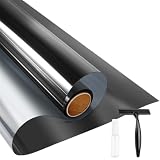
- UV BLOCKING & GLARE CONTROL: KESPEN sun blocking window film can effectively block 82% of infrared rays and 90% of UV rays which may hurt your skin, prevent your precious furniture and interior decorations from fading. 12% VLT means that some visible light can enter the room, not only to block the harsh light and reduce glare, but also to maintain your good view
- HEAT CONTROL & ENERGY SAVING: The window tinting film for home reflects some of the heat back outside, thus reducing the amount of heat transmitted through window glass, which can keep cool in summer and retain heat in winter, helping you save money by cutting the high energy bills
- ONLY DAYTIME PRIVACY PROTECTION: This one way window film provides superb privacy during daytime, the mirror reflection of privacy control window film allows others to not see any interiors from the outside, effectively protecting your private space. But when inside light is stronger than outside, loss of light difference, such as the lights turning on, the mirror effect will disappear and will be seen from the outside. So at night with this mirror tint, it is necessary to draw the curtains
- STATIC CLING & EASY TO INSTALL: The reflective window film is designed with non glue, this static cling window film avoids the release of chemical substances, very easy to use just spray A LOT of water on both the adhesive side and the window. It can also be removed easily without any traces left on the glass
- WIDELY APPLICATION OCCASIONS: Our house window tint film is suitable for the smooth and clean glass surface of your kitchen, sliding door, bedroom, balcony, restroom, office doors, and windows. Not used on double-paned glass, frosted glass, cut glass, and curved glass. Useful Tips: Please make sure the glass, edges, and corners are totally cleaned without any dust and tear off the protective film before pasting it onto the glass
Orientation changes the problem
- East façades: receive low morning sun that can penetrate deep into the lobby. Vertical fins, exterior screens and adjustable shades are generally more useful than a simple horizontal overhang.
- West façades: face the same low-angle challenge in the afternoon, often when indoor and outdoor temperatures are already high. Prioritize exterior screening and controllable shading at reception and waiting areas.
- South façades: receive higher-angle sun in many locations. Correctly sized horizontal overhangs, canopies or light shelves can block much of the summer exposure while admitting lower winter sun where the climate and design intent support it.
- North façades: usually have less direct solar gain in the northern hemisphere, but reflected light, neighboring façades and seasonal sun can still produce glare. Check the actual site rather than assuming a north elevation needs no control.
Begin with a façade and occupancy audit
Before choosing film, shades or replacement glass, document the conditions that determine performance. A short audit prevents a low-SHGC product from being installed where glare is actually caused by an unshaded west-facing entrance, and it reveals whether a retrofit must preserve an existing coating or laminated construction.
- Map each elevation. Record compass orientation, neighboring buildings, trees, canopies, roof projections and the height of the glazing. Note obstructions that change with season.
- Describe the glass. Identify whether each lite is single, insulated, laminated, tinted or already coated. Gather pane thickness, spacer details and any manufacturer markings if available.
- Mark occupied zones. Plot reception desks, security points, queues, seating, circulation paths and workstations. A shade that protects an empty wall does not solve glare at a guard’s monitor.
- Record time-based complaints. Ask when glare or overheating occurs—morning, noon or afternoon—and whether the issue is seasonal. Note blinds that occupants already keep closed.
- Set daylight and view requirements. Decide which areas need clear exterior views, diffuse daylight, privacy or blackout capability. These priorities affect acceptable VT and shade openness.
- Check building systems. Note cooling capacity, perimeter zones, thermostat locations and whether controls can accept shade or façade sensor signals. A shading change can alter perimeter loads and control behavior.
Photograph the interior from the eye positions of users, not only from the center of the room. Capture the window and the reflected task surface in the same frame at representative times; this creates a practical baseline for commissioning.
Make exterior shading the first design test
Exterior devices intercept radiation before it passes through the glazing, so the glass and interior finishes absorb less energy. Test them before relying on interior blinds. Their geometry must match the sun angles of the actual façade; a generic overhang sized for a south wall will not reliably block low-angle east or west sun.
Do these 3 things before closing this tab:
1Clear out junk files and repair common Windows errors2Scan for outdated or missing drivers - takes under a minute3Repair Windows errors before they cause bigger problems| Exterior strategy | Best application | Design checks |
|---|---|---|
| Horizontal overhangs or canopies | High-angle exposure, often on south-facing elevations; useful above entrances and continuous clerestories | Size projection and vertical position to the seasonal solar angles; verify wind, drainage, snow and egress requirements |
| Vertical fins | East and west façades with strong low-angle sun | Orient and space fins for the façade azimuth; check view obstruction, structure and cleaning access |
| Exterior mesh screens | Large curtain-wall fields where diffuse daylight and outward view are still required | Select openness and color for the desired balance of glare, heat rejection and view; coordinate attachment and wind loading |
| Adjustable louvers | Buildings needing changing control through the day or season | Provide reliable actuators, manual override and a maintenance plan; prevent a failed position from blocking all daylight |
| Landscape or architectural shade | Low-rise façades where trees, trellises or adjacent structures can intercept sun | Account for growth, deciduous seasonal change, irrigation, roots, sightlines and security |
For a new lobby, integrate attachment points, drainage and access into the façade design. For an existing building, confirm that the structure can carry wind and dead loads before selecting a screen or louver. Exterior shading can also reduce cleaning frequency by keeping some glass out of direct weather, but it introduces its own inspection and access needs.
Rank #2

- 2026 Updated Backing Grids: Our window tint for home has been upgraded to the latest version! There are 1 inch grids on the backing for you to cut it easily. Now you can complete the installation more easily!
- Note: 1. Dwersty one way window film provides superb DAYTIME privacy, with a mirror effect looking in from outside when the light is stronger outside than inside. However, when inside light is stronger than outside (for example, at nighttime or when it's very cloudy), the mirror effect disappears and you can see in from outside. Remember to draw the curtains at night for privacy. 2. The free tools are inside of the paper tube.
- HEAT CONTROL & ENERGY SAVING: Dwersty home window tint let in the light you love while reflecting much of the sun's heat away from your home, so you can stay cooler in hot days. It also helps to save energy and cut cost on your energy bills by providing better insolation and allowing air conditioners reach a constant temperature faster. You and your family can enjoy a safer and more comfortable home time economically!
- UV BLOCKING & GLARE CONTROL: This sun blocker film for windows blocks 93% of UV rays and 85% of IR rays, reducing fading and aging of your beloved furnishings and protecting skin from harmful rays, which is number one cause for skin aging and damage. The home window tint allows natural light enter the room, while protecting your eyes from harsh sunlight and glare.
- STATIC CLING & NO MESS NO FUSS INSTALLATION: This removable window tint has no glue or chemical substances, which makes it easier and safer to install or remove without any trace left on glass. In addition, we provide complementary tools save you money and trouble - please look for them inside of the film roll. if any is missing, please contact us. For smooth application, make sure window surface is completely clean and spray A LOT of soapy water on both the adhesive side and the window.
Specify replacement glazing with four metrics
Ask manufacturers for whole-window values, not only center-of-glass data. Frame, spacer and edge effects can materially change performance. Evaluate SHGC, VT, U-factor and the VT/SHGC relationship together.
| Metric | What it tells you | How to use it in a lobby |
|---|---|---|
| Solar heat gain coefficient (SHGC) | Fraction of incident solar heat transmitted through the fenestration. Lower values generally reduce unwanted summer gain in cooling-dominated climates. | Compare products for the same orientation and climate. Do not select the lowest number automatically if it makes the interior too dark or harms useful daylight. |
| Visible transmittance (VT) | Fraction of visible daylight transmitted through the window. | Check whether reception and circulation areas still receive useful daylight. The U.S. Department of Energy notes that VT below 0.5 noticeably reduces transmitted light in typical products. |
| U-factor | Thermal transmittance through the window assembly; lower values improve insulation. | Use it to control conductive winter and summer transfer, while remembering that it does not stop direct solar glare or solar heat gain. |
| VT/SHGC | Light-to-solar-gain relationship showing how much daylight is admitted relative to solar heat. | ASHRAE’s 2017 Handbook gives 1.5 to 2.0 as a daylight-oriented rule of thumb, not a universal requirement. Use it as a screening value alongside glare and energy analysis. |
DOE procurement guidance reports SHGC values of about 0.20 to 0.80 and VT values of about 0.10 to 0.80 for actual fenestration products. Those ranges describe what is available, not a target for every project. A lobby with sensitive displays, dark finishes or limited electric-light controls may need more VT than a highly exposed west wall can tolerate without exterior shading.
Use spectrally selective low-e glass when replacing the window
In hot or cooling-dominated conditions, spectrally selective low-emissivity (low-e) glazing can reject much of the near-infrared portion of sunlight while preserving a useful share of visible daylight. This approach reduces solar heat without making the lobby as dark as a heavily tinted product with similar heat rejection.
Outdated Drivers Are Slowing You Down
One free scan finds every outdated or missing driver and matches the right update for your exact hardware.Free scan · exact hardware matchPC Slower Than It Used to Be?
A free scan shows the junk files, broken settings and background clutter dragging Windows down - then fixes them in one click.Free scan · Windows 10 & 11DOE guidance published in 2012 attributes removal of roughly 40% to 70% of the heat normally transmitted through insulated window glass or glazing to some spectrally selective low-e coatings while allowing full daylight. The figure is a general description of coating capability, not a guarantee for a particular whole-window assembly.
Rank #3
- ONLY DAYTIME PRIVACY PROTECTION: This one way window film provides superb privacy during daytime, the mirror reflection of privacy control window film allows others to not see any interiors from the outside, effectively protecting your private space. But when inside light is stronger than outside, loss of light difference, such as the lights turning on, the mirror effect will disappear and will be seen from the outside. So at night with this mirror tint, it is necessary to draw the curtains
- UV BLOCKING & GLARE CONTROL: KESPEN sun blocking window film can effectively block 82% of infrared rays and 90% of UV rays which may hurt your skin, prevent your precious furniture and interior decorations from fading. 12% VLT means that some visible light can enter the room, not only to block the harsh light and reduce glare, but also to maintain your good view
- HEAT CONTROL & ENERGY SAVING: The window tinting film for home reflects some of the heat back outside, thus reducing the amount of heat transmitted through window glass, which can keep cool in summer and retain heat in winter, helping you save money by cutting the high energy bills
- STATIC CLING & EASY TO INSTALL: The reflective window film is designed with non glue, this static cling window film avoids the release of chemical substances, very easy to use just spray A LOT of water on both the adhesive side and the window. It can also be removed easily without any traces left on the glass
- WIDELY APPLICATION OCCASIONS: Our house window tint film is suitable for the smooth and clean glass surface of your kitchen, sliding door, bedroom, balcony, restroom, office doors, and windows. Not used on double-paned glass, frosted glass, cut glass, and curved glass. Useful Tips: Please make sure the glass, edges, and corners are totally cleaned without any dust and tear off the protective film before pasting it onto the glass
The same DOE guidance gives general comparisons of low-e windows costing about 10% to 15% more than regular windows and reducing energy loss by about 30% to 50%. These are broad figures for low-e windows versus regular windows, not a project-specific payback or cooling-energy prediction. Frame type, orientation, climate, operating schedule and HVAC controls can change the result.
Questions to put in the glazing specification
- Are the quoted SHGC, VT and U-factor whole-window values for the exact frame and spacer?
- What is the VT/SHGC ratio, and does it support the daylight level required at reception and circulation areas?
- Is the low-e surface position compatible with cleaning, adjacent shading and interior air temperatures?
- Will the appearance—color, reflectance and exterior visibility—meet planning, branding and security requirements?
- Does the supplier provide optical data for the viewing angles that matter at desks and security points?
- How will the selected glass coordinate with exterior screens or automated shades if those are added later?
Add interior or automated shades for changing glare
Interior shades remain valuable because glare changes by hour, season and activity. Motorized solar roller shades can lower contrast at a reception monitor, protect a queue during an afternoon event or open when the sun moves away. Select openness, fabric color and drop length for the specific sight lines; a partially lowered shade that leaves a bright strip at eye level may not solve the complaint.
ASHRAE states that “Interior blinds and shades are the least effective shading devices for limiting the window-driven cooling load in a space.” They can still be a cost-effective, controllable response to glare and thermal discomfort when fixed exterior shading is not possible or cannot cover every solar angle.
Free tools Windows power users keep installed
One-click scans. No signup required.
Control features that preserve daylight
- Solar position or irradiance input: Use façade-specific sensors or calculated sun position so east, south and west groups respond independently.
- Glare-based limits: Set a lower shade position when measured brightness or contrast at an occupied zone exceeds the agreed threshold.
- View and daylight override: Give staff a clear manual command and a timed reopening option instead of allowing a shade to remain closed indefinitely.
- Wind and safety logic: For exterior devices, retract or move to a safe position when the manufacturer’s wind limit is reached.
- Fault indication: Alert facilities staff to a failed motor, sensor or communication link; a silent failure can leave one bay exposed or the entire lobby dark.
Coordinate shade zoning with interior activities. Reception, security and seating may need different positions from an unoccupied circulation wall. Commission the automatic schedule with real users so controls respond to actual complaints rather than only to a theoretical sun chart.
Rank #4
- Note: 1. Dwersty one way window film provides superb DAYTIME privacy, with a mirror effect looking in from outside when the light is stronger outside than inside. However, when inside light is stronger than outside (for example, at nighttime or when it's very cloudy), the mirror effect disappears and you can see in from outside. Remember to draw the curtains at night for privacy. 2. The free tools are inside of the paper tube.
- HEAT CONTROL & ENERGY SAVING: Dwersty home window tint let in the light you love while reflecting much of the sun's heat away from your home, so you can stay cooler in hot days. It also helps to save energy and cut cost on your energy bills by providing better insolation and allowing air conditioners reach a constant temperature faster. You and your family can enjoy a safer and more comfortable home time economically!
- UV BLOCKING & GLARE CONTROL: This sun blocker film for windows blocks 93% of UV rays and 85% of IR rays, reducing fading and aging of your beloved furnishings and protecting skin from harmful rays, which is number one cause for skin aging and damage. The home window tint allows natural light enter the room, while protecting your eyes from harsh sunlight and glare.
- STATIC CLING & NO MESS NO FUSS INSTALLATION: This removable window tint has no glue or chemical substances, which makes it easier and safer to install or remove without any trace left on glass. In addition, we provide complementary tools save you money and trouble - please look for them inside of the film roll. if any is missing, please contact us. For smooth application, make sure window surface is completely clean and spray A LOT of soapy water on both the adhesive side and the window.
- 100% SATISFACTION SERVICE: We want to provide you the best DAYTIME one way privacy window film (see out not in), with 100% satisfaction. We offer a 3-month warranty against non-human damage and 24/7 email support. For any product problems, shipping damage, and installation issues, please contact the seller via email first and your problem will be resolved within 24 hours! Now Click "Add to Cart" and experience better home time.
Retrofit existing glass with solar-control or low-e film
When replacing a curtain wall is impractical, professionally specified solar-control window film or low-e window film can change the glass’s solar and visible properties without removing the frame. DOE recognizes low-e films as retrofit products; some are sold for do-it-yourself installation, but a large commercial lobby warrants a project-specific review.
Compatibility review before ordering
- Identify the existing assembly. Confirm single or insulating glass, pane thickness, laminates, existing low-e coatings, tint and edge conditions.
- Check thermal-stress risk. A film that absorbs more solar energy can raise pane temperatures or create uneven heating. Have the film and glass supplier evaluate thermal stress for the exact exposure and shading pattern.
- Compare optical data. Request film SHGC, VT, reflectance and color information, and assess the combined film-plus-glass values rather than the film alone.
- Review warranties and service life. Clarify adhesion, bubbling, edge lift, discoloration, replacement responsibility and compatibility with the cleaning products used by the facility.
- Confirm fire and code requirements. Verify interior finish, fire-rating and egress implications with the design professional and authority having jurisdiction.
- Mock up a representative bay. View it from reception, seating and exterior approaches at different times before committing to every elevation.
Film does not block low-angle sun before it reaches the glass, so it should not be treated as a substitute for exterior shading where the façade geometry allows a screen, fin or canopy. It is most useful when replacement glazing is disruptive, when a modest change is needed across many existing lites, or when paired with shades to manage the remaining glare.
Choose a solution with a practical decision sequence
Use this order to avoid spending on a visually attractive product that does not address the dominant exposure.
- Document the façade and use. Record orientation, climate, occupied hours, views, glare complaints, glass construction and HVAC constraints.
- Test exterior options. Sketch or model overhangs, fins, louvers, mesh screens, canopies and landscape shade at the actual solar angles. Give east and west elevations special attention.
- Set glazing performance targets. For replacement, request whole-window SHGC, U-factor, VT and VT/SHGC. In cooling-dominated conditions, screen for spectrally selective low-e products that retain useful VT.
- Add controllable shades. Use automated or interior solar shades where glare changes through the day, where views must be preserved, or where exterior devices cannot cover every angle.
- Evaluate film for existing glass. Compare solar-control or low-e film with shade systems only after checking compatibility, thermal stress, appearance, warranty, fire requirements and cleaning.
- Commission under real conditions. Inspect reception, security, seating and circulation at representative morning, noon and afternoon sun conditions. Adjust schedules and setpoints so shades are not left permanently closed.
Commissioning: prove that the lobby works
Commissioning should measure comfort and usability, not just whether a motor moves. Walk the occupied zones with facilities staff and representative users. At each time period, record whether monitors remain legible, whether people avoid a seat, whether a bright window is reflected in polished surfaces and whether the cooling system is responding normally.
Best Value

- 3’ X 5’ DAYTIME WINDOW PRIVACY FILM: Contains one (1) 3’ x 5’ sheet of 3M Sun Control Window Film Solar Privacy; covers approximately 1-2 interior home windows depending on window size
- ONE-WAY DAYTIME PRIVACY: This one-way privacy window film lets you see out, not in, adding daytime privacy to your home, apartment, and condo windows while still allowing natural daylight to come in
- UP TO 67% HEAT REJECTION: This window film cuts down on solar heat and offers up to 67% heat rejection which helps reduce the load on your A/C system and helps keep rooms cooler and more comfortable on sunny days
- HELPS REDUCE GLARE: The one-way window film lets in natural light while helping reduce glare on TVs, monitors, and personal electronic devices for a more comfortable viewing experience inside your home
- PROTECTS FURNISHINGS FROM UV RAYS: 3M Sun Control Window Film Solar Privacy blocks 99.9% of UV rays to help protect your furniture, carpets, fabrics, and artwork from fading or discoloring over time
Acceptance checklist
- Every shade group reaches its commanded position and reports faults.
- Manual overrides work locally and return to automatic control after the agreed timeout.
- Exterior devices do not obstruct doors, egress paths, signage, cameras or maintenance access.
- Glazing and film appearance is consistent across adjacent bays under interior and exterior lighting.
- Reception, security and seating areas remain usable during morning, noon and afternoon exposure.
- Control schedules reopen shades when direct sun has passed, preserving daylight and views.
- Facilities staff receive setpoints, sensor locations, cleaning instructions and a fault-response procedure.
Common mistakes and how to correct them
| Observed mistake | Why it fails | Better correction |
|---|---|---|
| Installing interior blinds as the only heat strategy | They intercept radiation after it has entered the room and are the least effective device for limiting window-driven cooling load. | Test exterior shading first; retain interior or automated shades for variable glare and comfort. |
| Using a standard south overhang on an east or west wall | Low-angle morning or afternoon sun can pass beneath or around the projection. | Use vertical fins, exterior screens, selective glazing and controllable shades sized to the actual azimuth. |
| Choosing the lowest SHGC without checking VT | The lobby can become noticeably darker, increasing electric-light use and reducing visual quality. | Review SHGC, VT and VT/SHGC together; compare a mock-up from occupied viewpoints. |
| Relying on U-factor to solve glare | Insulation limits conductive transfer but does not stop direct solar brightness. | Combine an appropriate U-factor with solar control and glare management. |
| Applying film without a glass review | Absorption and uneven shading can create thermal-stress, warranty or appearance problems. | Verify glass construction, coating position, thermal stress, fire requirements and cleaning compatibility first. |
| Programming shades to stay closed | It removes useful daylight and views and can create a permanently dim, unwelcoming lobby. | Use façade-specific automation, manual override and reopening logic, then tune schedules during commissioning. |
How to brief the design and construction team
Give the architect, façade consultant, glazing contractor, controls integrator and facilities team one coordinated schedule. For each elevation, list orientation, target SHGC, minimum acceptable VT, U-factor, desired VT/SHGC range, shade type, control zones and maintenance access. Include a drawing showing reception, security and seating sight lines so glare decisions are tied to people rather than only to window area.
Request a physical or full-scale digital mock-up for the most difficult bay—usually a west-facing corner, entrance or double-height wall. Review it under the lighting and finish colors planned for the completed lobby. Record the approved glass appearance, film sample, shade fabric, control behavior and cleaning method in the handover documents.
What success looks like
A successful lobby does not simply have dark glass or closed blinds. Exterior devices intercept the strongest sun, glazing rejects unwanted solar heat while admitting useful daylight, and shades respond to the remaining time-varying glare. Occupants can see reception displays and security screens, seated visitors are not forced away from the façade, and facilities staff can maintain the system without guesswork. Because every building combines different orientations, glass assemblies and operating schedules, final selections should be verified for the specific façade rather than copied from a generic product schedule.
Recommended Free Tools
Quick Recap
Product prices and availability are accurate as of the date/time indicated and are subject to change. Any price and availability information displayed on Amazon at the time of purchase will apply.

