Reduce post-construction erosion by working in this order: limit exposed soil, keep clean water away from disturbed banks, control runoff volume and velocity, install sediment controls before disturbance, stabilize idle soil within the applicable deadline, inspect and repair controls, and keep them in place until permanent stabilization is accepted. Federal EPA rules are a baseline; the permit and stormwater pollution prevention plan (SWPPP) for your location control the details.
What to do first after streambank construction
Streambank work leaves soil vulnerable to raindrop impact, overland flow, concentrated discharge and changing stream levels. Sediment controls placed at the toe of a bank can capture some detached soil, but they cannot prevent the bank from eroding. The reliable approach is a treatment train in which each measure addresses a different failure point:
As an Amazon Associate I earn from qualifying purchases.
- Prevent detachment: reduce the area and duration of exposed soil, preserve vegetation and topsoil, and protect slopes.
- Manage runoff: keep clean water clean and reduce the peak flow and total volume reaching the bank or an outfall.
- Intercept sediment: place perimeter and downgradient controls before the relevant earthwork begins.
- Stabilize inactive soil: apply temporary cover when work will stop beyond the applicable period.
- Inspect and repair: maintain controls through storms and every phase of work.
- Complete permanent stabilization: establish the specified vegetation or permanent bank and drainage features before removing temporary controls.
This sequence follows the U.S. Environmental Protection Agency’s construction stormwater framework and its National Menu of Best Management Practices (BMPs) for Stormwater—Construction (EPA BMP menu).
Free tools Windows power users keep installed
One-click scans. No signup required.
Confirm which permit requirements apply
In the United States, federal construction stormwater requirements generally apply when a project disturbs 1 acre or more, including a smaller phase that is part of a common development plan that will ultimately disturb at least 1 acre. The applicable state, tribal or local authority may regulate smaller sites or impose stricter conditions. EPA’s current overview, updated August 10, 2026, explains that the 2022 Construction General Permit (CGP) is scheduled to expire on February 16, 2027, and that a proposed 2027 permit is in development (EPA construction stormwater overview). The detailed requirements quoted below come from EPA’s modified 2017 CGP, so verify the governing permit, notice of intent, SWPPP and local erosion-control ordinance before applying a provision to a live project.
#1 Best Overall

- Premium Jute Construction: Our Soil Saver Erosion Control Fabric is made from premium-quality jute, a natural and biodegradable material renowned for its superior erosion control capabilities. Crafted with meticulous attention to detail, this 48-inch wide and 20-yard long fabric ensures a sturdy, reliable solution for preventing soil erosion.
- Extensive Coverage for Soil Protection: With a length of 20 yards, this roll of fabric covers an approximate area of 240 square feet, delivering extensive coverage for your landscape. It acts as a shield, safeguarding soil from erosion, reducing sedimentation, and mitigating the adverse impact of wind and water, ensuring the integrity of your landscape and garden areas.
- Environmentally Sustainable Solution: Harness the power of nature with our eco-friendly jute erosion control fabric. As a natural and biodegradable material, it promotes environmental sustainability by seamlessly integrating with the soil, enriching its quality, and eventually decomposing without leaving harmful residues.
- Versatile and Adaptable Design: The 48-inch width provides a versatile solution that can be easily tailored to your landscaping needs. Whether you're covering embankments, stabilizing slopes, or nurturing garden beds, the easy-to-cut design allows for seamless customization, adapting effortlessly to various terrains and shapes.
- User-Friendly Installation: Engineered for hassle-free installation, this erosion control fabric is user-friendly and straightforward to set up. Its manageable weight and pliability make it easy to handle and lay down, allowing for a quick and efficient application, reducing installation time and effort.
Ask these questions before mobilization
- Which agency is the NPDES permitting authority for this site?
- Is the disturbed area, including the common plan of development, at least 1 acre?
- Does the permit require a natural buffer, an equivalent sediment-reduction method, or both?
- What inspection frequency, rain-event trigger, stabilization deadline and final-cover standard appear in the permit and SWPPP?
- Are there stream, wetland, fish-spawning, floodplain, or local work-window restrictions?
Do not treat a federal threshold as a permit determination. A project can need authorization under state or local rules even when the federal 1-acre trigger is not reached.
Plan and limit disturbance
Planning is the most effective erosion control because it prevents soil from becoming mobile. Phase clearing, grading and bank work so the smallest practical area is exposed at one time. Schedule each phase so temporary or permanent stabilization follows closely rather than leaving a long, continuous strip of bare bank.
Preserve what already works
- Fence or otherwise mark riparian vegetation and trees that the design allows you to retain.
- Strip, stockpile and protect native topsoil for later reuse where feasible; topsoil usually supports faster vegetation establishment than imported subsoil.
- Keep equipment, fuel, spoils and material storage out of protected buffers and flow paths.
- Avoid compaction in areas intended for seed, live stakes or other vegetation. Use designated access routes and restore compacted soil before planting.
- Minimize disturbance on steep slopes and avoid creating smooth, long flow paths that accelerate water toward the channel.
Design around the site’s runoff conditions
Choose control locations from the actual drainage pattern, not from a standard spacing chart alone. Review rainfall intensity, contributing drainage area, runoff volume, slope length and steepness, soil texture and erodibility, expected particle size, groundwater and the duration of exposure. The 2012 CGP fact sheet describes these as core design considerations, while acknowledging that it is older explanatory material (EPA 2012 CGP fact sheet).
The Tool Desk
Outbyte Driver Updater FREEScan for outdated or missing drivers - takes under a minuteDriver Scan →Outbyte PC Repair FREEClear out junk files and repair common Windows errorsFree Scan →Mark every point where water can enter the site, cross a disturbed area, leave the site or discharge near the bank. Do not concentrate or accelerate flow onto an unprotected bank. If a temporary diversion, swale, pipe or pump outfall is necessary, design its outlet and velocity dissipation for the expected flow rather than allowing a free discharge onto bare soil.
Keep clean water clean and control runoff
Separate runoff from undisturbed ground from sediment-laden water whenever the layout allows. Direct clean water around the work area or through stable, vegetated routes. Where a natural buffer is available, let vegetation slow flow, promote infiltration and trap particles before runoff reaches the stream.
The 50-foot buffer provision
The modified 2017 CGP addresses situations in which a water of the United States is within 50 feet of the earth-disturbance boundary. It describes retaining the natural buffer or using an allowed equivalent sediment-reduction approach, subject to exceptions and documentation. Linear projects with limited right-of-way may not be able to retain the full width; EPA’s construction permit frequently asked questions explain that such projects should retain as much buffer as feasible, document the constraint and install supplemental controls (EPA CGP frequent questions).
Rank #2
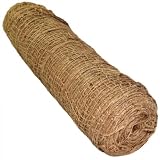
- 100% Natural & Biodegradable: Our 700 Gram Coconut Coir Matting is 100% Natural & Biodegradable over time as well as being photodegradable. It is very environmentally friendly and will have no ill effects wherever you put it.
- 2-5 Years of Protection: This durable and reliable matting provides 2-5 years of reliable erosion control on slopes (up to 2:1), hillsides, riverbanks, and other challenging areas. It helps prevent damage caused from Erosion and can save you thousands of Dollars.
- DOT Approved: DOT-approved, it's the eco-friendly and effective solution for preventing soil loss and promoting healthy vegetation, even in demanding jobsites, high-slope areas, shallow slopes, and Channels.
- Landscape Protection: Protect your landscape and stop erosion with our heavy duty 700 gram Coconut Coir Matting roll (also known as a coir mat). This product prevents soil erosion from rainfall, stormwater sheet flow, & channel flow. It also retains moisture in soil to promote seed germination and plant growth.
- Easy To Use & Install: Just unroll the roll down your hillside or along the shoreline & secure with landscape staples. And you’re done. Your slope is protected from all the winter storms.
A buffer is not permission to ignore bank stabilization. Keep the buffer undisturbed, prevent equipment traffic through it, and supplement it where slope, soil or flow makes filtration inadequate.
Reduce both peak flow and total volume
EPA’s modified 2017 CGP Part 2.2.11 states: “Control stormwater discharges, including both peak flowrates and total stormwater volume, to minimize channel and streambank erosion and scour in the immediate vicinity of discharge points.” Apply that principle by using stable conveyances, level spreaders or other approved flow-dissipation measures, temporary storage where designed, and vegetated infiltration areas where feasible. A silt fence downstream of a high-energy outlet does not correct an erosive discharge; stabilize the source and outlet first.
Install sediment controls before disturbing soil
Install required perimeter and downgradient controls before the work phase that can generate sediment begins. Inspect the installation before bringing equipment onto the bank. EPA’s BMP menu includes filter berms, fiber rolls, silt fence, sediment traps and basins, vegetated buffers, inlet protection, geotextiles, matting and other practices. Select and combine them according to drainage area, flow depth and velocity, slope, soil and available access.
What each common control does
| Control | Primary function | Best fit and limitations | Installation and maintenance points |
|---|---|---|---|
| Silt fence | Filters and ponds shallow sheet flow at a perimeter. | Useful for low-energy sheet flow from small contributing areas; not a substitute for a diversion, channel lining or bank stabilization. | Bury or trench the lower edge as specified, turn ends uphill, keep the fence on the contour, and provide relief before water overtops it. Remove accumulated sediment before it reaches one-half of the above-ground height of the control under the modified 2017 CGP. |
| Fiber rolls or filter berms | Slow shallow flow and trap coarse sediment. | Suited to contours, slope breaks and small drainage paths; they can be bypassed or undercut by concentrated flow. | Stake and key them into the soil, overlap or abut ends tightly, and repair undercut sections promptly. |
| Sediment trap or basin | Temporarily stores runoff so particles settle. | Useful for larger drainage areas where excavation, storage volume and safe overflow are available; fine clay may require additional treatment. | Protect the embankment and emergency spillway, inspect after storms, and remove sediment before storage capacity is materially reduced or the permit’s threshold is reached. |
| Inlet protection | Stops sediment entering a storm drain or culvert. | Appropriate at stable, accessible inlets; a blocked inlet can cause flooding, so it must be sized and maintained for expected flow. | Keep the device seated, clear bypass routes and remove sediment without washing it into the drainage system. |
| Vegetated buffer | Slows sheet flow, filters particles and promotes infiltration. | Strong where existing vegetation can remain; ineffective if flow is concentrated, the buffer is compacted or the slope is too steep for shallow sheet flow. | Fence it off, avoid rutting, repair concentrated flow paths and do not count a damaged buffer as functional treatment. |
| Erosion-control blanket or rolled mat | Protects soil from raindrop impact and shallow flow while vegetation establishes. | Useful on exposed slopes when the specified product matches slope, soil, flow and vegetation goals; a blanket alone cannot protect every bank or replace runoff control. | Prepare and seed the surface first when specified, place the mat in the direction and overlap required by the manufacturer or design, anchor edges and seams, and repair uplift or washouts. |
Use the permit’s construction details and project specifications for spacing, anchoring, sizing and materials. EPA encourages controls shown to minimize environmental and wildlife impacts and recommends removing netting products when they are no longer needed (EPA BMP menu). Where suitable, choose natural or biodegradable matting; evaluate wildlife entanglement, buoyancy, ultraviolet exposure and removal requirements before approving plastic netting.
Stabilize soil whenever work pauses
Federal construction stormwater guidance summarized by EPA requires stabilization when earth disturbance has ceased and will not resume for more than 14 days. Your permit may require action sooner or specify a completion period and approved methods. Stabilization applies to stockpiles, access routes, graded banks, spoil areas and other disturbed soil, not just the main excavation.
Temporary stabilization options
- Mulch: apply the specified type and rate, anchor it where wind or flowing water could move it, and protect the toe and edges.
- Seeding: prepare the seedbed, use species and dates suited to the region, and provide moisture and protection until germination.
- Erosion-control blankets: use a design-approved mat when slope or rainfall makes loose mulch unreliable.
- Hydroseeding: combine seed, mulch and tackifier where the equipment can reach the surface and the specification supports the mix.
- Cover or other approved methods: use only methods accepted by the permit, engineer or SWPPP.
Keep perimeter and sediment controls operating while temporary cover establishes. Mulch or seed that has not rooted is not a reason to remove a downstream barrier.
Rank #3

- 100% Biodegradable - The Material and Netting in this Blanket is 100% Biodegradable. Both the agricultural Wheat Straw and Coconut Fibers are 100% Biodegradable and they are held together by a Biodegradable Brown Poly Net that will biodegrade after 90 days. This product comes as a 7.5' Width for shipping purposes.
- 70% Straw - Our 100% Biodegradable Straw/Coconut Erosion Control Blankets are a temporary rolled erosion control product composed of 70% agricultural wheat straw.
- 30% Coconut Fiber - Our 100% Biodegradable Straw/Coconut Erosion Control Blankets are a temporary rolled erosion control product composed of 30% organic coconut fiber.
- Germination: Our Erosion Control Blankets also aid in the germination of newly planted seeds by shielding seeds from erosion and harsh weather which makes it easier for them to grow.
- Versatile: Erosion Control Blankets are very versatile as they are widely used on riverbeds, hills, culvert inlets and outfalls, and channel and ditch linings. They are great for construction projects as well as they are a contractors dream.
Inspect after installation, rain and changing site conditions
Inspection frequency and corrective-action deadlines come from the active permit and SWPPP. Assign a named competent person, provide a route to every control and record conditions with photographs, weather information and repair dates. Inspect before forecast storms when practical, after significant rainfall, after high flow or flooding, and whenever a new phase changes drainage.
Use this field checklist
- Is any bare soil rilling, gullying, slumping or undercutting?
- Are diversion ditches, pipes, check structures and outfalls stable and free of blockage?
- Is water bypassing, flowing under or overtopping a silt fence, roll, berm or inlet device?
- Are stakes, anchors, trenches, overlaps and end turns still secure?
- Has sediment reached one-half of the above-ground height of a perimeter control?
- Are basins and traps retaining their designed storage and has the emergency overflow remained stable?
- Has sediment reached pavement, a public road, a drain, wetland or the stream?
- Is temporary cover germinating and remaining attached through runoff?
- Has equipment traffic created new compacted lanes or unauthorized access through the buffer?
Repair immediately and finish by the required deadline
The modified 2017 CGP says to initiate routine maintenance immediately and complete it by the close of the next business day. That is a permit-specific example, not a universal deadline; follow the current permit and SWPPP if they differ. Typical corrective work includes re-trenching a fence, adding or replacing stakes, rebuilding a washed-out berm, cleaning an inlet, removing sediment from a trap, extending a diversion, armoring an outlet or reapplying cover.
Remove sediment from public pavement by sweeping, shoveling, vacuuming or an equally effective method. Do not hose it into a storm drain, ditch or waterway. Transport recovered sediment to an approved stable location where runoff cannot remobilize it.
Windows Errors? Fix Them Before They Spread
Repair common Windows errors and clear accumulated junk for a smoother, more stable PC - no reinstall needed.Free scan · no reinstallOutdated Drivers Are Slowing You Down
One free scan finds every outdated or missing driver and matches the right update for your exact hardware.Free scan · exact hardware matchComplete permanent streambank stabilization
Temporary controls manage symptoms while the permanent design becomes functional. Permanent stabilization may combine grading, native vegetation, live stakes, woody debris, rock or other bioengineering, drainage features and an approved energy-dissipation detail. The choice depends on bank geometry, flood frequency, shear stress, soil, groundwater, habitat objectives and the responsible designer’s specifications.
Vegetation needs a prepared site
- Remove compaction and correct rills before seeding or planting.
- Use locally appropriate native species and planting windows identified by the project plan.
- Protect seed and plantings from concentrated flow, browsing and equipment traffic.
- Maintain moisture during establishment where required, without creating erosive irrigation runoff.
- Repair failed patches rather than counting sparse or detached vegetation as stabilization.
EPA’s SWPPP guide describes 70 percent of native background cover as a common final-stabilization definition, but states and permits may require a higher percentage or a different standard (EPA SWPPP guide). Use the exact final-stabilization criterion in the permit and SWPPP, document how it was measured, and obtain any required approval before demobilization.
Remove temporary controls only when authorized
Do not remove a silt fence, basin, berm or blanket merely because construction equipment has left. Retain temporary controls until final-stabilization criteria are met and the permit or SWPPP directs removal. When removal is authorized, prevent the act of digging out or hauling away the control from creating a new sediment source; stabilize the disturbed footprint immediately.
Rank #4
- 100% Biodegradable - The Material and Netting in this Blanket is 100% Biodegradable. Both the agricultural Wheat Straw and Coconut Fibers are 100% Biodegradable and they are held together by a Biodegradable Brown Poly Net that will biodegrade after 90 days.
- 70% Straw - Our 100% Biodegradable Straw/Coconut Erosion Control Blankets are a temporary rolled erosion control product composed of 70% agricultural wheat straw.
- 30% Coconut Fiber - Our 100% Biodegradable Straw/Coconut Erosion Control Blankets are a temporary rolled erosion control product composed of 30% organic coconut fiber.
- Germination: Our Erosion Control Blankets also aid in the germination of newly planted seeds by shielding seeds from erosion and harsh weather which makes it easier for them to grow.
- Versatile: Erosion Control Blankets are very versatile as they are widely used on riverbeds, hills, culvert inlets and outfalls, and channel and ditch linings. They are great for construction projects as well as they are a contractors dream.
Common failure modes and corrections
A barrier is installed but the bank keeps eroding
The barrier is intercepting sediment after detachment while runoff continues to scour the bank. Reduce upstream flow, shorten the exposed phase, stabilize the slope surface and protect the discharge point. Increase sediment capacity only after correcting the erosive source.
What’s actually slowing this PC down?
Pick the symptom - the matching free tool is one click away.
Water flows around the ends of a silt fence
End runs were probably not turned uphill, the fence was not on the contour, or the contributing drainage area is too large. Regrade or extend the ends, add a diversion or use a designed channel or basin for concentrated flow.
The fence is undercut
Re-trench the fabric or replace damaged sections, compact the backfill, reset stakes and address the velocity that caused the scour. A taller fence does not fix flow passing underneath it.
A blanket washes out
Check surface preparation, anchor spacing, seam overlap, orientation and whether the slope receives concentrated flow beyond the product’s design. Repair the washed section, divert runoff and use a more robust or engineered treatment where necessary.
The basin fills repeatedly
Inspect the upstream source, stabilize exposed soil and confirm that the basin has adequate volume and a stable overflow. Repeated cleanouts without source control increase cost and still allow sediment discharge during the next storm.
Controls fail after a flood or high stream stage
Restrict access until the bank and controls are safe. Inspect for toe scour, slumping, flotation, debris impact and changed flow paths; then repair according to the engineer’s design and permit reporting requirements. A post-flood inspection can reveal that a previously adequate control is now undersized.
Quick Recap
A practical closeout sequence
- Verify the permanent bank, drainage and vegetation design against the permit and approved plans.
- Complete grading, soil preparation and permanent planting or structural work.
- Maintain temporary perimeter, inlet and sediment-storage controls while permanent cover establishes.
- Inspect during establishment and repair rills, bare patches, undercutting and concentrated flow.
- Measure final cover using the permit’s criterion; do not assume the 70-percent figure applies everywhere.
- Document photographs, inspections, maintenance, sediment removal and final stabilization.
- Remove temporary controls only as directed, and immediately stabilize the areas disturbed by removal.
Sources and current federal guidance
- EPA: Stormwater Discharges from Construction Activities (overview updated August 10, 2026).
- EPA: National Menu of Best Management Practices for Stormwater—Construction.
- EPA: National Pollutant Discharge Elimination System General Permit for Discharges from Construction Activities, as modified (2017 CGP text).
- EPA: Developing Your Stormwater Pollution Prevention Plan: A Guide for Construction Sites.
- EPA: Construction General Permit Frequent Questions.
- EPA: Construction General Permit Fact Sheet (2012 explanatory material).
Product prices and availability are accurate as of the date/time indicated and are subject to change. Any price and availability information displayed on Amazon at the time of purchase will apply.

