The most effective dust reduction happens at the road project: watering or otherwise stabilizing disturbed soil, controlling truck and equipment movement, and preventing debris from leaving the site. Inside your home, close windows and doors during visibly dusty periods, use a correctly sized particle air cleaner, and clean settled dust with damp methods. Construction noise is likewise best reduced through project scheduling, quieter methods, equipment placement, barriers or enclosures, and prompt coordination with the project owner. Household filtration and window treatments can reduce indoor exposure, but they cannot make outdoor construction quiet or replace site controls.
Start with the right division of responsibility
Road construction creates two different problems. Dust is generated outdoors when soil, aggregate, pavement, and truck routes are disturbed. Noise is generated by engines, backup alarms, impact tools, hauling, demolition, and other operations. The project owner and contractor control the source and most of the sound path; residents control only the indoor receiver environment.
As an Amazon Associate I earn from qualifying purchases.
U.S. Environmental Protection Agency (EPA) and Federal Highway Administration (FHWA) guidance provides a framework, not a single nationwide package of measures. Local permits, ordinances, work-hour rules, complaint contacts, and the controls available on a particular project vary. The steps below therefore separate actions you can take immediately from requests that require project approval.
Outdated Drivers Are Slowing You Down
One free scan finds every outdated or missing driver and matches the right update for your exact hardware.Free scan · exact hardware matchWindows Errors? Fix Them Before They Spread
Repair common Windows errors and clear accumulated junk for a smoother, more stable PC - no reinstall needed.Free scan · no reinstallWhat to do inside your home when dust is present
Check outdoor particle conditions before opening the house
Check your local air-quality agency or AirNow for particle conditions. Road work can add particles to ordinary outdoor pollution, and EPA notes that outdoor particulate matter enters through open doors and windows and through small cracks and crevices. An air-quality alert is a reason to be more cautious about ventilation, but a clear reading does not prove that a nearby work zone is producing no localized dust.
#1 Best Overall

- 𝗪𝗛𝗬 𝗖𝗛𝗢𝗢𝗦𝗘 𝗔𝗛𝗔𝗠 𝗩𝗘𝗥𝗜𝗙𝗜𝗗𝗘 𝗔𝗜𝗥 𝗣𝗨𝗥𝗜𝗙𝗜𝗘𝗥𝗦: AHAM (Association of Home Appliance Manufacturers) is an ANSI-accredited organization that sets strict standards for appliance performance. Air purifiers with the AHAM VERIFIDE seal have been independently tested for air cleaning performance, safety, and energy efficiency. When you choose an AHAM certified air purifier, you're choosing a product trusted for reliable and effective indoor air quality improvement
- 𝗥𝗘𝗠𝗢𝗩𝗘 𝗣𝗢𝗟𝗟𝗨𝗧𝗔𝗡𝗧𝗦 𝗘𝗩𝗘𝗥𝗬𝗪𝗛𝗘𝗥𝗘: Our Pre-Filter and Main Filter capture lint, hair, pet dander, fine airborne pollutants, and smoke particles, helping achieve a cleaner environment for you
- 𝗛𝗘𝗟𝗣𝗦 𝗠𝗔𝗞𝗘 𝗢𝗗𝗢𝗥𝗦 𝗢𝗗𝗢𝗥𝗟𝗘𝗦𝗦: The air purifier helps neutralize smoke, odors, and fumes. You'll love the feeling of breathing clean air at home
- 𝗨𝗦𝗘 𝗜𝗧 𝗔𝗡𝗬𝗪𝗛𝗘𝗥𝗘: With the Levoit Core Mini-P, you can focus on your activities in the bedroom, kitchen, or office. It offers an auto-off display, sleep mode for fewer interruptions, and relaxing aromatherapy, all while operating more quietly than a whisper
- #𝟭 𝗔𝗜𝗥 𝗣𝗨𝗥𝗜𝗙𝗜𝗘𝗥 𝗕𝗥𝗔𝗡𝗗: Levoit has sold over 6.5 million products worldwide and has been a pioneer in air purification technology for 6 years.
Close openings during dusty work, when practical
During visibly dusty operations or elevated outdoor particle conditions, close windows and exterior doors if doing so is safe and compatible with your need for ventilation. This removes a major pathway for entry, but it does not seal a house completely: air can still move through gaps, cracks, door operation, and mechanical systems. If closing the home creates excessive heat, humidity, or a safety problem, use the shortest practical closure period and ventilate when the work and outdoor conditions are better.
Choose a portable air cleaner by room size and particle CADR
For a bedroom, home office, or other room where people spend substantial time, a portable particle air cleaner can reduce some airborne particles. EPA advises matching the unit to the room using its particle clean air delivery rate (CADR), rather than assuming that the word “HEPA” alone guarantees a result. A larger room generally requires a higher CADR or more than one unit.
| What to compare | Why it matters during road work | What to verify before buying |
|---|---|---|
| Room area the device can serve | An undersized cleaner may not circulate enough air to make a meaningful difference. | Use the manufacturer’s stated room rating and compare it with the actual room, not the whole house unless the unit is designed for that purpose. |
| Particle CADR | CADR indicates how quickly the unit delivers filtered air for particles. | Look for a particle CADR, not only a general marketing claim or an odor rating. |
| Filter type and availability | Filters collect dust and eventually load up. | Confirm replacement filters are available and note their replacement interval. |
| Operating noise | Higher fan speeds usually filter more air but can make the room noisier. | Check the sound level at the speed you will actually tolerate overnight or while working. |
| Ozone production | Some air-cleaning technologies can add an indoor pollutant. | Prefer equipment that does not intentionally produce ozone and review the manufacturer’s emissions information. |
Run the cleaner for longer periods and at a higher speed when practical; EPA notes that both fan speed and operating time generally increase filtration. Balance that benefit against noise, energy use, and filter loading. No portable unit removes every pollutant, and a particle cleaner does not control dust at the construction site.
Use central HVAC filtration only when the system can handle it
A more efficient central-HVAC replacement filter may reduce particles that pass through the system, but only if the filter fits correctly and the equipment can maintain adequate airflow. Check the filter dimensions and the HVAC manufacturer’s requirements. If you are unsure whether a higher-efficiency filter is compatible, ask an HVAC professional before changing it. A filter that is too restrictive, poorly fitted, or overdue for replacement can reduce system performance.
Replace or inspect the filter on the manufacturer’s schedule, and check it sooner if it is visibly dirty or the project is generating unusually heavy dust. HVAC filtration is an indoor measure; it does not substitute for suppressing dust where soil and materials are disturbed.
Understand the limit of a window or ductless air-conditioner filter
A window air conditioner’s filter is generally intended to protect the unit, not to remove fine particles from all of the room air. Cleaning that filter as directed helps the appliance operate, but it should not be treated as a portable particle-cleaning system. A wall-mounted ductless unit has the same practical limitation unless its manufacturer specifically documents particle-cleaning performance.
Rank #2
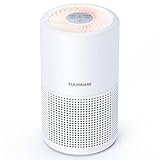
- Efficient Particle Filtration: FULMINARE air purifier uses an H13 HEPA filter. Simply turn it on and maintain a clean and peaceful environment and give families health.
- High Circulation Rate: The air purifier for home adopts dual-channel technology with a 360° air outlet, evenly covering rooms up to 1,086 ft² (based on 5 air changes per hour). The small portable air purifier is easy to place anywhere you want. One is enough to effectively improve your indoor air quality.
- Low Decibel Operation: FULMINARE H13 air purifiers for bedroom is so nice to light sleepers, allowing investors to sleep soundly each night. Set your air purifiers to sleep mode and, the air purifier will run at a near-silent noise level is around 20db at low fan speed. Ultra-quiet but enough to clean your room air at night, bringing you a smooth and sweet sleep.
- Independent Night Light and 5 Timers: It is designed to serve both as an air purifier and a night light. Dual function design makes it a good choice for babies and young children, who can find the softly glowing light or a soothing night time companion. Besides, the air purifiers come with 2-4-8-10-12 five-timers that fit your needs while you're away from home.
- Notice:1. Please open the bottom base cover to get the charging adapter(Plug-in design no battery required). 2 Remove the plastic packaging of the filter before running the air purifier. 3. The air purifiers for pets in time to replace them (3 Months Normally, Search FULMINARE PU-P05 Air Purifier Replacement Filters to get independent filter replacements).
Remove settled dust without putting it back into the air
- Let heavy airborne dust settle before cleaning, if conditions allow.
- Wipe hard surfaces with a damp cloth rather than dry-dusting them.
- Damp-mop floors and other washable surfaces.
- If vacuuming is needed, use a vacuum with a HEPA filter; EPA says this can help keep some vacuumed dust from escaping back into room air.
- Maintain and replace vacuum and air-cleaner filters according to their manufacturers’ instructions, checking more often when they become visibly dirty.
These steps address dust that has entered and settled indoors. They do not measure or guarantee a particular percentage reduction during road construction; the reviewed federal sources do not provide a household dust-reduction statistic for this specific situation.
Ask the project to control dust at its source
EPA describes construction dust control as a set of practices intended to reduce dust generated by disturbed soil and other site activity. Because controls depend on the soil, weather, equipment, traffic pattern, and permit conditions, there is no single universal list that applies to every road project. If visible dust is traveling beyond the work boundary, contact the project owner or contractor and ask what controls are being used.
Questions for the project owner or contractor
- Which organization owns the project, and who is the current dust-control contact?
- What methods are being used to control dust from excavation, grading, stockpiles, haul roads, and truck loading?
- How are dry or windy conditions handled?
- What should residents do to report visible dust crossing the property line, and what information should a complaint include?
- Are there restrictions on truck speeds, wheel or roadway cleaning, or covering loads under the project’s permit or contract?
When reporting, provide the date, time, location, wind or weather conditions if known, the activity producing the plume, and whether dust reached your home or neighboring properties. Keep photographs only where it is safe and lawful to do so; do not enter the work zone.
Reduce construction noise by working through the project contact
FHWA organizes construction-noise mitigation around five questions: what is the source, how does sound travel along the path, who is the receiver, what operating conditions are involved, and how will the community be coordinated? That framework helps turn a general complaint into a request the project team can evaluate.
Get the schedule and identify unusually loud work
Use the hotline, owner, or public notice contact listed for the project. Ask for the current work schedule, the dates and times of unusually noisy operations, any approved after-hours work, the person who logs complaints, and the expected response process. Schedules can change because of weather, utility conflicts, safety, or emergency work, so ask how updates will be communicated.
FHWA’s community-coordination guidance states, “Community Relations – early communication with the general public is vital.” Raising a concern before a major operation starts gives the team more options than reporting it after the work is complete.
Rank #3

- Personal Air Purifier: Designed for small space use, this convenient, portable travel air purifier cleans 6ft² of air in 12 minutes*, so you can breathe fresher air in your personal space and tackle common issues, such as allergies, sinus problems, colds, nasal swelling, and more.
- True HEPA Filter: The 2-stage filtration system eliminates 99.97% of germs. Stage 1 is an Activated Carbon Pre-Filter that traps odors and harmful gasses, while the Stage 2 True HEPA Filter eliminates dust, dander, pet hair, pollen, mold spores, and smoke in the air.
- CORDLESS & TRAVEL-FRIENDLY: The rechargeable lithium-ion battery lasts up to 12 hours on low setting, so you can use the purifier with or without an outlet. You can even purify the air inside your car for cleaner air to and from any location. Weighing less than 1 pound, it’s a lightweight and portable option for anyone on-the-go.
- Customized Features: The adjustable handle allows you to place the air purifier either upright or on its side to find the best position, or even remove the handle when you don’t need it. Choose from 3 fan speeds (low, medium, or high) to find the air purification that works best for you. Place the fan speed on high and the purifier can even double as your own personal cooling fan.
- 5-Year Manufacturer's Warranty: This mini air purifier comes with a 2-in-1 filter, USB charging cable, and Pure Enrichment’s guaranteed 5-Year Manufacturer’s Warranty. Our customer support team provides daily quality service and peace of mind to millions worldwide all from a brand you can trust. *Coverage area based on AHAM standard of CADR (4 CFM) x 1.55.
Request source and operating controls
Ask whether the contractor can use quieter equipment or methods, keep equipment properly maintained, avoid unnecessary idling, and sequence the loudest work away from homes or sensitive locations and times. Feasibility depends on safety, production, utility access, and the project plan; a request is not a guarantee.
- Source: consider quieter machinery, alternative construction methods, maintenance, and limits on unnecessary engine operation.
- Path: place stationary equipment farther from homes where the site allows, and use temporary barriers or enclosures around pumps, generators, compressors, or other fixed sources.
- Operating conditions: schedule impact work, demolition, or other high-energy tasks for approved daytime periods when possible.
- Community coordination: provide advance notices, a working complaint log, and a named person who can investigate recurring problems.
FHWA describes barriers and enclosures as possible project-side treatments, but their effectiveness depends on line of sight, height, length, gaps, source location, and the receiver’s position. A short panel that leaves the source visible may provide little benefit.
Know what federal construction-noise rules do and do not promise
For covered federally aided highway projects, FHWA regulation 23 CFR 772.19 directs agencies to identify affected land uses, determine measures needed to minimize or eliminate adverse construction-noise impacts, and put needed measures into plans and specifications. The operative language is: “Determine the measures which are needed in the plans and specifications to minimize or eliminate adverse construction noise impacts to the community.”
This provision does not mean every home receives a particular window, barrier, or payment, and it does not establish the rules for every locally funded project. Ask the project owner which requirements apply to your project and what mitigation was included in its plans.
Indoor steps for construction noise
Use a quieter room and close openings when practical
When loud work is underway, move sleeping, study, or telework activities to a room on the side of the home farthest from the project, if that room is otherwise suitable. Closing windows and exterior doors can reduce indoor sound and also limits one route for dust entry. Do not block required exits or compromise safe ventilation.
Consider the building envelope before paying for upgrades
Acoustic window treatments and replacement windows act at the receiver, inside your property line. FHWA describes options with different costs and performance. A permanent replacement window can be expensive, and its result depends on the entire façade, including walls, vents, doors, and gaps. Before purchasing an upgrade for a temporary project, ask the project owner whether any receptor treatment is available and how long the noisy phase is expected to last.
Rank #4
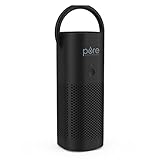
- Personal Air Purifier: Designed for small space use, this convenient, portable travel air purifier cleans 6ft² of air in 12 minutes*, so you can breathe fresher air in your personal space and tackle common issues, such as allergies, sinus problems, colds, nasal swelling, and more.
- True HEPA Filter: The 2-stage filtration system eliminates 99.97% of germs. Stage 1 is an Activated Carbon Pre-Filter that traps odors and harmful gasses, while the Stage 2 True HEPA Filter eliminates dust, dander, pet hair, pollen, mold spores, and smoke in the air.
- CORDLESS & TRAVEL-FRIENDLY: The rechargeable lithium-ion battery lasts up to 12 hours on low setting, so you can use the purifier with or without an outlet. You can even purify the air inside your car for cleaner air to and from any location. Weighing less than 1 pound, it’s a lightweight and portable option for anyone on-the-go.
- Customized Features: The adjustable handle allows you to place the air purifier either upright or on its side to find the best position, or even remove the handle when you don’t need it. Choose from 3 fan speeds (low, medium, or high) to find the air purification that works best for you. Place the fan speed on high and the purifier can even double as your own personal cooling fan.
- 5-Year Manufacturer's Warranty: This mini air purifier comes with a 2-in-1 filter, USB charging cable, and Pure Enrichment’s guaranteed 5-Year Manufacturer’s Warranty. Our customer support team provides daily quality service and peace of mind to millions worldwide all from a brand you can trust. *Coverage area based on AHAM standard of CADR (4 CFM) x 1.55.
Temporary curtains, inserts, or sealing measures may improve a particular room, but they do not make outdoor work quiet and should not be represented as a substitute for project planning or source control. Maintain ventilation and indoor-air quality when closing or sealing openings.
What’s actually slowing this PC down?
Pick the symptom - the matching free tool is one click away.
How barriers and enclosures should be interpreted
FHWA’s traffic-noise guidance says effective noise barriers can reduce noise levels by 10 decibels, cutting the loudness of traffic noise in half. That figure applies to highway traffic-noise barriers under the conditions evaluated by FHWA; it is not a promise for temporary construction work or for a particular residence.
Construction sources move, change height, and operate intermittently. A barrier may help when it blocks the direct line of sight between a fixed source and a home, yet have little effect when equipment rises above it or moves around its end. Ask the project team what source, barrier geometry, and homes were considered rather than applying a traffic-barrier performance number directly to construction.
Compare response options by where they act
| Measure | Acts at | Likely duration | Approval needed | Main limitation |
|---|---|---|---|---|
| Watering or other site dust suppression | Dust source | During active site work and changing weather | Project owner or contractor | Must be maintained and adapted to conditions; no universal method fits every site. |
| Closing windows and doors | Indoor entry path | During dusty or loud periods | No project approval, but safety and ventilation must be considered | Does not seal all cracks or stop outdoor noise at the source. |
| Portable particle air cleaner | Indoor receiver | As long as it is operated and maintained | No | Must be sized by room and particle CADR; does not remove every pollutant or control site dust. |
| Central-HVAC filter upgrade | Indoor air system | Until the filter loads or is replaced | No project approval; HVAC compatibility is essential | A restrictive or ill-fitting filter can impair airflow; consult a professional when uncertain. |
| HEPA-filtered vacuum and damp cleaning | Settled indoor dust | After dust deposits and during recurring cleaning | No | Removes settled material but does not prevent new outdoor dust from entering. |
| Temporary noise barrier or equipment enclosure | Sound path or source | Usually the noisy phase of construction | Project approval | Performance depends on height, placement, gaps, source movement, and line of sight. |
| Quieter equipment, sequencing, or restricted hours | Source and operating conditions | For the affected operation | Project approval and sometimes agency approval | May conflict with safety, schedule, access, or contract requirements. |
| Window treatment or replacement window | Indoor receiver | Temporary treatment or permanent installation | Resident decision; possible project assistance | Cost and performance vary; treats the building, not the outdoor source. |
Use a practical complaint and follow-up process
- Find the official contact. Use the project notice, agency website, hotline sign, or mailed construction update rather than an unverified social-media contact.
- Describe one event clearly. Include the address or nearest intersection, date, start and end time, activity, and whether the issue was dust, noise, or both.
- Explain the impact. Note visible dust entering the home, blocked access, sleep disruption, or work interference without exaggerating what you cannot verify.
- Ask for a specific action. Examples include confirming the schedule, checking a dust-control practice, moving stationary equipment, adding an enclosure, or explaining after-hours authorization.
- Request a tracking number or response date. Keep copies of messages and the name of the person who responded.
- Escalate through the stated chain. If the project does not respond, use the agency or permit-enforcement contact identified in local notices. Emergency hazards, unsafe traffic conditions, or medical emergencies should be reported through the appropriate emergency channel.
Keep a simple log when conditions recur. A pattern showing the same operation, time, wind direction, or equipment location can help the project team test a targeted solution.
Common mistakes and how to correct them
- Relying on a portable cleaner to control a dust plume outdoors: move the request to the project owner and ask for source controls.
- Assuming “HEPA” automatically protects the whole house: verify room size, particle CADR, operating speed, filter condition, and placement.
- Installing a high-efficiency HVAC filter without checking compatibility: confirm fit and airflow requirements or consult an HVAC professional.
- Treating a window-air-conditioner filter as a fine-particle purifier: use a properly sized particle cleaner if indoor particle reduction is the goal.
- Dry sweeping settled construction dust: use damp wiping or mopping and a HEPA-filtered vacuum.
- Expecting a barrier to eliminate all noise: ask what source and receiver geometry the barrier addresses and whether equipment can move outside its shadow.
- Buying permanent window upgrades before asking about project mitigation: obtain the schedule and ask whether receptor treatment is available.
- Assuming federal highway guidance controls every project: confirm whether the work is federally aided and which local rules apply.
What the evidence can and cannot establish
Federal guidance supports source-focused dust control, indoor particle reduction through correctly operated filtration, damp cleaning, and project-side noise planning. It does not provide a universal dust-control recipe, a guaranteed indoor particle-removal percentage for a nearby road project, or a single construction-noise reduction number that applies to every home. Results depend on the project design, weather, building, equipment, distance, and how consistently controls are operated.
Do these 3 things before closing this tab:
1Fix the driver behind crashes, sound loss and screen glitches2Clear out junk files and repair common Windows errors3Scan for outdated or missing drivers - takes under a minuteFor that reason, use product specifications and project commitments that are specific to your room and location. Keep the project team responsible for outdoor dust and noise, and use indoor measures to reduce exposure while the work is underway.
Quick Recap
Product prices and availability are accurate as of the date/time indicated and are subject to change. Any price and availability information displayed on Amazon at the time of purchase will apply.

