Recommended Free Tools
The most effective way to reduce daytime construction noise is to combine controls: schedule the loudest tasks, move people and activities farther from the work, block sound at its source, close safe transmission paths, create a quiet refuge, and use well-fitted hearing protection during peaks. Source-side barriers and enclosures help everyone in the house; earplugs and earmuffs protect only the person wearing them.
Use a layered noise-control plan
No single tactic works for every construction sound. A circular saw, impact drill, compressor and demolition hammer transmit sound differently, and a closed window that helps with noise can create an air-quality problem during dusty remodeling. Plan controls in this order: reduce or reschedule the noise, increase distance, interrupt the sound path, isolate rooms, protect hearing, and maintain safe ventilation.
As an Amazon Associate I earn from qualifying purchases.
| Control | What it does | Best use | Limit |
|---|---|---|---|
| Schedule and breaks | Reduces how long occupants are exposed | Demolition, cutting, drilling and deliveries | Does not reduce sound while the task is underway |
| Distance | Lets sound spread before it reaches you | Moving bedrooms, offices and child-care areas | Space may be limited |
| Source barriers or enclosures | Reduces sound before it travels through the house | Saws, breakers, compressors and generators | Must be designed for the equipment and kept clear of hazards |
| Room isolation | Blocks gaps and reduces reverberation | Windows, doors and interior refuge rooms | Can interfere with required exits or combustion air if done incorrectly |
| Hearing protection | Reduces sound reaching the wearer | Short, intense peaks or unavoidable work | Protects one person and may be removed if uncomfortable |
| Ventilation controls | Controls dust while openings remain closed | Remodeling, sanding and demolition | Fans and exhaust must be installed safely |
These measures reflect the control hierarchy used by occupational-safety agencies: engineering controls at the source or along the sound path generally outperform relying on personal protection alone.
What’s actually slowing this PC down?
Pick the symptom - the matching free tool is one click away.
Coordinate the loudest work before it starts
Ask for a task-by-task schedule
Ask the contractor which activities will be loudest and when they are expected. Demolition, concrete breaking, tile removal, framing with powder-actuated tools, cutting masonry and generator use usually deserve special scheduling. Request that the noisiest periods be grouped into predictable blocks rather than scattered throughout the day. You can then leave, arrange child care, schedule calls elsewhere or use the most distant room during those blocks.
#1 Best Overall
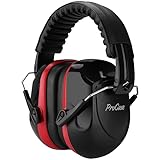
- Dual Standard Noise Attenuation: Tested by NVLAP accredited lab per EU EN352-1 standard, certified SNR 33dB (printed on product outer package). Industry recognized equivalent US ANSI S3.19 NRR 28dB, SNR & NRR adopt different testing algorithms
- Fully Adjustable Headband: Adjustable metal frame and padded headband fit most adult and teen head sizes. Distributes pressure evenly, no squeezing or pinching even after all-day wear. Compatible with most eyeglasses with minimized sound leakage
- Foldable & Portable Design: ProCase earmuffs fold into a compact size, easy to store in bags, toolboxes or pockets. Lightweight build makes them perfect for shooting ranges, construction sites, travel, concerts and outdoor activities
- Soft Breathable Cushions for All-Day Comfort: Thickened soft ear pads are skin-friendly and breathable, Over-ear ergonomic design fits snugly around ears, comfortable for work, study, sleep and long hours of use
- Durable Build & Wide Versatile Applications: Constructed by solid ABS shell ensure long service life. Ideal for shooting, construction, woodworking, mowing, studying, sleeping, fireworks and crowd noise. Great for workers, shooters, students, light sleepers and sensory-sensitive users
OSHA and CDC guidance treats scheduling, shorter exposure and quiet breaks as administrative controls. They reduce the time a person spends in the sound field even when the equipment cannot be made quiet enough.
Set practical communication rules
- Ask the crew to provide notice before starting demolition or other peak-noise tasks.
- Agree on a daily start and stop time consistent with your local code and the permit.
- Arrange a text message or visual signal for urgent communication when the house is noisy.
- Keep a written record of agreed quiet periods, naps, medical appointments and remote meetings.
Scheduling is a request to coordinate work, not a substitute for checking municipal rules. Construction hours, permit conditions and complaint procedures are set locally and can differ between neighboring jurisdictions.
Increase distance inside the house
Move people and activities first
Use the room farthest from the work, preferably on the opposite side of the building and behind more than one wall. Move sleeping arrangements, desks, teleconferencing equipment and play areas before work begins. Close the door to the work-facing room and avoid placing a bed or chair against a wall shared with the construction area.
CDC/NIOSH reports that doubling the distance from a sound source can reduce sound by as much as 6 dB under suitable conditions. The result varies with reflections, walls, outdoor equipment and whether the source is near a building corner, so treat it as a useful planning estimate rather than a guarantee.
Use outdoor distance carefully
If you leave the house, choose a location away from the equipment, not merely the other side of a window. Generators and compressors can project sound across a yard, while walls and fences may reflect it toward you. Never enter a marked work zone to gain distance; ask the contractor where occupants may safely go.
Close sound paths without creating hazards
Shut windows and interior doors
Closed windows and doors are often the fastest receiver-side improvement. Latch windows fully, close doors between the work side and your refuge, and keep hallway doors closed when they are not needed. A door sweep or temporary weather-sealing material can reduce sound leaking through a visible gap.
Rank #2

- Efficient Hearing Protection: These noise canceling headphones are equipped with a double-layer sound-dampening foam and a composite housing that effectively reduces noise levels by SNR 34dB certified(ANSI S3.19 (US)). They excel at suppressing harmful noises, making them ideal for shooting activities as they reduce the noise to a safe and comfortable level.Generous space inside the ear cups ensure breathability meanwhile soft imitation leather provides a tight sound-proof seal
- Universal Fit: These noise-canceling headphones feature retractable steel wires that allow for easy adjustment to fit almost any head size. Simply slide the earmuffs along the headband to find the perfect fit. The safety earmuffs come with 360° rotatable pins, ensuring a customized fit that conforms to your unique head shape and size. With spacious ear cups, they comfortably accommodate all types of ears, providing ample ventilation and ensuring maximum comfort.
- Robust Construction for Enhanced Comfort: These noise-canceling ear muffs are designed with durability and ergonomic comfort in mind. The high-density sponge padding and skin-friendly imitation leather create a snug acoustic seal, ensuring a comfortable fit throughout the day. The addition of a specially designed hole at the bottom allows the soft sponge to provide a slow rebound, resulting in a customized and perfect fit.
- Convenient Combination: These shooting ear protection earmuffs feature a compact folding design, allowing for easy storage and convenient portability. They fit seamlessly into a range bag or backpack, making them a practical choice for on-the-go use.
- Expert-Level Hearing Protection: These hearing protection ear muffs have been approved by ANSI S3.19 and CE EN 352-1, ensuring that you receive ear protection supported by scientific standards. With this certification, you can trust that these earmuffs are designed to provide optimal hearing protection in various environments, such as construction sites, woodworking areas, welding stations, lawn mowing, airplane travel, factories, and while operating heavy machinery.
Seal only safe openings
Do not block a required exit, a smoke- or carbon-monoxide-detector path, a combustion-air opening, a return-air grille or any opening needed by heating equipment. Do not tape over vents connected to fuel-burning appliances. If you are unsure whether an opening is safety-critical, ask the contractor or a qualified building professional before sealing it.
For a temporary seal, use removable dense weather-stripping or a properly fitted door draft seal. Avoid loose plastic, fabric or foam near hot tools, heaters, electrical equipment or moving machinery.
Put barriers and enclosures near the source
Use dense temporary barriers
Ask the contractor whether a dense temporary barrier, sound curtain or partial enclosure can be placed close to a saw, breaker, compressor or generator. NIOSH notes that barriers work better when they are close to the noisy equipment, block the direct line of sight and have absorptive facing to reduce reflections from hard surfaces. A barrier that is far away may leave the sound path open around its edges.
The crew must maintain safe clearances, access for maintenance, emergency egress and airflow required by the equipment. A curtain must not touch a hot muffler, rotating blade, exhaust outlet or fuel container.
Address reflected sound
Hard walls, concrete floors and ceilings can reflect sound back into the house. An absorptive surface on the work side of a temporary barrier can reduce those reflections. Soft household furnishings inside your refuge—rugs, upholstered furniture and lined curtains—can also reduce reverberation, although they do not stop the original sound from entering.
Handle low-frequency noise differently
Low-frequency noise from generators, compressors, pumps and heavy equipment bends around ordinary barriers more readily than mid- and high-frequency noise. A thin screen or a single curtain may therefore produce little improvement in a room that still vibrates or hums.
Rank #3

- Noise Reduction Rating (NRR) of 30 dB*
- Helps protect against harmful noises
- Steel wire headband with rubber overmold design for durability and comfort
- Lightweight, adjustable design reduces pressure points for all-day comfort
- Premium cushioning and pivoting cups to help ensure a good fit
For low-frequency equipment, NIOSH recommends a complete, dense enclosure lined with absorptive material and with openings tightly closed. The enclosure must be engineered around cooling, exhaust, fire safety and maintenance requirements. Never improvise an airtight cover around an engine or fuel-burning machine; the contractor must provide ventilation and safe exhaust routing.
If you feel vibration through a floor or wall, report it specifically. Soundproofing a window will not solve structure-borne vibration transmitted through framing, pipes or slabs; the source equipment, mounting or work method may need to change.
Create a quiet refuge room
Choose the room
Select an interior room away from the work, with the fewest windows facing the project. A closet-sized room is not automatically suitable: it must have safe, adequate ventilation and enough space for the occupants who will use it. Keep a charged phone, water, medication, communication devices and a way to hear alarms there.
The Tool Desk
Outbyte Driver Updater FREEFix the driver behind crashes, sound loss and screen glitchesFind Drivers →Outbyte PC Repair FREERepair Windows errors before they cause bigger problemsFix Now →Reduce reverberation
Add thick curtains, rugs, upholstered furniture, filled bookcases or moving blankets secured so they cannot fall. These materials absorb reflections and make speech easier to understand. They do not make the room soundproof, and they must remain clear of heaters, electrical panels, exits and sprinklers.
Plan for children, older adults and pets
Young children may not fit standard hearing protectors, and pets can become distressed by intermittent impact noise. Keep children and animals out of the work zone, provide a calm supervised area and follow the manufacturer’s age and fit instructions for any hearing protector. Older adults or people with hearing devices may need visual alerts or a quieter off-site location so alarms and communication are not masked.
Use hearing protection correctly during peaks
Repeated exposure above 85 dBA is considered hazardous noise by CDC/NIOSH. That benchmark concerns exposure risk, not a promise that a lower reading will feel comfortable in your home. During unavoidable loud periods, use comfortable earmuffs or earplugs selected for the task and fitted according to the manufacturer’s instructions.
Rank #4

- 【Extremely Comfortable to Wear】: Wrap your child's ears in cloud-like softness! Dr.meter noise cancelling headphone is made of premium memory foam cores with PU leather padding, creating a breathable seal that stays cozy during monster jams, fireworks, concerts, or even long-term sports events. Designed for providing comfortable wearing—no itching or pressure marks!
- 【SNR 27.4dB Noise Reduction】: Reduce only, NOT MUTE. This kids earmuff is cutting-edge acoustic engineering meets mom-approved protection; ABS shells+ triple-layer sound-dampening foam block harmful decibels at monster truck rallies while keeping voices clear for "Mommy, look!" moments. It reduces noise (by 27.4 dB SNR/20dB NRR) but does not completely block sound, suitable for noise sensitive kids, child concentration aid, and autism sensory.
- 【Adjustable Headband to Fit All】: The headband of the noise cancelling headphone for kids can smoothly adjust to fit different head sizes, from toddlers and children to teenagers and even adults. Tips: If you feel the earmuff is too tight when you use it for the first time, you can put it on the package box (or size 3 soccer ball) for 4 hours to loosen it.
- 【Double-Certified Safety】: Breathe easy with ANSI S3.19-1974 & CE EN 352-1 certified hearing armor. Our noise-canceling earmuffs are meticulously designed to provide optimal safety. With an impressive SNR of 27.4 dB, they excel at reducing noise and protecting your kids' ears as well as your own hearing.
- 【For Inside & Outside Activities】: From school study to air shows, celebration fireworks to monster truck races, and noisy concerts to theme park chaos—these foldable ear defenders transform noise hazards into joyful memories. Dr. meter kids ear muffs are the perfect solution for your child's hearing protection needs.
Choose a protector you will keep on
- Earplugs: Useful under earmuffs or when a low-profile protector is needed, but they require a correct seal. Disposable foam plugs must be rolled, inserted deeply enough to seal and held in place while they expand.
- Earmuffs: Easier for many people to fit consistently and useful when hands are dirty, but glasses, hair and hats can create leaks.
- Dual protection: Earplugs plus earmuffs can be appropriate for very loud peaks when both fit correctly.
CDC/NIOSH advises choosing protectors compatible with the task, fitting them well and using them consistently. Avoid excessive attenuation that makes speech, alarms or communication impossible and leads people to remove the protection. Hearing protection does not replace a source barrier or safe scheduling.
Quick wins for a faster PC:
Scan for outdated or missing drivers - takes under a minuteDriver Scan →Clear out junk files and repair common Windows errorsFree Scan →If you experience ringing, muffled hearing, pain or a feeling of fullness after work, leave the noisy area and seek medical advice, especially if symptoms persist.
Control dust and air while reducing noise
During sanding, drywall work, demolition or cutting, closing windows can keep noise out but also reduce dilution of dust and fumes. EPA recommends exhaust ventilation that moves air from the work area to outdoors, creating a pressure barrier so contaminated air does not migrate into occupied rooms.
Use a window fan safely
- Choose a window in or immediately adjacent to the work area that can exhaust outdoors.
- Secure a box fan so it cannot fall or be pulled into the opening.
- Seal gaps around the fan with appropriate removable material, while keeping the fan and its cord dry and clear of tools.
- Keep doors to occupied rooms closed and monitor whether dust is moving toward the refuge.
- Remove the fan during rain and whenever the setup would expose occupants to water, electrical hazards or unstable equipment.
Protect children from the fan, cords, open window and work area. Do not use an exhaust setup that pulls combustion gases from a furnace, fireplace, water heater or portable fuel-burning appliance into the house. If you smell fuel or exhaust, stop the work, leave the area and contact the contractor or emergency services as appropriate.
Independent reader supportYour contribution helps us test, update, and keep practical guides available for everyone.Measure, document and escalate persistent noise
Keep a dated log
Record the date, start and stop time, task, room affected, whether windows were open or closed, and how the noise interfered with sleep, conversation or work. Note vibration, dust or exhaust separately. A clear log helps the contractor adjust methods and gives a municipality specific information if a complaint becomes necessary.
Do these 3 things before closing this tab:
1Fix the driver behind crashes, sound loss and screen glitches2Clear out junk files and repair common Windows errors3Scan for outdated or missing drivers - takes under a minuteUse a sound-level meter for a formal record
A calibrated sound-level meter is more defensible than an uncalibrated phone app when a formal record is needed. Record the meter model, calibration status, measurement location, weighting and time interval. Do not place yourself in a hazardous area to obtain a reading; ask the contractor or an authorized inspector to measure near the source.
Best Value

- 34 dB NRR — Proven, Compact & Trusted for Over 10 Years: Since 2013, we’ve designed sleeker, lighter safety earmuffs without sacrificing performance — launching one of the first models certified at 34dB NRR, a rare achievement for compact soundproof earmuffs. Most ear muffs above 30 dB are bulky and heavy; ours deliver powerful noise protection with lasting comfort, fold to pocket size, and give you the confidence to take on shooting ranges, hunting, yard work, and any loud environment.
- BREAK-IN TO UNLOCK COMFORT & CUSTOMIZED FIT: For best noise reduction, these passive noise cancelling ear muffs fit snugly by design. If they feel tight at first (normal), just clamp them over the product box for 2–4 hrs or overnight to loosen the fit. The headband is fully adjustable and padded to fit kids through adults — simply place it on your head and pull each earcup down to fit. They are available in Standard and Large sizes; for larger heads, search “Pro For Sho Large” on Amazon.
- ESSENTIAL GEAR FOR LOUD EVENTS & SENSORY NEED: Pro For Sho 34 dB NRR noise reduction ear muffs deliver serious protection in a slim, compact build—making them the perfect choice for shooting ear protection, gun range, drumming, sports events, monster truck rallies, Monster Jam, fireworks, and NASCAR. They also work as sensory headphones to aid concentration or meditation, and to ease sensory overload, including autism/ASD. Foldable and travel-ready for protection anywhere.
- CERTIFIED, TRUSTED PROTECTION: ANSI S3.19 & CE EN 352-1 certified with a 34 dB NRR (OSHA-adjusted to 31 dB per safety guidelines). Engineered to cut harmful high-frequency sounds—like gunshots, power tools, or engines — while staying slim, compact, and foldable. As passive noise reduction earmuffs, they reduce rather than cancelling noise, so low-frequency sound (e.g., conversation, bass) is less affected. For maximum ear protection in extreme noise, double up with earplugs under the earmuffs.
- From Our Hands to Your Ears – US Small Business’s Handshake Promise: For over 10 years, we’ve thoughtfully designed hearing protection ear muffs families truly love. If your pair ever lets you down, we’ll replace or refund it—friendly, fast, no runaround. Trusted by professionals in demanding environments and by families with autism for comfort, our sound proof earmuffs stay slim, compact, and foldable while delivering industry-leading 34 dB NRR. - trusted by over 1M families worldwide.
Know which threshold applies
OSHA’s construction guidance uses a 90 dBA 8-hour time-weighted average as a trigger for a worker hearing-conservation program. That is an employer duty for covered workers, not a household comfort limit and not a guarantee that a home is safe or acceptable at a particular reading. Household occupants should use the 85 dBA repeated-exposure benchmark from CDC/NIOSH as a reason to limit exposure and use protection, while also considering duration, peak impact sounds and personal sensitivity.
CDC/NIOSH reports that a 3 dB decrease can reduce hearing-loss risk. Because decibels are logarithmic, small numerical changes can represent meaningful changes in acoustic energy, but a meter reading alone cannot tell you whether a room is comfortable or whether a barrier is safe.
Check local hours and complaint procedures
Noise control is primarily handled by state and local governments. EPA explains that federal coordination of community-noise control ended in 1981, so the applicable hours, exemptions, permit conditions and enforcement agency depend on your city or county.
Free tools Windows power users keep installed
One-click scans. No signup required.
- Look up your municipality’s noise ordinance and construction-permit conditions.
- Confirm whether daytime construction has special hours for demolition, deliveries or generators.
- Ask the contractor to correct the problem first and keep your dated log.
- Use the local building, code-enforcement or non-emergency complaint route if the noise appears to violate the rule.
- Call emergency services only for an immediate danger, such as an unsafe structure, fire, gas leak or exposed electrical hazard.
Local rules may regulate hours or measured levels but cannot guarantee that ordinary daytime work will be quiet inside every house. Explain the specific impact—blocked conversation, inability to work, repeated sleep disruption or vibration—rather than reporting only that the work is “loud.”
Choose temporary or permanent measures
| Situation | Start with | Escalate to |
|---|---|---|
| Work lasts a few days | Schedule loud blocks, relocate occupants, close doors and use hearing protection | Temporary source barriers or a supervised off-site refuge |
| Several weeks of interior remodeling | Daily schedule, sealed safe gaps, room treatment and controlled exhaust | Contractor-designed enclosures and additional separation between work and living areas |
| Exterior generator or compressor runs daily | Move the equipment farther away and place a safe barrier near it | Quieter equipment, complete low-frequency enclosure or a different work method |
| Long-term or recurring projects | Plan room use and work phases before construction | Permanent window, door or structural-acoustic upgrades designed for the building |
| Noise includes vibration | Report the exact wall or floor affected and identify the source | Equipment isolation, mounting changes or a professional acoustic assessment |
Permanent window upgrades, structural isolation and major door changes cost more and require planning; they should be selected after the source and transmission path are identified. A costly receiver-side upgrade may be unnecessary if the contractor can move or enclose the equipment.
Day-of-work checklist
- Confirm the day’s loud tasks and the times they will occur.
- Move sleeping, working and child-care activities to the farthest safe room.
- Close and latch windows and interior doors; seal only safe, nonessential gaps.
- Verify that barriers or curtains are close to the source, stable and clear of heat, exhaust and moving parts.
- Set up the quiet refuge with communication devices, water and required medication.
- Put correctly fitted earplugs or earmuffs where occupants can reach them before the noise starts.
- Check dust control and exhaust direction; remove a window fan during rain.
- Keep children, pets and visitors out of the work zone.
- Log the times, task and impact of any excessive noise.
- Review local rules if the work exceeds permitted hours or creates a safety hazard.
The practical goal is not silence; it is to reduce sound at the source and along its path, limit the time people spend exposed, preserve a clean refuge and protect hearing when peaks cannot be avoided.
Quick Recap
Product prices and availability are accurate as of the date/time indicated and are subject to change. Any price and availability information displayed on Amazon at the time of purchase will apply.

