Quick wins for a faster PC:
Repair Windows errors before they cause bigger problemsFix Now →Fix the driver behind crashes, sound loss and screen glitchesFind Drivers →Clear out junk files and repair common Windows errorsFree Scan →The most effective way to reduce construction noise is to control it in this order: make the work quieter at the source, increase distance, block the transmission path, reduce reverberation, improve window and door sealing where appropriate, coordinate working hours, and use hearing protection for unavoidable peaks. Sound-absorbing curtains or acoustic panels can make a room less echoey, but they do not stop drilling or impact noise that travels directly through a wall, floor, ceiling, window or building structure.
That distinction matters. Construction noise may be airborne (sound travelling through air), structure-borne (vibration travelling through the building), direct (arriving straight from the work) or reverberant (reflected repeatedly inside a room). Each type needs a different response. The practical steps below apply to apartments and houses while keeping safety, ventilation, fire access and local noise rules in view.
As an Amazon Associate I earn from qualifying purchases.
Identify what is reaching your room
Listen for the path and character of the sound before buying materials or rearranging furniture. A sharp, clearly audible drill through a party wall or façade is primarily a transmission problem. A low rumble, shaking fixture or vibration felt through the floor is likely to include structure-borne energy. A hollow, “live” room in which voices and tool noise linger after the source pauses has a reverberation problem as well.
Outdated Drivers Are Slowing You Down
One free scan finds every outdated or missing driver and matches the right update for your exact hardware.Free scan · exact hardware matchPC Slower Than It Used to Be?
A free scan shows the junk files, broken settings and background clutter dragging Windows down - then fixes them in one click.Free scan · Windows 10 & 11Airborne noise
Airborne noise travels through air and then through weak points in the building envelope: open windows, door gaps, vents, lightweight partitions and poorly sealed joints. Temporary barriers, closed openings, better seals and upgraded glazing can reduce this path. They work best when the barrier is continuous and the remaining openings are addressed.
#1 Best Overall
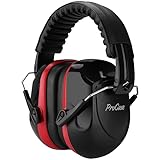
- Dual Standard Noise Attenuation: Tested by NVLAP accredited lab per EU EN352-1 standard, certified SNR 33dB (printed on product outer package). Industry recognized equivalent US ANSI S3.19 NRR 28dB, SNR & NRR adopt different testing algorithms
- Fully Adjustable Headband: Adjustable metal frame and padded headband fit most adult and teen head sizes. Distributes pressure evenly, no squeezing or pinching even after all-day wear. Compatible with most eyeglasses with minimized sound leakage
- Foldable & Portable Design: ProCase earmuffs fold into a compact size, easy to store in bags, toolboxes or pockets. Lightweight build makes them perfect for shooting ranges, construction sites, travel, concerts and outdoor activities
- Soft Breathable Cushions for All-Day Comfort: Thickened soft ear pads are skin-friendly and breathable, Over-ear ergonomic design fits snugly around ears, comfortable for work, study, sleep and long hours of use
- Durable Build & Wide Versatile Applications: Constructed by solid ABS shell ensure long service life. Ideal for shooting, construction, woodworking, mowing, studying, sleeping, fireworks and crowd noise. Great for workers, shooters, students, light sleepers and sensory-sensitive users
Structure-borne noise
Impact drilling, demolition and other heavy work can send vibration through slabs, beams, walls and connected services. A curtain or wall panel inside your room cannot remove vibration that has already entered the structure. Contractor-side choices—quieter tools, different work methods, equipment isolation and scheduling—usually have more leverage for this problem.
Direct and reverberant sound
Direct sound comes straight from the source or through a façade or party wall. Reverberant sound is reflected from ceilings, walls and hard floors, building up inside the room. Absorptive materials reduce the reflected component, but OSHA’s Technical Manual cautions that they do not remove direct sound. This is why panels can improve speech clarity while drilling remains loud.
Use the control hierarchy, starting at the source
Health and safety authorities place source and engineering controls ahead of personal hearing protection. HSE states that “Eliminating noisy processes or substituting them for a less noisy process” is the best way to deal with site noise. OSHA’s construction guidance presents the sequence as “Reduce It,” “Move It” and “Block It.” Apply those ideas in that order, then treat the room and protect people during residual peaks.
What’s actually slowing this PC down?
Pick the symptom - the matching free tool is one click away.
1. Ask for quieter work methods and equipment
Residents normally cannot change a contractor’s method directly, but a specific request to the contractor, landlord or building manager can prevent hours of avoidable noise. Ask whether the task can use a quieter tool or process, whether equipment is maintained correctly, and whether unnecessary radios, alarms or idling engines can be turned off. HSE’s hierarchy places eliminating a noisy process, substituting a quieter process and selecting quiet equipment before relying on hearing protection.
Explain the impact in practical terms: drilling beside a bedroom during a meeting, demolition during a child’s nap or a generator operating beside an occupied façade. A written request should identify the location, the activity, the times it is most disruptive and a preferred contact person. This gives the site a chance to move the task, change the method or correct poorly maintained equipment.
2. Increase distance and separate occupants from the work
OSHA’s current noise overview gives an open-space rule of thumb: every doubling of distance reduces sound by about 6 dBA. That is not a guaranteed indoor result; reflections, walls and building structure can change it. Even so, distance is often the fastest no-cost intervention.
Rank #2

- Efficient Hearing Protection: These noise canceling headphones are equipped with a double-layer sound-dampening foam and a composite housing that effectively reduces noise levels by SNR 34dB certified(ANSI S3.19 (US)). They excel at suppressing harmful noises, making them ideal for shooting activities as they reduce the noise to a safe and comfortable level.Generous space inside the ear cups ensure breathability meanwhile soft imitation leather provides a tight sound-proof seal
- Universal Fit: These noise-canceling headphones feature retractable steel wires that allow for easy adjustment to fit almost any head size. Simply slide the earmuffs along the headband to find the perfect fit. The safety earmuffs come with 360° rotatable pins, ensuring a customized fit that conforms to your unique head shape and size. With spacious ear cups, they comfortably accommodate all types of ears, providing ample ventilation and ensuring maximum comfort.
- Robust Construction for Enhanced Comfort: These noise-canceling ear muffs are designed with durability and ergonomic comfort in mind. The high-density sponge padding and skin-friendly imitation leather create a snug acoustic seal, ensuring a comfortable fit throughout the day. The addition of a specially designed hole at the bottom allows the soft sponge to provide a slow rebound, resulting in a customized and perfect fit.
- Convenient Combination: These shooting ear protection earmuffs feature a compact folding design, allowing for easy storage and convenient portability. They fit seamlessly into a range bag or backpack, making them a practical choice for on-the-go use.
- Expert-Level Hearing Protection: These hearing protection ear muffs have been approved by ANSI S3.19 and CE EN 352-1, ensuring that you receive ear protection supported by scientific standards. With this certification, you can trust that these earmuffs are designed to provide optimal hearing protection in various environments, such as construction sites, woodworking areas, welding stations, lawn mowing, airplane travel, factories, and while operating heavy machinery.
- Use the room farthest from the work, preferably one without a shared wall or façade facing the site.
- Move desks, beds and play areas away from the party wall, windows and doors closest to the work.
- Leave the building during the demolition or breaking period if that is practical and safe.
- Ask the site to position compressors, generators and other equipment away from occupied façades and shared walls.
Do not enter an active work zone to create distance. Arrange any equipment move through the contractor or building manager.
3. Block the transmission path
OSHA’s construction pocket guide calls this “Block It” and recommends temporary barriers. A barrier must be continuous to be useful: NSW EPA advises that panels should have no gaps and should be erected before work begins. Seal or overlap joints according to the barrier system’s instructions, and address the edges where sound can travel around rather than through the panel.
Barriers are most effective when they interrupt a clear line of sight between the source and the receiver. They may provide little benefit when sound arrives over the top, around the sides or through the building itself. NSW EPA specifically cautions that barriers may not shield upper floors of high-rise dwellings, where the noise path can pass above a ground-level screen.
Only the contractor or building manager should install a construction barrier in a shared area. A resident’s temporary screen must not obstruct exits, corridors, stairs, sprinklers, fire doors, ventilation, natural-light requirements or access for emergency services.
4. Reduce reverberation inside the room
Once direct transmission is addressed, absorption can make the room less harsh. OSHA’s Technical Manual explains that absorptive materials on walls or ceilings reduce reflected, reverberant buildup. Useful options include sound-absorbing curtains or panels placed on the surfaces that reflect the most sound, together with rugs or other soft furnishings where they are allowed.
Absorption is a room-acoustics treatment, not a promise of “soundproofing.” A panel on the wall opposite a drill may reduce reflections after the sound enters, but it will not stop the drill’s direct path through a party wall. Leave ventilation paths clear, keep materials away from heaters and lighting that can overheat them, and use products in accordance with their fire and installation instructions.
Rank #3

- Noise Reduction Rating (NRR) of 30 dB*
- Helps protect against harmful noises
- Steel wire headband with rubber overmold design for durability and comfort
- Lightweight, adjustable design reduces pressure points for all-day comfort
- Premium cushioning and pivoting cups to help ensure a good fit
5. Improve the outdoor-noise path through windows and doors
For construction outside a house or apartment, the window assembly can be the weak link. The federal Quieting guide says heavy-glass windows with weatherproof, airtight seals can substantially reduce outdoor noise intrusion. Results depend on the existing frame, seal condition and other paths such as vents, doors and adjoining walls.
Before considering a window upgrade, inspect gaskets, operable sashes and door seals for visible gaps. A professional can determine whether the existing opening, frame and wall can support an acoustic window or other assembly. Closing or upgrading windows can reduce natural ventilation; NSW EPA notes that an alternative ventilation arrangement may be required. Do not block a required vent or make a room unsafe by sealing it without a ventilation plan.
6. Coordinate timing and communication
EPA Victoria lists scheduling noisy work for normal hours, notifying neighbours, posting builder contact details and choosing quieter equipment as practical management measures. Permitted hours and noise limits vary by council, state, territory and country, so check the local council or environmental regulator rather than assuming a universal construction schedule.
Recommended Free Tools
Ask for a simple look-ahead schedule that identifies demolition, concrete breaking, drilling, deliveries and generator use. Request advance notice of unusually noisy periods and a contact who can respond when work exceeds the agreed plan. Keep a dated log of the activity, location, start and finish times, and the effect on sleep or work. A factual record helps a landlord, strata manager, builder or regulator investigate without guessing.
7. Protect hearing during unavoidable peaks
OSHA advises using engineering and administrative controls first, with earmuffs or plugs to supplement those controls or when exposure cannot be reduced enough. Hearing protection protects the wearer; it does not make the building quiet for other residents and should not be used to justify uncontrolled work.
For short periods of drilling or demolition, properly fitted, labeled noise-reduction earmuffs are a practical option because they are quick to put on and remove. Earplugs can also work when they fit the user correctly. Follow the product instructions, keep the seal intact, and replace damaged or contaminated protectors. If you must communicate, move through a noisy area or combine protection types, use only arrangements covered by the manufacturer’s instructions or competent safety advice.
Rank #4

- 【Extremely Comfortable to Wear】: Wrap your child's ears in cloud-like softness! Dr.meter noise cancelling headphone is made of premium memory foam cores with PU leather padding, creating a breathable seal that stays cozy during monster jams, fireworks, concerts, or even long-term sports events. Designed for providing comfortable wearing—no itching or pressure marks!
- 【SNR 27.4dB Noise Reduction】: Reduce only, NOT MUTE. This kids earmuff is cutting-edge acoustic engineering meets mom-approved protection; ABS shells+ triple-layer sound-dampening foam block harmful decibels at monster truck rallies while keeping voices clear for "Mommy, look!" moments. It reduces noise (by 27.4 dB SNR/20dB NRR) but does not completely block sound, suitable for noise sensitive kids, child concentration aid, and autism sensory.
- 【Adjustable Headband to Fit All】: The headband of the noise cancelling headphone for kids can smoothly adjust to fit different head sizes, from toddlers and children to teenagers and even adults. Tips: If you feel the earmuff is too tight when you use it for the first time, you can put it on the package box (or size 3 soccer ball) for 4 hours to loosen it.
- 【Double-Certified Safety】: Breathe easy with ANSI S3.19-1974 & CE EN 352-1 certified hearing armor. Our noise-canceling earmuffs are meticulously designed to provide optimal safety. With an impressive SNR of 27.4 dB, they excel at reducing noise and protecting your kids' ears as well as your own hearing.
- 【For Inside & Outside Activities】: From school study to air shows, celebration fireworks to monster truck races, and noisy concerts to theme park chaos—these foldable ear defenders transform noise hazards into joyful memories. Dr. meter kids ear muffs are the perfect solution for your child's hearing protection needs.
A step-by-step plan for an apartment or house
- Map the source. Note which room, wall, window, ceiling or floor transmits the sound and whether the noise is airborne, impact-related, tonal or vibration-heavy.
- Contact the responsible party. Tell the contractor, landlord, strata or building manager exactly what is happening. Ask for quieter methods, maintained equipment, equipment relocation and a schedule for the loudest tasks.
- Choose a refuge room. Select the room farthest from the work and move occupants and essential activities there during peak periods. If the work is inside your building, plan a safe time away from the site.
- Close and inspect openings. Shut windows and doors during the work, check seals and keep vents functioning. Do not tape over required ventilation or fire-safety openings.
- Add a compliant barrier if appropriate. Have the contractor install a temporary acoustic barrier with continuous panels and no gaps. Confirm that it does not block exits, access, fire systems or ventilation.
- Treat reflections. Add sound-absorbing curtains or panels where the room is reverberant. Place them without covering heaters, lights or required vents.
- Use hearing protection for the peak. Put on properly fitted earmuffs or plugs before drilling or demolition starts, and remove them only after leaving the noisy area.
- Review the result. If the room is still loud, determine whether the remaining path is direct, around the barrier, through a window or structure-borne. Escalate the source control rather than simply adding more interior absorption.
Match the measure to the noise problem
| Situation | Most relevant measures | What the measure cannot solve alone |
|---|---|---|
| Outdoor drilling entering through a closed window | Quiet equipment and scheduling; airtight, weatherproof window seals or an appropriately designed heavy-glass window; distance from the façade | Interior curtains do not eliminate direct sound through a weak window or wall |
| Construction beside a shared apartment wall | Quieter tools and methods; equipment relocation; a continuous temporary barrier where feasible; moving occupants to a distant room | A decorative acoustic panel cannot stop vibration or a direct path through the party wall |
| Echo and harshness inside the room | Sound-absorbing curtains, wall or ceiling panels and soft furnishings | Absorption reduces reflected sound, not the direct source |
| Low rumble or shaking during impact work | Contractor-side method changes, equipment isolation, distance and scheduling; temporary relocation during peaks | Hearing protection reduces exposure at the ear but does not remove building vibration |
| Noise concentrated at predictable periods | Advance notice, normal-hours scheduling, a look-ahead plan and a contact for problems | Scheduling cannot help if the source is uncontrolled outside the agreed period |
Temporary measures: useful, reversible and limited
Temporary measures are appropriate when work will end soon, permissions are uncertain or a permanent alteration would affect a rented home. Their value comes from combining several modest improvements rather than expecting one product to create a silent room.
Room selection and furniture placement
Start with distance. Put the largest occupied activities in the room farthest from the source, and avoid placing a bed or desk directly against the shared wall or window facing the work. This does not change the building’s sound insulation, but it reduces the exposure of the person who needs quiet most.
Temporary acoustic barrier panels
A temporary barrier should be designed for the site, installed before noisy work begins and arranged without gaps between panels. It should interrupt the source-to-receiver path without creating a hazard. Ask the contractor which side of the work it can safely occupy and whether upper floors, rooflines or adjacent façades leave an open path over the top.
Sound-absorbing curtains and panels
Use these when the problem includes echo or reflected sound. Hang or place them at the strongest reflection points while preserving doors, windows, heaters, lights and ventilation. Judge success by whether speech and room reverberation improve, not by expecting impact noise to disappear.
Scheduling and temporary relocation
When demolition is unavoidable, the quietest personal measure may be to work, study or sleep elsewhere during the announced peak. Coordinate this with the schedule rather than leaving unpredictably; a reliable plan helps households, contractors and neighbours.
Permanent building measures and their trade-offs
Window upgrades, new seals and changes to wall or ceiling assemblies can cost more, require professional design and affect ventilation, appearance or building approvals. They are worth investigating when construction noise is recurring or when the opening is plainly the weak link, but they should follow a diagnosis of the actual path.
Best Value

- 34 dB NRR — Proven, Compact & Trusted for Over 10 Years: Since 2013, we’ve designed sleeker, lighter safety earmuffs without sacrificing performance — launching one of the first models certified at 34dB NRR, a rare achievement for compact soundproof earmuffs. Most ear muffs above 30 dB are bulky and heavy; ours deliver powerful noise protection with lasting comfort, fold to pocket size, and give you the confidence to take on shooting ranges, hunting, yard work, and any loud environment.
- BREAK-IN TO UNLOCK COMFORT & CUSTOMIZED FIT: For best noise reduction, these passive noise cancelling ear muffs fit snugly by design. If they feel tight at first (normal), just clamp them over the product box for 2–4 hrs or overnight to loosen the fit. The headband is fully adjustable and padded to fit kids through adults — simply place it on your head and pull each earcup down to fit. They are available in Standard and Large sizes; for larger heads, search “Pro For Sho Large” on Amazon.
- ESSENTIAL GEAR FOR LOUD EVENTS & SENSORY NEED: Pro For Sho 34 dB NRR noise reduction ear muffs deliver serious protection in a slim, compact build—making them the perfect choice for shooting ear protection, gun range, drumming, sports events, monster truck rallies, Monster Jam, fireworks, and NASCAR. They also work as sensory headphones to aid concentration or meditation, and to ease sensory overload, including autism/ASD. Foldable and travel-ready for protection anywhere.
- CERTIFIED, TRUSTED PROTECTION: ANSI S3.19 & CE EN 352-1 certified with a 34 dB NRR (OSHA-adjusted to 31 dB per safety guidelines). Engineered to cut harmful high-frequency sounds—like gunshots, power tools, or engines — while staying slim, compact, and foldable. As passive noise reduction earmuffs, they reduce rather than cancelling noise, so low-frequency sound (e.g., conversation, bass) is less affected. For maximum ear protection in extreme noise, double up with earplugs under the earmuffs.
- From Our Hands to Your Ears – US Small Business’s Handshake Promise: For over 10 years, we’ve thoughtfully designed hearing protection ear muffs families truly love. If your pair ever lets you down, we’ll replace or refund it—friendly, fast, no runaround. Trusted by professionals in demanding environments and by families with autism for comfort, our sound proof earmuffs stay slim, compact, and foldable while delivering industry-leading 34 dB NRR. - trusted by over 1M families worldwide.
Windows and ventilation
Heavy glass and airtight, weatherproof seals can substantially reduce outdoor intrusion according to the federal Quieting guide. Have the existing seal performance checked first. If windows must remain closed for the acoustic benefit, plan compliant alternative ventilation; NSW EPA warns that closing or upgrading windows may require it.
Walls, ceilings and floors
Permanent assemblies can address airborne transmission, while impact and structure-borne problems may require isolation at the source or within the building assembly. Because the available evidence does not establish one universal construction detail for every apartment or house, obtain an assessment that identifies the path before approving a wall, ceiling or floor alteration. Confirm landlord, strata, fire and building-approval requirements.
Safety, access and local rules
- Never enter an active work zone to inspect a source or install a barrier.
- Do not obstruct exits, corridors, stairs, fire doors, sprinklers, extinguishers, required vents or emergency access.
- Keep temporary materials stable and away from heat, electrical equipment and damp areas.
- Do not seal a room so tightly that required ventilation is lost.
- Construction hours and noise limits are location-specific. Check the applicable council or environmental regulator for your address.
- Use hearing protection as a supplement to source, path and scheduling controls, not as the contractor’s substitute for them.
What to do when the first attempt fails
The room is still loud after adding curtains or panels
The remaining sound is probably direct or structure-borne rather than mainly reverberant. Ask the responsible party to change the tool or method, move the equipment, install a properly continuous barrier or schedule the work when the room is unoccupied.
Do these 3 things before closing this tab:
1Repair Windows errors before they cause bigger problems2Fix the driver behind crashes, sound loss and screen glitches3Clear out junk files and repair common Windows errorsA barrier seems ineffective
Check for gaps, an open path over the top, sound travelling around the sides or a source located on the same structure as the receiver. NSW EPA’s warning about upper floors is especially relevant to high-rise apartments. A barrier cannot block a path it does not intercept.
Closed windows make the room uncomfortable
Do not sacrifice safe ventilation. Discuss an alternative ventilation arrangement with the building manager or a qualified professional before relying on sealed windows as the long-term solution.
The loudest work happens outside the agreed hours
Record the date, time, activity and contact attempts. Raise the issue with the contractor, landlord or building manager, then consult the local council or environmental regulator about the applicable rule and complaint process.
Hearing protection is uncomfortable or leaks sound
Recheck the fit and condition, follow the manufacturer’s instructions and try a correctly sized option. Protection that is worn incorrectly cannot provide its intended benefit. Leave the area and seek competent safety advice if you cannot maintain a reliable fit during the work.
The Tool Desk
Outbyte PC Repair FREEClear out junk files and repair common Windows errorsFree Scan →Outbyte Driver Updater FREEScan for outdated or missing drivers - takes under a minuteDriver Scan →Bottom line
Construction noise is reduced most reliably by changing the work itself, then adding distance and a continuous barrier, treating room reverberation, improving the relevant window or door path, and coordinating the loudest tasks. Use noise-reduction earmuffs or plugs for your own exposure during unavoidable peaks, but keep responsibility for controlling the source with the contractor, landlord or building manager.
Quick Recap
Product prices and availability are accurate as of the date/time indicated and are subject to change. Any price and availability information displayed on Amazon at the time of purchase will apply.

