Free tools Windows power users keep installed
One-click scans. No signup required.
Confusion, slurred speech, a seizure, collapse, loss of consciousness or very high body temperature in someone exposed to heat is a possible heat stroke emergency. Call your local emergency number immediately (999 in the UK, 911 in the US), stay with the person, move them to a cool place and start rapid cooling. Do not wait for a thermometer reading or for the person to stop sweating.
Heat exhaustion is less severe but still needs prompt action: get the worker out of the heat, loosen unnecessary clothing, cool the skin and offer small sips of cool water only when the person is alert and can swallow safely. Monitor continuously and escalate if symptoms worsen, do not improve or fluids cannot be taken safely.
As an Amazon Associate I earn from qualifying purchases.
Why heat illness demands fast action on a construction site
Construction work combines direct sun, hot machinery, protective clothing, physical exertion and limited access to shade. A worker can move from feeling merely tired to becoming confused or unconscious quickly. A bystander does not need to make a perfect diagnosis before helping. Treat the pattern of symptoms and the person’s mental state as the guide.
Outdated Drivers Are Slowing You Down
One free scan finds every outdated or missing driver and matches the right update for your exact hardware.Free scan · exact hardware matchPC Slower Than It Used to Be?
A free scan shows the junk files, broken settings and background clutter dragging Windows down - then fixes them in one click.Free scan · Windows 10 & 11The NHS states, “Heatstroke is a medical emergency.” Heat exhaustion can progress to heat stroke, and the symptoms overlap with other medical problems. The safest approach is to begin cooling promptly, keep a responsible person with the worker and obtain professional help whenever the condition is severe, uncertain or deteriorating.
#1 Best Overall

- DUAL PURPOSE HOT AND COLD PACKS - Reusable Ice pack are really handy in the home, can be used for injuries or to keep your lunchbox cool.
- EXTREMELY DURABLE - Thick medical grade plastic lining and strong seal prevents leaks or punctures.
- NATURAL & SAFE - The soft ice or heat packs for quick & easy relief. Flexible. Reusable. Non-toxic.
- THERMAL THERAPY - When you need heat fast, our Hot Cold Gel Pack provide warmth after only seconds in the microwave.
- MOST VALUE FOR YOUR MONEY – With the perfect sized Hot Cold pack you are sure to be satisfied use it for anything you desire.
Heat exhaustion or heat stroke: the practical distinction
Use the comparison below to decide how urgently to call for help. It is a response guide, not a substitute for clinical diagnosis.
| Feature | Heat exhaustion | Possible heat stroke |
|---|---|---|
| Mental state | Usually awake and able to answer appropriately, although tired, irritable or weak | Confusion, altered behaviour, slurred speech, unusual agitation, seizure, collapse or loss of consciousness |
| Common physical signs | Heavy sweating, weakness or fatigue, dizziness, headache, nausea or vomiting, thirst and sometimes muscle cramps | Very high body temperature, hot skin, severe deterioration or any of the mental-status changes in this column |
| Skin and sweating | Often pale, clammy and sweaty | Skin may be dry or profusely sweating; lack of sweating is not required |
| Immediate priority | Move out of the heat, cool the person, give safe small sips of water and observe | Call the emergency number now, begin rapid cooling and continue until help takes over |
| When to escalate | Immediately if symptoms worsen, vomiting prevents drinking, safe swallowing is not possible or improvement does not occur | Every suspected case is an emergency; do not wait to see whether cooling alone works |
Temperature measurement can support professional assessment, but it must not delay treatment. A person with heat stroke may be sweating, so sweating does not make the situation safe. Conversely, a worker with heat exhaustion may have an elevated temperature without having heat stroke. Mental-status change and rapid deterioration are the critical warning signals.
Heat exhaustion: step-by-step first aid
Use this sequence when the worker is conscious, can communicate and can swallow safely.
- Stop the work and stay with the worker. Tell the supervisor or site first-aider while you begin care. Do not leave the person alone to walk to a welfare cabin or vehicle.
- Move to a cooler location. Use shade, an air-conditioned room or another ventilated area away from hot plant and direct sun. Keep the route and floor clear so the worker does not fall.
- Loosen or remove unnecessary clothing and equipment. Open tight collars, remove extra outer layers and take off non-essential personal protective equipment only when doing so is safe. Keep required PPE decisions with the competent site supervisor; cooling must not create another hazard.
- Cool the skin. Apply cool water, wet cloths or cold compresses to the skin. Increase airflow with a fan or natural ventilation. Re-wet cloths as they warm. A reusable cold pack can be used as a compress, but it is only an aid; accessible cool water, wet clothing and airflow are also useful.
- Offer frequent small sips of cool water. Do this only while the worker is fully alert, able to swallow and not repeatedly vomiting. Small, regular sips are safer than forcing a large drink. Never make an impaired person drink.
- Observe continuously. Watch breathing, responsiveness, ability to answer simple questions and whether the worker can keep fluids down. Ask another trained person to contact emergency or urgent medical services if the condition changes.
- Escalate without delay when the course is not clearly improving. Call for medical advice or emergency help if symptoms worsen, vomiting continues, the worker cannot drink safely or the person does not cool and improve. The NHS describes a 30-minute cooling window for uncomplicated heat exhaustion; that guidance does not justify waiting when severe signs are present or the worker is deteriorating.
Do not send a worker back onto the site simply because sweating has stopped or the person says they feel better. Arrange appropriate medical assessment and follow the site’s incident and occupational-health procedures when symptoms have been significant or persistent.
Rank #2
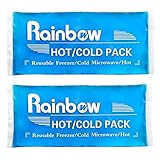
- 【Instant, Natural Pain Relief】- Enjoy 20 minutes of targeted cold or heat therapy per gel pack—doctor-recommended duration to avoid skin damage—ideal for reducing swelling and inflammation. Relieves stiff necks, arthritic wrists, knee strains, and ankle sprains. Trusted for both acute and chronic pain.
- 【Stay Cold Longer】 - 9.8" x 4.3" (25cm x 11cm) squishy ice pack holds significantly more medical-grade gel, maintaining temperature longer than traditional packs. 2 reusable packs + 2 protective covers included—swap one from the fridge while the other is in use, preventing frost/heat burn.
- 【Multiple Use Therapeutic Pack】 - Soft ice pack perfect for migraine, sprained foot, surgery rehabilitation, tired eyes, minor burns, hemorrhoid, allergy or joint pain. Ideal for carpal tunnel, shin splints, tendonitis or fasciitis, perineal and postpartum care.
- 【Use Both Hot Cold】 - Soft gel ice pack can be used as ice or heat pack for physical therapy. Store in refrigerator or freezer for cold compress to help reduce swelling and pain. Heating in microwave or boiled water for hot compress to promote blood flow to help relief from strains, sprains and inflammation while promoting healing.
- 【Safe, Durable, Flexible—Even Frozen】- Made from thinner yet tougher leak-proof plastic, the pack resists rips, tears and punctures. The gel stays soft and pliable straight from the freezer, flexing to wrap snugly around any body part for comfortable, secure relief.
Suspected heat stroke: emergency procedure
Use this procedure for any heat-exposed person with confusion, altered mental status, slurred speech, seizure, collapse, loss of consciousness, very high body temperature or a rapid, severe decline. You do not need to prove heat stroke before calling.
- Call the local emergency number immediately. Use 999 in the UK, 911 in the United States or the equivalent number where you are. Give the site address, access gate, level or grid reference, a callback number and the symptoms. Ask someone to meet responders at the gate.
- Stay with the person and send for the site first-aider. Keep monitoring responsiveness and breathing. If the person is unconscious and not breathing normally, follow the emergency dispatcher’s instructions and begin resuscitation if trained.
- Move them to a cool place if this can be done safely. Do not risk a fall, crush injury or contact with moving plant. Use enough people and suitable equipment for a safe transfer.
- Remove excess clothing. Take off outer layers and loosen restrictive items to expose more skin for cooling, while preserving dignity and avoiding unnecessary handling.
- Start rapid cooling immediately. Cold-water immersion is preferred by American Red Cross guidance when it is feasible and safe. On a construction site, other effective measures include continuously wetting the skin or clothing, using strong airflow, and placing cold wet cloths or ice packs at the head, neck, armpits and groin. Keep cooling while waiting for the ambulance.
- Do not give anything by mouth. A confused, unconscious, vomiting or otherwise impaired worker may aspirate. Do not offer water, sports drinks or medication unless emergency professionals specifically direct you to do so.
- Hand over precise information. Tell responders when symptoms began, what work and protective clothing were involved, what cooling was used, whether vomiting or a seizure occurred and whether the person lost consciousness. Preserve the scene details required by your employer’s incident process without delaying care.
Do not wait for the worker to stop sweating, for skin to become dry or for a temperature reading. Both dry skin and heavy sweating can occur in heat stroke, and cold packs alone are not a sufficient treatment.
If you cannot tell which condition it is
Choose the safer branch. Move the person out of the heat and begin cooling while checking whether they can answer simple questions and swallow safely. If mental status is abnormal, the worker collapses, has a seizure, cannot protect their airway or is getting worse, treat it as possible heat stroke and call emergency services immediately. If the worker remains alert but has the less severe pattern, follow the heat-exhaustion steps and obtain urgent advice if recovery is not prompt.
What’s actually slowing this PC down?
Pick the symptom - the matching free tool is one click away.
Never make the worker walk unassisted to a first-aid room, drive themselves home or return to a hot task. Heat illness can impair judgement before the person recognises the danger.
Rank #3

- DUAL PURPOSE HOT AND COLD PACKS - Reusable Ice pack are really handy in the home, can be used for injuries or to keep your lunchbox cool.
- EXTREMELY DURABLE - Thick medical grade plastic lining and strong seal prevents leaks or punctures.
- NATURAL & SAFE - The soft ice or heat packs for quick & easy relief. Flexible. Reusable. Non-toxic.
- THERMAL THERAPY - When you need heat fast, our Hot Cold Gel Pack provide warmth after only seconds in the microwave.
- MOST VALUE FOR YOUR MONEY - Comes in Four well thought out sizes that can be used for almost anything you can imagine
Construction-site prevention and monitoring plan
First aid is only one part of control. A written hot-weather plan gives supervisors and crews clear actions before symptoms appear.
Before the shift
- Check the forecast and identify the hottest periods, radiant heat from roofs or paving, enclosed areas and work near running plant.
- Confirm shaded or cooled rest areas, drinking water, communication methods and access routes for an ambulance.
- Brief every worker on the symptoms in the comparison table, the site emergency number and who is trained to provide first aid.
- Plan work so strenuous tasks and heat exposure can be interrupted for cooling and hydration. Follow the employer’s risk assessment and any occupational-health advice for the project.
- Check that high-visibility clothing, helmets, respiratory protection and other PPE can be loosened or removed promptly in an emergency without creating a separate hazard.
During hot work
- Encourage regular drinking rather than waiting until someone is intensely thirsty. Keep water close to the task, not only in a distant welfare unit.
- Use buddy checks. Ask colleagues whether they feel dizzy, weak, nauseated, unusually irritable or confused, and look for changes in speech or coordination.
- Rotate observation through crews working alone, on roofs, in excavations, in plant cabins or in enclosed spaces. A worker who lives alone or travels home alone may need a check-in before leaving.
- Keep cooling supplies ready: water for wetting skin and cloths, a fan where electricity and guarding make it safe, and cold compresses or ice packs. Supplies should be reachable without crossing a live-plant route.
- Stop and reassess when a worker’s performance, attention or communication changes. Do not interpret a mistake or slow response as merely a training issue until heat illness has been considered.
After a heat-illness event
- Ensure the worker receives the level of medical care indicated by their symptoms; do not rely on an informal “rest and see” decision after severe or persistent illness.
- Record the time, location, work activity, clothing or PPE, observed symptoms, cooling measures and escalation decisions in the site’s incident system.
- Review shade, water, work-rest arrangements, supervision and access for emergency responders before the next hot shift.
- Share lessons without disclosing unnecessary personal medical information. The aim is to prevent another exposure, not to blame the worker.
People who may need extra attention
Heat risk is not uniform across a crew. CDC prevention guidance specifically advises checking on family, friends and neighbours, particularly people with chronic conditions or who live alone. On a project, supervisors should apply the same principle to workers who may need additional checks.
- Older adults: may need more frequent observation during hot work.
- Children and teenagers with asthma: CDC health guidance identifies this group as a relevant consideration; young workers should have clear supervision and access to cooling.
- Pregnant workers: include pregnancy-related considerations in the worker’s occupational-health plan and do not dismiss symptoms as normal discomfort.
- People with chronic health conditions: ask them to follow their clinician’s advice and make sure supervisors know the emergency procedure, while protecting confidential medical details.
- Workers who are new to hot conditions, exercising hard or doing heavy manual work: use closer buddy checks because exertion and heat exposure can rise quickly.
These categories do not replace symptom-based action. Anyone exposed to heat can develop a medical emergency.
Common mistakes that make heat illness worse
- Waiting for a thermometer: emergency action is based on symptoms and mental status; a reading must not delay calling or cooling.
- Assuming sweating means it is not heat stroke: profuse sweating can occur in heat stroke.
- Giving drinks to an impaired worker: confusion, unconsciousness, vomiting or unsafe swallowing makes oral fluids dangerous.
- Using only a small cold pack: a pack can help as a compress, but suspected heat stroke needs broad, rapid cooling and emergency services.
- Leaving the person alone: deterioration, collapse or aspiration can occur without warning.
- Forcing a return to work after brief rest: apparent improvement does not prove that the risk has passed. Obtain appropriate medical advice and review the exposure.
- Focusing on blame: heat illness is a site-control issue as well as an individual event. Improve water, shade, communication and supervision.
Emergency-number and advice differences by country
Use the number that operates where the project is located. NHS guidance for the UK directs people to 999 for an emergency and 111 for urgent advice when the situation is not an immediate emergency. CDC/NIOSH and American Red Cross material uses 911 in the United States. International crews should have the local number printed on site notices, radios and induction materials rather than assuming that 999 or 911 works everywhere.
Rank #4
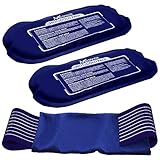
- DUAL GEL ICE PACKS - These reusable ice packs offer hot and cold therapeutic support to help relieve pain and inflammation in stiff, aching joints and sore muscles.
- RELIEVE PAIN, SWELLING AND INFLAMMATION - Our ice pack help relieve myofascial pain and localized soft tissue soreness. It can be heated up in a microwave or frozen in the freezer to let you customize your overall recovery.
- ENHANCED FULL-BODY SUPPORT - The smarter, more flexible ice bag design with adjustable straps allow you to use it on your knees, lower back, elbows, shoulders, and other areas for fast, supportive relief. These are perfect Knee ice pack, ice pack for back, cold pack for neck, shoulders etc.
- REUSABLE HOT AND COLD COMPRESS - From menstrual cramps to migraines to aging muscles after a tough workout our body and shoulder ice packs are soft to the touch and fit men, women, and youth equally.
- FASTER MUSCLE RECOVERY - Used after tough workouts, runs, or fitness routines our cold packs for therapy can help reduce inflammation and improve natural circulation so your body can recover more efficiently. Medvice ice packs for injuries reusable gel packs come in blue color. This package contains 2 Hot/Cold Packs (10"x5" in size) and a versatile strap 36” length (40” stretched) that adjusts to fit most sizes.
When calling, state that the person has been exposed to heat and describe the most serious observed sign. Give responders the exact construction-site access instructions; large sites often have several gates, lifts or restricted zones.
What to keep in a site heat-response kit
A kit should support, not replace, trained first aid and emergency response. Keep it where crews can reach it quickly and check it at the start of hot-weather work.
- Potable cool water and clean containers for drinking or wetting skin
- Clean cloths or towels that can be soaked and replaced
- Reusable cold packs or sealed ice packs for compresses
- A fan or other safe airflow option where electrical and guarding requirements are met
- Gloves and basic first-aid supplies
- A charged communication device, site address and emergency-access map
- A written list of trained first-aiders and the local emergency and urgent-advice numbers
Inspect packs, water and communication equipment routinely. Do not let a search for specialist equipment postpone moving a worker out of the heat, calling for help or starting cooling.
Quick wins for a faster PC:
Clear out junk files and repair common Windows errorsFree Scan →Fix the driver behind crashes, sound loss and screen glitchesFind Drivers →Repair Windows errors before they cause bigger problemsFix Now →Key takeaway for every worker and supervisor
Heat exhaustion calls for immediate cooling, safe small sips of water for an alert person and close observation. Any heat-exposed person with confusion, altered speech or behaviour, a seizure, collapse, loss of consciousness, very high body temperature or rapid deterioration should be treated as possible heat stroke: call emergency services, stay with them and cool them rapidly. Acting on those signs is safer than waiting for a diagnosis.
Quick Recap
Product prices and availability are accurate as of the date/time indicated and are subject to change. Any price and availability information displayed on Amazon at the time of purchase will apply.

