Rake with a light, height-appropriate tool, stay upright, use short strokes, and walk your feet toward the leaves instead of reaching or twisting. Work in small sections, alternate your lead side, and move several light loads rather than one heavy, awkward bag. Stop when normal effort becomes pain.
Set up the work before you rake
Back-friendly raking starts before the first stroke. A few minutes of preparation prevents many of the reaches, slips and rushed lifts that make yard cleanup harder.
As an Amazon Associate I earn from qualifying purchases.
Inspect the rake
Check the handle, head and connection for cracks, bends, looseness or splinters. Tighten or replace damaged parts before use. A failing tool can make you jerk suddenly or compensate with your back.
What’s actually slowing this PC down?
Pick the symptom - the matching free tool is one click away.
Choose protective gear
- Wear gloves that allow a secure grip and help prevent blisters.
- Use sturdy, closed-toe footwear with slip-resistant soles, particularly on damp grass, slopes or uneven ground.
- Dress for the weather so cold, wet or overheated muscles do not add to fatigue.
Clear hazards
Walk the area first. Look for rocks, holes, branches, toys, hoses, exposed roots and wet or slippery patches. Move hazards where possible and mark anything that cannot be removed. Keep children and pets away from the active work area.
#1 Best Overall
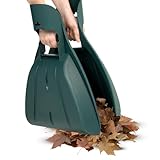
- LEAF SCOOPS HAND RAKES - These lightweight leaf scoops have supporting wrist guards that allow you to collect leaves with less strain than using a traditional rake. Slots on each of the wrist guards let you hang them up for easy storage after use.
- TIME SAVING - These gardening scoops make yard work easier, so you can reduce the amount of time spent on raking and leaf pick-up. They can also be used for a variety of other types of yard work, such as mulch spreading, gardening, and more.
- GREAT FOR ALL AGES - This set of garden scoops is a great gift for gardeners, grandparents, and kids. Their fun claw-like shape makes outdoor responsibilities much more enjoyable for everyone and is a great way to encourage kids to help with yard work.
- BUILT TO LAST - These garden rake arm extensions are made from strong, durable plastic that will last throughout the seasons and multiple outdoor tasks. The rugged edges are ridged to make it easier to grasp leaves and other debris for optimal pick-up.
- PRODUCT DETAILS - Materials: Plastic. Dimensions: (L) 13.5" x (W) 3.25" x (H) 19.75". Includes One Pair of Leaf Claws. Color: Green.
Warm up briefly
Do several minutes of easy walking and gentle movement before sustained raking. The goal is to raise your activity gradually, not to perform forceful stretches. Begin at an easy pace and increase only if your body feels comfortable.
Pick a rake that lets you stay upright
The easiest rake on your back is the one that matches your height and strength and lets you keep the head close to your body. There is no single best design for every person or yard.
Features that matter
| Feature | What to look for | Why it matters |
|---|---|---|
| Handle length | A length appropriate for your height, so the head reaches the ground while your back remains upright | Reduces bending and long, forward reaches |
| Total weight | A light tool you can control without gripping excessively | Lowers fatigue and the urge to use forceful, jerking strokes |
| Grip | Cushioned, secure handles with enough room for comfortable hand spacing | Helps maintain control and a neutral wrist |
| Head width | Wide enough to cover your section efficiently but manageable around beds, trees and obstacles | Balances fewer strokes with easier steering |
| Posture compatibility | A setup that allows elbows near your sides and the rake close to your body | Makes short strokes possible without twisting or reaching |
Virginia Cooperative Extension advises not reaching too far or extending the back while raking; it recommends shorter strokes from an upright position. Washington University Occupational Therapy Services recommends an ergonomic rake with cushioned handles and a handle length appropriate for your height. Use those principles when testing a tool: stand naturally, place the head on the ground and see whether you can work without hunching, leaning far forward or locking your elbows.
Use a stable stance and neutral posture
Place one foot slightly ahead of the other, with a comfortable distance between your feet. Keep your head up, shoulders relaxed and elbows near your body. Hold the handle with enough space between your hands to control the rake without crowding your wrists. A neutral wrist is relatively straight rather than bent sharply up, down or sideways.
As the work area changes, move your feet. Do not turn a rake into a long lever that pulls your torso out of alignment. Face the direction of the pile and turn your feet and hips with the movement. Avoid throwing leaves over a shoulder or to the side; that action rotates the spine while adding force.
Rank #2

- Heavy duty 1" diameter expandable metal rake for leaves painted black to prevent rusting and bending under heavy use.
- 9" small rake head is designed for raking pine straw in tight spots and it does the trick to het leaves out from around small shrubs or flower beds.
- 17" wider rake head makes heavy raking in your backyard easier and will rake the tall grass in the orchard even on the uneven ground.
- 30-58 inch Long Handle rake allows people of all heights to use comfortably. Handle comes in multiple pieces with center poles.
- 1 mins to assemble collapsible rake by screwing poles together with no extra tools required and easy to carry for camping.
Rake in short, efficient sections
- Divide the yard. Choose a small section that you can finish without reaching beyond a comfortable arm’s length. Work with the natural slope and boundaries of the area.
- Set the rake close. Place the head on the ground near your feet rather than far in front. Keep your chest lifted and your elbows close.
- Pull with short strokes. Draw leaves toward you using controlled strokes. Let the tool do the gathering; do not yank, stab or swing it.
- Step forward. Once the leaves are within your comfortable range, walk toward the next patch. Your feet should travel with the work so your spine does not become the moving part.
- Build a compact windrow or small pile. Keep the gathered material organized, but do not make one huge mound that requires a difficult final lift.
- Pause to reset. Relax your grip, straighten naturally and check your breathing before continuing.
Short strokes may appear slower than sweeping a large arc, but they reduce extreme reaching and make the force more predictable. OSHA identifies reaching, twisting, bending, poor posture, fatigue and forceful movement as contributors to back disorders. Keeping the tool close addresses several of those exposures at once.
Alternate sides before fatigue sets in
Raking with one hand position and one lead foot makes the same muscles repeat the same task. Periodically switch which foot is forward and reverse your hand positions, provided you can still control the rake safely. Change sides at a natural boundary, such as the end of a windrow, rather than while the head is caught in dense leaves.
Free tools Windows power users keep installed
One-click scans. No signup required.
Use a pace that leaves you able to maintain your posture. Frequent short breaks are more useful than waiting until your back, forearms or hands are exhausted. During a break, walk slowly, drink water and assess whether the next section should be smaller.
Collect leaves without turning a small job into a heavy lift
Make several manageable piles
Small piles reduce the size of each lift and keep paths clear. Position piles where a tarp, cart or collection bag can be reached without carrying leaves a long distance. On a slope, place them where you can approach and move them without stepping sideways on unstable ground.
Lift with your hips and knees
When you need to pick leaves up, stand close to the pile. Bend at your knees and hips, keep the load near your body, and rise smoothly. Washington University Occupational Therapy Services specifically advises bending at the knees and hips rather than in the back when reaching to the ground. Avoid rounding forward and then twisting while standing.
Rank #3

- DUAL WIDE & CURVED POLY BLADES with SERRATED EDGES readily grasp and hold material
- Strong & durable STEEL HANDLES
- CUSHIONED, ANGLED END GRIPS provide comfort & aids in control
- CONVENIENTLY SIZED for ease of use and storage
- EASY ASSEMBLY
Keep bags comfortably light
Stop filling a bag when it becomes awkward to drag, hold or lift. Wet leaves are heavier than dry leaves, so a bag that felt manageable earlier may become unsafe after rain or dew. Use smaller bags, make more trips, or have another person help with a larger load. A reusable tarp can let you drag or carry a broad, shallow load with less lifting, but keep the tarp load light enough to steer without sudden pulling.
Do these 3 things before closing this tab:
1Fix the driver behind crashes, sound loss and screen glitches2Repair Windows errors before they cause bigger problems3Scan for outdated or missing drivers - takes under a minuteMove the load in the direction you face
Before lifting or dragging, turn your feet and body toward the destination. Do not toss leaves over a shoulder or throw them sideways. If the destination is behind you, set the load down, reposition your feet and then continue.
Adapt the method to leaf and ground conditions
Dry, loose leaves
Dry leaves generally gather with light, short strokes. Wind can scatter a large pile, so work with the wind when practical and use smaller sections. Keep your face and eyes protected if dust or leaf fragments are blowing.
Wet or compacted leaves
Wet leaves cling to grass and become substantially heavier in bags. Reduce the size of each section, slow the stroke and empty containers earlier. Do not compensate for resistance by bending farther forward or jerking the handle. If footing is slippery, wait for safer conditions or ask for help.
Leaves on slopes and uneven ground
Use shorter steps and keep both feet on stable surfaces. Work across a manageable portion of the slope rather than stretching downhill. A tarp or several small containers can limit the distance you carry material. Never place a full bag where retrieving it requires stepping into a hole, over a branch or onto wet leaves.
Recommended Free Tools
Rank #4

- ADJUSTABLE HEAD WIDTH FOR VERSATILE CLEANING: The collapsible metal head expands from 9.6 to 20 inches to tackle both narrow garden beds and expansive lawns with ease. A simple plastic locking nut allows for quick adjustment of the 18 flexible tines, ensuring efficient debris removal in tight corners or under bushes where traditional leaf rakes for lawns fail
- TELESCOPIC HANDLE FOR COMFORTABLE POSTURE: Designed with a three-section threaded pole system, Jardineer lawn rake for leaves reaches lengths of 59, 43, or 28 inches to accommodate users of various heights of men, women or kids. The customizable length helps prevent back strain during long gardening sessions, providing a much more ergonomic experience than fixed-length alternatives
- HEAVY DUTY CONSTRUCTION WITH TIGHT CONNECTIONS: Crafted from high-quality metal with precision-threaded connections, the metal rake heavy duty ensures a secure and wobble-free performance. The 18 tines are engineered to remain intact under pressure, while the TPR-coated grip offers a non-slip, comfortable hold even during vigorous yard work
- EASY ASSEMBLY AND COMPACT STORAGE:No tools are required for installation, making it ready for use in seconds. The detachable design allows the collapsibl rake to be broken down easily for space-saving storage in a garage or shed, and its lightweight 2.2lb build makes it ideal for outdoor transport or camping trips
- MULTI-SURFACE YARD WASTE MANAGEMENT: This essential gardening rake is perfect for clearing leaves, pine needles, grass clippings, and light debris across patios, walkways, and flower beds. The specialized head design ensures effective gathering without damaging delicate plants or scratching hard surfaces
Leaves around beds and obstacles
A narrower, lighter rake may be easier to steer around shrubs, tree trunks and edging than a very wide head. Slow down near obstacles so the head does not catch and pull your torso unexpectedly. Finish tight spaces with controlled strokes rather than reaching across a bed.
Choose a cleanup method based on the load
| Method | Best use | Load and lifting profile | Limitations to plan for |
|---|---|---|---|
| Small bags | Small areas or places where storage and disposal access is close | Many light lifts and trips | More containers to handle and store |
| Reusable tarp | Moving leaves across relatively clear, level ground | Can reduce lifting by moving a shallow load; keep the pull controlled | Less maneuverable around obstacles, roots and tight corners |
| Several small piles | Large yards, slopes or work interrupted by breaks | Spreads lifting over time and keeps each load manageable | Requires organized staging so piles do not block paths |
| One large bag or mound | Only when you can handle it without awkward lifting or dragging | Highest risk of an unexpectedly heavy, unwieldy load, especially when wet | Difficult to carry, steer and empty safely |
Use the method that minimizes awkward posture and force for your actual ground conditions, not the method that promises the fewest trips. Several controlled trips are preferable to one load that you cannot lift or steer safely.
Independent reader supportYour contribution helps us test, update, and keep practical guides available for everyone.Recognize fatigue and pain early
Normal effort can produce tired muscles, but pain that starts, increases or changes your movement is a stop signal. Set the rake down, rest and reassess the task. Do not push through pain to finish a section.
- Stop immediately if you feel sudden or severe back pain, weakness, numbness, tingling, loss of coordination or pain traveling into a leg.
- Ask for help with heavy, wet or awkward loads rather than testing your limit.
- Seek medical advice for persistent or severe symptoms, or for symptoms that do not improve with rest.
A slower pace, smaller work area or different tool may let you resume ordinary activity, but it should not replace professional evaluation when symptoms are concerning.
Quick wins for a faster PC:
Repair Windows errors before they cause bigger problemsFix Now →Fix the driver behind crashes, sound loss and screen glitchesFind Drivers →Clear out junk files and repair common Windows errorsFree Scan →Prevent trips, blisters and tool-related injuries
Unpowered garden tools can still cause serious injuries. University of California Agriculture and Natural Resources reported that more than 28,000 people nationwide received hospital treatment during 2009 for unpowered garden-tool injuries; that figure covers unpowered tools broadly, not rakes alone.
Best Value
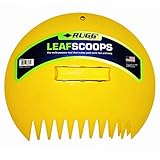
- You Get Two Scoops one for each hand
- Ideal for picking up large piles of leaves, grass clippings, twigs, mulch or anything else you need to pick up in your yard
- Hi impact plastic with strong teeth
- Built in handles for easy use
- Made in USA
- Keep the rake head pointed down and visible when walking.
- Do not leave the tool teeth facing up in a walkway or hidden under leaves.
- Keep gloves dry enough to maintain grip and replace footwear that has lost traction.
- Take extra care at curbs, steps, drainage edges and transitions between grass and pavement.
- Stop if wind, rain, darkness or poor visibility prevents you from seeing hazards.
A practical sequence for a full yard
- Inspect the rake, put on gloves and slip-resistant closed-toe footwear, and remove or mark hazards.
- Walk the perimeter and identify a disposal point, tarp route or staging area that avoids steps and obstacles.
- Warm up with easy movement, then choose a small starting section.
- Rake with the tool close, using short strokes from an upright posture.
- Walk forward as you progress; turn your feet and hips toward the developing pile.
- Switch your lead foot and hand positions at intervals that feel natural.
- Pause for water and a posture check before fatigue changes your technique.
- Collect leaves by bending at the knees and hips. Use small bags or a light tarp load.
- Move each load while facing the destination. Make additional trips rather than overfilling.
- Stop at the first sign of pain, secure the rake safely and deal with symptoms before deciding whether to continue.
Quick checklist before you start
- Is the rake intact, light enough and long enough for you to stay upright?
- Can you keep your elbows near your body and wrists mostly neutral?
- Are rocks, holes, branches, hoses and slippery areas identified?
- Are gloves and slip-resistant, closed-toe shoes on?
- Have you planned small piles and a route that avoids awkward carrying?
- Can you alternate sides and take breaks before fatigue changes your posture?
- Do you have a plan for wet leaves, uneven ground or help with heavy loads?
Frequently asked questions
What is the best way to rake leaves without hurting my back?
Use a light rake suited to your height, keep it close, pull with short strokes, walk toward the leaves and turn your feet instead of twisting your spine. Alternate sides, make small piles and keep bags light.
Should I rake standing up or bent over?
Stay as upright as the tool and ground allow. Virginia Cooperative Extension recommends shorter strokes from an upright position rather than reaching far and extending the back.
Is a wider rake always more efficient?
No. A wider head can cover more ground, but it may be harder to control around beds, obstacles or uneven surfaces. Choose the width you can steer without reaching or using forceful strokes.
Windows Errors? Fix Them Before They Spread
Repair common Windows errors and clear accumulated junk for a smoother, more stable PC - no reinstall needed.Free scan · no reinstallOutdated Drivers Are Slowing You Down
One free scan finds every outdated or missing driver and matches the right update for your exact hardware.Free scan · exact hardware matchHow should I handle wet leaves?
Make smaller piles, empty bags earlier and slow down. Wet leaves make loads heavier and can make footing slippery. Use help or several trips instead of lifting an awkward full bag.
When should I stop raking?
Stop when soreness becomes pain, pain worsens, or you notice weakness, numbness, tingling or loss of coordination. Rest and seek medical advice for persistent or severe symptoms.
Quick Recap
Product prices and availability are accurate as of the date/time indicated and are subject to change. Any price and availability information displayed on Amazon at the time of purchase will apply.

