Protect timber by controlling moisture first, then choosing wood and preservative treatment for the actual exposure. Keep water draining away, prevent soil and debris from staying against the wood, provide ventilation so timber can dry, and inspect vulnerable joints regularly. For outdoor or ground-contact work, use naturally durable or properly pressure-treated wood that is approved for that use. Preservatives help control decay fungi and insects; they do not make timber waterproof.
Why timber rots and attracts insects
Wood decay is usually a moisture-management problem before it is a product problem. Fungi need sustained moisture, oxygen and a suitable food source. Repeated wetting, slow drying and trapped debris create the conditions in which decay can progress. Insects can exploit damp or already weakened wood, while some species can attack sound timber regardless of whether it is exposed above ground or placed in soil.
As an Amazon Associate I earn from qualifying purchases.
A preservative cannot compensate for a detail that continuously traps water. A treated post set in a puddle, a deck ledger against an unflashed wall, or a beam buried in wet soil can deteriorate even when the treatment is appropriate. Design, installation and maintenance therefore come before any coating decision.
The Tool Desk
Outbyte Driver Updater FREEScan for outdated or missing drivers - takes under a minuteDriver Scan →Outbyte PC Repair FREEClear out junk files and repair common Windows errorsFree Scan →How do I protect timber from rot? Start with moisture control
Make water drain away
- Provide falls, drip edges and clear drainage paths so rain does not collect on horizontal surfaces.
- Keep end grain and cut surfaces from becoming permanent water reservoirs; orient exposed cuts so they can shed water.
- Separate timber from paving, masonry ledges and soil where the design allows, using details that do not trap water against the wood.
- Prevent roof, plumbing and irrigation leaks from wetting the same area repeatedly.
Avoid water-trapping joints
Closed joints, unsealed gaps and overlapping members can hold moisture long after surrounding surfaces look dry. Detail connections so water can escape and air can reach the timber. Do not block drainage holes or ventilation openings with sealant, debris or later-installed finishes.
#1 Best Overall

- Ready-to-Use Copper Naphthenate 17% (contains 2% copper as metal), meets the AWPA M4 Standard
- Required by building codes (IBC 2303.1.9 & IRC R317.1.1) on end-cuts of all pressure treated lumber
- Low VOC (<350g/L) and 100% domestically sourced from recycled copper and reclaimed by-products.
- Labeled for General Use, and wood treated with Tenino maybe discarded in local landfill
- Water repellant and both toxic and repellant to termites and other wood destroying insect
Allow drying and ventilation
Ventilated voids, raised floors and open-sided structures dry more reliably than enclosed pockets. Where a design requires cladding or a cover, preserve the drainage and ventilation layers specified for that construction. Timber that can dry between wetting events is less likely to remain in the moisture range that supports decay.
Keep soil, leaves and vegetation off the wood
Soil contact keeps timber damp and can introduce organisms directly to the member. Remove accumulated leaves, mulch and standing debris from decks, sleepers, posts and fence bases. Trim vegetation that prevents airflow or directs water onto the wood.
Inspection and maintenance that catch damage early
Inspect timber at least seasonally and after unusual storms, flooding or plumbing failures. Look at end grain, joints, fastener lines, post bases, deck ledgers, underside faces and areas hidden by soil or debris.
- Persistent dampness: find the source, improve drainage or ventilation, and allow the member to dry before refinishing.
- Soft, crumbly or hollow-sounding wood: probe cautiously and have structural members assessed before covering the area.
- Cracks, coating failure or exposed cut ends: clean, dry and treat only with a product whose label permits that use.
- Mud tubes, exit holes or frass: treat as possible insect evidence and obtain a qualified inspection; do not assume a new coating will solve an active infestation.
- Soil or concrete touching a member: correct the contact where feasible and verify whether the member meets the required ground-contact specification.
Do not paint over wet or decayed timber. Coating a damp surface can conceal continuing deterioration and make future inspection harder.
Does wood preservative make timber waterproof?
No. The National Pesticide Information Center at Oregon State University states: “Wood treatments are not meant to be water resistant.” Preservatives are intended to limit biological damage such as fungal decay and insect attack. They are not a substitute for flashing, drainage, ventilation or a compatible water-repellent finish.
A water-repellent or exterior finish may help manage liquid water and weathering when it is compatible with the wood and construction. Treat that as a separate finish decision: check the finish label, the preservative manufacturer’s instructions and the timber’s moisture condition before application. No generic coating rule applies to every species, treatment or exposure.
Choose wood for the exposure, not just the appearance
| Option | Best fit | Biological protection | Penetration and limitations | Checks before use |
|---|---|---|---|---|
| Pressure-treated lumber | Outdoor timber exposed above ground, in ground contact or in other labeled service conditions | Preservative systems can target fungal decay, insects or both, depending on the product | Factory pressure treatment generally gives deeper and more uniform penetration than non-pressure application; suitability still depends on the treatment and exposure | Confirm the treatment category, quality mark, intended end use and local code requirements |
| Naturally durable wood | Applications where the species and detailing are appropriate for the exposure | Natural extractives can slow decay, but durability varies within and among species | Some wood that performs well above ground deteriorates quickly in ground contact; natural durability is not a universal guarantee | Verify species, grade, moisture exposure, detailing and local requirements |
| Field-applied preservative | Repairs, cut ends or labeled above-ground applications where a surface treatment is permitted | May protect against the hazards listed on the product label | Usually does not penetrate as deeply or uniformly as factory pressure treatment and is not automatically equivalent | Follow the exact label for preparation, application method, PPE, drying and disposal |
For a structural member, the treatment must match both the biological hazard and the service condition. “Outdoor” is not one exposure class: a ventilated roof overhang, a rain-soaked deck, a fence post in soil and a timber in water impose different demands.
Free tools Windows power users keep installed
One-click scans. No signup required.
Rank #2

- It is easy to use
- It is highly durable
- Manufactured in United States
- Model number: 1904A
What treatment should I use for wood in contact with the ground?
Ground contact is more severe than ordinary above-ground exposure because the wood stays damp, has limited drying and is in direct proximity to decay organisms. Select lumber specifically rated for ground contact, or use a naturally durable material that is demonstrably suitable for that condition and accepted by the project requirements.
The 2021 International Residential Code excerpt cited for this subject requires approved pressure-preservative-treated wood suitable for ground contact in specified structural situations, including certain members in contact with soil or embedded in concrete that is in direct contact with soil, and requires a quality mark from an approved inspection agency. The 2012 International Building Code excerpt also addresses specified ground-contact and moisture-exposed structural uses. These are code-edition examples, not universal law: the authority having jurisdiction may have adopted a different edition, amendments or additional requirements.
Before buying or installing ground-contact timber:
- Identify the locally adopted residential or building code and any project specifications.
- Classify the exposure: above ground, ground contact, freshwater or another service condition.
- Check the lumber stamp or quality mark for the treatment category and inspection agency.
- Confirm that cuts, holes and field modifications will be handled as the treatment label requires.
- Keep the finished detail drained; rated lumber still needs a design that does not hold water.
Can I use treated wood for a deck or fence?
Decks
Deck framing, joists, posts and boards may have different exposure levels. Members close to soil, splash zones or poorly ventilated spaces need a treatment suitable for those conditions. Detail the ledger with proper flashing and drainage, keep joists from sitting in standing water, and maintain gaps that let boards drain and dry. Use fasteners and connectors approved for the treated wood system and the surrounding environment; the preservative, metal hardware and finish must be compatible.
Fences
Fence posts are commonly exposed to the most severe condition at their bases. A post that is merely labeled “outdoor” may not be rated for burial. Verify the ground-contact designation and local requirements, then shape the top and surrounding grade so rain sheds away. Do not rely on a brush-on product to turn an unsuitable above-ground board into a ground-contact post.
Preservative types and where they fit
Copper azole
The U.S. Environmental Protection Agency describes copper azole as a water-based preservative that protects against fungal decay and insects, with registered uses that include above-ground and ground-contact wood. The exact permitted uses, preparation and handling requirements come from the current label for the product being used.
Borates
The National Pesticide Information Center says borate treatments are used primarily where wood is protected from weather. They should not be treated as a universal solution for exposed outdoor timber or ground contact. Use borates only where the label permits the exposure and where rain or leaching will not defeat the treatment.
Copper naphthenate
EPA lists copper naphthenate products for brushing, dipping, spraying and pressure treatment, with applications that can include above-ground, ground-contact and water-contact timber. “Copper naphthenate” is therefore a treatment category, not a guarantee that every product can be used in every situation. Check the label for allowed substrates, surface preparation, application method, drying time, personal protection, cleanup and disposal.
Rank #3

- The information below is per-pack only
- Ready-to-Use Copper Naphthenate 17% (contains 2% copper as metal), meets the AWPA M4 Standard
- Required by building codes (IBC 2303.1.9 & IRC R317.1.1) on end-cuts of all pressure treated lumber
- Low VOC (<350g/L) and 100% domestically sourced from recycled copper and reclaimed by-products.
- Labeled for General Use, and wood treated with Tenino maybe discarded in local landfill
Pressure treatment versus field application
Pressure treatment forces preservative into the wood under controlled factory conditions and generally produces deeper, more uniform penetration than brushing or spraying. A field-applied product can still be useful for a labeled repair or cut-end application, but it should not be described as equivalent to pressure treatment throughout the member.
Do these 3 things before closing this tab:
1Scan for outdated or missing drivers - takes under a minute2Clear out junk files and repair common Windows errors3Fix the driver behind crashes, sound loss and screen glitchesStep-by-step: a practical timber protection plan
- Map the exposure. Record whether each member is indoors, weather exposed above ground, in ground contact or in water. Note splash, condensation, poor ventilation and soil proximity.
- Find the moisture source. Check roof edges, plumbing, irrigation, flashing, drainage paths, joints and debris. Correct the source before selecting a chemical treatment.
- Assess the wood. Probe suspect areas, look for insect signs and determine whether the member is structural. Replace or engineer around structural decay rather than hiding it with a coating.
- Select the material. Choose pressure-treated lumber or a naturally durable species rated for the identified exposure. Confirm quality marks and code requirements where applicable.
- Detail for drying. Raise timber where possible, provide drainage and ventilation, isolate it from soil, and avoid closed pockets at joints.
- Treat permitted surfaces. Use a preservative only where its current label allows the wood, hazard and application method. Pay particular attention to field cuts and drilled areas.
- Add a compatible finish if needed. A water-repellent finish is a separate moisture-management layer, not a decay preservative. Follow compatibility and recoat instructions.
- Document and inspect. Keep the product label and installation records, then schedule inspections of bases, joints, coatings and drainage points.
Safety, compatibility and disposal
Wood preservatives are pesticide products. The label controls permitted uses and provides the legally required directions for personal protective equipment, ventilation, storage, spill response, disposal and restrictions around people, animals, food, soil and water.
- Read the complete current label before opening or mixing a product.
- Do not use a preservative for food-contact, aquatic, structural or residential applications unless that use is expressly allowed.
- Keep treated offcuts, sawdust, containers and wash water out of drains, gardens and watercourses as the label directs.
- Use compatible fasteners, brackets, membranes and finishes; obtain manufacturer guidance when materials will remain in long-term contact.
- Do not burn treated offcuts or dispose of them with ordinary organic waste unless local rules and the label permit it.
General guidance cannot replace the label for the exact product. Formulations and registrations change, so use the current label rather than an old container instruction or a generic internet recipe.
Independent reader supportYour contribution helps us test, update, and keep practical guides available for everyone.Common mistakes and how to correct them
“I sealed it, so it cannot rot.”
Sealant or paint may slow liquid-water entry but cannot fix trapped moisture, leaks or soil contact. Rework the drainage and ventilation detail, then use a compatible finish if appropriate.
“Any pressure-treated board is suitable for burial.”
Pressure treatment is a process, not a single exposure rating. Read the treatment designation and quality mark; select material specifically approved for ground contact.
“A brush-on preservative equals factory treatment.”
Surface application generally reaches less deeply and less uniformly. Reserve it for labeled uses such as field cuts, repairs or suitable above-ground work.
“Naturally durable means maintenance-free.”
Species durability varies, and detailing can overwhelm a wood’s natural resistance. Keep the member dry, inspect it and verify that the species is appropriate for the actual exposure.
Rank #4
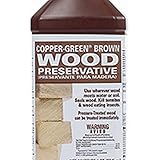
- Seals The Wood
- Protects Against Mold And Mildew
- Kills Off Harmful Insects
- Copper naphthenate and hydrocarbon solvent wood preservative
- Brush applied for surface protection of most woods
“Borate works for every outdoor project.”
Borates are primarily intended for wood protected from weather, according to NPIC. Rain and leaching can make them unsuitable for exposed or ground-contact uses unless a specific label says otherwise.
When to repair, replace or call a professional
Replace timber when decay has reduced the section, fasteners no longer hold, or a structural member has lost reliable bearing. A contractor, engineer or qualified inspector should assess posts, beams, joists, ledgers and other load-bearing components with extensive softness, cracking or insect damage. Cosmetic surface checking is not the same as structural decay, but only an inspection can distinguish them where loads or public safety are involved.
Recommended Free Tools
For recurring moisture, investigate the building system rather than repeatedly applying chemicals. A leak, failed flashing detail, poor grade or blocked ventilation will continue to defeat replacement timber until the source is corrected.
A decision checklist for your project
- What is the actual exposure: interior, weather-exposed above ground, ground contact or water contact?
- Is the main target fungal decay, insects or both?
- Can the design drain and dry, or is a moisture source still present?
- Does the wood carry a treatment quality mark or species documentation appropriate to the use?
- Does the locally adopted code require a particular treatment, grade or inspection mark?
- Will cuts, fasteners, membranes and finishes remain compatible with the preservative?
- Does the current product label allow this application and provide clear safety and disposal instructions?
- How will the timber be inspected and maintained after installation?
The durable solution is the combination of a dryable design, correctly selected wood and a treatment permitted for the exposure. No single coating can replace those three decisions.
Frequently Asked Questions
How do I stop wood rotting outside?
Reduce wetting and speed drying: fix leaks, provide drainage and ventilation, keep soil and debris away, choose wood rated for the exposure, and inspect joints, end grain and post bases. Add a compatible exterior finish only as a separate moisture-management measure.
What is the difference between ground-contact and above-ground treated wood?
Ground-contact wood is treated and rated for the more severe condition of persistent dampness and direct proximity to soil organisms. Above-ground treatment is not automatically suitable for burial; check the treatment designation, quality mark and locally adopted code.
What’s actually slowing this PC down?
Pick the symptom - the matching free tool is one click away.
Is copper naphthenate suitable for every timber project?
No. EPA lists copper naphthenate for several application methods and some above-ground, ground-contact and water-contact uses, but the exact product label controls the permitted wood, exposure, preparation, safety and disposal requirements.
Can naturally durable wood be used in soil?
Sometimes, but species and durability vary, and performance above ground does not guarantee performance in soil. Verify the species, project requirements and local code, and still provide drainage and inspection access.
Quick Recap
Product prices and availability are accurate as of the date/time indicated and are subject to change. Any price and availability information displayed on Amazon at the time of purchase will apply.

