Recommended Free Tools
Before temperatures are forecast to stay below freezing, disconnect every garden hose, close and drain any dedicated indoor valve serving an outdoor faucet, cover the faucet with a fitted insulating cover, and insulate exposed indoor pipe. Seal drafts where pipes pass through walls, find your main water shutoff, and treat heat tape as a specialized, code-compliant option rather than a substitute for draining and insulation.
What to do before freezing weather
Use this sequence for each outdoor faucet:
- Remove and drain the hose. A hose left connected can hold water against the faucet and prevent the line from draining normally.
- Close the dedicated indoor shutoff, if your plumbing has one. This valve may be in a basement, utility room, crawlspace or near the point where the pipe enters the house.
- Open the outdoor faucet. With the indoor valve closed, opening the outside tap lets water drain from the section between the valve and the faucet. Follow any drain feature or valve-specific instructions; call a plumber if water does not drain as expected.
- Fit an insulating hose-bib cover. Molded foam covers add a layer of protection after the hose is removed. They do not empty a pipe.
- Protect nearby pipe runs. Insulate exposed plumbing in garages, crawlspaces, attics, basements and other unheated spaces. Cover fittings and valves in a manner compatible with the insulation product.
- Seal air leaks. Caulk or otherwise seal openings around pipe penetrations and other drafts that can bring sub-freezing air to the plumbing.
- Locate the main water shutoff now. Knowing its location and how it operates reduces damage if a pipe splits.
Portland Water Bureau summarizes the basic protection this way: “Disconnect hoses from outdoor faucets. Insulate all outdoor faucets and hose bibs with molded-foam hose bib covers (available at most hardware stores) or with newspaper or rags covered with plastic wrap.” Its separate-shutoff guidance adds: “After you turn off the water, open each outdoor spigot to drain the remaining water from the pipes.”
As an Amazon Associate I earn from qualifying purchases.
Why an outdoor faucet freezes and splits
Water expands as it freezes. The ice itself may form in the faucet or in the short pipe leading to it, while liquid water trapped between the ice and a closed valve remains under increasing pressure. The eventual split often occurs inside the wall or at a fitting, not where ice is visible. When temperatures rise, the thawed water can then leak into framing, ceilings or floors.
A connected hose is a common way to trap water at the faucet. Insulation slows heat loss but cannot compensate for a line that remains full and exposed for a prolonged freeze. The safest protection therefore combines hose removal, draining where possible, and insulation of the remaining vulnerable components.
#1 Best Overall

- Protects outdoor faucets from freezing, wind and chill
- Easy to install
- Eco Friendly Option and Energy Efficiency
- 4 Pack
- Made in the USA
Choose the procedure that matches your plumbing
Outdoor faucet with a dedicated indoor shutoff
This is the most reliable arrangement for seasonal winterization.
- Remove the hose and empty it before storing it.
- Close the indoor valve that serves that faucet. Do not assume a nearby valve controls the correct branch; trace the pipe or label the valve during mild weather.
- Open the exterior faucet and leave it open while the line drains. Some valves have a small bleeder or drain port; use it only as directed by the valve manufacturer or your plumber.
- Once draining is complete, install the outdoor cover. Keep the cover snug against the wall so wind cannot wash cold air behind it.
Portland Water Bureau and the Philadelphia Water Department both advise closing the outdoor-water valve and opening the outside faucet to remove residual water. Philadelphia also advises taking action when the forecast is below 32°F, particularly when that condition is expected for two days or more. That is a local utility trigger, not a guarantee that every home is safe above it or unsafe below it; wind, pipe location, insulation and the length of the freeze all matter.
Outdoor faucet with no separate indoor shutoff
Some homes have the hose bib connected directly to the interior supply with no accessible branch valve. You cannot reliably drain that section by simply opening the tap, because water remains in the connected piping. In this setup:
What’s actually slowing this PC down?
Pick the symptom - the matching free tool is one click away.
- Remove and drain the hose before the freeze.
- Install a fitted foam cover or another weather-resistant insulating cover.
- If a temporary cover is necessary, Portland and Cincinnati guidance allows newspaper or rags protected by plastic; Austin mentions towels or a foam cover. Keep improvised materials dry, firmly secured and clear of ignition sources.
- Plan a permanent improvement if the faucet repeatedly freezes: have a plumber add an accessible shutoff, replace the faucet with a frost-free sill cock where suitable, or reroute vulnerable piping.
A cover is insulation only. It is not evidence that the line is drained, and it cannot correct a pipe that runs through an exterior wall or an unheated cavity.
Protect pipes in garages, crawlspaces, attics and basements
Insulate the entire exposed run
Find every water line outside the heated envelope, not just the visible faucet. Pipes in a garage, crawlspace, attic, unheated basement or under a floor can freeze even when the room inside the house feels comfortable. Use pipe insulation sized for the pipe and install it continuously, including around elbows, tees and valves where the product permits. Do not compress insulation so tightly that it loses its thickness.
Rank #2

- ❄【High Compatibility】-- Faucet covers for winter measures 6.7" W x 8.3" H, Works well with various faucet types, such as garden spigots, hose bibs, water tap, keep faucets protected in freezing weather.
- ❄【Easy To Install and Remove】-- Spicket cover outside No more tools and screws.ust slide covers onto the faucet; fasten it with hook-and-loop straps & cord. Measier to use than some foam covers or hook & loop tape styles.
- ❄【Superior Protection】-- Very thick faucet cover design.In winter protecting your outside faucets from freezing and bursting. In summer prevent faucets from the blazing sun or the rust. Help save costly repairs.
- ❄【Against freezing & Waterproof Material】-- Outside faucet cover freeze protection outer surface is 600D Oxford protection water coating, which prevents rainwater from entering. the middle was filled with special PP insulated cotton.Three-layer design have Some good insulation effects. effectively keep the faucet dry and warm during.
- ❄【Please confirm again】--- Our water faucet covers for outside size and packaging is 6.7" W x 8.3" H, Set of 2,If you don't know the size of your faucet, you can try to buy it. If it is not compatible with your faucet or the product is damaged, please contact our customer service team at any time, we will refund or replace you within 24 hours.
Insulation delays freezing; it does not create heat. A long, severe freeze can eventually overcome it, especially where a pipe is exposed to wind or lies against an exterior wall.
Stop cold air at penetrations
Air sealing is as important as wrapping. Seal gaps where supply pipes pass through rim joists, siding, foundation walls, subfloors and cabinets. The U.S. Department of Energy Building America Solution Center advises avoiding water pipes in exterior walls where possible. Where relocation is impractical, insulate the pipe and air-seal the wall cavity so outside air cannot flow around the insulation.
Free tools Windows power users keep installed
One-click scans. No signup required.
Do not block required combustion-air openings or ventilation openings for fuel-burning equipment. If a pipe shares a cavity with wiring, recessed lighting or a heat-producing appliance, use materials and clearances permitted by local building and fire codes.
Foam covers, pipe insulation and heat trace: which measure fits?
| Measure | Best use | What it does | Limits and cautions |
|---|---|---|---|
| Fitted molded-foam faucet cover | Exposed hose bib after the hose is removed | Adds an insulating layer and reduces wind-driven heat loss | Does not drain the line or protect a long pipe run hidden in a cold wall |
| Foam pipe insulation sleeves | Accessible pipe in a garage, crawlspace, attic or basement | Slows heat loss along the pipe | Fittings, valves, supports and air leaks still need appropriate treatment |
| Air sealing | Pipe penetrations and drafty exterior-wall cavities | Stops cold air from bypassing insulation | Must not obstruct required ventilation or combustion air |
| Temperature-controlled heat trace | A specific pipe that remains vulnerable in an unconditioned or freezing location | Adds controlled heat when the sensor calls for it | Improper installation can cause fire; electrical and fire codes, product instructions and suitable power must be followed |
| Frost-free sill cock retrofit | Long-term replacement of a conventional hose bib | Places the shutoff deeper inside the heated wall and allows the exterior section to drain when installed correctly | Requires correct length, slope and installation; it is not a guarantee if the interior space also freezes |
When heat trace is appropriate—and when it is not
The Department of Energy Building America Solution Center says, “In freezing climates, consider installing temperature sensor-controlled electric heat tape on any piping located in uninsulated or unconditioned basements, crawlspaces, attics, or exterior walls.” That recommendation applies to a defined vulnerable pipe run, not to casually wrapping any available tape around a faucet.
Use only a product approved for the pipe material and location. Install it exactly as directed, with the required sensor placement, insulation, grounding and clearances, and comply with applicable electrical and fire codes. Never overlap heat tape unless the manufacturer expressly permits it, and do not cover a damaged cord or use indoor-only equipment in a damp area.
Rank #3
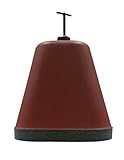
- Cover has a hard outer plastic shell to prevent freeze up in the winter season
- Protect from freezing, wind, and chill
- Insulate and protect regular and stand outdoor faucets
- Easy to install
- Hard. Outdoor. Faucet Cover.Insulates Faucet To Prevent Winter Freeze-up.Hard Plastic Outer Shell, Plus Poly Foam.Inner Cover Provides A Long Lasting Insulation.Protects From Freezing Wind, And Chill
Greater Cincinnati Water Works does not recommend electric heat tape as insulation for water lines. The two positions are not necessarily contradictory: heat trace is a specialized active system for a particular exposure, while insulation and drainage remain the primary passive protections. If a pipe needs heat trace every winter, ask a qualified plumber or electrician whether rerouting, air sealing, adding a shutoff or installing a frost-free sill cock is a safer permanent fix.
Frost-free sill cocks and permanent plumbing improvements
A frost-free sill cock places its shutoff valve farther inside the building than a standard hose bib. When the faucet is installed with a slight downward slope toward the exterior, water can drain from the barrel after the tap is closed. The design still depends on correct installation: a hose left attached, a blocked outlet or an interior pipe in a freezing cavity can defeat the benefit.
For a recurring problem, have a professional inspect the whole branch. The useful questions are whether the faucet has a dedicated indoor shutoff, whether the line can be drained, where the pipe crosses the thermal boundary, and whether air leaks or missing insulation are exposing it.
Independent reader supportYour contribution helps us test, update, and keep practical guides available for everyone.What to do when a freeze is forecast
Use the forecast as a planning trigger
Take action before the first overnight freeze, not after ice forms. Philadelphia’s utility guidance uses below 32°F, especially for two or more days, as a prompt. In a house with exposed piping, a shorter freeze can be enough. Pay attention to the coldest forecast near the pipe, not only the official outdoor sensor.
Keep indoor heat steady
Do not turn the heating system off while away during freezing weather. Portland suggests keeping heat on low and notes that low heat may help but may not prevent freezing. Austin recommends a thermostat setting of at least 65°F when away during freezing temperatures. These are local recommendations for particular conditions, not a universal substitute for winterizing outdoor lines. Keep doors open between heated rooms when appropriate, and open cabinet doors under sinks on exterior walls if doing so safely improves warm-air circulation.
The Tool Desk
Outbyte Driver Updater FREEFix the driver behind crashes, sound loss and screen glitchesFind Drivers →Outbyte PC Repair FREEClear out junk files and repair common Windows errorsFree Scan →Rank #4

- The product is manufactured in China
- The product is highly durable and easy to use
- Easy installation and easy handling
- The product is manufactured in China
- Easy installation and easy handling
Dripping faucets: limited, conditional help
Portland suggests a slight drip in some circumstances, and Cincinnati recommends dripping faucets farthest from the street during below-freezing weather. A drip may help a vulnerable interior section by maintaining flow, but it does not drain an outdoor branch that lacks a shutoff and does not replace insulation. Follow local utility advice, protect the drain from freezing, and never leave a faucet running if it could overflow or cause water damage.
Long absences
For a prolonged vacancy, Cincinnati describes shutting off and draining the entire domestic system. This requires planning around the water heater, appliances, toilets and fire-protection systems. Have a plumber or property manager perform the procedure if you are unsure which valves isolate which equipment. Leave heat at a safe setting unless the system has been properly winterized.
How to recognize a frozen pipe
- Only some faucets have water while others work normally.
- Flow is reduced to a trickle or stops suddenly after a cold night.
- A faucet produces air or sputtering as ice begins to thaw.
- You see bulging, cracking, frost or dampness on an exposed section.
- A ceiling, wall or cabinet becomes wet when temperatures rise.
Portland Water Bureau identifies partial loss of flow as a possible sign of a frozen pipe. Treat the situation as urgent even if no leak is visible: the pipe may split before the ice melts.
Safe thawing steps
- Find the main shutoff and assess for a leak. If water is escaping, close the main valve immediately. Renters should contact the property manager if the building shutoff is controlled by someone else.
- Open a faucet near the suspected frozen section. Austin advises opening a nearby tap so pressure and steam can escape as the ice melts.
- Apply gentle, even heat. A hair dryer, electric heating pad or warm towels can be used while you watch the pipe and surrounding materials.
- Work from the faucet toward the blockage. Keep the faucet open and warm the accessible section gradually; never concentrate heat on one point for a long time.
- Stop if conditions become unsafe. Call a licensed plumber or property manager if the pipe is inside a wall, the safe thawing method does not restore flow, electrical equipment may get wet, or you cannot identify the shutoff.
Never use an open flame, torch, charcoal burner or other combustion device to thaw plumbing. Fire can start inside a wall, and rapid heating can rupture the pipe.
If a pipe has burst
- Close the main water shutoff. If the break is on an isolated branch and you know the correct valve, close that valve as well.
- Open a faucet to relieve pressure and drain water from the system.
- Turn off electricity to wet areas only from a dry, safe location; do not enter standing water near electrical equipment.
- Move valuables, catch water and document damage without delaying the shutoff.
- Call a licensed plumber. Contact your property manager if you rent.
Portland guidance also recommends additional steps around the water heater and faucets after a burst; the correct actions depend on the equipment and the location of the break. Do not restart appliances or conceal damaged materials until they have been inspected.
Automatic sprinklers and backflow devices
Outdoor plumbing may include an irrigation backflow preventer or automatic sprinkler assembly. Follow the manufacturer’s winterization instructions rather than treating it like a hose bib. Portland warns that compressed-air sprinkler blowout can cause severe injury and says it is best performed by a qualified, licensed contractor. Use a professional when the system requires compressor equipment, specialized valves or code-required testing.
A practical inspection checklist
- Every hose has been removed, emptied and stored.
- Each outdoor faucet has a known shutoff status and, where possible, a drainable line.
- Exterior faucets have snug insulating covers.
- Exposed pipes and appropriate fittings are insulated.
- Pipe penetrations and drafts are sealed without blocking required ventilation.
- Heat-trace needs have been evaluated by location, product instructions and code requirements.
- The main water shutoff is accessible and clearly identified.
- Household members, renters or caretakers know whom to call if flow drops or a leak appears.
Municipal recommendations from Portland, Austin, Cincinnati and Philadelphia are written for their local systems and climates. Use them as practical guidance, then follow your local utility, plumbing code, manufacturer instructions and a qualified professional’s advice for conditions specific to your home.
Quick Recap
Product prices and availability are accurate as of the date/time indicated and are subject to change. Any price and availability information displayed on Amazon at the time of purchase will apply.
Quick wins for a faster PC:
Repair Windows errors before they cause bigger problemsFix Now →Fix the driver behind crashes, sound loss and screen glitchesFind Drivers →Clear out junk files and repair common Windows errorsFree Scan →
