Outdated Drivers Are Slowing You Down
One free scan finds every outdated or missing driver and matches the right update for your exact hardware.Free scan · exact hardware matchWindows Errors? Fix Them Before They Spread
Repair common Windows errors and clear accumulated junk for a smoother, more stable PC - no reinstall needed.Free scan · no reinstallProtect a foundation in this order: move roof water away from the house, identify the exact path water is taking, provide a properly designed drainage and sump system, protect plumbing from sewer backup, and address river-flood forces with code-compliant flood openings or professionally designed floodproofing. No coating, sump pump, or sealant can by itself make a basement safe from every type of flooding.
River water, groundwater, roof runoff, condensation, and backed-up plumbing enter by different routes. The right remedy depends on the source, foundation construction, soil, expected flood depth and duration, power reliability, and local floodplain rules. Use the sequence below to separate problems that a homeowner can correct from work that requires a licensed plumber, drainage contractor, or design professional.
As an Amazon Associate I earn from qualifying purchases.
1. Stop roof runoff from loading the foundation
Begin above grade. Water discharged beside a basement wall can infiltrate through cracks, the wall-floor joint, porous masonry, or the soil around the footing. It can also raise the hydrostatic pressure that pushes water through the foundation.
Inspect and repair gutters
- Remove leaves and sediment so gutters carry the entire roof flow.
- Reconnect loose joints and repair holes. A leaking corner can put a concentrated stream beside the foundation even when the rest of the gutter works.
- Confirm that each downspout empties into an extension, splash block, or other approved outlet rather than directly at the wall.
- Keep outlets from discharging onto a neighboring property, sidewalk, septic system, or area that sends water back toward the house.
University of Minnesota Extension warns that a downspout without an extender or splash block concentrates roof runoff beside the basement. Above-grade corrections are often less disruptive than excavation and can reduce the amount an underground drainage system must handle.
#1 Best Overall

- Outstanding Performance: This sump pump battery backup system delivers 2500W pure sine wave output, supporting dual-pump operation (1 HP main + 1/3 HP backup). Includes a USB port and AC outlet, ideal for emergency use and a home prone to heavy rainfall
- Quick Plug-In Setup: Say goodbye to risky wiring. This sump pump battery backup inverter features a standard 3-prong plug for quick and secure installation. It reduces errors and electrical hazards. Just plug in, and you're ready
- Battery-Friendly Charging: Equipped with 3-stage charging (Bulk, Absorption, Float), this basement protection sump pump inverter automatically optimizes battery performance and service life. Compatible with 12V Lead-acid, AGM, Gel, and LiFePO4 batteries
- Real-Time Display: Stay informed with an LCD screen and LED indicators. This pure sine wave power inverter allows you to monitor voltage, battery level, and working status easily. Control with confidence
- Security Comes First: Designed with security in mind, this back up system for emergency includes built-in protection against overcurrent, overvoltage, short circuit, reverse polarity, and high temp. A circuit breaker adds another layer of safeguards
Correct the ground slope
UMN Extension recommends a slope away from the foundation of at least 1 inch per foot for at least 6 feet. That is the extension service’s homeowner guidance, not a universal replacement for local drainage, accessibility, setback, or grading requirements. Use a level or laser to check the actual fall; soil can settle after construction and create a reverse slope.
Build up low spots with suitable fill and compact it in layers. Do not bury siding, bridge a damp-proofing line, block window wells, or direct water toward a retaining wall while reshaping the grade. Where six feet of positive slope is impossible, a designed swale or drain may be needed.
2. Diagnose the water before choosing a repair
A damp basement is not a diagnosis. Moisture can arrive as liquid rain or groundwater, move by capillary suction through masonry, diffuse as vapor, or condense from humid air on a cool wall or floor. A waterproofing coating or dehumidifier may reduce visible symptoms while water pressure, groundwater entry, or inadequate drainage continues.
Record when and where water appears
Keep a dated log through several weather conditions. Note whether the problem follows ordinary rain, prolonged wet weather, snowmelt, a high river, a rising groundwater table, or no outdoor event at all. Photograph the first wet location and mark the height of standing water.
- Wall cracks or isolated trickles: may indicate a joint, crack, window opening, or a localized drainage problem.
- The wall-floor joint: commonly points to water moving along the footing or rising beneath the slab.
- Water through a floor drain or plumbing fixture: suggests sewer or storm-system backup rather than a wall leak.
- Diffuse dampness, mold, mildew, or condensation: can result from vapor or humid air, even without liquid water entering.
- White, powdery efflorescence: shows that moisture has moved through masonry and left mineral deposits; cleaning it does not stop the water path.
- Standing water after a river rises: requires flood-exposure and structural evaluation, not only crack sealing.
These clues help select the next inspection, but they do not replace an assessment for structural movement, damaged utilities, contaminated floodwater, or weakened masonry.
Rank #2

- System comes preassembled and preplumbed so that installation is simple and quick
- Reliable design with durable ½ HP energy efficient copper-wound Permanent Split Capacitor (PSC) motor for long life and savings on your electric bills
- Includes a WiFi-capable battery backup system that provides 24-hour-a-day monitoring of pump, power and battery conditions; backup controller will sound an alarm, illuminate a warning light and describe what to do for easy maintenance
- Allows for connection to a Basement Watchdog CONNECT Module (BW-WiFi2—a SEPARATE PURCHASE), giving you real-time alerts via text, email, push notification or through the Basement Watchdog free app
- Provides days of intermittent pumping power on a single battery charge and is compatible with both maintenance-free AGM and wet-cell batteries. Connect two batteries in parallel for double the runtime.
Separate the entry routes
| Observed route or condition | What it can indicate | First response |
|---|---|---|
| Roof runoff beside the house | Gutters, downspouts, grading, or settled soil are concentrating water. | Repair conveyance and create positive surface drainage. |
| Seepage at walls or the wall-floor joint | Groundwater pressure, footing drainage limits, cracks, or a high water table. | Inspect drainage; consider an engineered exterior or interior system. |
| Water rising through a slab or floor drain | Sub-slab groundwater or a sanitary/storm sewer backup. | Evaluate the sump and sub-slab path; have a licensed plumber assess backflow protection. |
| Condensation on cool surfaces | Humid indoor air reaching a surface below the dew point. | Control indoor humidity and ventilation while checking for hidden liquid water. |
| Water around a crawlspace, garage, or other enclosure during a river flood | Floodwater pressure acting on walls that cannot equalize. | Check whether code-compliant flood openings are appropriate and keep them clear. |
3. Use drainage and a sump for groundwater you can collect
A sump pump is a collection-and-discharge device. It helps when groundwater or seepage reaches a sump basin; it does not stop river water flowing over the ground, through walls, or through an unprotected opening. FEMA recommends a sump pump with a battery-operated backup for basement seepage and flooding, and its retrofit guidance cautions that standard pumps can be overwhelmed when seepage is high.
Choose the drainage approach for the foundation
Exterior drainage can be effective because it intercepts water outside the wall, but it requires excavation and rebuilding the drainage around the foundation. That disruption and expense make accurate diagnosis important before digging.
Interior systems may use a channel at the wall-floor edge or drainage below the slab. Their suitability differs for poured-concrete and masonry walls and depends on whether water beneath the slab must be relieved. An interior channel that has no reliable destination simply moves water to another point; drainage must discharge to a lawful, suitable outlet or a sump designed for the expected inflow.
Size and install the sump as a system
Do not select pump capacity from a generic house size. Inflow, soil permeability, water-table conditions, design flood depth, discharge-head height, pipe friction, and the likelihood of a power outage all affect the required system. FEMA’s retrofit guidance specifically identifies pump sizing, backup power, soil permeability, flood depth, and construction details as design considerations.
- Use a basin that receives the drainage system without allowing soil or debris to jam the pump.
- Provide an airtight, childproof cover, as recommended by UMN Extension, to limit humidity, odors, and access to moving equipment.
- Discharge far enough away that pumped water cannot flow back to the foundation or overload a neighboring property.
- Install a battery-operated backup and test the primary pump, backup, float switch, check valve, alarm, and discharge line on a schedule.
- Plan for a backup that matches the expected outage duration; a battery is not useful if it cannot run the pump through the likely event.
During a major river event, groundwater inflow may exceed a standard residential pump’s capacity. A backup pump or power source may improve resilience, but only a site-specific design can establish how much water the system must handle.
Rank #3

- 【CONTINUOUS POWER】The Cantonape 2000 Watt Sump Pump Backup Battery System is a professional backup system in case of a power outage, featuring pure sine wave output, 2000 watts of powerful power output, LED display and 3 AC outputs, which produces a seamless, grid-like power output that is resistant to interference, can drive any type of load (resistive and inductive loads), has the highest conversion efficiency, and the lowest losses, and is therefore safer for all types of loads.
- 【CHARGING MODE】The 2000W sump pump backup battery system has a built-in 20A battery charger, which supports fast charging. In the event of a power outage, this sump pump battery backup system can quickly auto-switch to battery inverter power, ensuring continuous sump pump operation.
- 【LED DISPLAY】The Cantonape sump pump battery backup system is equipped with LED display, you can instantly monitor vital information such as battery voltage and AC voltage. Enjoy confident and informed decision-making every step of the way!
- 【SAFETY IN USE】The Cantonape sump pump battery backup system has a built-in cooling system and overload protector, as well as multiple protection functions such as overheat protection, short circuit protection, low voltage protection, overcharge protection, etc., which not only improves the safety of use, but also extends the service life of the device.
- 【MULTIPLE APPLICATIONS】Our sump pump battery backup system also works as a power inverter for many applications requiring backup power. You can use it to operate various electric devices, including lights, mobile phones, monitors, and other equipment. This inverter doesn't come with battery, a 12V GEL, AGM/SLA, Flooded/Wet battery is required for backup power operation.
4. Understand what sealants, coatings, and “waterproofing” can and cannot do
Crack and joint sealants can address a specific, stable leak after its source is understood. Paint-like coatings can reduce minor surface dampness or improve appearance. Neither is a complete defense against flood loading.
FEMA’s 2025 retrofit guide explains that dry floodproofing sealants and shields can leak and do not protect against underseepage: water can travel down a sealed wall and beneath the foundation. Water pressure can also create buoyancy and other forces that a coating cannot resist. A sealed basement may therefore hide the path until water accumulates below the slab or behind the wall.
Do not seal over active structural movement, cover a drain or relief path, or assume that a waterproofing label establishes flood protection. Have significant cracks, displacement, bowed walls, or repeated high-water entry evaluated by a qualified professional.
5. Protect against sewer and drain backups separately
A backwater or backflow valve addresses a specific route: sewage or stormwater reversing through pipes that enter the building. It is not a general foundation-water barrier and will not stop seepage through walls, floors, windows, or joints.
FEMA’s homeowner guidance recommends backflow valves on pipes entering the building and says installation should be performed by a qualified, licensed plumber. The plumber must confirm the correct location, access for cleaning, compatibility with the drainage system, and local requirements. A valve that is buried without access or not maintained may fail when debris prevents it from closing.
What’s actually slowing this PC down?
Pick the symptom - the matching free tool is one click away.
Rank #4

- Maintenance free - no need to add battery fluid or distilled water
- Up to 40-hour protection (based on a 10% duty cycle) on the Basement Watchdog Big Dog (BWD12-120C+)
- Up to 48-hour protection (based on a 10% duty cycle) on the Basement Watchdog Special + (BWSP+) and Basement Watchdog Big Combination sump pump system (BW4000, CITS-50)
- Up to 80-hour protection (based on a 10% duty cycle) on the Basement Watchdog Emergency (BWE) and Basement Watchdog Combination sump pump system (DFK961, CITE-33)
- Runs various Basement Watchdog sump pump systems intermittently for days
6. Use flood vents only in suitable enclosures
Permanent flood openings can allow water to flow through a crawlspace, garage, or other qualifying enclosure. Equalizing water levels reduces pressure buildup that could damage walls and foundations. FEMA advises that vents remain clear so they can operate during a flood.
A flood vent is not a license to open a finished basement or place an opening in any wall. The enclosure, elevation, opening area, location, screens, and installation details must meet current local and floodplain requirements. Keep landscaping, stored materials, insulation, snow, and debris from blocking the openings.
7. Treat river flooding as a floodplain and structural-design problem
River flooding can expose a house to water depth, duration, flow, debris, contaminated water, and pressure differences on opposite sides of a wall. The response depends on the mapped flood risk and the building’s elevation, foundation, enclosure, and utilities—not simply on whether a basement has leaked before.
Check the rules before altering the building
FEMA’s floodproofing glossary describes National Flood Insurance Program restrictions on floodproofing residential areas below base flood elevation, except where a community has an approved exception for floodproofed basements. Local building and floodplain officials determine how those rules apply to a particular property.
Do these 3 things before closing this tab:
1Clear out junk files and repair common Windows errors2Fix the driver behind crashes, sound loss and screen glitches3Repair Windows errors before they cause bigger problemsBefore installing barriers, sealing a below-grade room, altering an enclosure, adding vents, or changing drainage, verify the current floodplain designation, base flood elevation, permits, and required certifications with the local authority having jurisdiction. Do not assume a homeowner may freely dry-floodproof a basement below the mapped flood elevation.
Best Value
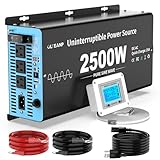
- 【Designed for Basement Flood Protection & Emergency Preparedness】: Protect your home from flooding during hurricanes, heavy rainstorms, and unexpected power outages. This sump pump battery backup system automatically switches from grid power to battery power, ensuring uninterrupted water removal and continuous basement protection. Ideal for homeowners in flood-prone areas and finished basement properties.
- 【Acts as a Reliable Emergency Backup Power Source (Battery Not Included)】: Serves as a dedicated emergency backup solution for primary or secondary sump pump systems. When utility power fails, it instantly transfers to 12V deep cycle battery power (battery required, not included) and automatically recharges when power is restored. Compatible with LiFePO4, AGM, GEL, and Flooded deep-cycle batteries.
- 【Built-in 25A Smart Charger with Multi-Stage Battery Protection】:Features a high-speed 25A charger with selectable charging modes to optimize battery lifespan. Includes overcharge, low voltage, overload, short circuit, and overheat protection. Designed for long-term reliability during storm season and emergency situations.
- 【2500W Pure Sine Wave Output – Safely Powers Sump Pumps & Essential Devices】: Delivers stable pure sine wave power capable of running sump pumps smoothly and efficiently without damaging sensitive equipment. With 3 AC outlets, USB port, and Type-C port, it can also support essential household devices during outages.
- 【LCD Remote Monitoring & Easy Installation】: Includes a remote controller with LCD display to monitor battery voltage, load status, and operating mode in real time. Supports wall mounting or flat placement with simple AC and DC connections — no complicated rewiring required. Trusted by homeowners, property managers, and contractors seeking dependable flood prevention solutions.
Know when professional design is necessary
FEMA advises seeking a design professional familiar with dry floodproofing because the systems are complex and failure consequences can be severe. The design may need to address leakage through seals, underseepage beneath the foundation, drainage from water that reaches the wall, buoyancy, soil permeability, flood depth and duration, and the strength of the foundation and enclosure.
Get professional input when water reaches structural components, the river rises near the building, the project changes load paths or openings, the basement is below the base flood elevation, or the drainage destination is uncertain. A contractor can install a system; an engineer or other qualified design professional may be needed to establish that the proposed system is structurally and hydraulically appropriate.
Independent reader supportYour contribution helps us test, update, and keep practical guides available for everyone.8. Prepare for an approaching river flood
Permanent improvements reduce risk, but they do not make a basement invulnerable. Before a forecast event:
- Clear gutters, downspouts, swales, drains, and flood openings.
- Test the primary sump, battery backup, alarm, check valve, and discharge route.
- Move electrical equipment, stored chemicals, appliances, and irreplaceable items above the expected flood level where possible.
- Keep generators and fuel outside and away from doors, windows, and vents; never operate them indoors or in an attached garage.
- Follow evacuation and utility-shutoff directions from local emergency officials. Do not enter standing water where electrical equipment may be energized.
- After water recedes, treat floodwater as contaminated, document damage, and have electrical, structural, heating, and plumbing systems inspected before re-energizing or occupying affected spaces.
9. Compare measures by the problem they solve
| Measure | Redirects water | Drains collected water | Blocks water | Allows controlled passage | Main limitation |
|---|---|---|---|---|---|
| Gutter, downspout extension, splash block, grading | Yes | No | No | No | Does not address river inundation or water already below the slab. |
| Exterior foundation drainage | Partly | Yes | No | No | Requires excavation; outlet and soil conditions must be designed. |
| Interior channel or sub-slab drainage | No | Yes | No | No | Must suit the wall and slab construction and have a reliable discharge. |
| Sump pump with battery backup | No | Yes | No | No | Handles collected groundwater, not every flood; high inflow can overwhelm it. |
| Crack or joint sealant | No | No | Locally | No | Does not stop underseepage or flood pressure and is unsuitable for moving defects. |
| Backflow valve | No | No | Plumbing route only | No | Requires correct installation and maintenance by a qualified plumber. |
| Flood vent | No | No | No | Yes | Applies to suitable enclosures and must remain clear and code-compliant. |
| Dry floodproofing | No | Only with designed drainage | Partly | No | Can leak, cannot prevent underseepage, and may be restricted below base flood elevation. |
10. Maintain the protection year-round
- Inspect gutters, extensions, splash blocks, grading, window wells, and drains after major storms and whenever soil settles.
- Run the sump pump and backup under test conditions; check the alarm and battery condition according to the equipment manufacturer’s schedule.
- Keep the sump cover airtight and childproof, and keep access clear for service.
- Exercise and inspect the backflow valve through the access provided by the plumber.
- Keep flood vents unobstructed by stored goods, landscaping, insulation, or debris.
- Watch for new cracks, widening joints, bowed walls, efflorescence, mold, or unexplained changes in dampness. Escalating symptoms warrant inspection rather than another coat of sealant.
11. A practical decision sequence for homeowners
- Control surface water: repair gutters, extend downspouts, and establish positive grading.
- Map the entry route: document timing, location, depth, and relation to rain, river level, groundwater, plumbing, or humidity.
- Address the matching system: improve exterior or interior drainage for groundwater, install a properly designed sump and backup, or use a licensed plumber for sewer-backflow protection.
- Evaluate flood exposure: check the floodplain, base flood elevation, enclosure type, expected depth and duration, and local permit requirements.
- Escalate complex work: obtain design-professional input for dry floodproofing, structural changes, below-elevation residential areas, buoyancy concerns, or drainage with no obvious safe outlet.
- Test and maintain: a protection measure that is blocked, unpowered, inaccessible, or unmaintained cannot perform during a flood.
The most reliable strategy is layered: keep ordinary rain away from the foundation, drain groundwater that reaches the system, prevent plumbing backups, allow pressure to equalize in suitable enclosures, and reserve floodproofing decisions for a code-compliant, site-specific design. A sump pump with battery backup is an important part of seepage protection, but it is not a stand-alone defense against river inundation.
Quick Recap
Product prices and availability are accurate as of the date/time indicated and are subject to change. Any price and availability information displayed on Amazon at the time of purchase will apply.

